
Policies
1000 - Community Relations Series
-
1000 - Community Relations/Board OperationsConcept, Goals and Roles in Community Relations
1110.1 - Distribution of Materials by Students
1140 – Distribution of Materials by Students
1210 – Fundraising Request Form
1220 – Nondiscrimination
1240 – School Volunteers, Student Interns, and Other Non-Employees
1250 – Visitors and Observations in Schools
1312 – Citizen’s request for reconsideration of a book
1316.1 – Relations Between Public and School Personnel / Public Conduct at School Activities
1324 – Soliciting Funds from and by Students
1324 – Fundraising Form
1325 – Community Relations / Advertising and Promotion
1330- Use of School Facilities / Rental/Labor Fees for Use of School Buildings
1331 – Prohibition Against Smoking
1411 – Law Enforcement Officials
1415 – Possession of a Deadly Weapon or Firearm 1415
1420 – School Security and Safety
1430 – Automatic External Defibrillators
1450A – Sexual Offenders
1455 – Green Cleaning Program 1455
1460 - Pesticide Application on School Property
Relations between Non-Public and other Educational Organizations and the Schools
-
Community Relations/Board OperationsConcept, Goals and Roles in Community Relations
The Board of Education recognizes that the community, both locally and statewide, determines the quality of local education. It is imperative that members of the community and the school personnel communicate and support appropriate planning, the development of policy, the implementation of programs and accountability.
School-community relations are part of a public enterprise in which community members and school personnel take an active role in promoting the best interests of the school district.
The Board of Education establishes the following goals for the community relations program:
1. To increase public understanding of the school system.
2. To increase the community's confidence and interest in the school system.
3. To promote the effective dissemination of information concerning school activities.
4. To solicit community opinions about the school system.
5. To encourage the sharing of resources by civic and community organizations for the benefit of the school system.
Policy adopted: April 10, 2003
Policy revised: September 14, 2017
BOLTON PUBLIC SCHOOLS
Bolton, Connecticut
-
Community Relations/Board OperationsFamily Involvement
The Board of Education recognizes the critical importance of family involvement to a child's education. A dynamic, interactive partnership between school and home is a crucial factor in building an environment for learning.
The Board supports the development, implementation and regular evaluation of programs to involve parents at all grade levels in a variety of roles. Our approach to family involvement includes the following components:
1. Recognizing and supporting the family's role in shaping the attitudes, abilities and expectations children bring with them to school and providing resources and experiences that promote learning.
2. Welcoming and encouraging the direct involvement of parents in school programs as volunteers, speakers and resources in the classroom and in extracurricular activities.
3. Regular, ongoing, two-way communication between home and school, and developing vehicles for communication that maximize access and interaction.
4. Providing opportunities for direct community input at the policy level through such means such as advisory committees, personnel search committees, and other forms of participation in decision-making, all within the framework of the Board of Education a's authority.
Legal Reference: Connecticut General Statutes
10-221(f) Boards of Education to prescribe rule(s), policies, and procedures
Policy adopted: April 10, 2003
Policy revised: September 14, 2017
BOLTON PUBLIC SCHOOLS
Bolton, Connecticut
-
Community Relations/Board Operations
Distribution of Materials by Students
Printed materials may be distributed to students to be brought home as an inexpensive means of.communication. To allow for the distribution of printed materials without unnecessarily burdening students, the Superintendent or his/her designee may approve such distribution providing:
1. The materials relate to the school, community, local recreational or civic activities.
2. The materials do not promote a commercial enterprise or private gain.
3. The materials do not promote any political party, candidate, or political position.
Flyers from the Town Recreation Department, Girls Scouts, Boy Scouts, Brownies and Cub Scouts may be distributed by arrangement through the Superintendent. Communications from the PTA, the High School Parent Advisory Group, Bolton Music Works, Bolton Scholarship Committee, and Project Graduation may be distributed through the individual schools to parents following the review and approval of the Principal.
Budget/Referendum Materials
Printed information concerning a budget referendum, specifying only the time, date, location, and question, may be disseminated through the students. This information may not contain statements, or be written in a manner, which advocates a position on the budget referendum question.
Legal Reference: Connecticut General Statutes
9-369b Explanatory text relating to local questions.
Policy adopted: April 10, 2003
Policy revised: September 14, 2017
BOLTON PUBLIC SCHOOLS
Bolton, Connecticut
-
BOLTON PUBLIC SCHOOLS
Bolton, Connecticut
This form is to be used by all groups wishing to raise money for any reason for the benefit of students. If order to conform to fundraising procedures, signatures indicating approval must be obtained before any money raising activity is begun.
Name of Organization: _____________________________________________________
Advisor/Coach Name: _____________________________________________________
Event (Candy Sale, Dance, etc.): _____________________________________________
* Event date (if one time event such as Dance):
* Sale dates (if ongoing event): Start Date _______________ End Date _______________
Detailed description of event. (What is being sold, how much is being charged, price of admission, etc.):
Purpose of event. (What will the funds be used for?)
Approval: No event will be added to the BHS Calendar without completed signatures.
Step #1 - Advisor/Coach Signature:
This form should be submitted to the Student Council Advisor 1 week prior to monthly meeting – 1st week of each month.
Step #2 – Student Council Advisor Signature:
Step #3 – Principal Signature:
Step #4 - Superintendent Signature:
Do not use this form for any event that includes any type of raffle, game of chance, or any cash prize. Events such as these must have special approval by the Superintendent’s Office. Connecticut State Law requires a state permit for these types of events and only adults (over the age of 18) are permitted to sell raffle tickets. The permit number as provided by the State of Connecticut must be made available to the Superintendent’s Office before final approval will be granted.
-
Community Relations/Board Operations
Nondiscrimination
It is the policy of the Board of Education (the "Board") that any form of discrimination or harassment on the basis of race, religion, color, national origin, alienage, sex, sexual orientation, marital status, age, disability, pregnancy, genetic information, gender identity or expression, veteran status, status as a victim of domestic violence, or any other basis prohibited by state or federal law ("Protected Class") is prohibited in the Bolton Public Schools (the "District"), whether by students, Board employees, Board members or third parties subject to the control of the Board., subject to the conditions and limitations established by law. The Board's prohibition of discrimination or harassment in its educational programs or activities expressly extends to academic, nonacademic and extracurricular activities, including athletics, school-sponsored activities, as well as the District website.
The Board further prohibits reprisal or retaliation against any individual who reports incidents in good faith that may be a violation of this policy, or who participates in the investigation of such reports.
Discrimination and/or harassment against any individual on the basis of that individual's association with someone in a Protected Class may also be considered a form of Protected Class discrimination and/or harassment, and is therefore prohibited by this policy.
I. Definitions:
The following definitions apply for purposes of this policy:
A. Discrimination: Discrimination in violation of this policy occurs when an individual is denied participation in, or the benefits of, a program or activity of the Board because of such individual's actual or perceived membership in a Protected Class.
B. Harassment: Harassment is a form of Protected Class discrimination that is prohibited by law and by this policy. Harassment constitutes unlawful discrimination when it creates a hostile environment, which occurs when the harassment is sufficiently severe, pervasive, or persistent so as to interfere with or limit an individual's ability to participate in or benefit from the services, activities, or opportunities offered by the District.
Although not an exhaustive list, the following are examples of the types of conduct that may be considered Protected Class harassment and can lead to a hostile environment, and are therefore prohibited by this policy:
• objectively offensive racial, ethnic, or religious epithets (or epithets commonly associated with any Protected Class membership, including but not limited to epithets relating to sex, sexual orientation, and/or gender identity or expression);
• other words or phrases considered demeaning or degrading on the basis of Protected Class membership;
• display of images or symbols commonly associated with discrimination against individuals on the basis of their membership in a Protected Class;
• graphic, written or electronic communications that are harmful or humiliating based on Protected Class membership;
• bigoted conduct or communications; or
• physical, written, electronic or verbal threats based on Protected Class membership.
Harassment does not have to involve intent to harm, be directed toward a specific person, or involve repeated incidents.
Sexual harassment is a form of harassment that is prohibited by law and Board policy. For more information regarding harassment based on sex, sexual orientation, pregnancy, or gender identity or expression, contact the District's Title IX Coordinator at:
Director of HR and Student Support Services
72 Brandy Street
Bolton, CT 06043
860-643-1569
bgoldsnider@boltonct.org
C. Gender identity or expression: Gender identity or expression refers to a person's gender-related identity, appearance or behavior, whether or not that gender-related identity, appearance or behavior is different from that traditionally associated with the person's physiology or assigned sex at birth, which gender-related identity can be shown by providing evidence including, but not limited to, medical history, care or treatment of the gender-related identity, consistent and uniform assertion of the gender-related identity or any other evidence that the gender-related identity is sincerely held, part of a person's core identity or not being asserted for an improper purpose.
D. Sexual orientation: Sexual orientation refers to a person's identity in relation to the gender or genders to which they are romantically, emotionally or sexually attracted, inclusive of any identity that a person (i) may have previously expressed, or (ii) is perceived by another person to hold.
E. Veteran: A veteran is any person honorably discharged from, released under honorable conditions from or released with an other than honorable discharge based on a qualifying condition from active service in, the United States Army, Navy, Marine Corps, Coast Guard, Air Force, and Space Force and any reserve component thereof, including the Connecticut National Guard. "Qualifying condition" means (A) a diagnosis of post-traumatic stress disorder or traumatic brain injury made by an individual licensed to provide health care services at a United States Department of Veterans Affairs facility, (B) an experience of military sexual trauma disclosed to an individual licensed to provide health care services at a United States Department of Veterans Affairs facility, or (C) a determination that sexual orientation, gender identity or gender expression was more likely than not the primary reason for an other than honorable discharge, as determined in accordance with Conn. Gen. Stat. §§ 27-103(c), (d).
F. Race: The term "race" is inclusive of ethnic traits historically associated with race, including but not limited to, hair texture and protective hairstyles. "Protective hairstyles" includes, but is not limited to, wigs, headwraps and hairstyles such as individual braids, cornrows, locs, twists, Bantu knots, afros and afro puffs.
G. Domestic violence: Domestic violence means (1) a continuous threat of present physical pain or physical injury against a family or household member, as defined in Conn. Gen. Stat. § 46b-38a; (2) stalking, including but not limited to, stalking as described in Conn. Gen. Stat. § 53a-181d, of such family or household member; (3) a pattern of threatening, including but not limited to, a pattern of threatening as described in Conn. Gen. Stat. § 53a-62, of such family or household member or a third party that intimidates such family or household member; or (4) coercive control of such family or household member, which is a pattern of behavior that in purpose or effect unreasonably interferes with a person's free will and personal liberty. "Coercive control" includes, but is not limited to, unreasonably engaging in any of the following: (a) isolating the family or household member from friends, relatives or other sources of support; (b) depriving the family or household member of basic necessities; (c) controlling, regulating or monitoring the family or household member's movements, communications, daily behavior, finances, economic resources or access to services; (d) compelling the family or household member by force, threat or intimidation, including, but not limited to, threats based on actual or suspected immigration status, to (i) engage in conduct from which such family or household member has a right to abstain, or (ii) abstain from conduct that such family or household member has a right to pursue; (e) committing or threatening to commit cruelty to animals that intimidates the family or household member; or (f) forced sex acts, or threats of a sexual nature, including, but not limited to, threatened acts of sexual conduct, threats based on a person's sexuality or threats to release sexual images
II. Reporting:
Alleged Discrimination/Harassment of Students or Employees:
Complaints of alleged discrimination and/or harassment of students and/or employees will be investigated in accordance with the non-discrimination policies applicable to students and/or personnel respectively. Complaints pertaining to specific forms of discrimination and/or harassment, such as sexual harassment or disability- based harassment, have specific policies and procedures applicable to these forms of harassment and will be investigated in accordance with the specific procedures for such issues. If a complaint involves allegations of discrimination or harassment based on sex, sexual orientation, pregnancy, or gender identity or expression, such complaints will be handled in accordance with the procedures set forth in Board Policy #4118.1, Policy Regarding Prohibition of Sex Discrimination, Including Sex-Based Harassment (Personnel), or Policy #5145.5, Policy Regarding Prohibition of Sex Discrimination, Including Sex-Based Harassment (Students). Complaints involving allegations of discrimination or harassment based on disability will be addressed in accordance with the procedures set forth in Board Policy #4120.4, Section 504/ADA (Personnel), or Board Policy #5145, Section 504/ADA (Students). In the event reported conduct allegedly violates more than one policy, the Board will coordinate any investigation in compliance with the applicable policies.
Alleged Discrimination/Harassment of Community Members on the Basis of Sex:
In the event the District receives a complaint alleging discrimination or harassment of a community member (e.g., an individual affiliated with the District, accessing or seeking access to District facilities who is not a student or an employee) on the basis of sex, sexual orientation, pregnancy, or gender identity or expression, the complaint shall be referred to the District's Title IX Coordinator, who shall take steps designed to ensure that applicable state and federal law are followed.
Alleged Discrimination/Harassment of Community Members on the Basis of Disability:
In the event the District receives a complaint alleging discrimination or harassment of a community member (e.g., an individual affiliated with the District, accessing or seeking access to District facilities who is not a student or an employee) based on disability, the complaint shall be referred to the District's Section 504/ADA Coordinator, who shall take steps designed to ensure that applicable state and federal law are followed.
Reporting to District Officials:
It is the policy of the Board to provide for the prompt and equitable resolution of complaints alleging Protected Class discrimination or harassment. The District will investigate both formal and informal complaints of discrimination, harassment or retaliation.
Any individual who believes a community member has experienced Protected Class discrimination or harassment or an act of retaliation or reprisal in violation of this policy should report such concern in writing to the Director of HR and Student Support Services
in accordance with the Board's complaint procedures included in the Board's Administrative Regulations Regarding Non-Discrimination/Community, which accompany this policy, and are available online at https://www.boltonpublicschools.com/ or upon request from the main office of any District school.
Reporting to State and Federal Agencies:
In addition to reporting to District officials in accordance with this policy, individuals also may file a complaint with the following agencies:
Office for Civil Rights, U.S. Department of Education ("OCR"):
Office for Civil Rights, Boston Office
U.S. Department of Education
8th Floor
5 Post Office Square
Boston, MA 02109- 3921
(617)-289-0111
http://www2.ed.gov/about/offices/list/ocr/docs/howto.html
Connecticut Commission on Human Rights and Opportunities
450 Columbus Blvd.
Hartford, CT 06103-1835
(800-477-5737)
Equal Employment Opportunity Commission (employees only):
Equal Employment Opportunity Commission, Boston Area Office
John F. Kennedy Federal Building
475 Government Center
Boston, MA 02203
(800-669-4000)
Questions/Requests for Accommodations:
Any parent, student, staff member, Board member or community member (e.g., other individual affiliated with the District, accessing or seeking access to District facilities) who:
1. has questions or concerns about this policy or its accompanying regulations; OR
2. wishes to request or discuss accommodations based on religion; OR
3. who would like a copy of the Board's complaint procedures or complaint forms related to claims of discrimination or harassment:
may contact any District administrator or the following District official:
Director of HR and Student Support Services
72 Brandy Street
Bolton, CT 06043
860-643-1569
bgoldsnider@boltonct.org
Any parent, student, staff member, Board member or community member (e.g., other individual affiliated with the District, accessing or seeking access to District facilities) who has questions or concerns about the Board's policies regarding discrimination or harassment on the basis of gender/sex, gender identity or expression, sexual orientation or pregnancy may contact the District's Title IX Coordinator:
Director of HR and Student Support Services
72 Brandy Street
Bolton, CT 06043
860-643-1569
bgoldsnider@boltonct.org
Any parent, student, staff member, Board member or community member (e.g., other individual affiliated with the District, accessing or seeking access to District facilities) who has questions or concerns about the Board's policies regarding discrimination or harassment on the basis of disability, and/or who may wish to request or discuss accommodations for a disability, may contact the District's Section 504/ADA Coordinator:
Director of HR and Student Support Services
72 Brandy Street
Bolton, CT 06043
860-643-1569
Legal References:
Title VI of the Civil Rights Act of 1964, 42 U.S.C. § 2000d et seq.
Title VII of the Civil Rights Act of 1964, 42 U.S.C. § 2000e et seq.
Title IX of the Education Amendments of 1972, 20 U.S.C. § 1681 et seq.
Boy Scouts of America Equal Access Act, 20 U.S.C. § 7905
Age Discrimination in Employment Act, 29 U.S.C. § 621 et seq.
Americans with Disabilities Act, 42 U.S.C. § 12101
Section 504 of the Rehabilitation Act of 1973, 29 U.S.C. § 794
Connecticut General Statutes § 1-1n, "Gender Identity or Expression" defined
Connecticut General Statutes § 27-103
Connecticut General Statutes § 46a-51, Definitions
Connecticut General Statutes § 46a-58, Deprivation of rights
Connecticut Fair Employment Practices Act, Connecticut General Statutes § 46a-60
Connecticut General Statutes § 46a-81c, Sexual orientation discrimination: Employment
Connecticut General Statutes § 46b-1, Family relations matters and domestic violence defined
Public Act No. 23-145, "An Act Revising the State's Antidiscrimination Statutes"
Policy adopted: September 14, 2017
Policy revised: December 12, 2019
Policy revised: November 11, 2021
Policy revised: August 24, 2023
Policy revised: December 12, 2024
BOLTON PUBLIC SCHOOLS
Bolton, Connecticut
R1220
Administrative Regulation
Administrative Regulations for Discrimination Complaints (Community Members)
It is the policy of the Bolton Board of Education (the "Board") that any form of discrimination or harassment on the basis of race, religion, color, national origin, ancestry, alienage, sex, sexual orientation, marital status, age, disability, pregnancy, gender identity or expression, veteran status, status as a victim of domestic violence, or any other basis prohibited by state or federal law ("Protected Class") is prohibited in the Bolton Public Schools (the "District"), whether by students, Board employees, Board members or third parties subject to the control of the Board, subject to the conditions and limitations established by law. Students, Board employees, Board members and third parties are expected to adhere to a standard of conduct that is respectful of the rights of all members of the school community.
Retaliation Prohibited:
The Board further prohibits reprisal or retaliation against any individual who reports incidents in good faith that may be a violation of this policy, or who participates in the investigation of such reports.
The District will not tolerate any reprisals or retaliation that occur as a result of the good faith reporting of charges of Protected Class harassment or discrimination. Any such reprisals or retaliation will result in disciplinary action against the retaliator, and other corrective actions as appropriate.
Discrimination on the Basis of Protected Class Association Prohibited:
Discrimination and/or harassment against any individual on the basis of that individual's association with someone in a Protected Class may also be considered a form of Protected Class discrimination and/or harassment.
Scope and Applicability:
Students, Board employees, Board members and community members (e.g., other individuals affiliated with the District, accessing or seeking access to District facilities) are expected to adhere to a standard of conduct that is respectful of the rights of all members of the school community.
The following non-exhaustive list provides examples of the types of prohibited conduct that may be considered Protected Class harassment that can lead to a hostile environment:
• objectively offensive racial, ethnic, or religious epithets (or epithets commonly associated with any Protected Class membership, including but not limited to epithets relating to sex, sexual orientation, and/or gender identity or expression);
• other words or phrases considered demeaning or degrading on the basis of Protected Class membership;
• display of images or symbols commonly associated with discrimination against individuals on the basis of their membership in a Protected Class;
• graphic, written or electronic communications that are harmful or humiliating based on Protected Class membership;
• bigoted conduct or communications; or
• physical, written, electronic or verbal threats based on Protected Class membership.
Harassment does not have to involve intent to harm, be directed toward a specific person, or involve repeated incidents.
Alleged Discrimination/Harassment of Students or Employees:
Complaints of alleged discrimination and/or harassment of students and/or personnel will be investigated in accordance with the non-discrimination policies applicable to students and/or personnel respectively. Complaints pertaining to specific forms of discrimination and/or harassment, such as sexual harassment or disability-based harassment, have specific policies and procedures applicable to these forms of harassment and will be investigated in accordance with the specific procedures for such issues. If a complaint involves allegations of discrimination or harassment of a student or an employee based on sex, sexual orientation, pregnancy, or gender identity or expression, such complaints will be handled in accordance with the procedures set forth in Board Policy #4118.1 Prohibition of Sex Discrimination, Including Sex-Based Harassment (Personnel), or Policy #5145.5 Policy Regarding Prohibition of Sex Discrimination, Including Sex-Based Harassment (Students). Complaints involving allegations of discrimination or harassment of a student or an employee based on disability will be addressed in accordance with the procedures set forth in Board Policy #4120.4, Section 504/ADA (Personnel), or Board Policy 5145, Section 504/ADA (Students).
Alleged Discrimination/Harassment of Community Members on the Basis of Sex:
In the event the District receives a complaint alleging discrimination or harassment of a community member (e.g. an individual affiliated with the District, accessing or seeking access to District facilities who is not a student or an employee) on the basis of sex, sexual orientation, pregnancy, or gender identity or expression, the complaint shall be referred to the District's Title IX Coordinator, who shall take steps designed to ensure that applicable state and federal law are followed.
Alleged Discrimination/Harassment of Community Members on the Basis of Disability:
In the event the District receives a complaint alleging discrimination or harassment of a community member (e.g., an individual affiliated with the District, accessing or seeking access to District facilities who is not a student or an employee) based on disability, the complaint shall be referred to the District's Section 504/ADA Coordinator, who shall take steps designed to ensure that applicable state and federal law are followed.
Reporting to District Officials:
It is the policy of the Board to provide for the prompt and equitable resolution of complaints alleging Protected Class discrimination or harassment. The District will investigate both formal and informal complaints of discrimination, harassment, or retaliation.
Any individual who believes that they, or another individual, has experienced Protected Class discrimination or harassment or an act of retaliation or reprisal in violation of Board policy should report such concern in writing to:
Director of HR and Student Support Services
72 Brandy Street
Bolton, CT 06043
860-643-1569
in accordance with the Board's complaint procedures included in these Administrative Regulations Regarding Non-Discrimination/Community.
Complaint Procedure
Preferably, complaints should be filed within thirty (30) calendar days of the alleged occurrence. Timely reporting of complaints facilitates the investigation and resolution of such complaints. The District will investigate such complaints promptly and equitably, and will take corrective action when allegations are verified.
As soon as an individual feels that they, or another individual has been subjected to Protected Class discrimination or harassment, the individual should make a written complaint to the Superintendent or designee.
The individual who is alleged have experienced Protected Class discrimination/harassment (the "complainant") and any individual accused of Protected Class discrimination/harassment (the "respondent") (if applicable) will be provided a copy of the Board's policy and regulation and made aware of the individual's rights under this policy and regulation. In the event reported conduct allegedly violates more than one policy, the Board will coordinate an investigation in compliance with the applicable policies, laws and regulations.
The complaint should state the:
A. Name of the complainant,
B. Date of the complaint,
C. Date(s) of the alleged harassment/discrimination,
D. Name(s) of the harasser(s) or discriminator(s),
E. Location where such harassment/discrimination occurred,
F. Names of any witness(es) to the harassment/discrimination,
G. Detailed statement of the circumstances constituting the alleged harassment/discrimination; and
H. Proposed remedy.
Any individual who makes an oral complaint of discrimination or harassment of a community member (e.g., an individual affiliated with the District, accessing or seeking access to District facilities who is not a student or an employee) will be provided a copy of this regulation and will be requested to make a written complaint pursuant to the above procedure. If an individual is unable to make a written complaint, the employee receiving the oral complaint will either reduce the complaint to writing, assist the individual with completing the written complaint form, or request the assistance of a District administrator to do so.
All complaints received by employees are to be forwarded immediately to the Superintendent or designee. Upon receipt of a complaint alleging discrimination or harassment of a community member (e.g., an individual affiliated with the District, accessing or seeking access to District facilities who is not a student or an employee) under this complaint procedure, the Superintendent shall promptly investigate the complaint, or designate a District administrator or other trained individual to do so. During the course of the investigation, the investigator shall interview or consult with all individuals reasonably believed to have relevant information, including the complainant, the reporter (if different from the complainant), the respondent and any witnesses to the conduct. Complaints will be investigated promptly within the timeframes identified below. Timeframes may be extended as needed given the complexity of the investigation, availability of individuals with relevant information and/or other extenuating circumstances. Confidentiality will be maintained by all persons involved in the investigation to the extent possible, as determined by the investigator.
Upon receipt of a written complaint of discrimination or harassment, the investigator should:
1. Offer to meet with the complainant and respondent (if applicable) within ten (10) business days (provided that such timeframe may be reasonably extended based on the availability of necessary witnesses and/or participants, the complexity of the investigation, and/or other extenuating circumstances) to discuss the nature of the complaint, discuss the availability of interim measures, identify individuals the complainant or respondent believes has relevant information, and obtain any relevant documents the complainant or respondent may have;
2. Provide the complainant and respondent (if applicable) with a copy of the Board's non-discrimination policy and accompanying regulations;
3. Conduct an investigation that is adequate, reliable, and impartial. Investigate the factual basis of the complaint, including, as applicable, conducting interviews with the parties to the complaint and any relevant witnesses or other individuals deemed relevant to the complaint;
4. Review any records, notes, statements, or other documents relevant to the complaint;
5. Maintain confidentiality to the extent practicable throughout the investigative process, in accordance with state and federal law;
6. Complete a final investigation report that includes: (i) a findings of fact based on the evidence gathered; (ii) for each allegation, the conclusion(s) and reasoning(s) as to whether the discrimination or harassment occurred; and (iii) for any individual(s) found to have engaged in discrimination or harassment, a broad statement of consequences imposed (to the extent permitted by state and federal confidentiality requirements) (e.g., "Consequences were imposed.").
7. Communicate the outcome of the investigation in writing to the complainant and respondent (if any) (to the extent permitted by state and federal confidentiality requirements), within thirty (30) business days (provided that such timeframe may be reasonably extended based on the availability of necessary witnesses and/or participants, the complexity of the investigation, and/or other extenuating circumstances) from the date the complaint was received by the Superintendent's office. The complainant and respondent (if any) shall be notified of any extension of the investigation timeline. The written notice shall include a finding whether the complaint was substantiated and if so, shall identify, to the extent possible, how the District will remedy the discrimination or harassment, adhering to the requirements of state and federal law;
8. If a complaint is made during summer recess, the complaint will be reviewed and addressed as quickly as possible given the availability of employees and/or other individuals who may have information relevant to the complaint. If fixed timeframes cannot be met, the complainant and respondent (if any) will receive notice and interim measures may be implemented as necessary;
9. Whenever allegations are verified, ensure that appropriate corrective action is taken (including, but not limited to, disciplinary action) aimed at preventing the recurrence of the discrimination or harassment. Corrective action should include steps designed to avoid continuing discrimination or harassment;
10. After receiving the written notice of the outcome, parties shall have ten (10) school days to submit a formal written statement of appeal, if they so choose, to the Superintendent challenging the outcome of the investigation and explaining the basis for appeal. Upon receipt of an appeal, the Superintendent shall appoint a decisionmaker(s) for the appeal, who may be the Superintendent or designee. The decisionmaker(s) for the appeal will provide the appealing party's written statement to the non-appealing party. The non-appealing party will then have ten (10) school days to submit to the decision-maker(s) for the appeal a written statement in support of, or challenging, the outcome of the investigation. The decisionmaker(s) for the appeal shall review the evidence and the information presented by the parties and determine if further action and/or investigation is warranted. Such action may include consultation with the investigator(s) and the parties, a meeting with appropriate individuals to attempt to resolve the complaint, or a decision affirming or overruling the written outcome. Generally, a party's disagreement with the outcome of the investigation, alone, will not be basis for further action. The decisionmaker(s) for the appeal will attempt to issue written notice of the outcome of the appeal to the parties within thirty (30) school days of receipt of all written statements from the parties.
Complaint Procedure for Superintendent/Board Member Complaints:
Any district administrator or Board member who receives a complaint of discrimination, harassment or retaliation of a community member by a Board Member and/or the Superintendent shall forward the complaint promptly to the Chair of the Board of Education. Complaints pertaining to the Superintendent or Board of Education members will be forwarded to the Chair of the Board of Education. Complaints pertaining to the Board Chair will be forwarded to the Board Vice Chair. In all cases, the individual receiving the complaint shall take appropriate steps to cause the matter to be investigated in a manner consistent with the procedures described above.
If a complainant or a respondent is not satisfied with the findings and conclusions of an investigation in which the Superintendent or a member of the Board is the respondent, within (30) calendar days of receiving the findings such party may present the complaint and written outcome to the Board Chair (or, if initially presented by the Board Chair, the Board Vice Chair), who will take appropriate steps to cause the matter to be reviewed in a manner consistent with the Board's non-discrimination policy and regulation. Such steps may include retention of an investigator different from the investigator who investigated the complaint.
Remedial Action:
If the District makes a finding of discrimination, harassment or retaliation of a community member, the District will take remedial action designed to:
A. eliminate the discriminatory/harassing/retaliatory conduct,
B. prevent its recurrence, and
C. address its effects on the complainant and any other affected individuals.
Examples of appropriate action may include, but are not limited to:
A. In the case of a student respondent, interventions for the individual who engaged in the discrimination/harassment may include, but are not limited to, discipline (including but not limited to suspension and/or expulsion), educational interventions, exclusion from extra-curricular activities and/or sports programs, and/or referral to appropriate state or local agencies;
B. In the case of an employee respondent, interventions for the individual who engaged in the discrimination/harassment may include, but are not limited to, supervisor notification, discipline (including possible termination of employment), training, and/or referral to appropriate state or local agencies;
C. In the case of respondent who is otherwise associated with the school community, interventions for the individual who engaged in the discrimination/harassment may include, but are not limited to, exclusion from school property and/or activities and/or referral to appropriate state or local agencies;
D. Follow-up inquiries with the complainant and witnesses to ensure that the discriminatory/harassing conduct has stopped and that they have not experienced any retaliation;
E. Supports for the complainant; and
F. Training or other interventions for the larger school community designed to ensure that students, staff, parents, Board members and other individuals within the school community understand the types of behavior that constitute discrimination/harassment, that the District does not tolerate it, and how to report it.
Staff Development:
The District will periodically provide staff development for District administrators and periodically distribute the Board's Non-Discrimination policies and the implementing administrative regulations to staff, students and parents in an effort to maintain an environment free of discrimination and harassment.
Reporting to State and Federal Agencies:
In addition to reporting to District officials in accordance with this policy, individuals also may file a complaint with the following agencies:
Office for Civil Rights, U.S. Department of Education ("OCR"):
Office for Civil Rights, Boston Office
U.S. Department of Education,
8th Floor,
5 Post Office Square,
Boston, MA 02109- 3921
(617-289-0111)
http://www2.ed.gov/about/offices/list/ocr/docs/howto.html
Equal Employment Opportunity Commission:
Equal Employment Opportunity Commission, Boston Area Office
John F. Kennedy Federal Building
475 Government Center
Boston, MA 02203
(800-669-4000)
Connecticut Commission on Human Rights and Opportunities:
Connecticut Commission on Human Rights and Opportunities
450 Columbus Blvd.
Hartford, CT 06103-1835
(860-541-3400 or Connecticut Toll Free Number 1-800-477-5737)
Questions/Requests for Accommodation:
Any parent, student, staff member, Board member or community member (e.g., other individual affiliated with the District, accessing or seeking access to District facilities) who:
1. has questions or concerns about this policy or its accompanying regulations; OR
2. wishes to request or discuss accommodations based on religion; OR
3. who would like a copy of the Board's complaint procedures or complaint forms related to claims of discrimination or harassment:
may contact any building administrator or the following District official:
Director of HR and Student Support Services
72 Brandy Street
Bolton, CT 06043
860-643-1569
bgoldsnider@boltonct.org
Any parent, student, staff member, Board member or community member (e.g., other individual affiliated with the District, accessing or seeking access to District facilities) who has questions or concerns about the Board's policies regarding discrimination or harassment on the basis of gender/sex, gender identity or expression, sexual orientation or pregnancy may contact the District's Title IX Coordinator:
Director of HR and Student Support Services
72 Brandy Street
Bolton, CT 06043
860-643-1569
bgoldsnider@boltonct.org
Any parent, student, staff member, Board member or community member (e.g., other individual affiliated with the District, accessing or seeking access to District facilities) who has questions or concerns about the Board's policies regarding discrimination or harassment on the basis of disability, and/or who may wish to request or discuss accommodations for a disability, may contact the District's Section 504/ADA Coordinator:
Director of HR and Student Support Services
72 Brandy Street
Bolton, CT 06043
860-643-1569
bgoldsnider@boltonct.org
Regulation adopted: September 14, 2017
Regulation revised: December 12, 2019
Regulation revised: November 11, 2021
Regulation revised: August 24, 2023
Regulation revised: December 12, 2024
DISCRIMINATION/HARASSMENT COMPLAINT FORM
(For complaints based on race, color, religion, age, sex, sexual orientation, marital status, national origin, alienage, ancestry, disability, pregnancy, gender identity or expression, veteran status, or status as a victim of domestic violence)
Name of the reporter ________________________________________________
Relationship of reporter to the District ______________________________________
Name of the complainant/victim ______________________________________
Relationship of complainant/victim to the District _______________________
Date of the complaint ______________________________________________________
Date of the discrimination/harassment ______________________________
Name or names of the discriminator(s) or harasser(s) ________________________
________________________________________________________________________
Location where such discrimination/harassment occurred ________________________
________________________________________________________________________
Name(s) of any witness(es) to the discrimination/harassment ________________________
________________________________________________________________________
Detailed statement of the circumstances constituting the alleged discrimination or harassment
________________________________________________________________________
________________________________________________________________________
________________________________________________________________________
________________________________________________________________________
Proposed remedy: ____________________________________________________________
___________________________________________________________________________
___________________________________________________________________________
-
Community Relations/Board Operations
School Volunteers, Student Interns, and Other Non-Employees
The Bolton Board of Education (the "Board") recognizes the importance of school volunteers at all levels of schooling. Volunteers can enhance collaboration between the school and community, broaden the school's educational environment and ultimately enrich students' school experience. The Board further acknowledges that it may, from time to time, be asked to provide learning experiences for student interns within the school environments which experiences are not part of the teacher preparation program, as defined in section 10-10a of the Connecticut General Statutes. . In recognition of the benefit of having volunteers, interns and other such non-employees providing services within the schools, the Board supports the involvement of these individuals in accordance with suitable regulations and safeguards to be developed by the Administration.
Volunteers, interns, and other such non-employees working within the schools ("volunteers") must work under the supervision of the Bolton Public Schools ("District") staff. Volunteers are held to the same standards of conduct as school staff and must observe all Board policies, including applicable policies on the confidentiality of student information.
Volunteers may be required to submit to state and federal criminal record checks and a record check of the Department of Children and Families ("DCF") Child Abuse and Neglect Registry. No person who is required to register as a sex offender under state or federal law, or whose name is currently listed on the DCF registry, may volunteer in the District.
All volunteers must comply with all school health and safety protocols in place at the time, including any health screening protocols. The Board may limit or restrict volunteers based on the guidance of federal, state, and local health authorities.
No employee of the District shall serve as a volunteer in any capacity, except as may be approved by the Superintendent or his/her designee based on the specific situation.
Persons interested in volunteering their services should contact the school principal.
Legal References:
Connecticut General Statutes § 10-4g Parental and community involvement in schools; model program; school-based teams.
Connecticut General Statutes § 10-220 Duties of boards of education.
Connecticut General Statutes § 10-235 Indemnification of teachers, board members, employees and certain volunteers and students in damages suits; expenses of litigation.
Connecticut General Statutes § 54-250 et seq. Registration of sexual offenders.
Policy adopted: September 14, 2017
Policy revised: October 12, 2017
Policy revised: October 8, 2020
Policy revised: August 20, 2021BOLTON PUBLIC SCHOOLS
Bolton, Connecticut -
Community Relations
Visitors and Observations in Schools
The Bolton Board of Education (the "Board") encourages visits by citizens, taxpayers, and parents to all school buildings. In order to promote a safe and productive educational environment for all students and staff, the Board requires all visitors to receive prior approval from the school principal or designee before being permitted to visit any school building. The Board, through the administration, reserves the right to limit visits in accordance with administrative regulations.
The Board further desires to work collaboratively with parents with an educational nexus with the Bolton Public Schools (the "District"), its educational programs, or the student being observed, to observe their students in their current classrooms or observe proposed educational placements in the Board's schools. The Board, through the administration, reserves the right to limit observations of current and proposed educational placements in accordance with administrative regulations and the Board's Guidelines for Independent Educational Evaluations.
Upon arrival, all visitors and observers must comply with any and all applicable building security procedures, including but not limited to utilizing security buzzers for access, complying with requests for photo identification, reporting directly to and signing in and out at the visitors' reception area of the school office, prominently displaying visitors' badges or other identification required for visitors to the school buildings, limiting access to those areas of the buildings and grounds for which the visitors/observers have authorized access, refraining from engaging with students and/or staff except as permitted by the school officials and consistent with the purpose of the visit in question, and complying with directives of school officials at all times. All visitors and observers permitted into school buildings or on school grounds must comply with all school health and safety protocols in place at the time, including but not limited to any health screening or personal protective equipment ("PPE") protocols.
In the event that a federal immigration authority appears in person at a school in the District or otherwise contacts a school to request information, in accordance with applicable law and pursuant to the Guidance to K-12 Public Schools Pertaining to Immigration Activities developed by the Connecticut State Department of Education ("CSDE") or any subsequent applicable CSDE guidance, such authority shall be directed to communicate with the administrator designated for such interactions, who will follow the protocols outlined in the school's Security and Safety Plan. For purposes of this policy, a "federal immigration authority" means "any officer, employee or other person otherwise paid by or acting as an agent of the United States Immigration and Customs Enforcement or any successor agency thereto or any division thereof or any officer, employee or other person otherwise paid by or acting as an agent of the United States Department of Homeland Security or any successor agency thereto who is charged with enforcement of the civil provisions of the Immigration and Nationality Act."
Legal References:
Conn. Gen. Stat. § 10-222m
Conn. Gen. Stat. § 54-192h
Public Act No. 25-1, "An Act Concerning Interactions Between School Personnel and Immigration Authorities, the Purchase and Operation of Certain Drones, Grants to Certain Nonprofit Organizations, and Student Athlete Compensation Through Endorsement Contracts and Revenue Sharing Agreements"
Connecticut State Department of Education, Guidance to K-12 Public Schools Pertaining to Immigration Activities (January 28, 2025).
Connecticut State Department of Education, Guidelines Regarding Independent Educational Evaluations at Public Expense and In-School Observations (March 28, 2018).
Policy adopted: April 10, 2003
Policy revised: July 12, 2012
Policy revised: November 12, 2015
Policy revised: October 8, 2020
Policy revised: August 20, 2021
Policy revised:
BOLTON PUBLIC SCHOOLS
Bolton, Connecticut
R1250
ADMINISTRATIVE REGULATIONS REGARDING VISITORS AND OBSERVATIONS IN SCHOOLS
1. Any person wishing to visit a school building in the Bolton Public Schools (the "District"), and/or observe any student program, must obtain prior approval from the building principal or responsible administrator of the respective school building or program.
2. A visitor to any school building or program must be able to articulate a legitimate operational or educational reason for the proposed visit and/or observation. Where the visitation involves direct contact with District students, or observation of an identified student or student program, the visitor must have a sufficient educational nexus with the District, its educational programs, or the student to support such request.
3. All visits must be reasonable in length and conducted in a manner designed to minimize disruption to the District's educational programs, as determined by school officials.
4. When a parent/guardian makes a request to observe an identified student or student program, the request will be reviewed with the student's parent/guardian to determine the purpose of the observation, specific questions being addressed, the location(s) of the observation, and the date, time and length of the observation.
5. When determining whether to approve a request to visit and/or observe individual students or student programs, the building principal or responsible administrator shall consider the following factors:
a. the frequency of visits;
b. the duration of the visit;
c. the number of visitors involved;
d. the effect of the visit on a particular class or activity;
e. the age of the students;
f. the nature of the class or program;
g. the potential for disclosure of confidential personally identifiable student information;
h. whether the visitor/observer has a legitimate educational interest in visiting the school;
i. whether the visitor/observer has professional ethical obligations not to disclose any personally identifiable student information;
j. any safety risk to students and school staff; and
k. compliance with the Board's Guidelines for Independent Educational Evaluations, if applicable.
6. The building principal or responsible administrator has the discretion to limit, or refuse, requests for visits and/or observations of student programs in light of the above criteria. When a requested observation is refused, the building principal or responsible administrator will provide the parent/guardian with the reason for the decision and will work to develop alternative ways designed to permit the parent/guardian to obtain the information the parent/guardian seeks.
7. If a building principal or responsible administrator approves a request to visit a school building and/or observe a student program, arrangements must be made in advance to ensure that the visit will not disrupt educational programs. The length and scope of any visit shall be determined by the building principal or responsible administrator in accordance with these regulations and accompanying Board policy. The building principal or responsible administrator shall determine a reasonable amount of time for observations of individual students or student programs.
8. Upon arrival, all visitors must comply with any and all applicable building security procedures, including but not limited to utilizing security buzzers for access, complying with requests for photo identification, reporting directly to and signing in and out at the visitors' reception area of the school office, prominently displaying visitors' badges or other identification required for visitors to the school buildings, limiting access to those areas of the buildings and grounds for which the visitors have authorized access, refraining from engaging with students and/or staff except as permitted by the school officials and consistent with the purpose of the visit in question, and complying with directives of school officials at all times.
9. The District has an obligation to maintain the confidentiality of personally identifiable student information. All visitors and observers must restrict their visits and observations to the purpose identified in the request to visit or observe and are strictly prohibited from observing or collecting information on other students within the school. If the visitor/observer views, accesses, or otherwise obtains personally identifiable student information concerning another student, the visitor/observer must notify the building principal or responsible administrator as soon as possible.
10. All visitors and observers permitted inside school buildings or on school grounds must comply with all school health and safety protocols in place at the time, including but not limited to any health screening or personal protective equipment ("PPE") protocols.
11. A refusal to comply with any of the Board's policy provisions and/or regulations concerning visitors shall constitute grounds for denial of the visitor's or observer's privileges, as determined appropriate by the building principal or designee. Such refusal may also result in a referral to law enforcement personnel, as determined appropriate by the building principal or designee.
12. In the event that a federal immigration authority appears in person at a school in the District or otherwise contacts a school to request information, in accordance with applicable law and pursuant to the Guidance to K-12 Public Schools Pertaining to Immigration Activities developed by the Connecticut State Department of Education ("CSDE") or any subsequent applicable CSDE guidance, such authority shall be directed to communicate with the administrator designated for such interactions, who will follow the protocols outlined in the school's Security and Safety Plan. For purposes of these Administrative Regulations, a "federal immigration authority" means "any officer, employee or other person otherwise paid by or acting as an agent of the United States Immigration and Customs Enforcement or any successor agency thereto or any division thereof or any officer, employee or other person otherwise paid by or acting as an agent of the United States Department of Homeland Security or any successor agency thereto who is charged with enforcement of the civil provisions of the Immigration and Nationality Act."
Legal References:
Conn. Gen. Stat. § 10-222m
Conn. Gen. Stat. § 54-192h
Public Act No. 25-1, "An Act Concerning Interactions Between School Personnel and Immigration Authorities, the Purchase and Operation of Certain Drones, Grants to Certain Nonprofit Organizations, and Student Athlete Compensation Through Endorsement Contracts and Revenue Sharing Agreements"
Connecticut State Department of Education, Guidance to K-12 Public Schools Pertaining to Immigration Activities (January 28, 2025).
"Connecticut State Department of Education, Guidelines Regarding Independent Educational Evaluations at Public Expense and In-School Observations (March 28, 2018).
Regulation adopted: August 20, 2021
Regulation revised:
BOLTON PUBLIC SCHOOLS
Bolton, Connecticut
-
BOLTON PUBLIC SCHOOLS
Bolton, Connecticut
CITIZEN'S REQUEST FOR RECONSIDERATION OF A BOOK
AUTHOR _________________________________________________________________ Hardcover _________ Paperback _________
TITLE ___________________________________________________________________ PUBLISHER (if known) __________________
Request Initiated By _________________________________________________________ Telephone # ___________________________
Street Address ______________________________________________________________Town __________________Zip ___________
Complainant Represents: _________Self
_________Organization - Name __________________________________________________________________
_________Other - Identify ______________________________________________________________________
1. To what in the book do you object? (Please be specific; cite pages) ______________________________________________________
___________________________________________________________________________________________________________
2. What do you feel might be the result of reading this book? _____________________________________________________________
3. For what age group would you recommend this book? ________________________________________________________________
4. In your opinion, is there anything good about this book? ______________________________________________________________
5. Did you read the entire book? _____ If not, what parts did you read? _____________________________________________________
___________________________________________________________________________________________________________
6. What do you believe is the theme of this book? ______________________________________________________________________
7. Are you award of the judgment of this book by literary critics?__________________________________________________________
8. What would you like your school to do about this book?
________ Do not assign it to my child
________ Send it to the Book Committee for reevaluation
9. In its place, what book of equal literary quality would you recommend that would convey as valuable a picture and perspective of our civilization? _____________________________________________________________________________________________________________
_____________________________________________________________________________________________________________
10. Further comments and suggestions: _______________________________________________________________________________
_____________________________________________________________________________________________________________
_____________________________________________________________________________________________________________
___________________________________________ ______________________________ _______________________
Signature of Complainant School Date
-
Community Relations/Board Operations
Relations Between Public and School Personnel
Public Conduct at School Activities
School sponsored activities are an important part of the educational program and offer students the opportunity to participate in a variety of activities not available during the regular school day. School sponsored activities are provided to enhance students' educational experience.
Spectators are permitted and encouraged to attend these activities as guests of the District and are expected to comply with the District's rules and policies. Spectators will not be allowed to interfere with the enjoyment of the students participating, other spectators, and with employees and officials supervising the school sponsored activities. Spectators, like the student participants, are expected to display mature behavior and sportsmanship. The failure of spectators to do so is disruptive to students, the District and the entire community.
To protect the rights of students to participate without fear of interference and to allow employees and officials to perform their responsibilities, the following provisions shall be in effect:
" Abusive, verbal or physical conduct of spectators directed at participants, officials or staff involved in such activities is prohibited.
" Verbal or physical conduct of spectators that interferes with the performance of students, officials, or staff involved in such activities is prohibited.
If a spectator at a student activity becomes verbally or physically abusive, uses vulgar, obscene or demeaning language, or in any way disrupts an activity, the spectator may be asked to leave the event by the school official in charge of the event. The Superintendent of Schools or his/her designee may exclude the spectator from future sponsored activities.
The Superintendent may cause a notice of exclusion at District sponsored activities to be sent to the individual(s) involved. The Superintendent or his/her designee shall advise the individual of the District's right to exclude him/her from District activities and events for the duration of the exclusion. If the individual disobeys school officials and the District's order, law enforcement authorities may be contacted and requested to remove the spectator.
(cf. 1250 - Visits to the Schools)
(cf. 1251 - Loitering or Causing Disturbances)
(cf. 1316 - Conduct on School Property)
(cf. 1320 - Relations between the Public and School Personnel)
(cf. 1330 - Use of School Facilities)
(cf. 1331 - Prohibition Against Smoking)
(cf. 1700 - Otherwise Lawful Possession of Firearms on School Property)
(cf. 3517.2 - Vandalism)
(cf. 5131.5 - Vandalism)
(cf. 6145.22 - Sportsmanship)
(cf. 6145.71 - Use of Alcohol by Adults)
Legal Reference: Connecticut General Statutes
10-221 Boards of education to prescribe rule(s), policies, and procedures
Policy adopted: April 10, 2003
Policy revised: September 14, 2017
BOLTON PUBLIC SCHOOLS
Bolton, Connecticut
-
Community Relations/Board Operations
Soliciting Funds from and by Students
Fund raising activities may be approved by the Superintendent of Schools or his/her designee consistent with the following guidelines:
1. Fund raising is in connection with school sponsored projects. Requests for approval of fund raisers shall be made and approved, in writing, on the form provided.
2. There are sufficient educational or financial benefits which will accrue to the school and/or students, either directly or indirectly, from the activity.
3. The mechanics or procedures of fund raising will neither be an unacceptable burden to teachers or other school staff members nor subject the school to inappropriate risks or responsibilities in handling funds.
Upon approval by the Superintendent, information from recognized charitable and other organizations may be distributed through the schools. In these instances, the distribution of material would be the only school involvement on behalf of the organizations.
There shall be no direct solicitation of funds by outside organizations from students except on specific approval of the Superintendent.
(cf. 1311 Participation in Community Life)
(cf. 1321 Public Performances by Students)
(cf. 1322 Student Contests)
(cf. 1325 Advertising and Promotion)
Policy adopted: November 12, 2015
Policy revised: September 14, 2017
BOLTON PUBLIC SCHOOLS
Bolton, Connecticut
-
BOLTON PUBLIC SCHOOLS
Bolton, Connecticut 06043
FUNDRAISING FORM
This form is to be used by all groups wishing to raise money for any reason within the Bolton schools. In order to conform to fundraising procedures, signatures indicating approval must be obtained before any money raising activity is begun.
Name of Organization: ______________________________________ Check here if school organization: ____
Advisor/Coach/Contact Name: _______________________________ Event Location: BCS ____ BHS ____
Phone numbers of contact: _____________________________________________________________________
Name of event: ______________________________________________________________________________
Event Start Date: _________________ End Date (if multi-day sale/event): ______________
Detailed description of event. (What is being sold, how much is being charged, price of admission, etc?)
Purpose of event. (What will the funds be used for?)
Approval: NO event will be added to the Calendar without completed signatures.
This form should be submitted the 1st week of the month preceding the event.
Advisor/Contact/Coach Signature: ___________________________________ Date: ___________
Student Council Advisor Signature (BHS Only): ___________________________ Date: ___________
Principal Signature: ________________________________________________ Date: ___________
Do not use this form for any event that includes any type of raffle, game of chance, or any cash prize. Events such as these must have special approval by the Superintendent's Office. Connecticut State Law requires a state permit for these types of events and only adults (over the age of 18) are permitted to sell raffle tickets. The permit number as provided by the State of Connecticut must be made available to the Superintendent's Office before final approval will be granted.
BOLTON PUBLIC SCHOOLS
Bolton, Connecticut 06043

 APPROVAL FORM
GIFTS, GRANTS, AND BEQUESTSSchool _______________________________________________ Date ___________________
Organization ____________________________________________________________________
Contact person __________________________________________________________________
Requires Board of Education Approval _____ Superintendent Approval _____
Gift Description:
_______________________________________________________________________________
_______________________________________________________________________________
_______________________________________________________________________________
_______________________________________________________________________________
Value of gift/donation
_______________________________________________________________________________
_______________________________________________________________________________
______________________________________ ____________________________________
Superintendent's Signature Date Principal's Signature Date
-
Community Relations
Advertising and Promotion
Students must be protected from possible exploitation in advertising or promoting interests of any non-school agency or organization. Within that context:
1. Schools may cooperate in furthering the work of any non-profit community-wide social service agency; provided that such cooperation does not restrict or impair the educational program of the schools.
2. The schools may use films or other media materials which include commercial messages providing such materials can be justified on the basis of their educational values.
3. The Superintendent may, at his/her discretion, announce or authorize to be announced, any lecture, play, film, or other community activity with educational value.
4. The schools may, upon approval of the Board of Education, cooperate with any agency in promoting activities in the general public interest, and which promote the education and the best interests of students.
5. No advertising material may be posted or distributed to students which, in the opinion of school authorities, would contribute to the personal gain of an individual, business, or company except as follows:
a. Educational material used by staff for educational purposes.
b. Samples, calendars, supply catalogs, etc., distributed to staff for examination, testing or review or routine classroom use.
Policy adopted: November 12, 2015
BOLTON PUBLIC SCHOOLS
Bolton, Connecticut
-
Community Relations/Board Operations
Use of School Facilities
In accordance with Conn. Gen. Stat. § 10-239, the Bolton Board of Education (the "Board") may permit the use of any school facility for nonprofit educational or community purposes whether or not school is in session. The Board may also grant the temporary use of any school facility for public, educational or other purposes, including the holding of political discussion, at such time the facility is not in use for school purposes. In addition, the Board shall grant such use for any purpose of voting under the provisions of Title 9 of the Connecticut General Statutes whether or not school is in session. In accordance with 20 U.S.C. § 7905, the Board shall not deny equal access to or a fair opportunity to meet, or otherwise discriminate, against any group officially affiliated with the Boy Scouts of America (or any other youth group listed as a patriotic society in Title 36 of the United States Code) that wishes to conduct a meeting using school facilities pursuant to this policy. Such uses shall be governed by the following rules and procedures, and shall be subject to such restrictions as the Superintendent or his/her designee considers expedient.
Consistent with this policy, the Superintendent shall develop and promulgate Administrative Regulations and associated forms governing use of school buildings and facilities by community and other groups. Since the primary purpose of school facilities is for educational activities, such activities will have priority over all other requested uses.
A. Application Procedures
Applications for use of school facilities and athletic fields shall be submitted to the Building Use Coordinator in accordance with the Administrative Regulations.
Groups requesting use of school buildings and facilities must apply at least two weeks (14 days) before and up to one (1) year prior to the function to the function date, identify the specific facilities desired, and approval will be for those specific date(s) and facilities only. All school equipment on the premises shall remain in the charge and control of the building principal or responsible administrator, and shall not be used without the express written permission of the administrator.
Approval for use of school facilities may be revoked at any time by the Superintendent or his/her designee.
B. Eligible Organizations and Priority of Use
Administrators responsible for approving/disapproving requests for use of school district facilities will use the following guidelines regarding priority of usage of such facilities:
Order of priority:
1. School-sponsored programs and activities.
2. Activities of school-related organizations (e.g. PTA, Booster Clubs, Project Graduation, and similar organizations).
3. Town recreational athletic groups.
4. Other town department or agency activities.
5. Activities of non-profit organizations operating within the Town, other than school-related organizations covered by category #2 above.
6. Activities of for-profit organizations operating within the Town.
7. Out-of-town organizations.
C. Restrictions on Use of School Facilities
The following restrictions shall apply to the use of school facilities:
1. Illegal activities will not be tolerated.
2. Use or possession of tobacco, vapor products, alcoholic beverages or unauthorized controlled substances shall not be permitted on school property.
3. Refreshments may not be prepared, served or consumed without the prior approval of the responsible administrator. Notwithstanding, only those beverages permitted by state law may be sold during the school day. The responsible administrator may permit other beverages to be sold at the location of events occurring after the end of the regular school day or on the weekend as long as they are not sold from a vending machine or at a school store. Upon approval by the administrator, refreshments may be prepared, served and consumed only in areas designated by the responsible administrator.
4. School kitchens are not available to outside caterers; when organizations employ a caterer, the caterer shall be expected to furnish all necessary supplies. School kitchens may be used by community groups provided proper approval has been granted which includes meeting required sanitation standards.
5. Obscene advertising, decorations or materials shall not be permitted on school property.
6. Advertising, decorations or other materials that promote the use of illegal drugs, tobacco products, vapor products, or alcoholic beverages shall not be permitted.
7. Activities that are disruptive of the school environment are not permitted.
Any violation of this Policy or any applicable Administrative Regulations may result in permanent revocation of the privilege to use school facilities against the organization and/or individuals involved.
D. Fees and Other Costs
Users of school facilities shall be responsible for the fees and costs set out in a fee schedule established by the Superintendent with the approval of the Board of Education. The following guidelines shall be incorporated into such fee schedule:
Category
Fee
1.
School-sponsored programs and activities.
No rental fee or associated costs.
2.
Activities of school-related organizations (e.g. PTA, Booster Clubs, Project Graduation, and similar organizations).
No rental fee or associated costs.
3.
Town recreational athletic groups.
Associated costs.
4.
Other town department or agency activities.
Associated costs.
5.
Activities of non-profit organizations operating within the Town, other than school-related organizations covered by category #2 above.
Associated costs.
6.
Activities of for-profit organizations operating within the Town.
Rental fee and associated costs.
7.
Out-of-town organizations.
Rental fee and associated costs.
"Associated costs" shall include, but shall not be limited to, fees for the services of any custodial personnel, food service personnel, security personnel or other personnel deemed by the responsible administrator to be necessary in connection with the use of a school district facility. Such costs shall be at the rates set forth in the fee schedule. Rental fees and/or associated costs otherwise applicable may be waived by the Superintendent or his/her designee if such waiver is deemed by the Superintendent or his/her designee to be in the best interest of the school system and/or the Town.
E. Responsibility for Damage to Property or Loss of Property
In order to use school district facilities, any organization or individual requesting such use must agree to assume responsibility for any damage to and/or theft or loss of any school district property arising out of the use of the facilities.
F. Health and Safety Protocols
In order to use school district facilities, any organization or individual requesting such use must agree to abide by all health and safety protocols in place by the school district at the time of use, including but not limited to protocols relating to cleaning of the facilities, signage, and health screenings of individuals requesting access to the facilities.
Legal References:
Conn. Gen. Stat. § 10-239
Conn. Gen. Stat. § 10-215f
Conn. Gen. Stat. § 10-221q
Conn. Gen. Stat. Title 9
Boy Scouts of America Equal Access Act, 20 U.S.C. § 7905
Patriotic and National Organizations, 36 U.S.C § 1010 et seq.
Policy adopted: April 10, 2003
Policy revised: September 14, 2017
Policy revised: October 8, 2020
Policy revised: August 20, 2021BOLTON PUBLIC SCHOOLS
Bolton, Connecticut -
Application for Building Use
All requests must be accompanied by a signed Indemnification and Hold Harmless Agreement below.
[ ] School Sponsored Activity
[ ] Non-School Sponsored Activity (Proof of $500,000 Liability Insurance with the Bolton Board of Education as a named insured may be required )
NO LATEX PRODUCTS MAY BE BROUGHT INTO ANY SCHOOL BUILDING (balloons, gloves, etc.)
DO NOT TAPE SIGNS OR NOTICES TO ANY WINDOW OR DOOR GLASS
Organization Requesting Use ___________________________________________________________
Date of Request ____________________________________________________________________
Applications submitted less than two (2) weeks prior to the event may not be able to be accommodated.
Date(s) of facility use Open Building Event Starts Event Ends
________________________ ______ AM/PM ______ AM/PM ______ AM/PM
________________________ ______ AM/PM ______ AM/PM ______ AM/PM
________________________ ______ AM/PM ______ AM/PM ______ AM/PM
Person responsible Name _________________ Address __________________________________
Day Phone ________________ Evening Phone ________________ E-mail _____________________
Number of people anticipated: _________ Will admission be charged? Yes: _____ No: _____
Areas to be used
[ ] Bolton High School Library - seats up to 50
[ ] Bolton High School Seminar Room (off Library) - seats up to 20
[ ] Bolton High School Student Commons (Cafetorium/Stage) - with tables seats 175, chairs only seats 350
[ ] Bolton High School Warming Kitchen - Equipment needed: ______________________________
[ ] Bolton High School Gymnasium
[ ] Bolton High School Locker Rooms
[ ] Bolton High School Athletic Fields: _________________________________________________
[ ] Bolton Center School Library - seats up to 50
[ ] Bolton Center School All Purpose Room - with tables seats 150, chairs only seats 200
[ ] Bolton Center School Kitchen - Equipment needed: ____________________________________
[ ] Bolton Center School Gymnasium ______ with stage ______ without stage
[ ] Bolton Center School Locker Rooms
[ ] Bolton Center School Athletic Fields: _______________________________________________
[ ] Board of Education Conference Room
[ ] Other Rooms/Locations: _________________________________________________________
Equipment requested
# of chairs: _____ # of tables: _____ LCD Projector _____ Microphone _____
LCD and Microphone not available in all locations. The use of stage lighting and stage sound at the BHS Student Commons does require the hiring of staff. The use of kitchen and other areas may also require the hiring of staff.
Applicant's Signature _______________________________________________
Applicant, by signing the above, agrees to the rules and regulations for use of school buildings as provided by BOE Policy 1330.
SMOKING AND THE USE OF ALCOHOLIC BEVERAGES IS PROHOBITED ON SCHOOL PROPERTY
FOR OFFICE USE ONLY
Approval Yes _____ No _____ Date ____________________
Signature _______________________________________ (Director of Operations)
Custodian(s)____________________________ @ $ __________ per hour for __________ hours.
Food Service ___________________________ @ $ __________ per hour for __________ hours.
Light/Sound technician (For BHS) ___________ @ $ __________ per hour for __________ hours.
Check box if answer is YES
[ ] Constable(s) required
[ ] Insurance required
[ ] School calendar cleared and copies to appropriate staff (Music, LMC, etc.)
NOTE: Stage lighting and sound equipment requests must be submitted at least two (2) weeks prior to the event. Requests submitted less than two (2) weeks may not be able to be accommodated.
-
BOLTON PUBLIC SCHOOLS
Rental/Labor Fees for Use of School Buildings
All school use permits are reviewed by the Superintendent's Office to determine the total rental and labor fees. When a rental and/or labor fee is required, payment must be made in advance in order to issue a final approved permit.
Rental Fees: Rental fees will be charged on the following basis:
High School
Gymnasium.......................................................$200 per event
Student Commons/Kitchen................................$150 per event
All Purpose Spaces...........................................$120 per event
Rehearsals or Preparations for an Event.............$50 for each use
Elementary Schools
Gymnasium.......................................................$200 (w/stage platform) per event
All Purpose Spaces...........................................$120 per event
Kitchen..............................................................$50 per event
Rehearsals or Preparations for an Event..............$50 for each use
Labor Fees
Custodial Fees: Rates per custodial contract Weekends & holidays will be paid at overtime rates
Kitchen Workers: Rates per contract Weekends & holidays will be paid at overtime rates
-
Community Relations/Board Operations
Prohibition against Smoking
The Bolton Board of Education prohibits smoking, including smoking using an electronic nicotine delivery system (e.g. e-cigarettes) or vapor product, on the real property of any school or administrative office building or at any school-sponsored activity. Real property means the land and all temporary and permanent structures comprising the district's elementary and secondary schools, and administrative office building and includes, but is not limited to, classrooms, hallways, storage facilities, theatres, gymnasiums, fields, and parking lots. For purposes of this policy, the term "electronic nicotine delivery system" shall mean an electronic device that may be used to simulate smoking in the delivery of nicotine or other substance to a person inhaling from the device and includes, but is not limited to, an electronic cigarette, electronic cigar, electronic cigarillo, electronic pipe, or electronic hookah and any related device and any cartridge or other component of such device, and the term "vapor product" shall mean any product that employs a heating element, power source, electronic circuit, or other electronic, chemical or mechanical means, regardless of shape or size, to produce a vapor that may or may not contain nicotine, that is inhaled by the user of such product. As defined by Conn. Gen. Stat. § 10-233a(h), a school-sponsored activity "means any activity sponsored, recognized or authorized by a board of education and includes activities conducted on or off school property."
Legal References:
Conn. Gen. Stat. § 53-344b
Conn. Gen. Stat. § 19a-342a
Conn. Gen. Stat. § 10-233a(h)
Pro-Children Act of 2001, Pub. L. 107-110, 115 Stat. 1174, 20 U.S.C. § 7183
Policy adopted: April 10, 2003
Policy revised: March 11, 2010
Policy revised: October 8, 2015
Policy revised: September 14, 2017
BOLTON PUBLIC SCHOOLS
Bolton, Connecticut
-
Community Relations
Law Enforcement Officials
Schools are responsible for students during school hours. This responsibility includes protecting each student's constitutional rights, assuring due process in questioning and arrest, protecting students from any form of illegal coercion and keeping students safe from physical and emotional harm. Because of the many support services that local law enforcement agencies provide to the schools, staff, and students, the State Board of Education supports the best possible relationship with those agencies consistent with the system's responsibilities to protect legal rights of staff and students.
This policy is intended to balance the needs of school and police officials. The reduction of ambiguity and confusion in how these officials interact will provide an optimal environment for education while ensuring that the public safety needs of the school and community are adequately met. Priority shall be given to law enforcement's involvement in threat assessments and in the planning and implementation of school district emergency plans, security procedures, intervention and crisis response.
Law enforcement officials are viewed as key community stakeholders in developing and implementing a comprehensive emergency readiness plan for the district's schools.
Interview of Students
Police interviews generally will not take place on school grounds. However, if the police do indicate that an interview on school grounds is necessary, school authorities may cooperate. When the interview involves a juvenile, a parent or guardian must be present. The exceptions to this rule are (a) if the student is being interviewed as a victim and/or (b) if there is an overriding immediate public safety concern. If a student under the age of 16 is being interviewed by the police and the parent/guardian cannot be present, a member of the school staff should be present.
When police are investigating possible criminal acts which occurred, or may have occurred, on school property, or while under the jurisdiction of the school district, they may question students at school when the following procedures are observed:
1. Students will be questioned as confidentially and inconspicuously as possible.
2. An attempt will be made to notify the student's parents or guardians so that they may be present during the questioning. The school Principal, or his/her designee, will be present. The administrator shall maintain a written record of all such interviews conducted.
3. Preferably, the officer doing the questioning will wear civilian clothes.
When investigating a possible criminal violation occurring off school grounds or not part of a school program, police will be encouraged to question students in their homes; however, they may be permitted to question students in the schools when the procedures outlined in 1-3 above are observed. Police will make every attempt to minimize distractions or disruption of school routines during the performance of their duties.
Arrest of Students
The decision to call police and request an arrest is within the discretion of the building administrator. The Principal may request the arrest of a student or there are times in which the police may request to pick up a student due to a warrant being issued for his/her arrest. At no time will a student be released to an officer without one of the following: (a) a warrant; (b) a court order; (c) arrest; (d) protective custody resulting from child abuse investigation; (e) permission of the parent or guardian.
Weapons
In cases where a student is suspected of carrying a dangerous weapon and there is a safety issue inherent in the search process, the student should be secured in a private area and the police should be contacted to conduct the search.
If a search is conducted by a school official and a weapon is found, weapons that are illegal should be turned over to the police immediately by the school official. Illegal weapons include knives with over a four-inch blade, dirk knives, switchblade knives, martial arts weapons and firearms. Ammunition should also be immediately turned over to the police. Weapons that are not illegal but are a violation of school policy may be retained by the Principal.
Designation of Authority
The Superintendent is authorized to develop procedures regarding this policy, including a process to ensure that appropriate staff has been informed, and to establish lines of communication with local law enforcement agencies to effect necessary cooperation toward ensuring the security of the school facilities, and the safety of students and staff.
(cf. 5145.12 Search/Seizure)
Legal Reference: Connecticut General Statutes
10-221 Boards of Education to prescribe rules
53a-185 Loitering in our about school grounds: Class C Misdemeanor
54-76j Disposition upon adjudication as youthful offender
Policy adopted: December 10, 2015
BOLTON PUBLIC SCHOOLS
Bolton, Connecticut
-
Community Relations/Board Operations
Possession of Deadly Weapons or Firearms
I. Definitions:
A. Deadly Weapon means "any weapon, whether loaded or unloaded, from which a shot may be discharged, or a switchblade knife, gravity knife, billy, blackjack, bludgeon, or metal knuckles." Conn. Gen. Stat. § 53a-3 (6).
B. Firearm means "any sawed-off shotgun, machine gun, rifle, shotgun, pistol, revolver, or other weapon, whether loaded or unloaded, from which a shot may be discharged." Conn. Gen. Stat. § 53a-3 (19).
C. Peace Officer means "a member of the Division of State Police within the Department of Emergency Services and Public Protection or an organized local police department, a chief inspector or inspector in the Division of Criminal Justice, a state marshal while exercising authority granted under any provision of the general statutes, a judicial marshal in the performance of the duties of a judicial marshal, a conservation officer or special conservation officer, as defined in section 26-5, a constable who performs criminal law enforcement duties, a special policeman appointed under section 29-18, 29-18a or 29-19, an adult probation officer, an official of the Department of Correction authorized by the Commissioner of Correction to make arrests in a correctional institution or facility, any investigator in the investigations unit of the office of the State Treasurer, an inspector of motor vehicles in the Department of Motor Vehicles, who is certified under the provisions of sections 7-294a to 7-294e, inclusive, a United States marshal or deputy marshal, any special agent of the federal government authorized to enforce the provisions of Title 21 of the United States Code, or a member of a law enforcement unit of the Mashantucket Pequot Tribe or the Mohegan Tribe of Indians of Connecticut created and governed by a memorandum of agreement under section 47-65c who is certified as a police officer by the Police Officer Standards and Training Council pursuant to sections 7-294a to 7-294e, inclusive." Conn. Gen. Stat. § 53a-3 (9).
D. Real Property means the land and all temporary and permanent structures comprising the district's elementary and secondary schools, and administrative office buildings. Real property includes, but is not limited to, the following: classrooms, hallways, storage facilities, theatres, gymnasiums, fields and parking lots.
E. School-Sponsored Activity means "any activity sponsored, recognized or authorized by a board of education and includes activities conducted on or off school property." Conn. Gen. Stat. § 10-233a(h).
II. Prohibition of Deadly Weapons and Firearms
In accordance with Conn. Gen. Stat. § 29-28(e) and § 53a-217b, the possession and/or use of a deadly weapon or firearm on the real property of any school or administrative office building in this district, on school transportation, or at a school-sponsored activity, is prohibited, even if the person possessing the deadly weapon or firearm has a permit for such item.
III. Peace Officer Exception
A peace officer engaged in the performance of his or her official duties who is in lawful possession of a deadly weapon or firearm may bring such item on the real property of any school or administrative office building in this district, on school transportation, or to a school-sponsored activity.
IV. Other Exceptions
Persons in lawful possession of a deadly weapon or firearm may possess such item on the real property of any school or administrative office building in this district, on school transportation, or to a school-sponsored activity, if:
A. The person brings the deadly weapon or firearm on the real property of any school or administrative office building, on school transportation, or to a school-sponsored activity for use in a program approved by school officials. In such case, the person must give school officials notice of his/her intention to bring such item, and the person must receive prior written permission from school officials.
B. The person possesses the deadly weapon or firearm on the real property of any school or administrative office building, on school transportation, or at a school-sponsored activity pursuant to a written agreement with school officials or a written agreement between such person's employer and school officials.
V. Consequences
A. Unless subject to one of the exceptions listed above, any person who possesses a deadly weapon or firearm on the real property of an elementary or secondary school in this district, or administrative office building, on school transportation, or at a school-sponsored activity, whether or not the person is lawfully permitted to carry such deadly weapon or firearm, will be reported to the local police authorities once school officials become aware of its possession.
B. A student who possesses and/or uses any deadly weapon or firearm the real property of an elementary or secondary school in this district, or administrative office building, on school transportation, or at a school-sponsored activity in violation of this policy shall be disciplined in accordance with Board of Education Student Discipline Policy.
C. The Board of Education reserves the right to forbid anyone caught possessing a deadly weapon or firearm on the real property of its school buildings or administrative office buildings, on school transportation, or at a school-sponsored activity, from using any and all school facilities.
Legal References:
Connecticut General Statutes § 10-233a
§ 10-244a
§ 29-28(e)
§ 53a-3
§ 53a-217b
Policy adopted: April 10, 2003
Policy revised: November 12, 2015
Policy revised: September 14, 2017
Policy revised: November 11, 2021 -
Community Relations/Board Operations
School Security and Safety
The Bolton Board of Education (the "Board") will develop and implement an all-hazards security and safety plan with a school-specific annex for each school within the Bolton Public Schools (the "District") or a school security and safety plan for each school within the District (together, "School Security and Safety Plans") to bolster existing emergency preparedness, response capability, and school safety and security measures and to address all-hazards threats.
School Security and Safety Plans will be based on the school security and safety plan standards developed by the Connecticut Department of Emergency Services and Public Protection ("DESPP"), the Guidance to K-12 Public Schools Pertaining to Immigration Activities developed by the Connecticut State Department of Education ("CSDE"), and other applicable requirements.
For the school year commencing July 1, 2024, and each school year thereafter, each School Security and Safety Plan shall be updated to include protocols for interacting with a federal immigration authority who appears in person at a school in the District or otherwise contacts a school to request information. For purposes of this policy, a "federal immigration authority" means "any officer, employee or other person otherwise paid by or acting as an agent of the United States Immigration and Customs Enforcement or any successor agency thereto or any division thereof or any officer, employee or other person otherwise paid by or acting as an agent of the United States Department of Homeland Security or any successor agency thereto who is charged with enforcement of the civil provisions of the Immigration and Nationality Act."
Such protocols shall be based on applicable law and the CSDE's Guidance to K-12 Public Schools Pertaining to Immigration Activities"), or any subsequent applicable CSDE guidance, and shall include, at a minimum:
A. the designation of at least one administrator at each school to serve as the individual responsible for interacting with the federal immigration authority;
B. provisions that such administrator, or any other school employee, may:
1. request and record a federal immigration authority's identification, including the name, badge or identification number, telephone number and business card of such federal immigration authority;
2. ask such federal immigration authority if the federal immigration authority is in possession of a judicial warrant to support the federal immigration authority's request and, if so, to produce such judicial warrant;
3. review any warrant or other materials that the federal immigration authority produces to determine who issued such warrant and what the warrant or other material authorizes the federal immigration authority to do; and
4. consult with legal counsel for the Board, or guidance developed by such legal counsel, on how to interact with the federal immigration authority with regards to the nature of the request, whether a warrant is produced, the details of any such warrant, whether such warrant is a judicial warrant or an administrative warrant, whether the federal immigration authority is claiming exigent circumstances, and any other consideration identified by the Board's legal counsel; and
C. permission for other school personnel to direct such federal immigration authority who requests access to any records, information, the interior of the school building or other school personnel to communicate with the administrator designated to interact with the federal immigration authority.
The Board shall annually submit its School Security and Safety Plans to DESPP, in accordance with state law.
School Security and Safety Plans should be kept securely and will only be provided to the Board, school staff and administration, members of the school security and safety committees, members of state and local law enforcement, first responders, local municipal officials, or other persons authorized by the Board or the Superintendent (e.g., consultants, contractors). Pursuant to Connecticut General Statutes § 1-210(b)(19), School Security and Safety Plans will not be available to the public.
Legal References:
State Law:
Conn. Gen. Stat. § 1-210(b)(19)
Conn. Gen. Stat. § 10-222m
Conn. Gen. Stat. § 10-222n
Conn. Gen. Stat. § 10-222aa
Conn. Gen. Stat. § 10-231
Conn. Gen. Stat. § 28-7
Conn. Gen. Stat. § 54-192h
Public Act No. 25-1, "An Act Concerning Interactions Between School Personnel and Immigration Authorities, the Purchase and Operation of Certain Drones, Grants to Certain Nonprofit Organizations, and Student Athlete Compensation Through Endorsement Contracts and Revenue Sharing Agreements"
State Standards:
Connecticut Department of Emergency Services and Public Protection, School Security and Safety Plan Standards.
Connecticut State Department of Education, Guidance to K-12 Public Schools Pertaining to Immigration Activities (January 28, 2025).
Federal Guidance:
Federal Emergency Management Agency, Guide for Developing High-Quality School Emergency Operations Plans (June 2013).
Policy adopted: September 14, 2017
Policy revised: April 9, 2025
BOLTON PUBLIC SCHOOLS
Bolton, Connecticut
R1420
Community/Board Operation
SCHOOL SECURITY AND SAFETY ADMINISTRATIVE REGULATIONS
I. Security and Safety Committee
The Bolton Board of Education (the "Board"), through the Superintendent of Schools (the "Superintendent"), shall establish a school security and safety committee at each school under the jurisdiction of the Board (the "Security and Safety Committee"). The Security and Safety Committee is responsible for assisting in the development of the school's security and safety plan (the "School Security and Safety Plan") and in administering said plan.
The Security and Safety Committee shall include in its membership a local police officer, a local first responder, a teacher, the administrator(s) designated by the Superintendent to serve as the individual(s) responsible for interacting with a federal immigration authority who appears in person at the location of the school or otherwise contacts the school to request information, a building administrator employed at the school, a mental health professional, a parent or guardian of a student at the school, and any other person the Board deems necessary. Subject matter experts, including but not limited to the local public works director, food services director, the Superintendent, additional law enforcement members, or first responders and representatives of the municipality or others shall be invited to participate as needed.
The Security and Safety Committee will meet at least annually to review and update the School Security and Safety Plan, as necessary. In determining whether the School Security and Safety Plan requires updating, the Security and Safety Committee will take into account the results of the security and vulnerability assessment of the school, as described in Section IV below. The Security and Safety Committee shall also be notified of any instances of disturbing or threatening behavior that may not meet the definition of bullying.
Any information provided under this regulation shall be provided in accordance with the confidentiality restrictions imposed under the Family Educational Rights and Privacy Act ("FERPA") and the Board's Confidentiality and Access to Student Information policy and accompanying regulations. Specifically, any parent/guardian serving as a member of the Security and Safety Committee shall not have access to information reported to the Security and Safety Committee that would result in a violation of FERPA, and the access of other members of the Security and Safety Committee to personally identifiable student information shall be limited to those individuals on such committee who have a legitimate educational interest in such information.
II. School Security and Safety Plan
Each School Security and Safety Plan will be created using the format prescribed by the Connecticut Department of Emergency Services and Public Protection ("DESPP").
For the school year commencing July 1, 2024, and each school year thereafter, each School Security and Safety Plan shall be updated to include protocols for interacting with a federal immigration authority who appears in person at a school in the Bolton Public Schools (the "District") or otherwise contacts a school to request information. For purposes of these Administrative Regulations, a "federal immigration authority" means "any officer, employee or other person otherwise paid by or acting as an agent of the United States Immigration and Customs Enforcement or any successor agency thereto or any division thereof or any officer, employee or other person otherwise paid by or acting as an agent of the United States Department of Homeland Security or any successor agency thereto who is charged with enforcement of the civil provisions of the Immigration and Nationality Act."
Such protocols shall be based on applicable law and the Guidance to K-12 Public Schools Pertaining to Immigration Activities developed by the Connecticut State Department of Education ("CSDE"), or any subsequent applicable CSDE guidance, and shall include, at a minimum:
A. the designation of at least one administrator at each school to serve as the individual responsible for interacting with the federal immigration authority;
B. provisions that such administrator, or any other school employee, may:
1. request and record a federal immigration authority's identification, including the name, badge or identification number, telephone number and business card of such federal immigration authority;
2. ask such federal immigration authority if the federal immigration authority is in possession of a judicial warrant to support the federal immigration authority's request and, if so, to produce such judicial warrant;
3. review any warrant or other materials that the federal immigration authority produces to determine who issued such warrant and what the warrant or other material authorizes the federal immigration authority to do; and
4. consult with legal counsel for the Board, or guidance developed by such legal counsel, on how to interact with the federal immigration authority with regards to the nature of the request, whether a warrant is produced, the details of any such warrant, whether such warrant is a judicial warrant or an administrative warrant, whether the federal immigration authority is claiming exigent circumstances, and any other consideration identified by the Board's legal counsel; and
C. permission for other school personnel to direct such federal immigration authority who requests access to any records, information, the interior of the school building or other school personnel to communicate with the administrator designated to interact with the federal immigration authority.
D. direction that staff maintain a calm and cooperative manner to avoid: 1) escalating the situation; 2) increasing anxiety among the staff and students; or 3) being perceived as obstructing or interfering with any lawful activities; and
E. direction that the designated administrator or other staff record details regarding the visit, any access the agents gained to information, records, areas, or individuals, whether that access was granted and, if so, who granted such access.
The Board will submit the finalized School Security and Safety Plan for each school to DESPP via its Division of Emergency Management and Homeland Security ("DEHMS") Regional Coordinator. On or before November 1 of each school year, the Board will also submit to its DESPP/DEMHS Regional Coordinator the results of the security and vulnerability assessment described in Section IV of these regulations. Additionally, each School Security and Safety Plan will be filed as an annex to the municipality's Local Emergency Operations Plan, filed annually with DESPP/DEMHS pursuant to Conn. Gen. Stat. § 28-7. A reference kit that meets the requirements of DESPP/DEMHS will be created in conjunction with the security and safety plan, which will be available to first responders in the event of a safety or security emergency.
III. Training and Orientation for School Employees
Each school employee at the school shall receive an orientation on the School Security and Safety Plan, including the school-specific annexes relevant to that employee. Additionally, each school employee at the school shall receive violence prevention training in a manner described in the School Security and Safety Plan. The training will be conducted in cooperation with the Security and Safety Committee and may include other municipal or emergency officials and services. The goal of the orientation and training is to provide the school community and municipal officials with an understanding of the need for unified planning, preparedness, and response.
IV. Assessments
At least every two years, the Board shall conduct a security and vulnerability assessment for each school in the District. Each school's Security and Safety Committee shall be advised of the results of the assessment for the Security and Safety Committee's school, and such results shall be considered by the Security and Safety Committee in updating and revising the School Security and Safety Plan.
Local law enforcement and other public safety officials, including the local emergency management director, fire marshal, building inspector and emergency medical services representative, shall each evaluate, score, and provide feedback on a representative sample of fire drills and crisis response drills at each school in the District. By July 1 of each year, the Board shall submit a report to the Regional Coordinator regarding types, frequency, and feedback related to the fire drills and crisis response drills.
Legal References:
State Law:
Conn. Gen. Stat. § 1-210(b)(19)
Conn. Gen. Stat. § 10-222m
Conn. Gen. Stat. § 10-222n
Conn. Gen. Stat. § 10-222aa
Conn. Gen. Stat. § 10-231
Conn. Gen. Stat. § 28-7
Conn. Gen. Stat. § 54-192h
Public Act No. 25-1, "An Act Concerning Interactions Between School Personnel and Immigration Authorities, the Purchase and Operation of Certain Drones, Grants to Certain Nonprofit Organizations, and Student Athlete Compensation Through Endorsement Contracts and Revenue Sharing Agreements"
State Standards:
Connecticut Department of Emergency Services and Public Protection, School Security and Safety Plan Standards.
Connecticut State Department of Education, Guidance to K-12 Public Schools Pertaining to Immigration Activities (January 28, 2025).
Federal Guidance:
Federal Emergency Management Agency, Guide for Developing High-Quality School Emergency Operations Plans (June 2013).
Regulation adopted: September 14, 2017
Regulation revised: April 9, 2025
BOLTON PUBLIC SCHOOLS
Bolton, Connecticut
-
Community Relations/Board Operations
Automatic External Defibrillators
In order to assist individuals who may experience sudden cardiac arrest or a similar life-threatening emergency during the school's normal operational hours, during school-sponsored athletic practices and athletic events taking place on school grounds, and during school sponsored events not occurring during the normal operational hours of the school, the Bolton Board of Education maintains at each school under the Board's jurisdiction, automatic external defibrillators and school personnel trained in the operation of such automatic external defibrillators and the use of cardiopulmonary resuscitation. It is the policy of the Bolton Board of Education to support the use of these automatic external defibrillators and trained school personnel during medically appropriate circumstances.
Requirements concerning the use and maintenance of AEDs are set forth in the accompanying Administrative Regulations as may be supplemented by or amended by the Administration from time to time.
For purposes of this policy and the accompanying regulations, an AED is a device that:
1) is used to administer an electric shock through the chest wall to the heart;
2) contains internal decision-making electronics, microcomputers or special software that allows it to interpret physiologic signals, make medical diagnosis and, if necessary, apply therapy;
3) guides the user through the process of using the device by audible or visual prompts; and
4) does not require the user to employ any discretion or judgment in its use.
Legal References:
Connecticut General Statutes
§ 19a-175 Definitions
§ 52-557b Good Samaritan Law
§ 10-212d Availability of Automatic External Defibrillators in Schools
Regulations of Connecticut State Agencies
Department of Public Health § 19a-179-1 et seq.
Policy adopted: September 14, 2017
BOLTON PUBLIC SCHOOLS
Bolton, Connecticut
1430
Administrative Regulations
Community Relations/Board Operations
Automatic External Defibrillator
I. Definitions:
Automatic External Defibrillator (AED) - a device that: (A) is used to administer an electric shock through the chest wall to the heart; (B) contains internal decision making electronics, microcomputers or special software that allows it to interpret physiologic signals, make medical diagnosis, and, if necessary, apply therapy; (C) guides the user through the process of using the device by audible or visual prompts; and (D) does not require the user to employ any discretion or judgment in its use.
AED certified person- a person who is certified in the operation of automatic external defibrillators and the use of cardiopulmonary resuscitation, and has a copy of his/her certification on record with the Bolton Public Schools.
II. Defibrillator Location
1. The Bolton Public Schools will have defibrillators and at least one AED certified person in each school building under the jurisdiction of the Bolton Board of Education.
2. The AEDs will be strategically placed and readily accessible to maximize rapid utilization.
III. Responsibility for Operation, Maintenance and Record Keeping
1. The school nurse at each building in which an AED is installed will check the AED in the building on a weekly basis. The nurse at the high school will also check the AED in the Board of Education offices weekly. It will be that nurse's responsibility to verify that the unit is in the proper location, that it has all the appropriate equipment (battery, mask, case, emergency pack), that it is ready for use, and that it has performed its self-diagnostic evaluation. If the nurse notes any problems, or the AED's self-diagnostic test has identified any problems, the nurse must contact the School Nurse Supervisor or designee immediately to report the problem.
2. After performing an AED check, the nurse shall indicate on the AED service log (Appendix III) that the unit has been inspected and that it was found to be "In Service" or "Out-of-Service."
3. The School Nurse or his/her designee shall be responsible for the following:
a) AED service checks during the contracted school year;
b) the replacement of equipment and supplies for the AED;
c) the repair and service of the AED;
d) all recordkeeping for the equipment during the school year;
e) training, or scheduling training, for all Board employees who require such training or would like to receive such training;
f) maintaining a list of AED certified persons;
g) maintaining all records concerning incidents involving the use of an AED;
h) maintaining of copies of the certifications signed by the AED certified persons (Appendix IV);
i) reporting the need for revising the AED policy and administrative regulations to the Superintendent or designee.
IV. Training for AED certified persons
The Bolton Board of Education will provide initial training or refresher training to the following classes of individuals on an annual basis:
1) Staff who work in the Health Services Department, including all school nurses and the School Nurse Supervisor;
2) Staff who work in the Athletic Department, including all athletic trainers, head coaches and the Athletic Director;
3) All building administrators; and
4) Other designated faculty and staff at each school.
The training will be provided in accordance with the standards set forth by the American Red Cross or American Heart Association. Individuals completing this training will be considered an AED certified person. [Note: Additional staff members may be required to receive training if the District has received State or Federal or private funds designated for the purchase of AEDs and for training employees on the use of AEDs and in CPR. For additional information, see Conn. Gen. Stat. § 10-212d]
V. Procedures for Use of an AED
1. To the extent practicable, AEDs should be retrieved and used by AED certified persons or other trained emergency medical services personnel. In the event no AED certified person or other trained emergency medical services personnel is available or present, an AED may be used by any individual in order to provide emergency care to an individual who may be in cardiac arrest or who may be experiencing a similar life-threatening emergency.
2. AEDs may only be used in medically appropriate circumstances.
3. In the event of use, the School Nurse shall promptly thereafter complete an AED check and verify that the unit is in the proper location, that it has all the appropriate equipment (battery, mask, case, emergency pack), that it is ready for use, and that it has performed its self-diagnostic evaluation. Any problems with the AED shall immediately be reported to the School Nurse Supervisor.
Regulation adopted: September 14, 2017
BOLTON PUBLIC SCHOOLS
Bolton, Connecticut
-
AUTOMATIC EXTERNAL DEFIBRILLATOR LOG
Any time the AED is retrieved and/or used, the AED must be returned to its original location after retrieval/use and the individual returning the AED must complete the necessary information below:
Retrieved
(Date & TimeIn-Service
*Out-of-Service
Returned
(Date & Time)In-Service
*Out-of-Service
User Signature
*If out-of-service, immediately contact the School Nurse or Director of Student Support Services.
-
BOLTON PUBLIC SCHOOLS
AUTOMATIC EXTERNAL DEFIBRILLATOR
INCIDENT REPORT
Name of person completing report: _______________________________________________
Date report is being completed: __________________ Date of incident: __________________
Name of individual on whom AED was used: _______________________________________
Age of individual on whom AED was used: _________________________________________
Known status of individual: ________ Student
________ Parent of Student
________ Other, Explain ____________________________
Describe incident:
__________________________________________________________________________
__________________________________________________________________________
__________________________________________________________________________
__________________________________________________________________________
__________________________________________________________________________
List series of events from the beginning of the emergency until its conclusion:
__________________________________________________________________________
__________________________________________________________________________
__________________________________________________________________________
__________________________________________________________________________
__________________________________________________________________________
Signature of person completing form: __________________________________________
Please forward to the School Nurse no later than 24 hours after the incident.
The School Nurse will forward it to the Director of Student Support Services immediately upon receipt.
-
BOLTON PUBLIC SCHOOLS
AED WEEKLY MAINTENCANCE LOG
AED Serial # __________
Location ___________Expiration dates: Battery in unit _______ Pads connected to unit _______
Spare pads _______Date
Battery Installed
Adult Pads Attached
Pedi Pads-Spare
Green "Ready" light blinking
Cabinet Alarm Checked
Gloves, scissors, mask, and razor in unit
Inspected by
If the AED is out-of-service or is missing equipment, the School Nurse will replenish the equipment or contact the Director of Student Support Services immediately if equipment needs to be ordered.
-
1430 Appendix IV
CERTIFICATION OF UNDERSTANDING AND AGREEMENT
To: Bolton Board of Education
From: ______________________
I, ____________________, hereby certify that I have completed the training provided by the Bolton Board of Education concerning the operation of an automatic external defibrillator and the use of cardiopulmonary resuscitation. I further certify that I have read, understand, and agree to comply with the Bolton Board of Education Policy Regarding Automatic External Defibrillators and the accompanying Administrative Regulations.
Sincerely,
__________________________ __________
AED certified person Date
-
Community Relations/Board Operations
Sexual Offenders
Pursuant to state law, the Connecticut Department of Public Safety is obligated to notify school superintendents whenever a sexual offender is released into the community or whenever a registered sexual offender changes his or her address.
In addition, school district personnel shall cross-reference the Connecticut Department of Public Safety's sexual offender registry prior to hiring any new employee and prior to permitting a volunteer to work with students in any capacity. Registration as a sexual offender constitutes grounds for denial of employment and/or volunteer opportunities in the Bolton Public Schools.
The Superintendent or his/her designee shall provide training to appropriate staff members regarding the methods for accessing the sexual offender registry information posted on the Connecticut Department of Public Safety and the provisions of these regulations.
Legal references:
Conn. Gen. Stat. § 54-258
Regulation adopted: September 14, 2017
BOLTON PUBLIC SCHOOLS
Bolton, Connecticut
-
Community Relations/Board Operations
Green Cleaning Programs
It is the policy of the Bolton Board of Education to implement a green cleaning program in which the Board procures and properly uses environmentally preferable cleaning products in school buildings and facilities. Pursuant to subsection (a)(2)(A) of section 10-231g of the Connecticut General Statutes, any disinfectant, disinfecting cleaner, sanitizer or any other antimicrobial product approved by federal law may be used by the Board.
The Bolton Board of Education shall provide the staff of each school and, upon request, the parents and guardians of each child enrolled in each school with a written statement of the school district's green cleaning program. Such notice shall include (1) the types and names of environmentally preferable cleaning products being applied in schools, (2) the location of the application of such cleaning products in the school buildings and facilities, (3) the schedule of when such cleaning products are applied in the school buildings and facilities, (4) the statement, "No parent, guardian, teacher or staff member may bring into the school facility any consumer product which is intended to clean, deodorize, sanitize or disinfect." and (5) the name of the school administrator, or a designee, who may be contacted for further information. Such notice shall be provided to the parents or guardians of any child who transfers to a school during the school year and to staff hired during the school year.
The Bolton Board of Education shall make such notice, as well as the report submitted to the Department of Education pursuant to subsection (a) of section 10-220 of the Connecticut General Statutes (i.e. required report on condition of facilities, action taken to implement the Board's long-term school building program, indoor air quality and green cleaning program), available on its web site and the web site of each school under such board's jurisdiction. If no such web site exists, the board shall make such notice otherwise publicly available.
Legal References:
Connecticut General Statutes:
§ 10-220(a) Duties of board of education.
§ 10-231g Green cleaning program at schools: Definitions. Implementation. Notice.
Policy adopted: September 14, 2017
Policy revised: October 8, 2020
Policy revised: August 20, 2021BOLTON PUBLIC SCHOOLS
Bolton, Connecticut -
Community Relations/Board Operations
Pesticide Application on School Property
It is the policy of the Bolton Board of Education to implement an integrated pest management plan to reduce the amounts of pesticides applied in any building, or the grounds of any Bolton public school, by using all available pest control techniques including judicious use of pesticides, when warranted, to maintain a pest population at or below an acceptable level, while decreasing the use of pesticides.
The decision to apply pesticide in any building, or the grounds of any Bolton public school is dependent on results of periodic monitoring for pest populations to determine if a pest problem exists that exceeds acceptable threshold levels.
No application of pesticide shall be made in any building, or the grounds of any Bolton public school during regular school hours or during planned activities at any school, except as provided by Connecticut statute or regulation.
Parents or guardians of children in any school and/or staff members in any school may register for prior notice of pesticide application at their school. Each school shall maintain a registry of persons requesting such notice, and shall provide notice to registered individuals in accordance with applicable Connecticut statutory and regulatory provisions.
The Superintendent may direct that an emergency application of a lawn care pesticide be made without prior notice to parents or guardians of children in any school and/or staff members in the event of a threat to human health, subject to applicable Connecticut statutory and regulatory provisions.
The Superintendent may direct that an emergency application of a pesticide be made during regular school hours or during planned activities at school without prior notice to parents or guardians of children and/or staff members in any school in the event of an immediate threat to human health, subject to applicable Connecticut statutory and regulatory provisions.
There shall be no application of any lawn care pesticide on the grounds of any school with students in grade eight (8) or lower, except on an emergency basis, subject to applicable Connecticut statutory and regulatory provisions.
Legal References:
Connecticut General Statutes:
§10-231a
§10-231b
§10-231d
Policy adopted: September 14, 2017
BOLTON PUBLIC SCHOOLS
Bolton, Connecticut
2000 - Administration Series
-
2100 – Administrative Staff Organization/Organizational Chart
2130 – Job Descriptions
2131 – Superintendent of Schools
2160 – Uniform Treatment of Recruiters
2300 – Statement of Ethics for Administrators
2410 – Retention of Electronic Records and Information
2410A – Administrative Regulation - Retention of Electronic Records and Information
2420 – Holds on Destruction of Records (Litigation)
2420 A – Holds on Destruction of Records
-
Administration
Administrative Staff Organization
The Superintendent of Schools shall maintain an organizational chart which depicts the working and accountability relationships within the school system and will report proposed changes to the Board of Education.
(cf. 2130 - Job Descriptions)
Policy adopted: December 12, 2002
Policy revised: June 11, 2015
Policy revised: November 8, 2018
BOLTON PUBLIC SCHOOLS
Bolton, Connecticut
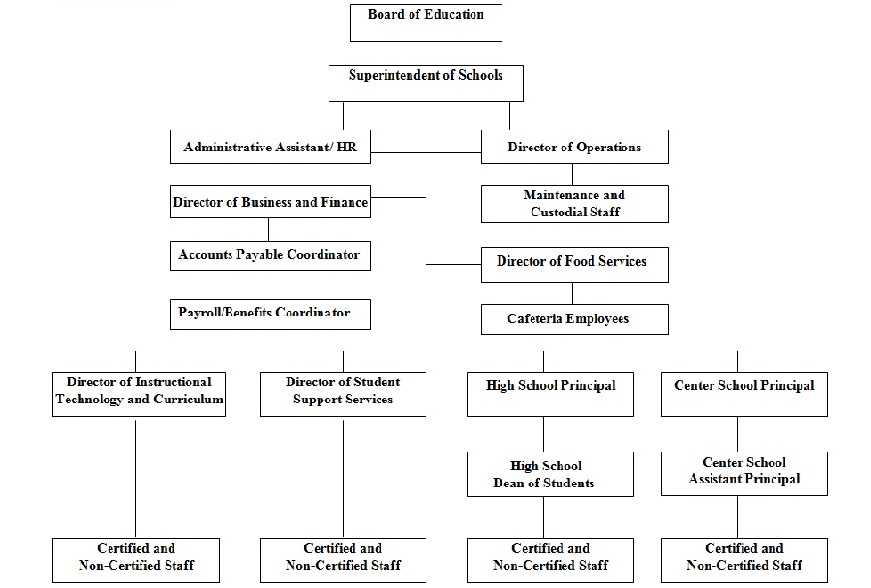
-
Administration
Job Descriptions
The Superintendent of Schools shall prepare and maintain job descriptions for all personnel. Such job descriptions will be kept in a separate manual or electronic format for that purpose.
Regulation adopted: November 8, 2018
BOLTON PUBLIC SCHOOLS
Bolton, Connecticut -
Administration
Superintendent of Schools
The Superintendent of Schools shall be appointed by a vote of the Board of Education.
The Superintendent serves as the Chief Executive Officer of the Board and has authority and responsibility for the supervision of the school system.
As the Chief Executive Officer, the Superintendent shall serve as the Board of Education's professional advisor and agent. In accordance with the policies of the Board and State Statutes, (s)he shall provide the professional leadership of public education in Bolton. The Superintendent shall be responsible for administration and supervision of the schools and all other activities under the control of the Board.
The Superintendent shall meet all of the certification requirements of the State of Connecticut for the position.
The Board of Education shall provide a written contract of employment which includes salary, benefits, and length of contract.
Each year, the Board of Education will evaluate the Superintendent in accordance with the guidelines and criteria mutually determined and agreed upon by both the Board and the Superintendent.
The Superintendent shall appoint all certified and non-certified personnel below the position of Assistant Principal.
10-157 Superintendents
Policy adopted: December 12, 2002
Policy revised: November 8, 2018
BOLTON PUBLIC SCHOOLS
Bolton, Connecticut
-
Administration
Uniform Treatment of Recruiters
Subject to the provisions of law, all recruiters, including commercial, military and nonmilitary concerns, recruiters representing institutions of higher education, and prospective employers shall be provided equal opportunities of access to students enrolled in the district's secondary school[s]. Access may be granted through programs conducted by the Guidance Department. Such programs may consist of career days, college fairs, individual school visitations, and in-school recruiting.
Except as provided below, military recruiters and institutions of higher education shall, upon request, be given access to the names, addresses, and telephone numbers of secondary school students.
On an annual basis, the school district will notify parents of secondary school students of their right to object to the disclosure of the student's name, address and telephone number to military recruiters or to an institution of higher education. If a secondary school student or the parent of a secondary school student objects in writing to the disclosure of a student's name, address or telephone number to a military recruiter or an institution of higher education, then the district shall not disclose the student's name, address or telephone number to a military recruiter or an institution of higher education. The objection shall remain in force until the district re-issues the annual notification referenced above, after which time the parents and/or secondary school student must inform the school district in writing again of their objection to the disclosure of the information described above.
Legal References:
Conn. Gen. Stat. §10-221b
No Child Left Behind Act, 20 U.S.C. § 7908
National Defense Authorization Act for Fiscal Year 2002, Pub. L. No. 107-107, 115 Stat. 1012.
Policy Adopted: November 8, 2018
BOLTON PUBLIC SCHOOLS
Bolton, Connecticut
-
Administration
Statement of Ethics for Administrators
The administrator acknowledges that the schools belong to the public they serve for the purpose of providing educational opportunities to all. The administrator recognizes that his/her actions will be viewed and appraised by the community, professional associates, and students. The administrator assumes responsibility for providing professional leadership in the school and community. This responsibility requires the administrator to maintain standards of exemplary professional conduct. To these ends, the administrator is guided by the Connecticut Code of Professional Responsibility for School Administrators and subscribes to the following statements of standards.
The educational administrator:
1. Makes the well-being of students the fundamental value of all decision making and actions.
2. Fulfills professional responsibilities with honesty and integrity.
3. Supports the principle of due process and protects the civil and human rights of all individuals.
4. Obeys local, state, and national laws and promotes the principles and ideals of democratic citizenship.
5. Implements the governing Board of Education's policies and administrative rules and regulations.
6. Pursues appropriate measures to correct those laws, policies, and regulations that are not consistent with sound educational goals.
7. Avoids using positions for personal gain.
8. Accepts academic degrees or professional certification only from duly accredited institutions.
9. Maintains the standards and seeks to improve the effectiveness of the profession through research and continuing professional development.
10. Honors all contracts until fulfillment, release, or dissolution mutually agreed upon by all parties to contract.
Legal Reference: Regulations of Connecticut State Agencies
10-154c-400b: Code of Professional Responsibility for School Administrators
Regulation approved: December 12, 2002
Regulation revised: November 8, 2018
BOLTON PUBLIC SCHOOLS
Bolton, Connecticut
-
Administration
Retention of Electronic Records and Information
I. POLICY
The Bolton Board of Education (the “Board”) complies with all state and federal laws and regulations regarding the retention, storage and destruction of electronic information and records. The Superintendent or designee shall be responsible for developing and implementing administrative regulations concerning the retention, storage, and destruction of electronic information and the dissemination of such administrative regulations to all school officials, employees, and individuals granted access to the computer systems and/or networks of the Bolton Public Schools (the “District”) and/or who send electronic messages as part of their work for the District. Collectively, all individuals granted access to the District’s computer systems are referred to as the “Users”.
II. USE OF ELECTRONIC MESSAGES AND ELECTRONIC COMMUNICATIONS
The Board has installed computers and a computer network(s), including Internet access and electronic messaging systems, on Board premises and may provide other electronic devices that can access the network(s) and/or have the ability to send and receive messages with an operating system or network communication framework. Devices include but are not limited to personal computing devices, cellular phones, Smartphones, network access devices, radios, personal cassette players, CD players, tablets, walkie-talkies, personal gaming systems, Bluetooth speakers, personal data assistants, and other electronic signaling devices. Electronic messaging systems include mobile, chat, and instant message; cloud collaboration platforms, including internal chat, peer-to-peer messaging systems, and draft email message transfer; and products that have the ability to create duration-based or subjective removal of content, such as Snapchat, and security focused platforms, such as Signal. The Board’s computers, computer networks, electronic devices, Internet access and electronic messaging systems are referred to collectively as "the computer systems" and are provided in order to enhance both the educational opportunities for our students and the business operations of the District.
Electronic messages sent by Users as part of their work and/or by using the District’s computer systems and/or network(s) are not private communications and are potentially subject to disclosure, regardless of whether the messages are sent using personal devices or the District’s computer systems. Users must understand that the Board has reserved the right to conduct monitoring of the District’s computer systems and may do so despite the assignment to individual Users of passwords for system security. Any password systems implemented by the District are designed solely to provide system security from unauthorized users, not to provide privacy to the individual system User.
The system's security aspects, message delete function and personal passwords may be bypassed for monitoring purposes. Therefore, Users must be aware that they should not have any expectation of personal privacy in the use of these computer systems. This provision applies to any and all uses of the District’s computer systems, including any incidental personal use permitted in accordance with the Board’s policy and regulations regarding computer use by Users.
Any retained messages may be retrieved as part of routine monitoring by the Board, an employee investigation, a search for documents pursuant to a Freedom of Information Act request, or a formal discovery process as part of litigation. Users should bear in mind that electronic messages may be retained at different locations within the computer network and that these messages are subject to retrieval, regardless of whether the User has deleted such messages from the User’s accounts. Consequently, Users should use discretion when using computers or other electronic technology to send, record or retain electronic messages and information.
III. RETENTION OF ELECTRONICALLY STORED INFORMATION
Electronically stored information on District computers or electronic communication systems shall be retained only as long as necessary. The same record retention policy that applies to paper records applies to electronically stored information, including electronic messages. Therefore, like paper records, the content and function of an electronic record, including electronic messages, determines the retention period for that document. The District will comply with all of the minimum standards set forth in the Municipal Records Retention Schedules, as issued by the Office of the Public Records Administrator for the State of Connecticut.
In addition to the retention guidelines established by the Board and used by District officials and employees, all District officials and employees have a duty to preserve all records and electronic information, including records and electronic information that might otherwise be deleted or destroyed, that relate to any matter that is currently in litigation or may be anticipated to involve future litigation.
Legal References:
Conn. Gen. Stat. §§ 1-200(5); 1-211; 1-213(b)(3)
Conn. Gen. Stat. § 7-109
Conn. Gen. Stat. § 11-8 et seq.
General Letters 96-2 and 2009-2 of the Public Records Administrator
Public Records Policy 01, Digital Imaging, of the Public Records Administrator (Aug. 2014)
Record Retention Schedules Towns, Municipalities and Boards of Education
Connecticut State Library, Office of the Public Records Administrator, Authorization for Disposal of Original (Non-Permanent) Paper Records Stored as Digital Images, Form RC-075.1 (revised 12/2021)
Frequently Asked Questions about E-mail, CT Public Records Administrator, available at Connecticut State Library
Policy adopted: November 8, 2018
Policy revised: January 13, 2022
Policy revised: January 12, 2023BOLTON PUBLIC SCHOOLS
Bolton, Connecticut -
Administrative Regulation
RETENTION OF ELECTRONIC RECORDS AND INFORMATION
I. RECORDS CUSTODIAN
These regulations are designed to assist in implementation of Board Policy 2410 regarding the retention of electronic records and information. These regulations supplement and do not replace District policy relating to education records.
The Superintendent of Schools shall designate a Records Custodian who will be responsible for implementation of District policies and regulations for the retention of records, including electronic messages and electronically stored information.
II. DEFINITIONS
A. Electronic messages include e-mail, fax, instant messaging, text messaging, and Web-based messaging services. Electronic messages may be transmitted by a variety of mediums, including computers and mobile computing devices. In addition to the body of the message, electronic messages also contain metadata, such as transactional information (e.g., date and time sent, sender/receiver) and may contain attachments such as calendars, directories, distribution lists, sound recordings, photographs, images, word-processing documents, spreadsheets, and other electronic documents.
B. Electronically stored information is information that is fixed in a tangible form and is stored in a medium from which it can be retrieved and examined. It can consist of writings, drawings, graphs, charts, photographs, sound recordings, images, and other data or data compilations stored in any medium from which information can be obtained into useable form.
C. Public records are any recorded data or information relating to the conduct of the public’s business prepared, owned, used, or received by a public agency, whether such data or information is handwritten, typed, tape-recorded, videotaped, printed, photostated, photographed or recorded by any method.
D. Digital imaging is the process of converting original records on paper or film into electronic images. The process typically requires a document scanner or digital camera, a computer and software to capture the image, and indexing of the digitized images.
E. Transitory correspondence consists of communication that does not relate to an individual’s job responsibilities or has a short term administrative value.
F. Routine correspondence consists of any communication that is part of or relates to commonplace tasks or duties within an office and is done at regular or specified intervals.
III. CLASSIFICATION OF ELECTRONIC MESSAGES
The same record retention policy that applies to paper records applies to electronically stored information, including electronic messages. Therefore, like paper records, the content and function of an electronic record, including electronic messages, determine the retention period for that document. The District will comply with all of the minimum standards set forth in the Municipal Records Retention Schedules, as issued by the Office of the Public Records Administrator for the State of Connecticut.
Users shall use the following steps in determining whether to maintain electronic messages and, if so, for how long:
Step 1: Determine whether the message is a public record or a non-record.
Step 2: If the message is a non-record, destroy at will (e.g., spam and unsolicited advertisements).
Step 3: If the message is a record, determine which records series the message belongs to, for example:
1. If the message is Transitory Correspondence, delete at will.
2. If the message is Routine Correspondence, retain for 2 years.
3. If the message is All Other Correspondence, retain for the equivalent records series.
Step 4: Maintain the messages for the required retention period under the equivalent records series.
IV. DIGITAL IMAGING OF PAPER/HARD COPY RECORDS
Paper records may be digitized and maintained as electronic records; however, in doing so, the District must ensure the authenticity, reliability, integrity and usability of the reformatted records. If the District uses a vendor for digital imaging services, the District remains responsible for ensuring compliance with this policy.
In its use of digital imaging, the District shall:
1. Establish and maintain a quality assurance process to ensure the creation of accurate and authentic digital images and accurate indexes and production metadata.
2. Create and maintain accurate and authentic digital images in accordance with accepted standards and best practices.
3. Create and maintain accurate indexes and production metadata to properly identify and retrieve digital images.
4. Store and protect digital images against file corruption, alteration, or deletion throughout the designated retention period.
5. Perform periodic backups of all digital images, associated indices, and production metadata and maintain a geographically remote offsite backup copy to enable recovery and access in the event of a wide-spread disaster or emergency.
6. Perform and certify annual tests of backup media to ensure all files have been backed up and are readable.
7. Migrate digital images, associated indexes, and production metadata to a newer media platform or file format as needed to ensure the content remains accessible.
8. Define and document the normal operations and use of the imaging technology and electronic content management system to ensure system trustworthiness.
If paper public records have been converted to digital images, the District shall retain and/or dispose of the original paper records pursuant to the following guidelines.
Permanent If records are required to be retained permanently or have been designated as archival, they may be digitally scanned and retained in an electronic format, but security copies of the records must be retained in a “human-readable” format, such as paper or microfilm. The Records Custodian must first verify with the Office of the Public Records Administrator for approval of the security copy storage format.
Less than These records may be transferred to a digital imaging format with
Permanent disposal of the original, paper records. To dispose of the original records following their digital imaging, the Records Custodian must first obtain prior authorization from the Public Records Administrator and State Archivist (using Form RC 075.1, available from the Office of the Public Records Administrator). Following destruction of the original records, the Records Custodian must document that the paper records were destroyed lawfully.
To dispose of digital images once the minimum retention period has expired, the Records Custodian shall obtain prior authorization from the Public Records Administrator and State Archivist. The District must document that the digital images were destroyed lawfully under the appropriate disposition authority. The District shall follow a destruction process by which content is systematically deleted with an audit trail that is legally admissible in court. Destruction should be documented by recording the date of destruction on the form “Records Disposition Authorization” and attaching any supporting documentation, or by following the District’s process for documenting document destruction. After disposing of the records in accordance with these procedures, the Records Custodian will follow all other steps required by the Office of the Public Records Administrator.
V. RETENTION OF ELECTRONIC RECORDS
Electronic messages and electronically stored information will be archived by the District for their required retention period using method(s) approved by the Records Custodian, which may include the following:
1. Print message or record and store in appropriate hard copy file.
2. Place in computer folders and save on hard drive.
3. Save to a removable disk which is then stored in an appropriate location.
4. Transfer to an automated records management software application.
5. Manage at the server by an automated classification system.
The Records Custodian will be responsible for working with the District Systems Administrator to implement a schedule and system for reviewing electronically stored information. This review shall occur at least annually. No system wide process for automatic deletion of electronic information will be implemented without notice to any individual who may have such information and each such individual will verify that they have reviewed and archived information that must be retained. Following this review, all electronic messages and/or electronically stored information that have not been archived according to District policies and procedures shall be designated for deletion or archiving, and the affected District Users will be notified about the procedures to be followed to implement this process. The Records Custodian or designee shall follow up with notified Users to ensure compliance.
Additionally, the Records Custodian, working with the District Systems Administrator, shall ensure than any process for automatic deletion of electronic information from the system will not delete information stored in folders and/or system locations that have been designated as appropriate for archiving electronically stored information.
Legal References:
Conn. Gen. Stat. §§ 1-200(5); 1-211; 1-213(b)(3)
Conn. Gen. Stat. § 7-109
Conn. Gen. Stat. § 11-8 et seq.
General Letters 96-2 and 2009-2 of the Public Records Administrator
Public Records Policy 02, Digital Imaging, of the Public Records Administrator (Aug.
2014)
Record Retention Schedules Towns, Municipalities and Boards of Education
Connecticut State Library, Office of the Public Records Administrator, Authorization for Disposal of Original (Non-Permanent) Paper Records Stored as Digital Images, Form RC-075.1 (revised 12/2021)
Frequently Asked Questions about E-mail, CT Public Records Administrator, available at https://ctstatelibrary.org/wp-content/uploads/2015/05/EmailGuidelines.pdf.
Regulation adopted: November 8, 2018
Regulation revised: January 13, 2022
Regulation revised: January 12, 2023BOLTON PUBLIC SCHOOLS
Bolton, Connecticut -
Administration
Holds on Destruction of Records (Litigation)
The Board of Education (the "Board") complies with all state and federal regulations regarding the retention, storage and destruction of electronic information and paper records. The Superintendent or his/her designee shall be responsible for implementing administrative regulations concerning the placing of a "hold" on electronic information and paper records that may reasonably be anticipated to be subject to discovery in the course of litigation.
All school officials and employees have a duty to preserve all paper records and electronic information, including records and electronic information that might otherwise be deleted or destroyed, that relate to any matter that is currently in litigation or may be anticipated to involve future litigation.
The Superintendent or his/her designee shall be responsible for developing and implementing administrative regulations to preserve records, including e-mails and electronically stored information, that could potentially be related to any matter that is currently in litigation or may be anticipated to result in future litigation. Such regulations shall identify those individuals responsible for identifying those matters for which records must be preserved as well as developing procedures, with the help of technical staff, for the preservation of electronically stored information.
Legal References:
Rules 34 and 45 of the Federal Rules of Civil Procedure
General Letter 2009-2 of the Public Records Administrator Record Retention Schedules Towns, Municipalities and Boards of Education
ADOPTED: November 8, 2018
REVISED:_________
-
Administration
Holds on the Destruction of Electronic Information and Paper Records
I. RECORDS CUSTODIAN
These regulations are designed to assist in implementation of Board Policy 2420 regarding holds on the destruction of electronic information and paper records. The Superintendent of Schools shall designate a Records Custodian who will be responsible for implementation of District policies and regulations for the preservation of paper records and electronically stored information, including e-mails.
II. HOLDS ON THE DESTRUCTION OF ELECTRONIC INFORMATION AND PAPER RECORDS
Upon receipt of notice that the District is involved in litigation as a party to a lawsuit, the District is issued a subpoena by a party to a lawsuit in which it is not a party, or if the District receives information that would lead a reasonable person to anticipate the possibility of litigation, the Records Custodian is to immediately take steps to ensure that any paper records and electronically stored information that could be related to the litigation or potential litigation are preserved from deletion or destruction. Actions to preserve records and electronically stored information shall include, but are not limited to, the postponing or canceling of any automatic deletion of electronically stored information until relevant information and documents can be identified and stored, notification to employees of a "litigation hold" to prevent the deletion and destruction of documents that might be related to the litigation or potential litigation, and the identification of documents and information that are subject to preservation. This litigation hold triggers the duty to preserve documents, such as transitory messages, that otherwise could be deleted under the district's record retention policy.
The Records Custodian shall issue a "litigation hold" memorandum that specifically describes the types of documents and information that must be preserved and describes how those materials are to be identified, maintained and stored. The memorandum shall specifically state that the duty of preservation is ongoing and that it is the responsibility of employees to continue to identify and preserve relevant documents until notified via a subsequent memorandum that the litigation hold is no longer in effect. All employees who are sent a "litigation hold" memorandum are to acknowledge receipt and understanding of the memorandum in writing, which may be in the form of an e-mail response. A copy of any "litigation hold" memorandum shall be sent to the District IT department.
The Records Custodian shall be responsible for the collection and coordination of the retention of documents that are subject to the litigation hold, including electronically stored information. He/she shall work with the District's IT personnel to ensure compliance with the litigation hold. Specifically, the Records Custodian shall determine the types of electronically stored information that exist and where that information is maintained, identify where both identified paper documents and electronically stored information will be stored, and implement procedures to ensure that District employees are complying with the litigation hold. No system wide process for automatic deletion of electronic information will be implemented while a litigation hold is in effect without prior notice to the Records Custodian and verification by the Records Custodian that the deletion process will not destroy documents or information that is subject to a litigation hold. The Records Custodian may need to periodically reissue the "litigation hold" memorandum and will ensure that the "litigation hold" memorandum is provided to new employees who may have access to relevant information. Finally, the Records Custodian shall ensure that all steps taken by the District to identify and preserve relevant information are documented.
Legal References:
General Letters 96-2, 2001-1, 2009-2 of the Public Records Administrator
Record Retention Schedules Towns, Municipalities and Boards of Education
Rules 34 and 45 of the Federal Rules of Civil Procedure
Silvestri v. General Motors Corp., 271 F.3d 583 (4th Cir. 2001)
ADOPTED: November 8, 2018________
REVISED:_________
3000 - Business: Non-instructional Series
-
Budget/Budgeting System
Business non-Instruction Series
3160 – Board Budget Procedures and Line Item Transfers
3240 – Tuition Fees
3260 – Sales and Disposal of Books, Equipment and Supplies
3280 – Gifts, Grants and Bequests
3300 – Purchasing
3453 – Activity Funds Management
3541 – Transportation
3542.31 – Free or Reduced-Price Lunches (National School Lunch Program)
2542.33 – Food Sales Other than National School Lunch Program
3543 – Concept and Roles in Planning for Educational Facilities
-
Business/Non-Instructional Operations
BOARD BUDGET PROCEDURES AND LINE ITEM TRANSFERS
In accordance with Conn. Gen. Stat. § 10-222, the Board of Education shall prepare an itemized estimate of its budget each year for submission to the fiscal authority (i.e. Board of Finance, Board of Selectmen, Town Council, or other appropriating municipal authority) (the "Fiscal Authority") for review and appropriation. For purposes of this policy, an itemized estimate means an estimate in which the following broad budgetary categories listed below are divided into one or more budgetary category line items.
Salaries
Employee Benefits
Purchased Services
Tuition
Supplies
Property
Operations and Maintenance
Other
The itemized estimate provided to the Fiscal Authority is referred to herein as the "Itemized Estimate".
The Board of Education shall review the recommendations and suggestions made by the Fiscal Authority as to how it may consolidate non-educational services and realize financial efficiencies. If the Board rejects such suggestions and recommendations it shall provide the Fiscal Authority a written explanation of the reason for the rejection.
Following the annual appropriation, the Board of Education shall meet and revise the Itemized Estimate, if necessary, and adopt a final appropriated budget for the year. Line items in the budget may be allocated more specifically by the Superintendent or his/her designee in the development, administration, and monitoring of the budget.
The Superintendent and/or the Superintendent's designee shall be responsible for administering and monitoring the budget through the course of the year. The Superintendent or the Superintendent's designee shall maintain a system of appropriate expenditures and encumbrance accounting that is organized to conform with the requirements for State and Federal Accounting Reports. A monthly report shall be prepared in the same format as the Itemized Estimate by program showing for each budgetary category line item the appropriated budget amount, expenditure to date, projected expenditures, difference between the projected expenditures and the appropriation, and general comments indicating the reasons for the difference.
Such budget report shall be presented to the Board of Education at the regularly scheduled meeting in the month following the period for which such report is prepared.
Based on expenditures and budget projections, with such budget reports, the Superintendent shall recommend to the Board of Education transfers from one of the broad budgetary categories in the Itemized Estimate (as set forth above) to another as needed.
The Superintendent is authorized to make such transfers as necessary if the urgent need for transfer prevents the Board of Education from meeting in a timely fashion to consider the transfer, provided that such transfers by the Superintendent shall not exceed 0.2% of the overall budget. Transfers between the broad budgetary categories in the Itemized Estimate made in such instances shall be announced at the next regularly scheduled meeting of the Board of Education and a written explanation of such transfer shall be provided to the legislative body of the municipality or, in a municipality where the legislative body is a town meeting, to the board of selectmen and transfers subsequently ratified by the Board at any such meeting shall not be counted in the limitation on the authority of the Superintendent to make transfers.
The Board of Education shall not expend more than the amount of the appropriation and the amount of money received from other sources for school purposes. If any occasion arises whereby additional funds are needed by Board of Education, the Chairperson of the Board shall notify the Fiscal Authority and submit a request for such necessary additional funds. No additional funds shall be expended until such supplemental appropriation is granted and no supplemental expenditures shall be made in excess of those so authorized.
Legal Reference:
Conn. Gen. Stat. § 10-221
Conn. Gen. Stat. § 10-222
Policy adopted: June 12, 2003
Policy revised: April 9, 2015
Policy revised: January 10, 2019
Policy revised: December 12, 2019
Policy revised: December 12, 2024
BOLTON PUBLIC SCHOOLS
Bolton, Connecticut
-
General Provisions:
The following terms and conditions are to be used as guidelines when determining eligibility of a non-resident student to enroll or continue enrollment in the Bolton Public Schools except that this policy shall not be applied to decisions about enrollment of students who reside in a town that has a designated high school agreement with the Bolton Public Schools or to non-resident students who are otherwise entitled to attend Bolton Public Schools in accordance with law.
A. The Superintendent or his/her designee may approve the enrollment or continuation of enrollment of a non-resident student if the Superintendent determines that conditions (such as class size, availability of resources, and other considerations) permit such enrollment.
B. The Superintendent or his/her designee shall not hire additional staff to permit enrollment or continuation of enrollment for a non-resident student under this policy.
C. The Superintendent or his/her designee shall make the decision about class Assignment.
D. The decision to permit non-resident enrollment shall be for one school year or less, but may be extended from year to year at the discretion of the Superintendent or his/her designee. Such extension decisions shall be made at least on an annual basis.
E. This policy does not obligate the Bolton Board of Education to provide special education programs or services or create unique programs for students. If a non-resident student is enrolled or continued in enrollment in the Bolton Public Schools and such student is eligible for services under the Individuals with Disabilities Education Act ("IDEA"), the Bolton Board of Education shall not act as the local education agency for such child. In instances where special or additional services are provided for a non-resident student, a supplemental tuition or fee may be charged based upon the actual costs associated with providing the special or additional services.
F. Application for initial enrollment shall be made in writing on a form supplied by the Superintendent or his/her designee.
G. A student shall apply for enrollment each school year, in writing, on a form supplied by the Superintendent or his/her designee.
H. No student applying for enrollment pursuant to subsections F or G, above, shall be enrolled in the Bolton Public Schools until the Board has received tuition payment on behalf of such student in accordance with Section II, below.
I. At the discretion of the Superintendent or his/her designee, the candidate for initial or continued enrollment shall be interviewed by the principal or assistant principal of the school at which enrollment or continued enrollment is sought.
J. For initial enrollment, the non-resident student's immediate past principal or responsible administrator must make a recommendation on behalf of the child, attesting to his/her good citizenship, in order for the student to be eligible for initial or continued enrollment.
K. All non-resident students or their parents or guardians, or the school district of residence, shall provide necessary transportation to and from school.
L. A non-resident student's continuation in the Bolton Public Schools will be contingent upon the student's compliance with all applicable rules and regulations of the Bolton Board of Education and the individual school, satisfactory attendance and academic progress, and the availability of staff and school resources. The Superintendent or his/her designee may terminate the non-resident student's enrollment at any time if, in his or her opinion, continuation is not in the best interest of the school system or the student. Only non-resident students who meet the criteria set forth in this policy may enroll or continue in enrollment in the Bolton Public Schools.
II. Tuition and Fees:
A. The annual tuition fee for grade K-12 regular program students will be calculated as follows:
1. The base rate will be 100% of the most current actual per-pupil cost as reported by the CPSE (Connecticut Public School Expenditures) data on net current expenditure per pupil.
B. Tuition payments will be made in four installments on the following schedule: September 1, or the first day of school, whichever comes first; November 1; February 1; April 1.
C. If a non-resident special education student's IEP includes provisions requiring additional expenditures, those costs will be added to the student's yearly tuition fee.
D. A tuition charge for students enrolled or withdrawn at times other than the beginning and end of the school year will be determined on a pro rata basis.
III. Waiver of Tuition and Fees for Certain Students
Non-resident students may be allowed to attend a local school without tuition upon the approval of the Superintendent of Schools following written parental request when:
A. A family moves from the district after April 1st of the current school year; or
B. A family residing outside the district demonstrates firm plans to move into the district within the current school year. The parent or legal guardian must sign an agreement to make tuition payments on November 1, February 1, April 1 and June 1 as applicable, if residency is not achieved by the stated date, in order for the child or children to continue attending the Bolton schools. If a non-resident special education student's IEP includes provisions requiring additional expenditures, those costs will be added to the student's quarterly tuition fee.
C. Non-resident students may be allowed to attend a local school with a tuition adjustment upon the recommendation of the Superintendent, and approval of the Board of Education, following written parental request if the Superintendent or his/her designee makes a finding that extraordinary circumstance(s) regarding the child and/or their parent(s) support a tuition adjustment.
IV. Tuition and Fees for Children of Non-resident Staff
A. Children of non-resident staff may be allowed to attend the Bolton Public Schools with the written approval of the Superintendent of Schools following a written request. The guidelines in Sections I and II above shall apply to such requests except for the payment terms and schedule described below.
1. The annual tuition for these students will be based on the staff member's length of continuous service in the Bolton School System.
a. 0-5 years of completed service - the staff member will be charged 50 percent of the tuition rate established under Section II.
b. 5-10 years of completed service - the staff member will be charged 25 percent of the tuition rate established tuition rate established under Section II
c. 10 or more years of completed service - the staff member will be charged 10 percent of the tuition rate established under Section II.
2. Tuition payment will be made on a payroll deduction basis.
3. If special education services are required, and the student's IEP includes provisions requiring additional expenditures, the staff member shall be charged those additional costs as fees in addition to the tuition charge without any proration or reduction for years of service.
Legal Reference: Connecticut General Statutes
10-35 Notice of discontinuance of high school service to nonresidents.
10-220(a) Duties of boards of education.
Policy Adopted: March 1, 2007
Policy Revised: November 12, 2009
Policy Revised: March 14, 2019
BOLTON PUBLIC SCHOOLS
Bolton, Connecticut
-
Business/Non-Instructional Operations
Disposal of Obsolete or Surplus Equipment/Materials
No obsolete or surplus equipment or materials will be discarded or disposed of by a teacher or other school employee. Such items will be set aside and reported to the principal. The principal or his/her designee will prepare lists of such equipment and materials annually and forward such list to the Superintendent of Schools or his/her designee.
The Superintendent shall be authorized to dispose, reuse, and/or recycle excess, obsolete, or scrap furnishings, materials, and equipment. Obsolete or surplus equipment and/or materials shall be traded in, donated, or sold only upon the approval of the Superintendent of Schools or his/her designee.
Prior to making a donation or conducting a public sale, and after determining there is no appropriate use of such equipment or materials within the school system, the Superintendent of Schools or his/her designee shall notify the Town Administrative Officer of the Town of the equipment or materials approved for disposal, and shall request a written response within 15 days indicating the Town's interest, if any, in such equipment or materials. Any transfer costs shall be borne by the recipient of the surplus or obsolete equipment or materials.
Obsolete or surplus equipment or materials not retained within the school system or transferred to the Town may be donated or sold to the general public in a manner determined by the Superintendent of Schools to be in the best interests of the school district. Such equipment or materials shall not be donated to an employee of the school district and shall only be sold to an employee of the school district if the equipment or material is offered for sale to the general public. Under those circumstances, the employee shall receive an equal, but not preferential, opportunity to purchase the equipment or materials.
If the equipment and materials cannot be donated or sold, the Superintendent of Schools or his/her designee may dispose of such items.
Policy approved: June 12, 2003
Policy revised: January 10, 2019
BOLTON PUBLIC SCHOOLS
Bolton, Connecticut
-
Business/Non-Instructional Operations
Gifts, Grants, and Bequests
Gifts of personal property to the district, including monetary donations, that meet criteria set forth in the administrative regulations established in accordance with this policy are welcomed and encouraged.
The Superintendent of Schools shall develop administrative regulations governing the acceptance of gifts and the procedure for examining and evaluating offers of gifts to the district.
The school principal may approve gifts to a school that are valued at $500 or under and meet criteria established by the administrative regulations established in accordance with this policy. Only the Superintendent of Schools may accept gifts that are valued over $500 and meet criteria established by the administrative regulations established in accordance with this policy.
The Superintendent, in consultation with the principals and considering the wishes of the donor, may determine the school(s), program(s) or facility(ies) to which the gift shall go if it is valued at more than $500. The Superintendent shall inform the Board of Education of any gift valued at more than $500 that has been accepted by the district.
If the Superintendent determines that a gift fails to meet the criteria established in the administrative regulations, the Superintendent shall inform the Board of Education. Any gift not accepted pursuant to this policy shall be returned to the donor or the donor's estate, with a statement indicating the reason for rejection of such gift.
Legal Reference:
Conn. Gen. Stat. § 10-237
Policy adopted: June 12, 2003
Policy revised: January 10, 2019
BOLTON PUBLIC SCHOOLS
Bolton, Connecticut
3280
Business/Non-Instructional Operations
Gifts, Grants and Bequests
Any gift presented to the school district must be accompanied by a letter from the donor identifying the subject and purpose of the gift and any restrictions that may apply for official action and recognition by the Board of Education.
To be accepted, a gift must satisfy the following criteria:
1. Have a purpose consistent with those of the school district.
2. Be offered by a donor acceptable to the Board of Education.
3. Would not bring undesirable or hidden costs to the school district.
4. Will place no restrictions on the school program.
5. Will be suitable for use in meeting the instructional needs of the school, if the gift is technology material, such as computers and/or software.
6. Will not be inappropriate or harmful to the best education of students.
7. Will not imply endorsement of any business or product.
8. Will not be in conflict with any provision of the school code or public law.
All gifts, grants and bequests shall become school district property.
A letter of appreciation signed by the Superintendent of Schools shall be sent to a donor.
Any gift not accepted pursuant to this policy shall be returned to the donor or the donor's estate within 60 days, with a statement indicating the reason for rejection of such gift.
Grants from Private Sources
Staff members will follow the steps listed below to develop proposals for projects to be funded by outside sources, to receive approval for project proposals and to administer projects funded by outside sources.
Proposal Development and Approval
1. Staff members will review preliminary plans for a proposal with their immediate supervisor, whose responsibilities may be affected by receipt of the grant and the Director of Curriculum and Instruction.
2. If preliminary plans are approved, the Director of Curriculum and Instruction will provide the appropriate guidelines.
3. The staff member will develop the proposal and submit the proposal along with supporting data and documents to the Director of Curriculum and Instruction for review and approval.
4. The Director of Curriculum of Instruction will submit any proposal related to the instructional program to the Superintendent for review and verification.
5. After review and verification of the proposal, the proposal will be submitted, including proposed method of funding, from the Superintendent's Office.
6. The Superintendent will share approved projects with the Board.
Regulation approved: June 12, 2003
Regulation revised: January 10, 2019
BOLTON PUBLIC SCHOOLS
Bolton, Connecticut
-
Business/Non-Instructional Operations
Purchasing
I. REQUIREMENTS APPLICABLE TO PURCHASES OF ALL GOODS AND SERVICES
A. Definition
For the purposes of this policy:
1. "Goods or service" includes, but is not limited to, portable classrooms, motor vehicles or materials and equipment, such as telephone systems, computers and copy machines.
2. "General services" include all services which result in a measurable end product that can be defined by bid specifications and all services used in the process of building or altering property (excluding architectural, engineering and other design services).
3. "Property" means real property or personal property.
B. Consultation with Municipality Regarding Contracts for Goods or Services, Including Insurance and Payroll Software
After going out to bid for a good or service and receiving submissions, if the local municipality uses such good or service, the Bolton Board of Education (the "Board") shall consult with the legislative body of the municipality, or in the case of a municipality for which the legislative body is a town meeting or representative town meeting, the board of selectmen, and, if the equivalent level of such good or service is provided by the municipality through a municipal contract for a lower cost than the lowest qualified bid submission received by the Board, the Board will consider a cooperative agreement with the local municipality for the provision of such good or service.Further, the Board will consult with the local municipality's legislative body, or in the case of a municipality for which the legislative body is a town meeting or representative town meeting, the board of selectmen, prior to purchasing payroll processing or accounts payable software systems to determine whether such systems may be purchased or shared on a regional basis.
When possible, the Board will consult with the local municipality's legislative body, or in the case of a municipality for which the legislative body is a town meeting or representative town meeting, the board of selectmen, regarding the joint purchasing of property insurance, casualty insurance, and workers' compensation insurance.
II. COMPETITIVE BIDDING PROCESS
A. Purchases Requiring Competitive Bidding Process
Purchases of goods or general services, including high technology equipment, expected to involve an expenditure of $25,000 or more must be made by sealed competitive bid. As set forth below, such purchases in the amount of at least $5,000, but less than $25,000, may be awarded by the Superintendent or his/her designee. Such purchases in the amount of $25,000 or more must be awarded by the Board.
B. Bid Specifications
When competitive bidding is required, all requirements, terms and conditions describing and detailing the goods or general services to be purchased must be included in the bid specifications. The bid specifications should define the requirements for quality of materials, equipment and/or services to be procured, and as such, they should clearly and accurately reflect the required characteristics of the goods and services. The bid specifications should also include any vendor or contractor qualification requirements, a school district contact person responsible for all communications with prospective bidders, a requirement that all communications between the school district contact person and prospective bidders be in writing and, if the purchase will require entering into a contract, a draft contract whenever possible.
The Superintendent of Schools or his/her designee shall develop the proposed bid specifications and other bid documents.
C. Advertising
A legal notice inviting sealed bids shall be published by the Superintendent of Schools or his/her designee at least once in a daily newspaper in the local municipality and on the Board's website. At least five (5) calendar days must intervene between the date of the last newspaper or website publication and the final date for submitting bids. The notice shall contain a general description of the goods or services being bid, the school district contact person and the day, hour and place of the bid opening and may contain other information relating to the bid including, but not limited to, where and when bid packages may be obtained.
D. Bid Openings and Awards
All bids, and bid security if applicable, must be submitted to the Superintendent of Schools or his/her designee in sealed envelopes and show on the face of the envelopes the bid number, the title of the bid and the bidder's name. All envelopes will be date stamped as received.
All bids shall be opened in public and read aloud at the time stated in the legal notice. No bids shall be accepted, or opened, that were not submitted in compliance with the procedures set forth in the notice advertising the bid.
Within a reasonable time following the bid opening, the Superintendent of Schools or his/her designee will tabulate and analyze the bids. For contracts of $25,000 or more, the Board shall, subject to the right of rejection, award the bid to the Lowest Responsible Qualified Bidder, as defined below.
A record of all bids submitted, giving the names of the bidders, the amounts of the bids and indicating the successful bidder, shall be preserved by the Superintendent of Schools or his/her designee in accordance with State law.
E. Bid Security
When, in the judgment of the Superintendent of Schools or his/her designee, bid security is advisable, all bids must be accompanied by security in one of the following forms - certified check, cashier's check, personal money order, letter of credit or bid bond. The requirement for, and the amount of, the security must be set forth in the bid advertisement. All security presented must show the "Town of Bolton" as the payee.
F. Requirements Governing Bid Awards
The award shall be made to the bidder whose bid meets the requirements, terms and conditions contained in the bid specifications and is the lowest among those bidders possessing the skill, ability and integrity necessary for faithful performance of the work based on objective criteria considering past performance and financial responsibility (the "Lowest Responsible Qualified Bidder"), and after consideration of a cooperative agreement with the municipality as described in Section I.B, above.
In determining the Lowest Responsible Qualified Bidder the following criteria will be considered, as applicable:
(1) The ability and capacity of the bidder to perform the work based on an evaluation of the character, integrity, reputation and experience of the bidder. Consideration shall be given to previous work performed by the bidder for the Board or for other agencies, including the quality and degree of satisfaction with the work performed.
(2) The financial resources of the bidder and the bidder's ability to secure any required bonds and/or insurance.
(3) Compliance by the bidder with all applicable federal, state and local laws, including any licensing requirements.
(4) Delivery or completion time.
(5) Cost.
(6) Involvement in litigation.
Should a situation arise where it is impossible to distinguish between two bidders to identify the Lowest Responsible Qualified Bidder, and one of the bidders has its principal place of business located within the Town of Bolton, the award will be made to the local bidder.
G. Rejection of Bids
The Superintendent of Schools or designee has the right to reject any and all bids in whole or in part. Any or all bids may be rejected if there is any reason to believe that
collusion exists among the bidders. Individual bids may be rejected for irregularities of any kind, including, without limitation, alteration of form, additions not called for, conditional bids, incomplete bids and unexplained erasures. The Superintendent of Schools or his/her designee retains the right to waive any formality or procedural irregularities in the bids received. Nothing in this Section should be construed to limit in any way the right of the Superintendent of Schools or his/her designee to reject any and all bids.
H. Advisement of Bid Award
Upon acceptance of the Lowest Responsible Qualified Bidder, a letter will be sent to the successful bidder(s) announcing the award of the bid. All unsuccessful bidders will be sent a letter notifying them that they were not selected.
III. COMPETITIVE QUOTATION PROCESS
A. Purchases Requiring Competitive Quotation Process
Price quotations should be requested for all purchases of goods or general services, including high technology equipment, expected to involve an expenditure of at least $5,000, but less than $25,000. Purchases of goods or services which involve an expenditure of less than $5,000 may be made directly, without regard to any competitive bid or quotation process. Waivers from the quotation process are available for the same reasons that Waivers are available from the bidding process. (See Section V.)
B. Process for Obtaining Quotations
Generally quotations, either oral or written, should be solicited by the Superintendent of Schools or his/her designee from at least three (3) vendors or obtained from current catalogues or price sheets. The refusal of an otherwise valid supplier to quote shall qualify as a quotation. The quotation process does not require a public opening, and the Superintendent of Schools or his/her designee may send requests to a limited number of selected vendors. However, vendors must furnish all of the necessary information to the Superintendent of Schools or his/her designee by the specified date.
For purchases of more than $5,000 and up to $12,500 at least three (3) oral quotes shall be solicited if the nature of the commodity or service permits effective competitive pricing and if possible, feasible, and to the advantage of the district.
For purchases of more than $12,500 and up to $25,000 at least three (3) written quotes shall be solicited if the nature of the commodity or service permits effective competitive pricing and if possible, feasible, and to the advantage of the district.
The purchase shall be awarded to the provider whose proposal is deemed to best provide the good and/or services desired, taking into account cost and the project requirements, and after consideration of a cooperative agreement with the municipality as described in Section I.B, above.
IV. COMPETITIVE PROPOSAL PROCESS FOR SPECIAL OR PROFESSIONAL SERVICES
A. Purchases Requiring Competitive Proposal Process
Purchases of Special or Professional Services may be made by competitive proposal should the situation warrant if the purchase exceeds the monetary thresholds set forth below. Special or Professional Services involve the furnishing of judgment, expertise, advice or effort by persons other than Board employees, and not involving the delivery of a specific end product that is defined by bid specifications. Examples of Professional Services include, but are not limited to, in-service instructional leaders, pupil services, special education evaluations, interpreters, tutors, computer programmers, architects, auditors, attorneys, instructional consultants, and temporary agencies. Examples of Special Services include, but are not limited to, repair services for Board property, equipment and vehicles where the nature of the repair cannot be defined in advance by bid specifications and the professional expertise of the service provider is critical. Waivers from the proposal process are available for the same reasons that Waivers are available from the bidding process. (See Section V.) Funds must be available in the proper account in order to begin development of a Request for Proposals ("RFP").
Purchases of Special or Professional Services that are expected to be less than $12,500 shall be made directly by the Superintendent of Schools or his/her designee, without regard to a competitive proposal process.
B. Informal Competitive Proposal Process ($12,500 to $25,000)
Purchases of Special or Professional Services for at least $12,500, but less than $25,000, shall be based upon a reasonable and documented attempt to solicit proposals. Where possible, proposals should be solicited from at least three (3) potential service providers. The refusal to submit a proposal from an otherwise valid provider shall qualify as a proposal. The process shall be documented in writing by the Superintendent of Schools or his/her designee. If a single reasonable source exists for the service, this fact shall be documented in writing.
An evaluation of the proposals received will be made by the Superintendent of Schools or his/her designee. The Superintendent or his/her designee shall award the contract to the service provider whose proposal is deemed to best provide the services desired, taking into account cost and the project requirements.
A record of all proposals submitted, giving the names of the service providers, the amount of the proposal and indicating the successful provider, shall be preserved by the Superintendent of Schools or his/her designee in accordance with State law.
C. Formal Competitive Proposal Process ($25,000 or more)
Request for Proposals for Purchases of Special or Professional Services for $25,000 or more shall be prepared by the Superintendent or his/her designee. All requirements, terms and conditions, including provider qualifications, should be included in the RFP, as well as a draft contract whenever possible. The award of any such contracts for $25,000 or more shall be approved by the Board.
The Superintendent of Schools or his/her designee will arrange to have a legal notice requesting proposals published in a local newspaper and on the Board's website at least ten (10) business days prior to the deadline for submitting proposals. Whenever the Superintendent or his/her designee determines that the service requested is so specialized that few appropriate providers can reasonably be expected to respond to the notice, the Superintendent may substitute another means of notifying potential providers of the RFP in lieu of such newspaper and website notice. Any advertisement or other notice of the RFP shall include the general description of the services sought and the location where RFPs may be obtained.
Where possible, proposals should be solicited from at least three (3) potential service providers. The refusal to submit a proposal from an otherwise valid provider shall qualify as a proposal. The process shall be documented in writing by the Superintendent of Schools or his/her designee. If a single reasonable source exists for the service, this fact shall be documented in writing.
An evaluation of the proposals will be made by the Superintendent of Schools or his/her designee. The contract shall be awarded to the service provider whose proposal is deemed to best provide the services desired, taking into account cost and the requirements, terms and conditions contained in the RFP.
A record of all proposals submitted, giving the names of the service providers, the amount of the proposal and indicating the successful provider, shall be preserved by the Superintendent of Schools or his/her designee in accordance with State law.
V. WAIVERS
In certain situations the bidding, quotation, and proposal processes described above may be waived even though the estimated cost exceeds the dollar threshold established by the Board. The formal processes may be waived for any of the following reasons:
(1) Only one (1) reasonable or qualified source can be identified. This shall include situations such as the purchase of copyrighted materials and textbooks.
(2) Time is a critical factor, and taking the time necessary to comply with the formal process would not be in the best interests of the school district.
(3) In the opinion of the Superintendent or his/her designee, an emergency requires the purchase of goods or services to avoid injury or damage to human life or property.
(4) A special source, including but not limited to a sale, purchasing plan, government discount or trade-in allowance, will supply a lower cost than that which would result from a bid process.
(5) A formal process would result in substantially higher costs to the school district, or inefficient use of personnel, or cause substantial disruption of school district operations.
(6) Prices of goods or services are subject to specific federal or state competitive bidding requirements, including, but not limited to, "school building projects" as defined in the Connecticut General Statutes.
(7) Regional or cooperative purchases.
(8) Cooperative agreement with the local municipality.
(9) Services requiring specific expertise including, but not limited to, consultants, specialists, legal services, and architectural services.
For a requesting administrator to obtain a Waiver, the requesting administrator must make a written request to the Superintendent of Schools or his/her designee. The Waiver must bear the signature of the requesting administrator and state the reason(s) for requesting the Waiver. Upon receipt of such request, the Superintendent of Schools or his/her designee will promptly notify the requesting administrator if such Waiver has been granted.
In addition, the Superintendent of Schools or his/her designee, in his/her sole determination, may grant a Waiver for any of the above-listed reasons. Upon granting such a Waiver, the Superintendent of Schools or his/her designee must, in writing, state the reason(s) for granting such Waiver.
VI. PROCUREMENT OF PROPERTY AND SERVICES UNDER A FEDERAL AWARD
When procuring property and/or services under a Federal award, the Board will comply with relevant regulations in the Code of Federal Regulations, as described in 2 C.F.R. § 200.318 through 2 C.F.R. § 200.327, as amended from time to time, to the extent it is required to do so. See Appendix A.
VII. AUDITS
The Board may periodically engage an independent audit firm to review the purchasing procedures outlined in this policy.
Legal References:
State Law:
Conn. Gen. Stat. §10-241c Local board of education to consult with municipality re joint purchasing of property insurance, casualty insurance and workers' compensation insurance.
Conn. Gen. Stat. §10-241d Local board of education consultation with municipality re goods and services. Cooperative arrangements.
Conn. Gen. Stat. §10-241e Local board of education consultation with municipality prior to purchase of payroll processing or accounts payable software program.
Federal Law:
2 C.F.R. § 200.317 through 2 § C.F.R. 200.327.
2 C.F.R. § 200.81 (definition of property).
Policy adopted: January 10, 2019
Policy revised: January 13, 2022BOLTON PUBLIC SCHOOLS
Bolton, Connecticut -
-
Business/Non-Instructional Operations
School Activity Funds
The Superintendent or his/her designee may establish school activity funds to handle any of the following: 1) the finances of that part of the cost for the school lunch program that is not provided by local appropriations; 2) the finances of that part of the cost of the driver education program that is not provided by local appropriations; 3) such funds of schools and school organizations as the Superintendent or his/her designee may determine to be in the best interest of the school district (which funds may include amounts received as gifts or donations).
The Superintendent or his/her designee shall designate a person to serve as treasurer of any school activity fund. Such treasurer shall be bonded and shall keep separate accounts for each school activity fund. The treasurer may expend monies from the school activity fund only to the extent such expenses are in furtherance of the stated purposes of the school activity fund, and subject to any restrictions imposed by the Superintendent or his/her designee at the time the school activity fund is established or subsequently. The control of school funds and funds of any school organizations shall remain in the name of the respective schools and organizations.
The accounts of any school activity fund shall be considered town accounts and shall be audited by the town auditor in the same manner as all other town accounts.
Legal Reference:
Conn. Gen. Stat. §10-237.
Policy adopted: June 12, 2003
Policy revised: January 10, 2019
BOLTON PUBLIC SCHOOLS
Bolton, Connecticut
3453
Business/Non-Instructional Operations
Consolidated School Activity Funds
Accounting Procedures
1. Background
The establishment of consolidated/student activity funds is governed by Connecticut General Statutes Section 10-237. Regardless of the methods used to finance student activities, the school district, and thus the school business administrator, is ultimately responsible for the funds. School activity funds shall be considered Town accounts and shall be audited by the Town Auditor in the same manner as all other accounts. The management of consolidated/student activity funds shall be in accordance with sound business practices, including budgetary and accounting procedures and thorough audits.
2. Principles governing activity fund accounting
The accounting procedures outlined in this section are based on the principles:
a. The administration of the activity funds shall be governed by rules and regulations prescribed by the State of Connecticut and the Bolton Board of Education.
b. The Principal of the school, as custodian for the fund, shall be directly responsible for the conduct of the student financial activities in accordance with policies, rules, and procedures set forth by the State, the Board of Education, and the Business Office.
c. The Principal of the school, as custodian for the fund, shall be directly responsible for all consolidated/student activity funds within the school and shall be responsible for the maintenance of records and administration of procedures as prescribed by the Business Office.
d. The Director of Business and Finance shall have responsibility and authority to implement all policies and rules pertaining to the supervision and administration of consolidated/student activity funds in schools in accordance with established policies and rules of the Board of Education.
3. Management of Consolidated/Student Activity Funds
Consolidated/student activity fund records and financial procedures shall be subject to periodic audits by internal personnel and annual audits of outside independent auditors. Audit reports shall be referred to the Principal and Business Office for informative purposes and possible improvement of procedures. Monthly reports shall be prepared by the Principal and submitted to the Director of Business and Finance. These reports shall reflect the financial condition of the student activity fund and proof of reconciliation of the bank accounts.
Consolidated/student activity funds shall not be used for any purpose which represents an accommodation, loan, or credit to any person.
The Principal of each school shall designate one person, in addition to himself/herself, who shall be authorized to receive, deposit and account for funds. At least two signatures shall be required for all withdrawals, i.e., the Principal and his/her designee. These rules shall apply to savings as well as checking accounts. Supporting evidence shall be required prior to signing the check or withdrawal slip. Blank checks shall never be signed. Such action makes the signer personally liable for anything recorded over his/her signature.
Interest should be earned on savings accounts and checking accounts whenever possible.
Each account must be accounted in such a manner as to continually maintain the identity of its resources, obligations, revenues, and expenditures.
4. General procedures for receiving and disbursing money
a. Collection and Deposit of Cash
All monies collected from any source must be substantiated by a receipt. Pre-numbered duplicate-copy receipts are required. A receipt will be issued immediately upon receipt of funds. First copy of the receipt is to be given to the person from whom the money is received. The second copy is to be retained by the Principal or his/her designee as a permanent record of the money received.
Collections should be deposited daily, if reasonable. Money should never be left in the school over weekends or holidays. All monies collected shall be placed in the school, safe for safe keeping. Said monies shall remain in the school safe only until such time as a deposit can be reasonably completed. All checks to be deposited in the student activity bank account shall be endorsed immediately upon receipt, showing a restrictive endorsement (see example).
For Deposit Only
Bolton High School
Consolidated/Student Activity Fund
0000-000-0000
b. Documentation of Receipts
Cash receipts should include supporting documentation. For example, if a teacher is organizing a field trip and collecting money from students, the deposit receipt should include a class list of those students who have paid. For fund raising activities, the receipt should include a description of the items sold or services rendered. At the very least, the receipt should include a brief summary of the reason for the deposit.
c. Disbursements
All disbursements shall be made on pre-numbered checks which serve as the basis for making an entry recording the disbursement. Disbursements shall be supported by an original invoice or documentation bearing signatures certifying receipt of Accuracy of prices, extensions and totals should be check prior to payment. When a check has been written, the invoice and supporting documents shall be marked “PAID BY CHECK NUMBER ____” and “DATE OF PAYMENT ____” and shall be filed for auditing purposes. TWO signatures shall be required for all disbursements.
d. Records of Transactions
The Principal, or his/her designee, shall maintain a complete set of books recording all monies deposited and disbursed. The Cash Receipts Journal and the Cash Disbursements Journal shall serve as a control whereby the total amount of money deposited and expended for all funds is maintained continuously. All transactions shall be entered and categorized to permit appropriate analysis. Computerized software is available to handle these records of transactions.
e. Reconciliation of Bank Statements
The balance shown by the bank statement will rarely agree with the balance reflected by the books of the fund because of outstanding checks, deposits in transit, bank charges and possible errors. Therefore, the bank statement shall be reconciled with the activity fund books as soon as possible after it has been received. The last calendar day of each month shall serve as the cut-off date for reconciliation of bank statements.
f. Quarterly Financial Statements
At the end of each quarter, a financial statement shall be prepared by the Principal or his/her designee. The information contained in the statement shall include the financial status of each activity making up the activity fund. Copies of the statement shall be forwarded quarterly to the Business Manager for the purpose of reporting the overall financial status of the fund as well as providing an internal audit.
g. Annual Financial Statements
Annual financial statements shall be prepared by the Principal or his/her designee at the end of the school year. The statement shall be signed by the building Principal. This document will form the basis of the annual independent Town audit of student activity funds.
h. Audit
An annual audit shall be conducted by the Town Auditor in the same manner as all other Town accounts. Copies of the audit report shall be maintained as a permanent record.
Regulation approved: June 12, 2003
BOLTON PUBLIC SCHOOLS
Bolton, Connecticut
-
Business/Non Instructional Operations
Transportation
I. Statement of Policy
The Board of Education will provide transportation for students under provisions of state law and regulations. In determining the provision of transportation, the superintendent of schools shall consider the guidelines contained in this policy and shall administer the operation so as to:
1. provide for the safety of students, including consideration of hazardous conditions whether or not described in this policy;
2. provide for appropriate supervision for students while on school transportation, consistent with the Board's student discipline policy; and
3. assist disabled students by providing appropriate specialized transportation when required by law.
II. Definitions
1. "School transportation" means the procedure, program, or implemented plan by which a pupil is transported to and/or from school from the pupil's residence or the bus stop at public expense, whether by use of publicly owned equipment or by contract. Such transportation shall be over public roads approved by the municipality or private roads approved pursuant to C.G.S. Section 10-220c.
2. "Walking distance" means the linear measure of a prescribed or authorized pedestrian route between the pupil's residence and the pupil's school from a point at the curb or edge of a public or private road nearest the pupil's residence to a point at the entrance of the school, or a safe entrance to the school grounds located within one hundred feet of the school building entrance or the bus pick-up area, or the route from the point on the public thoroughfare nearest the residence to the school bus or vehicle embarkation point established by the Bolton Board of Education.
3. "One mile walking distance" means a reasonable measurement of a route to be traversed extending from the point of measurement at least 5,280 feet, but not more than 5,380 feet.
4. "Grade K" means kindergarten, or a school program appropriate to a beginning pupil.
5. "Hazard" means a thing or condition, as prescribed in this policy under "Hazardous Conditions" that affects the safety of pupils walking to or from school and/or to or from a designated bus pick-up area.
6. "Sidewalk" means a portion of the landscape right of way approximately three feet wide, usually parallel to the traffic lanes which may be paved or unpaved, and marked by curbing, drainage ditch, grass area or fencing; apart from and independent of any white line safety markings along the street pavement.
7. "Raised walk area" means a portion of the landscape right of way approximately three feet wide, usually parallel to the traffic lanes which may be paved or unpaved, distinguished by some elevation above the street pavement level and marked by curbing, drainage ditch, grass area or fencing; apart from and independent of any painted safety markings along the street pavement.
8. "Pupil" means any individual of school age enrolled in a public or nonprofit private school located within the school district or contiguous school district as the case may be.
III. Provision of Transportation
Transportation by private carrier may be provided whenever such practice is more economical than using school district-owned/leased facilities. If parents volunteer, and the administration permits, parents may be reimbursed for transportation of eligible students whenever such practice is more economical or convenient for the school district.
In determining the provision of transportation for resident public and eligible private school students, the following guidelines regarding walking distances will be considered. Distance measurements will be based on the most direct route from the student's home beginning at a point at the curb or edge of a public road or highway nearest the home to the edge of the school property or bus pickup areas.
Grade Limit
K 1 mile
1-3 1 mile
4-8 1 1/2 miles
9-12 2 milesStudents living within the stated distance limits will receive transportation when, in the opinion of the Superintendent of Schools, it is in the best interests of the district to provide transportation.
IV. Access to Bus Stops/Transportation and Behavior
Parents and/or guardians are responsible for ensuring the safety of their children up until the point when students board the school bus or other school provided transportation, and after students get off the bus after school. This responsibility includes the selection of walking routes to/from any bus stop and/or the school building, compliance with health and safety precautions at the bus stop and along walking routes, and the provision of supervision that is appropriate to the student's age, maturity and conditions along the walking route and/or at the bus stop at all times.
Given that bus pick up times may vary, the Board expects that parents and/or guardians will ensure that their children arrive at the bus stop in advance of any scheduled pick up time.
Students accessing school transportation are expected to behave in an appropriate manner, in accordance with all school rules and regulations. The Board's policies and procedures concerning student discipline shall apply to student behavior while accessing student transportation.
V. Hazardous Conditions
The administration shall consider the following guidelines for hazardous conditions when making decisions regarding the transportation of children:
1. Except as provided in Paragraph 7 of this Section, a street or road, along a designated walking route to or from school and/or to or from a designated bus pick-up area, having an adjacent or parallel sidewalk or raised walk area shall be deemed hazardous when any one of the following conditions exist:
a) For pupils under age ten, or enrolled in grades K through 3:
(i) the absence of a pedestrian crossing light or crossing guard where three or more streets intersect, and a pupil is expected to cross the street; OR
(ii) street crossings where there are no stop signs or crossing guards and the traffic count during the time that pupils are walking to or from school exceeds sixty vehicles per hour at the intersection, and a pupil is expected to cross the street.
b) For pupils over age ten, or enrolled in grades 4 through 12, the absence of a traffic light or stop signs or crossing guard at an intersection where three or more streets intersect which has a traffic count which exceeds ninety vehicles per hour during the time that pupils are walking to or from school, and such pupils are expected to cross the street;
c) For all pupils:
(i) any street, road, or highway with speed limits in excess of forty miles per hour which does not have pedestrian crossing lights or crossing guards or other safety provisions at points where pupils must cross when going to or from school or the bus stop; OR
(ii) the usual or frequent presence of any nuisance such as open man-holes, construction, snow plowed or piled on the walk area making walkways unusable, loading zones where delivery trucks are permitted to park on walkways, commercial entrances and exits where cars are crossing walking areas at speeds in excess of five miles per hour, and the like, including such nuisances which are hazardous or attractive to children.
2. Any street, road, or highway, along a designated walking route to or from school and/or to or from a designated bus pick-up area, that has no sidewalks or raised walk areas shall be deemed hazardous if any one of the following conditions exist:
a) For pupils under age ten, or enrolled in grade K through 3:
(i) any street, road, or highway possessing a traffic count of sixty or more vehicles per hour at the time that pupils are walking to or from school; OR
(ii) any street, road, or highway possessing a speed limit in excess of thirty miles per hour.
b) For all pupils:
(i) the presence of human-made hazards including attractive nuisances, as stated in 1(c)(ii) above; OR
(ii) any roadway available to vehicles that does not have a minimum width of approximately twenty-two feet; OR
(iii) any roadway available to vehicles that, when plowed free of snow accumulations, does not have a minimum width of approximately twenty feet; OR
(iv) any street, road, or highway where the line-of-sight visibility together with posted speed limits do not permit vehicular braking/stopping in accordance with the Connecticut Drivers Manual or Department of Transportation, Division of Design Standard, or other reasonable standard.
3. Any walkway, path, or bridge, along a designated walking route to or from school and/or to or from a designated bus pick-up area, in an area adjacent or parallel to railroad tracks shall be considered hazardous unless a suitable physical barrier along the entire pedestrian route is present and fixed between pupils and the track; and any crossing of railroad tracks carrying moving trains during hours that pupils are walking to or from school or to and from a designated bus pick-up area shall be deemed hazardous unless:
a) a crossing guard is present; OR
b) for pupil under age ten, an automatic control bar is present at crossings; OR
c) for pupils over age ten, a bar or red flashing signal light is operational.
4. For pupils in grades K through 4, the following conditions shall be deemed hazardous:
a) a lake, pond, stream, culvert, water-way, or bridge shall be deemed a hazard in the absence of a fence or other suitable barrier fixed between the pupil and the water; OR
b) any area adjacent to a roadway, sidewalk, or bridge, along a designated walking route to or from school and/or to or from a designated bus pick-up area, having a drop of three or more feet per four feet of travel length on either side of the established lanes, in the absence of a fence or other suitable barrier.
5. For pupils in grades K through 8, walking to or from school or the bus stop at any time prior to one-half hour before sunrise or any time one-half hour after sunset shall be deemed hazardous.
6. For all students, walking along any street, road, walkway, sidewalk, or path designated as a walking route which passes through an area which has a history of aggressive acts of molestation resulting in actual or threatened physical harm or moral degradation during the hours when pupils ordinarily walk to or from school shall be deemed hazardous.
7. It shall not be a "hazard" or "hazardous condition" for a pupil to (1) wait for the bus on the private property where the pupil resides in situations where the pupil is only required to enter onto or cross a street, road or highway to get on a school bus when the bus's flashing red lights are activated to stop traffic; or (2) exit a school bus that is stopped on a public street, road or highway and enter onto or cross such street, road or highway to access the private property where the pupil resides in situations where the pupil is only required to cross such street, road or highway when the bus's flashing lights are activated to stop traffic.
VI. Applicability and Exceptions
1. This policy is applicable to private roads approved for passage of school transportationvehicles in accordance with C.G.S. Section 10-220c.
2. Special Education pupils and pupils eligible for accommodations under Section 504 of the Rehabilitation Act shall be judged on an individual basis, and appropriate transportation provided.
3. The Superintendent of Schools may grant an exception to any guideline set forth in this policy where a peculiar condition or combination of conditions renders such condition(s) a hazard based upon reasonable judgment; or where under the circumstances, other conditions exist under which the safety of students necessitates a variance with the guidelines within this policy.
VII. Complaint Procedure
1. All complaints concerning school transportation safety shall be made in writing to the Superintendent of Schools or designee. The Superintendent or designee shall maintain a written record of all such complaints, and shall conduct appropriate investigations of the allegations in a timely manner. The investigation shall include 1) the review of the complaint raised with appropriate personnel responsible for transportation of students and 2) the opportunity for the parent or other person making the complaint to meet with the Superintendent to discuss the complaint and any possible resolution thereof. If a complaint covered by Section 10-186 of the Connecticut General Statutes, and is not resolved by the Superintendent, the Superintendent shall inform parent or guardian, or an emancipated minor or a pupil eighteen years of age or older, of his or her right to request a hearing regarding the complaint. Such hearing, if requested, shall be held in accordance with Section 10-186 of the Connecticut General Statutes, as it may be amended from time to time.
2. Annually, within thirty (30) business days of the end of the school year, the Superintendent of Schools or designee shall provide the Commissioner of Motor Vehicles ("Commissioner") with a copy of the written record of complaints received during the previous twelve (12) month period.
3. The Superintendent of Schools or designee shall make a written report of the circumstances of any accident within the Board's jurisdiction and knowledge, involving a motor vehicle and any pedestrian who is a student, which occurs at a designated school bus stop or in the immediate vicinity thereof, to the Commissioner within ten (10) business days thereafter on a form prescribed by the Commissioner.
4. If a complaint covered by Section 10-186 of the Connecticut General Statutes is not resolved by the Superintendent, the Superintendent shall inform parent or guardian, or an emancipated minor or a pupil eighteen years of age or older, of the right to request a hearing regarding the complaint. Such hearing, if requested, shall be held in accordance with Section 10-186 of the Connecticut General Statutes, as it may be amended from time to time.
Legal Reference: Connecticut General Statutes
10-186 Duties of local and regional boards of education re: school attendance.
Hearings. Appeals to state board. Establishment of hearing board.
Readmission. Transfers.
10-187 Appeal from finding of hearing board.
10-220 Duties of boards of education.
10-220c Transportation of children over private roads. Immunity from Liability.
10-221c Development of policy for reporting complaints regarding school transportation safety
10-273a Reimbursement for transportation to and from elementary and secondary schools.
10-280a Transportation for students in non-profit private schools outside school district.
10-281 Transportation for pupils in nonprofit private schools within school district.
14-275 Equipment and color of school buses.
14-275b Transportation of mobility impaired students.
14-275c Regulations re: school buses and motor vehicles used to transport special education students.
Policy approved: June 12, 2003
Policy revised: January 10, 2019
Policy revised: August 20, 2021BOLTON PUBLIC SCHOOLS
Bolton, Connecticut -
Business and Non-Instructional Operations
Free or Reduced-Price Lunches (National School Lunch Program)
Participation in the National School Lunch Program (NSLP) and School Breakfast Programs (SBP) is herewith authorized. The Superintendent is authorized to act on behalf of the Board for the purpose of participating in the National School Lunch Program and School Breakfast Program.
Free meals will be served to children from families whose income falls within the current criteria established by the Secretary of Agriculture under the Federal Lunch Program for free lunches.
The District shall establish an appeals process under which a parent/guardian may appeal a decision regarding his/her initial application for benefits, or any subsequent reduction or termination of benefits.
The schools shall not physically segregate or discriminate against any child because of his or her inability to pay for a meal. The names of children eligible to receive free meals shall not be published, posted, or announced in any manner; and there shall be no overt identification of any such children by use of special tokens or tickets, or by any other means.
The District shall ensure that, in the operation of the free and reduced-price meals and/or free milk programs, no student shall be discriminated against because of race, color, age, creed, religion, sex, sexual orientation, ancestry, gender identity or expression, national origin, marital status, pregnancy or disability, or any other basis prohibited by law.
The District's NSLP and SBP shall operate to meet dietary specifications in accordance with the Healthy, Hunger-Free Kids Act of 2010 and applicable state laws and regulations.
(cf. 3542.33 - Food Sales Other Than National School Lunch Program)
(cf. 6142.101 - Student Nutrition and Physical Wellness, School Wellness)
Legal Reference: Conn. Gen. Stat. § 10-215 Lunches, breakfasts and other feeding programs for public school children and employees.
Conn. Gen. Stat. § 10-216 Payment of expenses.
Title VII, Civil Rights Act, 42 U.S.C. 2000e, et seq. as amended by Title IX, Equal Employment Opportunity Act.
United States Department of Agriculture 7 C.F.R. 15, re nondiscrimination.
42 U.S.C. Sec. 1758, 7 CFR Part 145, Sec. 245.5, 245.6, 245.7, 210.9, 210.20
U.S.D.A., Eligibility Guidance for School Meals Manual
Healthy, Hunger-Free Kids Act of 2010, 42 U.S>C> 1751 §§203, 205
Nondiscrimination on the Basis of Handicap in Programs or Activities Receiving Federal Assistance, 7 C.F.R. Part 15b (2001)
Policy adopted: June 12, 2003
Policy revised: November 9, 2016
Policy revised: January 10, 2019
BOLTON PUBLIC SCHOOLS
Bolton, Connecticut
3542.31 R
Business/Non Instructional Operations
Free or Reduced-Price Lunches (National School Lunch Program)
National School Lunch Program (NSLP) regulations require that lunches be provided for needy students when the family income is insufficient to provide the basic necessities, including food of the proper quality and amount for good nutrition.
Parents shall be informed of the district policy concerning "Meals for Needy Children." A letter and application form will be distributed to all parents during the first few weeks of school. The letter will contain information on the eligibility standards, procedures for applying for free "Meals for Needy Children," and how an appeal may be filed for an adjustment in the decision with respect to the application. This information and an application form will also be provided whenever a new student is enrolled.
A public news release containing this same information will be made available to local news representatives early in the school year and will be posted on the district's website. Copies of this public release will be made available upon request to any interested party. Subsequent changes in the district eligibility standards during the school year, which are approved by the state agency, will also be publicly announced.
1. Free or reduced-price lunches and/or supplementary milk will be provided for all students who qualify on the basis of financial need. Breakfast snacks may be provided in cases of extreme nutritional deficiency.
2. There shall be no discrimination in the furnishings of meals or supplementary milk because of race, religion, source of income, etc.
3. The anonymity of students receiving assistance under this regulation shall be protected. The names of these students will be treated in a confidential manner. They will use the same tickets for milk and lunch and will obtain these items in the same manner and place as do all other children.
4. Requests for free lunches, reduced price lunches, and/or supplementary milk which have been denied may be appealed to the Superintendent.
5. Records of students receiving assistance will be kept in each school. A monthly report will be submitted to the district office where records for audit purposes will be maintained.
6. Annually the District will establish process for reimbursable student meals. The price charged to students who do not qualify for free or reduced price meals will be established annually by the Board in compliance with state and federal laws.
7. The price charged to students who qualify for reduced price meals will be established annually by the Board in compliance with state and federal laws. (According to Direct Certification and Certification of Homeless, Migrant and Runaway Children for Free School Meals, 7 C.F.R. Part 245, 2011)
8. Eligibility for the "Meals for Needy Children" program will be based on the following:
A. Emergency Situations
A child's statement of need is sufficient for providing assistance on a temporary basis. Contact with the child's parent(s)/guardian(s) should be made immediately to determine extent and probable duration of need. In cases of family emergency such as sudden unemployment, illness, death, desertion, etc., assistance will be provided as needed.
B. Objective Standards of Need
Eligibility for assistance, other than for emergency situations, will be determined on the basis of income and family size as indicated on the scale provided by the district.
9. If school authorities feel that a student's family's financial situation has changed, and the student is no longer eligible for free meals, a hearing procedure will be used by the Superintendent to challenge the continued eligibility. In the event of such a challenge, the family will be given a reasonable period of time in advance of the hearing to review the information on which the challenge is based. The child will continue to receive free meals until the conclusion of the hearing.
10. On a case-by-case basis, when a student is known to be eligible for free or reduced price meal (or free milk) and the household fails to submit a confidential application, the Superintendent or designee may complete an application for the student documenting how he/she knows the household income qualifies the student for free or reduced-price meal benefits. When an application is made for a student by a school official for free or reduced price benefits and it is approved, parent(s)/guardian(s) of the student will be notified of the decision and given the opportunity to decline benefits.
11. Students who do not qualify for free or reduced-price meals (or free milk) are eligible to participate in the (SMP) National School Lunch Program (NSLP) and School Breakfast Program (SBP) and will be charged "paid" meal, and snack milk prices set by the District. Students in the "paid" category will be treated equally to students receiving free or reduced price benefits in every aspect of the District's SMP, NSLP, and SBP.
12. The District has established a fair hearing process under which a household can appeal a decision with respect to the household's application for benefits or any subsequent reduction or termination of benefits.
13. In the event of major employers contemplating large layoffs in the attendance area of the district, the district will provide confidential applications and eligibility criteria for free and reduced price meals (or free milk) to the employer for distribution to affected employees.
Financial Management of the Nonprofit School Food Service
1. The District will maintain a nonprofit school nutrition and food service operation.
2. Revenues earned by the school nutrition and food services will be used only for the operation or improvement of NSLP, SBP, and SMP.
3. Lunch and breakfast meals served to teachers, administrators, custodians and other adults not directly involved with the operation of the District's nutrition and food services will be priced to cover all direct and indirect cost of preparing and serving the meal.
(Note: For meals with portion sizes equivalent to student meals, the adult meal price will be not less than the amount of reimbursement for a free-eligible meal, plus the value of commodity foods used in the meal preparation.)
4. The District will maintain effective control and accountability for, and adequately safeguard, all nutrition and food services' cash, real and personal property, equipment and other assets, and ensure they are used solely for nutrition and food services purposes.
5. The District will meet the requirements for allowable NSLP and SBP (SMP) costs as described in Office of Management and Budget (OMB) circular A-87.
6. All procurement transactions for nutrition and food services goods and services will be conducted according to state, federal and district procurement standards using the applicable cost thresholds.
7. In the operation of its nutrition and food services program, the District will purchase food products that are produced in the United States, whenever possible.
Nutrition and Menu Planning
1. Meals and snacks served for reimbursement will meet the recommendations of the most current Dietary Guidelines for Americans.
2. Meals served for reimbursement will meet at least the minimum NSLP and SBP requirements for food item and quantities.
3. Meals served for reimbursement will:
a. Meet all minimum and maximum calorie requirements by grade level;
b. Meet the maximum standards set for saturated fat;
c. Meet the maximum standards set for sodium by grade level; and
d. Meet the requirement for zero grams of trans fats.
4. The District will use the offer versus serve option when serving NSLP lunches to high school students. High school students must take at least a minimum of three of five food items including one-half cup of fruit or vegetable offered in program lunches.
5. The District will use the offer versus serve option when serving program breakfasts to high school students. High school students must take at least a minimum of three of four food items including one-half cup of fruit or vegetable offered in program breakfasts.
6. The District will use the offer versus serve option when serving program lunches to students below high school grades. Students below high school grades will be required to take a minimum of three of the five food items including one-half cup of fruit or vegetable offered in program lunches.
7. The District will use the offer versus serve option when serving program breakfasts to students below high school grades. Students below high school grades will be required to take three of the four food items including one-half cup of fruit offered in program breakfasts.
8. A copy of the Board Minutes adopting the offer versus serve option for students below high school grades for program lunches and/or for all students in the District for program breakfasts, as applicable, will be made available upon request.
Use and Control of Commodity Foods
1. The District will accept and use commodity foods in as large a quantity as may be efficiently utilized in the reimbursable lunch and breakfast program.
2. The District will maintain necessary safeguards to prevent theft or spoilage of commodity foods.
3. The value of commodity foods used for any food production other than NSLP, SBP or snacks shall be replaced in the food service inventory.
General USDA NSLP/SBP/SMP Requirements
1. No student may be denied a meal as a disciplinary action.
2. Breakfast will be served in the morning hours, at or near the beginning of the student's school day.
3. Lunch will be served between the hours of 10 a.m. and 2 p.m.
4. The District will provide substitute foods for students who are determined by a licensed physician to be legally disabled and whose disability restricts their diet. Substitutions will be provided only when a medical statement from the licensed physician is on file at the school. The medical statement must state the nature of the child's disability and how the disability affects the child's nutrition needs, and it must provide a medical prescription for substitute foods or texture modification. The District will not charge more than the price of the school meal, as determined by the child's eligibility status, for substitute meals or foods.
5. The sale of minimally nutritious foods is permitted in restricted areas.
6. The District will ensure that potable (drinking) water is available to students, free of charge for consumption in the place where meals are served during meal service. (New requirement under Healthy, Hunger-Free Kids Act of 2010, U.S.C. 1751 §§203)
7. A charge account for students paying full or reduced price for meals may be established with the District. In grades K - 8 any student failing to keep his/her account current as required by the District may charge no more that 5 (five) meals. At the high school level any student failing to keep his/her account current as required by the District may charge no more than 2 (two) meals. At least one warning shall be provided to a student and his/her parent/guardian prior to exceeding the District's charge limit. When a student is without funds or food, the district will provide a meal replacement as a courtesy to parents/guardians, who remain responsible for all costs. Continued occurrences may result in the district providing an alternative meal only. Repeat occurrences will be referred to the school principal to determine whether additional assistance is necessary. Students or parents/guardians of students may prepay meal costs. The District will notify all households of its meal charge requirements early in the school year.
8. The sale of foods other than FMNV (foods of minimal nutritional value) in competition with the District's lunch (NSLP) or breakfast (SBP) programs will be allowed in dining sites during lunch and breakfast periods with
Board approval only when all income from such food sales accrues to the benefit of the District's nutrition and food services or accrues to a school or student organization approved by the Board.
9. The District will not use nutrition and food services funds to purchase FMNV for sale unless the proceeds from the sale of those foods are deposited into the nutrition and food services account in an amount sufficient to cover all direct and indirect costs relating to the purchase and service of the foods.
Record Keeping
1. All currently approved and denied confidential applications for free and reduced-price meals and free milk and all current direct certification documents will be maintained for three years after the current school year. Records will be maintained longer in the event of unresolved audit(s) until the audit(s) have been completed.
2. All currently approved or denied confidential applications for free and reduce price meals and free milk and all current direct certification documents will be readily retrievable by school or site and made available to state or federal reviewers upon request.
3. The District will maintain financial records that account for all revenues and expenditures of the nonprofit school nutrition and food services for a period of three years after the school year to which they pertain.
(cf. 3542.33 - Food Sales Other Than National School Lunch Program)
(cf. 6142.101 - Student Nutrition and Physical Wellness, School Wellness)
Legal Reference: Connecticut General Statutes
10-215 Lunches, breakfasts and the feeding programs for public school children and employees.
10-215a Non-public school participation in feeding program.
10-15b Duties of state board of education re feeding programs.
10 216 Payment of expenses.
State board of education Regulation
10-215b-1 School lunch and nutrition programs
P.L. 111-296 Healthy, Hunger-Free Kids Act of 2010 (HHFKA), 42 U.S.C. 1751
7 CFR Parts 210 & 220 - Nutrition Standards in the National School Lunch & School Breakfast Programs.
Nondiscrimination on the Basis of Handicap in Programs or Activities Receiving Federal Assistance, 7 C.F.R. Part 15b (2001)
Regulation adopted: June 12, 2003
Regulation revised: November 9, 2016
Regulation revised: January 10, 2019
BOLTON PUBLIC SCHOOLS
Bolton, Connecticut
-
Business and Non Instructional Operations
Food Sales Other than National School Lunch Program
Good nutrition is essential to peak academic performance for students and to long-term health. The Board supports nutrition programs and nutrition education as an integral part of a high-quality education. The District's lunch and breakfast program will operate to meet dietary specifications in accordance with the Healthy, Hunger-Free Kids Act of 2010 and applicable state laws and regulations.
To ensure that foods served at schools address modern nutritional needs and to protect the health of students, the Director of Food Services will address control over the sale of non-cafeteria/competitive food. For purposes of this policy, "competitive food" refers to any foods sold or dispensed to children at school other than meals served through the U.S. Department of Agriculture's (USDA) school meal programs.
The District will permit vending machines and the sale of competitive foods in the middle school and high school in accordance with this policy.*
Schools will be allowed to offer or sell other non-cafeteria/competitive foods to students on campus for up to 30 minutes prior to breakfast and the first lunch period and 30 minutes after breakfast and the last lunch period.*
The Board shall make available in District schools for purchase by students nutritious and low-fat foods which shall include, but shall not be limited to, low-fat dairy products and fresh or dried fruit at all times when food is available for purchase during the regular school day in schools.
The sale of beverages to students from any source, including, but not limited to, school stores, vending machines, school cafeterias and any fund-raising activities on school grounds, whether or not school-sponsored, shall be restricted to milk, non-dairy drinks such as soy or rice milk, 100% fruit juices, vegetable juices or combination of such juices, beverages that contain only water or vegetable juice and water. All allowed beverages must fulfill the requirements specified in Connecticut statute and federal regulations regarding artificial sweeteners, flavoring, caffeine, and portion size.
The Director of Food Services is responsible for ensuring that foods from vending machines and other non-cafeteria/competitive foods are sold in compliance with federal and state guidelines and district policy.
The Superintendent of Schools is authorized to close a cafeteria or discontinue the sale of competitive foods if not properly operated.
*Note: Connecticut regulations prohibit schools from selling or dispensing tea, coffee, soft drinks and candy to students anywhere on school premises from 30 minutes prior to the start of any state or federally subsidized milk or meal program (National School Lunch Program, School Breakfast Program, After-School Snack Program and Special Milk Program) until 30 minutes after the end of the program. The income from the sale of any foods, including vending machines, school stores, student fund-raisers, P.T.A., clubs etc., sold or distributed anywhere on the school premises during the same timeframe must accrue to the food service account. Federal regulations prohibit the sale of foods of minimal nutritional value during meal periods. The sale of soda is banned by Connecticut statute.
(cf. 3542.31 - Participation in the Nutritional School Lunch Program)
(cf. 6142.101 - Student Nutrition and Physical Wellness, School Wellness)
Legal Reference: National School Lunch Program and School Breakfast Program; Competitive Foods. (7 CFR Parts 210 and 220, Federal Register, Vol.45, No. 20, Tuesday, January 29, 1980, pp. 6758 6772)
P.L. 111-296 Healthy, Hunger-Free Kids Act of 2010 (HHFKA), 42 U.S.C. 1751
7 CFR Parts 210 & 220 - Nutrition Standards in the National School Lunch & School Breakfast Programs.
Conn. Gen. Stat. § 10-215e Nutrition standards for food that is not part of lunch and breakfast program
Conn. Gen. Stat. § 10-215f Certification that food meets nutrition standards
Conn. Gen. Stat. § 10-221p Boards to make available for purchase nutritious low-fat foods and drinks
Conn. Gen. Stat. § 10-221q Sale of beverages
PA 06-63 An Act Concerning Healthy Food and Beverages in Schools
Regulation of Connecticut State Agencies - 10-215b-1 Competitive foods
Regulation of Connecticut State Agencies - 10-215b-23 Income from the sale of food items
Policy adopted: June 12, 2003
Policy revised: November 9, 2016
Policy revised: January 10, 2019
BOLTON PUBLIC SCHOOLS
Bolton, Connecticut
R3542.33
Business/Non-Instructional Operations
Food Sales Other than National School Lunch Program
Only food or drinks which meet the minimal nutritional values and requirements for a la carte foods set by the Food and Nutrition Service of the United States Department of Agriculture (Section 17 of Public Law 95-166 amending Section 10 of the Child Nutrition Act of 1966) and Connecticut statutes and regulations may be sold or made available for sale in any school of the district, however, the sale of such food is prohibited from 30 minutes before and 30 minutes after the close of the last lunch period at that school. No vending machine that distributes food or drink shall be accessible to students during those hours unless the food or drink being sold meets the minimal nutritional values specified and fulfills the requirement of Connecticut statute and USDA requirements. When any food is available for purchase during the day, nutritious low-fat foods and drinks, as defined by state law, must also be available for purchase by students during the regular school day.
Promotional candy sales shall be limited to the period before the beginning of the school day and after the close of the school day. Such sales require approval of the school Principal. (The CSDE strongly encourages districts to promote consistent health messages to students by prohibiting the sale and serving of candy on school premises at all times, or at least during the entire school day.)
Sale of food or drinks anywhere on campus from 30 minutes before and after the end of the last lunch period is regarded as being competitive with the National School Lunch Program or the School Breakfast Program. Food or drinks which do meet or exceed the minimal nutritional values of the USDA and which are sold during the period above are, however, not considered as being competitive with those programs. These may be sold during the times cited above, but all profits from such sales must accrue to the food service account.
The Secretary of the United States Department of Agriculture has approved a list of competitive foods which may be sold, and the State of Connecticut has extended that list, but only foods approved by the State of
Connecticut and/or the Secretary may be sold in the schools of the District during the hours cited.
The listing of categories of foods of less than minimal nutritional value shall be used as a guide to sales of competitive foods and drinks in the schools, with the understanding that the listing may be modified by the USDA and/or the State of Connecticut. The list follows:
Categories of Foods of Minimal Nutritional Value (FMNV)
Federal regulations define four categories of FMNV, listed below, that cannot be sold during the USDA meal periods. However, Connecticut's healthy food certification statue and sections 10-215b-1 and 10-215-23 of the Regulations of State Agencies superseded the federal requirements by mandating additional requirements for those foods.
1. Soda Water - (not permitted by Connecticut Law)
2. Water Ices - As defined by 21 CFR 135.160 FDA regulations except that water ices which contain fruit or fruit juices are not included in this definition.
3. Chewing Gum - Flavored products, regular and sugarless, from natural or synthetic gums and other ingredients which form an insoluble mass for chewing.
4. Certain Candies - Processed foods made predominantly from sweeteners or artificial sweeteners with a variety of minor ingredients which characterize the following types:
A. Hard candy, such as sour balls, fruit balls, candy sticks, lollipops, starlight mints, after dinner mints, sugar wafers, rock candy, cinnamon candies, breath mints, jaw breakers and cough drops.
B. Jellies and gums, such as gum drops, jelly beans, jellied and fruit-flavored slices, and "Gummi-Bear" type products.
C. Marshmallow candies.
D. Fondant, such as candy corn, soft mints.
E. Licorice a product made mostly from sugar and corn syrup which is flavored with an extract made from the licorice root.
F. Spun candy.
G. Candy coated popcorn, a product made by coating popcorn with a mixture made predominantly from sugar and corn syrup.
The federal definition of FMNV does not include any other competitive foods or beverages of low nutrient density (e.g., cake, cookies, chips, chocolate and sweetened beverages) except for the categories listed above.
Candy, water ices, and gum do NOT meet the Connecticut Nutrition Standards. They cannot be sold to students in schools implementing the healthy food certification unless the Board of Education votes to allow food exemptions and they are sold at the location of events that occur after the school day or on the weekend provided they are not sold from a vending machine or school store.
State statute prohibits the sale of soda (regular and diet), coffee, tea, (regular, herbal, iced), hot chocolate and cocoa, sports drinks, energy drinks, juice drinks or beverages that are not 100% juice, (e.g., lemonade, punch drinks, cranberry cocktail), waters (with added sugars, artificial sweeteners or non-nutritive sweeteners), beverages containing only water and juice with added sugars, artificial sweeteners or non-nutritive sweeteners. These prohibited beverages can be sold to students only if the Board of Education votes to allow exemptions and the beverages are sold at the location of events that occur after the school day or on the weekend, provided they are not sold from a vending machine or school store.
(cf. 3542.31 - Participation in the Nutritional School Lunch Program)
(cf. 6142.101 - Student Nutrition and Physical Wellness, School Wellness)
Legal Reference: National School Lunch Program and School Breakfast Program; Competitive Foods. (7 CFR Parts 210 and 220, Federal Register, Vol.45, No. 20, Tuesday, January 29, 1980, pp. 6758 6772)
P.L. 111-296 Healthy, Hunger-Free Kids Act of 2010 (HHFKA), 42 U.S.C. 1751
7 CFR Parts 210 & 220 - Nutrition Standards in the National School Lunch & School Breakfast Programs.
Nondiscrimination on the Basis of Handicap in Programs or Activities Receiving Federal Assistance, 7 C.F.R. Part 15b (2001)
Connecticut General Statutes
10-215e Nutrition standards for food that is not part of lunch and breakfast program
10-215f Certification that food meets nutrition standards
10-221p Boards to make available for purchase nutritious low-fat foods and drinks
10-221q Sale of beverages
PA 06-63 An Act Concerning Healthy Food and Beverages in Schools
P.L. 111-296 Healthy, Hunger-Free Kids Act of 2010 42 U.S.C. 1751
7 CFR Parts 210 & 220 - Nutrition Standards for all Foods Sold in School as Required by the Healthy, Hunger-Free Kids Act of 2010 Federal Register Vol. 78, No. 125, June 28, 2013
Regulation approved: November 9, 2016
Regulation revised: January 10, 2019
BOLTON PUBLIC SCHOOLS
Bolton, Connecticut
4000 - Personnel: Certified and Non-Certified Series
-
Certified Personnel
Permanent Personnel
4112 – Appointment and Conditions of Employment
4112.1 – Certification
4112.2 - Hiring of Non-Certified Staff
4112.5 – Employment And Student Teacher Checks
4112.8 – Employment of Family Members
4112.9 - Code of Ethics and Professional Responsibility for Personnel P
Assignment
4115 - Athletic Coaches Evaluation and Termination
4116 – Administrative Regulations Regarding Concussion Management and Training for Athletic Coaches
Rights, Responsibilities and Duties
4118 – Nondiscrimination
4118.1 – Prohibition of Sex Discrimination and Sexual Harassment in the Workplace
Professional Responsibilities
4118.2 – Alcohol, Tobacco, and Drug-free Workplace
4118.3 – Prohibition On Recommendations For Psychotropic Drugs
4118.4 – Employee Use Of The District's Computer Systems And Electronic Communications
4118.5 – Social Media
4118.6 – Emergency Action Plan for Interscholastic and Intramural Athletic Events
4118.7 – Exertional Heat Illness Awareness For Intramural and Interscholastic Athletics
4118.8 – Sudden Cardiac Arrest Awareness
4118.9 – Blood borne Pathogens
4120 – Reports of Suspected Abuse or Neglect of Children or Sexual Assault of Students by School Employees
4120 Appendix A
4120.2 – Abuse of Disabled Adults
4120.4 – Employees and Section 504 of the Rehabilitation Act of 1973 and Title II of the Americans with Disabilities Act of 1990
Long-Term Leaves
4152.6 – Personal/Family and Medical Leave 4152.6
-
Personnel – Certified
HIRING OF CERTIFIED STAFF
It is the policy of the Board of Education to appoint the most qualified applicants to positions of employment within the Public Schools. The Board of Education shall be responsible for the appointment of all building level and district-wide administrator positions. The Board of Education shall make such appointments in accordance with the procedures set forth in Section 10-151 of the Connecticut General Statutes, and in accordance with any applicable collective bargaining agreement.
The Superintendent of Schools shall be responsible for appointments to all other positions requiring a certificate issued by the State Board of Education.
Legal Reference:
Connecticut General Statutes §10-151
Policy adopted: October 9, 2003
Policy revised: December 12, 2019
BOLTON PUBLIC SCHOOLS
Bolton, Connecticut
-
Personnel -- Certified
Certification
Every instructional employee shall be certified according to the provisions of applicable state law.
It is the responsibility of the employee to submit proof of appropriate certification to the school system prior to the commencement of employment with the Bolton Public Schools. The school system will maintain a record of the employee's credential as required by law.
It shall be the sole responsibility of the certified employee to see that his/her credentials for certification are completed before the date of expiration and to file the completed certification with the school system.
Legal Reference: Connecticut General Statutes
10-145b Teaching certificate
10-146c Interstate agreements to facilitate educator certification
10-145d State board regulations for teacher certificates et. al.
10-145o Teacher education and mentoring program
20 U.S.C. 1119 - No Child Left Behind Act of 2001
34 C.F.R. 200.55 - Federal Regulations Regarding Highly Qualified Teachers
Policy adopted: October 8, 2015
Policy revised: November 14, 2019
BOLTON PUBLIC SCHOOLS
Bolton, Connecticut
-
Personnel - Certified/Non-Certified
HIRING OF NON-CERTIFIED STAFF
It is the policy of the Board of Education to appoint the most qualified applicants to positions of employment within the Public Schools, subject to the provisions of any applicable collective bargaining agreement. The Superintendent of Schools or his/her designee shall be responsible for appointments to all positions of employment within the Public Schools which do not require a certificate issued by the State Board of Education.
Legal Reference:
Connecticut General Statutes § 10-220
Policy adopted: December 12, 2019
BOLTON PUBLIC SCHOOLS
Bolton, Connecticut -
Personnel – Certified/Non-Certified
EMPLOYMENT AND STUDENT TEACHER CHECKS
As set forth below, each applicant for a position with the Bolton Public Schools (the "District") and each student who is enrolled in a teacher preparation program with the District, as defined in section 10-10a of the Connecticut General Statutes, and completing a student teaching experience in the District (collectively referred to as "applicants"), shall be asked to provide in writing: (1) whether the applicant has ever been convicted of a crime; (2) whether there are any criminal charges pending against the applicant at the time of the application and, if charges are pending, to state the charges and the court in which such charges are pending; and (3) whether the applicant is included on the Abuse and Neglect Registry of the Connecticut Department of Children and Families ("DCF") (the "Registry"). If the applicant's current or most recent employment occurred out of state, the applicant will also be asked whether the applicant is included on an equivalent database and/or abuse/neglect registry maintained in that other state.
Applicants shall not be required to disclose any arrest, criminal charge or conviction that has been erased. An employment application form that contains any question concerning the criminal history of the applicant shall contain the following notice, in clear and conspicuous language:
Pursuant to section 31-51i(d) of the Connecticut General Statutes, the applicant is hereby notified that (1) the applicant is not required to disclose the existence of any erased criminal history record information, (2) erased criminal history record information are records pertaining to a finding of delinquency or that a child was a member of a family with service needs, an adjudication as a youthful offender, a criminal charge that has been dismissed or nolled, a criminal charge for which the person has been found not guilty or a conviction for which the person received an absolute pardon or criminal records that are erased pursuant to statute or by other operation of law, and (3) any person with erased criminal history record information shall be deemed to have never been arrested within the meaning of the general statutes with respect to the proceedings so erased and may so swear under oath.
In addition, the District shall conduct an employment history check for each applicant for a position, as set forth below.
For the purposes of this policy:
"Sexual misconduct" means any verbal, nonverbal, written, or electronic communication, or any other act directed toward or with a student that is designed to establish a sexual relationship with the student, including a sexual invitation, dating or soliciting a date, engaging in sexual dialog, making sexually suggestive comments, self-disclosure or physical exposure of a sexual or erotic nature, and any other sexual, indecent, or erotic contact with a student.
"Abuse or neglect" means abuse or neglect as described in Conn. Gen. Stat. § 46b-120, and includes any violation of Conn. Gen. Stat. §§ 53a-70 (sexual assault in the first degree), 53a-70a (aggravated sexual assault in the first degree), 53a-71 (sexual assault in the second degree), 53a-72a (sexual assault in the third degree), 53a-72b (sexual assault in the third degree with a firearm), or 53a-73a (sexual assault in the fourth degree).
"Former employer" means any person, firm, business, educational institution, nonprofit agency, corporation, limited liability company, the state, any political subdivision of the state, any governmental agency, or any other entity that such applicant was employed by during any of the previous twenty years prior to applying for a position with a local or regional board of education.
I. Employment History Check Procedures
A. The District shall not offer employment to an applicant for a position, including any position that is contracted for, if such applicant would have direct student contact, prior to the District:
1. Requiring the applicant:
a. to list the name, address, and telephone number of each current employer or former employer (please note the definition of "former employer" above, including the applicable twenty year reporting period) during any of the previous twenty years, if:
(i) such current or former employer is/was a local or regional board of education, council of a state or local charter school, inter-district magnet school operator, or a supervisory agent of a nonpublic school, and/or
(ii) the applicant's employment with such current or former employer caused the applicant to have contact with children.
b. to submit a written authorization that:
(i) consents to and authorizes disclosure by the employers listed under paragraph I.A.1.a of this policy of the information requested under paragraph I.A.2 of this policy and the release of related records by such employers,
(ii) consents to and authorizes disclosure by the Connecticut State Department of Education (the "Department') of the information requested under paragraph I.A.3 of this policy and the release of related records by the Department, and
(iii) releases those employers and the Department from liability that may arise from such disclosure or release of records pursuant to paragraphs I.A.2 or I.A.3 of this policy; and
c. to submit a written statement of whether the applicant:
(i) has been the subject of an abuse or neglect or sexual misconduct investigation by any employer, state agency or police department, unless the investigation resulted in a finding that all allegations were unsubstantiated,
(ii) has ever been disciplined or asked to resign from employment or resigned from or otherwise separated from any employment while an allegation of abuse or neglect was pending or under investigation by DCF, or an allegation of sexual misconduct was pending or under investigation or due to an allegation substantiated pursuant to Conn. Gen. Stat. § 17a-101g of abuse or neglect, or of sexual misconduct or a conviction for abuse or neglect or sexual misconduct, or
(iii) has ever had a professional or occupational license or certificate suspended or revoked or has ever surrendered such a license or certificate while an allegation of abuse or neglect was pending or under investigation by DCF or an investigation of sexual misconduct was pending or under investigation, or due to an allegation substantiated by DCF of abuse or neglect or of sexual misconduct or a conviction for abuse or neglect or sexual misconduct;
2. Conducting a review of the employment history of the applicant by contacting those employers listed by the applicant under paragraph I.A.1.a of this policy. Such review shall be conducted using a form developed by the Department, which shall request the following:
a. the dates of employment of the applicant, and
b. a statement as to whether the employer has knowledge that the applicant:
(i) was the subject of an allegation of abuse or neglect or sexual misconduct which has been substantiated or for which there is an investigation pending with any employer, state agency, or police department or which has been substantiated, unless such substantiation was reversed as a result of an appeal to DCF;
(ii) was disciplined or asked to resign from employment or resigned from or otherwise separated from any employment while an allegation of abuse or neglect or sexual misconduct was pending or under investigation, or due to a substantiation of abuse or neglect or sexual misconduct, unless such substantiation was reversed as a result of an appeal to DCF; or
(iii) has ever had a professional or occupational license, certificate, authorization or permit suspended or revoked or has ever surrendered such a license, certificate, authorization or permit while an allegation of abuse or neglect or sexual misconduct was pending or under investigation, or due to a substantiation of abuse or neglect or sexual misconduct, unless such substantiation was reversed as a result of an appeal to DCF. Such review may be conducted telephonically or through written communication. Notwithstanding the provisions of subsection (g) of Conn. Gen. Stat. § 31-51i, not later than five (5) business days after the District receives a request for such information about an employee or former employee, the District shall respond with such information. The District may request more information concerning any response made by a current or former employer for information about an applicant, and, notwithstanding subsection (g), such employer shall respond not later than five (5) business days after receiving such request.
3. Requesting information from the Department concerning:
a. the eligibility status for employment of any applicant for a position requiring a certificate, authorization or permit,
b. whether the Department has knowledge that a finding has been substantiated by DCF pursuant to Conn. Gen. Stat. § 17a-101g of abuse or neglect or of sexual misconduct against the applicant and any information concerning such a finding, and
c. whether the Department has received notification that the applicant has been convicted of a crime or of criminal charges pending against the applicant and any information concerning such charges.
B. Notwithstanding the provisions of subsection (g) of Conn. Gen. Stat. § 31-51i, if the District receives information that an applicant for a position with or an employee of the board has been disciplined for a finding of abuse or neglect or sexual misconduct, it shall notify the Department of such information.
C. The District shall not hire an applicant for a position involving direct student contact who does not comply with the provisions of paragraph I.A.1 of this policy.
D. The District may employ or contract with an applicant on a temporary basis for a period not to exceed ninety (90) calendar days, pending the District's review of information received under this section, provided:
1. The applicant has complied with paragraph I.A.1 of this policy;
2. The District has no knowledge of information pertaining to the applicant that would disqualify the applicant from employment with the district; and
3. The applicant affirms that the applicant is not disqualified from employment with the District.
E. The District shall not enter into a collective bargaining agreement, an employment contract, an agreement for resignation or termination, a severance agreement, or any other contract or agreement or take any action that:
1. Has the effect of suppressing information relating to an investigation of a report of suspected abuse or neglect or sexual misconduct by a current or former employee;
2. Affects the ability of the District to report suspected abuse or neglect or sexual misconduct to appropriate authorities; or
3. Requires the District to expunge information about an allegation or a finding of suspected abuse or neglect or sexual misconduct from any documents maintained by the District, unless, after investigation, such allegation is dismissed or found to be false.
F. The District shall not offer employment to a person as a substitute teacher, unless such person and the District comply with the provisions of paragraph I.A.1 of this policy. The District shall determine which such persons are employable as substitute teachers and maintain a list of such persons. The District shall not hire any person as a substitute teacher who is not on such list. Such person shall remain on such list as long as such person is continuously employed by the District as a substitute teacher as described in paragraph III.B.2 of this policy, provided the District does not have any knowledge of a reason that such person should be removed from such list.
G. In the case of an applicant who is a contractor, the contractor shall require any employee with such contractor who would be in a position involving direct student contact to supply to such contractor all the information required of an applicant under paragraphs I.A.1.a and I.A.1.c of this policy and a written authorization under paragraph I.A.1.b of this policy. Such contractor shall contact any current or former employer (please note the definition of "former employer" above, including the applicable twenty year reporting period) of such employee that was a local or regional board of education, council of a state or local charter school, inter-district magnet school operator, or a supervisory agent of a nonpublic school, or if the employee's employment with such current or former employer caused the employee to have contact with children, and request, either telephonically or through written communication, any information concerning whether there was a finding of abuse or neglect or sexual misconduct against such employee. Notwithstanding the provisions of subsection (g) of Conn. Gen. Stat. § 31-51i, such employer shall report to the contractor any such finding, either telephonically or through written communication. If the contractor receives any information indicating such a finding or otherwise receives any information indicating such a finding or otherwise has knowledge of such a finding, the contractor shall, notwithstanding the provisions of subsection (g) of Conn. Gen. Stat. § 31-51i, immediately forward such information to the District, either telephonically or through written communication. If the District receives such information, it shall determine whether such employee of the contractor may work in a position involving direct student contact at any school in the District. No determination by the District that any such employee of the contractor shall not work under any such contract in any such position shall constitute a breach of such contract.
H. Any applicant/employee who knowingly provides false information or knowingly fails to disclose information required in subdivision (1) of subsection (A) of this section shall be subject to discipline by the District that may include:
1. denial of employment, or
2. termination of the contract of a certified employee, in accordance with the provisions of Conn. Gen. Stat. § 10-151.
3. termination of a non-certified employee in accordance with applicable law and/or any applicable collective bargaining agreement, contract or District policy.
I. If the District provides information in accordance with paragraph I.A.2 or I.G of this policy, the District shall be immune from criminal and civil liability, provided the District did not knowingly supply false information.
J. Notwithstanding the provisions of Conn. Gen. Stat. § 10-151c and subsection (g) of Conn. Gen. Stat. § 31-51i, not later than five (5) business days after the District receives a request for such information about an employee or former employee, the district shall provide, the requesting local or regional board of education, governing council of a state or local charter school, inter-district magnet school operator, or supervisory agent of a nonpublic school for the purposes of an inquiry pursuant to paragraphs I.A.2 or I.G of this policy or to the Commissioner of Education pursuant to paragraph I.B of this policy any information that the District has concerning a finding of abuse or neglect or sexual misconduct by a subject of any such inquiry.
K. Prior to offering employment to an applicant, the District shall make a documented good faith effort to contact each current and any former employer (please note the definition of "former employer" above, including the applicable twenty year reporting period) of the applicant that was a local or regional board of education, governing council of a state or local charter school, inter-district magnet school operator, or supervisory agent of a nonpublic school, or if the applicant's employment with such current or former employer caused the applicant to have contact with children in order to obtain information and recommendations that may be relevant to the applicant's fitness for employment. Such effort, however, shall not be construed to require more than three telephonic requests made on three separate days and a five day window for a response from the first request over a five-day period beginning with the first such request.
L. The District shall not offer employment to any applicant who had any previous employment contract terminated by a local or regional board of education, council of a state or local charter school, inter-district magnet school operator, or a supervisory agent of a nonpublic school, or who resigned from such employment, if the person has been convicted of a violation of Conn. Gen. Stat. § 17a-101a, when an allegation of abuse or neglect or sexual assault has been substantiated.
II. DCF Registry Checks
Prior to hiring any person for a position with the District, and before a student who is enrolled in a teacher preparation program, as defined in section 10-10a of the Connecticut General Statutes, and who is completing a student teaching experience with the District, begins such student teaching experience, the District shall require such applicant or student to submit to a records check of information maintained on the Registry concerning the applicant.
For any applicant whose current or most recent employment occurred out of state, the District shall request that the applicant provide the District with authorization to access information maintained concerning the applicant by the equivalent state agency in the state of most recent employment, if such state maintains information about abuse and neglect and has a procedure by which such information can be obtained. Refusal to permit the District to access such information shall be considered grounds for rejecting any applicant for employment.
The District shall request information from the Registry (or its out of state equivalent) promptly, and in any case no later than thirty (30) calendar days from the date of employment. Registry checks will be processed according to the following procedure:
A. No later than ten (10) calendar days after the Superintendent or the Superintendent's designee has notified a job applicant of a decision to offer employment to the applicant, or as soon thereafter as practicable, the Superintendent or the Superintendent's designee will either obtain the information from the Registry or, if the applicant's consent is required to access the information, will supply the applicant with the release form utilized by DCF, or its out of state equivalent, for obtaining information from the Registry.
B. If consent is required to access the Registry, or out-of-state registry, no later than ten (10) calendar days after the Superintendent or the Superintendent's designee has provided the successful job applicant with the form, the applicant must submit the signed form to DCF (or its out of state equivalent) with a copy to the Superintendent or the Superintendent's designee. Failure of the applicant to submit the signed form to DCF (or its out of state equivalent) within such ten-day period, without good cause, will be grounds for the withdrawal of the offer of employment.
C. Upon receipt of Registry (or out-of-state registry) information indicating previously undisclosed information concerning abuse or neglect investigations concerning the successful job applicant/employee, the Superintendent or the Superintendent's designee will notify the affected applicant/employee in writing of the results of the Registry check and will provide an opportunity for the affected applicant/employee to respond to the results of the Registry check.
D. If notification is received by the Superintendent or the Superintendent's designee that the applicant is listed as a perpetrator of abuse or neglect on the Registry, the Superintendent or the Superintendent's designee shall provide the applicant with an opportunity to be heard regarding the results of the Registry check. If warranted by the results of the Registry check and any additional information provided by the applicant, the Superintendent or the Superintendent's designee shall revoke the offer of employment and/or terminate the applicant's employment if the applicant has already commenced working for the District.
III. Criminal Records Check Procedure
A. Each person hired by the District shall be required to submit to state and national criminal records checks within thirty (30) calendar days from the date of employment. Each student who is enrolled in a teacher preparation program, as defined in section 10-10a of the Connecticut General Statutes, and completing a student teaching experience with the District, shall be required to submit to state and national criminal records checks within sixty (60) calendar days from the date such student begins to perform such student teaching experience. Record checks will be processed according to the following procedure:*
1. No later than five (5) calendar days after the Superintendent or the Superintendent's designee has notified a job applicant of a decision to hire the applicant, or as soon thereafter as practicable, the Superintendent or the Superintendent's designee will provide the applicant with a packet containing all documents and materials necessary for the applicant to be fingerprinted by the Capitol Region Education Council (CREC) or EASTCONN. This packet shall also contain all documents and materials necessary for the police department to submit the completed fingerprints to the State Police Bureau of Identification for the processing of state and national criminal records checks. The Superintendent or the Superintendent's designee will also provide each applicant with the following notifications before the applicant obtains the applicant's fingerprints: (1) Agency Privacy Requirements for Noncriminal Justice Applicants; (2) Noncriminal Justice Applicant's Privacy Rights; (3) and the Federal Bureau of Investigation, United States Department of Justice Privacy Act Statement.
2. No later than ten (10) calendar days after the Superintendent or Superintendent's designee has provided the successful job applicant with the fingerprinting packet, the applicant must be fingerprinted by CREC or EASTCONN. CREC or EASTCONN will then provide the Board of Education with the results of the criminal history records checks. Failure of the applicant to have the applicant's fingerprints taken within such ten-day period, without good cause, will be grounds for the withdrawal of the offer of employment.
3. Any person for whom criminal records checks are required to be performed pursuant to this policy must pay all fees and costs associated with the fingerprinting process and/or the submission or processing of the requests for criminal records checks. Fees and costs associated with the fingerprinting process and the submission and process of requests are waived for student teachers, in accordance with state law.
4. Upon receipt of a criminal records check indicating a previously undisclosed conviction, the Superintendent or the Superintendent's designee will notify the affected applicant/employee in writing of the results of the record check and will provide an opportunity for the affected applicant/employee to respond to the results of the criminal records check. The affected applicant/employee may notify the Superintendent or the Superintendent's designee in writing within five (5) calendar days that the affected applicant/employee will challenge such individual's criminal history records check. Upon written notification to the Superintendent or the Superintendent's designee of such a challenge, the affected applicant/employee shall have ten (10) calendar days to provide the Superintendent or the Superintendent's designee with necessary documentation regarding the affected applicant/employee's record challenge. The Superintendent or the Superintendent's designee may grant an extension to the preceding ten-day period during which the affected applicant/employee may provide such documentation for good cause shown.
5. Decisions regarding the effect of a conviction upon an applicant/employee, whether disclosed or undisclosed by the applicant/employee, will be made on a case-by-case basis. Notwithstanding the foregoing, the falsification or omission of any information on a job application or in a job interview, including but not limited to information concerning criminal convictions or pending criminal charges, but excluding any arrest, criminal charge, or conviction that has been erased, shall be grounds for disqualification from consideration for employment or discharge from employment.
6. Notwithstanding anything in paragraph III.A.5 of this policy, above, no decision to deny employment or withdraw an offer of employment on the basis of an applicant/employee's criminal history record shall be made without affording the applicant/employee the opportunities set forth in paragraph III.A.4 of this policy, above.
B. Criminal Records Check for Substitute Teachers:
A substitute teacher who is hired by the district must submit to state and national criminal history record checks according to the procedures outlined above, subject to the following:
1. If the state and national criminal history records checks for a substitute teacher have been completed within one year prior to the date the District hired the substitute teacher, and if the substitute teacher arranged for such prior criminal history records checks to be forwarded to the Superintendent or the Superintendent's designee, then the substitute teacher will not be required to submit to another criminal history records check at the time of such hire.
2. If a substitute teacher submitted to state and national criminal history records checks upon being hired by the District, then the substitute teacher will not be required to submit to another criminal history records check so long as the substitute teacher is continuously employed by the District, that is, employed for at least one day of each school year, by the District, provided a substitute teacher is subjected to such checks at least once every five years.
IV. Sex Offender Registry Checks
District personnel shall cross-reference the Connecticut Department of Public Safety's sexual offender registry prior to hiring any new employee and before a student who is enrolled in a teacher preparation program, as defined in section 10-10a of the Connecticut General Statutes, and completing a student teaching experience with the District, begins such student teaching experience. Registration as a sexual offender constitutes grounds for denial of employment opportunities and opportunities to perform student teaching experiences in the District.
V. Credit Checks
The District may also ask a prospective employee for a credit report for employment for certain District positions, where the District's receipt of a credit report is substantially related to the employee's potential job. "Substantially related to the current or potential job" is defined to mean "the information contained in the credit report is related to the position for which the employee or prospective employee who is the subject of the report is being evaluated because of the position." Prior to asking for a credit report, the District will determine whether the position falls within one of the categories as described in this paragraph. The position must: (1) be a managerial position which involves setting the direction or control of the District; (2) involve access to employees' personal or financial information; (3) involve a fiduciary responsibility to the District, including, but not limited to, the authority to issue payments, collect debts, transfer money or enter into contracts; (4) provide an expense account or District debit or credit card; or (5) involve access to the District's nonfinancial assets valued at two thousand five dollars ($2,500) or more.
When a credit report will be requested as part of the employment process, the District will provide written notification to the prospective employee regarding the use of credit checks. That notification must be provided in a document separate from the employment application. The notification must state that the District may use the information in the consumer credit report to make decisions related to the individual's employment. The District will obtain written, signed consent before performing the credit or other background checks.
If the District intends to take an action adverse to a potential employee based on the results of a credit report, the District must provide the prospective employee with a copy of the report on which the District relied in making the adverse decision, as well as a copy of "A Summary of Your Rights Under the Fair Credit Reporting Act," which should be provided by the company that provides the results of the credit check. The District will give the potential employee a reasonable amount of time, i.e., at least five days, to dispute any of the information in the report prior to making any final employment decision.
If an adverse action is taken based on information from the report, the District will the prospective employee either orally, in writing or via electronic means that the adverse action was taken based on the information in the consumer report. That notice must include the name, address and phone number of the consumer reporting company that supplied the credit report; a statement that the company that supplied the report did not make the decision to take the unfavorable action and cannot provide specific reasons for the District's actions; and a notice of the person's right to dispute the accuracy or completeness of any information the consumer reporting company furnished, and to get an additional free report from the company if the person asks for it within sixty (60) calendar days.
VI. Notice of Conviction
If, at any time, the District receives notice of a conviction of a crime by a person holding a certificate, authorization or permit issued by the State Board of Education the District shall send such notice to the State Board of Education. In complying with this requirement, the District shall not disseminate the results of any national criminal history records check.
VII. School Nurses
School nurses or nurse practitioners appointed by, or under contract with, the District shall also be required to submit to a criminal history records check in accordance with the procedures outlined above.
VIII. Personal Online Accounts
For purposes of these this policy, "personal online account" means any online account that is used by an employee or applicant exclusively for personal purposes and unrelated to any business purpose of the District, including, but not limited to, electronic mail, social media and retail-based Internet web sites. "Personal online account" does not include any account created, maintained, used or accessed by an employee or applicant for a business purpose of the District.
A. During the course of an employment check, the District may not:
1. request or require that an applicant provide the District with a user name and password, password or any other authentication means for accessing a personal online account;
2. request or require that an applicant authenticate or access a personal online account in the presence of District personnel; or
3. require that an applicant invite a supervisor employed by the District or accept an invitation from a supervisor employed by the District to join a group affiliated with any personal online account of the applicant.
B. The District may request or require that an applicant provide the District with a user name and password, password or any other authentication means for accessing:
1. any account or service provided by District or by virtue of the applicant's employment relationship with the District or that the applicant uses for the District's business purposes, or
2. any electronic communications device supplied or paid for, in whole or in part, by the District.
C. In accordance with applicable law, the District maintains the right to require an applicant to allow the District to access the applicant's personal online account, without disclosing the user name and password, password or other authentication means for accessing such personal online account, for the purpose of:
1. conducting an investigation for the purpose of ensuring compliance with applicable state or federal laws, regulatory requirements or prohibitions against work-related employee misconduct based on the receipt of specific information about activity on an applicant's personal online account; or
2. conducting an investigation based on the receipt of specific information about an applicant's unauthorized transfer of the District's proprietary information, confidential information or financial data to or from a personal online account operated by an applicant or other source.
IX. Policy Inapplicable to Certain Individuals
This policy shall not apply to:
A. A student employed by the district who attends a District school.
B. A person employed by the District as a teacher for a noncredit adult class or adult education activity, as defined in Conn. Gen. Stat. § 10-67, who is not required to hold a teaching certificate pursuant to Conn. Gen. Stat. § 10-145b for such position.
X. Falsification of Records.
Notwithstanding any other provisions of this policy, the falsification of any information or omission of any information material information on a job application or in a job interview, including but not limited to information concerning abuse or neglect investigations or pending criminal investigations, may be grounds for disqualification from consideration for employment or discharge from employment.
Legal References: Conn. Gen. Stat. § 10-212
Conn. Gen. Stat. § 10-221d
Conn. Gen. Stat. § 10-222c
Conn. Gen. Stat. § 31-40x
Conn. Gen. Stat. § 31-51i
Conn. Gen. Stat. § 31-51tt
Public Act 24-41, "An Act Concerning Educator Certification, Teachers, Paraeducators and Mandated Reporter Requirements."
Elementary and Secondary Education Act, reauthorized as the Every Student Succeeds Act, Pub. L. 114-95, codified at 20 U.S.C.§ 1001 et seq.
Fair Credit Reporting Act, 15 U.S.C. § 1681 et seq.
Policy adopted: April 8, 2010
Policy revised: December 12, 2019
Policy revised: October 8, 2020
Policy revised: August 20, 2021
Policy revised: August 24, 2023
Policy revised: December 12, 2024
BOLTON PUBLIC SCHOOLS
Bolton, Connecticut
-
Personnel -- Certified/Non-Certified
Employment of Family Members
Definitions
"Family member" means a spouse, child, parent, sister, brother, half-sister or half-brother, sister-in-law, brother-in-law, mother-in-law, father-in-law, daughter-in-law, son-in-law, step parent, aunt, uncle, niece, nephew, first cousin, grandparent, step child, foster child, or grandchild, or an individual living in the same household.
"Familial relationship" means a relationship between a district employee or board member and a family member, as defined within this policy.
Restrictions on Employment of Family Members
No individuals shall be hired to work in a position of employment that would result in a supervisory or evaluative relationship between a current employee and a family member.
No employee may be involved in the process of screening for advancement in the application process, interviewing or hiring his or her family members.
No administrator shall supervise any of his or her family members.
Employees will not access confidential information regarding family members, such as, but not limited to, information regarding benefits selections, confidential medical information or personnel records that are not subject to public disclosure.
Disclosure Requirements
A Board member or administrator who has an existing familial relationship with an employee, as defined above, or who has had a change in circumstances which creates a familial relationship with any employee of the Bolton Public Schools, shall declare such relationship to the Superintendent or Chair of the Board immediately.
If a change in circumstances creates a familial relationship between an employee and his or her supervisor, the Board, through its Superintendent, reserves the right to seek a transfer of any employee in order to resolve any concerns about the operations of the district with respect to the appearance of nepotism. The Superintendent may also provide for the evaluation and/or supervision of the employee outside of the typical chain of command in order to resolve any concerns about the appearance of nepotism.
A Board member or administrator who knows that a family member has applied for a position with the Bolton Public Schools shall declare such relationship to the Superintendent as soon practicable.
Recusal
A member of the Board should not vote on any action which will directly affect a family member.
Policy adopted: October 9, 2003
Policy revised: February 12, 2020
BOLTON PUBLIC SCHOOLS
Bolton, Connecticut
-
Personnel
Code of Ethics and Professional Responsibility for Personnel
The Bolton Board of Education (the “Board”) requires all Board employees to follow any applicable Board policy concerning employee conduct, maintain high ethical and professional standards, and exhibit professional conduct and responsibility.
Board employees shall comply with the following standards:
1. Maintain a just and courteous professional relationship with students, parents, staff members, Board members, and others.
2. Make the well-being of students the fundamental value of all decision-making and actions.
3. Fulfill professional responsibilities with honesty and integrity.
4. Support the principle of due process and protect the civil and human rights of all individuals.
5. Obey local, state, and national laws.
6. Adhere to, implement, and (as applicable) enforce the Board’s policies and administrative rules and regulations.
7. Avoid using positions for personal gain through political, social, religious, economic, or other influence.
8. Accept academic degrees or professional certification only from duly accredited institutions.
9. Maintain the standards and seek to improve the effectiveness of the profession through research and continuing professional development.
10. Honor all contracts until fulfillment, release, or dissolution mutually agreed upon by all parties to the contract.
11. Refrain from engaging or participating in any activity and/or conduct, whether on duty or off duty, that is incompatible with the proper discharge of the employee’s official duties, that would tend to impair the employee’s independent judgment or action in the performance of the employee’s professional duties, and/or that would erode the public’s trust in the employee’s ability to fulfill his/her professional duties.
12. Exhibit candor with supervisors and report to a supervisor any arrest or conviction of the employee that could erode the public’s trust in the employee’s ability to fulfill his/her professional duties.
13. Refrain from soliciting, accepting, or receiving, directly or indirectly, from any person, by rebate, gifts, or otherwise, any money, or anything of value whatsoever, or any promise, obligation, or contract for future reward or compensation in exchange for the performance of his/her duties as a Board employee. It is recognized that instructional personnel may receive unsolicited gifts from time to time from students and their families, typically associated with holidays, the end of the year or other special occasions. This policy is not intended to prevent school personnel from accepting typical and customary gifts from students and their families in such circumstances.
14. Refrain from offering or providing any special consideration, treatment, favor, or advantage to any person, beyond that which is generally available to students and their families.
15. Teachers must adhere to the Connecticut Code of Professional Responsibility for Teachers (Regulations of Connecticut State Agencies Section 10--145d--400a), which Code is incorporated herein by reference.
16. Administrators must adhere to the Connecticut Code of Professional Responsibility for School Administrators (Regulations of Connecticut State Agencies Section 10--145d--400b), which Code is incorporated herein by reference.
Violations of this policy may result in disciplinary action, up to and including termination of employment.
Legal References:
Regulations of Connecticut State Agencies, § 10-145d-400a Code of Professional Responsibility for Teachers; Connecticut Code of Professional
Regulations of Connecticut State Agencies, § 10-145d-400b, Code of Professional Responsibility for School Administrators
Policy approved: January 11, 2024
BOLTON PUBLIC SCHOOLS
Bolton, Connecticut -
Personnel
EVALUATION, TERMINATION AND NON-RENEWAL OF ATHLETIC COACHES
It is the policy of the Bolton Board of Education (the "Board") that an athletic coach employed by the Board shall:
1) adhere to all Board policies, rules and regulations;
2) conduct himself or herself in a professional manner;
3) serve as a role model for students; and
4) demonstrate competence and proficiency in his or her role as an athletic coach of a particular sport.For purposes of this policy, the term "athletic coach" means any person holding (and required to hold) a coaching permit issued by the Connecticut State Board of Education who is hired by the Board to act as a coach for a sport season. The term "athletic coach" under this policy shall include only coaches who have direct responsibility for one or more teams (including assistant coaches if they serve as a coach to another team (e.g., JV)), and the term shall not include other assistant coaches and volunteer coaches.
For purposes of this policy, the term "athletic director" means an individual responsible for administering the athletic program of a school or school district under the jurisdiction of the Board, and who is responsible for the supervision of athletic coaches.
The Superintendent may adopt administrative regulations in accordance with this policy.
I. Evaluations
Pursuant to state law, the Board requires that an athletic coach employed by the Board be evaluated on an annual basis by the athletic director or the coach's immediate supervisor. An athletic coach shall be provided with a copy of any such evaluation. Other assistant and volunteer coaches may be evaluated as directed by the Superintendent of Schools or his/her designee.
II. Employment of an Athletic Coach
A. Athletic coaches serve at the discretion of the Superintendent, and their employment in their specific coaching positions (e.g., basketball, golf) may be non-renewed or terminated at any time, subject to the provisions set forth below which apply to athletic coaches who have served in the same coaching position for three or more consecutive school years.
B. If the Superintendent non-renews or terminates the coaching contract of an athletic coach who has served in the same coaching position for three or more consecutive school years, the Superintendent shall inform such coach of the decision within ninety (90) calendar days of the end of the athletic season covered by the contract. In such cases, the athletic coach will have an opportunity to appeal the decision of the Superintendent in accordance with the procedures set forth below in Section III.
C. Notwithstanding any rights an athletic coach may have to a hearing, nothing prohibits a Superintendent from terminating the employment contract of any athletic coach at any time, including an athletic coach who has served in the same coaching position for three or more consecutive school years:
1) for reasons of moral misconduct, insubordination, failure to comply with the Board's policies, rules and regulations; or
2) because the sport has been canceled by the Board.
D. If a decision to terminate a coach's employment is made during the athletic season, the Superintendent shall remove the coach from duty during the pendency of any hearing conducted pursuant to this policy.
III. Hearing Procedures:
An athletic coach who has served in the same coaching position for three or more consecutive school years may appeal any such non-renewal or termination decision (except if such decision was due to cancellation of the sport) to the Boardin accordance with the following procedures:
A. The athletic coach must file a written appeal with the Board within ten (10) calendar days of the Superintendent's written notification of non-renewal or termination. Such appeal shall set forth the basis on which the athletic coach seeks review of that decision, and a copy of said appeal shall be sent to the Superintendent. Failure to submit a timely written appeal shall constitute a waiver of said appeal opportunity.
B. Within a reasonable period of time of its receipt of a written appeal of the Superintendent's decision, the Board or a committee of the Board as designated by the Chairperson shall conduct a hearing to consider such appeal. Reasonable notice of the time and place for such hearing shall be issued to the athletic coach prior to the commencement of the hearing.
C. At the hearing, the athletic coach shall have an opportunity to present facts and evidence in support of renewal and/or reinstatement, and the Superintendent shall have the opportunity (but shall not be obligated) to present facts and evidence in support of the decision of non-renewal and/or termination. For good cause shown, the athletic coach may call a limited number of witnesses to testify if there is a clear need for witnesses to present factual information (rather than simply expressing an opinion on the skill or competence of the athletic coach). In any event, cumulative or redundant testimony shall not be allowed.
D. The decision of non-renewal or termination shall be affirmed unless the Board determines that the decision is arbitrary and capricious. The coach shall bear the burden of proof on this point.
E. Within a reasonable period of time following the hearing, the Board shall determine whether the Superintendent acted in an arbitrary and capricious manner in making his/her decision not to renew and/or to terminate, and shall provide a written decision to the coach. The decision of the Board shall be final.
Legal References:
Conn. Gen. Stat. § 10-222e Policy on evaluation and termination of athletic coaches.
Conn. Gen. Stat. § 10-149d Athletic directors. Definitions, Qualifications and hiring. Duties.
Policy adopted: December 14, 2023
BOLTON BOARD OF EDUCATION
Bolton, Connecticut -
ADMINISTRATIVE REGULATIONS REGARDING CONCUSSION MANAGEMENT AND TRAINING FOR ATHLETIC COACHES
For purposes of these administrative regulations concerning training regarding concussions and head injuries, the term “coach” means any person who holds or is issued a coaching permit by the Connecticut State Department of Education and who is hired by the Bolton Board of Education (the “Board”) to coach intramural or interscholastic athletics.
Mandatory Training Concerning Concussions
1. Any coach of intramural or interscholastic athletics, who holds or is issued a coaching permit, must, before commencing his/her coaching assignment for the season, complete an initial training course concerning concussions, which are a type of brain injury. This training course must be approved by the State Department of Education.
2. Coaches must provide proof of initial course completion to the Athletic Director or his/her designee prior to commencing their coaching assignments for the season in which they coach.
3. One year after receiving an initial training, and every year thereafter, coaches must review current and relevant information regarding concussions prior to commencing their coaching assignments for the season. This current and relevant information shall be that approved by the State Department of Education. Coaches need not review this information in the year they are required to take a refresher course, as discussed below.
4. Coaches must complete a refresher course concerning concussions and head injuries not later than five (5) years after receiving their initial training course, and once every five (5) years thereafter. Coaches must provide proof of refresher course completion to the Athletic Director or his/her designee prior to commencing their coaching assignments for the season in which they coach.
5. The Board shall consider a coach as having successfully completed the initial training course regarding concussions and head injuries if such coach completes a course that is offered by the governing authority for intramural and interscholastic athletics and is substantially similar, as determined by the Department of Education, to the training course required by subsection 1 of these administrative regulations, provided such substantially similar course is completed on or after January 1, 2010, but prior to the date the State Board of Education approves the training course discussed in subsection 1 of these administrative regulations.
Concussion Management
1. Any coach of any intramural or interscholastic athletics shall immediately remove a student athlete from participating in any intramural or interscholastic athletic activity who:
a. is observed to exhibit signs, symptoms or behaviors consistent with a concussion following an observed or suspected blow to the head or body; or
b. is diagnosed with a concussion, regardless of when such concussion may have occurred.
2. Upon removal from participation, a school principal, teacher, licensed athletic trainer, licensed physical or occupational therapist employed by a school district, or coach shall notify the student athlete’s parent or legal guardian that the student athlete has exhibited such signs, symptoms or behaviors consistent with a concussion or has been diagnosed with a concussion. Such principal, teacher, licensed athletic trainer, licensed physical or occupational therapist employed by a school district, or coach shall provide such notification not later than twenty-four (24) hours after such removal and shall make a reasonable effort to provide such notification immediately after such removal.
3. The coach shall not permit such student athlete to participate in any supervised team activities involving physical exertion, including, but not limited to, practices, games or competitions, until such student athlete receives written clearance to participate in such supervised team activities involving physical exertion from a licensed health care professional trained in the evaluation and management of concussions.
4. Following receipt of clearance, the coach shall not permit such student athlete to participate in any full, unrestricted supervised team activities without limitations on contact or physical exertion, including, but not limited to, practices, games or competitions, until such student athlete:
a. no longer exhibits signs, symptoms or behaviors consistent with a concussion at rest or with exertion; and
b. receives written clearance to participate in such full, unrestricted supervised team activities from a licensed health care professional trained in the evaluation and management of concussions.
5. The Board shall prohibit a student athlete from participating in any intramural or interscholastic athletic activity unless the student athlete, and a parent or guardian of such athlete, receives training regarding the concussion education plan developed or approved by the State Board of Education by:
a. reading written materials;
b. viewing online training videos; or
c. attending in-person training regarding the concussion education plan developed or approved by the State Board of Education.
6. The Board shall annually provide each participating student athlete’s parent or legal guardian with a copy of an informed consent form approved by the State Board of Education and obtain the parent or guardian’s signature, attesting to the fact that such parent or guardian has received a copy of such form and authorizes the student athlete to participate in the athletic activity.
Reporting Requirements
1. The school principal, teacher, licensed athletic trainer, licensed physical or occupational therapist employed by a school district, or coach who informs a student athlete’s parent or guardian of the possible occurrence of a concussion shall also report such incident to the nurse supervisor or designee.
2. The nurse supervisor, or designee, shall follow-up on the incident with the student and/or the student’s parent or guardian and maintain a record of all incidents of diagnosed concussions. Such record shall include, if known:
a. The nature and extent of the concussion; and
b. The circumstances in which the student sustained the concussion.
3. The nurse supervisor, or designee, shall annually provide such record to the State Board of Education.
Miscellaneous
1. For purposes of these administrative regulations, “licensed health care professional” means a physician licensed pursuant to Chapter 370 of the Connecticut General Statutes, a physician assistant licensed pursuant to Chapter 370 of the Connecticut General Statutes, an advanced practice registered nurse licensed pursuant to Chapter 378 of the Connecticut General Statutes, or an athletic trainer licensed pursuant to Chapter 375a of the Connecticut General Statutes.
2. Should a coach fail to adhere to the requirements of these administrative regulations, the coach may be subject to discipline up to and including termination, as well as permit revocation by the State Board of Education.
Legal References
Conn. Gen. Stat. § 10-149b. Concussions: Training courses for coaches. Education plan. Informed consent form.
Conn. Gen. Stat. § 10-149c. Student athletes and concussions. Removal from athletic activities.
Conn. Gen. Stat. § 10-149e. School districts to collect and report occurrences of concussions. Report by Commissioner of Public Health.
Regulation adopted: August 19, 2010
Regulation revised: November 12, 2015
Regulation revised: January 11, 2024BOLTON BOARD OF EDUCATION
Bolton, CT -
Personnel--Certified/Non-Certified
Nondiscrimination
The Bolton Board of Education (the "Board") will not make employment decisions (including decisions related to hiring, assignment, compensation, promotion, demotion, disciplinary action and termination) on the basis of race, color, religion, age, sex, marital status, sexual orientation, national origin, alienage, ancestry, disability, pregnancy, genetic information, veteran status, gender identity or expression, status as a victim of domestic violence, or any other basis prohibited by state or federal law ("Protected Class"), except in the case of a bona fide occupational qualification.
It is the policy of the Board that any form of discrimination or harassment on the basis of individual's actual or perceived membership in a Protected Class, whether by students, Board employees, Board members or third parties subject to the control of the Board, is prohibited in the Bolton Public Schools (the "District"). The Board's prohibition of discrimination or harassment in its educational programs or activities expressly extends to academic, nonacademic and extracurricular activities, including athletics.
Discrimination on the Basis of Erased Criminal History Prohibited:
The Board will not discriminate against any employee or applicant for employment solely on the basis of the individual's erased criminal history record information, as defined in Conn. Gen. Stat. § 46a-80a.
Retaliation Prohibited:
The Board prohibits reprisal or retaliation against any individual who reports incidents in good faith that may be a violation of this policy, or who participates in the investigation of such reports.
Discrimination on the Basis of Protected Class Association Prohibited:
Discrimination and/or harassment against any individual on the basis of that individual's association with someone in a Protected Class may also be considered a form of Protected Class discrimination and/or harassment, and is therefore prohibited by this policy.
Scope and Applicability:
Students, Board employees, Board members and community members (e.g., other individuals affiliated with the District, accessing or seeking access to District facilities) are expected to adhere to a standard of conduct that is respectful of the rights of all members of the school community.
Definitions:
The following definitions apply for purposes of this policy:
A. Discrimination
With respect to employees, it is illegal for employers to treat employees differently in relation to hiring, discharging, compensating, or providing the terms, conditions, and privileges of employment because of such employee's actual or perceived membership in a Protected Class.
B. Harassment
Harassment is a form of Protected Class discrimination that is prohibited by law and by this policy. Harassment is unwelcome conduct that is based on an employee's actual or perceived membership in a Protected Class. Harassment constitutes unlawful discrimination when 1) enduring the offensive conduct becomes a condition of continued employment, or 2) the conduct is severe or pervasive enough to create a work environment that a reasonable person would consider intimidating, hostile, or abusive.
The following non-exhaustive list provides examples of the types of prohibited conduct that may be considered Protected Class harassment that can lead to an intimidating, hostile, or abusive environment, and are therefore prohibited by this policy:
• objectively offensive racial, ethnic, or religious epithets (or epithets commonly associated with any Protected Class membership, including but not limited to epithets relating to sex, sexual orientation, and/or gender identity or expression);
• other words or phrases commonly considered demeaning or degrading on the basis of Protected Class membership;
• display of images or symbols commonly associated with discrimination against individuals on the basis of their membership in a Protected Class;
• graphic, written or electronic communications that are harmful or humiliating based on Protected Class membership;
• bigoted conduct or communications; or
• physical, written, electronic or verbal threats based on Protected Class membership.
Harassment does not have to involve intent to harm, be directed toward a specific person, or involve repeated incidents.
Sexual harassment is a form of harassment that is prohibited by law and Board Policy 4118.1. Policy Regarding Prohibition of Sex Discrimination, Including Sex-Based Harassment. For more information regarding harassment based on sex, sexual orientation, pregnancy, or gender identity or expression, contact the District's Title IX Coordinator at:
Director of HR and Student Support Services
72 Brandy Street
Bolton, CT 06043
(860)-643-1569
bgoldsnider@boltonct.org
C. Genetic information
The information about genes, gene products, or inherited characteristics that may derive from an individual or a family member. "Genetic information" may also include an individual's family medical history, the results of an individual's or family member's genetic tests, the fact that an individual or an individual's family member sought or received genetic services, and genetic information of a fetus carried by an individual or an individual's family member or an embryo lawfully held by an individual or family member receiving assistive reproductive services.
D. Veteran
A veteran is any person honorably discharged from, released under honorable conditions from or released with an other than honorable discharge based on a qualifying condition from active service in the United States Army, Navy, Marine Corps, Coast Guard, Air Force, and Space Force and any reserve component thereof, including the Connecticut National Guard. "Qualifying condition" means (A) a diagnosis of post-traumatic stress disorder or traumatic brain injury made by an individual licensed to provide health care services at a United States Department of Veterans Affairs facility, (B) an experience of military sexual trauma disclosed to an individual licensed to provide health care services at a United States Department of Veterans Affairs facility, or (C) a determination that sexual orientation, gender identity, or gender expression was more likely than not the primary reason for an other than honorable discharge, as determined in accordance with Conn. Gen. Stat. §§ 27-103(c), (d).
E. Gender identity or expression
Gender identity or expression refers to a person's gender-related identity, appearance or behavior, whether or not that gender-related identity, appearance or behavior is different from that traditionally associated with the person's physiology or assigned sex at birth, which gender-related identity can be shown by providing evidence including, but not limited to, medical history, care or treatment of the gender-related identity, consistent and uniform assertion of the gender-related identity or any other evidence that the gender-related identity is sincerely held, part of a person's core identity or not being asserted for an improper purpose.
F. Sexual orientation
Sexual orientation refers to a person's identity in relation to the gender or genders to which they are romantically, emotionally or sexually attracted, inclusive of any identity that a person (i) may have previously expressed, or (ii) is perceived by another person to hold.
G. Race
The term race is inclusive of ethnic traits historically associated with race, including but not limited to, hair texture and protective hairstyles. "Protective hairstyles" includes, but is not limited to, wigs, headwraps and hairstyles such as individual braids, cornrows, locs, twists, Bantu knots, afros and afro puffs.
H. Domestic violence
The term domestic violence means (1) a continuous threat of present physical pain or physical injury against a family or household member, as defined in Conn. Gen. Stat. § 46b-38a; (2) stalking, including but not limited to, stalking as described in Conn. Gen. Stat. § 53a-181d, of such family or household member; (3) a pattern of threatening, including but not limited to, a pattern of threatening as described in Conn. Gen. Stat. § 53a-62, of such family or household member or a third party that intimidates such family or household member; or (4) coercive control of such family or household member, which is a pattern of behavior that in purpose or effect unreasonably interferes with a person's free will and personal liberty. "Coercive control" includes, but is not limited to, unreasonably engaging in any of the following: (a) isolating the family or household member from friends, relatives or other sources of support; (b) depriving the family or household member of basic necessities; (c) controlling, regulating or monitoring the family or household member's movements, communications, daily behavior, finances, economic resources or access to services; (d) compelling the family or household member by force, threat or intimidation, including, but not limited to, threats based on actual or suspected immigration status, to (i) engage in conduct from which such family or household member has a right to abstain, or (ii) abstain from conduct that such family or household member has a right to pursue; (e) committing or threatening to commit cruelty to animals that intimidates the family or household member; or (f) forced sex acts, or threats of a sexual nature, including, but not limited to, threatened acts of sexual conduct, threats based on a person's sexuality or threats to release sexual images.
Reporting to District Officials:
It is the policy of the Board to provide for the prompt and equitable resolution of complaints alleging Protected Class discrimination or harassment. The District will investigate both formal and informal complaints of discrimination, harassment or retaliation.
Any employee who believes an employee has experienced Protected Class discrimination or harassment or an act of retaliation or reprisal in violation of this policy should report such concern in writing to the district's Title IX Coordinator in accordance with the Board's complaint procedures included in the Board's Administrative Regulations Regarding Non-Discrimination/Personnel, which accompany this policy and are available online at Policies - Bolton Public Schools or upon request from the main office of any District school.
Employees are encouraged to report incidents of alleged Protected Class discrimination, harassment, or retaliation immediately.
If a complaint involves allegations of discrimination or harassment based on sex, sexual orientation, pregnancy, or gender identity or expression, such complaints will be handled in accordance with the procedures set forth in Board Policy # 4118.1, Policy Regarding Prohibition of Sex Discrimination, Including Sex-Based Harassment.
If a complaint involves allegations of discrimination or harassment based on disability, such complaints will be addressed in accordance with the procedures set forth in Board Policy # 4120.4, Section 504/ADA (Personnel).
In the event conduct reported as Protected Class discrimination and/or harassment allegedly violates more than one policy, the Board will coordinate any investigation in compliance with the applicable policies.
Mandatory Staff Reporting for Student Incidents:
Board employees are required to report incidents of alleged student-to-student and employee-to-student discrimination, harassment or retaliation that may be based on a Protected Class when Board employees witness such incidents or when Board employees receive reports or information about such incidents, whether such incidents are verbal or physical or amount to discrimination, harassment or retaliation in other forms. Reports should be made to any District administrator or to a building administrator:
Remedial Action:
If the District makes a finding of discrimination, harassment or retaliation, the District will take remedial action designed to:
A. eliminate the discriminatory/harassing/retaliatory conduct,
B. prevent its recurrence, and
C. address its effects on the complainant and any other affected individuals.
Examples of appropriate action may include, but are not limited to:
A. In the case of a student respondent, interventions for the individual who engaged in the discrimination/harassment may include, but are not limited to, discipline (including but not limited to suspension and/or expulsion), educational interventions, exclusion from extra-curricular activities and/or sports programs, and/or referral to appropriate state or local agencies;
B. In the case of an employee respondent, interventions for the individual who engaged in the discrimination/harassment may include, but are not limited to, supervisor notification, discipline (including possible termination of employment), training, and/or referral to appropriate state or local agencies;
C. In the case of respondent who is otherwise associated with the school community, interventions for the individual who engaged in the discrimination/harassment may include, but are not limited to, exclusion from school property and/or activities and/or referral to appropriate state or local agencies;
D. Follow-up inquiries with the complainant and witnesses to ensure that the discriminatory/harassing conduct has stopped and that they have not experienced any retaliation;
E. Supports for the complainant; and
F. Training or other interventions for the larger school community designed to ensure that students, staff, parents, Board members and other individuals within the school community understand the types of behavior that constitute discrimination/harassment, that the District does not tolerate it, and how to report it.
Reporting to State and Federal Agencies:
In addition to reporting to the Board, any employee also may file a complaint with the following agencies:
Office for Civil Rights, U.S. Department of Education ("OCR"):
Office for Civil Rights, Boston Office
U.S. Department of Education
8th Floor
5 Post Office Square
Boston, MA 02109- 3921
(617-289-0111)
http://www2.ed.gov/about/offices/list/ocr/docs/howto.html
Equal Employment Opportunity Commission:
Equal Employment Opportunity Commission, Boston Area Office
John F. Kennedy Federal Building
475 Government Center
Boston, MA 02203
(800-669-4000)
Connecticut Commission on Human Rights and Opportunities:
Connecticut Commission on Human Rights and Opportunities
450 Columbus Blvd.
Hartford, CT 06103-1835
(860-541-3400 or Connecticut Toll Free Number 1-800-477-5737)
Questions/Requests for Accommodation:
Any employee who:
1. has questions or concerns about this policy or its accompanying regulations;
2. wishes to request or discuss accommodations based on religion; OR
3. would like a copy the Board's complaint procedures or complaint forms related to claims of discrimination or harassment should contact the following District official:
Director of HR and Student Support Services
72 Brandy Street
Bolton, CT 06043
(860)-643-1569
bgoldsnider@boltonct.org
Any employee who has questions or concerns about the Board's policies regarding discrimination or harassment on the basis of gender/sex/sexual orientation/pregnancy/, gender identity, or expression applicable to employees should contact the Board's Title IX Coordinator:
Director of HR and Student Support Services
72 Brandy Street
Bolton, CT 06043
(860)-643-1569
bgoldsnider@boltonct.org
Any employee who:
1. has specific questions or concerns about the Board's policies regarding discrimination on the basis of disability applicable to employees; OR
2. wishes to request an accommodation on the basis of disability should contact the District's Section 504/ADA Coordinator:
Director of HR and Student Support Services
72 Brandy Street
Bolton, CT 06043
(860)-643-1569
bgoldsnider@boltonct.org
Legal References:
Title VI of the Civil Rights Act of 1964, 42 U.S.C. § 2000d et seq.
Title VII of the Civil Rights Act of 1964, 42 U.S.C. § 2000e et seq.
Title IX of the Education Amendments of 1972, 20 U.S.C. § 1681 et seq.
Age Discrimination in Employment Act, 29 U.S.C. § 621 et seq.
Americans with Disabilities Act, 42 U.S.C. § 12101
Section 504 of the Rehabilitation Act of 1973, 29 U.S.C. § 794
Title II of the Genetic Information Nondiscrimination Act of 2008, Pub.L.110-233, 42 U.S.C. § 2000ff; 29 CFR 1635.1 et seq.
Connecticut General Statutes § 1-1n, "Gender Identity or Expression" defined
Connecticut General Statutes § 10-153, Discrimination on the basis of sex, gender or expression or marital status prohibited
Connecticut General Statutes § 27-103
Connecticut General Statutes § 31-51i
Connecticut General Statutes § 46a-51, Definitions
Connecticut General Statutes § 46a-58, Deprivation of rights
Connecticut Fair Employment Practices Act, Connecticut General Statutes § 46a-60
Connecticut General Statutes § 46a-80a
Connecticut General Statutes § 46a-81c, Sexual orientation discrimination: Employment
Connecticut General Statutes § 46b-1, Family relations matters and domestic violence defined
Public Act No. 23-145, "An Act Revising the State's Antidiscrimination Statutes"
Policy adopted: October 9, 2003
Policy revised: September 13, 2018
Policy revised: December 12, 2019
Policy revised: November 11, 2021
Policy revised: August 24, 2023
Policy revised: April 9, 2025
BOLTON PUBLIC SCHOOLS
Bolton, Connecticut
R4118
Personnel--Certified/Non-Certified
Administrative Regulation Regarding Discrimination Complaints (Personnel)
Protected Class Discrimination Prohibited:
The Bolton Board of Education (the "Board") will not make employment decisions (including decisions related to hiring, assignment, compensation, promotion, demotion, disciplinary action and termination) on the basis of race, color, religion, age, sex, marital status, sexual orientation, national origin, alienage, ancestry, disability, pregnancy, genetic information, veteran status, gender identity or expression, status as a victim of domestic violence, or any other basis prohibited by state or federal law ("Protected Class"), except in the case of a bona fide occupational qualification.
It is the policy of the Board that any form of discrimination or harassment on the basis of an individual's actual or perceived membership in a Protected Class, whether by students, Board employees, Board members or third parties subject to the control of the Board, is prohibited in the Bolton Public Schools (the "District"). Students, Board employees, Board members and third parties are expected to adhere to a standard of conduct that is respectful of the rights of all members of the school community.
Discrimination on the Basis of Erased Criminal History Prohibited:
The Board will not discriminate against any employee or applicant for employment solely on the basis of the individual's erased criminal history record information, as defined in Conn. Gen. Stat. § 46a-80a.
Retaliation Prohibited:
The Board prohibits reprisal or retaliation against any individual who reports incidents in good faith that may be a violation of this policy, or who participates in the investigation of such reports.
The District will not tolerate any reprisals or retaliation that occur as a result of the good faith reporting of charges of Protected Class discrimination or harassment. Any such reprisals or retaliation may result in disciplinary action against the retaliator, and other corrective actions as appropriate.
Discrimination on the Basis of Protected Class Association Prohibited:
Discrimination and/or harassment against any individual on the basis of that individual's association with someone in a Protected Class may also be considered a form of Protected Class discrimination and/or harassment.
Scope and Applicability:
Students, Board employees, Board members and community members (e.g., other individuals affiliated with the District, accessing or seeking access to District facilities) are expected to adhere to a standard of conduct that is respectful of the rights of all members of the school community.
The following non-exhaustive list provides examples of the types of conduct that may be considered Protected Class harassment and can lead to a hostile environment, and are therefore prohibited:
• objectively offensive racial, ethnic, or religious epithets (or epithets commonly associated with any Protected Class membership, including but not limited to epithets relating to sex, sexual orientation, and/or gender identity or expression);
• other words or phrases commonly considered demeaning or degrading on the basis of Protected Class membership;
• display of images or symbols commonly associated with discrimination against individuals on the basis of their membership in a Protected Class;
• graphic, written or electronic communications that are harmful or humiliating based on Protected Class membership;
• bigoted conduct or communications; OR
• physical, written, electronic or verbal threats based on Protected Class membership.
Harassment does not have to involve intent to harm, be directed toward a specific person, or involve repeated incidents.
Reporting to District Officials:
It is the policy of the Board to provide for the prompt and equitable resolution of complaints alleging Protected Class discrimination or harassment. The District will investigate both formal and informal complaints of discrimination, harassment or retaliation.
Employees are encouraged to report incidents of alleged Protected Class discrimination, harassment, or retaliation immediately.
Any employee who believes an employee has experienced Protected Class discrimination or harassment or an act of retaliation or reprisal in violation of Board policy should report such concern in writing to Director of HR and Student Support Services in accordance with the Board's complaint procedures included in these Administrative Regulations Regarding Non-Discrimination/Personnel.
If a complaint involves allegations of discrimination or harassment based on sex, sexual orientation, pregnancy, or gender identity or expression, such complaints will be handled in accordance with the procedures set forth in Board Policy # 4118.1, Policy Regarding Prohibition of Sex Discrimination, Including Sex-Based Harassment.
If a complaint involves allegations of discrimination or harassment based on disability, such complaints will be addressed in accordance with the procedures set forth in Board Policy # 4120.4, Section 504/ADA (Personnel).
In the event conduct reported as Protected Class discrimination and/or harassment allegedly violates more than one policy, the Board will coordinate any investigation in compliance with the applicable policies.
Mandatory Staff Reporting for Student Incidents:
Board employees are required to report incidents of alleged student-to-student and employee-to-student discrimination, harassment or retaliation that may be based on a Protected Class when Board employees witness such incidents or when Board employees receive reports or information about such incidents, whether such incidents are verbal or physical or amount to discrimination, harassment or retaliation in other forms. Reports should be made to any District administrator or to a building administrator:
Complaint Procedure:
Preferably, complaints should be filed within thirty (30) calendar days of the alleged occurrence. Timely reporting of complaints facilitates the investigation and resolution of such complaints. The District will investigate such complaints promptly and equitably, and will take corrective action when allegations are verified.
As soon as an individual feels that they, or another employee has been subjected to Protected Class discrimination or harassment, the individual should make a written complaint to the Superintendent or designee.
The individual who is alleged to have experienced Protected Class discrimination/harassment (the "complainant") and any individual accused of Protected Class discrimination/harassment (the "respondent") (if applicable) will be provided a copy of the Board's policy and regulation and made aware of the individual's rights under this policy and regulation. In the event the Superintendent or designee receives a complaint alleging discrimination or harassment based on sex, sexual orientation, pregnancy, or gender identity or expression, the Superintendent or designee shall follow the procedures identified in Board Policy #4118.1, Policy Regarding Prohibition of Sex Discrimination and Sexual Harassment in the Workplace (Personnel). In the event the Superintendent or designee receives a complaint alleging discrimination or harassment based on disability, the Superintendent or designee shall follow the procedures identified in Board Policy #4120.4, Section 504/ADA (Personnel).
The complaint should state the:
A. Name of the complainant,
B. Date of the complaint,
C. Date(s) of the alleged harassment/discrimination,
D. Name(s) of the harasser(s) or discriminator(s),
E. Location where such harassment/discrimination occurred,
F. Names of any witness(es) to the harassment/discrimination,
G. Detailed statement of the circumstances constituting the alleged harassment/discrimination; and
H. Proposed remedy.
Any individual who makes an oral complaint of discrimination or harassment of an employee will be provided a copy of this regulation and will be requested to make a written complaint pursuant to the above procedure. If an individual is unable to make a written complaint, the employee receiving the oral complaint will either reduce the complaint to writing, assist the individual with completing the written complaint form or request that a District administrator assist the individual.
All complaints received by employees are to be forwarded immediately to the Superintendent or designee. Upon receipt of a complaint alleging discrimination or harassment under this complaint procedure, the Superintendent shall promptly investigate the complaint, or other trained individual to do so.
During the course of the investigation, the investigator shall interview or consult with all individuals reasonably believed to have relevant information, including the complainant, the reporter (if different from the complainant), the respondent, and any witnesses to the conduct. Complaints will be investigated promptly within the timeframes identified below. Timeframes may be extended as needed given the complexity of the investigation, availability of individuals with relevant information and/or other extenuating circumstances. Confidentiality will be maintained by all persons involved in the investigation to the extent possible, to the extent consistent with due process, as determined by the investigator.
Upon receipt of a written complaint of discrimination or harassment, the investigator should:
1. Offer to meet with the complainant and respondent (if applicable) within ten (10) business days (provided that such timeframe may be reasonably extended based on the availability of necessary witnesses and/or participants, the complexity of the investigation, and/or other extenuating circumstances) to discuss the nature of the complaint, discuss the availability of interim measures, identify individuals the complainant or respondent believes has relevant information, and obtain any relevant documents the complainant or respondent may have;
2. Provide the complainant and respondent (if applicable) with a copy of the Board's non-discrimination policy and accompanying regulations;
3. Conduct an investigation that is adequate, reliable, and impartial. Investigate the factual basis of the complaint, including, as applicable, conducting interviews with the parties to the complaint and any relevant witnesses or other individuals deemed relevant to the complaint;
4. Review any records, notes, statements, or other documents relevant to the complaint;
5. Maintain confidentiality to the extent practicable throughout the investigative process, in accordance with state and federal law;
6. Complete a final investigation report that includes: (i) a findings of fact based on the evidence gathered; (ii) for each allegation, the conclusion(s) and reasoning(s) as to whether the discrimination or harassment occurred; and (iii) for any individual(s) found to have engaged in discrimination or harassment, a broad statement of consequences imposed (to the extent permitted by state and federal confidentiality requirements) (i.e. g. "Consequences were imposed.").
7. Communicate the outcome of the investigation in writing to the complainant and respondent (if any) (to the extent permitted by state and federal confidentiality requirements), within thirty (30) business days (provided that such timeframe may be reasonably extended based on the availability of necessary witnesses and/or participants, the complexity of the investigation, and/or other extenuating circumstances) from the date the complaint was received by the Superintendent's office. The complainant and respondent (if any) shall be notified of such extension. The written notice shall include a finding whether the complaint was substantiated and if so, shall identify, to the extent possible, how the District will remedy the discrimination or harassment, adhering to the requirements of state and federal law;
8. If a complaint is made during summer recess, the complaint will be reviewed and addressed as quickly as possible given the availability of employees and/or other individuals who may have information relevant to the complaint. If fixed timeframes cannot be met, the complainant and respondent (if any) will receive notice and interim measures may be implemented as necessary;
9. Whenever allegations are verified, ensure that appropriate corrective action is taken (including, but not limited to, disciplinary action) aimed at preventing the recurrence of the discrimination or harassment. Corrective action should include steps designed to avoid continuing discrimination or harassment;
10. After receiving the written notice of the outcome, parties shall have ten (10) school days to submit a formal written statement of appeal, if they so choose, to the Superintendent challenging the outcome of the investigation and explaining the basis for appeal. Upon receipt of an appeal, the Superintendent shall appoint a decisionmaker(s) for the appeal, who may be the Superintendent or designee. The decisionmaker(s) for the appeal will provide the appealing party's written statement to the non-appealing party. The non-appealing party will then have ten (10) school days to submit to the decision-maker(s) for the appeal a written statement in support of, or challenging, the outcome of the investigation. The decisionmaker(s) for the appeal shall review the evidence and the information presented by the parties and determine if further action and/or investigation is warranted. Such action may include consultation with the investigator(s) and the parties, a meeting with appropriate individuals to attempt to resolve the complaint, or a decision affirming or overruling the written outcome. Generally, a party's disagreement with the outcome of the investigation, alone, will not be basis for further action. The decisionmaker(s) for the appeal will attempt to issue written notice of the outcome of the appeal to the parties within thirty (30) school days of receipt of all written statements from the parties.
Complaint Procedure for Superintendent/Board Members Complaints:
Any District administrator or Board member who receives a complaint of discrimination, harassment or retaliation of any employee by a Board Member or by the Superintendent shall forward the complaint promptly to the Director of HR and Student Support Services. Complaints pertaining to the Superintendent or Board of Education members will be forwarded to the Chair of the Board of Education. Complaints pertaining to the Board Chair will be forwarded to the Board Vice Chair. In all cases, the individual receiving the complaint shall take appropriate steps to cause the matter to be investigated in a manner consistent with the procedures described above.
If a complainant or a respondent is not satisfied with the findings and conclusions of an investigation in which the Superintendent or a member of the Board is the respondent, within (30) calendar days of receiving the findings such party may present the complaint and written outcome to the Board Chair (or, if initially presented by the Board Chair, the Board Vice Chair), who will take appropriate steps to cause the matter to be reviewed in a manner consistent with the Board's non-discrimination policy and regulation. Such steps may include retention of an investigator different from the investigator who investigated the complaint.
Remedial Action:
If the District makes a finding of discrimination, harassment or retaliation, the District will take appropriate remedial action designed to:
A. eliminate the discriminatory/harassing/retaliatory conduct,
B. prevent its recurrence, and
C. address its effects on the complainant and any other affected individuals.
Examples of appropriate action may include, but are not limited to:
A. In the case of a student respondent, interventions for the individual who engaged in the discrimination/harassment may include, but are not limited to, discipline (including but not limited to suspension and/or expulsion), educational interventions, exclusion from extra-curricular activities and/or sports programs, and/or referral to appropriate state or local agencies;
B. In the case of an employee respondent, interventions for the individual who engaged in the discrimination/harassment may include, but are not limited to, supervisor notification, discipline (including possible termination of employment), training, and/or referral to appropriate state or local agencies;
C. In the case of respondent who is otherwise associated with the school community, interventions for the individual who engaged in the discrimination/harassment may include, but are not limited to, exclusion from school property and/or activities and/or referral to appropriate state or local agencies;
D. Follow-up inquiries with the complainant and witnesses to ensure that the discriminatory/harassing conduct has stopped and that they have not experienced any retaliation;
E. Supports for the complainant; and
F. Training or other interventions for the larger school community designed to ensure that students, staff, parents, Board members and other individuals within the school community understand the types of behavior that constitute discrimination/harassment, that the District does not tolerate it, and how to report it.
Staff Development:
The District will periodically provide staff development for District administrators and periodically distribute the Board's Non-Discrimination policies and the implementing administrative regulations to staff and students in an effort to maintain an environment free of discrimination and harassment.
Reporting to State and Federal Agencies:
In addition to reporting to the Board, any employee also may file a complaint with the following agencies:
Office for Civil Rights, U.S. Department of Education ("OCR"):
Office for Civil Rights, Boston Office
U.S. Department of Education
8th Floor
5 Post Office Square
Boston, MA 02109- 3921
(617-289-0111)
http://www2.ed.gov/about/offices/list/ocr/docs/howto.html
Equal Employment Opportunity Commission:
Equal Employment Opportunity Commission, Boston Area Office
John F. Kennedy Federal Building
475 Government Center
Boston, MA 02203
(800-669-4000)
Connecticut Commission on Human Rights and Opportunities:
Connecticut Commission on Human Rights and Opportunities
450 Columbus Blvd.
Hartford, CT 06103-1835
(860-541-3400 or Connecticut Toll Free Number 1-800-477-5737)
Questions/Requests for Accommodation:
Any employee who:
1. has questions or concerns about this policy or its accompanying regulations;
2. wishes to request or discuss accommodations based on religion; OR
3. would like a copy the Board's complaint procedures or complaint forms related to claims of discrimination or harassment should contact the following District official:
Director of Student Support Services and HR
72 Brandy Street
Bolton, CT 06043
(860)-643-1569
bgoldsnider@boltonct.org
Any employee who has questions or concerns about the Board's policies regarding discrimination or harassment on the basis of gender/sex/sexual orientation/pregnancy/gender identity or expression applicable to employees should contact the Board's Title IX Coordinator:
Director of Student Support Services and HR
72 Brandy Street
Bolton, CT 06043
(860)-643-1569
bgoldsnider@boltonct.org
Any employee who:
1. has specific questions or concerns about the Board's policies regarding discrimination on the basis of disability applicable to employees; OR
2. wishes to request an accommodation on the basis of disability should contact the District's Section 504/ADA Coordinator:
Director of Student Support Services and HR
72 Brandy Street
Bolton, CT 06043
(860)-643-1569
bgoldsnider@boltonct.org
Regulation adopted: September 13, 2018
Regulation revised: December 12, 2019
Regulation revised: November 11, 2021
Regulation revised: August 24, 2023
Regulation revised: April 9, 2025
BOLTON PUBLIC SCHOOLS
Bolton, Connecticut
DISCRIMINATION/HARASSMENT COMPLAINT FORM
(For complaints based on race, color, religion, age, marital status, national origin, alienage, ancestry, genetic information, veteran status, or status as a victim of domestic violence)
Name of the reporter:___________________________________________________________
Name of the complainant/victim: _________________________________________________
Reporter's relationship to complainant/victim:________________________________________
Date of the complaint: __________________________________________________________
Date of the alleged discrimination/harassment: _______________________________________
Name or names of the alleged discriminator(s) or harasser(s): ___________________________
_____________________________________________________________________________
Location where such discrimination/harassment occurred: ______________________________
_____________________________________________________________________________
Name(s) of any witness(es) to the discrimination/harassment: ____________________________
______________________________________________________________________________
Detailed statement of the circumstances constituting the alleged discrimination or harassment:
______________________________________________________________________________
______________________________________________________________________________
______________________________________________________________________________
______________________________________________________________________________
______________________________________________________________________________
______________________________________________________________________________
______________________________________________________________________________
Proposed Remedy: ______________________________________________________________
______________________________________________________________________________
______________________________________________________________________________
______________________________________________________________________________
______________________________________________________________________________
______________________________________________________________________________
_______________________________________________________________________
-
Students
Prohibition of Sex Discrimination Including Sex-Based Harassment
The Bolton Board of Education (the "Board") and the Bolton Public Schools (the "District") do not discriminate on the basis of sex and prohibit sex discrimination in any education program or activity that the Board and/or District operate, as required by Title IX of the Education Amendments of 1972, 20 U.S.C. § 1681, et seq. and its implementing regulations ("Title IX"), as it may be amended from time to time, Title VII of the Civil Rights Act of 1964 ("Title VII"), and Connecticut law.
Inquiries about Title IX may be referred to the District's Title IX Coordinator, the U.S. Department of Education's Office for Civil Rights, or both. The District's Title IX Coordinator is:
Director of HR and Student Support Services
72 Brandy Street
Bolton, CT 06043
bgoldsnider@boltonct.org
860-643-1569 x3405
The Superintendent of Schools shall develop and adopt grievance procedures that provide for the prompt and equitable resolution of complaints made (1) by students, employees, or other individuals who are participating or attempting to participate in the District's education program or activity, or (2) by the Title IX Coordinator, alleging any action that would be prohibited by Title IX, Title VII, or Connecticut law (the "Administrative Regulations"). The Administrative Regulations are located hereafter.
Sex discrimination occurs when a person, because of the person's sex, is denied participation in or the benefits of any education program or activity receiving federal financial assistance. This includes discrimination on the basis of sex stereotypes, sex characteristics, pregnancy or related conditions, sexual orientation, and gender identity. Sex discrimination includes sex-based harassment, as defined below.
Sex-based harassment is a form of sex discrimination and means sexual harassment and other harassment on the basis of sex, including on the basis of sex stereotypes, sex characteristics, pregnancy or related conditions, sexual orientation, and gender identity, that is:
1. Quid pro quo harassment, or where an employee, agent or other person authorized by the Board to provide an aid, benefit or services under its education program or activity explicitly or impliedly conditions the provision of an aid, benefit, or service of the Board on an individual's participation in unwelcome sexual conduct;
2. Hostile environment harassment, or unwelcome sex-based conduct that based on the totality of the circumstances, is (1) subjectively and objectively offensive and (2) so severe or pervasive that it limits or denies a person's ability to participate in or benefit from the District's education program or activity. Whether a hostile environment has been created is a fact-specific inquiry that includes consideration of the following:
a. the degree to which the conduct affected the complainant's ability to access the District's education program or activity;
b. the type, frequency, and duration of the conduct;
c. the parties' ages, roles within the District's education program or activity, previous interactions, and other factors about each party that may be relevant to evaluating the effects of the conduct;
d. the location of the conduct and the context in which the conduct occurred; and
e. other sex-based harassment in the District's education program or activity; or
3. A specific offense, as follows:
a. Sexual assault, meaning an offense classified as a forcible or nonforcible sex offense under the uniform crime reporting system of the Federal Bureau of Investigation;
b. Dating violence, meaning violence committed by a person: (i) who is or has been in a social relationship of a romantic or intimate nature with the victim; and (ii) where the existence of such a relationship shall be determined based on a consideration of the following factors: the length of the relationship, the type of relationship, and the frequency of interaction between the persons involved in the relationship;
c. Domestic violence, meaning felony or misdemeanor crimes committed by a person who: (i) is a current or former spouse or intimate partner of the victim under the family or domestic violence laws of Connecticut, or a person similarly situated to a spouse of the victim; (ii) is cohabitating, or has cohabitated, with the victim as a spouse or intimate partner; (iii) shares a child in common with the victim; or (iv) commits acts against a youth or adult victim who is protected from those acts under the family or domestic violence laws of Connecticut; or
d. Stalking, meaning engaging in a course of conduct directed at a specific person that would cause a reasonable person to: (i) fear for the person's safety or the safety of others; or (ii) suffer substantial emotional distress.
Reporting Sex Discrimination:
The following people have a right to make a complaint of sex discrimination, including a complaint of sex-based harassment, requesting that the District investigate and make a determination about alleged discrimination under Title IX:
1. A "complainant," which includes:
a. a student of the District or employee of the Board who is alleged to have been subjected to conduct that could constitute sex discrimination under Title IX; or
b. a person other than a student of the District or employee of the Board who is alleged to have been subjected to conduct that could constitute sex discrimination under Title IX at a time when that individual was participating or attempting to participate in the Board's education program or activity;
2. A parent, guardian, or other authorized legal representative with the legal right to act on behalf of a complainant; and
3. The District's Title IX Coordinator.
For clarity, a person is entitled to make a complaint of sex-based harassment only if they themselves are alleged to have been subjected to the sex-based harassment, if they have a legal right to act on behalf of such person, or if the Title IX Coordinator initiates a complaint consistent with the requirements of Title IX.
With respect to complaints of sex discrimination other than sex-based harassment, in addition to the people listed above, the following persons have a right to make a complaint:
• Any student of the District or employee of the Board; or
• Any person other than a student of the District or employee of the Board who was participating or attempting to participate in the Board's education program or activity at the time of the alleged sex discrimination.
To report information about conduct that may constitute sex discrimination or make a complaint of sex discrimination under Title IX, please contact the District's Title IX Coordinator or an administrator.
Any Board employee who has information about conduct that reasonably may constitute sex discrimination must as immediately as practicable notify the Title IX Coordinator. If the Title IX Coordinator is alleged to have engaged in sex discrimination, Board employees shall instead notify their building principal or the Superintendent of Schools, if the employee is not assigned to a school building.
Individuals may also make a report of sex discrimination to the U.S. Department of Education: Office for Civil Rights, Boston Office, U.S. Department of Education, 9th Floor, 5 Post Office Square, Boston, MA 02109-3921 (Telephone (617) 289-0111) and/or to the Connecticut Commission on Human Rights and Opportunities, 450 Columbus Boulevard, Hartford, CT 06103-1835 (Telephone: 860-541-3400 or Connecticut Toll Free Number: 1-800-477-5737).
Legal References: Title IX of the Education Amendments of 1972, 20 U.S.C. § 1681, et seq.
Title IX of the Education Amendments of 1972, 34 C.F.R § 106.1, et seq.
Civil Rights Act of 1964, Title VII, 42 U.S.C. § 2000e-2(a)
Meritor Savings Bank, FSB v. Vinson, 477 U.S. 57 (1986)
Gebser v. Lago Vista Independent School District, 524 U.S. 274 (1998)
Davis v. Monroe County Board of Education, 526 U.S. 629 (1999)
Equal Employment Opportunity Commission Policy Guidance on Current Issues of Sexual Harassment (N-915.050), March 19, 1990
Conn. Gen. Stat. § 10-15c - Discrimination in public schools prohibited.
Conn. Gen. Stat. § 46a-54 - Commission powers Connecticut
Conn. Gen. Stat. § 46a-60 - Discriminatory employment practices prohibited
Conn. Gen. Stat. § 46a-81c - Sexual orientation discrimination: Employment
Conn. Gen. Stat. § 10-153 - Discrimination on the basis of sex, gender identity or expression or marital status prohibited
Conn. Agencies Regs. §§ 46a-54-200 through § 46a-54-207
Brittell v. Department of Correction, 247 Conn. 148 (1998)
Fernandez v. Mac Motors, Inc., 205 Conn. App. 669 (2021)
Policy adopted: March 11, 2004
Policy revised: November 9, 2016
Policy revised: September 10. 2020
Policy revised: November 11, 2021
Policy revised: September 12, 2024
BOLTON PUBLIC SCHOOLS
Bolton, Connecticut
4118.1 R
Students
ADMINISTRATIVE REGULATIONS
PROHIBITION OF SEX DISCRIMINATION, INCLUDING SEX-BASED HARASSMENT
The Bolton Board of Education (the "Board") and the Bolton Public Schools (the "District") do not discriminate on the basis of sex and prohibit sex discrimination in any education program or activity that the Board and/or District operate, as required by Title IX of the Education Amendments of 1972, 20 U.S.C. § 1681, et seq. and its implementing regulations ("Title IX"), as it may be amended from time to time, Title VII of the Civil Rights Act of 1964 ("Title VII"), and Connecticut law.
The District has adopted grievance procedures that provide for the prompt and equitable resolution of complaints made by students, employees, or other individuals who are participating or attempting to participate in the District's education program or activity, or by the Title IX Coordinator, alleging any action that would be prohibited by Title IX, Title VII, or Connecticut law. Any reference in these Administrative Regulations to the Title IX coordinator or to an administrator includes such person's designee.
Sex discrimination occurs when a person, because of the person's sex, is denied participation in or the benefits of any education program or activity receiving federal financial assistance. This includes discrimination on the basis of sex stereotypes, sex characteristics, pregnancy or related conditions, sexual orientation, and gender identity. Sex discrimination includes sex-based harassment, as defined below.
Sex-based harassment under Title IX is a form of sex discrimination and means sexual harassment and other harassment on the basis of sex, including on the basis of sex stereotypes, sex characteristics, pregnancy or related conditions, sexual orientation, and gender identity, that is:
1. Quid pro quo harassment, or where an employee, agent or other person authorized by the Board to provide an aid, benefit or services under its education program or activity explicitly or impliedly conditions the provision of an aid, benefit, or service of the Board on an individual's participation in unwelcome sexual conduct;
2. Hostile environment harassment, or unwelcome sex-based conduct that based on the totality of the circumstances, is (1) subjectively and objectively offensive and (2) so severe or pervasive that it limits or denies a person's ability to participate in or benefit from the District's education program or activity. Whether a hostile environment has been created is a fact-specific inquiry that includes consideration of the following:
a. the degree to which the conduct affected the complainant's ability to access the District's education program or activity;
b. the type, frequency, and duration of the conduct;
c. the parties' ages, roles within the District's education program or activity, previous interactions, and other factors about each party that may be relevant to evaluating the effects of the conduct;
d. the location of the conduct and the context in which the conduct occurred; and
e. other sex-based harassment in the District's education program or activity; or
3. A specific offense, as follows:
a. Sexual assault, meaning an offense classified as a forcible or nonforcible sex offense under the uniform crime reporting system of the Federal Bureau of Investigation;
b. Dating violence, meaning violence committed by a person: (i) who is or has been in a social relationship of a romantic or intimate nature with the victim; and (ii) where the existence of such a relationship shall be determined based on a consideration of the following factors: the length of the relationship, the type of relationship, and the frequency of interaction between the persons involved in the relationship;
c. Domestic violence, meaning felony or misdemeanor crimes committed by a person who: (i) is a current or former spouse or intimate partner of the victim under the family or domestic violence laws of Connecticut, or a person similarly situated to a spouse of the victim; (ii) is cohabitating, or has cohabitated, with the victim as a spouse or intimate partner; (iii) shares a child in common with the victim; or (iv) commits acts against a youth or adult victim who is protected from those acts under the family or domestic violence laws of Connecticut; or
d. Stalking, meaning engaging in a course of conduct directed at a specific person that would cause a reasonable person to: (i) fear for the person's safety or the safety of others; or (ii) suffer substantial emotional distress.
SECTION I: REPORTING SEX DISCRIMINATION
To report information about conduct that may constitute sex discrimination or make a complaint of sex discrimination, please contact the District's Title IX Coordinator or an administrator. The District's Title IX Coordinator is:
Director of HR and Student Support Services
72 Brandy Street
Bolton, CT 06043
bgoldsnider@boltonct.org
860-643-1569 x3405
The following people have a right to make a complaint of sex discrimination, including a complaint of sex-based harassment, requesting that the District investigate and make a determination about alleged discrimination under Title IX and under the Board's policy and these Administrative Regulations:
1. A "complainant," which includes:
a. a student of the District or employee of the Board who is alleged to have been subjected to conduct that could constitute sex discrimination under Title IX; or
b. a person other than a student of the District or employee of the Board who is alleged to have been subjected to conduct that could constitute sex discrimination under Title IX at a time when that individual was participating or attempting to participate in the District's education program or activity;
2. A parent, guardian, or other authorized legal representative with the legal right to act on behalf of a complainant (collectively, "parent or guardian"); and
3. The District's Title IX Coordinator.
For clarity, a person is entitled to make a complaint of sex-based harassment only if they themselves are alleged to have been subjected to the sex-based harassment, if they have a legal right to act on behalf of such person, or if the Title IX Coordinator initiates a complaint consistent with the requirements of Title IX.
With respect to complaints of sex discrimination other than sex-based harassment, in addition to the people listed above, the following people have a right to make a complaint:
• Any student of the District or employee of the Board; or
• Any person other than a student of the District or employee of the Board who was participating or attempting to participate in the District's education program or activity at the time of the alleged sex discrimination.
The District may consolidate complaints of sex discrimination against more than one respondent, or by more than one complainant against one or more respondents, or by one party against another party, when the allegations of sex discrimination arise out of the same facts or circumstances. Consolidation shall not violate the Family Educational Rights and Privacy Act ("FERPA"), and thus requires that prior written consent is obtained from the parents or eligible students to the disclosure of their education records. Where the District is unable to obtain prior written consent, complaints cannot be consolidated. When more than one complainant or more than one respondent is involved, references in these Administrative Regulations to a party, complainant, or respondent include the plural, as applicable.
SECTION II: DEFINITIONS
1. Bias occurs when it is proven that the Title IX Coordinator, investigator(s), and/or decisionmaker(s) demonstrate actual bias, rather than the appearance of bias. Actual bias includes, but is not limited to, demonstrated personal animus against the respondent or the complainant and/or prejudgment of the facts at issue in the investigation.
2. Complainant means (1) a student of the District or employee of the Board who is alleged to have been subjected to conduct that could constitute sex discrimination under Title IX or its regulations; or (2) a person other than a student of the District or employee of the Board who is alleged to have been subjected to conduct that could constitute sex discrimination under Title IX or its regulations and who was participating or attempting to participate in the District's education program or activity at the time of the alleged sex discrimination. When a complainant is a student of the District, reference in these Administrative Regulations to complainant includes the student's parent or guardian.
3. Complaint means oral or written requests to the District that objectively can be understood as a request for the District to investigate and make a determination about alleged discrimination under Title IX or its regulations and under the Board's policy and these Administrative Regulations.
4. A conflict of interest occurs when it is proven that the Title IX Coordinator, investigator(s), and/or decisionmaker(s) have personal, financial and/or familial interests that affected the outcome of the investigation.
5. Consent means an active, clear and voluntary agreement by a person to engage in sexual activity with another person (also referred to hereafter as "affirmative consent").
For the purposes of an investigation conducted pursuant to these Administrative Regulations, the following principles shall be applied in determining whether consent for sexual activity was given and/or sustained:
o Affirmative consent is the standard used in determining whether consent to engage in sexual activity was given by all persons who engaged in the sexual activity.
o Affirmative consent may be revoked at any time during the sexual activity by any person engaged in the sexual activity.
o It is the responsibility of each person engaging in a sexual activity to ensure that the person has the affirmative consent of all persons engaged in the sexual activity to engage in the sexual activity and that the affirmative consent is sustained throughout the sexual activity.
o It shall not be a valid excuse to an alleged lack of affirmative consent that a respondent to the alleged violation believed that a complainant consented to the sexual activity:
• because the respondent was intoxicated or reckless or failed to take reasonable steps to ascertain whether the complainant consented, or
• if the respondent knew or should have known that the complainant was unable to consent because such individual was unconscious, asleep, unable to communicate due to a mental or physical condition, unable to consent due to the age of the individual or the age difference between the individual and the respondent, or incapacitated due to the influence of drugs, alcohol or medication.
o The existence of a past or current dating or sexual relationship between a complainant and a respondent, in and of itself, shall not be determinative of a finding of consent.
6. Disciplinary sanctions means consequences imposed on a respondent following a determination under Title IX or under the Board's policy and these Administrative Regulations that the respondent violated the District's prohibition on sex discrimination.
7. For purposes of investigations and complaints of sex discrimination, education program or activity includes buildings owned or controlled by the Board and conduct that is subject to the District's disciplinary authority. The District has an obligation to address a sex-based hostile environment under its education program or activity, even when some conduct alleged to be contributing to the hostile environment occurred outside the District's education program or activity or outside the United States.
8. Employee means (A) a teacher, substitute teacher, school administrator, school superintendent, guidance counselor, school counselor, psychologist, social worker, nurse, physician, school paraprofessional or coach employed by the Board or working in a public elementary, middle or high school; or (B) any other individual who, in the performance of the individual's duties, has regular contact with students and who provides services to or on behalf of students enrolled in a public elementary, middle or high school, pursuant to a contract with the Board.
9. Party means a complainant or respondent.
10. Pregnancy or related conditions mean (A) pregnancy, childbirth, termination of pregnancy, or lactation; (B) medical conditions related to pregnancy, childbirth, termination of pregnancy, or lactation; or (C) recovery from pregnancy, childbirth, termination of pregnancy, lactation, or related medical conditions.
11. Relevant means related to the allegations of sex discrimination under investigation as a part of the District's Title IX grievance procedures. Questions are relevant when they seek evidence that may aid in showing whether the alleged sex discrimination occurred, and evidence is relevant when it may aid a decisionmaker in determining whether the alleged sex discrimination occurred.
12. Remedies means measures provided, as appropriate, to a complainant or any other person the District identifies as having had their equal access to the District's education program or activity limited or denied by sex discrimination. These measures are provided to restore or preserve that person's access to the District's education program or activity after the District determines that sex discrimination occurred.
13. Respondent means an individual who is alleged to have violated the District's prohibition on sex discrimination. When a respondent is a student of the District, reference in these Administrative Regulations to respondent includes the student's parent or guardian.
14. Retaliation means intimidation, threats, coercion, or discrimination against any person by a student or an employee or other person authorized by the District to provide aid, benefit, or service under the District's education program or activity, for the purpose of interfering with any right or privilege secured by Title IX or Title VII or their regulations or Connecticut law, or because the person has reported information, made a complaint, testified, assisted, or participated or refused to participate in any manner in an investigation, proceeding, hearing or informal resolution process conducted pursuant to federal Title IX regulations or under the Board's policy and these Administrative Regulations. This also includes peer retaliation, which means retaliation by a student against another student.
15. School days means the days that school is in session as designated on the calendar posted on the District's website. In its discretion, and when equitably applied and with proper notice to the parties, the District may consider business days during the summer recess as "school days" if such designation facilitates the prompt resolution of the grievance procedures.
16. Supportive measures means individualized measures offered as appropriate, as reasonably available, without unreasonably burdening a complainant or respondent, not for punitive or disciplinary reasons, and without fee or charge to the complainant or respondent to: (1) restore or preserve that party's access to the District's education program or activity, including measures that are designed to protect the safety of the parties or the District's educational environment; or (2) provide support during the District's grievance procedures or during the informal resolution process. Supportive measures may include counseling,; extensions of deadlines or other course-related adjustments; increased security and monitoring; restrictions on contact; changes to class schedules or extracurriculars; training and education programs related to sex-based harassment, and other similar measures as determined appropriate by the Title IX Coordinator.
SECTION III: RESPONSE TO SEX DISCRIMINATION
1. Notification of Procedures. When notified of conduct that reasonably may constitute sex discrimination, including sex-based harassment, the Title IX Coordinator shall notify the complainant or, if the complainant is unknown, the individual who reported the conduct, of the grievance procedures, and the informal resolution process, if available and appropriate. If a complaint is made, the Title IX Coordinator shall also notify the respondent of the grievance procedures and the informal resolution process, if available and appropriate.
2. Supportive Measures. When notified of conduct that reasonably may constitute sex discrimination, including sex-based harassment, an administrator will offer and coordinate supportive measures as appropriate for the complainant and/or respondent to restore or preserve that person's access to the District's education program or activity or provide support during the District's Title IX grievance procedures or during the informal resolution process. The District will not disclose information about any supportive measures to persons other than the person to whom they apply and their parent or guardian unless necessary to provide the supportive measure or restore or preserve a party's access to the educational program or activity.
a. Where a supportive measure has been implemented, a party may seek the modification or termination of the supportive measure, if the supportive measure is applicable to them and if the party's circumstances have materially changed. The District may, as appropriate, modify or terminate supportive measures at the conclusion of the grievance procedures or at the conclusion of the informal resolution process.
b. Challenge to Supportive Measures. Upon an administrator's decision to provide, deny, modify or terminate a supportive measure, either a respondent or a complainant may challenge that decision. The challenged supportive measure must be applicable to the challenging party. A party's challenge may be based on, but is not limited to, concerns regarding whether the supportive measure is reasonably burdensome; reasonably available; being imposed for punitive or disciplinary reasons; imposed without fee or charge; or otherwise effective in meeting the purposes for which it is intended, including to restore or preserve access to the education program or activity, provide safety, or provide support during the grievance procedures. Such challenge shall be made in writing to the Title IX Coordinator.
Promptly and without undue delay after receiving a party's challenge, the Title IX Coordinator shall determine if the decision to provide, deny, modify, or terminate the supportive measure was inconsistent with the definition of supportive measures in this Administrative Regulation. When there is a change to a supportive measure currently in place, including the termination of the supportive measure, or where a new supportive measure is implemented or a requested supportive measure has been denied, the Title IX Coordinator shall notify the affected party of the determination.
In the event that the Title IX Coordinator made the decision to provide, deny, modify or terminate a supportive measure, the challenge will be assigned to a disinterested administrator.
3. Informal Resolution Process. In lieu of resolving a complaint of sex discrimination through the District's formal grievance procedures (outlined below), the parties may instead elect to participate in an informal resolution process. The District has discretion to determine whether it is appropriate to offer an informal resolution process and may decline to offer informal resolution despite one or more of the parties' wishes. The District does not offer informal resolution to resolve a complaint that includes allegations that an employee engaged in sex-based harassment of a student, or when such a process would conflict with the law. Upon the District offering the informal resolution process to both parties, that parties shall have seven (7) school days to decide if they would like to participate in the process. The District shall obtain the parties' voluntary consent to proceed with the informal resolution process. If the informal resolution process proceeds, the Title IX Coordinator shall appoint an informal resolution facilitator, who will not be the same person as the investigator or the decisionmaker.
a. Notice of Informal Resolution Process. Promptly upon obtaining the parties' voluntary consent to process with the informal resolution process and before initiation of the informal resolution process, the District must provide to the parties written notice that explains:
1) the allegations;
2) the requirements of the informal resolution process;
3) that, prior to agreeing to a resolution, any party has the right to withdraw from the informal resolution process and to initiate or resume the formal grievance procedures;
4) that the parties' agreement to a resolution at the conclusion of the informal resolution process would preclude the parties from initiating or resuming the formal grievance procedures arising from the same allegations;
5) the potential terms that may be requested or offered in an informal resolution agreement (which may include, but are not limited to, restrictions on contact, restrictions on the respondent's participation in the District's programs or activities, other disciplinary sanctions, and/or sensitivity training), including notice that an informal resolution agreement is binding only on the parties; and
6) what information the District will maintain and whether and how the District could disclose such information for use in formal grievances procedures.
b. Intake Meeting(s). From the date of the written notice provided in subsection III.3.a, above, the parties will have thirty (30) school days to reach a resolution. The Title IX Coordinator may extend this timeframe for the same reasons identified in subsection IV.1.d, below. If a resolution is not reached, the District will continue resolving the complaint through the grievance procedures as outlined below. The informal resolution process will be designed to be collaborative, focusing on the needs of both parties. When the parties have agreed to pursue the informal resolution process, the informal resolution facilitator shall have a separate intake meeting with each party to determine the appropriate path for resolution. During the intake meeting(s), each party will have the opportunity to share their perspective on the allegations, and the informal resolution facilitator will ascertain the party's goals and motivation in pursuing an informal resolution process.
c. Informal Resolution Process. Depending on the allegations of sex discrimination, the District may offer, or the parties may request (subject to the District's approval), one or more of the following types of informal resolution processes:
1) Facilitated Dialogue: After the intake meeting(s), the parties engage in a direct conversation about the alleged sex discrimination with the assistance of the informal resolution facilitator. In a facilitated dialogue, the parties are communicating directly and sharing the same space (virtually or in-person). During a facilitated dialogue, the parties will have the opportunity to discuss their individual experiences and listen to the experiences of others with the intention of reaching a mutually agreeable resolution.
2) Mediation: After the intake meeting, the parties will engage in back-and-forth communication to reach an agreed-upon resolution. Mediation may take place electronically or in-person or virtually, with the parties in different locations (e.g. not face-to-face). The parties will have the opportunity to speak with the informal resolution facilitator, and the informal resolution facilitator will communicate each party's perspective to the opposing party. Mediation may be completed in one session or may require multiple sessions.
d. Informal Resolution Agreement. After the parties have reached an agreed-upon resolution, the informal resolution facilitator shall memorialize such agreement in writing. Such resolutions may include, but are not limited to, mutual no-contact orders; agreed upon sensitivity training; restrictions on the respondent's participation in the District's programs or activities or other disciplinary sanctions; or other mutually agreed upon resolutions. Both parties shall sign the informal resolution agreement, at which point the matter will be considered resolved.
e. Retaliation and Subsequent Conduct. Nothing in this section precludes an individual from filing a complaint of retaliation for matters related to an informal resolution, nor does it preclude either party from filing complaints based on conduct that is alleged to occur following the District's facilitation of the informal resolution.
4. Emergency Removal. The District will not impose discipline on a respondent for sex discrimination prohibited by Title IX unless there is a determination at the conclusion of the grievance procedures that the respondent engaged in prohibited sex discrimination. However, the District may remove a respondent from the District's program or activity on an emergency basis, provided that the District undertakes an individualized safety and risk analysis, determines than an imminent and serious threat to the health or safety of the complainant or any students, employees, or other persons arising from the allegations of sex discrimination justifies removal, and provides the respondent with notice and an opportunity to challenge the decision immediately following the removal.
5. Students with Disabilities. If a complainant or respondent is a student with a disability, the Title IX Coordinator shall consult with one or more members of the student's Planning and Placement Team or Section 504 Team to determine how to comply with the requirements of the Individuals with Disabilities Education Act ("IDEA") and Section 504 of the Rehabilitation Act throughout the implementation of the grievance procedures, including in the implementation of supportive measures.
6. Absence of a Complaint. In the absence of a complaint, or the withdrawal of any or all allegations in the complaint, and in the absence or termination of the informal resolution process, the Title IX Coordinator shall make a fact-specific determination regarding whether the Title IX Coordinator should initiate a complaint of sex discrimination. In making this determination, the Title IX Coordinator shall consider, at a minimum, the following factors:
a. The complainant's request not to proceed with initiation of a complaint;
b. The complainant's reasonable safety concerns regarding initiation of a complaint;
c. The risk that additional acts of sex discrimination would occur if a complaint is not initiated;
d. The severity of the alleged sex discrimination, including whether the discrimination, if established, would require the removal of a respondent from the District's program or activity or imposition of another disciplinary sanction to end the discrimination and prevent its recurrence;
e. The age and relationship of the parties, including whether the respondent is a Board employee;
f. The scope of the alleged sex discrimination, including information suggesting a pattern, ongoing sex discrimination, or sex discrimination alleged to have impacted multiple individuals;
g. The availability of evidence to assist a decisionmaker in determining whether sex discrimination occurred; and
h. Whether the District could end the alleged sex discrimination and prevent its recurrence without initiating its grievance procedures.
If, after considering these and other relevant factors, the Title IX Coordinator determines that the alleged conduct presents an imminent and serious threat to the health or safety of the complainant or other person, or that the alleged conduct prevents the District from ensuring equal access on the basis of sex to its education program or activity, the Title IX Coordinator may initiate a complaint.
SECTION IV: GRIEVANCE PROCEDURES FOR COMPLAINTS OF SEX DISCRIMINATION
1. Basic Requirements for the Grievance Procedures.
a. The District will treat complainants and respondents equitably.
b. The District prohibits any Title IX Coordinator, investigator, or decisionmaker from having a conflict of interest or bias for or against complainants or respondents generally or an individual complainant or respondent.
c. The District presumes that the respondent is not responsible for the alleged sex discrimination until a determination is made at the conclusion of the grievance procedures.
d. The District has established timeframes for the major stages of the grievance procedures. The District has also established the following process that allows for the reasonable extension of timeframes on a case-by-case basis for good cause with notice to the parties that includes the reason for the delay:
1) When determining whether a reasonable extension of timeframes is appropriate, the Title IX Coordinator shall pursue a two-step inquiry. When appropriate, the Title IX Coordinator shall make this determination in consultation with the investigator, decisionmaker, appeal decisionmaker and/or the informal resolution facilitator.
2) First, the Title IX Coordinator shall determine whether good cause exists. Good cause shall include, but is not limited to, the absence or illness of a party or a witness; concurrent law enforcement activity and/or activity by the Department of Children and Families; school being out of session; or particular circumstances based on the Title IX Coordinator's experience and familiarity with the complaint that constitute good cause. Reasonable modifications for those with disabilities and language assistance for those with limited proficiency in English should be provided within the established timeframes without need for a reasonable extension.
3) The existence of good cause will not always require a reasonable extension. When evaluating whether such good cause warrants a reasonable extension of time, the Title IX Coordinator shall, in part, determine whether there is a reasonable alternative that may be pursued in lieu of an extension. Where no such alternative exists and where a reasonable extension is necessary to properly effectuate the District's grievance procedures, the Title IX Coordinator shall determine an appropriate extension of time and provide notice of the period of extension to the parties in writing.
e. The District will take reasonable steps to protect the privacy of the parties and witnesses during its grievance procedures. These steps will be designed to not restrict the ability of the parties to obtain and present evidence, including by speaking to witnesses; consulting with their family members or confidential resources; or otherwise preparing for or participating in the grievance procedures. The District prohibits retaliation by or against any parties, including against witnesses.
f. The District will objectively evaluate all evidence that is relevant and not otherwise impermissible-including both inculpatory (tending to prove sex discrimination) and exculpatory evidence (tending to disprove sex discrimination). Credibility determinations will not be based on a person's status as a complainant, respondent, or witness.
g. The following types of evidence, and questions seeking that evidence, are impermissible (i.e., will not be accessed or considered, except by the District to determine whether one of the exceptions listed below applies; will not be disclosed; and will not otherwise be used), regardless of whether they are relevant:
1) Evidence that is protected under a privilege recognized by Federal or Connecticut law, unless the person to whom the privilege is owed has voluntarily waived the privilege;
2) A party's or witness's records that are made or maintained by a physician, psychologist, or other recognized professional or paraprofessional in connection with the provision of treatment to the party or witness, unless the District obtains that party's or witness's voluntary, written consent for use in its grievance procedures; and
3) Evidence that relates to the complainant's sexual interests or prior sexual conduct, unless evidence about the complainant's prior sexual conduct is offered to prove that someone other than the respondent committed the alleged conduct or is evidence about specific incidents of the complainant's prior sexual conduct with the respondent that is offered to prove consent to the alleged sex-based harassment. The fact of prior consensual sexual conduct between the complainant and respondent does not by itself demonstrate or imply the complainant's consent to the alleged sex-based harassment or preclude determination that sex-based harassment occurred.
h. The District will not impose discipline on a respondent for sex discrimination prohibited by Title IX unless there is a determination at the conclusion of the grievance procedures that the respondent engaged in prohibited sex discrimination. However, the District may remove a respondent from the District's program or activity on an emergency basis, as discussed above.
2. Filing a Complaint. A complainant (as defined above) and/or their parent or guardian may file a written or oral complaint with the Title IX Coordinator or an administrator to initiate the District's grievance procedures. Complaints should be filed within thirty (30) school days of the alleged occurrence. If a complaint is filed after thirty (30) school days of the alleged occurrence, the District may be limited in its ability to investigate the complaint.
3. Notice of District Grievance Procedures. If not already done, within five (5) school days of receiving a complaint, the Title IX Coordinator shall inform the complainant and their parent or guardian about the District's Title IX grievance procedures, offer the complainant supportive measures, and, where appropriate, inform the complainant and their parent or guardian about the District's informal resolution process. Through this notification, the Title IX Coordinator shall confirm that the complainant is requesting the District to conduct an investigation and make a determination regarding their allegations of sex discrimination. When the Title IX Coordinator is named as the respondent, the building principal or administrator responsible for the program shall notify the complainant and their parent or guardian.
4. Jurisdiction and Dismissal. Prior to initiating an investigation into the alleged sex discrimination and prior to issuing the notice of allegations, the Title IX Coordinator shall review the complaint and determine jurisdiction. If the alleged conduct occurred in the District's program or activity or the conduct is otherwise subject to the District's disciplinary authority, then the District has jurisdiction. If there is no jurisdiction, the Title IX Coordinator must dismiss the complaint. The Title IX Coordinator shall make a determination regarding jurisdiction within five (5) school days of receiving the complaint.
a. The Title IX Coordinator or the investigator may dismiss a complaint of sex discrimination prior to issuing the notice of allegations and prior to reaching a determination regarding responsibility where:
1) The District is unable to identify the respondent after taking reasonable steps to do so;
2) The respondent is not participating in the District's education program or activity and/or is not employed by the Board;
3) The complainant voluntarily withdraws any or all of the allegations in the complaint, the Title IX Coordinator declines to initiate a complaint, and the Title IX Coordinator determines that, without the complainant's withdrawn allegations, the conduct that remains alleged in the complaint, if any, would not constitute sex discrimination under Title IX even if proven; or
4) The Title IX Coordinator determines the conduct alleged in the complaint, even if proven, would not constitute sex discrimination under Title IX. Before dismissing the complaint, the District will make reasonable efforts to clarify the allegations by communicating with the complainant to discuss the allegations in the complaint.
b. Upon dismissal of the complaint, the Title IX Coordinator will promptly notify the complainant of the basis for the dismissal. If the dismissal occurs after the respondent has been notified of the allegations, then the Title IX Coordinator will also notify the respondent of the dismissal and the basis for the dismissal promptly following notification to the complainant, or simultaneously if notification is in writing. When a complaint is dismissed, the District will, at a minimum:
1) Offer supportive measures to the complainant as appropriate;
2) If the respondent has been notified of the allegations, offer supportive measures to the respondent as appropriate; and
3) Take other prompt and effective steps, as appropriate, through the Title IX Coordinator to ensure that sex discrimination does not continue or recur within the District's education program or activity.
c. Appeal of Dismissal. The Title IX Coordinator will notify the complainant that a dismissal may be appealed and will provide the complainant with an opportunity to appeal the dismissal of a complaint. If the dismissal occurs after the respondent has been notified of the allegations, then the Title IX Coordinator will also notify the respondent that the dismissal may be appealed. The District's appeal procedures will be implemented equally for all parties.
1) Dismissals may be appealed on the following bases:
a) Procedural irregularity that would change the outcome;
b) New evidence that would change the outcome and that was not reasonably available when the dismissal was issued; and
c) The Title IX Coordinator, investigator or decisionmaker had a conflict of interest or bias for or against complainants or respondents generally or the individual complainant or respondent that would change the outcome.
2) If the dismissal is appealed, an administrator who did not take part in the investigation of the allegations or the dismissal of the complaint will be the appeal decisionmaker for the dismissal. The District's appeal process for the dismissal of a complaint provides the following:
a) The appealing party shall have five (5) school days, from the receipt of the dismissal, to submit a written statement in support of, or challenging the outcome of the dismissal;
b) The appeal decisionmaker must promptly notify the other party of the appeal;
c) The other party shall have five (5) school days, from receiving notice from the appeal decisionmaker to submit a written a statement in support of, or challenging, the outcome; and
d) Within ten (10) school days following the other party's opportunity to provide a statement, the appeals decisionmaker shall provide the parties the result of the appeal and the rationale for the result.
5. Notice of Allegations. Upon receipt or filing by the Title IX Coordinator of a complaint, and after determining that the District retains jurisdiction over the complaint, the Title IX Coordinator must provide a notice of allegations to the parties that includes the following:
a. The District's Title IX grievance procedures and availability of the informal resolution process;
b. Sufficient information available at the time to allow the parties to respond to the allegations, including the identities of the parties involved in the incident(s), the conduct alleged to constitute sex discrimination, and the date(s) and location(s) of the alleged incident(s);
c. A statement that retaliation is prohibited; and
d. A statement that the parties are entitled to an equal opportunity to access the relevant and not otherwise impermissible evidence or an accurate description of this evidence; and if the District provides a description of the evidence, the parties are entitled to an equal opportunity to access the relevant and not otherwise impermissible evidence upon the request of any party.
If, in the course of an investigation, the investigator decides to investigate additional allegations of sex discrimination by the respondent toward the complainant that are not included in the initial notice of allegations or that are included in a complaint that is consolidated, the District will notify the parties of the additional allegations by issuing an additional notice of allegations.
6. Investigation. The District will provide for the adequate, reliable, and impartial investigation of complaints. In most circumstances, the District will institute a unified investigative model in which an administrator, or a team of administrators, will serve as both the investigator and the decisionmaker. In rare circumstances, the Title IX Coordinator may implement a bifurcated investigative model in which the investigator and the decisionmaker are separate administrators, or separate teams of administrators. The implementation of a bifurcated investigative model shall be in the sole discretion of the District, based on a review by the Title IX Coordinator of the complexity of the investigation and the resources needed. The following applies to all investigations, except as otherwise provided herein:
a. The burden is on the District-not on the parties-to conduct an investigation that gathers sufficient evidence to determine whether sex discrimination occurred.
b. The investigator(s) will provide an equal opportunity for the parties to present fact witnesses and other inculpatory and exculpatory evidence that is relevant and not otherwise impermissible.
c. The investigator(s) will review all evidence gathered through the investigation and determine what evidence is relevant and what evidence is impermissible regardless of relevance.
d. Disclosure of Evidence: Prior to making a determination, the investigator(s) will provide each party with an equal opportunity to access the evidence that is relevant to the allegations of sex discrimination and not otherwise impermissible.
1) Access to such evidence shall be accomplished by the investigator(s) providing the parties with a description of such evidence or the actual relevant and not otherwise impermissible evidence.
2) The parties shall have five (5) school days to review a description of the evidence or the actual evidence.
3) If not already provided, the parties may request to review the relevant and not otherwise impermissible evidence, rather than a description of the evidence. Parties requesting a review of the evidence must do so within the five (5) school day review period identified above.
4) The parties may submit a written response to the evidence, which must be received by the investigator(s) no later than the end of the five (5) school day review period identified above.
5) Based on the complexity and amount of the evidence, the investigator(s) may provide the parties with additional time to review and respond to the evidence.
6) The District strictly prohibits the unauthorized disclosure of information and evidence obtained solely through the grievance procedures by parties or any other individuals involved in the Title IX grievance procedures. Disclosures of such information and evidence for purposes of administrative proceedings or litigation related to the complaint of sex discrimination are authorized.
e. Only when using a bifurcated investigative model, the investigator(s) will draft an investigative report that summarizes the relevant and not otherwise impermissible evidence. The investigator(s) will provide this report to the parties and to the decisionmaker(s).
7. Questioning the Parties and Witnesses. The decisionmaker(s) shall question parties and witnesses to adequately assess the credibility of a party or witness, to the extent credibility is both in dispute and relevant to evaluating one or more allegations of sex discrimination. Credibility may be considered to be in dispute where the decisionmaker(s) must choose between competing narratives to resolve the complaint. The decisionmaker(s), at their discretion, may conduct individual meetings with the parties or witnesses to evaluate credibility. The decisionmaker(s) may consider the following factors in making this evaluation:
a. Plausibility - Whether the testimony is believable on its face; whether the party or witness experienced or perceived the conduct firsthand; and/or whether there are any inconsistencies in any part of the party's or witness's testimony;
b. Corroboration - Whether there is other testimony or physical evidence that tends to prove or disprove the party's or witness's testimony;
c. Motive to Falsify - Whether the party or the witness had a motive to lie; whether a bias, interest or other motive exists; and/or whether there is a fear of retaliation;
d. Demeanor - Evaluating the party's or witness's body language, including whether there is a perceived nervousness and/or they make tense body movements.
The decisionmaker(s) shall consider the credibility of any party and witness based on the factors above, as well as the evidence and information gathered during the investigation.
8. Determination of Whether Sex Discrimination Occurred. Following an investigation and evaluation of all relevant and not otherwise impermissible evidence and within sixty (60) school days of issuing the initial notice of allegations, the decisionmaker(s) will:
a. Use the preponderance of the evidence standard to determine whether sex discrimination occurred. The standard requires the decisionmaker(s) to evaluate relevant and not otherwise impermissible evidence and determine if it is more likely than not that the conduct occurred. If the decisionmaker(s) is not persuaded by a preponderance of the evidence that sex discrimination occurred, the decisionmaker(s) shall not determine that sex discrimination occurred;
b. Notify the parties in writing of the determination whether sex discrimination occurred under Title IX and/or the Board's policy and these Administrative Regulations, including the rationale for such determination, and the procedures and permissible bases for the complainant and respondent to appeal;
c. Not impose discipline on a respondent for sex discrimination prohibited by Title IX unless there is a determination at the conclusion of the grievance procedures that the respondent engaged in prohibited sex discrimination;
d. Comply with the grievance procedures before the imposition of any disciplinary sanctions against a respondent; and
e. Not discipline a party, witness, or others participating in the grievance procedures for making a false statement or for engaging in consensual sexual conduct based solely on the determination whether sex discrimination occurred.
9. Remedies and Disciplinary Sanctions. If there is a determination that sex discrimination occurred, the Title IX Coordinator will, as appropriate:
a. Coordinate the provision and implementation of remedies to a complainant and other people the District identified as having had equal access to the District's education program or activity limited or denied by sex discrimination. These remedies may include, but are not limited to: continued supports for the complainant and other people the District identifies; follow-up inquiries with the complainant and witnesses to ensure that the discriminatory/harassing conduct has stopped and that they have not experienced any retaliation; training or other interventions for the larger school community designed to ensure that students, staff, parents, Board members and other individuals within the school community understand the types of behavior that constitute discrimination/harassment, that the District does not tolerate it, and how to report it; counseling supports; other remedies as may be appropriate for a particular circumstance as determined by the Title IX Coordinator.
b. Coordinate the imposition of disciplinary sanctions, as appropriate, for a respondent, including notification to the complainant of any such disciplinary sanctions. The possible sanctions may include, but are not limited to, discipline up to and including expulsion for students and termination of employment for employees; resolution through restorative practices; and/or restrictions from athletics and other extracurricular activities.
c. Take other appropriate prompt and effective steps to ensure that sex discrimination does not continue or recur within the District's education program or activity.
d. Communicate with a student's PPT or Section 504 team prior to disciplining a respondent to ensure compliance with the requirements of the IDEA and Section 504 with respect to discipline of students.
e. If expulsion is recommended, refer a student respondent to the Board for expulsion proceedings pursuant to Connecticut law.
10. Appeal of Determination. After receiving the written determination of the outcome, parties shall have ten (10) school days to submit a formal written statement of appeal, if they so choose, to the Title IX Coordinator challenging the outcome of the grievance procedures and explaining the basis for appeal.
Upon receipt of an appeal, the Superintendent shall appoint a decisionmaker(s) for the appeal, who shall be someone other than the Title IX Coordinator, investigator(s), or initial decisionmaker(s). The decisionmaker(s) for the appeal will provide the appealing party's written statement to the non-appealing party. The non-appealing party will then have ten (10) school days to submit to the decision-maker(s) for the appeal a written statement in support of, or challenging, the outcome of the grievance procedures.
The decisionmaker(s) for the appeal shall review the evidence and the information presented by the parties and determine if further action and/or investigation is warranted. Such action may include consultation with the investigator(s) and the parties, a meeting with appropriate individuals to attempt to resolve the complaint, or a decision affirming or overruling the written outcome. Generally, a party's disagreement with the outcome of the investigation, alone, will not be basis for further action. The decisionmaker(s) for the appeal will attempt to issue written notice of the outcome of the appeal to the parties within thirty (30) school days of receipt of all written statements from the parties.
SECTION V: PREGNANCY OR RELATED CONDITIONS
When any District employee is notified by a student or a student's parent or guardian that the student is pregnant or has a related condition, the District employee must promptly provide the student or parent or guardian with the Title IX Coordinator's contact information and inform the person that the Title IX Coordinator can coordinate specific actions to prevent sex discrimination and ensure the student's equal access to the District's education program or activity. Once a student or a student's parent or guardian notifies the Title IX Coordinator of the student's pregnancy or related condition, the Title IX Coordinator must take specific actions to prevent discrimination and ensure equal access, as outlined in 34 C.F.R. § 106.40(b)(3) of the Title IX federal regulations.
For Board employees, the District will treat pregnancy or related conditions as any other temporary medical conditions for all job-related purposes and follow the provisions outlined in 34 C.F.R. § 106.57 of the Title IX federal regulations. The District will provide reasonable break time for an employee to express break milk or breastfeed as needed. The District will also ensure that an employee can access a lactation space, which must be a space other than a bathroom that is clean, shielded from view, free from intrusion from others, and may be used by an employee for expressing breast milk or breastfeeding as needed.
SECTION VI: RETALIATION
The District prohibits retaliation, including peer retaliation, in its education program or activity. When the District has information about conduct that reasonably may constitute retaliation under Title IX and/or the Board's policy and these Administrative Regulations, the District must initiate its grievance procedures or, as appropriate, an informal resolution process.
SECTION VII: RECORDKEEPING
The District will maintain for a period of seven (7) years:
1. For each complaint of sex discrimination, records documenting the informal resolution process or the grievance procedures and the resulting outcome;
2. For each notification the Title IX Coordinator received of information about conduct that reasonably may constitute sex discrimination under Title IX, records documenting the actions the District took in response; and
3. All materials used to provide training to employees pursuant to this Administrative Regulation. The District will make these training materials available upon request for inspection by members of the public.
SECTION VIII: TRAINING
The District shall provide the individuals designated below with the following training promptly upon hiring or change of position that alters their duties, and annually thereafter.
1. All employees. All employees shall be annually trained on the District's obligation to address sex discrimination in its education program or activity; the scope of conduct that constitutes sex discrimination under Title IX, including the definition of sex-based harassment; and all applicable notification and information requirements related to pregnancy and related conditions and the District's response to sex discrimination.
2. Investigators, decisionmakers, and other persons who are responsible for implementing the District's grievance procedures or have the authority to modify or terminate supportive measures. Any employee who will act as an investigator, decisionmaker, or is responsible for supportive measures shall be annually trained on the District's response to sex discrimination; the District's grievance procedures; how to serve impartially, including by avoiding prejudgment of the facts at issue, conflicts of interest, and bias; and the meaning and application of the term "relevant" in relation to questions and evidence, and the types of evidence that are impermissible regardless of relevance under the grievance procedures.
3. Informal Resolution Facilitator. Any employee who will act as an informal resolution facilitator shall be annually trained on the topics in subsection (1) and the rules and practices associated with the District's informal resolution process and on how to serve impartially, including by avoiding conflicts of interest and bias.
4. Title IX Coordinator. Any employee who will serve as the Title IX coordinator must be trained on above subsections (1)-(3) and must be trained on their specific responsibilities under Title IX, the District's recordkeeping system and the requirements recordkeeping under Title IX.
SECTION IX: FURTHER REPORTING
At any time, a complainant alleging sex discrimination may also file a complaint with the Office for Civil Rights, Boston Office, U.S. Department of Education, 9th Floor, 5 Post Office Square, Boston, MA 02109-3921 (Telephone (617) 289-0111).
Individuals may also make a report of sex discrimination to the Connecticut Commission on Human Rights and Opportunities, 450 Columbus Boulevard, Hartford, CT 06103-1835 (Telephone: 860-541-3400 or Connecticut Toll Free Number: 1-800-477-5737).
Regulation approved: March 11, 2004
Regulation revised: November 9, 2016
Regulation revised: September 10, 2020
Regulation revised: November 11, 2021
Regulation revised: January 12, 2023
Regulation revised: September 12, 2024
BOLTON PUBLIC SCHOOLS
Bolton, Connecticut
COMPLAINT FORM REGARDING SEX DISCRIMINATION, INCLUDING SEX-BASED HARASSMENT
Name of the complainant: ________________________________________________________
Date of the alleged conduct: ______________________________________________________
Date of the alleged discrimination/harassment: ________________________________________
Name(s) of the alleged perpetrator(s): _______________________________________________
______________________________________________________________________________
Location where such conduct occurred:______________________________________________
______________________________________________________________________________
Name(s) of any witness(es) to the conduct: ___________________________________________
______________________________________________________________________________
Detailed statement of the circumstances: _____________________________________________
______________________________________________________________________________
Remedy requested:______________________________________________________________
______________________________________________________________________________
Signature: _____________________________________________________________________
Date: ___________________________________________________________
-
Personnel – Certified/Non-Certified
ALCOHOL, TOBACCO and DRUG-FREE WORKPLACE
PURPOSE
The purpose of this policy is to establish a workplace that is free of the effects of alcohol and second-hand smoke, and free from drug abuse. By accomplishing this purpose, the Board also seeks to promote a safe, healthy working environment for all employees and to reduce absenteeism, tardiness, and other job performance problems that may be caused by alcohol and/or drug abuse. This policy is adopted in accordance with state law and the Drug Free Workplace Act.
STATEMENT OF POLICY
Employees shall not be involved with the unlawful manufacture, distribution, possession, or use of an illegal drug, controlled substance, or alcohol and shall not be under the influence of such substances while on school property or while conducting Board business on or off school property. Any employee who discovers illegal drugs, a controlled substance, or alcohol on school property shall notify the Superintendent or the Superintendent’s designee who shall investigate the matter.
An employee must report any conviction under a criminal drug statute for violations occurring on or off school property while on Board business to the Superintendent or designee within five (5) days after the conviction. The Board will notify any state agency awarding a grant to the Board of such conviction within ten (10) days thereafter.
Employees shall only use prescription drugs on school property, or during the conduct of Board business, that have been prescribed to them by a licensed medical practitioner, and such drugs shall be used only as prescribed. However, in accordance with Conn. Gen. Stat. § 21a-408a through 408q, the Board specifically prohibits the palliative use of marijuana on school property, at a school-sponsored activity, or during the conduct of Board business, and specifically prohibits employees from being under the influence of intoxicating substances, including marijuana used for palliative purposes, during work hours.
The Board prohibits smoking, including smoking using an electronic nicotine delivery system (e.g. e-cigarettes), electronic cannabis delivery system, or vapor product, and the use of tobacco products in any area of a school building, on school property, including property owned, leased, contracted for, or utilized by the Board, or at any school-sponsored activity.
While Connecticut law allows for the legal use of marijuana under certain circumstances, because marijuana use is still prohibited under federal law, the use of marijuana at work, or outside of work if it impairs an employee’s ability to perform their job, constitutes a violation of this policy.
Violations of this policy may result in disciplinary action, up to and including possible termination of employment.
DEFINITIONS
“Any area” means the interior of a school building and the outside area within twenty-five feet of any doorway, operable window or air intake vent of a school building.
“Cannabis” means marijuana, as defined in Conn. Gen. Stat. § 21a-240.
“Controlled substance” means a controlled substance in schedules I through V of section 202 of the Comprehensive Drug Abuse Prevention and Control Act of 1970 (21 U.S.C. 812), including marijuana.
“Electronic cannabis delivery system” means an electronic device that may be used to simulate smoking in the delivery of cannabis to a person inhaling the device and includes, but is not limited to, a vaporizer, electronic pipe, electronic hookah and any related device and any cartridge or other component of such device.
“Electronic nicotine delivery system” means an electronic device used in the delivery of nicotine to a person inhaling from the device, and includes, but is not limited to, an electronic cigarette, electronic cigar, electronic cigarillo, electronic pipe or electronic hookah and any related device and any cartridge or other component of such device, including, but not limited to, electronic cigarette liquid or synthetic nicotine.
“School property” means any land and all temporary and permanent structures comprising the district’s school and administrative office buildings and includes, but is not limited to, classrooms, hallways, storage facilities, theatres, gymnasiums, fields, and parking lots.
“School-sponsored activity” means any activity sponsored, recognized, or authorized by a board of education and includes activities conducted on or off school property.
“Smoke” or “smoking” means the burning of a lighted cigar, cigarette, pipe or any other similar device, whether containing, wholly or in part, tobacco, cannabis or hemp.
“Vapor product” means any product that employs a heating element, power source, electronic circuit or other electronic, chemical or mechanical means, regardless of shape or size, to produce a vapor that may or may not include nicotine or cannabis and is inhaled by the user of such product.
EMPLOYEE ASSISTANCE
In appropriate circumstances, the Board shall provide an employee with an opportunity for rehabilitation in overcoming addiction to, dependence upon or other problem with alcohol or drugs.
Employees who feel they have developed an addiction to, dependence upon, or other problem with alcohol or drugs are encouraged to seek assistance. Certain benefits for alcoholism or drug addiction are provided under the Board's group medical insurance plan. An employee may be given an opportunity to participate in a rehabilitation program that requires absence from work for bona fide treatment. Such absence may be charged to the employee's accrued and unused sick leave, subject to the provisions of the employee's collective bargaining agreement and/or any applicable Board policies and regulations.
Any request for assistance with a drug or alcohol problem will be treated as confidential and only those persons "needing to know" will be made aware of such request.
Legal References:
Connecticut General Statutes:
Conn. Gen. Stat. § 10-233a(h) (definition of school-sponsored activity)
Conn. Gen. Stat. § 19a-342
Conn. Gen. Stat. § 19a-342a
Conn. Gen. Stat. § 21a-408a through 408q (palliative use of marijuana)
June Special Session, Public Act No. 21-1
United States Code:
Pro-Children Act of 2001, 20 U.S.C. § 7973, as amended by the Every Student Succeeds Act, Public Law 114-95, § 4001
Drug Free Workplace Act, 41 U.S.C. § 8101 et seq.
Policy adopted: October 9, 2003
Policy revised: December 12, 2019
Policy revised: January 11, 2024BOLTON PUBLIC SCHOOLS
Bolton, Connecticut -
Personnel
PROHIBITION ON RECOMMENDATIONS FOR PSYCHOTROPIC DRUGS
In accordance with Conn. Gen. Stat. § 10-212b, the Board of Education prohibits school personnel from recommending the use of psychotropic drugs for any child. Moreover, personnel may not require that a child obtain a prescription for a controlled substance (as defined in the Controlled Substances Act, 21 U.S.C. § 801 et seq.) in order for the child to: 1) attend school; 2) receive an initial evaluation or reevaluation to determine a child's eligibility for special education; or 3) receive special education and related services. Notwithstanding the foregoing, school health or mental health personnel may recommend that a child be evaluated by an appropriate medical practitioner and school personnel may consult with such practitioner with the consent of the parent(s) or guardian(s) of such child, in accordance with the procedures outlined below.
I. Definitions
For purposes of this policy, the following definitions apply:
A. Psychotropic drugs means prescription medications for behavioral or social-emotional concerns, such as attentional deficits, impulsivity, anxiety, depression and thought disorders, and includes, but is not limited to, stimulant medication and antidepressants.
B. Recommend means to directly or indirectly suggest that a child should use psychotropic drugs.
C. School health or mental health personnel means:
1. school nurses or nurse practitioners appointed pursuant to Conn. Gen. Stat. § 10-212;
2. school medical advisors appointed pursuant to Conn. Gen. Stat. § 10-205;
3. school psychologists;
4. school social workers;
5. school counselors;
6. school administrators;
7. other school personnel (such as a teacher designated as a child's Case Manager) who have been identified by a Planning and Placement Team, Section 504 team, Student Assistance Team or similar group of district professionals as the person responsible for communication with a parent or guardian about a child’s need for medical evaluation;
8. a school professional staff member designated by the Superintendent to communicate with a child's parent or guardian about a child’s need for medical evaluation.
II. Procedures
A. A school health or mental health personnel, as defined above, may communicate with other school personnel about a child who may require a recommendation for a medical evaluation, provided that 1) there is a legitimate educational interest in sharing such information; and 2) such communication shall remain confidential, to the extent required by law.
B. A school health or mental health personnel, as defined above, may communicate a recommendation to a parent or guardian that a child be evaluated by a medical practitioner provided that 1) based on such person’s professional experience, objective factors indicate that a medical evaluation may be necessary to address concerns relating to the child’s education and overall mental health; and 2) any communication includes the basis for the recommendation.
C. If a parent or guardian determines that it is necessary to share medical information, including results of any medical evaluation, with school personnel, he or she may do so at any time. School personnel who receive such information directly from a parent must maintain the confidentiality of such information, to the extent required by law.
D. Any school personnel with a legitimate educational interest in obtaining information from a child’s medical practitioner outside the school who is not a school employee must obtain prior, written consent from the child’s parent or guardian to communicate with such outside medical practitioners. Any school health or mental health personnel, as defined above, may request written consent from the parent or guardian. To be valid, the written consent must: 1) be signed by the child’s parent or guardian; 2) be dated; 3) provide the child’s name; 4) provide the name of the medical practitioner and relevant contact information, to the extent known; and 5) indicate the scope of the consent.
Nothing in this policy shall be construed to prevent school personnel from consulting with a medical practitioner who has information concerning a child, as long as the school district has obtained consent from the parent(s) or guardian(s) of the child, in accordance with Section II.D., above. Nothing in this policy shall prevent a Planning and Placement Team from recommending a medical evaluation as part of an initial evaluation or reevaluation, as needed to determine a child's (i) eligibility for special education and related services, or (ii) educational needs for an individualized education program.
Legal References:
Conn. Gen. Stat. § 10-76d Duties and powers of boards of education to provide special education programs and services.
Conn. Gen. Stat. § 10-212b Policies prohibiting the recommendation of psychotropic drugs by school personnel.
34 C.F.R. § 300.174 Prohibition on mandatory medication.
Policy adopted: October 9, 2003
Policy revised: December 12, 2019
Policy revised: January 11, 2024BOLTON PUBLIC SCHOOLS
Bolton, Connecticut -
Personnel
EMPLOYEE USE OF THE DISTRICT”S COMPUTER SYSTEMS AND ELECTRONIC COMMUNICATIONS
Computers, computer networks, electronic devices, Internet access, and electronic messaging systems are effective and important technological resources. The Bolton Board of Education (the “Board”) has installed computers and computer network(s), including Internet access and electronic messaging systems, on Board premises and may provide other electronic devices that can access the network(s) and/or have the ability to send and receive messages with an operating system or network communication framework. Devices include but are not limited to, personal computing devices, cellular phones, Smartphones, network access devices, radios, personal cassette players, CD players, tablets, walkie-talkies, personal gaming systems, Bluetooth speakers, personal data assistants, and other electronic signaling devices). Electronic messaging systems include mobile, chat, and instant message; cloud collaboration platforms, including internal chat, peer-to-peer messaging systems, and draft email message transfer; and products that have the ability to create duration-based or subjective removal of content, such as Snapchat, and security focused platforms, such as Signal. The Board’s computers, computer networks, electronic devices, Internet access, and electronic messaging systems are referred to collectively as “the computer systems” and are provided in order to enhance both the educational opportunities for our students and the business operations of the district.
These computer systems are business and educational tools. As such, they are made available to Board employees for business and education related uses. The Administration shall develop regulations setting forth procedures to be used by the Administration in an effort to ensure that such computer systems are used for appropriate business and education related purposes.
In accordance with applicable laws and the Administrative Regulations associated with this Policy, the system administrator and others managing the computer systems may access electronic messaging systems (including email) or monitor activity on the computer system or electronic devices accessing the computer systems at any time and for any reason or no reason. Typical examples include when there is reason to suspect inappropriate conduct or there is a problem with the computer systems needing correction. Further, the system administrator and others managing the computer systems can access or monitor activity on the systems despite the use of passwords by individual users, and can bypass such passwords. In addition, review of electronic messaging systems (including email), messages or information stored on the computer systems, which can be forensically retrieved, includes those messages and/or electronic data sent, posted and/or retrieved using social networking sites, including but not limited to, Twitter, Facebook, LinkedIn, Instagram and YouTube.
Incidental personal use of the computer systems may be permitted solely for the purpose of e-mail transmissions and access to the Internet on a limited, occasional basis. Such incidental personal use of the computer systems, however, is subject to all rules, including monitoring of all such use, as the Superintendent may establish through regulation. Moreover, any such incidental personal use shall not interfere in any manner with work responsibilities.
Users should not have any expectation of personal privacy in the use of the computer system or other electronic devices that access the computer system. Use of the computer system represents an employee's acknowledgement that the employee has read and understands this policy and any applicable regulations in their entirety, including the provisions regarding monitoring and review of computer activity.
Users should not have any expectation of personal privacy in the use of the computer system or other electronic devices that access the computer system. Use of the computer system represents an employee’s acknowledgement that the employee has read and understands this policy and any applicable regulations in their entirety, including the provisions regarding monitoring and review of computer activity.
Legal References:
Conn. Gen. Stat. § 31-40x
Conn. Gen. Stat. § 31-48d
Conn. Gen. Stat. §§ 53a-182b; 53a-183; 53a-250
Electronic Communication Privacy Act, 18 U.S.C. §§ 2510 through 2520
Policy adopted: December 12, 2019
Policy revised: October 8, 2020
Policy revised: August 20, 2021
Policy revised: January 12, 2023BOLTON PUBLIC SCHOOLS
Bolton, ConnecticutR4118.4
Personnel
Administrative Regulation
EMPLOYEE USE OF THE DISTRICT'S COMPUTER SYSTEMS AND ELECTRONIC COMMUNICATIONS
Introduction
Computers, computer networks, electronic devices, Internet access, and electronic messaging systems are effective and important technological resources. The Board of Education (the “Board”) has installed computers and a computer network(s), including Internet access and electronic messaging systems, on Board premises and may provide electronic devices that can access the network(s) and/or have the ability to send and receive messages with an operating system or network communication framework. Devices include but are not limited to personal computing devices, cellular phones,, Smartphones, network access devices, radios, personal cassette players, CD players, tablets, walkie-talkies, personal gaming systems, Bluetooth speakers, personal data assistants, and other electronic signaling devices. Electronic messaging systems include mobile, chat, and instant message; cloud collaboration platforms, including internal chat, peer-to-peer messaging systems, and draft email message transfer; and products that have the ability to create duration-based or subjective removal of content, such as Snapchat, and security focused platforms, such as Signal. The Board’s computers, computer networks, electronic devices, Internet access, and electronic messaging systems are referred to collectively as “the computer systems” and are provided in order electronic devices, to enhance the educational and business operations of the district. In these regulations, the computers, computer network, electronic devices, Internet access and e-mail system are referred to collectively as "the computer systems."
These computer systems are business and educational tools. As such, they are being made available to employees of the district for district-related educational and business purposes. All users of the computer systems must restrict themselves to appropriate district-related educational and business purposes. Incidental personal use of the computer systems may be permitted solely for the purpose of e-mail transmissions and similar communications, including access to the Internet on a limited, occasional basis. Such incidental personal use of the computer systems is subject to all rules, including monitoring of all such use, set out in these regulations. Moreover, any such incidental personal use shall not interfere in any manner with work responsibilities.
These computer systems are expensive to install, own and maintain. Unfortunately, these computer systems can be misused in a variety of ways, some of which are innocent and others deliberate. Therefore, in order to maximize the benefits of these technologies to the district, our employees and all our students, this regulation shall govern all use of these computer systems.
Monitoring
It is important for all users of these computer systems to understand that the Board, as the owner of the computer systems, reserves the right to monitor the use of the computer systems to ensure that they are being used in accordance with these regulations. The Board intends to monitor in a limited fashion, but will do so as needed to ensure that the systems are being used appropriately for district-related educational and business purposes and to maximize utilization of the systems for such business and educational purposes. The Superintendent reserves the right to eliminate personal use of the district’s computer systems by any or all employees at any time.
The system administrator and others managing the computer systems may access electronic messaging systems (including email) or monitor activity on the computer system or electronic devices accessing the computer systems at any time and for any reason or no reason. Typical examples include when there is reason to suspect inappropriate conduct or there is a problem with the computer systems needing correction. Further, the system administrator and others managing the computer systems can access or monitor activity on the systems despite the use of passwords by individual users, and can bypass such passwords. In addition, review of emails, messages or information stored on the computer systems, which can be forensically retrieved, includes those messages and/or electronic data sent, posted and/or retrieved using social networking sites, including, but not limited to, Twitter, Facebook, LinkedIn, Instagram and YouTube.
Notwithstanding the above and in accordance with state law, the Board may not: (1) request or require that an employee provide the Board with a user name and password, password or any other authentication means for accessing a personal online account; (2) request or require that an employee authenticate or access a personal online account in the presence of a Board representative; or (3) require that an employee invite a supervisor employed by the Board or accept an invitation from a supervisor employed by the Board to join a group affiliated with any personal online account of the employee. However, the Board may request or require that an employee provide the Board with a user name and password, password or any other authentication means for accessing (1) any account or service provided by the Board or by virtue of the employee’s employment relationship with the Board or that the employee uses for the Board’s business purposes, or (2) any electronic communications device supplied or paid for, in whole or in part, by the Board.
In accordance with applicable law, the Board maintains the right to require an employee to allow the Board to access the employee’s personal online account, without disclosing the user name and password, password or other authentication means for accessing such personal online account, for the purpose of:
(A) Conducting an investigation for the purpose of ensuring compliance with applicable state or federal laws, regulatory requirements or prohibitions against work-related employee misconduct based on the receipt of specific information about activity on an employee's personal online account; or
(B) Conducting an investigation based on the receipt of specific information about an employee's unauthorized transfer of the Board's proprietary information, confidential information or financial data to or from a personal online account operated by an employee or other source.
For purposes of these Administrative Regulations, “personal online account” means any online account that is used by an employee exclusively for personal purposes and unrelated to any business purpose of the Board, including, but not limited to, electronic mail, social media and retail-based Internet web sites. “Personal online account” does not include any account created, maintained, used or accessed by an employee for a business purpose of the Board.
Why Monitor?
The computer systems are expensive for the Board to install, operate and maintain. For that reason alone it is necessary to prevent misuse of the computer systems. However, there are other equally important reasons why the Board intends to monitor the use of these computer systems, reasons that support its efforts to maintain a comfortable and pleasant work environment for all employees.
These computer systems can be used for improper, and even illegal, purposes. Experience by other operators of such computer systems has shown that they can be used for such wrongful purposes as sexual harassment, intimidation of co-workers, threatening of co-workers, breaches of confidentiality, copyright infringement and the like.
Monitoring will also allow the Board to continually reassess the utility of the computer systems, and whenever appropriate, make such changes to the computer systems as it deems fit. Thus, the Board monitoring should serve to increase the value of the system to the district on an ongoing basis.
Privacy Issues
Employees must understand that the Board has reserved the right to conduct monitoring of these computer systems and can do so despite the assignment to individual employees of passwords for system security. Any password systems implemented by the district are designed solely to provide system security from unauthorized users, not to provide privacy to the individual system user.
The system's security aspects, message delete function and personal passwords can be bypassed for monitoring purposes.
Therefore, employees must be aware that they should not have any expectation of personal privacy in the use of these computer systems. This provision applies to any and all uses of the district's computer systems and electronic devices that access same, including any incidental personal use permitted in accordance with these regulations.
Use of the computer system represents an employee's acknowledgement that the employee has read and understands these regulations and any applicable policy in their entirety, including the provisions regarding monitoring and review of computer activity.
Prohibited Uses
Inappropriate use of district computer systems is expressly prohibited, including, but not limited to, the following:
• Sending any form of solicitation not directly related to the business of the Board of Education;
• Sending any form of slanderous, harassing, threatening, or intimidating message, at any time, to any person (such communications may also be a crime);
• Gaining or seeking to gain unauthorized access to computer systems;
• Downloading or modifying computer software of the district in violation of the district's licensure agreement(s) and/or without authorization from supervisory personnel;
• Sending any message that breaches the Board’s confidentiality requirements, including the confidentiality rights of students;
• Sending any copyrighted material over the system;
• Sending messages for any purpose prohibited by law;
• Transmission or receipt of inappropriate e-mail communications or accessing inappropriate information on the Internet, including vulgar, lewd or obscene words or pictures;
• Using computer systems for any purposes, or in any manner, other than those permitted under these regulations;
• Using social networking sites such as Facebook, Twitter, LinkedIn, Instagram and YouTube in a manner that disrupts or undermines the effective operation of the school district; is used to engage in harassing, defamatory, obscene, abusive, discriminatory or threatening or similarly inappropriate communications; creates a hostile work environment; breaches confidentiality obligations of school district employees; or violates the law, Board policies and/or the other school rules and regulations.
In addition, if a particular behavior or activity is generally prohibited by law and/or Board policy, use of these computer systems for the purpose of carrying out such activity and/or behavior is also prohibited.
Electronic Communications
The Board expects that all employees will comply with all applicable Board policies and standards of professional conduct when engaging in any form of electronic communication, including texting, using the district's computer system, or through the use of any electronic messaging system or electronic device or mobile device owned, leased, or used by the Board. As with any form of communication, the Board expects district personnel to exercise caution and appropriate judgment when using electronic communications with students, colleagues and other individuals in the context of fulfilling an employee's job-related responsibilities, including when engaging in remote teaching or use of a digital teaching platform.
Disciplinary Action
Misuse of these computer systems will not be tolerated and will result in disciplinary action up to and including termination of employment. Because no two situations are identical, the Board reserves the right to determine the appropriate discipline for any particular set of circumstances.
Complaints of Problems or Misuse
Anyone who is aware of problems with or misuse of these computer systems, or has a question regarding the appropriate use of the computer systems, should report this to a district administrator, or to the Superintendent or his/her designee.
Most importantly, the Board urges any employee who receives any harassing, threatening, intimidating or other improper message through the computer systems to report this immediately. It is the Board's policy that no employee should be required to tolerate such treatment, regardless of the identity of the sender of the message. Please report these events!
Legal References:
Conn. Gen. Stat. § 31-40x
Conn. Gen. Stat. § 31-48d
Conn. Gen. Stat. §§ 53a-182; 53a-183; 53a-250
Electronic Communication Privacy Act, 18 U.S.C. §§ 2510 through 2520
Regulation adopted: December 12, 2019
Regulation revised: October 8, 2020
Regulation revised: August 20, 2021
Regulation revised: January 14, 2023BOLTON PUBLIC SCHOOLS
Bolton, Connecticut -
Personnel - Certified/Non-Certified
Social Media
The Bolton Board of Education (the "Board") recognizes the importance and utility of social media and networks for its employees. The laws regarding social media continue to evolve and change. Nothing in this policy is intended to limit an employee's right to use social media or personal online accounts under applicable law, as it may evolve. The Board acknowledges, for example, that its employees have the right under the First Amendment, in certain circumstances, to speak out on matters of public concern. The Board will resolve any conflict between this policy and applicable law in favor of the law.
Ordinarily, the use of social media by employees, including employees' use of personal online accounts, will not be a legal or policy issue. While a policy cannot address every instance of inappropriate social media use, employees must refrain from social media use that:
1) interferes, disrupts or undermines the effective operation of the school district;
2) is used to engage in harassing, defamatory, obscene, abusive, discriminatory or threatening or similarly inappropriate communications;
3) creates a hostile work environment;
4) breaches confidentiality obligations of school district employees; or
5) violates the law, board policies and/or other school rules and regulations.The Board of Education, through its Superintendent, will adopt and maintain administrative regulations to implement this policy.
Legal References:
U.S. Constitution, Amend. I
Conn. Constitution, Article I, Sections 3, 4, 14
Electronic Communication Privacy Act, 18 U.S.C. §§ 2510 through 2520
Conn. Gen. Stat. § 31-40x
Conn. Gen. Stat. § 31-48d
Conn. Gen. Stat. § 31-51q
Conn. Gen. Stat. §§ 53a-182; 53a-183; 53a-250
Policy adopted: December 9, 2010
Policy revised: December 12, 2019
Policy revised: December 14, 2023BOLTON BOARD OF EDUCATION
Bolton, CT4118.5R
Personnel - Certified/Non-Certified
Administrative Regulation
USE OF SOCIAL MEDIA
The Bolton Board of Education (the "Board") recognizes the importance and utility of social media and networks for its employees. The laws regarding social media continue to evolve and change. Nothing in the Board's policy or these administrative regulations is intended to limit an employee's right to use social media or personal online accounts under applicable law, as it may evolve. The Board acknowledges, for example, that its employees have the right under the First Amendment, in certain circumstances, to speak out on matters of public concern. The Board will resolve any conflict between the Board's policy or these regulations and applicable law in favor of the law.
Ordinarily, the use of social media by employees, including employees' personal online accounts, will not be a legal or policy issue. While a policy or regulation cannot address every instance of inappropriate social media use, employees must refrain from social media use that:
1) interferes, disrupts or undermines the effective operation of the school district;
2) is used to engage in harassing, defamatory, obscene, abusive, discriminatory or threatening or similarly inappropriate communications;
3) creates a hostile work environment;
4) breaches confidentiality obligations of school district employees; or
5) violates the law, Board policies and/or other school rules and regulations.
Definitions:
The rapid speed at which technology continuously evolves makes it difficult, if not impossible, to identify all types of social media.
Thus, the term Social Media includes a variety of online tools and services that allow users to publish content and interact with their audiences. By way of example, social media includes, but is not limited to, the following websites or applications, including an employee's personal online account using such social media:
(1) social-networking (e.g. Facebook, LinkedIn, Google+, Classmates.com);
(2) blogs and micro-blogs (e.g. Twitter, Tumblr, Medium);
(3) content-sharing (e.g. Scribd, SlideShare, DropBox);
(4) imagesharing, videosharing or livestreaming (e.g. Snapchat, Periscope, Flickr, YouTube, Instagram, Vine, Pinterest);
(5) other sharing sites or apps such as by sound, location, news, or messaging, etc. (e.g. Reddit, Kik, Yik Yak, SoundCloud, WhatsApp).
Board of Education includes all names, logos, buildings, images and entities under the authority of the Board of Education.
Electronic communications device includes any electronic device that is capable of transmitting, accepting or processing data, including, but not limited to, a computer, computer network and computer system, and a cellular or wireless telephone.
Personal online account includes any online account that is used by an employee exclusively for personal purposes and unrelated to any business purpose of the Board, including, but not limited to electronic mail, social media and retail-based Internet websites. Personal online account does not include any account created, maintained, used or accessed by an employee for a business, educational or instructional purpose of the Board.
Rules Concerning District-Sponsored Social Media Activity
1. In order for an employee to use social media sites as an educational tool or in relation to extracurricular activities or programs of the school district, the employee must seek and obtain the prior permission of his/her supervisor.
2. Employees may not use personal online accounts to access social media for classroom activities without express permission of the employee's supervisor. Where appropriate and with permission, district-sponsored social media accounts should be used for such purposes.
3. If an employee wishes to use social media sites to communicate meetings, activities, games, responsibilities, announcements etc., for a school-based club or a school-based activity or an official school-based organization, or an official sports team, the employee must also comply with the following rules:
• The employee must receive the permission of his/her immediate supervisor.
• The employee must not use his/her personal online account for such purpose, but shall use his/her Board-issued account.
• The employee must ensure that such social media use is compliant with all Board of Education policies, regulations, and applicable state and federal law, including the provision of required legal notices and permission slips to parents.
• The employee must set up the club, etc. as a group list which will be "closed" (e.g. membership in the group is limited to students, parents and appropriate school personnel), and "monitored" (e.g. the employee had the ability to access and supervise communications on the social media site).
• Parents shall be permitted to access any page that their child has been invited to join.
• Access to the page may only be permitted for educational purposes related to the club, activity, organization or team.
• The employee responsible for the page will monitor it regularly.
• The employee's supervisor shall be permitted access to any page established by the employee for a school-related purpose.
• Employees are required to maintain appropriate professional boundaries in the establishment and maintenance of all such district-sponsored social media activity.
4. Employees are prohibited from making harassing, defamatory, obscene, abusive, discriminatory or threatening or similarly inappropriate statements in their social media communications using district-sponsored sites or accounts or through Board-issued electronic accounts.
5. Employees are required to comply with all Board of Education policies and procedures and all applicable laws with respect to the use of electronic communications devices, networks, Board-issued accounts, or when accessing district-sponsored social media sites or while using personal devices on the district's wireless network or while accessing district servers.
6. The Board of Education reserves the right to monitor all employee use of district computers and other electronic devices, including employee blogging and social networking activity. An employee should have no expectation of personal privacy in any communication made through social media, including personal online accounts, while using district electronic communications devices.
7. All communications through district-sponsored social media or Board-issued electronic accounts must comply with the Board of Education's policies concerning confidentiality, including the confidentiality of student information. If an employee is considering sharing information and is unsure about the confidential nature of the information, the employee shall consult with his/her supervisor prior to communicating such information.
8. An employee may not link a district-sponsored social media page to any personal online account or sites not sponsored by the school district.
9. An employee may not use district-sponsored social media or Board-issued electronic accounts for communications for private financial gain, political, commercial, advertisement, proselytizing or solicitation purposes.
10. An employee may not use district-sponsored social media or Board-issued electronic accounts in a manner that misrepresents personal views as those of the Board of Education, individual school or school district, or in a manner that could be construed as such.
Rules Concerning Personal Online Accounts
1. The Board understands that employees utilize social media and the web for personal matters in the workplace. The Board of Education reserves the right to monitor all employee use of district electronic communications devices, including a review of online and personal social media activities. An employee should have no expectation of personal privacy in any personal communication made through social media while using district computers, district-issued cellular telephones or other electronic communications devices. While the Board reserves the right to monitor use of its electronic communications devices, employees may engage in incidental personal use of social media in the workplace so long as such use does not interfere with operations and productivity, and does not violate other Board policies.
2. An employee may not mention, discuss, reference or link to the Board of Education, the school district or its individual schools, programs or teams using personal online accounts or other sites or applications in a manner that could reasonably be construed as an official school district communication, unless the employee also states within the communication that such communication is the personal view of the employee of the school district and that the views expressed are the employee's alone and do not represent the views of the school district or the Board of Education. An example of such a disclaimer is: "the opinions and views expressed are those of the author and do not necessarily represent the position or opinion of the school district or Board of Education." For example, except as may be permitted by Board policy, employees may not provide job references for other individuals on social media that indicate that such references are made in an official capacity on behalf of the Board of Education.
3. Employees are required to maintain appropriate professional boundaries with students, parents, and colleagues. For example, absent an unrelated online relationship (e.g., relative,
family friend, or personal friendship unrelated to school), it is not appropriate for a teacher or administrator to "friend" a student or his/her parent or guardian or otherwise establish special relationships with selected students through personal online accounts, and it is not appropriate for an employee to give students or parents access to personal postings unrelated to school.
4. In accordance with the public trust doctrine, employees are advised to refrain from engaging in harassing, defamatory, obscene, abusive, discriminatory or threatening or similarly inappropriate communications through personal online accounts. Such communications reflect poorly on the school district's reputation, can affect the educational process and may substantially and materially interfere with an employee's ability to fulfill his/her professional responsibilities.
5. Employees are individually responsible for their personal communications through social media and personal online accounts. Employees may be sued by other employees, parents or others, and any individual that views an employee's communication through social media and personal online accounts as defamatory, pornographic, proprietary, harassing, libelous or creating a hostile work environment. In addition, employees should consider refraining from posting anything that belongs to another person or entity, such as copyrighted publications or trademarked images. As all of these activities are outside the scope of employment, employees may be personally liable for such claims.
6. Employees are required to comply with all Board of Education policies and procedures with respect to the use of electronic communications devices when accessing personal online accounts and/or social media through district computer systems. Any access to personal online accounts and/or personal social media activities while on school property or using school district equipment must comply with those policies, and may not interfere with an employee's duties at work.
7. All communications through personal online accounts and/or social media must comply with the Board of Education's policies concerning confidentiality, including the confidentiality of student information. If an employee is considering sharing information and is unsure about the confidential nature of the information, the employee shall consult with his/her supervisor prior to communicating such information.
8. An employee may not post official Board of Education material using a personal online account without written permission of his/her supervisor.
9. All of the Board of Education's policies and administrative regulations apply to employee use of personal online accounts in the same way that they apply to conduct that occurs in the workplace and off duty conduct.
Access to Personal Online Accounts
1. An employee may not be required by his/her supervisor to provide his/her username, password, or other means of authentication of a personal online account.
2. An employee may not be required to authenticate or access a personal online account in the presence of his/her supervisor.
3. An employee may not be required to invite or accept an invitation from his/her supervisor or required to join a group with the employee's personal online account.
Use of Crowdfunding Activities
Prior to engaging in any crowdfunding activities (e.g. DonorsChoose, Kickstarter, GoFundMe, etc.) for the Board of Education, its schools, classes, or extracurricular teams or clubs, an employee must first apply in writing to the building principal and receive approval for the crowdfunding activity. Such written application must include the name of the website or application to be utilized, a full description of the reason for the crowdfunding activity, a copy of the proposed personal profile to be listed on the site/application, and the proposed content to be uploaded to the crowdfunding website or application, including images. Any money received from crowdfunding activities must be deposited directly into a school activity fund and may not first be received by the employee. Crowdfunding activities must comply with all Board of Education policies, regulations and procedures, and shall not include photos of students or the sharing of any confidential student information.
Disciplinary Consequences
Violation of the Board's policy concerning the use of social media or these administrative regulations may lead to discipline up to and including the termination of employment consistent with state and federal law. An employee may face disciplinary action up to and including termination of employment if an employee transmits, without the Board's permission, confidential information to or from the employee's personal online account.
An employee may not be disciplined for failing to provide his/her username, password, or other authentication means for accessing a personal online account, failing to authenticate or access a personal online account in the presence of his/her supervisor or failing to invite his/her supervisor or refusing to accept an invitation sent by his/her supervisor to join a group affiliated with a personal online account, except as provided herein.
Notwithstanding, the Board may require that an employee provide his/her username, password or other means of accessing or authenticating a personal online account for purposes of accessing any account or service provided by the Board for business purposes or any electronic communications device supplied by or paid for, in whole or in part, by the Board.
Nothing in this policy or regulations shall prevent the district from conducting an investigation for the purpose of ensuring compliance with applicable state or federal laws, regulatory requirements or prohibitions against work-related employee misconduct based on the receipt of specific information about an activity on an employee's personal online account or based on specific information about the transfer of confidential information to or from an employee's personal online account. During the course of such investigation, the district may require an employee to allow the district to access his or her personal online account for the purpose of conducting such investigation. However, the employee will not be required to provide his/her username and/or password or other authentication means in order for the district to access the personal online account.
Legal References:
U.S. Constitution, Amend. I
Conn. Constitution, Article I, Sections 3, 4, 14
Electronic Communication Privacy Act, 18 U.S.C. §§ 2510 through 2520
Conn. Gen. Stat. § 31-40x
Conn. Gen. Stat. § 31-48d
Conn. Gen. Stat. § 31-51q
Conn. Gen. Stat. §§ 53a-182; 53a-183; 53a-250
Regulation adopted: December 12, 2019
Regulation revised: December 14, 2023BOLTON BOARD OF EDUCATION
Bolton, CT -
Personnel
EMERGENCY ACTION PLAN FOR INTERSCHOLASTIC AND INTRAMURAL ATHLETIC EVENTS
The Bolton Board of Education (the “Board”), in consultation with local emergency medical services providers and allied health professions, authorizes the Administration to develop an emergency action plan to be followed in the event that a student sustains a serious injury or illness while participating in an interscholastic or intramural athletic event. Such plan shall include, but need not be limited to, the following components:
1) A list of the school employees, coaches or licensed athletic trainers in each school who will be responsible for implementing the emergency action plan and a description of each person's responsibilities under the plan;
2) Identification of the location(s) or venue(s) where the interscholastic or intramural athletic event is taking place;
3) A description of the equipment and supplies that may be available at the site of the interscholastic or intramural athletic event that will assist in responding to an emergency, including the location of where such equipment and supplies may be found at such site;
4) A description of the procedures to be followed when a student sustains a serious sports-related injury, including, but not limited to, responding to the injured student, summoning emergency medical care, assisting local first responders in getting to the injured student and documenting the actions taken during the emergency;
5) A description of the protocols to be followed during cardiac or respiratory emergencies, including the operation of an automatic external defibrillator, use of cardiopulmonary resuscitation or the administration of medication, in accordance with applicable state law and Board policy;
6) A description of the protocols to be followed when a student is observed to exhibit signs, symptoms or behaviors consistent with a concussion or is diagnosed with a concussion, in accordance with applicable state law and Board policy;
7) A description of the protocols to be followed when a student suffers from a traumatic brain injury or spinal cord injury, provided such protocols are designed to include instructions that are based on the level of training of the person implementing the emergency action plan and are in accordance with best practices and state law; and
8) A description of the protocols to be followed in the event of heat and cold-related emergencies, provided such protocols are in accordance with current professional standards.
In developing the emergency action plan, the Administration may also consult recommendations from the governing authority for intramural and interscholastic athletics.
The Board shall annually review such emergency action plan and authorize the Administration to update such plan, as necessary. Any school employee, coach or licensed athletic trainer identified in the emergency action plan shall (1) annually rehearse such emergency action plan, and (2) be certified in cardiopulmonary resuscitation and have completed a course in first aid offered by the American Red Cross, the American Heart Association, the Department of Public Health, any director of health, or an organization using guidelines for first aid published by the American Heart Association and the American Red Cross.
The Board shall distribute the emergency action plan to all school employees, coaches and licensed athletic trainers identified in the emergency action plan. The Board shall also post such emergency action plan in all athletic facilities and at all sites where interscholastic and intramural athletic events will take place, and make such emergency action plan available on the Internet web site for the school district or school.
Legal References
Conn. Gen. Stat. § 10-212i. Emergency action plans for serious and life-threatening sports-related injuries during interscholastic and intramural athletic events
Connecticut Association of Schools, Connecticut Interscholastic Athletic Conference, Medical Handbook 2022-2023, available at CIAC Medical Handbook.
Policy adopted: January 12, 2023
BOLTON PUBLIC SCHOOLS
Bolton, Connecticut -
Personnel
EXERTIONAL HEAT ILLNESS AWARENESS FOR INTRAMURAL AND INTERSCHOLASTIC ATHLETICS
Prior to commencing a coaching assignment for the season, each coach who holds or is issued a coaching permit by the State Board of Education and is a coach of any Bolton Board of Education (“Board”) intramural or interscholastic athletics shall complete an exertional heat illness awareness education program developed or approved by the governing authority for intramural and interscholastic athletics (the “Program”). Such program shall include, but need not be limited to, (1) the recognition of the symptoms of an exertional heat illness, (2) the means of obtaining proper medical treatment for a person suspected of having an exertional heat illness, and (3) the nature and risk of exertional heat illness, including the danger of continuing to engage in athletic activity after sustaining exertional heat illness and the proper method of allowing a student athlete who has sustained exertional heat illness to return to athletic activity.
Any person who holds or is issued a coaching permit by the State Board of Education and is a coach of Board intramural or interscholastic athletics shall annually review the Program.
Upon development by the governing authority for intramural and interscholastic athletics of a model exertional heat illness awareness plan, the Board shall implement such plan by utilizing written materials, online training or videos or in-person training that shall address, at a minimum: (1) the recognition of signs or symptoms of exertional heat illness, (2) the means of obtaining proper medical treatment for a person suspected of an exertional heat illness, (3) the nature and risks of exertional heat illness, including the danger of continuing to engage in athletic activity after experiencing exertional heat illness, (4) the proper procedures for allowing a student athlete who has experienced exertional heat illness to return to athletic activity, and (5) best practices in the prevention and treatment of exertional heat illness.
The Board shall provide each participating student and each participating student’s parent or legal guardian with information regarding exertional heat illness awareness. The Board shall prohibit a student athlete from participating in any intramural or interscholastic activity unless the student athlete, and a parent or guardian of such student athlete, (1) reads written materials, (2) views online training or videos, or (3) attends in-person training regarding exertional heat illness awareness. Acknowledgment of adherence to this standard by the student athlete and the parent or guardian shall be made by the parent's or guardian's signature on an athletic participation informed consent form issued by the Board.
Legal References
Conn. Gen. Stat. § 10-149h. Exertional heat illness awareness education program
Policy adopted: January 12, 2023
BOLTON PUBLIC SCHOOLS
Bolton, Connecticut -
Personnel
SUDDEN CARDIAC ARREST AWARENESS FOR INTRAMURAL AND INTERSCHOLASTIC ATHLETICS
Prior to each season of any Board of Education intramural or interscholastic athletics, each coach who holds or is issued a coaching permit by the State Board of Education and is a coach of any Board of Education intramural or interscholastic athletics, must provide each participating student’s parent or legal guardian with a copy of the informed consent form regarding sudden cardiac arrest developed by the State Board of Education and obtain such parent’s or legal guardian’s signature, attesting to the fact that that such parent or legal guardian has received a copy of such form and authorizes the student to participate in the intramural or interscholastic athletics.
Any person who holds or is issued a coaching permit by the State Board of Education and is a coach of Board of Education intramural or interscholastic athletics shall annually review the sudden cardiac arrest awareness education program developed or approved by the State Board of Education prior to commencing the coaching assignment for the season of such intramural or interscholastic athletics.
Nothing in this policy shall be construed to relieve a coach of intramural or interscholastic athletics of his or her duties or obligations under any provision of the Connecticut General Statutes, the regulations of Connecticut state agencies or a collective bargaining agreement.
Legal References
Conn. Gen. Stat. § 10-149f. Sudden cardiac arrest awareness education program. Consent form.
Conn. Gen. Stat. § 10-149g. Coaches to annually review cardiac arrest education program. Revocation of coaching permit. Immunity from suit and liability.
Policy adopted: January 11, 2024
BOLTON BOARD OF EDUCATION
Bolton, Connecticut -
Personnel
ADMINISTRATIVE REGULATIONS REGARDING BLOODBORNE PATHOGENS
The Bolton Board of Education (the “Board”) is committed to promoting a safe and healthful work environment for its staff. In pursuit of this goal and in accordance with the United States Department of Labor, Occupational Safety and Health Administration (“OSHA”) regulations dealing with “Safe Workplace” standards relating to exposure to bloodborne pathogens, the following will be the procedures of the Board for at risk personnel.
The Board shall establish a written exposure control plan in accordance with the federal standards for dealing with potentially infectious materials in the workplace to protect employees from possible infection due to contact with Bloodborne pathogens. Pursuant to these procedures, the school will take reasonably necessary actions to protect its employees from infectious disease and in particular H.I.V. and H.B.V. infection.
The school will provide the training and protective equipment to those persons who are at risk by virtue of their job performance and may come in contact with infectious disease. Furthermore, all Board personnel defined by OSHA and the school who may come in contact with blood and body fluids will be offered the vaccine for the hepatitis B Virus which is a life threatening bloodborne pathogen. The vaccination will be done at no cost to the personnel and is provided as a precaution for personnel safety.
Legal References:
29 C.F.R. § 1910.1030 OSHA Bloodborne pathogens standards
Regulation adopted: January 11, 2024
BOLTON PUBLIC SCHOOLS
Bolton, Connecticut -
Personnel
Reports of Suspected Abuse or Neglect of Children or Sexual Assault of Students by School Employees
Conn. Gen. Stat. Section 17a-101 et seq. requires school employees who have reasonable cause to suspect or believe (1) that any child under eighteen has been abused or neglected, has had a non-accidental physical injury, or injury which is at variance with the history given of such injury, or has been placed at imminent risk of serious harm, or (2) that any person who is being educated by the technical high school system or a local or regional board of education, other than as part of an adult education program, is a victim of sexual assault, and the perpetrator is a school employee, to report such suspicions to the appropriate authority. In furtherance of this statute and its purpose, it is the policy of the Bolton Board of Education ("Board") to require ALL EMPLOYEES of the Board of Education to report suspected abuse and/or neglect, non-accidental physical injury, imminent risk of serious harm, or sexual assault of a student by a school employee, in accordance with the procedures set forth below.
1. Scope of Policy
This policy applies not only to school employees who are required by law to report suspected child abuse and/or neglect, non-accidental physical injury, imminent risk of serious harm or sexual assault of a student by a school employee, but to ALL EMPLOYEES of the Board of Education.
2. Definitions
For the purposes of this policy:
"Abused" means that a child (a) has had a physical injury or injuries inflicted upon the child other than by accidental means, or (b) has injuries which are at variance with the history given of them, or (c) is in a condition which is the result of maltreatment, such as, but not limited to, malnutrition, sexual molestation or exploitation, deprivation of necessities, emotional maltreatment, or cruel punishment.
"Neglected" means that a child (a) has been abandoned, or (b) is being denied proper care and attention, physically, educationally, emotionally or morally, or (c) is being permitted to live under conditions, circumstances, or associations injurious to the child’s well-being, or (d) has been abused.
"School employee" means (a) a teacher, substitute teacher, school administrator, school superintendent, guidance counselor, school counselor, psychologist, social worker, nurse, physician, school paraprofessional, or coach employed by the Board or who is working in a Board elementary, middle, or high school; or (b) any other person who, in the performance of that person’s duties, has regular contact with students and who provides services to or on behalf of students enrolled in the Bolton Public Schools ("District"), pursuant to a contract with the Board.
"Sexual assault" means, for the purposes of the mandatory reporting laws and this policy, a violation of Sections 53a-70, 53a-70a, 53a-71, 53a-72a, 53a-72b or 53a-73a of the Connecticut General Statutes. Please see Appendix A of this policy for the relevant statutory definitions of sexual assault laws and related terms covered by the mandatory reporting laws and this policy.
"Statutory mandated reporter" means an individual required by Conn. Gen. Stat. Section 17a-101 et seq. to report suspected abuse and/or neglect of children or the sexual assault of a student by a school employee. The term "statutory mandated reporter" includes all school employees, as defined above, any person who is a licensed behavior analyst, and any person who holds or is issued a coaching permit by the State Board of Education, is a coach of intramural or interscholastic athletics and is eighteen years of age or older.
3. What Must Be Reported
a) A report must be made when any employee of the Board of Education in the ordinary course of such person's employment or profession has reasonable cause to suspect or believe that any child under the age of eighteen years:
i) has been abused or neglected;
ii) has had non-accidental physical injury, or injury which is at variance with the history given for such injury, inflicted upon the child;
iii) is placed at imminent risk of serious harm; or
b) A report must be made when any employee of the Board of Education in the ordinary course of such person's employment or profession has reasonable cause to suspect or believe that any person, regardless of age, who is being educated by the technical high school system or a local or regional board of education, other than as part of an adult education program, is a victim of the following sexual assault crimes, and the perpetrator is a school employee:
i) sexual assault in the first degree;
ii) aggravated sexual assault in the first degree;
iii) sexual assault in the second degree;
iv) sexual assault in the third degree;
v) sexual assault in the third degree with a firearm; or
vi) sexual assault in the fourth degree.
Please see Appendix A of this policy for the relevant statutory definitions of sexual assault laws and related terms covered by the mandatory reporting laws and this policy.
c) The suspicion or belief of a Board employee may be based on factors including, but not limited to, observations, allegations, facts or statements by a child or victim, as described above, or a third party. Such suspicion or belief does not require certainty or probable cause.
4. Reporting Procedures for Statutory Mandated Reporters
The following procedures apply only to statutory mandated reporters, as defined above.
a) When an employee of the Board of Education who is a statutory mandated reporter and who, in the ordinary course of the person's employment, has reasonable cause to suspect or believe that a child has been abused or neglected or placed at imminent risk of serious harm, or is a victim of sexual assault by a school employee, as described in Paragraph 3, above, the following steps shall be taken.
(1) The employee shall make an oral report as soon as practicable, but not later than twelve (12) hours after having reasonable cause to suspect or believe that a child has been abused or neglected or placed at imminent risk of serious harm, or is a victim of sexual assault by a school employee. Effective October 1, 2019, the employee shall make an oral or electronic report.
(a) An oral report shall be made by telephone or in person to the Commissioner of the Department of Children and Families (“DCF”) or the local law enforcement agency. DCF has established a 24 hour Child Abuse and Neglect Careline at 1-800-842-2288 for the purpose of making such oral reports.
(b) An electronic report shall be made in the manner prescribed by the Commissioner of DCF. An employee making an electronic report shall respond to further inquiries from the Commissioner of DCF or Commissioner’s designee made within twenty-four (24) hours. Such employee shall inform the Superintendent or Superintendent’s designee as soon as possible as to the nature of the further communication with the Commissioner or Commissioner’s designee.
(2) The employee shall also make an oral report as soon as practicable to the Building Principal or Building Principal’s designee, and/or the Superintendent or Superintendent’s designee. If the Building Principal is the alleged perpetrator of the abuse/neglect or sexual assault of a student, then the employee shall notify the Superintendent or Superintendent’s designee directly.
(3) In cases involving suspected or believed abuse, neglect, or sexual assault of a student by a school employee, the Superintendent or Superintendent’s designee shall immediately notify the child's parent or guardian that such a report has been made.
(4) Not later than forty-eight (48) hours after making an oral report, the employee shall submit a written or electronic report to the Commissioner of DCF or the Commissioner’s designee containing all of the required information. The written or electronic report should be submitted in the manner prescribed by the Commissioner of DCF. When such report is submitted electronically, the employee shall respond to further inquiries from the Commissioner of DCF or Commissioner’s designee made within twenty-four (24) hours. Such employee shall inform the Superintendent or Superintendent’s designee as soon as possible as to the nature of the further communication with the Commissioner or Commissioner’s designee.
(5) The employee shall immediately submit a copy of the written or electronic report to the Building Principal or Building Principal’s designee and to the Superintendent or the Superintendent's designee.
(6) If the report concerns suspected abuse, neglect, or sexual assault of a student by a school employee holding a certificate, authorization or permit issued by the State Department of Education, the Commissioner of DCF (or Commissioner of DCF’s designee) shall submit a copy of the written or electronic report to the Commissioner of Education (or Commissioner of Education’s designee).
5. Reporting Procedures for Employees Other Than Statutory Mandated Reporters
The following procedures apply only to employees who are not statutory mandated reporters, as defined above.
a) When an employee who is not a statutory mandated reporter and who, in the ordinary course of the person's employment or profession, has reasonable cause to suspect or believe that a child has been abused or neglected or placed at imminent risk of serious harm, or is a victim of sexual assault by a school employee, as described in Paragraph 3, above, the following steps shall be taken.
(1) The employee shall make an oral report as soon as practicable, but not later than twelve (12) hours after the employee has reasonable cause to suspect or believe that a child has been abused or neglected, placed at imminent risk of serious harm, or is a victim of sexual assault by a school employee. Such oral report shall be made by telephone or in person to the Superintendent of Schools or Superintendent’s designee, to be followed by an immediate written report to the Superintendent or his/her designee.
(2) If the Superintendent or Superintendent’s designee determines that there is reasonable cause to suspect or believe that a child has been abused or neglected or placed at imminent risk of serious harm or is a victim of sexual assault by a school employee, he/she shall cause reports to be made in accordance with the procedures set forth for statutory mandated reporters.
b) Nothing in this policy shall be construed to preclude an employee reporting suspected child abuse, neglect, or sexual assault by a school employee from reporting the same directly to the Commissioner of DCF.
6. Contents of Reports
Any report made pursuant to this policy shall contain the following information, if known:
a) The names and addresses of the child* and the child’s parents or other person responsible for the child’s care;
b) the age of the child;
c) the gender of the child;
d) the nature and extent of the child's injury or injuries, maltreatment, or neglect;
e) the approximate date and time the injury or injuries, maltreatment, or neglect occurred;
f) information concerning any previous injury or injuries to, or maltreatment, or neglect of the child or the child’s siblings;
g) the circumstances in which the injury or injuries, maltreatment, or neglect came to be known to the reporter;
h) the name of the person or persons suspected to be responsible for causing such injury or injuries, maltreatment, or neglect;
i) the reasons such person or persons are suspected of causing such injury or injuries, maltreatment, or neglect;
j) any information concerning any prior cases in which such person or persons have been suspected of causing an injury, maltreatment, or neglect of a child; and
k) whatever action, if any, was taken to treat, provide shelter, or otherwise assist the child.
*For purposes of this Paragraph, the term "child" includes any victim of sexual assault by a school employee, as described in Paragraph 3, above.
7. Investigation of the Report
a) The Superintendent or Superintendent’s designee shall thoroughly investigate reports of suspected abuse, neglect or sexual assault if/when such report involves an employee of the Board of Education or other individual under the control of the Board, provided the procedures in subparagraph (b) below are followed. In all other cases, DCF shall be responsible for conducting the investigation with the cooperation and collaboration of the Board, as appropriate.
b) Recognizing that DCF is the lead agency for the investigation of child abuse and neglect reports and reports of a student's sexual assault by school employees, the Superintendent's investigation shall permit and give priority to any investigation conducted by the Commissioner of DCF or the appropriate local law enforcement agency. The Superintendent shall conduct the District's investigation and take any disciplinary action, consistent with state law, upon notice from the Commissioner of
DCF or the appropriate local law enforcement agency that the District's investigation will not interfere with the investigation of the Commissioner of DCF or the local law enforcement agency.
c) The Superintendent shall coordinate investigatory activities in order to minimize the number of interviews of any child or student victim of sexual assault and share information with other persons authorized to conduct an investigation of child abuse or neglect, as appropriate.
d) Any person reporting child abuse or neglect or the sexual assault of a student by a school employee, or having any information relevant to alleged abuse or neglect or sexual assault of a student by a school employee, shall provide the Superintendent with all information related to the investigation that is in the possession or control of such person, except as expressly prohibited by state or federal law.
e) When the school district is conducting an investigation involving suspected abuse or neglect or sexual assault of a student by an employee of the Board or other individual under the control of the Board, the Superintendent's investigation shall include an opportunity for the individual suspected of abuse, neglect or sexual assault to be heard with respect to the allegations contained within the report. During the course of such investigation, the Superintendent may suspend a Board employee with pay or may place the employee on administrative leave with pay, pending the outcome of the investigation. If the individual is one who provides services to or on behalf of students enrolled in the District, pursuant to a contract with the Board of Education, the Superintendent may suspend the provision of such services, and direct the individual to refrain from any contact with students enrolled in the District, pending the outcome of the investigation.
8. Evidence of Abuse, Neglect or Sexual Assault by a School Employee
a) If, upon completion of the investigation by the Commissioner of DCF ("Commissioner"), the Superintendent has received a report from the Commissioner that the Commissioner has reasonable cause to believe that (1) a child has been abused or neglected by a school employee, as defined above, and the Commissioner has recommended that such employee be placed on the DCF child abuse and neglect registry, or (2) a student is a victim of sexual assault by a school employee, the Superintendent shall request (and the law provides) that DCF notify the Superintendent not later than five (5) working days after such finding, and provide the Superintendent with records, whether or not created by DCF, concerning such investigation. The Superintendent shall suspend such school employee. Such suspension shall be with pay and shall not result in the diminution or termination of benefits to such employee.
b) Not later than seventy-two (72) hours after such suspension, the Superintendent shall notify the Board of Education and the Commissioner of Education, or the Commissioner of Education's representative, of the reasons for and the conditions of the suspension. The Superintendent shall disclose such records to the Commissioner of Education and the Board of Education or its attorney for purposes of review of employment status or the status of such employee's certificate, permit or authorization, if any.
c) The suspension of a school employee employed in a position requiring a certificate shall remain in effect until the Superintendent and/or Board of Education acts pursuant to the provisions of Conn. Gen. Stat. §10-151. If the contract of employment of such certified school employee is terminated, or such certified school employee resigns such employment, the Superintendent shall notify the Commissioner of Education, or the Commissioner of Education's representative, within seventy-two (72) hours after such termination or resignation.
d) The suspension of a school employee employed in a position requiring an authorization or permit shall remain in effect until the Superintendent and/or Board of Education acts pursuant to any applicable termination provisions. If the contract of employment of a school employee holding an authorization or permit from the State Department of Education is terminated, or such school employee resigns such employment, the Superintendent shall notify the Commissioner of Education, or the Commissioner of Education's representative, within seventy-two hours (72) after such termination or resignation.
e) Regardless of the outcome of any investigation by the Commissioner of DCF and/or the police, the Superintendent and/or the Board, as appropriate, may take disciplinary action, up to and including termination of employment, in accordance with the provisions of any applicable statute, if the Superintendent's investigation produces evidence that a child has been abused or neglected by a school employee or that a student has been a victim of sexual assault by a school employee.
f) District shall not employ a person whose employment contract is terminated or who resigned from employment following a suspension pursuant to Paragraph 8(a) of this policy and Conn. Gen. Stat. §17a-101i, if such person is convicted of a crime involving an act of child abuse or neglect or an act of sexual assault of a student, as described in Paragraph 3 of this policy.
9. Evidence of Abuse, Neglect or Sexual Assault by an Independent Contractor of the Board of Education
If the investigation by the Superintendent and/or the Commissioner of DCF produces evidence that a child has been abused or neglected, or a student has been sexually assaulted, by any individual who provides services to or on behalf of students enrolled in the District, pursuant to a contract with the Board, the Superintendent shall permanently suspend the provision of such services, and direct the individual to refrain from any contact with students enrolled in the District.
10. Delegation of Authority by Superintendent
The Superintendent may appoint a designee for the purposes of receiving and making reports, notifying and receiving notification, or investigating reports pursuant to this policy.
11. Confidential Rapid Response Team
The Superintendent shall establish a confidential rapid response team to coordinate with DCF to (1) ensure prompt reporting of suspected abuse or neglect or sexual assault of a student by a school employee, as described in Paragraph 2, above, and (2) provide immediate access to information and individuals relevant to the department's investigation. The confidential rapid response team shall consist of a teacher and the Superintendent, a local police officer and any other person the Board of Education, acting through its Superintendent, deems appropriate.
12. Disciplinary Action for Failure to Follow Policy
Except as provided in Section 14 below, any employee who fails to comply with the requirements of this policy shall be subject to discipline, up to and including termination of employment.
13. The District shall not hire any person whose employment contract was previously terminated by a board of education or who resigned from such employment, if such person has been convicted of a violation of Section 17a-101a of the Connecticut General Statutes, as amended, relating to mandatory reporting, when an allegation of abuse or neglect or sexual assault has been substantiated.
14. Non-Discrimination Policy/Prohibition Against Retaliation
The Board of Education expressly prohibits retaliation against individuals reporting child abuse or neglect or the sexual assault of a student by a school employee and shall not discharge or in any manner discriminate or retaliate against any employee who, in good faith makes a report pursuant to this policy, or testifies or is about to testify in any proceeding involving abuse or neglect or sexual assault by a school employee. The Board of Education also prohibits any employee from hindering or preventing or attempting to hinder or prevent any employee from making a report pursuant to this policy or state law concerning suspected child abuse or neglect or the sexual assault of a student by a school employee or testifying in any proceeding involving child abuse or neglect or the sexual assault of a student by a school employee.
15. Distribution of Policy, Guidelines and Posting of Careline Information
This policy shall annually be distributed electronically to all school employees employed by the Board. The Board shall document that all such school employees have received this written policy and completed the training and refresher training programs required by in Section 16, below. Guidelines regarding identifying and reporting child sexual abuse developed by the Governor’s task force on justice for abused children shall annually be distributed electronically to all school employees, Board members, and the parents or guardians of students enrolled in the schools under the jurisdiction of the Board. The Board shall post the Internet web site address and telephone number for the DCF Child Abuse and Neglect Careline in a conspicuous location frequented by students in each school under the jurisdiction of the Board.
16. Training
a) All new school employees, as defined above, shall be required to complete an educational training program for the accurate and prompt identification and reporting of child abuse and neglect. Such training program shall be developed and approved by the Commissioner of DCF.
b) All school employees, as defined above, shall take a refresher training course developed and approved by the Commissioner of DCF at least once every three years.
c) The principal for each school shall annually certify to the Superintendent that each school employee, as defined above, working at such school, is in compliance with the training provisions in this policy and as required by state law. The Superintendent shall certify such compliance to the State Board of Education.
d) Beginning July 1, 2023, all school employees, as defined above, shall complete the (1) training regarding the prevention and identification of, and response to, child sexual abuse and assault; (2) bystander training program; and (3) appropriate interaction with children training program. Each employee must repeat these trainings at least once every three years. Such trainings shall be identified or developed by DCF.
17. Records
a) The Board shall maintain in a central location all records of allegations, investigations and reports that a child has been abused or neglected by a school employee employed by the Board or that a student has been a victim of sexual assault by a school employee employed by the Board, as defined above, and conducted in accordance with this policy. Such records shall include any reports made to DCF. The State Department of Education shall have access to such records upon request.
b) Notwithstanding the provisions of Conn. Gen. Stat. §10-151c, the Board shall provide the Commissioner of DCF, upon request and for the purposes of an investigation by the Commissioner of DCF of suspected child abuse or neglect by a teacher employed by the Board, any records maintained or kept on file by the Board. Such records shall include, but not be limited to, supervisory records, reports of competence, personal character and efficiency maintained in such teacher's personnel file with reference to evaluation of performance as a professional employee of the Board, and records of the personal misconduct of such teacher. For purposes of this section, "teacher" includes each certified professional employee below the rank of superintendent employed by the Board in a position requiring a certificate issued by the State Board of Education.
18. Child Sexual Abuse and/or Sexual Assault Response Policy and Reporting Procedure
The Board has adopted a uniform child sexual abuse and/or sexual assault response policy and reporting procedure in connection with the implementation of the sexual assault and abuse prevention and awareness program identified or developed by DCF, as outlined in Board Policy 5145.511, Child Sexual Abuse and/or Sexual Assault Response Policy and Reporting Procedure. Upon receipt of any report of child sexual abuse and/or sexual assault from any source, a school employee shall report such suspicion to the Safe School Climate Coordinator in addition to complying with the school employee’s obligations under this Policy and the law regarding mandatory reporting of abuse, neglect and sexual assault.
Beginning July 1, 2023, and annually thereafter, information regarding the sexual abuse and assault awareness and prevention program identified or developed by DCF shall be distributed electronically to all school employees, Board members, and the parents or guardians of enrolled students.
Legal References:
Connecticut General Statutes:
Section 10-151
Section 10-221s
Section 17a-101 et seq.
Section 17a-101q, Statewide Sexual Abuse and Assault Awareness and Prevention Program
Section 17a-103
Section 46b-120
Section 53a-65
Public Act No. 22-87, “An Act Concerning the Identification and Prevention of and Response to Adult Sexual Misconduct Against Children.”
Policy adopted: November 9, 2016
Policy revised: December 13, 2018
Policy revised: December 12, 2019
Policy revised: January 12, 2023BOLTON PUBLIC SCHOOLS
Bolton, Connecticut -
RELEVANT EXCERPTS OF STATUTORY DEFINITIONS OF SEXUAL ASSAULT AND RELATED TERMS COVERED BY MANDATORY REPORTING LAWS AND THIS POLICY
An employee of the Board of Education must make a report in accordance with this policy when the employee of the Board of Education in the ordinary course of such person's employment or profession has reasonable cause to suspect or believe that any person, regardless of age, who is being educated by the technical high school system or a local or regional board of education, other than as part of an adult education program, is a victim of the following sexual assault crimes, and the perpetrator is a school employee. The following are relevant excerpts of the sexual assault laws and related terms covered by mandatory reporting laws and this policy.
"Intimate Parts" (Conn. Gen. Stat. § 53a-65)
"Intimate parts" means the genital area or any substance emitted therefrom, groin, anus or any substance emitted therefrom, inner thighs, buttocks or breasts.
"Sexual Intercourse" (Conn. Gen. Stat. § 53a-65)
"Sexual intercourse" means vaginal intercourse, anal intercourse, fellatio or cunnilingus between persons regardless of sex. Its meaning is limited to persons not married to each other. Penetration, however slight, is sufficient to complete vaginal intercourse, anal intercourse or fellatio and does not require emission of semen. Penetration may be committed by an object manipulated by the actor into the genital or anal opening of the victim's body.
"Sexual Contact" (Conn. Gen. Stat. § 53a-65)
"Sexual contact" means any contact with the intimate parts of a person not married to the actor for the purpose of sexual gratification of the actor or for the purpose of degrading or humiliating such person or any contact of the intimate parts of the actor with a person not married to the actor for the purpose of sexual gratification of the actor or for the purpose of degrading or humiliating such person.
Sexual Assault in First Degree (Conn. Gen. Stat. § 53a-70)
A person is guilty of sexual assault in the first degree when such person (1) compels another person to engage in sexual intercourse by the use of force against such other person or a third person, or by the threat of use of force against such other person or against a third person which
reasonably causes such person to fear physical injury to such person or a third person, or (2) engages in sexual intercourse with another person and such other person is under thirteen years of age and the actor is more than two years older than such person, or (3) commits sexual assault in the second degree as provided in section 53a-71 and in the commission of such offense is aided by two or more other persons actually present, or (4) engages in sexual intercourse with another person and such other person is mentally incapacitated to the extent that such other person is unable to consent to such sexual intercourse.
Aggravated Sexual Assault in the First Degree (Conn. Gen. Stat. § 53a-70a)
A person is guilty of aggravated sexual assault in the first degree when such person commits sexual assault in the first degree as provided in section 53a-70 and in the commission of such offense (1) such person uses or is armed with and threatens the use of or displays or represents by such person's words or conduct that such person possesses a deadly weapon, (2) with intent to disfigure the victim seriously and permanently, or to destroy, amputate or disable permanently a member or organ of the victim's body, such person causes such injury to such victim, (3) under circumstances evincing an extreme indifference to human life such person recklessly engages in conduct which creates a risk of death to the victim, and thereby causes serious physical injury to such victim, or (4) such person is aided by two or more other persons actually present. No person shall be convicted of sexual assault in the first degree and aggravated sexual assault in the first degree upon the same transaction but such person may be charged and prosecuted for both such offenses upon the same information.
Sexual Assault in the Second Degree (Conn. Gen. Stat. § 53a-71)
A person is guilty of sexual assault in the second degree when such person engages in sexual intercourse with another person and: (1) Such other person is thirteen years of age or older but under sixteen years of age and the actor is more than three years older than such other person; or (2) such other person is impaired because of mental disability or disease to the extent that such other person is unable to consent to such sexual intercourse; or (3) such other person is physically helpless; or (4) such other person is less than eighteen years old and the actor is such person's guardian or otherwise responsible for the general supervision of such person's welfare; or (5) such other person is in custody of law or detained in a hospital or other institution and the actor has supervisory or disciplinary authority over such other person; or (6) the actor is a psychotherapist and such other person is (A) a patient of the actor and the sexual intercourse occurs during the psychotherapy session, (B) a patient or former patient of the actor and such patient or former patient is emotionally dependent upon the actor, or (C) a patient or former patient of the actor and the sexual intercourse occurs by means of therapeutic deception; or (7) the actor accomplishes the sexual intercourse by means of false representation that the sexual
intercourse is for a bona fide medical purpose by a health care professional; or (8) the actor is a school employee and such other person is a student enrolled in a school in which the actor works or a school under the jurisdiction of the local or regional board of education which employs the actor; or (9) the actor is a coach in an athletic activity or a person who provides intensive, ongoing instruction and such other person is a recipient of coaching or instruction from the actor and (A) is a secondary school student and receives such coaching or instruction in a secondary school setting, or (B) is under eighteen years of age; or (10) the actor is twenty years of age or older and stands in a position of power, authority or supervision over such other person by virtue of the actor's professional, legal, occupational or volunteer status and such other person's participation in a program or activity, and such other person is under eighteen years of age; or (11) such other person is placed or receiving services under the direction of the Commissioner of Developmental Services in any public or private facility or program and the actor has supervisory or disciplinary authority over such other person.
Sexual Assault in the Third Degree (Conn. Gen. Stat. § 53a-72a)
A person is guilty of sexual assault in the third degree when such person (1) compels another person to submit to sexual contact (A) by the use of force against such other person or a third person, or (B) by the threat of use of force against such other person or against a third person, which reasonably causes such other person to fear physical injury to himself or herself or a third person, or (2) engages in sexual intercourse with another person whom the actor knows to be related to him or her within any of the degrees of kindred specified in section 46b-21.
Sexual Assault in the Third Degree with a Firearm (Conn. Gen. Stat. § 53a-72b)
A person is guilty of sexual assault in the third degree with a firearm when such person commits sexual assault in the third degree as provided in section 53a-72a, and in the commission of such offense, such person uses or is armed with and threatens the use of or displays or represents by such person's words or conduct that such person possesses a pistol, revolver, machine gun, rifle, shotgun or other firearm. No person shall be convicted of sexual assault in the third degree and sexual assault in the third degree with a firearm upon the same transaction but such person may be charged and prosecuted for both such offenses upon the same information.
Sexual Assault in the Fourth Degree (Conn. Gen. Stat. § 53a-73a)
A person is guilty of sexual assault in the fourth degree when: (1) Such person subjects another person to sexual contact who is (A) under thirteen years of age and the actor is more than two years older than such other person, or (B) thirteen years of age or older but under fifteen years of age and the actor is more than three years older than such other person, or (C) mentally
incapacitated or impaired because of mental disability or disease to the extent that such other person is unable to consent to such sexual contact, or (D) physically helpless, or (E) less than eighteen years old and the actor is such other person's guardian or otherwise responsible for the general supervision of such other person's welfare, or (F) in custody of law or detained in a hospital or other institution and the actor has supervisory or disciplinary authority over such other person; or (2) such person subjects another person to sexual contact without such other person's consent; or (3) such person engages in sexual contact with an animal or dead body; or (4) such person is a psychotherapist and subjects another person to sexual contact who is (A) a patient of the actor and the sexual contact occurs during the psychotherapy session, or (B) a patient or former patient of the actor and such patient or former patient is emotionally dependent upon the actor, or (C) a patient or former patient of the actor and the sexual contact occurs by means of therapeutic deception; or (5) such person subjects another person to sexual contact and accomplishes the sexual contact by means of false representation that the sexual contact is for a bona fide medical purpose by a health care professional; or (6) such person is a school employee and subjects another person to sexual contact who is a student enrolled in a school in which the actor works or a school under the jurisdiction of the local or regional board of education which employs the actor; or (7) such person is a coach in an athletic activity or a person who provides intensive, ongoing instruction and subjects another person to sexual contact who is a recipient of coaching or instruction from the actor and (A) is a secondary school student and receives such coaching or instruction in a secondary school setting, or (B) is under eighteen years of age; or (8) such person subjects another person to sexual contact and (A) the actor is twenty years of age or older and stands in a position of power, authority or supervision over such other person by virtue of the actor's professional, legal, occupational or volunteer status and such other person's participation in a program or activity, and (B) such other person is under eighteen years of age; or (9) such person subjects another person to sexual contact who is placed or receiving services under the direction of the Commissioner of Developmental Services in any public or private facility or program and the actor has supervisory or disciplinary authority over such other person.
-
Personnel
REPORTS OF SUSPECTED ABUSE OR NEGLECT OF ADULTS WITH AN INTELLECTUAL DISABILITY OR AUTISM SPECTRUM DISORDER
Section 46a-11b of the Connecticut General Statutes requires that certain school personnel report any suspected abuse or neglect of persons between eighteen (18) and sixty (60) years of age who: 1) have an intellectual disability or 2) receive funding or services from the Department of Social Services’ (“DSS”) Division of Autism Spectrum Disorder Services. In furtherance of this statute and its purpose, it is the policy of the Bolton Board of Education (the “Board”) to require ALL EMPLOYEES of the Board to comply with the following procedures in the event that, in the ordinary course of their employment or profession, they have reasonable cause to suspect that a person with an intellectual disability or an individual receiving funding or services from DSS’ Division of Autism Spectrum Disorder Services between eighteen (18) and sixty (60) years of age has been abused or neglected.
1. Scope of Policy
This policy applies not only to employees who are required by law to report suspected abuse and/or neglect of adults with intellectual disabilities, but also to ALL EMPLOYEES of the Board.
2. Definitions
For the purposes of this policy:
"Abuse" means the willful infliction of physical pain or injury or the willful deprivation by a caretaker of services which are necessary to the person's health or safety.
"Neglect" means a situation where a person with an intellectual disability either is living alone and is not able to provide for himself or herself the services which are necessary to maintain his or her physical and mental health, or is not receiving such necessary services from the caretaker.
"Statutorily Mandated Reporter" means an individual required by Conn. Gen. Stat. Section 46a-11b to report suspected abuse and/or neglect of adults with intellectual disabilities. In the public school context, the term "statutorily mandated reporter" includes teachers, school administrators, school guidance counselors, paraprofessionals, licensed behavior analysts, registered or licensed practical nurses, psychologists, social workers, licensed or certified substance abuse counselors, mental health professionals, physical therapists, occupational therapists, dental hygienists, speech pathologists, and licensed professional counselors.
3. Reporting Procedures for Statutorily Mandated Reporters
If a statutorily mandated reporter has reasonable cause to suspect or believe that any person with an intellectual disability, or any individual who receives funding or services from DSS’ Division of Autism Spectrum Disorder Services, between eighteen (18) and sixty (60) years of age has been abused or neglected, the mandated reporter shall, as soon as practicable, but not later than forty-eight (48) hours after having reasonable cause to suspect abuse or neglect, make an oral report to:
Abuse Investigation Division
Department of Developmental Services (“DDS”)
460 Capitol Avenue
Hartford, Connecticut 06106
Telephone: 1-844-878-8923
An unsuccessful attempt to make an initial report to DDS on the weekend, holiday, or after business hours shall not be construed as a violation of this policy or applicable law if the mandatory reporter makes reasonable attempts to make such report as soon as practicable after the initial attempt. For purposes of this policy, “reasonable attempts” means documented efforts to contact DDS by phone, electronic mail or in person.
The statutorily mandated reporter shall also immediately notify the Superintendent.
Such initial oral report shall be followed by a written report to the Abuse Investigation Division of DDS not later than five calendar days after the initial oral report was made, and a copy of any written report shall be given to the Superintendent.
4. Reporting Procedures for Non-Statutorily Mandated Reporters
The following procedures apply only to employees who are not statutorily mandated reporters, as set forth above.
a) If an employee who is not a statutorily mandated reporter has reasonable cause to suspect that any person with an intellectual disability, or any individual who receives funding or services from the DSS’ Division of Autism Spectrum Disorder Services, between eighteen (18) and sixty (60) years of age has been abused or neglected, the following steps shall be taken.
(1) The employee shall as soon as practicable, but not later than forty-eight (48) hours after having reasonable cause to suspect abuse or neglect, make an oral report by telephone or in person to the Superintendent of Schools or his/her designee, to be followed by an immediate written report to the Superintendent or his/her designee.
(2) If the Superintendent or his/her designee determines that there is reasonable cause to suspect or believe that any person with an intellectual disability, or any individual who receives funding or services from the DSS’ Division of Autism Spectrum Disorder Services, between eighteen (18) and sixty (60) years has been abused or neglected, the Superintendent or designee shall cause reports to be made in accordance with the procedures set forth for statutorily mandated reporters, set forth above.
b) Nothing in this policy shall be construed to preclude an employee from reporting suspected abuse and/or neglect of adults with intellectual disabilities, or any individual who receives funding or services from the DSS’ Division of Autism Spectrum Disorder Services, directly to the Abuse Investigation Division of DDS.
5. Contents of Report
Any oral or written report made pursuant to this policy shall contain the following information, if known:
a) the name and address of the allegedly abused or neglected person;
b) a statement from the reporter indicating a belief that the person is intellectually disabled or receives funding or services from the DSS’ Division of Autism Spectrum Disorder Services, together with information indicating that the person is unable to protect himself or herself from abuse or neglect;
c) information concerning the nature and extent of the abuse or neglect; and
d) any additional information that the reporter believes would be helpful in investigating the report or in protecting the person with an intellectual disability or who receives funding or services from the DSS’ Division of Autism Spectrum Disorder Services.
6. Investigation of the Report
If the suspected abuser is a school employee, the Superintendent shall thoroughly investigate the report, and shall, to the extent feasible, endeavor to coordinate any such investigation with the investigation conducted by the Abuse Investigation Division of DDS.
The Superintendent's investigation shall include an opportunity for the suspected abuser to be heard with respect to the allegations contained within the report. During the course of an investigation of suspected abuse by a school employee, the Superintendent may suspend the employee with pay or may place the employee on administrative leave with pay, pending the outcome of the investigation.
If the investigation by the Superintendent and/or the Abuse Investigation Division of DDS produces evidence that a person with an intellectual disability, or any individual who receives funding or services from the DSS’ Division of Autism Spectrum Disorder Services, has been abused by a school employee, the Superintendent and/or the Board, as appropriate, may take disciplinary action, up to and including termination of employment.
7. Delegation of Authority by Superintendent
The Superintendent may appoint a designee for the purposes of receiving and making reports, notifying and receiving notification, or investigating reports pursuant to this policy.
8. Disciplinary Action for Failure to Follow Policy
Any employee who fails to comply with the requirements of this policy shall be subject to discipline, up to and including termination of employment.
9. Non-discrimination Policy
The Board shall not discharge or in any manner discriminate or retaliate against any employee who, in good faith, makes a report pursuant to this policy, or testifies or is about to testify in any proceeding involving abuse or neglect.
Legal References:
Connecticut General Statutes:
Section 46a-11a
Section 46a-11b et seq.
Policy approved: January 11, 2024
BOLTON BOARD OF EDUCATION
Bolton, Connecticut -
Personnel
POLICY REGARDING EMPLOYEES AND SECTION 504 OF THE REHABILITATION ACT OF 1973 AND TITLE II OF THE AMERICANS WITH DISABILITIES ACT OF 1990
Section 504 of the Rehabilitation Act of 1973 ("Section 504") prohibits discrimination against individuals with a disability in any program receiving Federal financial assistance. Similarly, Title II of the Americans with Disabilities Act of 1990 ("Title II" or "ADA") prohibits discrimination against individuals with a disability by state and local governments. To be protected under Section 504 and the ADA ("collectively, "Section 504/ADA"), an individual must (1) have a physical or mental impairment that substantially limits one or more major life activities; (2) have a record of such an impairment; or (3) be regarded as having such an impairment.
In order to fulfill its obligation under Section 504/ADA, the Bolton Board of Education (the "Board") recognizes a responsibility to avoid discrimination in policies and practices regarding its personnel, students, parents/guardians and members of the public who participate in school sponsored programs of the Bolton Public Schools (the District). In this regard, the Board prohibits discrimination against any person with a disability in any of the services, programs or activities of the District.
Employees who are interested in requesting or discussing reasonable accommodations for a disability should contact the Section 504/ADA Coordinator:
Director of HR and Student Support Services
72 Brandy Street
Bolton, CT 06043
860-643-1569
Any employee may file an internal grievance/complaint regarding discrimination on the basis of disability by or within the District by utilizing the grievance/complaint procedures outlined in the Board's Administrative Regulations Regarding Employees and Section 504 of Rehabilitation Act of 1973 and Title II of Americans with Disabilities Act, and/or may file a complaint with the Office for Civil Rights, U.S. Department of Education ("OCR"):
Office for Civil Rights, Boston Office
U.S. Department of Education
8th Floor
5 Post Office Square
Boston, MA 02109-3921
(617) 289-0111
Employees may also file a complaint regarding employment discrimination on the basis of disability with the Equal Employment Opportunity Commission, Boston Area Office, John F.
Kennedy Federal Building, 15 New Sudbury Street, Room 475, Boston, MA 02203-0506 (telephone number: 800-669-4000).
Employees may also file a complaint with the Connecticut Commission on Human Rights and Opportunities, 450 Columbus Blvd., Hartford, CT 06103-1835 (telephone number: 800-477-5737).
Anyone who wishes to file a grievance/complaint with the district, or who has questions or concerns about this policy, should contact the Director of HR and Student Support Services, the Section 504/ADA Coordinator for the Bolton Public Schools, at 8650-643-1569.
Legal References:
29 U.S.C. §§ 705, 794
34 C.F.R. Part 104
42 U.S.C. § 12101 et seq.
28 C.F.R. Part 35
Policy adopted: October 9, 2003
Policy revised: September 13, 2018
Policy revised: January 11, 2024
Policy revised: April 9, 2025
BOLTON PUBLIC SCHOOLS
Bolton, Connecticut
R4120.4
Administrative Regulation
Employees and Section 504 of the Rehabilitation Act of 1973 and Title II of the Americans with Disabilities Act of 1990
Bolton Board of Education Section 504/ADA Grievance/Complaint Procedures Regarding Discrimination Against Employees
Section 504 of the Rehabilitation Act of 1973 ("Section 504") and Title II of the Americans with Disabilities Act of 1990 ("Title II" or "ADA") (collectively, "Section 504/ADA") prohibit discrimination on the basis of disability. For the purposes of Section 504/ADA, the term "disability" with respect to an individual means: (a) a physical or mental impairment that substantially limits one or more major life activities of such individual; (b) a record of such an impairment; or (c) being regarded as having such an impairment.
I. Definitions
Major life activities: include, but are not limited to, caring for oneself, performing manual tasks, seeing, hearing, eating, sleeping, walking, standing, sitting, reaching, lifting, bending, speaking, breathing, learning, reading, concentrating, thinking, communicating, interacting with others, and working. A major life activity also includes the operation of a major bodily function, such as the functions of the immune system, special sense organs and skin, normal cell growth, and digestive, genitourinary, bowel, bladder, neurological, brain, respiratory, circulatory, cardiovascular, endocrine, hemic, lymphatic, musculoskeletal, and reproductive systems. The operation of a major bodily function includes the operation of an individual organ within a body system.
Mitigating measures: include, but are not limited to, (a) medication, medical supplies, equipment, appliances, low-vision devices (defined as devices that magnify, enhance, or otherwise augment a visual image, but not including ordinary eyeglasses or contact lenses), prosthetics including limbs and devices, hearing aid(s) and cochlear implant(s) or other implantable hearing devices, mobility devices, oxygen therapy equipment and supplies; (b) use of assistive technology; (c) reasonable modifications or auxiliary aids or services; (d) learned behavioral or adaptive neurological modifications; or (e) psychotherapy, behavioral therapy, or physical therapy.
Physical or mental impairment: (a) any physiological disorder or condition, cosmetic disfigurement, or anatomical loss affecting one or more of the following body systems, such as: neurological, musculoskeletal, special sense organs, respiratory (including speech organs), cardiovascular, reproductive, digestive, genitourinary, immune, circulatory, hemic, lymphatic, skin, and endocrine;(b) any mental or psychological disorder, such as intellectual disability, organic brain syndrome, emotional or mental illness, and specific learning disability; or (c) an impairment that is episodic or in remission if it would substantially limit a major life activity when active. Physical or mental impairment includes, but is not limited to, contagious and noncontagious diseases and conditions such as the following: orthopedic, visual, speech, and hearing impairments, and cerebral palsy, epilepsy, muscular dystrophy, multiple sclerosis, cancer, heart disease, diabetes, intellectual disability, emotional illness, dyslexia and other specific learning disabilities, Attention Deficit Hyperactivity Disorder, Human Immunodeficiency Virus infection (whether symptomatic or asymptomatic), tuberculosis, drug addiction, and alcoholism.
II. Procedures for Grievances/Complaints Alleging Discrimination on the Basis of Disability
A. Any eligible person, including any student, parent/guardian, staff member or other employee who feels that they have been discriminated against on the basis of disability (including differential treatment, harassment and retaliation) may submit a written complaint to the Section 504/ADA Coordinator for the Bolton Public Schools (the "District") (see contact information below) within thirty (30) school days of the alleged occurrence.
B. Timely reporting of complaints facilitates the prompt investigation and resolution of such complaints. If a complaint is filed relating to alleged discrimination occurring more than thirty (30) school days after the alleged occurrence, the ability of the District to investigate the allegations may be limited by the passage of time. Therefore, complaints received after thirty (30) school days of the alleged occurrence shall be investigated to the extent possible, given the passage of time and the impact on available information, witnesses and memory. If a complaint is made verbally, the individual taking the complaint will reduce the complaint to writing. Individuals wishing to make a complaint about discrimination against students on the basis of disability should be referred to the district's Section 504/ADA policies and regulations regarding students.
C. Retaliation against any individual who complains pursuant to the Board's policy and regulations listed herein is strictly prohibited. The district will not tolerate any retaliation that occurs as a result of the good faith reporting or complaint of disability-based discrimination or as a result of an individual's participation or cooperating in the investigation of a complaint. The District will take necessary actions to prevent retaliation as a result of filing a complaint or the participation in an investigation of a complaint.
D. If the Section 504/ADA Coordinator is the subject of the complaint, the complaint should be submitted directly to the Superintendent who may conduct the investigation or appoint a designee to conduct the investigation in accordance with these procedures. If the Superintendent is the subject of the complaint, the Board shall designate an appropriate party to conduct the investigation in accordance with these procedures.
E. Complaints will be investigated promptly within timeframes identified below. Timeframes may be extended as needed given the complexity of the investigation, availability of individuals with relevant information and other extenuating circumstances. Confidentiality will be maintained by all persons involved in the investigation to the extent possible.
F. The complaint should contain the following information:
1. The name of the complainant;
2. The date of the complaint;
3. The date(s) of the alleged discrimination;
4. The names of any witnesses or individuals relevant to the complaint;
5. A detailed statement describing the circumstances in which the alleged discrimination occurred; and
6. The remedy requested.
However, all complaints will be investigated to the extent possible, even if such information is not included in the complaint. In such circumstances, additional information may be requested by the investigator as part of the investigation process.
G. Upon receipt of the complaint, the individual investigating the complaint shall:
1. Provide a copy of the written complaint to the Superintendent of Schools;
2. Meet separately with the complainant and the respondent within ten (10) school days to discuss the nature of the complaint, identify individuals the complainant and respondent believe have relevant information, and obtain any relevant documents the complainant may have;
3. Provide the complainant and respondent with a copy of the applicable Board Section 504/ADA Policy and these administrative regulations;
4. Consider whether and which interim measures might be appropriate for an alleged victim and the respondent pending the outcome of the District's investigation;
5. Conduct an investigation of the factual basis of the complaint that is adequate, reliable, and impartial, including conducting interviews with individuals with information and review of documents relevant to the complaint;
6. Maintain confidentiality to the extent practicable throughout the investigative process in accordance with state and federal law;
7. Communicate the outcome of the investigation in writing to the complainant, and to the respondent (to the extent permitted by state and federal confidentiality requirements), within fifteen (15) school days from the date the complaint was received by the Section 504/ADA Coordinator or Superintendent. The written notice shall include a finding as to whether the complaint was substantiated and if so, shall identify how the District will remedy any identified violations of Section 504/ADA. The investigator may extend this deadline for no more than fifteen (15) additional school days if needed to complete the investigation. The complainant and the respondent shall be notified of any such extension;
8. If a complaint is made during summer recess, the complaint will be reviewed and addressed as quickly as possible given the availability of staff and/or other individuals who may have information relevant to the complaint, and no later than fifteen (15) school days after the start of the following school year. The complainant and the respondent will receive notice if the investigation has been impeded by the summer recess, and interim measures may be implemented as necessary (see sub-paragraph 4);
9. Ensure that appropriate corrective action is taken whenever allegations are verified. When allegations are verified, ensure that measures to remedy the effects of the discrimination and prevent its recurrence are appropriately considered, and offered, when appropriate. Corrective action should include steps to avoid continuing discrimination;
10. In the event the investigator concludes that there is no violation of Section 504/ADA, the District may attempt to resolve the complainant's ongoing concerns, if possible.
H. After receiving the written notice of the outcome, parties shall have ten (10) school days to submit a formal written statement of appeal, if they so choose, to the Superintendent of Schools challenging the outcome of the investigation and explaining the basis for appeal.
Upon receipt of an appeal, the Superintendent shall appoint a decisionmaker(s) for the appeal, who may be the Superintendent or designee. The decisionmaker(s) for the appeal will provide the appealing party's written statement to the non-appealing party. The non-appealing party will then have ten (10) school days to submit to the decision-maker(s) for the appeal a written statement in support of, or challenging, the outcome of the investigation.
The decisionmaker(s) for the appeal shall review the evidence and the information presented by the parties and determine if further action and/or investigation is warranted. Such action may include consultation with the investigator(s) and the parties, a meeting with appropriate individuals to attempt to resolve the complaint, or a decision affirming or overruling the written outcome. Generally, a party's disagreement with the outcome of the investigation, alone, will not be basis for further action. The decisionmaker(s) for the appeal will attempt to issue written notice of the outcome of the appeal to the parties within thirty (30) school days of receipt of all written statements from the parties.
III. The Section 504/ADA Coordinator for the District is:
Director of HR and Student Support Services
72 Brandy Street
Bolton, CT 06043
860-643-1569
IV. Complaints to Federal or State Agencies
At any time, the complainant has the right to file a formal complaint with the U.S. Department of Education, Office for Civil Rights, 8th Floor, 5 Post Office Square, Suite 900, Boston, MA 02109-0111 (telephone number: (617) 289-0111); http://www2.ed.gov/about/offices/list/ocr/docs/howto.html. Employees may also file a complaint regarding employment discrimination on the basis of disability with the Equal Employment Opportunity Commission, Boston Area Office, John F. Kennedy Federal Building, 15 New Sudbury Street, Room 475, Boston, MA 02203-0506 (TELEPHONE NUMBER 800-669-4000), or the Connecticut Commission on Human Rights and Opportunities, 450 Columbus Blvd., Hartford, CT 06103-1835 (telephone number: 800-477-5737).
Regulation adopted: September 13, 2018
Regulation revised: January 11, 2024
Regulation revised: April 9, 2025
BOLTON PUBLIC SCHOOLS
Bolton, Connecticut
SECTION 504/ADA DISCRIMINATION GRIEVANCE/COMPLAINT FORM FOR NON-STUDENT
(This form is intended to be used if an individual has grievance/complaint under Section 504/ADA alleging discrimination on the basis of a disability).
1. Name of Complainant:_____________________________________ Date:______________
2. Contact Information for Complainant:
(Address) _____________________________________________
(Home Tel. #) _____________________________________________
(Cell # or Work #) _____________________________________________
3. Name of Covered Individual: _____________________________________________
4. Address of Covered Individual (if different from above):
______________________________________________
______________________________________________
5. Relationship to School (e.g., position, visitor, parent) (if applicable): ___________________________________________________________________________
6. Please describe the nature of your complaint:
___________________________________________________________________________
___________________________________________________________________________
___________________________________________________________________________
___________________________________________________________________________
7. Proposed resolution or corrective action you wish to see taken with regard to the stated issues:
___________________________________________________________________________
___________________________________________________________________________
___________________________________________________________________________
_____________________________________________________________
-
Personnel - Certified/Non-Certified
Family and Medical Leave Act
PURPOSE
The purpose of this policy is to apprise employees of their rights, and establish guidelines for leaves taken by employees of the Bolton Board of Education (the "Board"), under the federal Family and Medical Leave Act of 1993 ("FMLA") and applicable Connecticut state law. This policy is not intended to, and does not, recite every provision of applicable law and regulations.
ELIGIBILITY
An employee who holds a certification under Chapter 166 of the Connecticut General Statutes (i.e. a certified employee) who has been employed by the Board for at least twelve (12) months, and who has worked at least 1,250 actual work hours during the twelve (12) months immediately preceding the start of a leave, is eligible for unpaid leave under the FMLA. A full-time instructional employee meets the 1,250 hours of service requirement unless the Board can demonstrate that such employee did not meet the 1,250 hours of service requirement in the 12-month period prior to the start of leave.
An employee who does not hold a certification under Chapter 166 of the Connecticut General Statutes (i.e. a noncertified employee) is eligible for the leave described in this policy if such employee has worked for the Board for at least twelve (12) months, and has worked at least 950 service hours during the twelve (12) months immediately preceding the start of such leave.
DEFINITIONS
Genetic information: For purposes of this policy, "genetic information" includes an individual's family medical history, the results of an individual's or family member's genetic tests, the fact that an individual or an individual's family member sought or received genetic services, and genetic information of a fetus carried by an individual or an individual's family member or an embryo lawfully held by an individual or family member receiving assistive reproductive services.
Instructional employee: For purposes of this policy, an "instructional employee" is defined as a teacher or other employee of the Board who is employed principally in an instructional capacity and whose principal function is to teach and instruct students in a class, a small group, or an individual setting, and includes athletic coaches, driving instructors, and special education assistants such as signers for the hearing impaired. The term does not include teacher assistants or aides who do not have as their principal function actual teaching or instructing, nor auxiliary personnel such as counselors, psychologists, curriculum specialists, cafeteria workers, maintenance workers, bus drivers, or other primarily non-instructional employees.
REASONS FOR LEAVE
Leaves under the FMLA and applicable state law may be taken for the following reasons:
• incapacity due to pregnancy, prenatal medical care or child birth; or
• to care for the employee's newborn child; or
• the placement of a child with the employee by adoption or for foster care; or
• to care for the employee's spouse, child or parent who has a serious health condition; or
• to care for the employee's own serious health condition that renders the employee unable to perform the functions of the employee's position; or
• to serve as an organ or bone marrow donor; or
• to care for an injured or ill servicemember (see below - Length of Leave - for further information); or
• a qualifying exigency arising out of a family member's military service, including one or more of the following reasons (note - more detailed information on the following categories is available from the Superintendent's Office):
• short notice deployment;
• military events and related activities;
• childcare and school activities;
• financial and legal arrangements;
• counseling;
• rest and recuperation;
• post-deployment activities;
• parental care leave for military member's parent who is incapable of self-care and care is necessitated by the military member's covered active duty; and/or
• additional activities that arise out of the active duty or call to active duty status of a covered military member, provided that the Board and the employee agree that such leave qualifies as an exigency, and agree to both the timing and the duration of such leave.
LENGTH OF LEAVE
(a) Basic FMLA Leave Entitlement
If a leave is requested for one of the above-listed reasons, each eligible employee may take up to a total of twelve (12) weeks unpaid family or medical leave in the 12-month entitlement period.
The 12-month entitlement period for family or medical leave is measured on the basis of a fiscal year, July 1 to June 30. Note, to change calculation methods employer must plan ahead, giving at least sixty (60) days' notice to all employees, and make no reduction in rights for employees using/requesting leave at the time of transition.
(b) Leave to Care for an Injured or Ill Servicemember
In addition to the reasons for leave listed above, an eligible employee may take up to twenty-six (26) workweeks of FMLA leave during a 12-month period to care for (i) a servicemember who is the employee's spouse, parent, child or next of kin, and who incurred a serious injury or illness in the line of duty and while on active duty in the Armed Forces or had a preexisting injury or illness prior to beginning active duty that was aggravated by service in the line of duty on active duty in the Armed Forces; or (ii) a covered veteran with a serious injury or illness who is the employee's spouse, parent, child or next of kin.
For servicemembers, the injury or illness must render the servicemember medically unable to perform the duties of office, grade, rank or rating. This provision applies to servicemembers who are undergoing medical treatment, recuperation, or therapy, are in outpatient status, or who are on the temporary disability retired list, for a serious injury or illness.
For covered veterans, the veteran must be undergoing medical treatment, recuperation or therapy for a serious injury or illness and must have been (1) a member of the Armed Forces (including the National Guard or Reserves); (2) discharged or released under conditions that were other than dishonorable; and (3) discharged within the five-year period before the eligible employee first takes FMLA military caregiver leave to care for the veteran.
For covered veterans, serious injury or illness means any of the following:
(i) a continuation of a serious injury or illness that was incurred or aggravated when the covered veteran was a member of the Armed Forces and rendered the servicemember unable to perform the duties of the servicemember's office, grade, rank, or rating; or
(ii) a physical or mental condition for which the covered veteran has received a U.S. Department of Veterans Affairs Service-Related Disability Rating (VASRD) of 50 percent or greater, and such VASRD rating is based, in whole or in part, on the condition precipitating the need for military caregiver leave; or
(iii) a physical or mental condition that substantially impairs the covered veteran's ability to secure or follow a substantially gainful occupation by reason of a disability or disabilities related to military service, or would do so absent treatment; or
(iv) an injury, including a psychological injury, on the basis of which the covered veteran has been enrolled in the Department of Veterans Affairs Program of Comprehensive Assistance for Family Caregivers.
When combined with any other type of FMLA-qualifying leave, total leave time may not exceed twenty-six (26) weeks in a single twelve (12) month period. Standard FMLA leave procedures described below apply to all requests for and designation of leave for this purpose. However, in the case of leave to care for a servicemember with a serious injury or illness, the 12-month period begins on the day such leave actually commences.
TYPES OF LEAVE AND CONDITIONS
(a) Full-Time, Intermittent and Reduced Schedule Leave
Full-time leave excuses the employee from work for a continuous period of time. Full-time unpaid leave may be taken for any of the reasons permitted by the FMLA.
Intermittent leave means leave taken due to a single qualifying reason in separate periods of time rather than for one continuous period of time. Examples of intermittent leave include: leave taken one day per week over a period of a few months or leave taken on an occasional/as-needed basis for medical appointments.
Reduced schedule leave is leave that reduces the employee's usual number of work hours per day for some period of time. For example, an employee may request half-time work for a number of weeks so the employee can assist in the care of a seriously ill parent.
Intermittent or reduced schedule leave may be taken (a) when medically necessary for an employee's or covered family member's serious health condition, or for a covered servicemember's serious illness or injury, and (b) the need for leave can be best accommodated through an intermittent or reduced schedule leave. In addition, FMLA leave may be taken intermittently or on a reduced schedule basis due to a qualifying exigency.
If foreseeable intermittent or reduced schedule leave is medically required based upon planned medical treatment of the employee or a family member or a covered servicemember, including during a period of recovery from an employee's or family member's serious health condition or a serious injury or illness of a covered servicemember, the Board may, in its sole discretion, temporarily transfer the employee to another job with equivalent pay and benefits that better accommodates the type of leave requested. Also, special arrangements may be required of an instructional employee who needs to take intermittent or reduced-schedule leave which will involve absence for more than twenty (20) percent of the work days in the period over which the leave will extend (for example, more than five days over a five-week period), if the leave is to care for a family member with a serious health condition, to care for a covered servicemember with a serious injury or illness, or for the employee's own serious health condition, which is foreseeable based on planned medical treatment. In such situations, the Board may require the instructional employee to transfer temporarily to another job or take leave for a particular duration, not to exceed the duration of the planned medical treatment.
(b) Both Spouses Working for the Same Employer
If both spouses are eligible employees of the Board and request leave for the birth, placement of a child by adoption or for foster care, or to care for a parent with a serious health condition, they only will be entitled to a maximum combined total leave equal to twelve (12) weeks in the 12-month entitlement period. If either spouse (or both) uses a portion of the total 12-week entitlement for one of the purposes in the preceding sentence, each is entitled to the difference between the amount the employee has taken individually and the 12 weeks for FMLA leave for their own or their spouse's serious health condition in the 12-month entitlement periods.
(c) Leave Taken by Instructional Employees Near the End of an Academic Term
If a leave taken by an instructional employee for any reason begins more than five (5) weeks before the end of an academic term, the Board may require that instructional employee to continue the leave until the end of the term if the leave will last at least three (3) weeks and the instructional employee would return to work during the three-week period before the end of the term.
If the instructional employee begins a leave during the five-week period preceding the end of an academic term for a reason other than the instructional employee's own serious health condition, the Board may require the instructional employee to continue taking leave until the end of the term if the leave will last more than two (2) weeks and the instructional employee would return to work during the two-week period before the end of the term.
If the instructional employee begins a leave during the three-week period preceding the end of an academic term for a reason other than the instructional employee's own serious health condition, the Board may require the instructional employee to continue taking leave until the end of the term if the leave will last more than five (5) working days.
(d) Light Duty
Should an employee be offered a light duty opportunity during a period of FMLA leave, time spent performing the light duty assignment will not count against the employee's FMLA leave entitlement. The employee's right to restoration to the employee's job will be held in abeyance during the light duty assignment, or until the end of the applicable 12-month FMLA leave period.
REQUESTS FOR LEAVE
(a) Foreseeable Leave
An employee must notify the Superintendent's administrative assistant of the need for a family or medical leave at least thirty (30) days before the leave is to begin if the need for the leave is foreseeable based on the expected birth of the employee's child, placement of a child with the employee for adoption or foster care, planned medical treatment for the employee's or family member's serious health condition, or the planned medical treatment for a serious injury or illness of a covered servicemember. If 30 days-notice is not practicable, then the employee must provide notice as soon as practicable under the circumstances, usually the same day or the next business day after the employee becomes aware of the need for FMLA leave.
(b) Qualifying Exigency.
An employee must provide notice as soon as practicable if the foreseeable leave is for a qualifying exigency, regardless of how far in advance such leave is foreseeable.
(c) Unforeseeable Leave.
When the employee's need for leave is not foreseeable, an employee must provide notice as practicable under the circumstances.
SCHEDULING PLANNED MEDICAL TREATMENT
When planning medical treatment for foreseeable FMLA leave, an employee must consult with the Superintendent's administrative assistant and make a reasonable effort to schedule the treatment so as not to disrupt unduly the Board's operations, subject to the approval of the health care provider. Similarly, if an employee needs leave intermittently or on a reduced leave schedule for planned medical treatment, the employee must make a reasonable effort to schedule the treatment so as not to disrupt unduly the Board's operations. Ordinarily, the employee should consult with the Superintendent's administrative assistant prior to scheduling the treatment in order to work out a treatment schedule that best suits the needs of the Board and the employee. The Board and the employee shall attempt to work out a schedule for leave that meets the employee's needs without unduly disrupting the Board's operations, subject to the approval of the health care provider as to any modification of the treatment schedule.
REQUIRED CERTIFICATIONS/DOCUMENTATION
For leaves taken for any FMLA-qualifying reason, an employee must submit a completed certification form supporting the need for leave. The appropriate form will be provided to the employee. The employee must submit a complete and sufficient certification form as required within fifteen (15) calendar days of receiving the request for the completed certification. If it is not practicable for the employee to provide the completed form by the due date despite the employee's diligent, good faith efforts, the employee must inform the Superintendent's administrative assistant of the reason(s) for delay and what efforts the employee undertook to obtain the required certification. FMLA-protected leave may be delayed or denied if the employee does not provide a complete and sufficient certification as required. Depending on the reason for leave, an employee may be required to submit medical certification from the employee's health care provider, medical certification the employee's family member's health care provider, and/or other documentation (e.g., to establish a family relationship, military active duty orders, etc.). In certain circumstances and under certain conditions, employees may also be required to obtain second or third medical opinions and/or recertifications, in accordance with applicable law.
If an employee takes leave for the employee's own serious health condition (except on an intermittent or reduced-schedule basis), prior to returning to work the employee must provide a medical fitness-for-duty certification that the employee is able to resume work and the health condition that created the need for the leave no longer renders the employee unable to perform the essential functions of the job. This certification must be submitted to the Superintendent's administrative assistant. If the employee is unable to perform one or more of the essential functions of the employee's position, the Board will determine whether the employee is eligible for additional FMLA leave (if such leave has not been exhausted) or whether an accommodation is appropriate, in accordance with the Americans with Disabilities Act.
In connection with the Board's request for medical information, employees must be aware that the Genetic Information Nondiscrimination Act of 2008 (GINA) prohibits employers and other entities covered by GINA Title II from requesting or requiring genetic information of an individual or family member of the individual, except as specifically allowed by this law. To comply with this law, the Board requests that employees not provide any genetic information when responding to a request for medical information.
USE OF PAID LEAVE
Paid leave, which has been accrued in accordance with applicable law, the relevant collective bargaining agreement (if any), and/or Board policy will be substituted for any unpaid portions of family or medical leave taken for any reason that is also a qualifying reason for using such accrued paid leave. In such instance, the employee's accrued paid leave and FMLA-qualifying leave will run concurrently. The employee must satisfy any procedural requirements applicable to the use of paid leave, but only in connection with the receipt of such payment.
In addition, in cases involving absences due to a Workers' Compensation injury that also qualifies as an FMLA serious health condition, and if the employee (and the employee's collective bargaining agent, if applicable) and the Board agree to do so, the Board will apply the employee's available accrued paid leave in increments as a supplement to the Workers' Compensation weekly benefit in an appropriate amount so that the employee can maintain the employee's regular weekly income level.
MEDICAL INSURANCE AND OTHER BENEFITS
During family or medical leaves of absence approved pursuant to this policy, the Board will continue to pay its portion of medical insurance premiums for the period of unpaid family or medical leave. The employee must continue to pay the employee's share of the premium, and failure to do so may result in loss of coverage. If the employee does not return to work after expiration of the leave, the employee will be required to reimburse the Board for payment of medical insurance premiums during the family or medical leave, unless the employee does not return because of a serious health condition or circumstances beyond the employee's control.
During an FMLA leave, an employee shall not accrue seniority, pension benefits, or sick or vacation leave, unless otherwise required by any applicable collective bargaining agreement or Board Policy. However, unused employment benefits accrued by the employee up to the day on which the leave begins will not be lost upon return to work. Leave taken under this policy does not constitute an absence under the Board's attendance policy, if any.
REINSTATEMENT
Except for circumstances unrelated to the taking of a family or medical leave, pursuant to this policy, and unless an exception applies, an employee who returns to work following the expiration of a family or medical leave is entitled to return to the job such employee held prior to the leave or to an equivalent position with equivalent pay and benefits.
ADDITIONAL INFORMATION
Questions regarding family or medical leave may be directed to the Superintendent or designee. An employee may file a complaint with U.S. Department of Labor or may bring a private lawsuit against an employer. FMLA does not affect any federal or state law prohibiting discrimination, or supersede any state or local law or collective bargaining agreement which provides greater family or medical leave rights.
Legal References:
Connecticut General Statutes:
Conn. Gen. Stat. § 31-51rr Family and medical leave benefits for employees of political subdivisions
Regs. Conn. State Agencies 31-51rr-1, et seq.
Public Act 24-41, "An Act Concerning Educator Certification, Teachers, Paraeducators and Mandated Reporter Requirements"
United States Code:
Family and Medical Leave Act of 1993, 29 U.S.C. Section 2601 et seq., as amended
29 CFR Part 825.100 et seq.
Title II of the Genetic Information Nondiscrimination Act of 2008, Pub.L.110 233, 42 USC 2000ff et seq.
29 CFR 1635.1 et seq.
Policy adopted: October 9, 2003
Policy revised: November 12, 2009
Policy revised: May 12, 2011
Policy revised: April 9, 2015
Policy revised: December 12, 2019
Policy revised: August 24, 2023
Policy revised: December 12, 2024
BOLTON PUBLIC SCHOOLS
Bolton, Connecticut
5000 - Student Series
-
Elementary and Secondary
Attendance
5112 – Ages of Attendance
5112.3 – Dropouts
5112.4 – Disenrollment
5113 – Student Attendance, Truancy And Chronic Absenteeism
5118.1 – Homeless Students
Progress/Records
5125 – Student Records; Confidentiality and Access to Education Records
5125.11 – Students Records; Health/Medical Records
Activities
5131 – Student Discipline
5131.6 – Drug And Alcohol Use By Students
5131.9 – Connecticut School Climate Policy
5132 Dress and Grooming
5133– Meal Charging Policy
5134 – Use of the District's Computer Systems and Internet Safety
5135 – Use of Private Technology Devices by Students
5136 – Pledge of Allegiance
Welfare
Health
5140 – Wellness
Illness
5141.21 – Administration of Student Medications in the Schools
5141.25 – Management Plan and Guidelines for Students with Food Allergies, Glycogen Storage Disease, and/or Diabetes
5141.25 Form
5141.3 – Health Assessments and Immunizations
5141.5 – Suicide Prevention/Intervention
5141.6 – Chemical Health Policy For Student Athletes
5141.8 – Sunscreen Application in Schools
5141.9 – Completion Rates of FAFSA
Safety
5142.1 – Physical Activity, Undirected Play And Student Discipline
5142.2 – Dismissal Precautions
5143 – Cheating/Plagiarism
5144.1 – Physical Restraint and Seclusion of Students
5144.1 Form 1
5144.1 Form 2
5144.1 Form 3
5144.1 Appendix A
5145 – Students – Section 504
Civil & Legal Rights and Responsibilities
Invasion of Privacy
5145.11 – Police in Schools
5145.12 – Search and Seizure
5145.121 – Vehicle Searches on School Grounds
5145.14 – On-Campus Recruitment
5145.2 – Freedom of Speech/Expression
5145.4 – Nondiscrimination
5145.5 – Title IX of the Education Amendments of 1972 – Prohibition of Sex Discrimination and Sexual Harassment
5145.511 – Child Sexual Abuse and Assault Policy and Reporting Procedure
-
Students
ADMISSION TO THE PUBLIC SCHOOLS AT OR BEFORE AGE FIVE
The Bolton Board of Education (the "Board") complies with its legal obligation to cause each child five years of age and over and under eighteen years of age who is not a high school graduate and is residing within the Board's jurisdiction to attend school in accordance with Connecticut General Statutes § 10-184.
The Bolton Public Schools (the "District") shall be open to resident children five years of age and over who reach age five on or before the first day of September of any school year. For children who will not reach the age of five on or before the first day of September of the school year, the child's parent or guardian may submit a written request to the principal of the school in which the child would be enrolled based on District residency and attendance area requirements, seeking early admission to the District. Upon receipt of such written request, the principal and an appropriate certified staff member shall assess such child to determine whether admitting the child is developmentally appropriate. For decisions relating to early admission to the District, the decision of the principal and appropriate certified staff shall be final.
The Superintendent or designee shall be responsible for developing administrative regulations in furtherance of this policy. Such regulations shall identify procedures for the receipt and processing of requests for early admission to the District and for assessing whether early admission of a child is developmentally appropriate.
Legal Reference:
Connecticut General Statutes:
10-15c Discrimination by public schools prohibited. School attendance for five-year-olds
10-220 Duties of boards of education
10-221 Board of education to prescribe rules, policies, and procedures
10-184 Duties of parents. School attendance age requirements
Public Act 23-208, "An Act Making Certain Revisions to the Education Statutes."
Policy adopted: March 11, 2004
Policy revised: January 11, 2024
Policy revised: December 12, 2024
BOLTON PUBLIC SCHOOLS
Bolton, Connecticut
-
Students
Dropouts
It is the policy of the Bolton Board of Education that the high school will do everything within its power to retain every student until he/she has graduated from high school or until he/she has reached the age of 21. A student, if under eighteen years of age must have written parental consent for withdrawal from school.
A dropout decision will be considered only when all efforts to retain a student have failed and when such action has received parental confirmation. Every attempt will be made to identify potential dropouts in order to provide the appropriate resources to assist such students.
Each principal shall submit a copy of the dropout form together with the circumstances involving that decision for each student involved to the office of the Superintendent of Schools immediately following such action.
Periodically the student and/or his parents will be contacted by mail to encourage him/her to meet with staff to reconsider his/her decision or to discuss other available options.
The Superintendent of Schools will provide an annual report on the number of dropouts for the preceding school year.
(cf. 5111 - Admission)
(cf. 5112 - Ages of Attendance)
(cf. 5113 - Admission/Excuses/Dismissal)
(cf. 5113.2 - Truancy)
Legal Reference: Connecticut General Statutes
10-184 Duties of parents as amended by PA 98-243 and PA 00-157.
10-199 through 10-202 Attendance, truancy - in general.
Policy adopted: March 11, 2004
BOLTON PUBLIC SCHOOLS
Bolton, Connecticut
-
BOLTON PUBLIC SCHOOLS
Bolton, Connecticut
DROP OUT NOTICE
(Principal to Superintendent)
______________________________
School
______________________________
Date
Student _____________________________ Grade ____________ Age __________*
______________________________
Effective Date of Withdrawal
Circumstances Resulting in Drop Out Decision: ______________________________________________________________________
_________________________________________________________________________________________________________
_________________________________________________________________________________________________________
_________________________________________________________________________________________________________
Action Taken by Principal Prior to Drop Out: ________________________________________________________________________
_________________________________________________________________________________________________________
_________________________________________________________________________________________________________
_________________________________________________________________________________________________________
* A student under the age of eighteen must have written parental consent in order to withdrawal from school.
-
Students
Disenrollment
The Board understands and appreciates the critical need and importance of accurate student enrollment counts/data at the district and individual school levels. Such counts are crucial to the appropriate fulfillment of the Board’s responsibilities related to budget, personnel and facility planning, currently and long range. District enrollment data, forwarded as required to the State Department of Education, must also be up-to-date and accurate to facilitate the timely, correct and equitable calculations of grant entitlements supportive of district efforts.
The Board directs the Superintendent of Schools or his/her designee to develop and implement the necessary procedures to ensure the accuracy of District enrollment counts through the timely removal from District rolls of those students no longer attending and/or eligible for services in the District.
(cf. 5111 - Admission)
(cf. 5112 - Ages of Attendance)
(cf. 5113 - Attendance and Excuses)
(cf. 5113.2 – Truancy)
Legal Reference: Connecticut General Statutes
10-15 Towns to maintain schools
10-15c Discrimination in public schools prohibited. School attendance by five-year olds, as amended by PA 97-247
10-76a - 10-76g re special education
10-184 Duties of parents (re mandatory schooling for children ages five to sixteen, inclusive) - as amended by PA 98-243, and PA 00-157
10-186 Duties of local and regional boards of education re school attendance. Hearings. Amended by PA 96-26, An Act Concerning Graduation Requirements and Placement of Older Students
Appeals to state board. Establishment of hearing board
10-198a Policies and procedures concerning truants, as amended by PA 00-157
10-199 through 10-202 Attendance, truancy -in general.
10-221 (b) Board of Education to prescribe rules.
10-233a - 10-233f Inclusive; re: suspend, expel, removal of pupils
10-233c Suspension of pupils
10-233d Expulsion of pupils
10-261 Definitions
State Board of Education Regulations
10-76a-1 General definitions (c) (d) (q) (t)
10-76d-7 Admission of student requiring special education (referral)
10-204a Required immunizations (as amended by PA 98-243)
Policy adopted: July 12, 2012
BOLTON PUBLIC SCHOOLS
Bolton, Connecticut
-
Students
STUDENT ATTENDANCE, TRUANCY AND CHRONIC ABSENTEEISM
Regular and punctual student attendance in school is essential to the educational process. Connecticut state law places responsibility for assuring that students attend school with the parent or other person having control of the child. To assist parents and other persons in meeting this responsibility, the Bolton Board of Education (the "Board"), through its Superintendent, will adopt and maintain procedures to implement this policy.
In addition, the Board takes seriously the issue of chronic absenteeism. To address this issue, the Board, through its Superintendent, will adopt and maintain procedures regarding chronic absenteeism in accordance with state law.
Legal References:
Public Act No. 23-160, "An Act Concerning Education Mandate Relief and Other Technical and Assorted Revisions and Additions to the Education and Early Childhood Education Statutes."
Connecticut General Statutes § 10-73d
Connecticut General Statutes § 10-220
Connecticut General Statutes § 10-184
Connecticut General Statutes § 10-186
Connecticut General Statutes § 10-198a
Connecticut General Statutes § 10-198b
Connecticut General Statutes § 10-198c
Connecticut General Statutes § 10-198d
Connecticut General Statutes § 10-198e
Connecticut General Statutes § 10-198f
Connecticut State Department of Education, Guidelines for Reporting Student Attendance in the Public School Information System (January 2008)
Connecticut State Board of Education Memorandum, Definitions of Excused and Unexcused Absences (June 27, 2012)
Connecticut State Department of Education, Guidelines for Implementation of the Definitions of Excused and Unexcused Absences and Best Practices for Absence Prevention and Intervention (April 2013)
Connecticut State Department of Education, Reducing Chronic Absence in Connecticut's Schools: A Prevention and Intervention Guide for Schools and Districts (April 2017)
Connecticut State Department of Education Memorandum, Youth Service Bureau Referral for Truancy and Defiance of School Rules (February 22, 2018)
Connecticut State Department of Education, Youth Service Bureau Referral Guide (February 2018)
Connecticut State Department of Education Memorandum, Mental Health Wellness Days (January 24, 2022)
Connecticut State Department of Education Memorandum, Adoption of Definition of Remote Absence (September 7, 2022)
Connecticut State Board of Education Resolution (September 7, 2022)
Policy adopted: March 11, 2004
Policy revised: October 8, 2015
Policy revised: January 13, 2022
Policy revised: August 24, 2023
Policy revised: December 12, 2024
BOLTON PUBLIC SCHOOLS
Bolton, Connecticut
R5113
Students
ADMINISTRATIVE REGULATIONS REGARDING ATTENDANCE, TRUANCY AND CHRONIC ABSENTEEISM
I. Attendance and Truancy
A. Definitions for Section I
1. "Absence" - any day during which a student is not considered "in attendance" at the student's assigned school, or on a school -sponsored activity (e.g. field trip), for at least one half of the school day.
2. "Disciplinary absence" - any absence as a result of school or District disciplinary action. Any student serving an out-of-school suspension or expulsion should be considered absent. Such absence is not considered excused or unexcused for attendance and truancy purposes.
3. "Educational evaluation" - for purposes of this policy, an educational evaluation is an assessment of a student's educational development, which, based upon the student's presenting characteristics, would assess (as appropriate) the following areas: health, vision, hearing, social and emotional status, general intelligence, academic performance, communicative status and/or motor abilities.
4. "Excused absence" - a student is considered excused from school if the school has received written documentation describing the reason for the absence within ten (10) school days of the student's return to school, or if the student has been excluded from school in accordance with Conn. Gen. Stat. § 10-210 (regarding communicable diseases), and the following criteria are met:
a. Any absence before the student's tenth (10th) absence is considered excused when the student's parent/guardian approves such absence and submits appropriate written documentation in accordance with this regulation.
b. For the student's tenth (10th) absence and all absences thereafter, a student's absences from school are, with appropriate documentation in accordance with this regulation, considered excused only for the following reasons:
i. student illness (verified by an appropriately licensed medical professional);
ii. religious holidays;
iii. mandated court appearances (documentation required);
iv. funeral or death in the family, or other emergency beyond the control of the student's family;
v. extraordinary educational opportunities pre-approved by the District administrators and in accordance with Connecticut State Department of Education ("State Department of Education") guidance and this regulation; or
vi. lack of transportation that is normally provided by a school district other than the one the student attends.
c. A student, age five (5) to eighteen (18), inclusive, whose parent or legal guardian is an active duty member of the armed forces who has been called for duty, is on leave from or has immediately returned from deployment to a combat zone or combat support posting, shall be granted ten (10) days of excused absences in any school year, and, in the discretion of the administration, additional excused absences to visit such student's parent or legal guardian with respect to the parent's leave or deployment. In the case of such excused absences, the student and parent or legal guardian are responsible for obtaining assignments from the student's teacher prior to any period of excused absence, and for ensuring that such assignments are completed by the student prior to the student's return to school.
"Excused absence" excludes a student's engagement in (1) virtual classes, (2) virtual meetings, (3) activities on time-logged electronic systems, and (4) the completion and submission of assignments, if such engagement accounts for not less than one-half of the school day during remote learning.
5. "In Attendance" - any day during which a student is present at the student's assigned school, or an activity sponsored by the school, for at least half of the regular school day.
6. "Mental health wellness day" - a school day during which a student attends to such student's emotional and psychological well-being in lieu of attending school.
7. "Remote learning" - instruction by means of one or more Internet-based software platforms as part of a remote learning model as may be authorized by the Bolton Board of Education (the "Board") in accordance with applicable law.
8. "Student" - a student enrolled in the Bolton Public Schools (the "District").
9. "Truant" - any student five (5) to eighteen (18) years of age, inclusive, who has four (4) unexcused absences from school in any one month or ten (10) unexcused absences from school in any school year.
10. "Unexcused absence" - any absence from a regularly scheduled school day for at least one half of the school day, which is not excused or considered a disciplinary absence.
"Unexcused absence" excludes a student's engagement in (1) virtual classes, (2) virtual meetings, (3) activities on time-logged electronic systems, and (4) the completion and submission of assignments, if such engagement accounts for not less than one-half of the school day during remote learning.
The determination of whether an absence is excused will be made by the building principal or designee. Parents or other persons having control of the child may appeal that decision to the Superintendent or designee, whose decision shall be final.
B. Mental Health Wellness Days
Any student enrolled in grades kindergarten to twelve, inclusive, shall be permitted to take two mental health wellness days during the school year, during which day such student shall not be required to attend school. No student shall take mental health wellness days during consecutive school days.
Mental health wellness days shall be excused when permission by the student's parent/guardian is documented by the student's school, regardless of the number of absences a student has accrued in the school year. Mental health wellness days will not be included in reporting or referrals related to truancy. Mental health wellness day will count as an "absence" for determining chronic absenteeism, as defined in Section II of this policy.
C. Written Documentation Requirements for Absences
1. Written documentation must be submitted for each incidence of absence within ten (10) school days of the student's return to school. Consecutive days of absence are considered one incidence of absence.
2. The first nine (9) days of absence will be excused upon receipt of a signed note from the student's parent/guardian, a signed note from a school official that spoke in person with the parent/guardian regarding the absence, or a note confirming the absence by the school nurse or by a licensed medical professional, as appropriate.
3. For the student's tenth (10th) absence, and all absences thereafter, documentation of the absence must be submitted in accordance with paragraphs 1 and 2 above, and must also include the reason for the absence and the following additional information:
a. student illness:
i. a signed note from a medical professional, who may be the school nurse, who has evaluated the student confirming the absence and giving an expected return date; or
ii. a signed note from school nurse who has spoken with the student's medical professional and confirmed the absence, including the date and location of the consultation.
b. religious holidays: none.
c. mandated court appearances:
i. a police summons;
ii. a subpoena;
iii. a notice to appear;
iv. a signed note from a court official; or
v. any other official, written documentation of the legal requirement to appear in court.
d. funeral or death in the family, or other emergency beyond the control of the student's family: a written document explaining the nature of the emergency.
e. extraordinary educational opportunity pre-approved by the District administrators and in accordance with State Department of Education guidance and this policy: written pre-approval from the administration, in accordance with this regulation.
f. lack of transportation that is normally provided by a school district other than the one the student attends: none.
4. Neither e-mail nor text message shall satisfy the requirement of written documentation. Under certain circumstances, a building administrator may accept the delivery of written documentation through a scanned copy sent by e-mail or submission of a report through an online system established for parents/guardians to comply with attendance reporting requirements.
5. The District reserves the right to randomly audit written documentation received, through telephone and other methods of communication, to determine its authenticity.
6. Any absence that is not documented in accordance with this regulation within ten (10) school days after the incidence of absence will be recorded as unexcused. If documentation is provided within ten (10) school days, but is incomplete, the building principal may, at the building principal's own discretion, grant up to a five (5) school day extension for provision of the completed documentation.
D. Extraordinary Educational Opportunities
1. To qualify as an extraordinary educational opportunity, the opportunity must:
a. be educational in nature and must have a learning objective related to the student's course work or plan of study;
b. be an opportunity not ordinarily available to the student;
c. be grade and developmentally appropriate; and
d. include content that is highly relevant to the student; while some opportunities will be relevant to all students, others will contain very specific content that would limit their relevance to a smaller group of students.
2. Family vacations do not qualify as extraordinary educational opportunities.
3. All requests for approval of extraordinary educational opportunities must:
a. be submitted to the building principal in writing prior to the opportunity, but no later than ten (10) school days prior to the opportunity except in exceptional circumstances at the discretion of the building principal;
b. contain the signatures of both the parent/guardian and the student;
c. include an outline of the learning objective of the opportunity and include detail as to how the objective is linked to the student's coursework or plan of study; and
d. include additional documentation, where available, about the opportunity.
4. The building principal shall provide a response in writing and include the following:
a. either approval or denial of the request;
b. brief reason for any denial;
c. any requirements placed upon the student as a condition of approval;
d. the specific days approved as excused absences for the opportunity; and
e. the understanding that the building administrator may withdraw its approval if the opportunity is canceled or the student fails to meet the agreed-upon requirements of the approval.
5. All decisions of the building principal relating to extraordinary educational opportunities shall be final.
6. Students who are granted excusal from school to participate in extraordinary educational opportunities are expected to share their experiences with other students and/or school staff when they return.
7. Approval for an extraordinary educational opportunity is determined on a case-by-case basis and the analysis of individualized factors. An opportunity approved for one student may not be approved for another.
E. Truancy Exceptions:
1. A student five (5) or six (6) years of age shall not be considered truant if the parent or person having control over such student has appeared personally at the school District office and exercised the option of not sending the child to school at five (5) or six (6) years of age.
2. A student who is both (1) under seventeen (17) years of age and (2) a parent may request permission from the Board to attend adult education classes. The Board may, by a majority vote of the members of the Board present and voting at a regular or special meeting of the Board called for such purpose, assign such student to adult education classes.
3. A student who is seventeen (17) years of age shall not be considered truant if the parent or person having control over such child withdraws such child from school and enrolls such child in an adult education program pursuant to Conn. Gen. Stat. § 10-69. Such parent or person shall personally appear at the school District office and sign an adult education withdrawal and enrollment form. Such adult education withdrawal and enrollment form shall include an attestation (1) from a school counselor or school administrator of the school that the District has provided such parent or person with information on the educational options available in the school system and in the community, and (2) from such parent or person that such child will be enrolled in an adult education program upon such child's withdrawal from school.
4. A student who is eighteen (18) years of age or older may withdraw from school. Such student shall personally appear in person at the District office and sign a withdrawal form. Such withdrawal form must include an attestation from a guidance counselor, school counselor, or school administrator of the school that the District has provided such student with information on the educational options available in the school system and community.
5. If a parent or guardian of an expelled student chooses not to enroll the student in an alternative program, the student shall not be considered to be truant.
F. Readmission to School Following Voluntary Withdrawal
1. Except as noted in paragraph 2 below, if a student voluntarily withdraws from school (in accordance with Section E.3 or E.4 above) and subsequently seeks readmission, the Board may deny school accommodations to the student for up to ninety (90) school days from the date of the student's withdrawal from school.
2. If a student who has voluntarily withdrawn from school (in accordance with Section E.3or E.4 above) seeks readmission within ten (10) school days of the student's withdrawal, the Board shall provide school accommodations to the student not later than three (3) school days after the student requests readmission.
G. Determinations of Whether a Student is "In Attendance":
1. A student serving an out-of-school suspension or expulsion shall be reported as absent unless the student receives an alternative educational program for at least one half of the regular school day. In any event, the absence is considered a disciplinary absence, and will not be designated as excused or unexcused.
2. On early dismissal days and days shortened due to inclement weather, the regular school day for attendance purposes is considered to be the amount of instructional time offered to students on that day. For example, if school is open for four hours on a shortened day scheduled, a student must be present for a minimum of two hours in order to be considered "in attendance."
3. Students placed on homebound instruction due to illness or injury in accordance with applicable regulations and requirements are counted as being "in attendance" for every day that they receive instruction from an appropriately certified teacher for an amount of time deemed adequate in accordance with applicable law.
H. Procedures for students in grades K-8*
1. Notification
a. Annually at the beginning of the school year and upon the enrollment of any child during the school year, the administration shall notify the parent or other person having control of the student enrolled in grades K - 8 in writing of the obligations pursuant to Conn. Gen. Stat. § 10-184 to ensure that such a student attends school regularly or to show that the child is elsewhere receiving equivalent instruction in the studies taught in the District.
b. Annually at the beginning of the school year and upon the enrollment of any child during the school year, the administration shall obtain from the parent or other person having control of the student in grades K-8 a telephone number or other means of contacting such parent or other person during the school day.
2. Monitoring
Each school shall implement a system of monitoring individual unexcused absences of students in grades K-8. Whenever such a student fails to report to school on a regularly scheduled school day, school personnel under the direction of the building principal [or designee] shall make a reasonable effort to notify the parent or other person having control of such student by telephone, email, or by mail of the student's absence, unless school personnel have received an indication that the parent or other person is aware of the student's absence. [Reasonable efforts shall include two (2) attempts to reach the parent or other person at the contact information provided by the parent or other person. Such attempts shall be recorded on a form provided by the Superintendent.] Any person who, in good faith, gives or fails to give such notice shall be immune from liability, civil or criminal, which might otherwise be incurred or imposed and shall have the same immunity with respect to any judicial proceeding which results from such notice or failure to give notice.
I. Procedures applicable to students ages five (5) to eighteen (18)
1. Intervention
a. When a student is truant, the building principal or designee shall schedule a meeting with the parent (or other person having control of such student) and appropriate school personnel to review and evaluate the reasons for the student's truancy. This meeting shall be held no later than ten (10) days after the student becomes truant. The District shall document the meeting, and if parent or other person declines to attend the meeting, or is otherwise is non -responsive, that fact shall also be documented and the meeting shall proceed with school personnel in attendance.
b. When a student is truant, the Superintendent or designee shall coordinate services with and referrals of students to community agencies providing child and family services, as appropriate. The District shall document efforts to contact and include families and to provide early intervention in truancy matters.
c. When a student is truant, the Superintendent or designee shall provide notice to the student's parent or guardian of the information concerning the existence and availability of the 2-1-1 Infoline program, and other pediatric mental and behavioral health screening services and tools described in Conn. Gen. Stat. § 17a-22r.
d. When a student is truant, an appropriate school mental health specialist, as determined by the District, shall conduct an evaluation of the student to determine if additional behavioral health interventions are necessary for the well-being of the child. "School mental health specialist" means any person employed by the District to provide mental health services to students, including but not limited to a school social worker, school psychologist, trauma specialist, behavior technician, board certified behavior analyst, school counselor, licensed professional counselor or licensed marriage and family therapist.
e. When a student is truant, the District shall implement the truancy intervention model developed by the State Department of Education that accounts for mental and behavioral health, if the State Department of Education has developed such model. Otherwise, the District shall implement a truancy intervention plan that meets the requirements set forth in Conn. Gen. Stat. § 10-198e(b).
f. If the Commissioner of Education determines that any school under the jurisdiction of the Board has a disproportionately high rate of truancy, the District shall implement in that school a truancy intervention model identified by the State Department of Education pursuant to Conn. Gen. Stat. § 10-198e.
g. In addition to the procedures specified in subsections (a) through (c) above, a regular education student who is experiencing attendance problems should be referred to the building Child Study Team [or other appropriate school based team] to consider the need for additional interventions and/or assistance. The Team will also consider whether the student should be referred to a planning and placement team ("PPT") meeting to review the student's need and eligibility for special education. A special education student who is experiencing attendance problems should be referred to a PPT meeting for program review.
h. Where the documented implementation of the procedures specified in subsections (a) through (e) above does not result in improved outcomes despite collaboration with the parent/guardian, the Superintendent or designee may, with written parental consent, refer a student who is truant to a Youth Service Bureau.
J. Attendance Records
All attendance records developed by the District shall include the individual student's state-assigned student identifier (SASID).
II. Chronic Absenteeism
A. Definitions for Section II
1. "Chronically absent child" - a child who is enrolled in a school under the jurisdiction of the Board and whose total number of absences at any time during a school year is equal to or greater than ten percent (10%) of the total number of days that such student has been enrolled at such school during such school year.
2. "Absence" - an excused absence, unexcused absence or disciplinary absence, as those terms are defined by the State Department of Education pursuant to Conn. Gen. Stat. § 10-198b and these administrative regulations.
3. "District chronic absenteeism rate" - the total number of chronically absent children under the jurisdiction of the Board in the previous school year divided by the total number of students under the jurisdiction of the Board for such school year.
4. "School chronic absenteeism rate" - the total number of chronically absent students for a school in the previous school year divided by the total number of students enrolled in such school for such school year.
B. Establishment of Attendance Review Teams
If the District has a District chronic absenteeism rate of ten percent (10%) or higher, it shall establish an attendance review team for the District.
If a school under the jurisdiction of the Board has a school chronic absenteeism rate of fifteen percent (15%) or higher, it shall establish an attendance review team for that school.
If the District has more than one school with a school chronic absenteeism rate of fifteen percent (15%) or higher, it shall establish an attendance review team for the District or at each such school.
If the District has a district chronic absenteeism rate of ten percent (10%) or higher and one or more schools with a school chronic absenteeism rate of fifteen percent (15%) or higher, it shall establish an attendance review team for the District or at each such school.
C. Composition and Role of Attendance Review Teams
Any attendance review team established under these regulations may include school administrators, guidance counselors, school social workers, teachers, representatives from community-based programs who address issues related to student attendance by providing programs and services to truants, as defined under I.A.9, and chronically absent students and their parents or guardians.
Each attendance review team shall be responsible for reviewing the cases of truants and chronically absent students, discussing school interventions and community referrals for such truants and chronically absent students and making any additional recommendations for such truants and chronically absent children and their parents or guardians. Each attendance review team shall meet at least monthly.
D. State Chronic Absenteeism Prevention and Intervention Plan
The District and its attendance review teams, if any, will consider any chronic absenteeism prevention and intervention plan developed by the State Department of Education.
III. Reports to the State Regarding Truancy Data
Annually, the Board shall include information regarding the number of truants and chronically absent children in the strategic school profile report for each school under its jurisdiction and for the District as a whole submitted to the Commissioner of Education. Measures of truancy include the type of data that is required to be collected by the State Department of Education regarding attendance and unexcused absences in order for the department to comply with federal reporting requirements and the actions taken by the Board to reduce truancy in the District.
Legal References:
Public Act No. 23-160, "An Act Concerning Education Mandate Relief and Other Technical and Assorted Revisions and Additions to the Education and Early Childhood Education Statutes."
Connecticut General Statutes § 10-73d
Connecticut General Statutes § 10-22
Connecticut General Statutes § 10-184
Connecticut General Statutes § 10-186
Connecticut General Statutes § 10-198a
Connecticut General Statutes § 10-198b
Connecticut General Statutes § 10-198c
Connecticut General Statutes § 10-198d
Connecticut General Statutes § 10-198e
Connecticut General Statutes § 10-198f
Connecticut State Department of Education, Guidelines for Reporting Student Attendance in the Public School Information System (January 2008)
Connecticut State Board of Education Memorandum, Definitions of Excused and Unexcused Absences (June 27, 2012)
Connecticut State Department of Education, Guidelines for Implementation of the Definitions of Excused and Unexcused Absences and Best Practices for Absence Prevention and Intervention (April 2013)
Connecticut State Department of Education, Reducing Chronic Absence in Connecticut's Schools: A Prevention and Intervention Guide for Schools and Districts (April 2017)
Connecticut State Department of Education Memorandum, Youth Service Bureau Referral for Truancy and Defiance of School Rules (February 22, 2018)
Connecticut State Department of Education, Youth Service Bureau Referral Guide (February 2018)
Connecticut State Department of Education Memorandum, Mental Health Wellness Days (January 24, 2022)
Regulation adopted: January 13, 2022
Regulation revised: August 24, 2023
Regulation revised: December 12, 2024
BOLTON PUBLIC SCHOOLS
Bolton, Connecticut
-
Students
HOMELESS CHILDREN AND YOUTH
In accordance with federal law, it is the policy of the Bolton Board of Education (the "Board") to prohibit discrimination against, segregation of, or stigmatization of, homeless children and youth. The Board authorizes the Administration to establish regulations setting forth procedures necessary to implement the requirements of law with respect to homeless children and youth. In the event of conflict between federal and/or state law and these administrative regulations, the provisions of law shall control.
Legal References:
State Law:
Connecticut General Statutes § 10-186 Duties of local and regional boards of education re school attendance. Hearings. Appeals to state board. Establishment of hearing board. Readmission. Transfers.
Connecticut General Statutes § 10-253 School privileges for children in certain placements, non-resident children and children in temporary shelters, homeless children and children in juvenile residential centers. Liaison to facilitate transitions between school districts and juvenile and criminal justice systems.
Federal Law:
The McKinney-Vento Homeless Education Assistance Act, 42 U.S.C. §§ 11431 et seq., as amended by Every Student Succeeds Act, Pub. L. 114-95.
Policy adopted: March 11, 2004
Policy revised: December 12, 2019
Policy revised: December 12, 2024
BOLTON PUBLIC SCHOOLS
Bolton, Connecticut
5118.1R
ADMINISTRATIVE REGULATIONS REGARDING HOMELESS CHILDREN AND YOUTH
In accordance with federal law, the Bolton Board of Education (the "Board") does not permit discrimination against, segregation of, or stigmatization of, homeless children and youth. The following sets forth the procedures to implement the requirements of law with respect to homeless children and youth. In the event of conflict between federal and/or state law and these regulations with respect to homeless children and youth, the provisions of law shall control.
I. Definitions:
A. Enroll and Enrollment: includes attending classes and participating fully in school activities.
B. Homeless Children and Youth: means children and youth who lack a fixed, regular, and adequate nighttime residence, including children and youth who:
1. Are sharing the housing of other persons due to loss of housing, economic hardship, or a similar reason.
2. Are living in motels, hotels, trailer parks or camping grounds due to the lack of alternative adequate accommodations.
3. Are living in emergency or transitional shelters.
4. Are abandoned in hospitals.
5. Have a primary nighttime residence that is a public or private place not designed for or ordinarily used as a regular sleeping accommodation for human beings.
6. Are living in cars, parks, public spaces, abandoned buildings, substandard housing, bus or train stations, or similar settings.
7. Are migratory children living in the above described circumstances.
C. School of Origin: means the school that a homeless child or youth attended when permanently housed or the school in which the homeless child was last enrolled. School of origin may include preschool administered by the District and, when a homeless child or youth completes the final grade level served by the school of origin, school of origin also includes the designated receiving school at the next grade level for all feeder schools.
D. Unaccompanied Youth: means a homeless child or youth not in the physical custody of a parent or guardian.
II. Homeless Liaison:
A. The District's Homeless Liaison is the Director of HR and Student Support Services.
B. The duties of the Homeless Liaison include:
1. Ensuring that homeless children and youth are identified by school personnel and through outreach and coordination with other entities and agencies.
2. Ensuring that homeless children and youth enroll in, and have full and equal opportunity to succeed in the District's schools, including ensuring that such homeless children and youth have opportunities to meet the same challenging state academic standards as other children and youths.
3. Ensuring that homeless families, children, and youths receive educational services for which such families, children and youth are eligible, including services through Head Start and Even Start, early intervention services under Part C of the Individuals with Disabilities Education Act and preschool programs administered by the District.
4. Ensuring that parents and guardians of homeless children and youth and unaccompanied youth receive referrals to health care services, dental services, mental health and substance abuse services, housing services, and other appropriate services.
5. Ensuring that parents and guardians of homeless children and youth and unaccompanied youth are informed of educational and related opportunities available to homeless children and youth, including extracurricular activities, and that parents and guardians of homeless children and youth are provided with meaningful opportunities to participate in the education of their children.
6. Ensuring that public notice of the educational rights of homeless children under the McKinney-Vento Act is disseminated in locations frequented by parents, guardians, and unaccompanied youth in a manner and form that is understandable to them.
7. Ensuring that enrollment disputes are mediated in accordance with the McKinney-Vento Act, including carrying out the initial dispute resolution process and ensuring that homeless students are immediately enrolled pending resolution of any enrollment dispute.
8. Ensuring that parent(s)/guardian(s) of homeless children and youth and unaccompanied youth are fully informed of all transportation services, including transportation to and from the school of origin, and are assisted in accessing those services.
9. Assisting homeless children and youth in enrolling in school and accessing school services and removing barriers to enrollment and retention due to outstanding fees, fines or absences.
10. Ensuring that students who are English learners/multilingual learners are not deterred or discouraged from applying and/or accessing special academic programs and offerings, including advanced courses and programs, because they are English learners/multilingual learners or because they have interrupted formal schooling due to work-related mobility.
11. Informing parent(s)/guardian(s) of homeless children and youth and unaccompanied youth, school personnel, and others of the rights of such students.
12. Assisting homeless children and youth who do not have immunizations or immunization/medical records to obtain necessary immunizations or immunization/medical records.
13. Assisting unaccompanied youth in placement/enrollment decisions, including considering the unaccompanied youth's wishes in those decisions, and providing notice to the unaccompanied youth of his or her the right to appeal such decisions.
14. Ensuring that high school age homeless children and youth receive assistance from counselors to advise such youths on preparation and readiness for college, including informing such children and youths of their status as independent students under the Higher Education Act of 1965 and that they may obtain assistance from the district to receive verification of this status for purposes of the Free Application for Federal Student Aid (FAFSA).
15. Ensuring collaboration with community and school personnel responsible for providing education and related support services to homeless children and youth.
16. Collaborating with and participating in professional development and technical assistance activities offered by the State Office of the Coordinator for the Education of Homeless Children and Youth.
17. Ensuring that school personnel providing services to homeless children and youth receive professional development and other technical assistance activities regarding the McKinney-Vento Act.
18. Ensuring that unaccompanied youth are enrolled in school and that procedures are implemented to identify and remove barriers that prevent them from receiving credit for full or partial coursework satisfactorily completed at a prior school, in accordance with State, local, and school policies.
19. Ensuring that information about enrollment, classes, and other educational programs and activities is made accessible to parents and guardians who have limited English proficiency.
20. With appropriate training, affirming that a child or youth who is eligible for and participating in a program provided by the District, or the immediate family of such a child or youth, is eligible for homeless assistance programs administered under Title IV of the McKinney-Vento Act.
III. Enrollment of Homeless Children and Youth:
A. Enrollment of homeless children and youth may not be denied or delayed due to the lack of any document normally required for enrollment. However, administrators shall require the parent/guardian or unaccompanied youth to provide contact information prior to enrollment.
B. To facilitate enrollment, administrators:
1. May permit parents/guardians of homeless children and youth and unaccompanied youth to sign affidavits of residency to replace typical proof of residency.
2. May permit unaccompanied youth to enroll with affidavits to replace typical proof of guardianship.
3. Shall refer parent/guardian/unaccompanied youth to the Liaison who will assist in obtaining immunizations.
4. Shall contact previous schools for records and assistance with placement decisions.
5. Shall maintain records so that the records are available in a timely fashion when the student enters a new school or school district.
IV. School Selection:
A. Standards for School Selection:
1. The District is required to make a determination as to the best interests of a homeless child or youth in making a determination as to the appropriate school of placement.
2. In making such a determination, the District is required to keep a homeless child or youth in child's or youth's school of origin for the duration of homelessness when a homeless child or youth becomes homeless between academic years or during an academic year; or for the remainder of the academic year if the homeless child or youth becomes permanently housed during an academic year, to the extent feasible, unless it is against the wishes of the parent or guardian or unaccompanied youth. Otherwise, the homeless child or youth shall be enrolled in a public school that non-homeless students who live in the area where the homeless child or youth is actually living are eligible to attend.
3. The District must presume that keeping the homeless child or youth in the school of origin is in the child's or youth's best interest unless doing so is contrary to the request of the child's or youth's parent or guardian, or in the case of an unaccompanied youth, the unaccompanied youth. In considering the child's or youth's best interest, the District must consider student-centered factors related to the child's or youth's best interest, giving priority to the request of the parent or guardian or unaccompanied youth.
B. Procedures for Review of School Selection Recommendation:
1. The Principal or the Principal's designee of the school in which enrollment is sought reviews an enrollment request in accordance with the standards discussed above, and shall make an initial recommendation regarding same. If the Principal or the Principal's designee's recommendation is to select a placement other than the school desired by the parent(s) or guardian(s) of the homeless child or youth or the unaccompanied youth, then the Principal or the Principal's designee shall refer the matter to the Superintendent or the Principal's designee for review of the recommendation and the reasons therefor, and shall notify the District's Homeless Liaison of same.
2. The Superintendent or the Superintendent's designee shall review the matter and consult with the District Homeless Liaison concerning same. If the Superintendent or the Superintendent's designee agrees with the recommendation of the Principal or the Principal's designee, and a dispute remains between the District and the parent(s) or guardian(s) of a homeless child or youth or an unaccompanied youth about a school selection and/or enrollment decision; the Superintendent or the Superintendent's designee shall provide the parent(s) or guardian(s) of a homeless child or youth or an unaccompanied youth with a written explanation of the District's decision regarding this matter, and the right to appeal such decision to the Board.
C. Dispute Resolution Process:
1. The District's Homeless Liaison shall be responsible for promoting objective and expeditious dispute resolutions, and adherence to these administrative regulations.
2. If the parent(s) or guardian(s) of a homeless child or youth or an unaccompanied youth disputes the school placement decision or enrollment, the District must immediately enroll the homeless child or youth in the school in which enrollment is sought, pending resolution of the dispute. The homeless child or youth shall also have the right to all appropriate educational services, including transportation to and from the school in which enrollment is sought, while the dispute is pending.
3. If necessary, the District Homeless Liaison shall assist parent(s) or guardian(s) of a homeless child or youth or an unaccompanied youth with completion of the necessary appeal paperwork required to file for an appeal to the Board, and provide the parent(s) or guardian(s) of a homeless child or youth or an unaccompanied youth with a copy of Section 10-186(b).
4. Not later than ten (10) days after receipt of an appeal to the Board by a parent(s) or guardian(s) of a homeless child or youth or an unaccompanied youth, the District shall hold a hearing before the Board concerning such appeal, and such hearing shall be shall be conducted in accordance with Section 10-186(b).
5. If the Board finds in favor of the Superintendent or the Superintendent's designee, a parent or guardian of a homeless child or youth or unaccompanied youth may appeal the Board's decision to the State Board of Education within twenty (20) days of receipt of the Board's written decision, in accordance with Section 10-186(b). If necessary, the District Homeless Liaison shall assist a parent or guardian of a homeless child or youth or unaccompanied youth with filing the necessary appeal paperwork to the State Board of Education. The homeless child or youth or unaccompanied youth shall remain in his or her school of origin pending resolution of the dispute, including all available appeals.
V. Services:
A. Homeless children and youth shall be provided with services comparable to those offered other students in the selected school including:
1. Title I services or similar state or local programs, educational programs for students with disabilities, programs for students with limited English proficiency, and preschool programs.
2. Language assistance services for students who have limited English proficiency to enable students who are English learners/multilingual learners to meaningfully participate in the educational programs.
3. Transportation services.
4. Vocational and technical education.
5. Programs for gifted and talented students.
6. School nutrition programs.
7. Before and after school programs
B. The District shall coordinate with local social service agencies, other service providers, housing assistance providers and other school districts to ensure that homeless children and youth have access and reasonable proximity to available education and support services.
VI. Transportation:
A. The District shall provide transportation comparable to that available to other students.
B. Transportation shall be provided, at a parent or guardian or unaccompanied youth's request, to and from the school of origin for a homeless child or youth. Transportation shall be provided for the entire time the child or youth is homeless and until the end of any academic year in which they move into permanent housing. Transportation to the school of origin shall also be provided during pending disputes. The Liaison shall request transportation to and from the school of origin for an unaccompanied youth. Parents and unaccompanied youth shall be informed of this right to transportation before they select a school for attendance.
C. To comply with these requirements:
1. Parents/guardians, schools, and liaisons shall use the district transportation form to process transportation requests.
2. If the homeless child or youth is living and attending school in this District, the District shall arrange transportation.
3. If the homeless child or youth is living in this District but attending school in another, or attending school in this District and living in another, the District will follow the inter-district transportation agreement to determine the responsibility and costs for such transportation. If there is no inter-district transportation agreement, the District shall confer with the other school district's Homeless Liaison to determine an apportionment of the responsibility and costs.
4. If no mutually agreeable arrangement can be reached, then the District shall:
(a) arrange transportation immediately;
(b) bring the matter to the attention of the State Coordinator for the Education of Homeless Children and Youth; and
(c) ensure that such disputes do not interfere with the homeless child or youth attending school.
VII. Records
An unaccompanied youth, as defined in section I.D., above, is entitled to knowledge of and access to all educational, medical, or similar records in the cumulative record of such unaccompanied youth maintained by this District.
VII. Contact Information
A. Local Contact: for further information, contact:
Director of HR and Student Support Services at 860-643-1569
B. State Contact: for further information or technical assistance, contact:
Louis Tallarita, State Coordinator
Connecticut Department of Education
450 Columbus Boulevard
Hartford, CT 06103
(860) 807-2058
Louis.Tallarita@ct.gov
Legal References:
State Law:
Connecticut General Statutes § 10-186 Duties of local and regional boards of education re school attendance. Hearings. Appeals to state board. Establishment of hearing board. Readmission. Transfers.
Connecticut General Statutes § 10-253 School privileges for children in certain placements, non-resident children and children in temporary shelters, homeless children and children in juvenile residential centers. Liaison to facilitate transitions between school districts and juvenile and criminal justice systems.
Connecticut General Statutes § 10-76d Duties and powers of boards of education to provide special education programs and services. Medicaid enrollment, participation and billing requirements. Development of individualized education program. Planning and placement team meetings. Public agency placements; apportionment of costs. Relationship of insurance to special education costs. Prohibition on punishing members of planning and placement teams and birth-to-three service coordinators and qualified personnel for certain conduct.
Federal Law:
The McKinney-Vento Homeless Education Assistance Act, 42 U.S.C. §§ 11431 et seq., as amended by Every Student Succeeds Act, Pub. L. 114-95.
United States Department of Education, Office for Civil Rights, Protecting Access to Education for Unaccompanied Children (June 2023).
United States Department of Education, Office for Civil Rights, Protecting Access to Education for Migratory Children (June 2023).
Regulation adopted: December 12, 2019
Regulation revised: December 12, 2024
BOLTON PUBLIC SCHOOLS
Bolton, Connecticut
-
CONFIDENTIALITY AND ACCESS TO EDUCATION RECORDS
I. POLICY
The Board of Education ("Board") complies with the state and federal regulations regarding confidentiality, access to and amendment of education records. The Board shall implement procedures that protect the privacy of parents and students while providing proper access to records. Availability of these procedures shall be made known annually to parents of students currently in attendance and eligible students currently in attendance.
II. DEFINITIONS
A. Access is defined as the right to inspect or review a student's education records or any part thereof. Access may include the right to receive copies of records under limited circumstances.
B. Authorized representative means any entity or individual designated by the Board, a State educational authority, or an agency headed by an official listed in 34 C.F.R. § 99.31(a)(3), to conduct -- with respect to Federal - or State-supported education programs-- any audit or evaluation, or any compliance or enforcement activity in connection with Federal legal requirements that relate to these programs.
C. Biometric record, as used in the definition of personally identifiable information, means a record of one or more measurable biological or behavioral characteristics that can be used for automated recognition of an individual, such as fingerprints, retina and iris patterns, voiceprints, DNA sequence; facial characteristics, and handwriting.
D. De-identified education records means education records or information from education records from which all personally identifiable information has been removed, and for which the district has made a reasonable determination that a student's identity is not personally identifiable, whether through single or multiple releases, taking into account other reasonably available information.
E. Directory Information includes information contained in an education record of a student that would not generally be considered harmful or an invasion of privacy if disclosed. Directory information includes, but is not limited to, the parent's name, address and/or e-mail address, the student's name, address, telephone number, e-mail address, photographic, computer and/or video images, date and place of birth, major field(s) of study, grade level, enrollment status (full-time; part-time), participation in school-sponsored activities or athletics, weight and height (if the student is a member of an athletic team), dates of attendance, degrees, honors and awards received, the most recent previous school(s) attended, and student identification numbers for the limited purposes of displaying a student identification card. The student identification number, however, will not be the only identifier used when obtaining access to educational records or data. Directory information does not include a student's social security number, student identification number or other unique personal identifier used by the student for purposes of accessing or communicating in electronic systems unless the identifier cannot be used to gain access to education records except when used in conjunction with one or more factors that authenticate the user's identity, such as a PIN or password.
F. Disciplinary action or proceeding means the investigation, adjudication or imposition of sanctions by an educational agency or institution with respect to an infraction or violation of internal rules of conduct applicable to students.
G. Disclosure means to permit access to or to release, transfer, or otherwise communicate personally identifiable information as contained in education records by any means, including oral, written or electronic means, to any party except the party identified as the party that provided or created the record.
H. Education Records
1. Education records means any information directly related to a student that is recorded in any manner (e.g., handwriting, print, computer media, video or audio tape, film, microfilm, and microfiche) and that is maintained by the school system or persons acting for the school system.
2. Education records do not include:
a) private, personal, or working notes in the sole possession of the maker thereof, and which are not accessible or revealed to any other individual except a "substitute";
b) records maintained by a law enforcement unit of the school district that were created by that unit for the purpose of law enforcement;
c) employment records used only in relation to the student's employment by the school district that are 1) made and maintained in the normal course of business, 2) relate exclusively to the student's capacity as an employee, and 3) are not made available for any other purpose;
d) records on an eligible student (i.e., over 18 or attending a postsecondary educational institution) that are considered "treatment records" as they meet the following criteria: 1) the records are maintained by a physician, psychiatrist, psychologist, or other recognized professional or paraprofessional acting in his or her professional capacity or assisting in a paraprofessional capacity, 2) the records are made in connection with the treatment of the student, and 3) the records are disclosed only to individuals providing such treatment (treatment does not include remedial educational activities or activities that are part of the program or instruction of the school district); however, the school district must, upon request, permit an eligible student to have a physician or other appropriate professional of the student's choice review his/her treatment records;
e) records created or received by the school district after an individual is no longer a student in attendance and that are not directly related to the individual's attendance as a student; and
f) grades on peer-graded papers before they are collected and recorded by a teacher.
I. Eligible Student is a student or former student who has reached 18 years of age or is attending an institution of post-secondary education or is an emancipated minor.
J. Legitimate Educational Interest means the need for a school official to review an education record in order to fulfill his or her professional responsibilities.
K. Parent is defined as a parent or parents of a student, including a natural parent, a guardian, or surrogate parent, or an individual acting as a parent in the absence of a parent or guardian. The rights of a parent shall transfer to an eligible student; however, a parent of a student who claims that student as a dependent under Section 152 of the Internal Revenue Code of 1986 is entitled to access to the student's education records without the eligible student's consent.
L. Personally Identifiable Information includes, but is not limited to, the student's name; the name of the student's parent or other family members; the address of the student or his/her family; a personal identifier, such as the student's Social Security Number, student number or biometric record; other indirect identifiers, such as the student's date of birth, place of birth, and mother's maiden name; other information that, alone or in combination, is linked or linkable to a specific student that would allow a reasonable person in the school community, who does not have personal knowledge of the relevant circumstances, to identify the student with reasonable certainty; or information requested by a person who the school district reasonably believes knows the identity of the student to whom the education record relates.
M. School Official is a person employed by the District as an administrator, supervisor, instructor, or support staff member (including health or medical staff and law enforcement personnel); a person serving on the Board of Education; a volunteer, contractor or consultant or other party who performs an institutional service or function for the District (such as an attorney, auditor, medical consultant, therapist, or school resource officer); or a parent or student serving on an official committee, such as a disciplinary or grievance committee; or a parent, student or other volunteer assisting another school official in performing his or her tasks.
N. Signed and Dated Written Consent to disclose personally identifiable student information from a student's education records must specify the records to be disclosed, the purpose of disclosure, and the party to whom such records should be provided. Consent may include a record and signature in electronic form provided that the consent identifies and authenticates a particular person as the source of electronic consent.
III. ANNUAL NOTIFICATION OF RIGHTS / RELEASE OF DIRECTORY INFORMATION
A. On an annual basis, the school district will notify parents and/or eligible students currently in attendance of their rights regarding a student's education records. This notice will be published in all student handbooks in the District and will also be published in the school district's guide to Special Education Services and will be published in any other manner "reasonably likely" to inform such parents and eligible students of their rights. The school district will take steps to ensure that parents or eligible students whose primary or home language is not English or who are disabled will also be notified of their rights regarding a student's education records.
B. On an annual basis, the school district will also notify parents and/or eligible students currently in attendance of any categories of information designated as directory information. This notice will provide such individuals with an opportunity to object to such disclosure. An objection to the disclosure of directory information shall be good for only the current school year. Parents and/or eligible students may not use the right to opt out of directory information disclosures to prohibit the school district from requiring students to wear or display a student identification card.
C. In the annual notification, the school district will also provide notice to parents and/or eligible students that the district is legally obligated to provide military recruiters, institutions of higher education, or school choice programs, upon request, with the names, addresses, and telephone numbers of secondary school students, unless the secondary student or the parent of the student objects to such disclosure in writing. Such objection must be in writing and shall be effective for one school year.
IV. CONFIDENTIALITY OF EDUCATION RECORDS
A. All school officials are directed to maintain the confidentiality of personally identifiable information contained in a student's education records. Each person who has access to education records is responsible for ensuring personally identifiable information is protected from disclosure at collection, storage, disclosure, and destruction stages. Disclosure of information is permitted only in accordance with Board policy and administrative regulations and in a manner consistent with state and federal law.
B. Education records are not public records, and any disclosure other than to persons authorized to receive the records without prior consent of a parent or an eligible student violates the law and Board policy, except as provided in federal and state statutes.
C. The school district shall use reasonable methods, including administrative policies and procedures, as well as physical and technological access controls, to ensure that school officials obtain access to only those education records in which they have a legitimate educational interest.
D. The district shall use reasonable methods to identify and authenticate the identity of parents, students, school officials, and other parties to whom the district discloses personally identifiable information from education records.
E. The district shall require contractors and other outside agencies with access to education records to certify their compliance with the confidentiality requirements of this policy, as well as with applicable state and federal law.
V. ACCESS TO EDUCATION RECORDS
A. Parents and/or an eligible student have the right to inspect and review all education records of the student unless such rights have been waived under Section XI, below. Parents' rights of inspection and review are restricted to information dealing with their own child. In the case of an eligible student, the right to inspect and review is restricted to information concerning the student. All requests for access to education records must be in writing.
B. When submitting a written request to inspect or review education records, the request must identify the record or records being sought. The school district will notify the parent or eligible student of the date, time, and location where the records may be inspected and reviewed.
C. The parents or eligible students may designate in writing a representative to inspect and review the records. Consent for disclosure of education records to a designated representative must be signed and dated by the parent or eligible student.
D. A school professional shall be present at all such inspections and reviews and shall respond to reasonable requests for explanations and interpretations of the records.
E. For the records of regular education students, the Board will make education records available for inspection and review by parents or eligible students within a reasonable period of time, but in any event, no more than forty-five (45) calendar days from the receipt of a written request.
F. For students requiring special education, the Board will comply with a request to review and inspect the child's education records without unnecessary delay and before any meeting regarding an IEP or any due process hearing or resolution session held in accordance with the IDEA; otherwise, the Board will comply with such request not later than ten (10) school days of such request.
G. Parents of students eligible to receive special education and related services (or the eligible student) have the right to receive one free copy of their child's (his/her) education records. The request for the free copy must be in writing and the Board will comply with the written request within ten (10) school days of the request. Notwithstanding the fact that a test instrument or portion of a test instrument may meet the criteria of an "education record" under the Family Educational Rights and Privacy Act, 20 USC 1232g, any test instrument or portion of a test instrument for which the test manufacturer asserts a proprietary or copyright interest in the instrument shall not be copied. The parent or eligible student retains the right to review and inspect such information and the Board shall respond to reasonable requests from the parent or eligible student for explanations and interpretations of the student's education record, which may include reviewing copyrighted testing instruments.
H. Aside from a parent or eligible student, staff members, school employees, and other school officials may access a student's educational records only if they have been determined by the school system to have a legitimate educational interest in accessing the information contained in such records. Disclosures to any other parties, may be made only in accordance with the exemptions and provisions set forth in Section VII, below.
I. Pursuant to the procedures set forth in Section VI, below, the district shall maintain a record of all parties that have requested access to education records, including access to education records found in computer memory banks.
J. Non-custodial Parents:
1. Divorced Parents
A parent does not lose his or her right to access to education records upon divorce. Non-custodial parents retain their rights to review their child's education records unless the school district has been provided with evidence that there is a court order, state statute, or legally binding document relating to such matters as divorce, separation, or custody that specifically revokes the non-custodial parent's rights. School notices shall be mailed to the non-custodial parent/guardian requesting the notices at the same time that they are provided to the custodial parent/guardian. Any requests by the non-custodial parent/guardian to receive school notices shall be effective for as long as the child remains in the school the student is attending at the time of the request.
2. Incarcerated Parents
Nothing in this Policy shall be construed to limit a parent who is incarcerated from being entitled to knowledge of and access to all educational, medical, or similar records maintained in the cumulative record of any minor student of such incarcerated parent, except that such incarcerated parent shall not be entitled to such records if:
a) such information is considered privileged under Conn. Gen. Stat. § 10-154a, regarding a communication made privately and in confidence by a student to a professional employee in the course of the professional employee's employment concerning alcohol or drug abuse or any alcoholic or drug problem of such student;
b) such incarcerated parent has been convicted in Connecticut or any other state sexual assault in violation of Conn. Gen. Stat. §§ 53a-70, 53a-70a, 53a-71, 53a-72a, 53a-72b, or 53a-73a; or
c) such incarcerated parent is prohibited from knowledge of or access to such student's cumulative record pursuant to a court order.
K. Unaccompanied Youth:
Notwithstanding anything in this Policy to the contrary, an unaccompanied youth shall be entitled to knowledge of and have access to all educational, medical or similar records in the cumulative record of such unaccompanied youth maintained by the school district. For the purposes of this provision, the term "unaccompanied youth" shall mean a homeless child or youth not in the physical custody of a parent or guardian.
L. Copies of Education Records/Fees:
1. The school district cannot charge a fee to search for or to retrieve the education records of a student. As noted above, if a student has been identified as requiring special education and related services, the parents' (or eligible student's) right to inspect and review the child's records shall include the right to receive one free copy of those records. The request for the free copy shall be made in writing. The Board shall comply with such request as stated above. A charge will be levied for additional copies; in no case will the charge exceed 50¢ per page. [Please note that the district may or may not charge for copies, provided such fee is consistent with its policy for charging for copies of records for regular education students and provided that such fee does not effectively prohibit the parent/student from exercising their rights to access records].
2. In addition to the provision above regarding special education students, if circumstances effectively prevent the parent or eligible student from exercising the right to inspect and review the student's education records, the district shall:
a) provide the parent or eligible student with a copy of the records requested, or
b) make other arrangements for the parent or eligible student to inspect and review the requested records.
3. The Board reserves the right to charge for copies of a student's education records. Such charge will not exceed 50¢ per page.
VI. RECORD KEEPING REQUIREMENTS/DOCUMENTATION OF ACCESS TO EDUCATION RECORDS
A. The school district will appoint an individual to be responsible for the care and upkeep of all education records. Education records are kept by categories, each of which encompasses a specific type of data collected during a student's educational career. These categories also determine how long the school district must maintain the records. The school district will provide to parents, on request, a list of the categories and locations of education records collected, maintained, or used by the school district.
B. Except as provided below, a record (log) will be kept documenting each request for, and disclosure of, personally identifiable information from the education records of each student, including information found in computer memory banks. The record log shall contain:
1. the name of any individual, agency, or organization that requested or obtained access to the student's records;
2. the date of the request for access;
3. whether access was given;
4. the purpose for which the party was granted access to the records;
5. the names of additional parties to whom the receiving party may disclose the information on behalf of the school district; and
6. the legitimate educational interest in obtaining the information.
C. The record (log) requirement does not apply to requests from, or disclosure to:
1. a parent or eligible student;
2. a party seeking directory information;
3. a party who has a signed and dated written consent from the parent and/or eligible student;
4. school officials from the school district in which the student is currently enrolled who have a legitimate educational interest in the information contained in the student's record; or
5. persons seeking or receiving the information as directed by a Federal grand jury, other law enforcement subpoena, or ex parte order of the Attorney General of the United States (provided that the information requested is not to be redisclosed).
D. The record (log) is a permanent part of the student's education records and must be available to the parent or eligible student upon request.
E. If the district makes a release of education records without consent in a health and safety emergency, the district must record:
1. the articulable and significant threat to the health and safety of a student or other individuals that formed the basis for disclosure; and
2. the parties to whom the district disclosed the information.
VII. THE RELEASE OF RECORDS OR PERSONALLY IDENTIFIABLE INFORMATION
A. The school system or its designated agent(s) may not permit release of education records or any information from such records which contains personally identifiable student information to any outside individual, agency, or organization without the signed and dated written consent of the parents or eligible student, except as indicated in Section VII.C below. Personally identifiable information contained in the education record, other than directory information, will not be furnished in any form (i.e., written, taped, video or audio recorded, person-to-person, statement over the telephone, on computer disk, e-mailed or electronic message, etc.) to any person other than those listed below, unless prior written consent has been obtained.
B. To be effective, the written consent must be signed and dated and must specify the records that may be disclosed, state the purpose of the disclosure, and identify the party or class of parties to whom the disclosure may be made.
C. Personally identifiable information may be released without consent of the parents, or the eligible student, only if the disclosure meets one of the criteria set forth below:
1. School Officials:
a) The disclosure is to other school officials within the district, including teachers, who have been determined by the school district to have legitimate educational interests in the education records.
b) A contractor, consultant, volunteer, or other party to whom the district has outsourced institutional services or functions, provided that the party:
1. performs an institutional service or function for which the district would otherwise use employees;
2. is under the direct control of the district with respect to the use and maintenance of education records; and
3. is subject to the requirements of FERPA with respect to the use and redisclosure of personally identifiable information from education records.
c) The Board shall comply with the below Subsection I of this Section VII prior to the provision of student records, student information or student-generated content to any school official who is a consultant or operator, as those terms are defined in Subsection I.
2. Transfer Students:
a) The disclosure is to officials of another school, including other public schools, charter schools, and post-secondary institutions, in which the student seeks or intends to enroll, or where the student is already enrolled so long as the disclosure is for purposes related to the student's enrollment or transfer. Disclosure of personally identifiable information will be made only upon condition that the student's parents be notified of the transfer, receive a copy of the record if desired, and have an opportunity for a hearing to challenge the content of the record pursuant to Section X.
b) When a student enrolls in a new public school district (including public charter school), the receiving school district must send written notice of such enrollment to the school the student previously attended not later than two (2) business days after the student enrolls. Not later than ten (10) days after receipt of such notice, the sending school shall transfer the student's records to the new school district.
c) Upon notification by the Department of Children and Families of a decision to change the school placement for a student attending district schools who is placed in out-of-home care by DCF pursuant to an order of temporary custody or an order of commitment, in accordance with section 46b-129 of the Connecticut General Statutes, the Board shall transmit to the receiving school, not later than one (1) business day after receipt of such notification from DCF, all essential educational records for the student, including, but not limited to, the student's individualized education plan ("IEP") and behavioral intervention plan, if any, and all documents necessary for the receiving school to determine appropriate class placement and to provide educational services. The Board shall transfer nonessential records to the receiving school in accordance with subsection b) above.
3. The disclosure is to authorized representatives of the U.S. Comptroller, the U.S. Attorney General, the U.S. Secretary of Education, or State or local educational authorities. Disclosures of this nature may be made only in connection with an audit or evaluation of Federal or State supported education programs, or for the enforcement of or compliance with the Federal legal requirements that related to these programs. These entities may make further disclosures of personally identifiable information that are designated by them as their authorized representatives to conduct any audit, evaluation, or enforcement or compliance activity on their behalf, if applicable requirements are met.
4. The disclosure is made in connection with a student's application for, or receipt of, financial aid, if such information is necessary to determine eligibility for, the amount of, or the conditions for financial aid, or to enforce the terms and conditions of financial aid.
5. The disclosure is to state and local officials or authorities within the juvenile justice system as long as the officials and authorities to whom the records are disclosed certify in writing to the school district that (a) the information is required by the court, (b) will not be disclosed to any other party without the prior, written consent of the parent of the student, except as provided under State law. Disclosure shall be permitted for information relating to the student's school attendance, adjustment and behavior, as well as the student's IEP and related documents if the student receives special education services. If a student is placed on probation by the juvenile court, school officials may issue their own recommendation concerning the conditions of the student's probation.
6. The disclosure is to organizations conducting studies for, or on behalf of, educational agencies or institutions for the purpose of developing, validating, or administering predictive tests, administering student aid programs, or improving instruction, so long as;
a) the study does not permit personal identification of parents or students by individuals other than representatives of the organization,
b) the information is destroyed after it is no longer needed for the purposes for which the study was conducted, and
c) the Board enters into a written agreement with the organization conducting the study that satisfies the requirements of 34 C.F.R. § 99.31(a)(6).
7. The disclosure is to accrediting organizations in order to carry out their accrediting functions.
8. The disclosure is to parents of an eligible student who claim that student as a dependent student as defined in Section 152 of the Internal Revenue Code of 1986.
9. The disclosure is to comply with a judicial order or lawfully issued subpoena, provided that the educational agency makes a reasonable effort to notify the parent or the eligible student in advance of compliance, unless such disclosure is in compliance with
a) a federal grand jury subpoena and the court has ordered that the existence or the contents of the subpoena or the information furnished in response to the subpoena not be disclosed;
b) any other subpoena issued for a law enforcement purpose and the court or other issuing agency has ordered that the existence or the contents of the subpoena or the information furnished in response to the subpoena not be disclosed; or
c) an ex parte order obtained by the United States Attorney General (or designee not lower than an Assistant Attorney General) concerning the investigation or prosecution of terrorism crimes specified in sections 2332b(g)(5)(B) and 2331 of title 18, U.S. Code.
10. If the school district initiates legal action against a parent or student, the school district may disclose to the court, without a court order or subpoena, the education records of the student that are relevant for the school district to proceed with the legal action as plaintiff.
11. If a parent or eligible student initiates legal action against the school district, the school district may disclose to the court, without a court order or subpoena, the student's education records that are relevant for the school district to defend itself.
12. The disclosure is to appropriate parties, including parents of an eligible student, in connection with a health and safety emergency if knowledge of the information is necessary to protect the health or safety of the student or other individuals. In making a determination regarding the disclosure of education records without consent in a health and safety emergency, the district may take into account the totality of the circumstances pertaining to the threat to the health or safety of a student or other individuals. If the district reasonably determines that there is an articulable and significant threat to the health or safety of a student or other individuals, it may disclose information from education records to any person whose knowledge of the information is necessary to protect the health or safety of the student or other individuals, provided, however, that the district record such disclosure in accordance with Section VI. D, above.
13. The disclosure is to the parent of a student who is under 18 years of age or to the student.
14. The disclosure concerns sex offenders and other individuals required to register under Section 170101 of the Violent Crime Control and Law Enforcement Act of 1994, 42 U.S.C. 14071, and the information was provided to the district under 42 U.S.C. 14071 and applicable federal guidelines.
15. The disclosure is to the Secretary of Agriculture or an authorized representative from the Food and Nutrition Service, or contractors acting on its behalf, for the purposes of conducting program monitoring, evaluations, and performance measurements of state and local educational and other agencies and institutions receiving funding or providing benefits of one or more federal meal or nutrition programs in order to report aggregate results that do not identify any individual. Such disclosures may only be made if:
a) the data collected will be protected to prevent the personal identification of students and their parents by other than the authorized representatives of the Secretary of Agriculture, and
b) any personally identifiable data will be destroyed when they are no longer needed for program monitoring, evaluations, and performance measurements.
16. The disclosure is to an agency caseworker or other representative of the Department of Children and Families ("DCF") or other child welfare agency or tribal organization who has the right to access a student's case plan when the agency or organization is legally responsible for the care and protection of the student. The agency or organization may not disclose the education records or personally identifiable information contained in such records, except to an individual or entity engaged in addressing the student's educational needs and authorized by the agency or organization to receive such disclosure. Any disclosures made by the agency or organization must comply with applicable confidentiality laws for student education records.
D. Directory Information
The school district will notify parents (of students currently enrolled within the district) or eligible students (currently enrolled in the district) annually of any categories of information designated as directory information. This notice will provide such individuals with an opportunity to object to such disclosure. An objection to the disclosure of directory information shall be good for only one school year.
1. School districts are legally obligated to provide military recruiters or institutions of higher education, upon request, with the names, addresses and telephone numbers of secondary school students, unless the secondary student or the parent of the student objects to such disclosure in writing. Such objection must be in writing and shall be effective for one school year.
2. In all other circumstances, information designated as directory information will not be released when requested by a third party unless the release of such information is determined by the administration to be in the educational interest of the school district and is consistent with the district's obligations under both state and federal law.
3. The school district may disclose directory information about students after they are no longer enrolled in the school district. Notwithstanding the foregoing, the district will continue to honor any valid objection to the disclosure of directory information made while a student was in attendance unless the student rescinds the objection.
4. An objection to the disclosure of directory information shall not prevent the school district from disclosing or requiring a student to disclose the student's name and, identified or institutional email address in a class in which the student is enrolled. Parents and/or eligible students may not use the right to opt out of directory information disclosures to prohibit the school district from requiring students to wear or display a student identification card.
5. The school district will not use the student's Social Security Number or other non-directory information alone or combined with other elements to identify or help identify the student or the student's records.
E. De-identified Records and Information
1. The school district may release education records or information from education records without the consent of a parent or eligible student after the removal of all personally identifiable information, provided that the district has made a reasonable determination that a student's identity is not personally identifiable, whether through single or multiple releases, taking into account other reasonably available information.
2. The school district may release de-identified education records including student-level data from education records for the purpose of education research by attaching a code to each record that may allow the recipient to match information received from the same source, provided that:
a) the district does not disclose any information about how it generates and assigns a record code, or that would allow a recipient of the information to identify a student based on the record code;
b) the record code is used for no purpose other than identifying a de-identified record for the purposes of education research and cannot be used to ascertain personally identifiable information about a student; and
c) the record code is not based on a student's Social Security Number or other personal information.
F. Disciplinary Records:
Nothing in this policy shall prevent the school district from:
1. Including in the education records of a student appropriate information concerning disciplinary action taken against the student for conduct that posed a significant risk to the safety or well-being of that student, other students, or other members of the school community.
2. Disclosing appropriate information concerning disciplinary action taken against a student for conduct that posed a significant risk to the safety or well-being of that student, other students, or other members of the school community, to teachers and school officials who have been determined to have legitimate educational interests in the behavior of the student.
G. In accordance with state and federal law, the district will facilitate the transfer of records of suspension and expulsion of a student to officials of any private elementary or secondary school in which the student is subsequently enrolled or seeks, intends, or is instructed to enroll.
H. Records of the Department of Children and Families ("DCF")
1. Documents related to any Department of Children and Families ("DCF") child abuse and/or neglect investigations that are maintained by the Board are considered education records under the Family Educational Rights and Privacy Act ("FERPA"). As such, they are subject to the confidentiality and disclosure requirements set forth in this policy and in corresponding provisions of state and federal law. Such records, including records of allegations, investigations, and reports made to DCF, should be kept in a confidential and central location, with restricted access and shall be disclosed only as authorized by law. In addition to meeting the requirements under FERPA, should the Board receive a request to disclose confidential DCF records to an outside third party, the Board shall redact the name or other personally identifiable information concerning the individual suspected of being responsible for the alleged abuse and/or neglect unless the requested records are being released to the individual named in the DCF records.
2. In addition, the district shall redact the name or any personally identifiable information related to the identity of any individual responsible for making a report of alleged child abuse and/or neglect before releasing or transferring any DCF records containing such reports.
I. Except as set forth in subsection I.5, below, the Board shall enter into a written contract with a consultant or operator any time the Board shares or provides access to student information, student records, or student-generated content with such consultant or operator.
1. The provisions of said contract shall comply with the requirements of Conn. Gen. Stat. §§ 10-234aa to 10-234dd.
2. The district shall maintain and update an Internet web site with information relating to all contracts entered into pursuant to Subsection I, above. On or before September first of each school year, the Board shall electronically notify students and the parents or legal guardians of students of the address of such Internet website. Not later than five (5) business days after executing a contract pursuant to this subsection, the Board shall post notice of such contract on the Board's website. The notice shall:
a) State that the contract has been executed and the date that such contract was executed;
b) Provide a brief description of the contract and the purpose of the contract; and
c) State what student information, student records or student-generated content may be collected as a result of the contract.
3. For purposes of this subsection, upon receipt of notice of a breach of security that results in the unauthorized release, disclosure or acquisition of directory information, student information, student records or student-generated content, the Board shall electronically notify, not later than two business days after receipt of such notice, the student and the parents or guardians of the student whose information is involved in such breach. The Board shall thereafter post notice of such breach on the Board's Internet web site. The Internet posting shall comply with the requirements of FERPA. All questions and concerns relative to breach of security shall be referred to the Director of Instructional Technology and Curriculum at 860-643-1569.
4. For purposes of this subsection, the following definitions are applicable:
a) Consultant means a professional who provides non-instructional services, including but not limited to, administrative, planning, analysis, statistical or research services, to the Board pursuant to a contract with the Board.
b) Operator means any person who (a) operates an Internet web site, online service or mobile application with actual knowledge that such Internet web site, online service or mobile application is used for school purposes and was designed and marketed for school purposes, to the extent it is engaged in the operation of such Internet web site, online service or mobile application, and (b) collects, maintains or uses student information.
c) School Purposes means purposes that customarily take place at the direction of a teacher or the Board, or aid in the administration of school activities, including but not limited to instruction in the classroom, administrative activities and collaboration among students, school personnel or parents or legal guardians of students.
d) Student means a person who is a resident of the state and (a) enrolled in a preschool program participating in the state-wide public school information system, pursuant to Conn. Gen. Stat. 10-10a; (b) enrolled in grades kindergarten to twelve, inclusive, in a school under the jurisdiction of the Board; (c) receiving special education and related services under an individualized education program; or (d) otherwise the responsibility of the Board.
e) Student Information means personally identifiable information or material of a student in any media or format this is not publicly available and is any of the following:
1) Created or provided by a student or the parent or legal guardian of a student, to the operator in the course of the student, parent or legal guardian using the operator's Internet web site, online service or mobile application for school purposes;
2) Created or provided by an employee or agent of the Board to an operator for school purposes;
3) Gathered by an operator through the operation of the operator's Internet web site, online service or mobile application and identifies a student, including but not limited to, information in the student's records or electronic mail account, first or last name, home address, telephone number, date of birth, electronic mail address, discipline records, test results, grades, evaluations, criminal records, medical records, health records, Social Security number, biometric information, disabilities, socioeconomic information, food purchases, political affiliations, religious affiliations, text messages, documents, student identifiers, search activity, photographs, voice recordings, survey responses or behavioral assessments.
f. Student Record means any information directly related to a student that is maintained by the Board or any information acquired from a student through the use of educational software assigned to the student by a teacher or employee of the Board, except student record does not include de-identified student information allowed under the contract to be used by the consultant or operator to:
1) Improve educational products for adaptive learning purposes and customize student learning;
2) Demonstrate the effectiveness of the contractor's products in the marketing of such products; and
3) Develop and improve the consultant's or operator's products and services.
5. Notwithstanding anything in this Subsection to the contrary, the Board may use an operator's or consultant's services without entering into a contract as described above, if the use of an Internet web site, online service or mobile application operated by a consultant or an operator is unique and necessary to implement a child's individualized education program or plan pursuant to Section 504 of the Rehabilitation Act of 1973 and such Internet website, online service or mobile application is unable to comply with the provisions of Conn. Gen. Stat. § 10-234bb, provided:
a) Such Internet web site, online service or mobile application complies with FERPA and the Health Insurance Portability and Accountability Act of 1996, P.L. 104-191, as amended from time to time;
b) The Board can provide evidence that it has made a reasonable effort to:
1) enter into a contract with such consultant or operator to use such Internet web site, online service or mobile application, in accordance with the provisions of Conn. Gen. Stat. §§ 10-234bb; and
2) find an equivalent Internet web site, online service or mobile application operated by a consultant or an operator that complies with the provisions of Conn. Gen. Stat. §§ 10-234bb;
c. The consultant or operator complies with the provisions of Conn. Gen. Stat. § 10-234cc for such use; and
d. The parent or legal guardian of such child, and, in the case of a child with an individualized education program, a member of the planning and placement team, sign an agreement that:
1) acknowledges such parent or legal guardian is aware that such Internet web site, online service or mobile application is unable to comply with the provisions of Conn. Gen. Stat. §§ 10-234bb; and
2) authorizes the use of such Internet web site, online service or mobile application.
e. The Board shall, upon the request of a parent or legal guardian of a child, provide the evidence described in subsection 5.b, above.
VIII. REDISCLOSURE OF EDUCATION RECORDS
A. The school district may disclose personally identifiable information from an education record only on the conditions that:
1. the party to whom the information is disclosed will not subsequently redisclose the information to any other party without the proper consent of the parent or eligible student, and
2. the officers, employees, and agents of a party that receives such information may only use the information for the purposes for which disclosure was made.
B. Notwithstanding the provisions of Section A. above, the school district may disclose personally identifiable information from an education record with the understanding that the information may be redisclosed by the recipient of the information as long as prior written consent for disclosure is not required, for one of the reasons listed in Article VII, Section C. above, and at least one of the following conditions is met.
1. The record of the original disclosure includes the names of the parties to whom redisclosure is being made and the legitimate interests each such party has in requesting or obtaining the information.
2. The original disclosure was to a state or local educational authority or federal official or agency as set forth in Article VII, Section C., and such state or local educational authority or federal official or agency has complied with the requirements of 34 CFR 99.32(b)(2).
3. In the case of disclosures made pursuant to a court order or lawfully issued subpoena, the district has made a reasonable effort to notify the parent or eligible student in advance of compliance with the subpoena (except if such subpoena meets the criteria set forth above in Article VII, Section C. (10)).
4. Disclosure is made to a parent, an eligible student, or the parent of an eligible student.
5. The information is considered directory information.
C. In the event that the Family Policy Compliance Office determines that a third party outside of the school district has improperly redisclosed personally identifiable information from education records in violation of FERPA, the school district may not allow that third party access to personally identifiable information from education records for at least five (5) years.
IX. AMENDMENT OF EDUCATION RECORDS
A. If a parent or an eligible student believes that information in the student's education records is inaccurate, misleading, or in violation of the student's right to privacy, he/she is entitled to:
1. Request in writing that the school district amend the records;
2. Receive within a reasonable period of time a decision from the school district with respect to its decision on the amendment(s) requested by the parent or eligible student.
B. If the school district decides to amend the records, the school district shall promptly take such steps as may be necessary to put the decision into effect with respect to the requested amendments, and shall inform the parent or eligible student of the amendment.
C. If the school district decides that an amendment of the records in accordance with the request is not warranted, it shall so inform the parent or eligible student and advise him/her of the right to a hearing pursuant to this policy.
X. HEARING RIGHTS AND PROCEDURES
A. Rights
1. Upon written request of a parent or eligible student to the Superintendent, an opportunity for a hearing shall be provided to challenge the content of a student's education records on the grounds that the information contained in the education records is inaccurate, misleading, or otherwise in violation of the privacy rights of the student.
2. If, as a result of the hearing, the school district decides that information contained in the education records of a student is inaccurate, misleading, or otherwise in violation of the privacy rights of the student, the records shall be amended, and the parent or eligible student shall be informed in writing.
3. If, as a result of the hearing, the school district decides that information contained in the education records of a student is not inaccurate, misleading, or otherwise in violation of the privacy rights of the student, the parent or eligible student shall be informed of the right to place in the student's education records a statement commenting on the contested information or stating why he or she disagrees with the district's decision, or both.
a) Any statement placed in the records of the student shall be maintained by the school system as part of the records of the student as long as the record or contested portion is maintained by the school system.
b) If the contested portion of the education record is disclosed by the school system, the statement of disagreement by the parents and/or eligible student shall also be disclosed.
B. Procedures
1. The hearing shall be held within a reasonable time after the school system has received the request, unless the parent or eligible student requests a delay.
2. The parent or eligible student shall be given notice of the date, place, and time of the hearing, within a reasonable time in advance of the hearing.
3. The hearing will be conducted by a person or persons appointed by the Superintendent of Schools. This person(s) shall be knowledgeable of the policies relating to confidentiality and shall not have a direct interest in the outcome of the hearing.
4. The parent or eligible student and the school system shall have the right to be represented by person(s) of their choosing at their own expense, to cross-examine witnesses, to present evidence, and to receive a written decision of the hearing.
5. The decision reached through the hearing shall be made in writing within a reasonable period of time after the hearing. The decision will be based solely upon the evidence presented at the hearing and shall include a summary of the evidence and the reasons for the decision.
XI. WAIVER OF RIGHTS
A. A student who is an applicant for admission to an institution of post-secondary education or is in attendance at an institution of post-secondary education, may waive his or her right to inspect and review confidential letters and confidential statements of recommendation with the following limitations:
1. The student is notified, upon request, of the names of all individuals providing the letters or statements.
2. The letters or statements are used only for the purpose for which they were originally intended.
3. The waiver is not required by the agency as a condition of admission to or receipt of any other service or benefit from the agency.
4. The waiver is in writing and executed by the student, regardless of age, rather than by the parent.
B. A waiver may be revoked with respect to any actions occurring after the revocation.
C. Revocation of a waiver must be in writing.
XII. SPECIAL CONFIDENTIALITY PROCEDURES FOR HIV-RELATED INFORMATION
A. The following definitions shall apply to Section XII of this policy:
1. Confidential HIV-Related Information
"Confidential HIV-related information" means any information pertaining to the protected individual or obtained pursuant to a release of confidential HIV-related information, concerning whether a person has been counseled regarding HIV infection, has been the subject of an HIV-related test, or has HIV infection, HIV-related illness or AIDS, or information which identifies or reasonably could identify a person as having one or more of such conditions, including information pertaining to such individual's partners.
2. Health Care Provider
"Health Care Provider" means any physician, dentist, nurse, provider of services for the mentally ill or persons with mental retardation, or other person involved in providing medical, nursing, counseling, or other health care, substance abuse or mental health service, including such services associated with, or under contract to, a health maintenance organization or medical services plan.
3. Protected Individual
"Protected individual" means a person who has been counseled regarding HIV infection, is the subject of an HIV-related test or who has been diagnosed as having HIV infection, AIDS or HIV-related illness.
4. Release of confidential HIV-related information
"Release of confidential HIV-related information" means a written authorization for disclosure of confidential HIV-related information which is signed by the protected individual, if an eligible student, or a person authorized to consent to health care for the individual and which is dated and specifies to whom disclosure is authorized, the purpose for such disclosure and the time period during which the release is to be effective. A general authorization for the release of medical or other information is not a release of confidential HIV-related information, unless such authorization specifically indicates its dual purpose as a general authorization and an authorization for the release of confidential HIV-related information.
5. School Medical Personnel
"School medical personnel" means an employee of the Board who is a school nurse or the school district medical adviser.
B. Confidentiality of HIV-related Information
1. All school staff must understand that no person who obtains confidential HIV-related information regarding a protected individual may disclose or be compelled to disclose such information. Each person who has access to confidential HIV-related information is responsible for ensuring that confidential HIV-related information is protected from disclosure and/or redisclosure.
2. Confidential HIV-related information is not public information and any disclosure, other than to persons pursuant to a legally sufficient release or to persons authorized by law to receive such information without a legally sufficient release, violates the law and Board policy.
C. Accessibility of Confidential HIV-related Information
1. No school staff member who obtains confidential HIV-related information may disclose or be compelled to disclose such information, except to the following:
a) the protected individual, his/her legal guardian or a person authorized to consent to health care for such individual;
b) any person who secures a release of confidential HIV-related information;
c) a federal, state or local health law officer when such disclosure is mandated or authorized by federal or state law;
d) a health care provider or health facility when knowledge of the HIV-related information is necessary to provide appropriate care or treatment to the protected individual or when confidential HIV-related information is already recorded in a medical chart or record and a health care provider has access to such record for the purpose of providing medical care to the protected individual;
e) a medical examiner to assist in determining cause of death; or
f) any person allowed access to such information by a court order.
D. Procedures
1. If a school staff member, other than school medical personnel, is given confidential HIV-related information regarding a protected individual who is also a student from the student's legal guardian or the student, the school staff member shall attempt to secure a release of confidential HIV-related information for the sole purpose of disclosing such information to school medical personnel.
2. If a school medical personnel member is given confidential HIV-related information regarding a protected individual, who is also a student, by a student's legal guardian, or by the student, and the legal guardian or the student requests accommodations to the student's program for reasons related thereto, the school medical personnel member shall inform the legal guardian or the student, if an eligible student, that a release of confidential HIV-related information is necessary before such information may be disclosed to other educational personnel capable of assessing the need for and implementing appropriate accommodations to the student's program.
3. Any school staff member who obtains confidential HIV-related information from a source other than the protected individual or his/her legal guardian, shall keep such information confidential and shall not disclose such information.
4. No school staff member may disclose confidential HIV-related information to other school staff members without first obtaining a release of confidential HIV-related information.
5. Any record containing confidential HIV-related information shall be maintained in a separate file, and shall not be subject to the provisions of this policy regarding accessibility of general student records.
6. If school medical personnel determine that the health and safety of the student and/or others would be threatened if a release of confidential HIV-related information is not obtained, the school medical personnel may seek a court order authorizing disclosure. In such cases, such confidential HIV-related information may be disclosed as set forth in and subject to any limitation of such court order.
E. Disclosures Pursuant to a Release
1. Any disclosure pursuant to a release shall be accompanied by a notice in writing stating, "This information has been disclosed to you from records whose confidentiality is protected by state law. State law prohibits you from making any further disclosure of it without the specific written consent of the person to whom it pertains, or as otherwise permitted by said law. A general authorization for the release of medical or other information is NOT sufficient for this purpose."
2. Oral disclosures must be accompanied or followed by the above notice within ten (10) days.
3. Except for disclosures made to a federal, state, or local health officer when such disclosure is mandated or authorized by federal or state law, a notation of all disclosures shall be placed in the medical record or with any HIV-related test result of a protected individual, who shall be informed of such disclosures on request.
XIII. CHILD ABUSE REPORTING
Nothing in this policy shall limit a mandated reporter's responsibility to report suspected child abuse or neglect under the Board's Child Abuse and Neglect Reporting Policy 5145.511.
XIV. RIGHT TO FILE A COMPLAINT
FERPA affords parents and eligible students the right to file a complaint with the U.S. Department of Education concerning alleged failures by the District to comply with the requirements of FERPA. The name and address of the agency that administers FERPA is:
Family Policy Compliance Office
U.S. Department of Education
400 Maryland Avenue, S.W.
Washington, DC 20202-4605Legal References:
State Law:
Public Act 18-125, "An Act Concerning Revisions to the Student Data Privacy Act"
Conn. Gen. Stat. § 1-210 et seq.
Conn. Gen. Stat. § 1-220h
Conn. Gen. Stat. § 10-15b
Conn. Gen. Stat. § 10-233d
Conn. Gen. Stat. § 10-234aa
Conn. Gen. Stat. § 10-234bb
Conn. Gen. Stat. § 10-234cc
Conn. Gen. Stat. § 10-234dd
Conn. Gen. Stat. § 10-220d
Conn. Gen. Stat. § 10-253
Conn. Gen. Stat. § 17-16a
Conn. Gen. Stat. § 17a-28
Conn. Gen. Stat. § 17a-101k
Conn. Gen. Stat. § 19a-581 et seq.
Conn. Gen. Stat. § 46b-134
Regs. Conn. State Agencies § 10-76d-18
State Department of Education, Guidance on Civil Rights Protections and Supports for Transgender Students, June 2017
State Department of Education, Guidance on Civil Rights Protections and Supports for Transgender Students: Frequently Asked Questions, June 2017
State Department of Education memorandum dated December 21, 2010, on school choice recruitment
Office of the Public Records Administrator, Retention Schedule M8-Education Records, Revised 2/2005, available at CT State Library
Federal Law:
Family Educational Rights and Privacy Act (FERPA), 20 U.S.C. §§ 1232g
USA Patriot Act of 2001, Pub. L. 107-56
Every Student Succeeds Act, Pub. L. No. 114-95
Healthy, Hunger-Free Kids Act of 2010, Pub. L. 111-296
The McKinney-Vento Homeless Education Assistance Act, 42 U.S.C. §§ 11431 et seq., as amended by Every Student Succeeds Act, Pub. L. 114-95.
34 CFR 99.1 - 99.67
34 CFR 300.560-300.576
Balancing Student Privacy and School Safety: A Guide to the Family Educational Rights and Privacy Act for Elementary and Secondary Schools, US Department of Education (October 2007), available at US Department of Education.
Policy Adopted: March 11, 2004
Policy Revised: June 11, 2009
Policy Revised: May 26, 2016
Policy Revised: November 10, 2020BOLTON BOARD OF EDUCATION
Bolton, CT
5125
Students
Student Records; Confidentiality
Definitions
As used in this regulation:
1. “Student” means an individual who is or has been “in attendance” in person at an educational agency or institution for whom education records are maintained. It also includes those situations in which students “attend” classes but are not physically present, including attendance by videoconference, satellite, Internet, or other electronic information and telecommunication technologies.
2. “Student Record” means any item of information directly related to an identifiable student, other than directory information, which is maintained by the school district or required to be maintained by an employee in the performance of his/her duties whether recorded by handwriting, print, computer media, video or audio tape, film, microfilm and microfiche. Student records include information relative to an individual student gathered within or without the school system and maintained within the school district, regardless of the physical form in which it is maintained. Any information which is maintained for the purpose of review by a second party is considered a student record.
“Student Record” shall not include informal notes related to a student compiled by a school officer or employee which remain in the sole possession of the maker and are not accessible or revealed to any other person except a substitute for the maker of the record. Employment records used only in relation to a student’s employment by the district are not considered student records. In addition student records do not include alumni records that contain information about the student after the student is no longer in attendance, records maintained by a law enforcement unit of an educational agency or institution that were created by that unit for the purpose of law enforcement or records of an eligible student that are maintained by a physician, psychologist, professional or paraprofessional made in connection with the treatment of the student and disclosed only to individuals providing such treatment.
“Substitute” means a person who performs the duties of the individual who made the notes on a temporary basis, and does not refer to a person who permanently succeeds the maker of notes in his or her position. Medical records are not open to public inspection.
Post-enrollment Records” means that records that pertain to an individual’s previous attendance as a student are “education records” under FERPA regardless of when they were created or received by the institution.
3. “Directory Information” means one or more of the following items: parent’s name and/or e-mail address, student’s name, address, telephone number, date and place of birth, major field(s) of study, participation in officially recognized activities and sports, photographic, computer and/or video images, grade levels, electronic mail address, weight and height of members of athletic teams, dates of attendance, degrees and awards received, and the most recent previous public or private school attended by the student.
A student’s Social Security Number or student ID number is prohibited from designation as directory information. However, student ID numbers and other electronic personal identifiers used to access or communicate in electronic systems may be disclosed only if the identifier is not used by itself to authenticate identity and cannot be used to gain access to education records.
4. “Parent” means a natural parent, an adopted parent, or legal guardian or an individual acting as a parent in the absence of a parent or guardian. If parents are divorced or legally separated, both the parent granted custody and the parent not granted custody have the legal right of access to the academic, medical, hospital or other health records of the child, unless a court order prohibits access.
Whenever a student has attained eighteen (18) years or is attending an institution of post-secondary education, the permission or consent required of, and the rights accorded to, the parents or guardian of the student shall thereafter only be required of, and accorded to, the student, unless parents of a student eighteen (18) years of age or older who is a dependent as defined in Section 152 of the Internal Revenue Code of 1956.
5. “School Official” means a person employed by the district as an administrator, supervisor, instructor or support staff member, including health or medical staff and law enforcement unit personnel, a person serving on the Board of Education, a person or company with whom the district has contracted to perform a special task (such as an attorney, auditor, medical consultant, or therapist), or a parent or student serving on an official committee such as a disciplinary or grievance committee, or assisting another school official in performing his/her tasks.
6. “Disclosure” means to permit access to or the release, transfer, or other communication of personally identifiable information contained in education records, to any party, by any means including oral, written, or electronic means. It is also permitted to return an educational record to the provider or creator of the record, including the return of a questionable document to the purported sender for verification of information in the document.
7. “Personally Identifiable Information” includes but is not limited to the student’s name, the name of the student's parent or other family member, the address of the student or student’s family, a personal identifier such as the student’s Social Security Number or student number, or “biometric records” (a record of one or more measurable biological or behavioral characteristics that can be used for automated recognition of an individual, including fingerprints, retina and iris patterns, voice prints, ’’DNA’ sequence, facial characteristics and handwriting), a list of personal characteristics or indirect identifiers, such as the name of the student’s parent or other family members and the date and place of birth and mother’s maiden name, or other information that would allow a reasonable person in the school or community who does not have personal knowledge of the relevant circumstances, to identify the student with reasonable certainty.
8. “Record” means any information recorded in any way, including, but not limited to, handwriting, print, computer media, video or audio tape, film, microfilm and microfiche.
9. “Access” means a personal inspection and review of a record or an accurate copy of a record, an oral description or communication of a record or an accurate copy of a record and a request to release a copy of any record.
10. “Student” means a person who is or was enrolled in a school.
11. “Adult student” means a person who is or was enrolled in school and who is at least eighteen (18) years of age.
12. “Eligible Student” means a student or former student who has reached eighteen years (18) of age or who is attending an institution of post-secondary education or is an emancipated minor.
13. “Law Enforcement Unit” means an individual office, department, division, or other component of an education agency or institution that is officially authorized or designated by that agency or institution to (1) enforce laws or refer matters of law enforcement to appropriate authorities, or (2) maintain the physical security and safety of the agency or institution.
14. “Legitimate Education Interest” means the need for a school official to review an educational record in order to fulfill his/her professional responsibilities.
15. “Signed and Dated Waiver Consent” means signed and dated written consent to disclose personally identifiable student information from a student’s records must specify the records to be disclosed, the purpose of disclosure and the party to whom such records should be provided. Consent may include a record and signature in electronic form provided that the consent identifies and authenticates a particular person as the source of consent.
Types of Records
The school district shall maintain only the following three categories of records:
1. “Mandatory Permanent Student Records” are those records which are maintained in perpetuity (at least 50 years) and which schools have been directed to compile by statute, regulation, or authorized administrative directive. Such records shall include the following:
A. Legal name of student, address, gender of student
B. Date of birth, place of birth
C. Method of verification of birth date
D. Name and address of parent of minor student
(1) Address of minor student if different than the above
(2) An annual verification of the name and address of the parent and the residence of the student
E. Entering and leaving date of each school year and for any summer session or other extra session
F. Subjects taken during each year, half-year, summer session, or quarter
G. Academic achievement (grades, transcripts)
H. Level of academic achievement (class standing/academic level)
I. If marks or credit are given, the mark or number of credits toward graduation allowed for work taken
J. Verification or exemption from required immunizations
K. Date of high school graduation or equivalent
L. Student activities and significant awards
2. “Mandatory Interim Student Records” are those records which the schools are directed to compile and maintain for stipulated periods of time and are then destroyed as per statute, regulations (6 years following the student’s graduation, or the graduation of the class to which he/she belonged, after appropriate notification to parents and/or eligible students via media and an opportunity provided to copy said records), or authorized administrative directive. Such records include the following:
A. A log or record shall be maintained for each student's record which lists all persons, agencies or organizations requesting or receiving information from the record, and the legitimate interests thereof. (Exception from listing, see Access Log, #2.)
B. Health information, including Child Health Developmental Disabilities Prevention Program verification or waiver. (Comprehensive Health Record)
C. Participation in special education programs including required tests, case studies, authorizations, and actions necessary to establish eligibility for admission or discharge.
D. Language training records.
E. Progress slips and/or notices.
F. Parental restrictions regarding access to directory information or related stipulations.
G. Parent or adult student rejoinders to challenged records and to disciplinary action.
H. Parental authorizations or prohibitions of student participation in specific programs.
I. Results of standardized tests administered within the preceding three years.
Note: Disciplinary records of suspension and expulsion are subject to being expunged according to state and federal statutes.
3. “Permitted Records” are those records having clear importance only to the current educational process of the student. Such records may be destroyed after 6 years following the student’s graduation, or the graduation of the class to which he/she belonged, after appropriate notification to parents and/or eligible students via media and an opportunity provided to copy said records. Such records may include the following:
A. Objective counselor and/or teacher ratings
B. Standardized test results older than three years
C. Routine discipline data
D. Verified reports of relevant behavioral patterns
E. All disciplinary notices
Maintenance and Security of Student Records
1. Custodian of Records
A. The Director of Pupil Services is hereby designated as custodian of student records. The address of the custodian is 108 Notch Road, Bolton, CT 06043
(1) The custodian is charged with district-wide responsibility for implementing Board of Education policies and administrative regulations relating to student records.
(2) The custodian shall be responsible for security of student records and shall devise procedures for assuring that access to such records is limited to authorized persons.
(3) The custodian of records or a designated certified employee shall be responsible during the inspection for interpretation of the records where necessary and for prevention of their alteration, damage or loss.
B. In each school, the principal, or a certified employee designated by the principal, is responsible for implementation of Board of Education policies and administrative regulations relating to student records maintained in that school.
2. Files
A. A record for each individual student shall be maintained in a central file at the school attended by the student, or when records are maintained in different locations, a notation shall be placed in the central file indicating where such records may be found.
B. Student records shall be stored in locked containers (files) or rooms.
3. Information
A. All anecdotal information and assessment reports maintained as student records must be dated and signed by the individual who originated the record. Each school principal shall keep on file a record of enrollment and scholarship for each student currently enrolled in that school.
Access to Student Records
1. School Officials
A. School officials, as defined, have access to students’ educational records without consent, if the official has been determined to have a legitimate educational interest in the records.
B. Contractors, consultants, volunteers, and other parties to whom a school has out sourced services or functions are considered “school officials” who may have access to student records, without parental consent, if the following conditions are met:
· The party is under the direct control of the school.
· The party is subject to the same conditions governing the use and re-disclosure of education records applicable to other school officials.
· The contractor must ensure that only individuals with legitimate educational interests, as determined by the district or school, obtain access to the education records. The contractor may not re-disclosure personally identifiable information without consent unless the district or school has authorized the re-disclosure under a FERPA exception and the district or school records the subsequent disclosure.
C. The district or school may not disclose education records to an outside service provider unless it has specified in its annual FERPA notification to parents/students that it uses contractors, consultants, volunteers, as “school officials” to provide certain institutional services and functions.
D. In controlling access to education records by school officials and outside service providers, schools must:
(1) Use “reasonable methods” to ensure an official is given access to only those education records, paper or electronic, in which the official has a legitimate educational interest.
(2) Schools may use such methods as:
· Physical controls such as locked filing cabinets;
· Technological controls such as role-based access controls for electronic records;
· Administrative policies, in lieu of physical or technological controls. Such policies must be effective in controlling access.
2. Parents
A. Parents of currently enrolled or former students shall have an absolute right during regular business hours to access to any and all student records related to their children which are maintained by the district. Neither the student record, nor any part thereof, shall be withheld or edited. If the student records contain information on more than one student, the parent may inspect and review or be informed of only the specific information which pertains to that student.
B. A parent or guardian’s request for access to student records shall be made in writing to the custodian of student records. Access shall be granted no later than forty-five (45) days following the date of the request.
C. A requesting parent shall be notified of the location of all student records, if not centrally located.
D. When a parent’s dominant language is not English, the district shall make an effort to
(1) provide interpretation of the student record in the dominant language of the parent, or
(2) assist the parent in securing an interpreter.
3. Parental Consent
A. The custodian of student records may permit access to student records during regular school hours (a) to any person for whom a student’s parent has executed written consent specifying the records to be released and identifying the party or class of parties to whom the records may be released; or (b) to the student if he/she is an eligible student, or has entered a post secondary educational institution.
B. The recipient must be notified that the transmission of the information to others without the written consent of the parent is prohibited.
C. The consent notices shall be kept permanently with the student record.
D. Upon request, the district shall provide the parent/eligible student with a copy of the record which is disclosed. (34 CFR 9910, Rights of Inspection and Review)
4. Without Parental Consent
A. No person or agent shall be permitted access to student records without written parental consent or under judicial order, except that access to those particular records relevant to the legitimate educational interests of the requester shall be permitted to the following:
(1) Officials and employees of other public schools or school districts, including local, county, or state correctional facilities where educational programs leading to high school graduation are provided, where the student intends to or is directed to enroll. The authority of the district or school to transfer education records to a student’s new school continues after actual enrollment so long as the disclosure is in connection with the student’s enrollment. This ensures that a school may supplement, update, or correct records sent during the student’s application or transfer period. A school official has a legitimate educational interest if the official needs to review an education record in order to fulfill his or her professional responsibility.
(2) Authorized representatives of the Comptroller General of the United States, the Secretary of Education, an administrative head of an education agency, State Education Officials, or their respective designees, or the United States Office for Civil Rights where such information is necessary to audit or evaluate a state or federally supported education program or pursuant to a federal or state law; provided that except when collection of personally identifiable information is specifically authorized by federal law, any data collected by such officials shall be protected in a manner which will not permit the personal identification of students or their parents by other than those officials, and such personally identifiable data shall be destroyed when no longer needed for such audit, evaluation, and enforcement of federal legal requirements.
(3) The U.S. Attorney General or his/her designee in response to a court issued ex parte order, under the USA Patriot Act, in connection with the investigation or persecution of an offense listed in U.S.C. 2332b(g)5(B) or an act of domestic or international terrorism crimes. The District, in response to such an order, is not required to record a disclosure of information, nor acquire consent or notice to the parent or student.
(4) Other state and local officials to the extent that such information is specifically required to be reported pursuant to state law.
(5) Parents of a student eighteen (18) years of age or older who is a dependent as defined in Section 152 of the Internal Revenue Code of 1954.
(6) Schools may disclose information received under a community notification program concerning a student who is required to register as a sex offender in the State.
B. Information from student records may be released to the following:
(1) Appropriate persons in connection with an emergency if the knowledge of such information is necessary to protect the health or safety of other persons. The factors to be considered in determining whether information may be disclosed include the seriousness of the threat to the health or safety of the student or other individuals, the need for the information to meet the emergency, whether the parties to whom the information is disclosed are in a position to deal with the emergency, and the extent to which time is of the essence in dealing with the emergency. 34 CFR 99.36, Conditions for disclosure of information in health and safety emergencies.
(2) Agencies or organizations in connection with a student’s application form or receipt of financial aid, provided that information permitting the personal identification of students or their parents may be disclosed only as may be necessary for such purposes as to determine the amount of the financial aid, to determine the conditions which will be imposed regarding the financial aid, or to enforce the terms or conditions of the financial aid.
(3) Accrediting organizations in order to carry out their accrediting functions.
(4) Organizations conducting studies for or on behalf of state educational agencies and state higher education authorities, educational agencies or institutions for the purpose of developing, validating, or administering predictive tests, administering student aid programs, and improving instruction, if such studies are conducted in such a manner as will not permit the personal identification of students or their parents by persons other than representatives of such organizations and such information will be destroyed when no longer needed for the purpose for which it is conducted.
Such disclosure is subject to the following FERPA requirements:
· The school does not have to initiate the research request or agree with or endorse the conclusion or results of the study.
· The school must agree with the purposes of the study and retain control over information from the education records it discloses.
· The school must have a written agreement with the receiving organization that:
· Specifies the purpose, scope, and duration of the study or studies and the information to be disclosed.
· Requires the organization to use the information from education records only to meet the purpose or purposes of the study stated in the agreement.
· Requires the organization to conduct the study in a manner that does not permit personal identification of parents and students by anyone other than representatives of
the organization with legitimate interests.· Requires the organization to destroy or return all personally identifiable information when no longer needed for purposes of the study.
· Specifies the time period in which the information must be returned or destroyed.
(5) Officials and employees of private schools or school districts where the student is enrolled or intends to enroll subject to the rights of parents by law.
C. No person, persons, agency, or organization permitted access to student records pursuant to this regulation shall permit access to any information obtained from such records by any other person, persons, agency or organization without the written consent of the student's parent; provided, however, that this paragraph shall not be construed to require prior parental consent when information obtained pursuant to this regulation is shared with other persons within the district so long as such persons have an equal legitimate interest in the information.
D. Education records may be released without consent if all personally identifiable information has been removed. The district must reach a “reasonable determination” that a student’s identity is not personally identifiable because of unique patterns of information about that student, whether through single or multiple releases, taking into account other reasonably available information. Also, de-identified student level data may be released for the purpose of educational research by attaching a code to each record. It may be necessary to look to local news, events, and media coverage in the “school community” in determining, in a highly publicized incident, whether other information would make a particular record personally identifiable even if all direct identifiers have been removed.
5. Court Order
A. Information concerning a student shall be furnished in compliance with a court order.
(1) Unless otherwise judicially instructed, the custodian shall, prior to the disclosure of any student's records pursuant to a court order, give the parent and the student three days notice, if lawfully possible, within the requirements of the judicial order, of the name of the requesting agency and the specific records requested. Such notice shall be in writing if possible.
(2) Only those records related to the specific purpose of the court order shall be disclosed.
B. The service of a subpoena upon a district employee or official solely for the purpose of causing the employee to produce a school record pertaining to any student may be complied with by such employee, in lieu of personal appearance as witness in the proceeding, by submitting to the court, or other agency issuing the subpoena, at the time and place required by the subpoena, a copy of such record, accompanied by an affidavit certifying that such copy is a true copy of the original record on file in the school or school office. The copy of the record shall be in the form of a photograph, microfilm, micro card, or miniature photograph or other photographic copy or reproduction or an enlargement thereof.
Nothing in this regulation shall preclude the district from providing in its discretion statistical data from which no student may be identified to any public agency or entity or private nonprofit college, university, or educational research and development organization when such actions would be in the best educational interests of students.
If it is determined, per the federal regulations, that a third party improperly redisclosed personally identifiable information from education records in violation of 599.33(a), the district may not allow that third party access to personally identifiable information from education records for at least five years.
6. Disclosure to Parents of “Eligible Students” and Rights of Students
A. Rights of parents under FERPA transfer to students once the student has reached 18 years of age or is attending a post secondary institution and thereby becomes an “eligible student.”
B. Disclosure to parents without student consent after FERPA rights have transferred to students is permitted under the following circumstances:
(1) The student is a dependent for Federal income tax purposes.
(2) The disclosure is in connection with a health or safety emergency; i.e. knowledge of the information is necessary to protect the health or safety of other individuals.
(3) The student has violated a law or the school’s rules or policies governing alcohol or substance abuse.
7. Disclosure of Information in Health and Safety Emergencies (Also see section above)
A. The district may include in the education records of a student appropriate information concerning disciplinary action taken against the student for conduct that posed a significant risk to the safety or well being of that student, other students, or other members of the school community.
B. Such appropriate information concerning disciplinary action may be disclosed to teachers and school officials in the district who have been determined to have legitimate educational interests in the behavior of the student. This must be strictly construed.
C. Such appropriate information, concerning disciplinary action, may be disclosed to teachers and school officials in other schools who have been determined to have legitimate educational interests in the behavior of the student.
D. In making a determination, the district or school must take into account the totality of the circumstances pertaining to a threat to the safety or health of the student or other individuals. If a school determines that there is an articulable and significant threat to the safety or health of a student or other individuals, it may disclose information from education records to appropriate parties whose knowledge of the information is necessary to protect the health and safety of the student or other individuals.
E. The district or school is required to record the articulable and significant threat that formed the basis for the disclosure and the parties to whom the information was disclosed. “Appropriate parties” include the parents of an eligible student.
F. Pursuant to C.G.S. 19a-581 through 19a-585, confidential information concerning HIV status may not be released to anyone EXCEPT a health care provider with a written release from the parents.
8. Redisclosure of Educational Records
A. Federal and State officials that receive education records for audits, evaluation, and compliance and enforcement purposes may redisclose such records under the same conditions that apply to other recipients of education records.
B. A state educational agency that received records for audit, evaluation or compliance or enforcement purposes may redisclose records for other qualifying purposes, such as:
(1) Forwarding records to a student’s new school district;
(2) Forwarding records to another listed official, including the Education Secretary or a post secondary authority;
(3) Forwarding to an accrediting agency; or
(4) In connection with a health or safety emergency.
9. Criteria
A. “School officials and employees” as used in this regulation means district employees and elected district officers, and other parties as defined in this regulation.
B. The following criteria shall be used in determining whether a “school official or employee” has a “legitimate educational interest”.
(1) The employee has an instructional or supervisory responsibility toward the student that, in order to be fulfilled, requires knowledge of the contents of the student's records.
(2) The employee has an administrative duty that requires information contained in the student's records.
(3) The school official is engaged in a disciplinary proceeding that requires disclosure of all or part of the student's records in order to come to a just conclusion. (Or criteria can be defined by school district)
C. The district and/or school shall use reasonable methods to identify and authenticate the identity of parents, students, school officials, and any other parties to whom they disclose education records. The district and its schools may use PINS, passwords, personal security questions, “smart cards” and tokens, biometric indicators, or other factors known or possessed only by the user, as appropriate. Identification means determining who is the intended or authorized recipient of the information. Authentication means ensuring that the recipient is who he/she claims to be.
Challenging Contents of Records
1. Following an inspection and review of a student’s records the parent or guardian of the student or former student may challenge the content of any student record.
A. The parent or eligible student may file a written request with the Superintendent of Schools to correct or remove any information recorded in the written records concerning the parent’s child which the parent alleges to be:
(1) Inaccurate, misleading or in violation of the student’s rights of privacy.
(2) An unsubstantiated personal conclusion or inference.
(3) A conclusion or inference outside of the observer’s area of competence.
(4) Not based on the personal observation of a named person with the time and place of the observation noted.
B. Within 30 days of receipt of such request, the Superintendent or designee shall meet with the parent or guardian and the certified employee who recorded the information in question, if any, and if such employee is presently employed by the school district.
C. The information shall be corrected or removed if the Superintendent sustains any or all of the allegations.
D. If the Superintendent denies any or all of the allegations and refuses to order the correction or the removal of the information, the parent or guardian may, within 30 days of the refusal, appeal the decision in writing to the Board of Education.
(1) Within 30 days of receipt of such an appeal, the Board of Education shall, in closed session with the parent or guardian and the certified employee who recorded the information in question, if any, and if such employee is presently employed by the district, determine whether or not to sustain or deny the allegations. The decision of the Board of Education shall be final.
(2) If the Board of Education sustains any or all of the allegations, it shall order the Superintendent to immediately correct or remove and destroy the information from the student’s written records.
(3) Records of these administrative proceedings shall be maintained in a confidential manner and shall be destroyed one year after the decision of the Board of Education unless the parent or guardian initiates legal proceedings relative to the disputed information within the prescribed period.
E. If the final decision of the Board of Education is unfavorable to the parent or guardian, or if the parent or guardian accepts an unfavorable decision by the Superintendent, the parent or guardian shall have the right to submit a written statement of his/her objections to the information. This statement shall become a part of the student’s school record until such time as the information objected to is corrected or removed.
2. Hearing Panel
A. Either the Superintendent of Schools or the Board of Education may convene a hearing panel composed of the following persons, provided the parent has given written consent to release information from the relevant student’s records to the members of the panel so convened, to assist in making determinations;
(1) The principal of a public school other than the one at which the record is on file.
(2) A certified employee appointed by the parent or guardian.
(3) A parent appointed by the Superintendent or by the Board of Education, depending upon who convenes the panel.
B. The persons appointed pursuant to the above paragraph, if possible, shall not be acquainted with the student, his/her parent or guardian, or the certified employee who recorded the information, except when the parent or guardian appoints the person pursuant to paragraph a (2) above.
C. The Principal appointed to the hearing panel shall serve as Chairperson.
D. The hearing panel shall, in closed session, hear the objections to the information of the parent and the testimony of the certified employee who recorded the information in question, if any, and if such employee is currently employed by the school system.
(1) The hearing panel shall be provided with verbatim copies of the information which is the subject of the controversy.
(2) Written findings shall be made setting forth the facts and decisions of the panel, and such findings shall be forwarded to the Superintendent or the Board of Education, depending upon who convened the panel.
E. The proceedings of the hearing shall not be disclosed or discussed by panel members except in their official capacities.
3. Whenever there is included in any student record information concerning any disciplinary action taken by school system personnel in connection with the student, the student’s parent or guardian may include in such student’s record a written statement or response concerning the disciplinary action.
Directory Information
1. The following student information is declared to be directory information:
A. Name
B. Address
C. Telephone number
D. Date and place of birth
E. Major field of study
F. Participation in officially recognized activities and sports
G. Weight and height of members of athletic teams
H. Dates of attendance
I. E-mail address
J. Parent’s name/e-mail address
K. Degrees and awards received, including honor roll publication
L. Most recent previous public or private school attended by the student
2. Directory information may be released to the following:
A. Federal, state and local governmental agencies
B. Representatives of the news media, including but not limited to newspapers, magazines and radio and television stations
C. Employers or prospective employers
D. Nonprofit youth organizations
E. Military recruiters or institutions of higher learning that have requested the names, addresses, and telephone numbers of secondary school students unless parental consent is denied.
3. Subject to the provisions of C.G.S. 1-19(b11), high schools shall provide the same directory information and on-campus recruiting opportunities to military recruiters as are offered to nonmilitary recruiters or commercial concerns. (cf. 5145.14 On-Campus Recruitment).
4. No information may be released to a private profit-making entity other than employers, prospective employers and representatives of the news media.
5. The names and addresses of students enrolled in grade 12 or who have terminated enrollment prior to graduation may be provided, in accordance with the terms of the law, to a private school or college cooperating under state law.
6. The custodian of records will normally limit or deny the release of specific categories of directory information unless he determines that such release is required by law or is in the best interests of students.
7. Notice shall be given annually of the categories of information which the school district plans to release and of the recipients.
A. The school shall allow a reasonable period of time after such notice has been given for a parent or guardian to inform the custodian of student records that any or all of the information designated should not be released without the parent's or guardian's prior consent.
B. No directory information shall be released regarding any student when a parent or guardian has notified the school that such information shall not be released.
8. Disclosure of directory information on former students is permitted without providing notice or additional opt-out opportunities. A former student’s opt-out provided while he/she was a student in the district must continue to be honored unless specifically rescinded by the former student.
9. Opt-out from directory information does not prevent a school from identifying a student by name or from disclosing an electronic identifier or instructional e-mail address in the classroom. A student does not have the right to remain anonymous in class and an opt-out may not be used to impede routine classroom communications and interactions, whether the class is held in a specified physical location or online through electronic communications.
Access Log
1. A log or record shall be maintained for each student's record which lists all persons, agencies, or organizations requesting or receiving information from the record and the legitimate educational interests.
2. Such listing need not include the following:
A. Parents or students to whom access is granted.
B. Parties to whom directory information is released.
C. Parties for whom written consent has been executed by the parent or guardian.
D. School officials or employees having a legitimate educational interest.
3. The log or record shall be open to inspection only by a parent or guardian and the custodian of student records, or the custodian’s designee, and to other school officials with legitimate interests in the records, and to the Comptroller General of the United States, the Secretary of the Office of Education, an administrative head of an education agency as defined in 20 U.S.C. 1232g., and state educational authorities as a means of auditing the school system’s operations.
Fee for Reproducing Records
1. A fee based upon the actual cost of reproduction, handling and postage (if any) shall be charged for furnishing copies of any student record.
2. The custodian of student records annually shall recommend a fee schedule for approval by the Board of Education.
3. No fee shall
A. effectively prevent the parents or guardians from exercising their right to inspect and review student records.
B. be charged for searching or retrieving a student’s record.
C. be made for furnishing
(1) up to two transcripts of former student’s records.
(2) up to two verifications of various records of former students.
Transfer of Student Records
1. Whenever a student transfers to another Connecticut public school district or to a charter school, the following student records shall be forwarded upon written notification of the student’s enrollment from the other district:
A. The student’s Mandatory Permanent Student Record or a copy thereof. The original or a copy shall be retained by this district.
B. The student’s entire Mandatory Interim Student Record.
2. The student’s records shall be transferred to the new school district or charter school no later than 10 days after receipt of such notification.
3. Whenever a student transfers to a school district in another state or to a private school, the district shall transfer the student’s Mandatory Permanent Student Record upon receipt of a written request.
4. Permitted student records may be forwarded.
5. Student records shall not be withheld from the requesting district because of any charges or fees owed by the student or the student’s parents or guardian.
6. All student records shall be updated prior to transfer.
7. Parent Notification
A. If a student’s parent or guardian did not give authorization for the transfer of such records, the district shall send notification of the transfer to the parent/guardian at the same time it transfers the records.
B. If the transfer is a within-state transfer, the receiving school shall notify the parents of the record transfer.
C. If the student transfers out of state, the custodian of student records shall notify the parents or guardian at their last known address of the rights accorded them. (34 C.F.R. 99.34 disclosure to other agencies or institutions)
D. The notification shall include a statement of the parent’s or guardian’s right to review, challenge, and receive a copy of the student record, if desired.
Retention and Destruction of Student Records
1. No additions, except routine updating, shall be made to a student’s record after high school graduation or permanent departure without the parent’s or guardian’s prior consent for those students who have not reached the age of eighteen years. Adult students may give consent for themselves.
2. The guide to disposal of municipal records in Connecticut is found in Connecticut General Statutes Section 7-109. For disposal of education records, see Schedule V of “Records Retention Schedules 1982” (Revised 1983) published by the Public Records Administration, Connecticut State Library, Hartford, Connecticut.
3. The method of destruction shall assure that records are not available to possible public inspection during the destruction process.
Subpoenaed Records
If the school is served with a subpoena issued by competent authority directing the production of school or student records in connection with any court proceeding, the school upon which such subpoena is served may deliver such record, or at its option a copy thereof, to the clerk of such court. Such clerk shall give a receipt for the same and shall be responsible for the safekeeping of such records, not permitting the removal of such records from the premises of the court. The clerk shall notify the school to call for the subpoenaed record when it is no longer needed for use in court. Any such record so delivered to the clerk of the court shall be sealed in an envelope which shall indicate the name of the school or student, the name of the attorney subpoenaing the same and the title of the case referred to in the subpoena.
No such record or copy shall be open to inspection by any person except upon the order of a judge of the court concerned, and any such record or copy shall at all times be subject to the order of such judge.
Any and all parts of any such record or copy, if not otherwise inadmissible, shall be admitted in evidence without any preliminary testimony, if there is attached thereto the certification in affidavit form of the person in charge of such record indicating that such record or copy is the original record or copy thereof, made in the regular course of such business to make such record and that it was the regular course of such business to make such record at the time of the transactions, occurrences or events recorded therein or within a reasonable time thereafter.
A subpoena directing production of such school or student records shall be served not less than eighteen (18) hours before the time for production, provided such subpoena shall be valid if served less than eighteen (18) hours before the time of production if written notice of intent to serve such subpoena has been delivered to the person in charge of such records not less than eighteen hours (18) nor more than two weeks before such time for production.
Notification of Parents
1. Parents shall be notified in writing of their rights under this regulation upon the date of the student's initial enrollment, and annually thereafter of students current attendance at the same time as notice is issued. The notice shall be in a form which reasonably notifies parents of the availability of the following specific information:
A. The type of student records and information contained therein which are directly related to students and maintained by the school system.
B. The position of the person responsible for the maintenance of each type of record.
C. The location of the log or record required to be maintained.
D. The criteria to be used by the school district in defining “school officials and employees” and in determining “legitimate educational interest.”
E. The policies of the school district for reviewing and expunging student records, including the right to inspect and review the student’s education records within 45 days of the day the school district receives a request. If circumstances effectively present the parent or eligible student from exercising the right to inspect and review the student’s education records, the district shall provide a copy of the records requested or make other arrangements for the inspection or review of the requested records.
F. The right of the parent or guardian to access (inspect and review) to student records.
G. The right to request the amendment of student education records that the parent or eligible student believes are inaccurate or misleading.
H. The procedures for challenging the content of student records.
I. The policy that no fee will be charged for up to two copies of a record.
J. The categories of information which the school district has designated as directory information and that pursuant to federal law, military recruiters and institutions of higher learning may request and receive names, addresses and telephone numbers of all high school students, unless their parents/guardians notify the school, in writing, not to release this information.
K. The right of the parent to file a complaint with the United States Department of Education concerning an alleged failure by the school system to comply with the provisions of Section 438 of the Federal Education Provisions Act (20 U.S.C.A. 1232g).
L. The right of a parent or eligible student to a hearing regarding the request for amendment of the record if denied by the district.
M. The right to consent to disclosures of personally identifiable information contained in the student education record, except to the extent that FERPA authorizes disclosure without consent.
Issue/Practice of Peer Grading
The definition of “education records” excludes grades on peer-graded papers before they are collected and recorded by a teacher. Peer-grading does not violate FERPA.
Legal Reference: Connecticut General Statutes
1-19(b)(11) Access to public records. Exempt records.
7-109 Destruction of documents.
10-15b Access of parent or guardian to student's records.
10-94i Rights and liabilities of surrogate parents.
10-154a Professional communications between teacher or nurse and student.
10-209 Records not to be public.
10-221b Boards of education to establish written uniform policy re treatment of recruiters.
11-8a Retention, destruction and transfer of documents
11-8b Transfer or disposal of public records. State Library Board to adopt regulations.
46b-56(e) Access to records of minors.
Federal Family Educational Rights and Privacy Act of 1974 (section 438 of the General Education Act, as amended, added by section 513 of P.L. 93-568, codified at 20 U.S.C. 1232g and Final Rule 34 CFR Part 99, December 9, 2008)
Connecticut Public Records Administration Schedule V --Disposition of Education Records (Revised 1983).
USA Patriot Act of 2001, PL 107-56, 115 Stat. 272, Sec 507, 18 U.S.C. §2332b(g)(5)(B) and 2331
PL 107-110 “No Child Left Behind Act of 2001,” Sections 4155, 5208, and 9528
Owasso Independent Sch. Dist. No.1-011 v. Falvo, 534 U.S.426 (2002)
Regulation Adopted: March 11, 2004
Regulation Revision Adopted: June 11, 2009
BOLTON BOARD OF EDUCATION
Bolton, CT
-
BOLTON PUBLIC SCHOOLS
Bolton, Connecticut
Model Notification of Rights Under FERPA for Elementary and Secondary Institutions[Note: Under the procedures outlined in the policy, the following information will be disclosed on an annual basis to parents of students currently in attendance, or eligible students currently in attendance.]
The Family Educational Rights and Privacy Act (FERPA), 20 U.S.C. §1232g, et. seq., affords parents and eligible students (i.e., students over 18, emancipated minors, and those attending post-secondary educational institutions) certain rights with respect to the student’s education records. They are:
1. The right to inspect and review the student’s education records within forty-five (45) calendar days of the day the District receives a request for access.
Parents or eligible students should submit to the school principal [or appropriate school official] a written request that identifies the record(s) they wish to inspect. The principal [or appropriate school official] will make arrangements for access and notify the parents or eligible student of the time and place where the records may be inspected.
2. The right to request the amendment of the student’s education records that the parents or eligible student believe are inaccurate or misleading, or otherwise violates the student’s privacy rights.
Parents or eligible students may ask the District to amend a record that they believe is inaccurate, misleading, or otherwise violates the student’s privacy rights. Parents or an eligible student should write the school principal [or appropriate school official], clearly identifying the part of the record the parents or eligible student want changed, and specify why it is inaccurate or misleading, or otherwise violates the student’s privacy rights.
If the District decides not to amend the record as requested by the parents or eligible student, the District will notify the parents or eligible student of the decision and advise them of their right to a hearing regarding the request for amendment. Additional information regarding the hearing procedures will be provided to the parents or eligible student when notified of the right to a hearing.
3. The right to consent to disclosures of personally identifiable information contained in the student’s educational records, except to the extent that FERPA authorizes disclosure without consent.
One exception that permits disclosure without consent is disclosure to a school official with legitimate interests. A school official is a person employed by the District as an administrator, supervisor, instructor or support staff member (including health or medical staff and law enforcement unit personnel); a person serving on the Board of Education; a person or company with whom the District has contracted to perform a special task (such as an attorney, auditor, medical consultant, or therapist); or a parent or student serving on an official committee, such as a disciplinary or grievance committee, or assisting another school official in performing his or her tasks. A school official has a legitimate educational interest if the official needs to review an education record in order to fulfill his or her professional responsibility.
Contractors, consultants, volunteers, and other parties to whom a school has outsourced services or functions are considered “school officials” who may have access to student records, without consent, subject to following conditions:
· The party is under the direct control of the school.
· The party is subject to the same conditions governing the use and re-disclosure of education records applicable to other school officials.
· The contractor must ensure that only individuals with legitimate educational interests, as determined by the district or school, obtain access to the education records. The contractor may not re-disclose personally identifiable information without consent unless the District or school has authorized the re-disclosure under a FERPA exception and the district or school records the subsequent disclosure.
Upon request, the District will disclose a student’s education record without consent to officials of another public school, including a public charter school, in which the student seeks or intends to enroll.
4. The right to file a complaint with the U.S. Department of Education concerning alleged failures by the District to comply with the requirements of FERPA. The name and address of the office that administers FERPA is:
Family Policy Compliance Office
U.S. Department of Education
400 Maryland Avenue, S.W.
Washington, DC 20202-4605
5. Unless notified in writing by a parent or eligible student to the contrary within two weeks of the date of this notice, the school district will be permitted to disclose “Directory Information” concerning a student. Directory Information means information contained in an education record of a student that would not generally be considered harmful or an invasion of privacy if disclosed. It includes, but is not limited to, the parent’s name and/or e-mail address, the student’s name, address, telephone number, e-mail address, photographic and video images, date and place of birth, major field(s) or study, grade level participation in school-sponsored activities or athletics, weight and height (if the student is a member of an athletic team), dates of attendance, degrees and awards received, and the most recent previous educational agency or institution attended.
The written objection to the disclosure of directory information shall be good for only one year. School districts are legally obligated to provide military recruiters and institutions of higher learning, upon request, with the names, addresses and telephone numbers of secondary school students, unless a parent or eligible student objects to such disclosure in writing. Such objection shall be in writing and shall be effective for one year. In all other circumstances, information designated as directory information will not be released when requested by a third party unless the release of such information is determined by the administration to be in the educational interest of the school district and is consistent with the District’s obligations under both state and federal law.
6. Pursuant to federal law, military recruiters and institutions of higher learning may request and receive the names, addresses, and telephone numbers of all high school students, unless their parents or guardians notify the school to release this information. Please notify the district in writing if you do not want this information released.
7. Pursuant to a court issued “ex parte” order, personally identifiable information in the student’s records may be released to the Attorney General of the ’’’’United States’’ or his/her designee in response to an “ex parte” order issued in connection with the investigation or persecution of an act of domestic or international terrorism crimes.
8. Schools may release information received under a community notification program concerning a student who is required to register as a sex o
-
BOLTON PUBLIC SCHOOLS
BOLTON, Connecticut
RELEASE OF CONFIDENTIAL HIV-RELATED INFORMATION
I hereby authorize ___________________________________________ [name of individual who holds the information] to release confidential
HIV-related information, as defined in Connecticut General Statute §19a-581, concerning ________________________________________ [name of protected individual] to the following personnel:
1. School Nurse
2. School Administrator(s)
a.__________________________________
b.__________________________________
3. Student’s Teacher(s)
a.___________________________________
b.___________________________________
4. Paraprofessional(s)
5. Director of Pupil Personnel Services
6. Other(s)
a.____________________________________
b.____________________________________
This authorization shall be valid for:
1. [ ] The student’s stay at ’’’’_____________________________’ ’’School’’
2. [ ] The current school year
3. [ ] Other ____________________________ (specify period)
I provide this information based on my responsibility to consent for the health care of __________________________________________. I understand that such information shall be held confidential by the persons authorized here to receive such information, except as otherwise provided by law.
____________________________________
Name
____________________________________
Relationship to Student
____________________________________
Date
-
5125 FORM #1 SAMPLE NOTIFICATION OF RIGHTS UNDER FERPA
Bolton Public Schools
Bolton, Connecticut
Dear Parent or Student:
The Family Educational Rights and Privacy Act (FERPA) affords parents and students over 18 years of age (“eligible students”) certain rights with respect to the student’s education records. They are:
1. The right to inspect and review the student’s education records within 45 days of the day the District receives a request for access.
Parents or eligible students should submit to the school principal (or appropriate school official) a written request that identifies the record(s) they wish to inspect. The principal/school official will make arrangements for access and notify the parent or eligible student of the time and place where the records may be inspected.
2. The right to request the amendment of the student's education records that the parent or eligible student believes are inaccurate.
Parents or eligible students may ask the District to amend a record that they believe is inaccurate. They should write the school principal or appropriate school official, clearly identify the part of the record they want changed, and specify why it is inaccurate or misleading.
If the District decides not to amend the record as requested by the parent or eligible student, the District will notify the parent or eligible student of the decision and advise them of their right to a hearing regarding the request for amendment. Additional information regarding the hearing procedures will be provided to the parent or eligible student when notified of the right to a hearing.
3. The right to consent to disclosures of personally identifiable information contained in the student’s education records, except to the extent that FERPA authorizes disclosure without consent.
One exception which permits disclosure without consent is disclosure to school officials with legitimate educational interests. A school official is a person employed by the district as an administrator, supervisor, instructor, or support staff member (including health or medical staff and law enforcement unit personnel); a person serving on the School Board; a person or company with whom the District has contracted to perform a special task (such as an attorney, auditor, medical consultant or therapist); a parent of student serving on an official committee, such as a disciplinary or grievance committee, or assisting another school official in performing his/her tasks. A school official has a legitimate educational interest if the official needs to review an education record in order to fulfill his/her professional responsibility.
Contractors, consultants, volunteers, and other parties to whom a school has out sourced services or functions are considered “school officials” who may have access to student records, without consent, subject to following conditions:
· The party is under the direct control of the school.
· The party is subject to the same conditions governing the use and redisclosure of education records applicable to other school officials.
· The contractor must ensure that only individuals with legitimate educational interests, as determined by the district or school, obtain access to the education records. The contractor may not redisclosure personally identifiable information without consent unless the District or school has authorized the redisclosure under a FERPA exception and the district or school records the subsequent disclosure.
Upon request, the District will disclose a student’s education record without consent to officials of another school district or charter school in which the student seeks or intends to enroll. (Note: FERPA requires a school district to make a reasonable attempt to notify the student of the records request unless it states in its annual notification that it intends to forward records on request.)
4. The right to file a complaint with the U.S. Department of Education concerning alleged failures by the District to comply with the requirements of FERPA. The name and address of the office that administers FERPA is:
Family Policy Compliance Office
U.S. Department of Education
400 Maryland Avenue
SW Washington
DC
20202-4605
5. The District has determined that the following information regarding the District’s students is not harmful or an invasion of privacy, and therefore will release this information without first obtaining parental consent. If a parent, guardian, person acting as a student’s parent in the absence of a parent or guardian, or the student (if 18 or older), does not want the District to release the information listed below, they must notify the District in writing within two weeks of receiving this notice of the information they do not want released.
SAMPLE NOTIFICATION OF RIGHTS UNDER FERPA
BOLTON PUBLIC SCHOOLS
Bolton, Connecticut
The following information may be released without obtaining parental consent:
Student’s name, parent’s name, address, telephone number, electronic mail address, date and place of birth, grade level, major field of study, enrollment status (full-time or part-time), participation in officially recognized activities and sports including audiovisual or photographic records of the openly visible, activities thereof (e.g. artistic performances sporting contests, assemblies, service projects, awards ceremonies, etc.), weight and height of members of athletic teams, dates of attendance, degrees, honors and awards received, most recent previous school attended and photographs of regular school activities that do not disclose specific academic information about the child and/or would not be considered harmful or an invasion of privacy.
6. Pursuant to federal law, military recruiters and institutions of higher learning may request and receive the names, addresses and telephone numbers of all high school students, unless their parents or guardians notify the school not to release this information. Please notify the District in writing if you do not want this information released.
7. Pursuant to a court issued “ex parte” order, personally identifiable information in the student’s records may be released to the Attorney General of the ’’’’United States’’ or his/her designee in response an “ex parte” order issued in connection with the investigation or persecution of terrorism crimes.
8. Schools may release information received under a community notification program concerning a student who is required to register as a sex offender in the State, with consent.
-
5125 FORM #2 NOTIFICATION OF RELEASE OF STUDENT RECORDS
PURSUANT TO COURT ORDER OR SUBPOENABolton Public Schools
Bolton, Connecticut
TO: ___________________________________________
Parent - Student
_____________________________________________________________________
Address
The purpose of this notice is to notify you that on _____________________ (date), the _______________________________ (school district) released the following documents:
_____________________________________________________________________
from your child's (your own) student records to:
______________________________________________________________________
pursuant to a court order or subpoena, a copy of which is attached hereto.
DATED: __________________________
-
APPLICATION TO REVIEW STUDENT'S RECORDS
AND CONSENT THERETO BY PARENT OR STUDENTBolton Public Schools
Bolton, Connecticut
I, _____________________________________
have hereby requested access to _________________________________
records for the following reasons:
__________________________________________________________
Said records will not be made available to any other person or persons without the specific written consent of (Parent-Student) _____________________________________
DATED: ______________________________
CONSENT
I hereby consent that ________________________________
have access to my child's (to my) records with the understanding that such records will not be released by him/her to other persons without my further consent.
DATED: _______________________________
-
APPLICATION TO REVIEW STUDENT'S RECORDS
BY PARTIES ENTITLED THERETO
WITHOUT CONSENT BY PARENT OR STUDENTBolton Public Schools
Bolton, Connecticut
I, _______________________________________
have hereby requested access to ______________________________________
records for the following reasons:
_______________________________________________________________
Said records will not be made available to any other person or persons without the specific written
consent of (Parent-Student) __________________________________________
DATED: ______________________________
-
Students
Health/Medical Records
When applicable, District schools will comply with the Health Insurance Portability and Accountability Act of 1996 (HIPAA) to maintain the privacy of protected health information that it receives, obtains, transmits or sends. The Board of Education designates the Director of Special Services as its HIPAA Privacy Officer.
Student education records, including personally identifiable health information, maintained by the District is subject to and protected by the Family Educational Rights and Privacy Act (FERPA). Both the United States Department of Health and Human Services and the United States Department of Education Family Policy Compliance Office have stated that student records under FERPA are not subject to HIPAA. Therefore, District schools will comply with FERPA’s confidentiality provisions rather than HIPAA’s.
The District will seek Medicaid eligibility information to determine if services to a student may be billed. Bills will be processed electronically for Medicaid reimbursement for qualified services to eligible special education students. The District will comply with HIPAA’s electronic transactions’ requirements. Procedures and safeguards will be developed to protect the privacy of health information and prevent wrongful user and disclosure. At a minimum, the policy and procedure for student records will comply with the Family Educational Rights and Privacy Act of 1974 (FERPA) with assurances that the District has obtained authorization from the parent or adult student prior to the release of protected health information for the purpose of Medicaid billing. Individuals involved in the Medicaid billing process for the District shall be trained on the privacy procedures. Discipline shall be imposed, up to and including discharge, for staff that wrongfully uses or discloses protected health information.
(cf. 3231 – Medical Reimbursement for Special Education Students)
(cf. 5125 – Student Records; Confidentiality)
Legal Reference: Connecticut General Statutes
1-19(b)(11) Access to public records. Exempt records.
10-15b Access of parent or guardians to student's records.
10-154a Professional communications between teacher or nurse & student.
10-209 Records not to be public
46b-56 (e) Access to Records of Minors.
Connecticut Public Records Administration Schedule V -Disposition of Education Records (Revised 1983).
Federal Family Educational Rights and Privacy Act of 1974 (section 438 of the General Education Provisions Act, as amended, added by section 513 of P.L. 93-568, codified at 20 U.S.C.1232g.).
Dept. of Educ. 34 C.F.R. Part 99 (May 9, 1980 45 FR 30802) regs. implementing FERPA enacted as part of 438 of General Educ. provisions act (20 U.S.C. 1232g)-parent and student privacy and other rights with respect to educational records, as amended 11/21/96.
USA Patriot Act of 2001, PL 107-56, 115 Stat. 272, Sec 507, 18 U.S.C. §2332b(g)(5)(B) and 2331
PL 107-110 “No Child Left Behind Act of 2001” Sections 5208 and
42 U.S.C. 1320d-1320d-8, P.L. 104-191, Health Insurance Portability and Accountability Act of 1996 (HIPAA)
65 Fed. Reg. 50312-50372
65 Fed. Reg. 92462-82829
63 Fed. Reg. 43242-43280
67 Fed. Reg. 53182-53273
Policy adopted: December 11, 2013
BOLTON PUBLIC SCHOOLS
Bolton, Connecticut
-
5125.11 HIPAA-COMPLIANT AUTHORIZATION FOR
RELEASE OF HEALTH INFORMATIONPatient/Student Name: _________________________________ Date of Birth:
I hereby authorize __________________________________________________ [insert health care provider name, and title] and _________________________________ [insert name & title of school official] to exchange health and education information/records for the purpose listed below.
__________________________________ [insert address& telephone of school/school district]
__________________________________ [insert address and telephone of health care provider]
Description:
The health information to be disclosed consists of:
The education information to be disclosed consists of:
Purpose: This information will be used for the following purpose(s):
1. Educational evaluation and program planning
2. Health assessment and planning for health care services and treatment in school
3. Medical evaluation and treatment
4. Other:
Authorization
This authorization is valid for one year from the date of signature. It will expire on _____________ [insert date]. I understand that I may revoke this authorization at any time by submitting written notice of the withdrawal of my consent. I recognize that these records, once received by the school district, may not be protected by the HIPAA Privacy Rule, but will become education records protected by the Family Educational Rights and Privacy Act. I also understand that if I refuse to sign, such refusal will not interfere with my child’s ability to obtain health care.
____________________________________________ ________________________
Parent Signature Date
____________________________________________ ________________________
Student Signature* Date
*If a minor student is authorized to consent to health care without parental consent under federal or state law, only the student shall sign this authorization form. In Connecticut, a competent minor, depending on age, can consent to outpatient mental health care, alcohol and drug abuse treatment, testing for HIV/AIDS, and reproductive health care services.
Copies: Parent or student*
Physician or other health care provider releasing the protected health information
School official requesting/receiving the protected health information
-
Students
Student Privacy
In accordance with federal law, the Bolton Board of Education (the "Board") adopts, in consultation with parents, the following provisions related to student privacy.
I. Definitions
A. "Invasive physical examination" means any medical examination that involves the exposure of private body parts, or any act during such examination that includes incision, insertion, or injection into the body, but does not include a hearing, vision, or scoliosis screening.
B. "Parent" includes a legal guardian or other person standing in loco parentis (such as a grandparent or stepparent with whom the child lives, or a person who is legally responsible for the welfare of the child).
C. "Personally identifiable information" includes, but is not limited to,
1. the student's name;
2. the name of the student's parent or other family members;
3. the address of the student or student's family;
4. a personal identifier, such as the student's social security number, student number, or biometric record;
5. other information that, alone or in combination, is linked or linkable to a specific student that would allow a reasonable person in the school community, who does not have personal knowledge of the relevant circumstances, to identify the student with reasonable certainty; or
6. information requested by a person who the educational agency or institution reasonably believes knows the identity of the student to whom the education record relates.
D. "Personal information" means individually identifiable information including:
1. a student's or parent's first and last name;
2. a home or other physical address (including a street name and the name of a city or town);
3. a telephone number; or
4. a Social Security identification number.
E. "Survey" includes an evaluation, but does not include a survey or evaluation administered to a student in accordance with the Individuals with Disabilities Education Act (20 U.S.C. § 1400 et seq.).
II. Student Surveys
A. Surveys Funded in Whole or in Part by the U.S. Department of Education:
1. The administration shall make available for inspection by parents all instructional materials, including teacher's manuals, films, tapes or other supplementary material which will be used in connection with any survey, analysis, or evaluation funded in whole or in part by the U.S. Department of Education.
2. The administration shall obtain the prior written consent of the parent or student (if the student is an adult or an emancipated minor), prior to requiring a student to submit to a survey, analysis, or evaluation funded in whole or part by the U.S. Department of Education that reveals information concerning any of the following topics:
a. political affiliations or beliefs of the student or the student's parent;
b. mental or psychological problems of the student or the student's family;
c. sex behavior or attitudes;
d. illegal, anti-social, self-incriminating, or demeaning behavior;
e. critical appraisals of other individuals with whom respondents have close family relationships;
f. legally recognized privileged or analogous relationships, such as those of lawyers, physicians, and ministers;
g. religious practices, affiliations, or beliefs of the student or of the student's parent; or
h. income (other than that required by law to determine eligibility in a program or for receiving financial assistance under such program).
3. If a student is not required to submit to a survey, analysis, or evaluation that reveals information concerning any of the topics in Section II.A.2 above, the administration shall provide parents with notice of the district's intent to distribute such survey and, upon written request, shall permit the parent or student (if an adult or emancipated minor) to opt out of participation.
B. Surveys Funded by Sources Other than the U.S. Department of Education:
1. Third Party Surveys
a. Prior to distributing any third party survey, the administration shall give notice to parents of the district's intent to distribute a survey on behalf of a third party.
b. Upon request, the administration shall permit parents to inspect any third party survey before it is administered or distributed by a school to a student. The administration shall grant reasonable access to the survey within a reasonable period of time after a parental request is received.
c. Student responses to third party surveys that contain personally identifiable information shall be considered student records, and shall be subject to the district's Confidentiality and Access to Student Records Policy and any administrative regulations or procedures governing the confidentiality of student records.
2. Confidential Topic Surveys
a. The provisions of this subsection apply to any survey (sponsored by the school district or a third party) which contains questions pertaining to one or more of the following items ("Confidential Topic Surveys"):
i) political affiliations or beliefs of the student or the student's parent,
ii) mental or psychological problems of the student or the student's family,
iii) sex behavior or attitudes,
iv) illegal, anti-social, self-incriminating, or demeaning behavior,
v) critical appraisals of other individuals with whom respondents have close family relationships,
vi) legally recognized privileged or analogous relationships, such as those of lawyers, physicians, and ministers,
vii) religious practices, affiliations, or beliefs of the student or of the student's parent,
viii) income (other than that required by law to determine eligibility in a program or for receiving financial assistance under such program).
b. At the beginning of the school year, the administration shall give direct notice to parents of affected students of the district's intent to distribute a Confidential Topic Survey(s). Such notice shall include the specific or approximate dates during the school year of such distribution.
c. Upon request, the administration shall permit parents to inspect any Confidential Topic Survey before it is administered, distributed or used by a school to or with a student. The administration shall grant reasonable access to the Confidential Topic Survey within a reasonable period of time after a parental request is received.
d. Student responses to any Confidential Topic Survey that contain personally identifiable information shall be considered student records, and shall be subject to the district's Confidentiality and Access to Student Records Policy and any administrative regulations or procedures governing the confidentiality of student records.
e. Upon written request, the administration shall permit the parent or student (if an adult or emancipated minor) to opt out of participation in any Confidential Topic Survey described in this subparagraph.
III. Collection of Personal Information
A. The provisions of this subsection apply to any instrument designed to collect personal information from a student for the purpose of marketing, selling or otherwise distributing such information or providing that information to others for that purpose.
B. At the beginning of the school year, the administration shall give direct notice to parents of affected students (or to the students aged eighteen (18) or older or emancipated minors) of the district's intent to collect, disclose or use personal information collected from students for the purpose of marketing, selling or otherwise distributing such information or providing that information to others for that purpose. Such notice shall include the specific or approximate dates during the school year of such collection, disclosure or use of personal information.
C. Upon written request, the administration shall permit parents to inspect an instrument designed to collect personal information of students before it is administered or distributed by a school to a student. The administration shall grant reasonable access to the instrument within a reasonable period of time after a parental request is received.
D. Upon written request, the administration shall permit parents (or students aged eighteen (18) or older or emancipated minors) to opt out of participation in the collection, disclosure or use of personal information obtained from students for the purposes of marketing, selling or otherwise distributing the personal information to others for that purpose.
E. The provisions regarding the collection, disclosure and/or use of personal information do not apply to personal information collected from students for the exclusive purpose of developing, evaluating, or providing educational products or services for, or to, students or educational institutions, such as the following:
1. college or other post-secondary education recruitment, or military recruitment*;
2. book clubs, magazines, and programs providing access to low-cost literary products;
3. curriculum and instructional materials used by elementary schools and secondary schools;
4. tests and assessments used by elementary schools and secondary schools to provide cognitive, evaluative, diagnostic, clinical, aptitude, or achievement information about students;
5. the sale by students of products or services to raise funds for school-related or education-related activities;
6. student recognition programs.
*Note: Notwithstanding the foregoing, the district will permit parents and students over the age of eighteen (18) or emancipated minors to prevent disclosure of secondary school students' names, addresses and telephone numbers to military recruiters and institutions of higher education, in accordance with the district's Confidentiality and Access to Student Records Policy.
IV. Non-Emergency Invasive Physical Examinations and Screenings
A. The provisions described in this subparagraph shall apply to any non-emergency, invasive physical examinations/screenings conducted by the school district, when such examinations/screenings meet the following conditions:
1. they are required as a condition of attendance;
2. they are administered by the school and scheduled by the school in advance;
3. they are not necessary to protect the immediate health and safety of the students; and
4. they are not required by state law.
B. At the beginning of the school year, the administration shall give direct notice to parents of affected students (or the affected student if eighteen (18) or older or an emancipated minor) of the district's intent to conduct non-emergency invasive physical examination(s)/ screening(s) described above, except for hearing, vision or scoliosis screenings. Such notice shall include the specific or approximate dates during the school year of the administration of such the non-emergency invasive physical examination(s)/ screening(s).
C. Upon written request, the administration shall permit parents of affected students or the affected students (if adults or emancipated minors) to opt out of participation in the non-emergency invasive physical examination(s)/screening(s) described in this subparagraph.
V. Complaint Procedure
Parents or students (if adults or emancipated minors) who believe that their rights under this policy have been violated may file a complaint with:
Student Privacy Policy Office
United States Department of Education
400 Maryland Avenue, SW
Washington, D.C. 20202-5920Legal References:
Family Educational Rights and Privacy Act (FERPA), U.S.C. § 1232g; 34 CFR Part 99
Protection of Pupil Rights Amendment, 20 U.S.C. § 1232h
UNITED STATES DEPARTMENT OF EDUCATION, STUDENT PRIVACY POLICY OFFICE, Protection of Pupil Rights Amendment (PPRA), SPPO-21-01 (issued November 24, 2020), available at Protection of Pupil Rights Amendment (PPRA.
Policy adopted: January 13, 2022
BOLTON PUBLIC SCHOOLS
Bolton, Connecticut -
Students
Student Discipline
It is the policy of the Bolton Board of Education (the "Board") to create a school environment that promotes respect of self, others, and property within the Bolton Public Schools (the "District"). Compliance with this policy will enhance the Board and the District's ability to maintain discipline and reduce interference with the educational process that can result from student misconduct.
I. Definitions
A. Cannabis means marijuana, as defined by Conn. Gen. Stat. § 21a-240.
B. Dangerous Instrument means any instrument, article or substance which, under the circumstances in which it is used or attempted or threatened to be used, is capable of causing death or serious physical injury, and includes a "vehicle" or a dog that has been commanded to attack.
C. Deadly Weapon means any weapon, whether loaded or unloaded, from which a shot may be discharged, or a switchblade knife, gravity knife, billy, blackjack, bludgeon or metal knuckles. A weapon such as a pellet gun and/or air soft pistol may constitute a deadly weapon if such weapon is designed for violence and is capable of inflicting death or serious bodily harm. In making such determination, the following factors should be considered: design of weapon; how weapon is typically used (e.g. hunting); type of projectile; force and velocity of discharge; method of discharge (e.g. spring v. CO2 cartridge) and potential for serious bodily harm or death.
D. Electronic Defense Weapon means a weapon which by electronic impulse or current is capable of immobilizing a person temporarily, but is not capable of inflicting death or serious physical injury, including a stun gun or other conductive energy device.
E. Emergency means a situation in which the continued presence of the student in school poses such a danger to persons or property or such a disruption of the educational process that a hearing may be delayed until a time as soon after the exclusion of such student as possible.
F. Exclusion means any denial of public school privileges to a student for disciplinary purposes.
G. Expulsion means the exclusion of a student from school privileges for more than ten (10) consecutive school days and shall be deemed to include, but not be limited to, exclusion from the school to which such student was assigned at the time such disciplinary action was taken. The expulsion period may not extend beyond one (1) calendar year.
H. Firearm, as defined in 18 U.S.C § 921, means (a) any weapon (including a starter gun) that will, is designed to, or may be readily converted to expel a projectile by the action of an explosive, (b) the frame or receiver of any such weapon, (c) a firearm muffler or silencer, or (d) any destructive device. The term firearm does not include an antique firearm. As used in this definition, a "destructive device" includes any explosive, incendiary, or poisonous gas device, including a bomb, a grenade, a rocket having a propellant charge of more than four ounces, a missile having an explosive or incendiary charge of more than one-quarter ounce, a mine, or any other similar device; or any weapon (other than a shotgun or shotgun shell which the Attorney General finds is generally recognized as particularly suited for sporting purposes) that will, or may be readily converted to, expel a projectile by explosive or other propellant, and which has a barrel with a bore of more than ½" in diameter. The term "destructive device" also includes any combination of parts either designed or intended for use in converting any device into any destructive device or any device from which a destructive device may be readily assembled. A "destructive device" does not include: an antique firearm; a rifle intended to be used by the owner solely for sporting, recreational, or cultural purposes; or any device which is neither designed nor redesigned for use as a weapon.
I. Generative Artificial Intelligence ("AI") refers to a technology system, including but not limited to ChatGPT, capable of learning patterns and relationships from data, enabling it to create content, including but not limited to text, images, audio, or video, when prompted by a user.
J. Protected Class Harassment is a form of discrimination on the basis of any protected characteristic (or protected class) including race, color, religion, age, sex, sexual orientation, marital status, national origin, alienage, ancestry, disability, pregnancy, gender identity or expression, veteran status, status as a victim of domestic violence, or any other basis prohibited by state or federal law ("Protected Class"). Harassment constitutes unlawful discrimination when it creates a hostile environment, which occurs when the harassment is sufficiently severe, pervasive, or persistent so as to interfere with or limit a student's ability to participate in or benefit from the services, activities, or opportunities offered by a school. Harassment does not have to include intent to harm, be directed at a specific target, or involve repeated incidents. Harassment against any individual on the basis of that individual's association with someone in a Protected Class may be a form of Protected Class harassment.
K. In-School Suspension means an exclusion from regular classroom activity for no more than ten (10) consecutive school days, but not exclusion from school, provided such exclusion shall not extend beyond the end of the school year in which such in-school suspension was imposed. No student shall be placed on in-school suspension more than fifteen (15) times or a total of fifty (50) days in one (1) school year, whichever results in fewer days of exclusion.
L. Martial Arts Weapon means a nunchaku, kama, kasari-fundo, octagon sai, tonfa or chinese star.
M. Removal is the exclusion of a student from a classroom for all or part of a single class period, provided such exclusion shall not extend beyond ninety (90) minutes.
N. School Days shall mean days when school is in session for students.
O. School-Sponsored Activity means any activity sponsored, recognized or authorized by the Board and includes activities conducted on or off school property.
P. Seriously Disruptive of the Educational Process, as applied to off-campus conduct, means any conduct that markedly interrupts or severely impedes the day-to-day operation of a school.
Q. Suspension means the exclusion of a student from school and/or transportation services only, provided such suspension shall not extend beyond the end of the school year in which such suspension is imposed; and further provided no student shall be suspended more than ten (10) times or a total of fifty (50) days in one school year, whichever results in fewer days of exclusion, unless such student is granted a formal hearing as provided below.
R. Weapon means any BB gun, any blackjack, any metal or brass knuckles, any police baton or nightstick, any dirk knife or switch knife, any knife having an automatic spring release devise by which a blade is released from the handle, having a blade of over one and one-half inches in length, any stiletto, any knife the edged portion of the blade of which is four inches and over in length, any martial arts weapon or electronic defense weapon, or any other dangerous or deadly weapon or instrument, unless permitted by law under section 29-38 of the Connecticut General Statutes.
S. Notwithstanding the foregoing definitions, the reassignment of a student from one regular education classroom program in the District to another regular education classroom program in the District shall not constitute a suspension or expulsion.
T. For purposes of this policy, references to "school" and "classroom" shall include physical educational environments, including on school transportation, as well as enironments in which students are engaged in remote learning, which means instruction by means of one or more Internet-based software platforms as part of a remote learning model.
II. Scope of the Student Discipline Policy
A. Conduct on School Grounds, on School Transportation, or at a School-Sponsored Activity:
1. Suspension. Students may be suspended for conduct on school grounds, on school transportation, or at any school-sponsored activity that violates a publicized policy of the Board or is seriously disruptive of the educational process or endangers persons or property.
2. Expulsion. Students may be expelled for conduct on school grounds, on school transportation or at any school-sponsored activity that either (1) violates a publicized policy of the Board and is seriously disruptive of the educational process, or (2) endangers persons or property.
B. Conduct off School Grounds:
Discipline. Students may be disciplined, including suspension and/or expulsion, for conduct off school grounds if such conduct violates a publicized policy of the Board and is seriously disruptive of the educational process.
C. Seriously Disruptive of the Educational Process:
In making a determination as to whether such conduct is seriously disruptive of the educational process, the Administration and the Board of Education may consider, but such consideration shall not be limited to, the following factors: (1) whether the incident occurred within close proximity of a school; (2) whether other students from the school were involved or whether there was any gang involvement; (3) whether the conduct involved violence, threats of violence, or the unlawful use of a weapon, as defined in Section 29-38 of the Connecticut General Statutes, and whether any injuries occurred; and (4) whether the conduct involved the use of alcohol. The Administration and/or the Board of Education may also consider (5) whether the off-campus conduct involved the illegal use of drugs.
III. Actions Leading to Disciplinary Action, including Removal from Class, Suspension and/or Expulsion
Conduct that is considered to violate a publicized policy of the Board includes the offenses described below. Any such conduct may lead to disciplinary action (including, but not limited to, removal from class, suspension and/or expulsion in accordance with this policy):
1. Striking or assaulting a student, member of the school staff or other person(s).
2. Theft.
3. The use of obscene or profane language or gestures, the possession and/or display of obscenity or pornographic images or the unauthorized or inappropriate possession and/or display of images, pictures or photographs depicting nudity.
4. Violation of smoking, dress, transportation regulations, or other regulations and/or policies governing student conduct.
5. Refusal to obey a member of the school staff, law enforcement authorities, or school volunteers, or disruptive classroom behavior.
6. Any act of Protected Class Harassment or reprisal or retaliation against any individual for reporting in good faith incidents of Protected Class Harassment, or who participate in the investigation of such reports.
7. Refusal by a student to respond to a staff member's request for the student to provide the student's name to a staff member when asked, misidentification of oneself to such person(s), lying to school officials or otherwise engaging in dishonest behavior.
8. Inappropriate displays of public affection of a sexual nature and/or sexual activity on school grounds, on school transportation or at a school-sponsored activity.
9. A walk-out from or sit-in within a classroom or school building or school grounds.
10. Blackmailing, threatening or intimidating school staff or students (or acting in a manner that could be construed to constitute blackmail, a threat, or intimidation, regardless of whether intended as a joke).
11. Possession and/or use of any weapon, weapon facsimile, deadly weapon, martial arts weapon, electronic defense weapon, pistol, knife, blackjack, bludgeon, box cutter, metal knuckles, pellet gun, air pistol, explosive device, firearm, whether loaded or unloaded, whether functional or not, or any other dangerous object or instrument. The possession and/or use of any object or device that has been converted or modified for use as a weapon.
12. Possession of any ammunition for any weapon described above in Paragraph 11.
13. Unauthorized entrance into any school facility or portion of a school facility or aiding or abetting an unauthorized entrance.
14. Possession or ignition of any fireworks, combustible or other explosive materials, or ignition of any material causing a fire. Possession of any materials designed to be used in the ignition of combustible materials, including matches and lighters.
15. Possession, sale, distribution, use, or consumption of tobacco, electronic nicotine delivery systems (e.g. e-cigarettes), electronic cannabis delivery system, or vapor products, or the unlawful possession, sale, distribution, use or consumption of drugs, narcotics or alcoholic beverages (or any facsimile of tobacco, drugs, narcotics or alcoholic beverages, or any item represented to be tobacco, drugs or alcoholic beverages), including being under the influence of any such substances or aiding in the procurement of any such substances. For the purposes of this Paragraph 15, the term "electronic nicotine delivery system" shall mean an electronic device in the delivery of nicotine or other substances to a person inhaling from the device, and includes, but is not limited to, an electronic cigarette, electronic cigar, electronic cigarillo, electronic pipe or electronic hookah and any related device and any cartridge or other component of such device, including, but not limited to, electronic cigarette liquid. For purposes of Paragraph 15, the term "electronic cannabis delivery system" shall mean an electronic device that may be used to simulate smoking in the delivery of cannabis to a person inhaling the device and includes, but is not limited to, a vaporizer, electronic pipe, electronic hookah and any related device and any cartridge or other component of such device. For the purposes of Paragraph 15, the term "vapor product" shall mean any product that employs a heating element, power source, electronic circuit or other electronic, chemical or mechanical means, regardless of shape or size, to produce a vapor that may or may not include nicotine and is inhaled by the user of such product. For the purposes of this Paragraph 15, the term "drugs" shall include, but shall not be limited to, any medicinal preparation (prescription and non-prescription) and any controlled substance whose possession, sale, distribution, use or consumption is illegal under state and/or federal law, including cannabis.
16. Sale, distribution, or consumption of substances contained in household items; including, but not limited to glue, paint, accelerants/propellants for aerosol canisters, and/or items such as the aerators for whipped cream; if sold, distributed or consumed for the purpose of inducing a stimulant, depressant, hallucinogenic or mind-altering effect.
17. Possession of paraphernalia used or designed to be used in the consumption, sale or distribution of drugs, alcohol or tobacco, as described in Paragraph 15 above. For purposes of this policy, drug paraphernalia includes any equipment, products and materials of any kind which are used, intended for use or designed for use in planting, propagating, cultivating, growing, harvesting, manufacturing, compounding, converting, producing, processing, preparing, testing, analyzing, packaging, repackaging, storing, containing or concealing, or injecting, ingesting, inhaling or otherwise introducing controlled drugs or controlled substances into the human body, including but not limited to items such as "bongs," pipes, "roach clips," vials, tobacco rolling papers, and any object or container used, intended or designed for use in storing, concealing, possessing, distributing or selling controlled drugs or controlled substances, including cannabis.
18. The destruction of real, personal or school property, such as, cutting, defacing or otherwise damaging property in any way.
19. Accumulation of offenses such as school and class tardiness, class or study hall cutting, or failure to attend detention.
20. Trespassing on school grounds while on out-of-school suspension or expulsion.
21. Making false bomb threats or other threats to the safety of students, employees, and/or other persons.
22. Defiance of school rules and the valid authority of teachers, supervisors, administrators, other employees and/or law enforcement authorities.
23. Throwing snowballs, rocks, sticks and/or similar objects, except as specifically authorized by school employees responsible for student supervision.
24. Unauthorized and/or reckless and/or improper operation of a motor vehicle on school grounds or at any school-sponsored activity.
25. Leaving school grounds, school transportation or a school-sponsored activity without authorization.
26. Use of or copying of the academic work of another individual and presenting it as the student's own work, without proper attribution; or any other form of academic dishonesty, cheating or plagiarism.
27. Possession and/or use of a cellular telephone, radio, portable audio player, CD player, blackberry, tablet, personal data assistant, walkie talkie, Smartphone, mobile or handheld device, or similar electronic device, on school grounds, on school transportation, or at a school-sponsored activity in violation of Board policy and/or administrative regulations regulating the use of such devices.
28. Possession and/or use of a beeper or paging device on school grounds, on school transportation, or at a school-sponsored activity without the written permission of the principal or his/her designee.
29. Unauthorized use of or tampering with any school computer, computer system, computer software, computer software, Internet connection or similar school property or system, or the use of such property or system for inappropriate purposes.
30. Possession and/or use of a laser pointer, unless the student possesses the laser pointer temporarily for an educational purpose while under the direct supervision of a responsible adult.
31. Hazing.
32. Bullying, defined as an act that is direct or indirect and severe, persistent or pervasive, which:
a. causes physical or emotional harm to an individual;
b. places an individual in reasonable fear of physical or emotional harm; or
c. infringes on the rights or opportunities of an individual at school; or
Bullying shall include, but need not be not limited to, a written, oral or electronic communication or physical act or gesture based on any actual or perceived differentiating characteristics, such as race, color, religion, ancestry, national origin, gender, sexual orientation, gender identity or expression, socioeconomic status, academic status, physical appearance, or mental, physical, developmental or sensory disability, or by association with an individual or group who has or is perceived to have one or more of such characteristics.
33. Cyberbullying, defined as any act of bullying through the use of the Internet, interactive and digital technologies, cellular mobile telephone or other mobile electronic devices or any electronic communications.
34. Acting in any manner that creates a health and/or safety hazard for employees, students, third parties on school property or the public, regardless of whether the conduct is intended as a joke, including but not limited to violating school or District health and safety protocols.
35. Engaging in a plan to stage or create a violent and/or sexual situation or activity for the purposes of recording it by electronic means and/or recording such situation or activity by electronic means. Reporting recordings to school officials may warrant exceptions from disciplinary action in certain circumstances.
36. The unauthorized publication or dissemination of a recording (photographic or audio) of another individual without permission of the individual or a school employee. Reporting recordings to school officials may warrant exceptions from disciplinary action in certain circumstances.
37. Using computer systems, including email, remote learning platforms, instant messaging, text messaging, blogging or the use of social networking websites, or other forms of electronic communications, to engage in any conduct prohibited by this policy.
38. Use of a privately owned electronic or technological device in violation of school rules, including the unauthorized recording (photographic or audio) of another individual without permission of the individual or a school employee.
39. Engaging in teen dating violence, defined as any act of physical, emotional or sexual abuse, including stalking, harassing and threatening, that occurs between two students who are currently in or who have recently been in a dating relationship.
40. Any action prohibited by any Federal or State law.
41. Any other violation of school rules or regulations or a series of violations which makes the presence of the student in school seriously disruptive of the educational process and/or a danger to persons or property.
IV. Discretionary and Mandatory Expulsions
A. An administrator responsible for a school program ("responsible administrator") may consider recommendation of expulsion of a student in grades three to twelve, inclusive, in a case where the responsible administrator has reason to believe the student has engaged in conduct described at Sections II.A. or II.B., above.
B. A responsible administrator must recommend expulsion proceedings in all cases against any student in grades kindergarten to twelve, inclusive, whom the Administration has reason to believe:
1. was in possession on school grounds, on school transportation, or at a school-sponsored activity of a deadly weapon, dangerous instrument, martial arts weapon, or firearm as defined in 18 U.S.C. § 921 as amended from time to time; or
2. off school grounds, possessed a firearm as defined in 18 U.S.C. § 921, in violation of Conn. Gen. Stat. § 29-35, or possessed and used a firearm as defined in 18 U.S.C. § 921, a deadly weapon, a dangerous instrument or a martial arts weapon in the commission of a crime under chapter 952 of the Connecticut General Statutes; or
3. was engaged on or off school grounds or school transportation in offering for sale or distribution a controlled substance (as defined in Conn. Gen. Stat. § 21a-240(9)), whose manufacturing, distribution, sale, prescription, dispensing, transporting, or possessing with intent to sell or dispense, offering or administering is subject to criminal penalties under Conn. Gen. Stat. §§21a-277 and 21a-278. Sale or distribution of less than one (1) kilogram of cannabis is not subject to mandatory expulsion.
The terms "dangerous instrument," "deadly weapon," electronic defense weapon," "firearm," and "martial arts weapon," are defined above in Section I.
C. In any preschool program provided by the Board or provided by a regional educational service center or a state or local charter school pursuant to an agreement with the Board, no student enrolled in such a preschool program shall be expelled from such preschool program, except an expulsion hearing shall be conducted by the Board in accordance with Section IX of this policy whenever the Administration has reason to believe that that a student enrolled in such preschool program was in possession of a firearm as defined in 18 U.S.C. § 921, as amended from time to time, on or off school grounds, on school transportation, or at a preschool program-sponsored event. The term "firearm" is defined above in Section I.
D. Upon receipt of an expulsion recommendation, the Superintendent may conduct an inquiry concerning the expulsion recommendation.
If the Superintendent or his/her designee determines that a student should or must be expelled, he or she shall forward his/her recommendation to the Board so that the Board can consider and act upon this recommendation.
E. In keeping with Conn. Gen. Stat. § 10-233d and the Gun-Free Schools Act, it shall be the policy of the Board to expel a student in grades kindergarten to twelve, inclusive, for one (1) full calendar year for the conduct described in Section IV. B (1), (2) and (3) of this policy and to expel a student enrolled in a preschool program for one (1) calendar year for the conduct described in Section IV. C. For any mandatory expulsion offense, the Board may modify the term of expulsion on a case-by-case basis.
V. Procedures Governing Behavior that Causes a Serious Disruption
A. A school principal or other school administrator shall notify a parent or guardian of a student whose behavior has caused a serious disruption to the instruction of other students; caused self-harm; or caused physical harm to a teacher, another student, or other school employee not later than twenty-four (24) hours after such behavior occurs.
B. Such notice shall include, but not be limited to, informing such parent or guardian that the teacher of record in the classroom in which such behavior occurred may request a behavior intervention meeting.
C. If the teacher of record in the classroom ultimately requests a behavior intervention meeting with the crisis intervention team for the school, the parent or guardian must be notified that such meeting will occur.
D. If a behavior intervention meeting occurs, the crisis intervention team shall, not later than seven (7) days after the behavior intervention meeting, provide to the parent or guardian of such student, in the dominant language of such parent or guardian, a written summary of such meeting, including, but not limited to, the resources and supports identified.
VI. Procedures Governing Removal from Class
A. A student may be removed from class by a teacher or administrator if he/she deliberately causes a serious disruption of the educational process. When a student is removed by a teacher, the teacher must send the student to a designated area and notify the responsible administrator or the administrator's designee at once.
B. A student may not be removed from class more than six (6) times in one school year nor more than twice in one week unless the student is referred to the responsible administrator or the administrator's designee and granted an informal hearing at which the student should be informed of the reasons for the disciplinary action and given an opportunity to explain the situation.
C. The parents or guardian of any minor student removed from class shall be given notice of such disciplinary action within twenty-four (24) hours of the time of the institution of such removal from class.
VII. Procedures Governing Suspension
A. The responsible administrator or the administrator's designee shall have the right to suspend a student for breach of conduct as noted in Section II of this policy for not more than the following: five (5) consecutive school days for an in-school suspension; ten (10) consecutive school days for an out-of-school suspension for students in grades three through twelve, inclusive; or five (5) consecutive school days for an out-of-school suspension for students in grades preschool to two, inclusive. In cases where suspension is contemplated, the following procedures shall be followed.
1. Unless an emergency situation exists, no student shall be suspended prior to having an informal hearing before the responsible administrator or the administrator's designee at which the student is informed of the alleged misconduct and given an opportunity to respond. In the event of an emergency, the informal hearing shall be held as soon after the suspension as possible.
2. If suspended, such suspension shall be an in-school suspension, except the responsible administrator or the administrator's designee may impose an out-of-school suspension on any student:
a. in grades three to twelve, inclusive, if, during the informal hearing, (i) the responsible administrator or the administrator's designee determines that the student poses such a danger to persons or property or such a disruption of the educational process that the student should be excluded from school during the period of suspension; or (ii) the responsible administrator or the administrator's designee determines that an out-of-school suspension is appropriate based on evidence of (A) the student's previous disciplinary problems that have led to suspensions or expulsion of such student, and (B) previous efforts by the Administration to address the student's disciplinary problems through means other than out-of-school suspension or expulsion, including positive behavioral support strategies, or
b. in grades preschool to two, inclusive, if the responsible administrator or the administrator's designee
(i) determines that an out-of-school suspension is appropriate for such student based on evidence that such student's conduct on school grounds is behavior that caused physical harm;
(ii) requires that such student receives services that are trauma-informed and developmentally appropriate and align with any behavioral intervention plan, individualized education program ("IEP") or plan pursuant to Section 504 of the Rehabilitation Act of 1973 ("Section 504") for such student upon such student's return to school immediately following the out-of-school suspension; and
(iii) considers whether to convene a Planning and Placement Team ("PPT") meeting for the purposes of conducting an evaluation to determine whether such student may require special education or related services.
3. Evidence of past disciplinary problems that have led to removal from a classroom, suspension, or expulsion of a student who is the subject of an informal hearing may be received by responsible administrator or the administrator's designee, but only considered in the determination of the length of suspensions.
4. By telephone, responsible administrator or the administrator's designee shall make reasonable attempts to immediately notify the parent or guardian of a minor student following the suspension and to state the cause(s) leading to the suspension.
5. Whether or not telephone contact is made with the parent or guardian of such minor student, responsible administrator or the administrator's designee shall forward a letter promptly to such parent or guardian to the last address reported on school records (or to a newer address if known by the responsible administrator or the administrator's designee), offering the parent or guardian an opportunity for a conference to discuss same.
6. In all cases, the parent or guardian of any minor student who has been suspended shall be given notice of such suspension within twenty-four (24) hours of the time of the institution of the suspension.
7. Not later than twenty-four (24) hours after the commencement of the suspension, the responsible administrator or the administrator's designee shall also notify the Superintendent or designee of the name of the student being suspended and the reason for the suspension.
8. The student shall be allowed to complete any classwork, including examinations, without penalty, which the student missed while under suspension.
9. The school Administration may, in its discretion, shorten or waive the suspension period for a student who has not previously been suspended or expelled, if the student completes an Administration-specified program and meets any other conditions required by the Administration. Such Administration-specified program shall not require the student and/or the student's parents to pay for participation in the program.
10. Notice of the suspension shall be recorded in the student's cumulative educational record. Such notice shall be expunged from the cumulative educational record if the student graduates from high school. In cases where the student's period of suspension is shortened or waived in accordance with Section VII.A(9), above, the Administration may choose to expunge the suspension notice from the cumulative record at the time the student completes the Administration-specified program and meets any other conditions required by the Administration.
11. If the student has not previously been suspended or expelled, and the Administration chooses to expunge the suspension notice from the student's cumulative record prior to graduation, the Administration may refer to the existence of the expunged disciplinary notice, notwithstanding the fact that such notice may have been expunged from the student's cumulative file, for the limited purpose of determining whether any subsequent suspensions or expulsions by the student would constitute the student's first such offense.
12. The decision of the responsible administrator or the administrator's designee with regard to disciplinary actions up to and including suspensions shall be final.
13. During any period of suspension served out of school, the student shall not be permitted to be on school property and shall not be permitted to attend or participate in any school-sponsored activities, unless the responsible administrator or the administrator's designee specifically authorizes the student to enter school property for a specified purpose or to participate in a particular school-sponsored activity.
B. In cases where a student's suspension will result in the student being suspended more than ten (10) times or for a total of fifty (50) days in a school year, whichever results in fewer days of exclusion, the student shall, prior to the pending suspension, be granted a formal hearing before the Board. The responsible administrator or the administrator's designee shall report the student to the Superintendent or designee and request a formal Board hearing. If an emergency situation exists, such hearing shall be held as soon after the suspension as possible.
VIII. Procedures Governing In-School Suspension
A. The responsible administrator or the administrator's designee may impose in-school suspension in cases where a student's conduct endangers persons or property, violates school policy or seriously disrupts the educational process as determined by the responsible administrator or the administrator's designee.
B. In-school suspension may not be imposed on a student without an informal hearing by responsible administrator or the administrator's designee.
C. In-school suspension may be served in the school or program that the student regularly attends or in any other school building within the jurisdiction of the Board.
D. No student shall be placed on in-school suspension more than ten (10) times or for a total of fifty (50) days in one school year, whichever results in fewer days of exclusion.
E. The parents or guardian of any minor student placed on in-school suspension shall be given notice of such suspension within twenty-four (24) hours of the time of the institution of the period of the in-school suspension.
IX. Procedures Governing Expulsion Hearing
A. Emergency Exception:
Except in an emergency situation, the Board shall, prior to expelling any student, conduct a hearing to be governed by the procedures outlined herein and consistent with the requirements of Conn. Gen. Stat. § 10-233d or Conn. Gen. Stat. § 10-233l, if applicable, as well as the applicable provisions of the Uniform Administrative Procedures Act, Conn. Gen. Stat. §§ 4-176e to 4-180a, and § 4-181a. Whenever an emergency exists, the hearing provided for herein shall be held as soon as possible after the expulsion.
B. Hearing Panel:
1. Expulsion hearings conducted by the Board will be heard by any three or more Board members. A decision to expel a student must be supported by a majority of the Board members present, provided that no less than three (3) affirmative votes to expel are cast.
2. Alternatively, the Board may appoint an impartial hearing board composed of one (1) or more persons to hear and decide the expulsion matter, provided that no member of the Board may serve on such panel.
C. Hearing Notice and Rights of the Student and Parent(s)/Guardian(s):
1. Written notice of the expulsion hearing must be given to the student, and, if the student is a minor, to the student's parent(s) or guardian(s) at least five (5) business days before such hearing, not including the day of such hearing.
2. A copy of this Board policy on student discipline shall also be given to the student, and if the student is a minor, to the student's parent(s) or guardian(s), at the time the notice is sent that an expulsion hearing will be convened.
3. The written notice of the expulsion hearing shall inform the student of the following:
a. The date, time, place and nature of the hearing, including if the hearing will be held virtually, via video conference.
b. The legal authority and jurisdiction under which the hearing is to be held, including a reference to the particular sections of the legal statutes involved.
c. A short, plain description of the conduct alleged by the Administration.
d. The student may present as evidence relevant testimony and documents concerning the conduct alleged and the appropriate length and conditions of expulsion; and that the expulsion hearing may be the student's sole opportunity to present such evidence.
e. The student may cross-examine witnesses called by the Administration.
f. The student may be represented by an attorney or other advocate of the student's choice at the student's expense or at the expense of the student's parent(s) or guardian(s).
g. A student is entitled to the services of a translator or interpreter, to be provided by the Board, whenever the student or the student's parent(s) or guardian(s) requires the services of an interpreter because they do not speak the English language or are disabled.
h. The conditions under which the Board is not legally required to give the student an alternative educational opportunity (if applicable).
i. Information concerning the parent's(s') or guardian's(s') and the student's legal rights and about free or reduced-rate legal services and how to access such services.
j. The parent(s) or guardian(s) of the student have the right to have the expulsion hearing postponed for up to one week to allow time to obtain representation, except that if an emergency exists, such hearing shall be held as soon after the expulsion as possible.
D. Hearing Procedures:
1. The hearing will be conducted by the Presiding Officer, who will call the meeting to order, introduce the parties, Board members and others participating in the hearing (if applicable), briefly explain the hearing procedures, and swear in any witnesses called by the Administration or the student. If an impartial board or more than one person has been appointed, the impartial board shall appoint a Presiding Officer.
2. The hearing will be conducted in executive session. A verbatim record of the hearing will be made, either by tape or digital recording or by a stenographer. A record of the hearing will be maintained, including the verbatim record, all written notices and documents relating to the case and all evidence received or considered at hearing.
3. The Administration shall bear the burden of production to come forward with evidence to support its case and shall bear the burden of persuasion. The standard of proof shall be a preponderance of the evidence.
4. Formal rules of evidence will not be followed. The Board (or the impartial board) has the right to accept hearsay and other evidence if it deems that evidence relevant or material to its determination. The Presiding Officer will rule on testimony or evidence as to it being immaterial, irrelevant and/or any other objections to its submission.
5. The hearing will be conducted in two (2) parts. In the first part of the hearing, the Board (or the impartial board) will receive and consider evidence regarding the conduct alleged by the Administration.
6. In the first part of the hearing, the charges will be introduced into the record by the Superintendent or designee.
7. Each witness for the Administration will be called and sworn. After a witness has finished testifying, the witness will be subject to cross-examination by the opposite party or the witness' legal counsel, by the Presiding Officer and by Board members (or the impartial board).
8. The student shall not be compelled to testify at the hearing.
9. After the Administration has presented its case, the student will be asked if the student has any witnesses or evidence to present concerning the charges. If so, the witnesses will be sworn, will testify, and will be subject to cross examination and to questioning by the Presiding Officer and/or by the Board (or the impartial board). The student may also choose to make a statement at this time. If the student chooses to make a statement, the student will be sworn and subject to cross examination and questioning by the Presiding Officer and/or by the Board (or the impartial board). Concluding statements will be made by the Administration and then by the student and/or the student's representative.
10. In cases where the student has denied the allegation, the Board (or the impartial board) must determine whether the student committed the offense(s) as charged by the Superintendent or designee.
11. If the Board (or the impartial board) determines that the student has committed the conduct as alleged, then the Board (or the impartial board) shall proceed with the second portion of the hearing, during which the Board (or the impartial board) will receive and consider relevant evidence regarding the length and conditions of expulsion.
12. When considering the length and conditions of expulsion, the Board (or the impartial board) may review the student's attendance, academic and past disciplinary records. The Board (or the impartial board) may not review notices of prior expulsions or suspensions which have been expunged from the student's cumulative record, except as so provided in Section VII.A (9), (10), (11), above, and Section XI, below. The Board (or the impartial board) may ask the Superintendent or designee for a recommendation as to the discipline to be imposed.
13. Evidence of past disciplinary problems that have led to removal from a classroom, suspension or expulsion of a student being considered for expulsion may be considered only during the second portion of the hearing, during which the Board (or the impartial board) is considering length of expulsion and nature of alternative educational opportunity to be offered.
14. Where administrators presented the case in support of the charges against the student, neither such administrative staff nor the Superintendent or designee shall not be present during the deliberations of the Board (or the impartial board) either on questions of evidence or on the final discipline to be imposed. The Superintendent or designee may, after reviewing the incident with administrators, and reviewing the student's records, make a recommendation to the Board (or the impartial panel) as to the appropriate discipline to be applied.
15. The Board (or the impartial board) shall make findings as to the truth of the charges, if the student has denied them; and, in all cases, the disciplinary action, if any, to be imposed. While the hearing itself is conducted in executive session, the vote regarding expulsion must be made in open session and in a manner that preserves the confidentiality of the student's name and other personally identifiable information.
16. Except for a student who has been expelled based on possession of a firearm or deadly weapon as described in subsection IV.B(1) and (2) above, the Board (or the impartial board) may, in its discretion, shorten or waive the expulsion period for a student who has not previously been suspended or expelled, if the student completes a Board-specified program and meets any other conditions required by the Board (or the impartial board). The Board-specified program shall not require the student and/or the student's parents to pay for participation in the program.
17. The Board (or the impartial board) shall report its final decision in writing to the student, or if such student is a minor, also to the parent(s) or guardian(s), stating the reasons on which the decision is based, and the disciplinary action to be imposed. Said decision shall be based solely on evidence presented at the hearing. The parents or guardian or any minor student who has been expelled shall be given notice of such disciplinary action within twenty-four (24) hours of the time of the institution of the period of the expulsion.
18. The hearing may be conducted virtually, via video conference, at the direction of the Board (or the impartial board), in the event school buildings are closed to students or individuals are provided limited access to school buildings due to a serious health or other emergency. Any virtual hearing must provide the student the due process rights identified in this Subsection D.
E. Presence on School Grounds, on School Transportation, and Participation in School-Sponsored Activities During Expulsion:
During the period of expulsion, the student shall not be permitted to be on school property or on school transportation, and shall not be permitted to attend or participate in any school-sponsored activities, except for the student's participation in any alternative educational opportunity provided by the District in accordance with this policy, unless the Superintendent specifically provides written permission for the student to enter school property or school transportation for a specified purpose or to participate in a particular school-sponsored activity.
F. Stipulated Agreements:
In lieu of the procedures used in this Section, the Administration and the parent(s) or legal guardian(s) of a student facing expulsion may choose to enter into a Joint Stipulation of the Facts and a Joint Recommendation to the Board concerning the length and conditions of expulsion. Such Joint Stipulation and Recommendation shall include language indicating that the parent(s) or legal guardian(s) understand their right to have an expulsion hearing held pursuant to these procedures, and language indicating that the Board, in its discretion, has the right to accept or reject the Joint Stipulation of Facts and Recommendation. If the Board (or the impartial board) rejects either the Joint Stipulation of Facts or the Recommendation, an expulsion hearing shall be held pursuant to the procedures outlined herein. If the student is eighteen years of age or older, the student shall have the authority to enter into a Joint Stipulation and Recommendation on the student's own behalf.
If the parties agree on the facts, but not on the disciplinary recommendation, the Administration and the parents (or legal guardians) of a student facing expulsion may also choose to enter into a Joint Stipulation of the Facts and submit only the Stipulation of the Facts to the Board (or the impartial board) in lieu of holding the first part of the hearing, as described above. Such Joint Stipulation shall include language indicating that the parents and/or student over the age of 18 understand their right to have a hearing to determine whether the student engaged in the alleged misconduct and that the Board, in its discretion, has the right to accept or reject the Joint Stipulation of Facts. If the Board (or the impartial board) rejects the Joint Stipulation of Facts, a full expulsion hearing shall be held pursuant to the procedures outlined herein.
X. Alternative Educational Opportunities for Expelled Students
A. Students under sixteen (16) years of age:
Whenever the Board expels a student under sixteen (16) years of age, it shall offer any such student an alternative educational opportunity.
B. Students sixteen (16) to eighteen (18) years of age:
1. The Board shall provide an alternative educational opportunity to a sixteen (16) to eighteen (18) year-old student expelled for the first time if the student requests it and if the student agrees to the conditions set by the Board (or the impartial board). Such alternative educational opportunity may include, but shall not be limited to, the placement of a student who is at least seventeen years of age in an adult education program. Any student participating in an adult education program during a period of expulsion shall not be required to withdraw from school as a condition to participation in the adult education program.
2. The Board is not required to offer an alternative educational opportunity to any student between the ages of sixteen (16) and eighteen (18) who is expelled for a second, or subsequent, time.
3. The Board shall count the expulsion of a student when the student was under sixteen (16) years of age for purposes of determining whether an alternative educational opportunity is required for such student when the student is between the ages of sixteen and eighteen.
C. Students eighteen (18) years of age or older:
The Board is not required to offer an alternative educational opportunity to expelled students eighteen (18) years of age or older.
D. Content of Alternative Educational Opportunity
1. For the purposes of Section X, and subject to Subsection X.E, below, any alternative educational opportunity to which an expelled student is statutorily entitled shall be (1) alternative education, as defined by Conn. Gen. Stat. § 10-74j and in accordance with the Standards for Educational Opportunities for Students Who Have Been Expelled, adopted by the Connecticut State Board of Education ("CSBE"), with an individualized learning plan, if the Board provides such alternative education, or (2) in accordance with the Standards for Educational Opportunities for Students Who Have Been Expelled, adopted by the CSBE.
2. The Superintendent, or designee, shall develop administrative regulations concerning alternative educational opportunities, which administrative regulations shall be in compliance with the standards adopted by the CSBE. Such administrative regulations shall include, but are not limited to, provisions to address student placement in alternative education; individualized learning plans; monitoring of students placements and performance; and a process for transition planning.
E. Students identified as eligible for services under the Individuals with Disabilities Education Act ("IDEA"):
Notwithstanding Subsections X.A. through D. above, if the Board expels a student who has been identified as eligible for services under the Individuals with Disabilities Education Act ("IDEA"), it shall offer an alternative educational opportunity to such student in accordance with the requirements of IDEA, as it may be amended from time to time, and in accordance with the Standards for Educational Opportunities for Students Who Have Been Expelled, adopted by the CSBE.
F. Students for whom an alternative educational opportunity is not required:
The Board may offer an alternative educational opportunity to a student for whom such alternative educational opportunity is not required by law or as described in this policy. In such cases, the Board, or if delegated by the Board, the Administration, shall determine the components, including nature, frequency and duration of such services, of any such alternative educational opportunity.
XI. Notice of Student Expulsion on Cumulative Record
Notice of expulsion and the conduct for which the student was expelled shall be included on the student's cumulative educational record. Such notice, except for notice of an expulsion of a student in grades nine through twelve, inclusive, based upon possession of a firearm or deadly weapon, shall be expunged from the cumulative educational record by the Board if the student graduates from high school.
In cases where the student's period of expulsion is shortened or waived in accordance with Section IX.D(16), above, the Board may choose to expunge the expulsion notice from the cumulative record at the time the student completes the Board-specified program and meets any other conditions required by the Board.
If a student's period of expulsion was not shortened or waived, the Board may choose to expunge the expulsion notice from the student's cumulative record prior to graduation if such student has demonstrated to the Board that the student's conduct and behavior in the years following such expulsion warrants an expungement. In deciding whether to expunge the expulsion notice, the Board may receive and consider evidence of any subsequent disciplinary problems that have led to removal from a classroom, suspension or expulsion of the student.
If the student has not previously been suspended or expelled, and the Administration chooses to expunge the expulsion notice from the student's cumulative record prior to graduation, the Administration may refer to the existence of the expunged notice, notwithstanding the fact that such notice may have been expunged from the student's cumulative file, for the limited purpose of determining whether any subsequent suspension or expulsion by the student would constitute the student's first such offense.
XII. Change of Residence During Expulsion Proceedings
A. Student moving into the District:
1. If a student enrolls in the District while an expulsion hearing is pending in another public school district, such student shall not be excluded from school pending completion of the expulsion hearing unless an emergency exists, as defined above. The Board shall retain the authority to suspend the student or to conduct its own expulsion hearing. The procedures outlined above in Section IX and consistent with the requirements of Conn. Gen. Stat. § 10-233d or Conn. Gen. Stat. § 10-233l, if applicable, as well as the applicable provisions of the Uniform Administrative Procedures Act, Conn. Gen. Stat. §§ 4-176e to 4-180a, and § 4-181a shall be utilized for any hearing conducted under this section.
2. Where a student enrolls in the District during the period of expulsion from another public school district, the Board may adopt the decision of the student expulsion hearing conducted by such other school district. The student shall be excluded from school pending such hearing. The excluded student shall be offered an alternative educational opportunity in accordance with statutory requirements. The Board (or the impartial board) shall make its determination pertaining to expulsion based upon a hearing held by the Board (or the impartial board), which hearing shall be limited to a determination of whether the conduct which was the basis of the previous public school district's expulsion would also warrant expulsion by the Board. The procedures outlined above in Section IX and consistent with the requirements of Conn. Gen. Stat. § 10-233d or Conn. Gen. Stat. § 10-233l, if applicable, as well as the applicable provisions of the Uniform Administrative Procedures Act, Conn. Gen. Stat. §§ 4-176e to 4-180a, and § 4-181a shall be utilized for any hearing conducted under this section.
B. Student moving out of the District:
Where a student withdraws from school after having been notified that an expulsion hearing is pending, but before a decision has been rendered by the Board, the notice of the pending expulsion hearing shall be included on the student's cumulative record and the Board shall complete the expulsion hearing and render a decision. If the Board subsequently renders a decision to expel the student, a notice of the expulsion shall be included on the student's cumulative record.
XIII. Procedures Governing Suspension and Expulsion of Students Identified as Eligible for Services under the Individuals with Disabilities Education Act ("IDEA")
A. Suspension of IDEA students:
Notwithstanding the foregoing, if the Administration suspends a student identified as eligible for services under the IDEA (an "IDEA student") who has violated any rule or code of conduct of the District that applies to all students, the following procedures shall apply:
1. The Administration shall make reasonable attempts to immediately notify the parents of the student of the decision to suspend on the date on which the decision to suspend was made, and a copy of the special education procedural safeguards must either be hand-delivered or sent by mail to the parents on the date that the decision to suspend was made.
2. During the period of suspension, the District is not required to provide any educational services to the IDEA student beyond that which is provided to all students suspended by the District.
B. Expulsion and Suspensions that Constitute Changes in Placement for IDEA students:
Notwithstanding any provision to the contrary, if the Administration recommends for expulsion an IDEA student who has violated any rule or code of conduct of the District that applies to all students, the procedures described in this section shall apply. The procedures described in this section shall also apply for students whom the Administration has suspended in a manner that is considered under the IDEA, as it may be amended from time to time, to be a change in educational placement:
1. Upon the decision by the Administration to recommend expulsion or impose a suspension that would constitute a change in educational placement, the Administration shall promptly notify the parent(s)/guardian(s) of the student of the recommendation of expulsion or the suspension that would constitute a change in educational placement, and provide the parents(s)/guardian(s) a copy of the special education procedural safeguards either by hand-delivery or by mail (unless other means of transmission have been arranged).
2. The District shall immediately convene the student's planning and placement team ("PPT"), but in no case later than ten (10) school days after the recommendation for expulsion or the suspension that constitutes a change in placement was made. The student's PPT shall consider the relationship between the student's disability and the behavior that led to the recommendation for expulsion or the suspension which constitutes a change in placement, in order to determine whether the student's behavior was a manifestation of the student's disability.
3. If the student's PPT finds that the behavior was a manifestation of the student's disability, the Administration shall not proceed with the recommendation for expulsion or the suspension that constitutes a change in placement.
4. If the student's PPT finds that the behavior was not a manifestation of the student's disability, the Administration may proceed with the recommended expulsion or suspension that constitutes a change in placement.
5. During any period of expulsion, or suspension of greater than ten (10) days per school year, the Administration shall provide the student with an alternative education program in accordance with the provisions of the IDEA.
6. When determining whether to recommend an expulsion or a suspension that constitutes a change in placement the responsible administrator (or designee) should consider the nature of the misconduct and any relevant educational records of the student.
C. Removal of Special Education Students for Certain Offenses:
1. A responsible administrator may remove a student eligible for special education under the IDEA to an appropriate interim alternative educational setting for not more than forty-five (45) school days if the student:
a. Was in possession of a dangerous weapon, as defined in 18 U.S.C. 930(g)(2), as amended from time to time, on school grounds, on school transportation, or at a school-sponsored activity, or
b. Knowingly possessed or used illegal drugs or sold or solicited the sale of a controlled substance while at school, on school transportation, or at a school-sponsored activity; or
c. Has inflicted serious bodily injury upon another person while at school, on school premises, on school transportation, or at a school function.
2. The following definitions shall be used for this subsection XIII.C.:
a. Dangerous weapon means a weapon, device, instrument, material, or substance, animate or inanimate, that is used for, or is readily capable of, causing death or serious bodily injury, except that such term does not include a pocket knife with a blade of less than 2.5 inches in length.
b. Controlled substance means a drug or other substance identified under schedules I, II, III, IV, or V in section 202(c) of the Controlled Substances Act, 21 U.S.C. 812(c).
c. Illegal drug means a controlled substance but does not include a substance that is legally possessed or used under the supervision of a licensed health-care professional or that is legally possessed or used under any other authority under the Controlled Substances Act or under any other provision of federal law.
d. Serious bodily injury means a bodily injury which involves: (A) a substantial risk of death; (B) extreme physical pain; (C) protracted and obvious disfigurement; or (D) protracted loss or impairment of the function of a bodily member, organ, or mental faculty.
XIV. Procedures Governing Expulsions for Students Identified as Eligible under Section 504
A. Except as provided in subsection B below, notwithstanding any provision to the contrary, if the Administration recommends for expulsion a student identified as eligible for educational accommodations under Section 504 who has violated any rule or code of conduct of the District that applies to all students, the following procedures shall apply:
1. The parents of the student must be notified of the decision to recommend the student for expulsion.
2. The District shall immediately convene the student's Section 504 team ("504 team") for the purpose of reviewing the relationship between the student's disability and the behavior that led to the recommendation for expulsion. The 504 team will determine whether the student's behavior was a manifestation of the student's disability.
3. If the 504 team finds that the behavior was a manifestation of the student's disability, the Administration shall not proceed with the recommended expulsion.
4. If the 504 team finds that the behavior was not a manifestation of the student's disability, the Administration may proceed with the recommended expulsion.
B. The Board may take disciplinary action for violations pertaining to the use or possession of illegal drugs or alcohol against any student with a disability who currently is engaging in the illegal use of drugs or alcohol to the same extent that such disciplinary action is taken against nondisabled students. Thus, when a student with a disability is recommended for expulsion based solely on the illegal use or possession of drugs or alcohol, the 504 team shall not be required to meet to review the relationship between the student's disability and the behavior that led to the recommendation for expulsion.
XV. Procedures Governing Expulsions for Students Placed in a Juvenile Detention Center
A. Any student who commits an expellable offense and is subsequently placed in a juvenile detention center or any other residential placement for such offense may be expelled by the Board in accordance with the provisions of this section. The period of expulsion shall run concurrently with the period of placement in a juvenile detention center or other residential placement.
B. If a student who committed an expellable offense seeks to return to the District after participating in a diversionary program or having been placed in a juvenile detention center or any other residential placement and such student has not been expelled by the Board for such offense under subdivision (A) of this subsection, the Board shall allow such student to return and may not expel the student for additional time for such offense.
XVI. Early Readmission to School
An expelled student may apply for early readmission to school. The Board delegates the authority to make decisions on readmission requests to the Superintendent. Students desiring readmission to school shall direct such readmission requests to the Superintendent. The Superintendent has the discretion to approve or deny such readmission requests, and may condition readmission on specified criteria.
XVII. Dissemination of Policy
The District shall, at the beginning of each school year and at such other times as it may deem appropriate, provide for an effective means of informing all students, parent(s) and/or guardian(s) of this policy.
XVIII. Compliance with Documentation and Reporting Requirements
A. The District shall include on all disciplinary reports the individual student's state-assigned student identifier (SASID).
B. The District shall report all suspensions and expulsions to the State Department of Education.
C. If the Board expels a student for sale or distribution of a controlled substance, as defined in Conn. Gen. Stat. § 21a-240(9), whose manufacture, distribution, sale, prescription, dispensing, transporting or possessing with the intent to sell or dispense, offering, or administration is the subject to criminal penalties under Conn. Gen. Stat. §§ 21a-277 and 21a-278, the District shall refer such student to an appropriate state or local agency for rehabilitation, intervention or job training and inform the agency of its action.
D. If the Board expels a student for possession of a firearm, as defined in 18 U.S.C. § 921, or deadly weapon, dangerous instrument or martial arts weapon, as defined in Conn. Gen. Stat. § 53a-3, the District shall report the violation to the local police.
Legal References:
§ 10-16 Length of school year
§ 10-74j Alternative education
§§ 4-176e through 4-180a and § 4-181a Uniform Administrative Procedures Act
§ 10-222d Safe school climate plans. Definitions. Safe school climate assessments
§§ 10-233a through 10-233f Suspension and expulsion of students.
§ 10-233l Expulsion and suspension of children in preschool programs
§ 10-253 School privileges for children in certain placements, nonresident children, children in temporary shelters, homeless children and children in juvenile detention facilities. Liaison to facilitate transitions between school districts and juvenile and criminal justice systems.
§ 19a-342a Use of electronic nicotine delivery system or vapor product prohibited. Exceptions. Signage required. Penalties
§ 21a-240 Definitions
§ 21a-277 Penalty for illegal manufacture, distribution, sale, prescription, dispensing
§ 21a-278 Penalty for illegal manufacture, distribution, sale, prescription, or administration by non-drug-dependent person
§§ 21a-408a through 408p Palliative Use of Marijuana
§ 29-35 Carrying of pistol or revolver without permit prohibited. Exceptions
§ 29-38 Weapons in vehicles
§ 53a-3 Definitions
§ 53-206 Carrying of dangerous weapons prohibited
§ 53-344 Sale or delivery of cigarettes or tobacco products to persons under twenty-one
§ 53-344b Sale and delivery of electronic nicotine delivery system or vapor products to persons under twenty-one years or age
Public Act 24-93, "An Act Concerning Various and Assorted Revisions to the Education Statutes."
Packer v. Board of Educ. of the Town of Thomaston, 717 A.2d 117 (Conn. 1998).
State v. Hardy, 896 A.2d 755 (Conn. 2006).
State v. Guzman, 955 A.2d 72 (Conn. App. Ct. 2008).
Connecticut State Department of Education, Standards for Educational Opportunities for Students Who Have Been Expelled, adopted January 3, 2018.
Federal law:
Individuals with Disabilities Education Act, 20 U.S.C. 1400 et seq., as amended by the Individuals with Disabilities Education Improvement Act of 2004, Pub. L. 108-446.
Section 504 of the Rehabilitation Act of 1973, 29 U.S.C. § 794(a).
18 U.S.C. § 921 (definition of "firearm")
18 U.S.C. § 930(g)(2) (definition of "dangerous weapon")
18 U.S.C. § 1365(h)(3) (identifying "serious bodily injury")
21 U.S.C. § 812(c) (identifying "controlled substances")
34 C.F.R. § 300.530 (defining "illegal drugs")
Gun-Free Schools Act, 20 U.S.C. § 7961
Honig v. Doe, 484 U.S. 305 (1988)
U.S. Department of Education Office for Civil Rights, U.S. Department of Justice Civil Rights Division, Resource on Confronting Racial Discrimination in Student Discipline (May 2023)
Policy adopted: March 11, 2004
Policy revised: May 14, 2009
Policy revised: December 9, 2010
Policy revised: October 8, 2015
Policy revised: January 12, 2017
Policy revised: August 20, 2021
Policy revised: August 24, 2023
Policy revised: April 9, 2025
BOLTON PUBLIC SCHOOLS
Bolton, Connecticut
R5131
Students
Student Discipline
ADMINISTRATIVE REGULATIONS REGARDING ALTERNATIVE EDUCATIONAL OPPORTUNITIES FOR EXPELLED STUDENTS
I. Applicability of these Administrative Regulations
These administrative regulations shall apply in cases when, pursuant to state law, a student in the Bolton Public Schools (the "District") is entitled to an alternative educational opportunity during a period of expulsion.
II. Responsible Personnel
The administrator responsible for a school program ("responsible administrator") from which the student has been expelled, or designee(s), shall maintain responsibility for compliance with these administrative regulations relative to the individual student who is being provided with the alternative educational opportunity.
III. Student Placement Procedures
A. After a student has been expelled, and unless extraordinary circumstances exist, the responsible administrator, or designee(s), will take the following steps:
1. Meet with the expelled student's parent(s)/guardian(s) prior to the student's placement in an alternative educational setting to provide information concerning the potentially appropriate alternative educational opportunities for the student and to inform the parent(s)/guardian(s) and student of the right to apply for early readmission to school in accordance with Conn. Gen. Stat. Section 10-233d(j).
2. Consult with relevant school personnel from the school from which the student was expelled, who are knowledgeable about the student, to obtain information regarding the student's academic, social, and behavioral history that will help inform the decision concerning an appropriate alternative educational opportunity. Such information may be gathered by written reports.
3. After placement options have been shared with the parent(s)/guardian(s), convene a placement meeting at which all alternative educational opportunities are explored and a placement decision is made.
B. The educational programming and placement for expelled students who are eligible to receive special education and related services under the Individuals with Disabilities Education Act ("IDEA") shall be determined by the student's Planning and Placement Team ("PPT"). In such case, Subsection A above shall not apply.
IV. Individualized Learning Plan
A. Development of the Individualized Learning Plan
After the student has been accepted into an alternative educational placement, the responsible administrator, or designee, will develop an Individualized Learning Plan ("ILP") that will govern the programming for the student for the period of expulsion. To develop the ILP, the responsible administrator, or designee, will collaborate with school personnel from the school from which the student was expelled, the student and the parent/guardian, and will review all relevant student records.
B. Contents of the Individualized Learning Plan
1. The ILP will reference student records with information relevant to the provision of an alternative educational opportunity. These records may include:
a. Student success plan (for students who have a student success plan as mandated by state law, the student success plan may inform the ILP but does not replace the ILP);
b. Individualized education program ("IEP");
c. Section 504 Plan;
d. Individualized health care plan or emergency care plan; and/or
e. Other relevant academic and behavioral data.
2. The ILP will address the following:
a. The student's academic and behavioral needs and appropriate academic and behavioral goals and interventions, including the student's core classes at the time of expulsion and the student's current placement or progress in the curriculum for those classes so that the student has an opportunity to continue to progress in the Board's academic program and earn graduation credits, if applicable;
b. Benchmarks to measure progress towards the goals and ultimately, progress towards graduation;
c. Provision for the timing and method for reviewing the student's progress in the alternative educational opportunity and for communicating that progress to the parent/guardian or student. For most students, monitoring and reviewing the student's progress will include monitoring the student's attendance, work completion and progress toward meeting the relevant academic standards for particular coursework, and thus progressing toward graduation, if applicable. The student's progress and grades will be communicated to the parents/guardians or student with the same frequency as similar progress for students in the regular school environment is reported and communicated to parents/guardians or students. The student's progress and grades will also be reported to the school or program from which the student was expelled;
d. Provision for the timely transfer of the student's records both from the student's school to the alternative educational opportunity provider, and also from the alternative educational opportunity provider to the student's school or program; and
e. The possibility of early readmission to the school or program from which the student was expelled and the early readmission criteria, if any, established by the Board or Superintendent, as applicable.
V. Review of Student's Placement in Alternative Educational Opportunity and Individualized Learning Plan
A. A review of the appropriateness of the placement must occur at least once per marking period.
B. The placement review must include:
1. Review of the ILP to (1) assess progress and make adjustments as necessary and (2) determine its alignment with the goals of the student's IEP, where applicable; and
2. Consideration of opportunities for early readmission as set forth in the ILP, as established by the Board or Superintendent, as applicable.
VI. Transition Plan for Readmission
A. Before a student is readmitted to the school or program from which the student was expelled, relevant staff should provide an opportunity to meet with the parents/guardians and student to discuss the student's readmission. As part of the readmission process and the student's ILP, the responsible administrator, or designee, should consider:
1. Efforts to readmit the student at a semester starting point (at the high school level);
2. A plan to transfer the student's credits and records back to the school or program from which the student was expelled:
a. The District will award an expelled high school student appropriate high school credit for work satisfactorily completed during the period the student participates in the alternative educational opportunity and will transfer relevant records back to the school or program from which the student was expelled;
b. The District will provide an expelled student transferring to a new school district a progress summary of all work completed during the course of the student's expulsion, and will indicate the course credit earned by the student for that work.
3. The student's need for academic and other supports upon returning to his/her school; and
4. Efforts to connect the returning student with opportunities to participate in extracurricular activities.
B. In the event the responsible administrator, or designee, determines that a student's alternative educational opportunity is no longer beneficial to the student, but it remains inappropriate to return the student to the school or program from which the student was expelled, a plan for a different alternative educational opportunity may be developed in accordance with the procedures outlines in these Administrative Regulations.
Legal References:
Connecticut General Statutes:
Conn. Gen. Stat. § 10-233d
Federal law:
Individuals with Disabilities Education Act, 20 U.S.C. 1400 et seq., as amended by the Individuals with Disabilities Education Improvement Act of 2004, Pub. L. 108-446.
Section 504 of the Rehabilitation Act of 1973, 29 U.S.C. § 794(a).
Connecticut State Department of Education, Standards for Educational Opportunities for Students Who Have Been Expelled (January 3, 2018).
Regulation adopted: August 20, 2021
Regulation revised: August 24, 2023
Regulation revised: April 9, 2025
BOLTON PUBLIC SCHOOLS
Bolton, Connecticut
-
Students
DRUG AND ALCOHOL USE BY STUDENTS
The Bolton Board of Education (the "Board") is required by Connecticut law to prescribe rules for the management and discipline of its schools. In keeping with this mandate, the unlawful use, sale, distribution or possession of controlled drugs, controlled substances, drug paraphernalia, as defined in Connecticut General Statutes Section 21a-240, or alcohol on or off school property or during any school-sponsored activity is prohibited. It shall be the policy of the Board to take positive action through education, counseling, discipline, parental involvement, medical referral, and law enforcement referral, as appropriate, in the handling of incidents in the schools involving the unlawful possession, distribution, sale or use of substances that affect behavior.
Definitions
(1) Controlled Drugs: means those drugs which contain any quantity of a substance which has been designated as subject to the federal Controlled Substances Act, or which has been designated as a depressant or stimulant drug pursuant to federal food and drug laws, or which has been designated by the Commissioner of Consumer Protection pursuant to C.G.S. Section 21a-243, as having a stimulant, depressant or hallucinogenic effect upon the higher functions of the central nervous system and as having a tendency to promote abuse or psychological or physiological dependence, or both. Such controlled drugs are classifiable as amphetamine-type, barbiturate-type, cannabis-type, cocaine-type, hallucinogenic, morphine-type and other stimulant and depressant drugs. C.G.S. Section 21a-240(8).
(2) Controlled Substances: means a drug, substance or immediate precursor in schedules I to V, inclusive, of the Connecticut controlled substance scheduling regulations adopted pursuant to C.G.S. Section 21a-243. C.G.S. Section 21a-240(9).
(3) Professional Communication: any communication made privately and in confidence by a student to a professional employee of such student's school in the course of the professional employee's employment. C.G.S. Section 10-154a(a)(4).
(4) Professional Employee: means a person employed by a school who "(A) holds a certificate from the State Board of Education, (B) is a member of a faculty where certification is not required, (C) is an administration officer of a school, or (D) is a registered nurse employed by or assigned to a school." C.G.S. Section 10-154a(a)(2).
(5) Drug Paraphernalia: means any equipment, products and materials of any kind which are used, intended for use or designed for use in planting, propagating, cultivating, growing, harvesting, manufacturing, compounding, converting, producing, processing, preparing, testing, analyzing, packaging, repackaging, storing, containing or concealing, or injecting, ingesting, inhaling or otherwise introducing any controlled substance into the human body, including but not limited to all items specified in C.G.S. Section 21a-240(20)(A), such as "bongs," pipes, "roach clips," miniature cocaine spoons, cocaine vials, and any object or container used, intended or designed for use in storing, concealing, possessing, distributing or selling controlled substances. C.G.S. Section 21a-240(20)(A).
Procedures
(1) Emergencies.
If an emergency situation results from drug or alcohol use, the student shall be sent to the school nurse or medical advisor immediately. The parent or designated responsible person will be notified.
(2) Prescribed Medications.
Students may possess and/or self-administer medications in school in accordance with the Board's policy concerning the administration of medication in school.
Students taking improper amounts of a prescribed medication, or otherwise taking medication contrary to the provisions of the Board's policy on the administration of medication, will be subject to the procedures for improper drug or alcohol use outlined in this policy.
(3) Voluntary Disclosure of Drug/Alcohol Problem (Self-Referral).
The following procedures will be followed when a student privately, and in confidence, discloses to a professional employee in a professional communication information concerning the student's use, possession, distribution or sale of a controlled drug, controlled substance or alcohol.
(a) Professional employees are permitted, in their professional judgment, to disclose any information acquired through a professional communication with a student, when such information concerns alcohol or drug abuse or any alcohol or drug problem of such student. In no event, however, will they be required to do so. C.G.S. Section 10-154a(b).
(b) Any physical evidence obtained from such student through a professional communication indicating that a crime has been or is being committed by the student must be turned over to school administrators or law enforcement officials as soon as possible, but no later than two calendar days after receipt of such
physical evidence, excluding Saturdays, Sundays and holidays. Employees are encouraged to contact the school administrator immediately upon obtaining physical evidence. In no case, however, will such employee be required to disclose the name of the student from whom the evidence was obtained. C.G.S. Section 10-154a(b).
(c) Any professional employee who has received a professional communication from a student may obtain advice and information concerning appropriate resources and refer the student accordingly, subject to the rights of the professional employee as described in paragraph (a) above.
(d) If a student consents to disclosure of a professional communication concerning the student's alcohol or drug problem, or if the professional employee deems disclosure to be appropriate, the professional employee should report the student's name and problem to the school's building administrator or designee who shall refer the student to appropriate school staff members for intervention and counseling.
(4) Involuntary Disclosure or Discovery of Drug/Alcohol Problems.
When a professional employee obtains information related to a student from a source other than the student's confidential disclosure, that the student, on or off school grounds or at a school sponsored activity, is under the influence of, or possesses, uses, dispenses, distributes, administers, sells or aids in the procurement of a controlled drug, controlled substance, drug paraphernalia or alcohol, that information is considered to be involuntarily disclosed. In this event, the following procedures will apply.
(a) The professional employee will immediately report the information to the building administrator or designee. The building administrator or designee will then refer the student to appropriate school staff members for intervention and counseling.
(b) Any physical evidence (for example, alcohol, drugs or drug paraphernalia) obtained from a student indicating that a crime has been or is being committed by the student must be turned over to the building administrator or designee or to law enforcement officials as soon as possible, but no later than within two calendar days after receipt of such physical evidence, excluding Saturdays, Sundays and holidays. C.G.S. Section 10-154a(b). Because such evidence was not obtained through a professional communication, the name of the student must be disclosed to the building administrator or designee.
(c) Search and Seizure of Students and/or Possessions: A professional employee who reasonably suspects that a student is violating a state/federal law or a school substance abuse policy must immediately report such suspicion to the building administrator or designee. The building administrator or designee may then search a student's person or possessions connected to that person, in accordance with the Board's policies and regulations if the administrator or designee has reasonable suspicion from the inception of the search that the student has violated or is violating either the law or a school substance abuse policy.
Any physical evidence obtained in the search of a student, or a student's possessions, indicating that the student is violating or has violated a state or federal law must be turned over to law enforcement officials as soon as possible, but not later than within three calendar days after receipt of such physical evidence, excluding Saturdays, Sundays and holidays. C.G.S. Section 10-154a(c). All school employees are encouraged to contact the school administration immediately upon obtaining physical evidence.
(5) Consequences for the Use, Sale, Distribution or Possession of Controlled Drugs, Controlled Substances, Drug Paraphernalia or Alcohol.
(a) Any student in the Bolton Public Schools using, consuming, possessing, being under the influence of, manufacturing, distributing, selling or aiding in the procurement of controlled drugs, controlled substances, drug paraphernalia or alcohol either on or off school property, or at a school-sponsored activity, except as such use or possession is in accordance with Connecticut General Statutes § 21a-408a through 408q, is subject to discipline up to and including expulsion pursuant to the Board's student discipline policy. On and after January 1, 2022, a student shall not face greater discipline, punishment or sanction for the use, sale, or possession of cannabis on school property than a student would face for the use, sale, or possession of alcohol on school property, except as otherwise required by applicable law.
(b) In conformity with the Board's student discipline policy, students may be suspended or expelled for drug or alcohol use off school grounds if such drug or alcohol use is considered seriously disruptive of the educational process. In determining whether the conduct is seriously disruptive of the educational process, the Administration and the Board may consider, among other factors: 1) whether the drug or alcohol use occurred within close proximity of a school; 2) whether other students from the school were involved; and 3) whether any injuries occurred.
(c) If a school administrator has reason to believe that any student was engaged, on or off school grounds, in offering for sale or distribution a controlled substance (as defined by Conn. Gen. Stat. § 21a-240(9)), whose manufacturing, distribution, sale, prescription, dispensing, transporting, or possessing with intent to sell or
dispense, offering or administering is subject to criminal penalties under Conn. Gen. Stat. §§ 21a-277 and 21a-278, the administrator will recommend such student for expulsion, in accordance with Conn. Gen. Stat. § 10-233d(a)(2) and the Board's student discipline policy.
(d) Students found to be in violation of this policy may be referred by the building administrator to an appropriate agency licensed to assess and treat drug and alcohol involved individuals. In such event, assessment and treatment costs will be the responsibility of the parent or guardian.
(e) A meeting may be scheduled with appropriate school staff members for the purpose of discussing the school's drug and alcohol policy with the student and parent or guardian.
(f) Law enforcement officials may be contacted by the building administrator in the case of suspected involvement in the use, sale or distribution of controlled drugs, controlled substances, drug paraphernalia or alcohol.
Legal References:
Connecticut General Statutes:
June Special Session, Public Act No. 21-1, An Act Concerning Responsible and Equitable Regulation of Adult-Use Cannabis
Section 10-154a
Section 10-212a
Section 10-221
Sections 10-233a through 10-233f
Section 21a-240
Section 21a-243
Section 21a-408a through 408q
Policy adopted: March 11, 2004
Policy revised: October 8, 2015
Policy revised: August 25, 2016
Policy revised: January 13, 2022BOLTON PUBLIC SCHOOLS
Bolton, Connecticut -
Students
Connecticut School Climate Policy
Policy Statement
All schools must support and promote teaching and learning environments where all students thrive academically and socially, have a strong and meaningful voice, and are prepared for lifelong success.
Implementation of the following set of guiding principles and systemic strategies will promote a positive school climate, which is essential to achieving these goals.
This policy sets forth the framework for an effective and informed school climate improvement process, which includes a continuous cycle of (i) planning and preparation, (ii) evaluation, (iii) action planning, and (iv) implementation, and serves to actualize the Connecticut School Climate Standards, as detailed herein.
The Board recognizes that improving school climate is contextual. Each school needs to consider its history, strengths, needs, and goals. Furthermore, this policy will support and promote the development of restorative action plans that will create and sustain safe and equitable learning environments.
Definitions
1. "School climate" means the quality and character of the school life, with a particular focus on the quality of the relationships within the school community, and which is based on patterns of people's experiences of school life and that reflects the norms, goals, values, interpersonal relationships, teaching, learning, leadership practices and organizational structures within the school community.
2. "Positive Sustained School Climate" is the foundation for learning and positive youth development and includes:
a. Norms, values, and expectations that support people feeling socially, emotionally, culturally, racially, intellectually, and physically safe.
b. People who treat one another with dignity and are engaged, respected and solve problems restoratively.
c. A school community that works collaboratively together to develop, live, and contribute to a shared school vision.
d. Adults who model and nurture attitudes that emphasize the benefits and satisfaction gained from learning; and
e. A school community that contributes to the operations of the school and the care of the physical environment.
3. "Social and emotional learning" means the process through which children and adults achieve emotional intelligence through the competencies of self-awareness, self-management, social awareness, relationship skills and responsible decision-making.
4. "Emotional intelligence" means the ability to (A) perceive, recognize, and understand emotions in oneself or others, (B) use emotions to facilitate cognitive activities, including, but not limited to, reasoning, problem solving and interpersonal communication, (C) understand and identify emotions, and (D) manage emotions in oneself and others.
5. "Bullying" means unwanted and aggressive behavior among children in grades kindergarten to twelve, inclusive, that involves a real or perceived power imbalance.
6. "School environment" means a school-sponsored or school-related activity, function or program, whether on or off school grounds, including at a school bus stop or on a school bus or other vehicle owned, leased or used by a local or regional board of education, and may include other activities, functions or programs that occur outside of a school-sponsored or school-related activity, function or program if bullying at or during such other activities, functions or programs negatively impacts the school environment.
7. "Cyberbullying" means any act of bullying through the use of the Internet, interactive and digital technologies, cellular mobile telephone or other mobile electronic devices or any other electronic communication.
8. "Teen dating violence" means any act of physical, emotional or sexual abuse, including stalking, harassing and threatening, that occurs between two students who are currently in or who have recently been in a dating relationship.
9. "Mobile electronic device" means any hand-held or other portable electronic equipment capable of providing data communication between two or more individuals, including, but not limited to, a text messaging device, a paging device, a personal digital assistant, a laptop computer, equipment that is capable of playing a video game or a digital video disk or equipment on which digital images are taken or transmitted.
10. "Electronic communication" means any transfer of signs, signals, writing, images, sounds, data or intelligence of any nature transmitted in whole or in part by a wire, radio, electromagnetic, photoelectronic or photo-optical system.
11. "School climate improvement plan" means a building-specific plan developed by the school climate committee, in collaboration with the school climate specialist, using school climate survey data and any other relevant information, through a process that engages all members of the school community and involves such members in a series of overlapping systemic improvements, school-wide instructional practices and relational practices that prevent, identify and respond to challenging behavior, including, but not limited to alleged bullying and harassment in the school environment.
12. "Restorative practices" means evidence and research-based system-level practices that focus on (A) building high-quality, constructive relationships among the school community, (B) holding each student accountable for any challenging behavior, and (C) ensuring each such student has a role in repairing relationships and reintegrating into the school community.
13. "School climate survey" means a research-based, validated and developmentally appropriate survey administered to students, school employees and families of students, in the predominant languages of the members of the school community, that measures and identifies school climate needs and tracks progress through a school climate improvement plan.
14. "Connecticut school climate policy" means the school climate policy developed, updated and approved by an association in the state that represents boards of education and adopted by the Social and Emotional Learning and School Climate Advisory Collaborative, established pursuant to section 10-222q of the general statutes, as amended by this act, that provides a framework for an effective and democratically informed school climate improvement process that serves to implement Connecticut school climate standards, and includes a continuous cycle of (A) planning and preparation, (B) evaluation, (C) action planning, and (D) implementation.
15. "School employee" means (A) a teacher, substitute teacher, administrator, school superintendent, school counselor, school psychologist, social worker, school nurse, physician, paraeducator or coach employed by a local or regional board of education, or (B) any other individual who, in the performance of his or her duties, has regular contact with students and who provides services to or on behalf of students enrolled in a public school, pursuant to a contract with a local or regional board of education.
16. "School community" means any individuals, groups, businesses, public institutions and nonprofit organizations that are invested in the welfare and vitality of a public school system and the community in which it is located, including, but not limited to, students and their families, members of the local or regional board of education, volunteers at a school and school employees.
17. "Challenging behavior" means behavior that negatively impacts school climate or interferes, or is at risk of interfering, with the learning or safety of a student or the safety of a school employee.
18. "Evidence Based Practices" in education refers to instructional and school-wide improvement practices that systematic empirical research has provided evidence of statistically significant effectiveness.
19. "Effective School Climate Improvement" is a restorative process that engages all stakeholders in the following six essential practices:
a. Promoting decision-making that is collaborative and actively involves all stakeholders (e.g., school personnel, students, families, community members) with varied and meaningful roles and perspectives where all voices are heard;
b. Utilizing psychometrically sound quantitative (e.g., school climate survey, discipline data) and qualitative (e.g., interviews, focus groups) data to drive action planning, preventive and intervention practices and implementation strategies that continuously improve all dimensions of school climate, including regularly collecting data to evaluate progress and inform the improvement process;
c. Tailoring improvement goals to the unique needs of the students, educators, and broader school community. These goals shall be integrated into overall school improvement efforts thereby leveraging school strengths to address evidence-based areas of need, while sustaining the improvement process over time;
d. Fostering adult learning in teams and/or professional learning communities to build capacity building among school personnel and develop common staff skills to educate the whole child;
e. Basing curriculum, instruction, student supports, and interventions on scientific research and grounding in cognitive, social-emotional, and psychological theories of youth development. Interventions include strength-based programs and practices that together represent a comprehensive continuum of approaches to promote healthy student development and positive learning environments as well as address individual student barriers to learning and adult barriers to teaching; and;
f. Strengthening policies and procedures related to:
1) climate and restorative informed teaching and learning environments;
2) infrastructure to facilitate data collection, analysis, and effective planning;
3) implementation of school climate improvement plans with the goal of becoming restorative;
4) evaluation of the school climate improvement process; and
5) sustainability of school climate and restorative improvement efforts.
School Climate Coordinator Roles and Responsibilities
For the school year commencing July 1, 2025, and each school year thereafter, the superintendent of schools for each school district, or an administrator appointed by the superintendent, shall serve as the school climate coordinator for the school district.
The school climate coordinator shall be responsible for:
1. providing district-level leadership and support for the implementation of the school climate improvement plan for each school;
2. collaborating with the school climate specialist, for each school to (A) develop a continuum of strategies to prevent, identify and respond to challenging behavior, including, but not limited to, alleged bullying and harassment in the school environment, and (B) communicate such strategies to the school community, including, but not limited to, through publication in the district student handbook;
3. collecting and maintaining data regarding school climate improvement, including, but not limited to, school discipline records, school climate assessments, attendance rates, social and emotional learning assessments, academic growth data, types and numbers of alleged and verified bullying complaints submitted by members of the school community, types and numbers of challenging behaviors addressed using the restorative practices response policy, and data concerning the implementation and outcome of restorative practices; and;
4. meeting with the school climate specialist for each school at least twice during the school year to (A) identify strategies to improve school climate, including, but not limited to, by responding to challenging behavior and implementing evidence and research-based interventions, such as restorative practices, (B) propose recommendations for revisions to the school climate improvement plan, and (C) assist with the completion of the school climate survey.
School Climate Specialist
For the school year commencing July 1, 2025, and each school year thereafter, the principal of each school, or a school employee who holds professional certification pursuant to section 10-145 of the general statutes, is trained in school climate improvement or restorative practices and is designated as the school climate specialist by the school principal, shall serve as the school climate specialist for the school.
The school climate specialist shall be responsible for:
1. leading in the prevention, identification, and response to challenging behavior, including, but not limited to, reports of alleged bullying and harassment;
2. implementing evidence and research-based interventions, including, but not limited to, restorative practices;
3. scheduling meetings for and leading the school climate committee; and
4. leading the implementation of the school climate improvement plan.
School Climate Committee
For the school year commencing July 1, 2025, and each school year thereafter, each school climate specialist shall appoint members to the school climate committee who are diverse, including members who are racially, culturally, and linguistically representative of various roles in the school community.
The school climate committee shall consist of:
1. the school climate specialist;
2. a teacher selected by the exclusive bargaining representative for certified employees chosen pursuant to section 10-153b of the general statutes;
3. a demographically representative group of students enrolled at the school, as developmentally appropriate;
4. families of students enrolled at the school; and
5. at least two members of the school community, as determined by the school climate specialist.
Membership of the school climate committee shall be annually reviewed and approved by the school climate specialist, in coordination with the school climate coordinator.
The school climate committee shall be responsible for:
1. assisting in the development, annual scheduling, and administration of the school climate survey, and reviewing of the school climate survey data.
2. using the school climate survey data to identify strengths and challenges to improve school climate, and to create or propose revisions to the school climate improvement plan.
3. assisting in the implementation of the school climate improvement plan and recommending any improvements or revisions to the plan.
4. advising on strategies to improve school climate and implementing evidence and research-based interventions, including, but not limited to, restorative practices, in the school community.
5. annually providing notice of the uniform challenging behavior and/or bullying complaint form, or similar complaint form used by the school, to the school community.
School Climate Survey
For the school year commencing July 1, 2025, and biennially thereafter, the school climate committee, for each school, shall administer a school climate survey to students, school employees and families of students, provided the parent or guardian of each student shall receive prior written notice of the content and administration of such school climate survey and shall have a reasonable opportunity to opt such student out of such school climate survey.
School Climate Improvement Plan
For the school year commencing July 1, 2025, and each school year thereafter, the school climate specialist, for each school, in collaboration with the school climate coordinator, shall develop, and update as necessary, a school climate improvement plan. Such plan shall be based on the results of the school climate survey, any recommendations from the school climate committee, including the protocols, supports, and any other data the school climate specialist and school climate coordinator deem relevant. Such plan shall be submitted to the school climate coordinator for review and approval on or before December thirty-first of each school year. Upon approval of such plan, a written or electronic copy of such plan shall be made available to members of the school community and such plan shall be used in the prevention of, identification of and response to all challenging behavior.
Additionally, districts may place the school climate improvement plans into their district and school improvement plans.
Training
For the school year commencing July 1, 2024, and each school year thereafter, each local and regional Board of Education shall provide resources and training to school employees regarding:
1. social and emotional learning;
2. school climate and culture and evidence and research-based interventions; and
3. restorative practices.
Such resources and training may be made available at each school under the jurisdiction of such board and include technical assistance in the implementation of a school climate improvement plan. Any school employee may participate in any such training offered by the board under this section. The school climate coordinator, shall select, and approve, the individuals or organizations that will provide such training.
Funding
The school district shall in its discretion allocate sufficient funding to satisfy the requirements of this policy for all schools in the district. Such funding shall be distributed accordingly, with Superintendent approval, for assessments and professional development, as well as for school community outreach, training, and technical assistance.
Accountability
The Board shall adopt and allocate adequate resources to support the Connecticut School Climate Policy and adhere to state regulations set forth in Public Act 23-167.
Connecticut School Climate Standards
1. The school district community has a shared vision and plan for promoting and sustaining a positive school climate that focuses on prevention, identification, and response to all challenging behavior.
2. The school district community adopts policies that promote:
a. a sound school environment that develops and sustains academic, social, emotional, ethical, civic, and intellectual skills; and
b. a restorative school environment focused on overcoming barriers to teaching and learning by building and supporting meaningful school-wide relationships, and intentionally re-engaging any disengaged students, educators, and families of students in the school community.
3. The school community's practices are identified, prioritized, and supported to:
a. promote learning and the positive academic, social, emotional, ethical, and civic development of students;
b. enhance engagement in teaching, learning, and school-wide activities;
c. address barriers to teaching and learning; and
d. develop and sustain a restorative infrastructure that builds capacity, accountability, and sustainability.
4. The school community creates a school environment where everyone is safe, welcomed, supported, and included in all school-based activities.
5. The school community creates a restorative system that cultivates a sense of belonging through norms and activities that promote social and civic responsibility, and a dedication to cultural responsiveness, diversity, equity, and inclusion.
Legal References: Connecticut General Statutes
Conn. Gen. Stat. §10-222d Policy on bullying behavior as amended by PA 08-160, P.A. 11-232, P.A. 14-172 and PA 18-15 and PA 19-166.
Conn. Gen. Stat. §10-222g Prevention and intervention strategy re bullying and teen dating violence
Conn. Gen. Stat. §10-222h Analysis of school districts' efforts re prevention of and response to bullying in schools. School climate assessment instruments
Conn. Gen. Stat. §10-222i State-wide safe school climate resource network. [Repealed, Effective 7/1/2025 State-wide safe school climate resource network]
Conn. Gen. Stat. §10-222k District safe school climate coordinator. Safe school climate specialist. Safe school climate committee (as amended by PA 21-95, Section 14)
Conn. Gen. Stat. §10-222p Review of safe school climate plans by Department of Education. Approval or rejection.
PA 23-167 An Act Concerning Transparency in Education
Policy adopted: June 12, 2025
BOLTON PUBLIC SCHOOLS
Bolton, Connecticut
5131.9
Students
Connecticut School Climate Policy
ADMINISTRATIVE REGULATIONS REGARDING CONNECTICUT SCHOOL CLIMATE POLICY
The Bolton Board of Education (the "Board") has adopted the Connecticut School Climate Policy in accordance with Connecticut General Statutes Section 10-222cc. The purpose of these Administrative Regulations Regarding Connecticut School Climate Policy is to outline additional requirements under Connecticut General Statutes Sections 10-222aa et seq. regarding the reporting of, assessment of, and responses to challenging behavior and bullying, as well as certain related requirements.
I. Definitions
"School Climate Specialist" means the principal of each school, or a school employee who holds professional certification pursuant to Connecticut General Statutes Section 10-145, who is trained in school climate improvement or restorative practices, and is designated as the School Climate Specialist by the school principal. The School Climate Specialist is responsible for (1) leading in the prevention, identification and response to challenging behavior, including, but not limited to, reports of alleged bullying and harassment, (2) implementing evidence and research-based interventions, including, but not limited to, restorative practices, (3) scheduling meetings for and leading the school climate committee, as described in Connecticut General Statutes Section 10-222ff, and (4) leading the implementation of the school climate improvement plan, developed pursuant to Connecticut General Statutes Section 10-222hh.
A. "School employee" means (1) a teacher, substitute teacher, administrator, school superintendent, school counselor, school psychologist, social worker, school nurse, physician, paraeducator or coach employed by the Board, or (2) any other individual who, in the performance of the individual's duties, has regular contact with students and who provides services to or on behalf of students enrolled in a public school, pursuant to a contract with the Board.
B. "Challenging behavior" means behavior that negatively impacts school climate or interferes, or is at risk of interfering, with the learning or safety of a student or the safety of a school employee.
C. "Bullying" means unwanted and aggressive behavior among children in grades kindergarten to twelve, inclusive, that involves a real or perceived power imbalance. "Bullying" includes "cyberbullying", which means any act of bullying through the use of the Internet, interactive and digital technologies, cellular mobile telephone or other mobile electronic devices or any other electronic communication.
D. "Challenging Behavior Reporting Form" (referenced as the "uniform bullying complaint form" in Connecticut General Statutes Section 10-222bb) means the form that accompanies the Connecticut School Climate Policy and is intended for students, parents or guardians of students enrolled in the school, and school employees to report alleged challenging behavior and/or alleged bullying incidents. Such form must be included on the Board's web site and in each of the Board's student handbooks, and the School Climate Committee must annually provide notice of such form to the school community.
E. "Investigation Form" means the form that accompanies the Connecticut School Climate Policy and is to be completed by the School Climate Specialist within a reasonable amount of time after receiving a report of an alleged challenging behavior and/or alleged bullying incident.
F. "Response Process(es) Notification Form" means the form that accompanies the Connecticut School Climate Policy and is to be completed and submitted by the School Climate Specialist to the student(s), parent(s) or guardian(s), and/or school employee(s) who submitted the Challenging Behavior Reporting Form within three (3) school days after an assessment has been finalized and submitted.
G. "Tiered responses" are responses to challenging behavior, based on level of impact or frequency of occurrence, that are designed to re-engage students who have become disengaged. Particular tiered responses are required when a student engages in behavior that (1) requires temporarily clearing a classroom or removing a majority of students within the classroom to reduce likelihood of injury, (2) indicates credible intention to cause bodily harm to self or others, or (3) results in an injury that requires medical attention beyond basic first aid, or less severe injuries caused by the same student on more than one occasion, verified by the school nurse or other medical professional. Such tiered responses must include, at a minimum, the responses described in Section V of these Administrative Regulations.
H. "Student discipline", for purposes of these Administrative Regulations, means removal from the classroom, suspension, or expulsion, as authorized by the Board's student discipline policy.
I. "Removal" means an exclusion from a classroom for all or part of a single class period, provided such exclusion shall not extend beyond ninety (90) minutes.
II. Reporting Challenging Behavior or Bullying
A. School employees shall notify the School Climate Specialist or designee of any alleged challenging behavior or alleged bullying incident that results in student discipline (i.e., removal from the classroom, suspension, or expulsion).
B. Students, parents or guardians of students enrolled in the school, and school employees ("Reporters") may file a written report of any alleged challenging behavior or alleged bullying incident using the Challenging Behavior Reporting Form. Such reports may be filed with the building principal, program administrator, and/or the School Climate Specialist, and all reports shall be forwarded to the School Climate Specialist for review and actions consistent with these Administrative Regulations.
C. Reporters may complete the Challenging Behavior Reporting Form electronically or in hard copy, or they may meet with the School Climate Specialist for assistance in completing the Challenging Behavior Reporting Form.
D. Written reports of alleged challenging behavior and/or alleged bullying shall be reasonably specific as to the basis for the report, including the date and place of the alleged conduct, a description of what happened, and the names of potential witnesses.
E. Within three (3) school days, the School Climate Specialist or designee will provide the Reporter with confirmation of receipt of the Challenging Behavior Reporting Form.
III. Assessing Challenging Behavior and Bullying
The School Climate Specialist or other designated administrator shall assess the facts, severity, and intentionality of the alleged challenging behavior or alleged bullying incident in accordance with the following process:
A. The School Climate Specialist or other designated administrator shall review the information reported in the Challenging Behavior Reporting Form.
B. The School Climate Specialist or other designated administrator shall assess the factual basis of the report, as well as the severity and intentionality of any actions that may have occurred.
C. In conducting such assessment, the School Climate Specialist or other designated administrator shall:
1. Consult with individuals reasonably believed to have relevant information, including the Reporter, the individuals identified as having been affected by the behavior, and witnesses to the behavior, as appropriate;
2. Review any relevant materials (e.g., records, statements, documents, videos);
3. Consider whether the conduct also should be addressed pursuant to any other Board policies or District regulations, such as those related to protected class discrimination or harassment; and
4. Maintain confidentiality to the extent practicable throughout the assessment process, in accordance with state and federal law.
D. When conducting the assessment, the School Climate Specialist or other designated administrator shall complete the Investigation Form.
E. Within a reasonable amount of time, the School Climate Specialist or other designated administrator will determine what responses, if any, should be or have already been taken to address the behavior and/or prevent future instances of such behavior.
F. Within three (3) school days after an assessment has been completed, the School Climate Specialist or other designated administrator shall (a) complete the Response Process(es) Notification Form, describing the steps taken to address and prevent future instances of challenging behavior or bullying and keeping in mind the District's obligations regarding student confidentiality, and (b) provide the Response Process(es) Notification Form to the Reporter who completed the Challenging Behavior Reporting Form.
IV. Challenging Behavior or Bullying That Results in Student Discipline
A. Removal. If a teacher removes a student from the classroom because the student has deliberately caused a serious disruption of the educational process, the teacher shall: (1) send the student to the office and (2) immediately inform the building principal or designee of the name of the student who was removed and the reason for the removal.
1. While the student has been removed to a designated area, the student may receive supports that include, but are not limited to: intervention from a school employee trained to provide such intervention, therapeutic resources, available mental health supports, instructional materials and technology or other resources to address the temporary needs of such student.
2. The parents or guardian of any minor student removed from class shall be given notice of such disciplinary action within twenty-four (24) hours of the time of the institution of such removal from class. Additional procedures governing behavior that causes a serious disruption; self-harm; and/or physical harm to teacher, another student, or other school employee shall be implemented in accordance with applicable law. Specifically:
a. The notice shall include, but not be limited to, informing such parent or guardian that the teacher of record in the classroom in which such behavior occurred may request a behavior intervention meeting.
b. If the teacher of record in the classroom ultimately requests a behavior intervention meeting with the crisis intervention team for the school, the parent or guardian must be notified that such meeting will occur.
c. If a behavior intervention meeting occurs, the crisis intervention team shall, not later than seven (7) days after the behavior intervention meeting, provide to the parent or guardian of such student, in the dominant language of such parent or guardian, a written summary of such meeting, including, but not limited to, the resources and supports identified.
B. Discipline. The District shall address incidents of challenging behavior or bullying that violate the Board's Student Discipline policy in accordance with such policy and any school rules, student handbook, or code of conduct provisions regarding same. Disciplinary action may be necessary for violations of other applicable Board policies or District regulations, such as those related to protected class discrimination or harassment and/or Title IX.
V. Challenging Behavior or Bullying That Requires Temporarily Clearing a Classroom or Students, a Credible Intention to Cause Bodily Harm, or Results in Certain Levels of Injury - Tiered Responses
A. The school shall implement tiered responses, based on level of impact or frequency of occurrence, to incidents of challenging behavior or bullying that:
1. Require temporarily clearing a classroom or removing a majority of students within the classroom to reduce likelihood of injury;
2. Indicate credible intention to cause bodily harm to self or others; or
3. Result in an injury that requires medical attention beyond basic first aid, or less severe injuries caused by the same student on more than one occasion, verified by the school nurse or other medical professional.
B. Such tiered responses shall include, but need not be limited to, the following:
1. For a single incident, the school principal shall notify the parents or guardians of each student involved in such incident in a manner that complies with the requirements of the Family Educational Rights and Privacy Act ("FERPA") and relevant Board policy.
2. For a subsequent incident, the school principal shall invite the parents or guardians of each student involved in such incident to a meeting, either in person at the school or virtually, to discuss the specific supports or interventions that are applicable to such student, including, but not limited to, restorative practices.
3. For multiple subsequent incidents or a single incident that causes severe harm, the school principal shall provide notice to the parents or guardians of each student involved in such incident of other resources for supports and interventions, including, but not limited to, the 2-1-1 Infoline program, services or programs available through the Behavioral Health Partnership, or other resources for professional services, support, or crisis intervention.
C. For incidents of challenging behavior or bullying that are subject to tiered responses pursuant to this section:
1. Not later than two school days after the date such incident occurred, there shall be a meeting between an administrator and the school employee (if any) who witnessed such incident. The purpose of the meeting shall be to determine the supports and interventions required to address the needs of students and school employees, provided the supports and interventions for any student who receives special education shall be determined by the planning and placement team ("PPT") for such student, and notice of such incident shall be submitted to the PPT not later than two school days after the date such incident occurred for consideration at a PPT to be scheduled in accordance with the Individuals with Disabilities Education Act. For a student who is eligible under Section 504 of the Rehabilitation Act of 1973 ("Section 504"), notice of the incident shall also be provided to the student's Section 504 team.
2. Any teacher of record in the classroom may request a behavior intervention meeting with the crisis intervention team for the school. Such request should be submitted to the building principal.
D. The District prohibits discrimination or retaliation against any person who reports or assists in the investigation of an incident of challenging behavior or bullying that is subject to a tiered response.
VI. Students with Disabilities
A. The school shall ensure that any supports, services, or interventions provided in accordance with these regulations to any student who receives special education or accommodation for a disability comply such student's individualized education program or Section 504 plan and applicable law.
VII. Reports to Board of Education
A. The Superintendent of Schools shall submit, at least annually, to the Board a report concerning:
1. the number of incidents of challenging behavior or bullying that require temporarily clearing a classroom of students, a credible intention to cause bodily harm, or result in certain levels of injury, as described in Section V of these regulations, that occurred during the prior year;
2. the grade level of each student involved in such incidents; and
3. the supports, services, or interventions provided in response to such incidents to address the needs of students and school employees.
B. Such report shall be produced in a manner that does not result in the disclosure of data identifiable to individual students in accordance with FERPA and the Connecticut State Department of Education's data suppression guidelines.
Legal References: Connecticut General Statutes
Conn. Gen. Stat. § 10-222aa
Conn. Gen. Stat. § 10-222bb
Conn. Gen. Stat. § 10-222cc
Conn. Gen. Stat. § 10-222dd
Conn. Gen. Stat. § 10-222ee
Conn. Gen. Stat. § 10-222ff
Conn. Gen. Stat. § 10-222gg
Conn. Gen. Stat. § 10-222hh
Conn. Gen. Stat. § 10-222ii
Conn. Gen. Stat. § 10-233a
Conn. Gen. Stat. § 10-233b
Conn. Gen. Stat. § 10-233c
Conn. Gen. Stat. § 10-233d
Conn. Gen. Stat. § 10-233e
Conn. Gen. Stat. § 10-236c
Regulation adopted: June 12, 2025
BOLTON PUBLIC SCHOOLS
Bolton, Connecticut
5131.9 Form 1
Challenging Behavior Reporting Form
This form is not required by law or policy but serves as a model challenging behavior reporting form that local and regional boards of education may adapt and adopt.
Instructions
This form is for students, parents or guardians of students enrolled in the school, and school employees to report any alleged challenging behavioral incidents. Challenging behavior is behavior that negatively impacts school climate or interferes, or is at risk with interfering, with the learning or safety of a student or the safety of a school employee. This form should also be used to report alleged bullying incidents, meaning: unwanted and aggressive behavior among children in grades kindergarten to twelve, inclusive, that involves a real or perceived power imbalance.
Complete this form electronically, or in writing, or go to your school climate specialist (principal, vice principal, or other certified administrator) who will assist you with completing this form. All completed reports require a response from the school climate specialist, and every student, parent or guardian, and school employee who completed this form will receive a copy of the "Response Process(es) Notification Form" describing the action steps taken, within three (3) school business days after an assessment has been completed.
The school climate specialist will assess the facts of a challenging behavior incident and complete the "Response Process(es) Notification Form" (located on page 5 of this document). A confirmation of receipt of the "challenging behavior reporting form" will be provided to the individual who completed this form within three (3) school business days, and the behavioral assessment will be finalized within a reasonable amount of time.
If this is an emergency, and you feel that you or someone else is in imminent danger, please call 911, or your municipal police department.
Name: First __________________________ Last _______________________ or check here [ ] for any student who would like to submit anonymously.
I am a: [ ] Student, [ ] Parent and/or Guardian or [ ] School Employee
Email: __________________________________________________
Phone Number: ___________________________________________
Contact me by: [ ] Phone [ ] Email
Was this previously reported to any school employee prior to this report? If yes, identify to whom, when, and what was reported? ___________________________________________________________
Where did the incident occur? _____________________________________________________
Check any boxes that apply:
[ ] On school property
[ ] At a school-sponsored activity or off school property
[ ] Electronic communication, internet, and social media
[ ] On a school bus
[ ] On the way to/from school
[ ] Outside of school
[ ] Other ____________________________________________
Approximate date of incident (if known): ____________________________________
Please describe what happened?
______________________________________________________________________
______________________________________________________________________
______________________________________________________________________
______________________________________________________________________
Of the following statement(s) check any that may describe or include what happened:
[ ] Teasing, name-calling, intimidating, or threatening, in person or through electronic communication
[ ] Spreading rumors or gossip
[ ] Hitting, kicking, shoving, spitting, hair pulling, or throwing something
[ ] Making intimidating, and/or threatening gestures or remarks
[ ] Getting another person to do any of the behaviors listed above
[ ] Unwanted contact of a sexual nature (verbal, non-verbal, physical) or other acts of physical aggression
Do you believe that the reported instance(s) of challenging behavior was in reference to a student's perceived or actual age, ancestry, color, learning disability, marital status, intellectual disability, national origin, physical disability, mental disability, race, religious creed, sex, gender identity or expression, sexual orientation, and status as a veteran? If so, why?
______________________________________________________________________
______________________________________________________________________
If known, provide the name(s) of any witness(es) of the alleged incident:
______________________________________________________________________
______________________________________________________________________
Date form submitted: _____________________________________________________
*For school climate specialist use only:
Date received by school climate specialist: ____________________________________
Signature of receipt by school climate specialist: ____________________________________________
5131.9 Form 2
Investigation Form
The purpose of this form is to provide a streamlined process to assess reported instances of challenging behavior.
This form is to be completed by the school climate specialist within a reasonable amount of time. Pursuant to the Federal Education Confidentiality Law (FERPA), students, parents or guardians, and school employees that completed the challenging behavior reporting form cannot receive a copy of this "Investigation Form" but will be provided with a copy of the "Response Process(es) Notification Form" after an assessment is completed.
Date "Challenging Behavior Reporting Form" received: __________________________
Today's Date: _______________________
Name of school climate specialist who received the report: ______________________________________
Were these events already reported to any school employee? If yes, please identify to whom, when, and what was reported _________________________________________________________
Name of school community member who is reporting the incident: (student, parent or guardian, school or district employee, bystander, anonymous): _________________________________________________________
Name of student or students who were allegedly subjected to the challenging behavior: _________________________________________________________
Name of person or persons who allegedly engaged in the challenging behavior: _________________________________________________________
Where did the alleged incident occur? _________________________________________________________
Date and time alleged incident occurred: (if known): _________________________________________________________
Description of the alleged incident:
_______________________________________________________________________
_______________________________________________________________________
_______________________________________________________________________
_______________________________________________________________________
What investigative processes occurred? Answer all of the following questions below. A single incident may require an assessment into multiple areas. Please check all that apply.
Was this investigated as bullying? YES [ ] NO [ ]
Was this a verified act of bullying? YES [ ] NO [ ]
Was this investigated as cyberbullying? YES [ ] NO [ ]
Was this a verified act of cyberbullying? YES [ ] NO [ ]
Was this investigated as teen dating violence? YES [ ] NO [ ]
Was this verified teen dating violence? YES [ ] NO [ ]
Was this investigated as an assault? YES [ ] NO [ ]
Was this a verified assault? YES [ ] NO [ ]
Was this investigated as an act of physical violence? YES [ ] NO [ ]
Was this a verified act of physical violence? YES [ ] NO [ ]
Was this investigated as a protected class violation/ harassment? YES [ ] NO [ ]
Was this a verified protected class violation/harassment? YES [ ] NO [ ]
Was this investigated as a Title IX violation? YES [ ] NO [ ]
Was this a verified Title IX violation? YES [ ] NO [ ]
Was this a verified act of challenging behavior not listed above? YES [ ] NO [ ]
What was the response by the school climate specialist? (E.g., utilization of restorative practices, school-based threat assessment, safety plan, student support services) Additionally, provide the date of each response.
____________________________________________________________________________________
____________________________________________________________________________________
____________________________________________________________________________________
____________________________________________________________________________________
____________________________________________________________________________________
If applicable, please provide any additional notes, observations, or actions taken as a result of this incident:
____________________________________________________________________________________
____________________________________________________________________________________
____________________________________________________________________________________
____________________________________________________________________________________
Signature or E-signature of responding school climate specialist: ___________________________________________________________
Printed name: ___________________________________________________________
Date of response: ___________________________________________________________
5131.9 Form 3
Response Process(es) Notification Form
The purpose of this form is to provide a template for transparency and accountability to a person(s) that submit(s) a report of challenging behavior.
The school climate specialist will complete and submit this form within three (3) school business days after an assessment has been finalized and submit it to the student(s), parent(s), or guardian(s), and/or school employee(s) who completed the "Challenging Behavior Reporting Form".
Describe the steps taken to address and prevent future instance(s) of challenging behavior(s).
Responses may include:
• utilization of restorative practices;
• the completion of a school-based threat assessment;
• safety plan for student(s) involved in the instance of alleged challenging behavior;
• student support services;
____________________________________________________________________________________
____________________________________________________________________________________
____________________________________________________________________________________
____________________________________________________________________________________
____________________________________________________________________________________
Signature or E-signature of school climate specialist: __________________________________________
Printed name: __________________________________________
Date completed: __________________________________________
Definitions and Clarifying Terms
Restorative Practices: Evidence and research-based system-level practices that focus on (A) building high-quality, constructive relationships among the school community, (B) holding each student accountable for any challenging behavior, and (C) ensuring each such student has a role in repairing relationships and reintegrating into the school community.
School Based Threat Assessment: An evidence-based systematic evaluation process used to prevent violence, help troubled students, and avoid over-reactions to challenging behavior.
5131.9 Appendix I
SCHOOL CLIMATE IMPROVEMENT PLAN
School Climate Improvement Plan (to be linked once completed).
5131.9 Appendix II
CONNECTICUT SCHOOL CLIMATE SURVEYS FOR STUDENTS
PARENTAL NOTIFICATION & OPT-OUT FORM
CONNECTICUT SCHOOL CLIMATE STANDARDS
School Climate Committees are not obligated to use the survey questions provided by the Collaborative, however, any School Climate Survey that is administered is required to align with the Connecticut School Climate Survey Standards that are subsequently provided.
The quality of school climate is an integral component for student success. Therefore, measuring school climate is a critically important endeavor for all schools. Surveys along with other data sources allow school employees and School Climate Committees to take a data driven approach toward better understanding of the views and opinions of students, families of students, and school employees. Survey results provide School Climate Committees with anonymous data to help identify individual school needs, set goals, and track progress toward improving the conditions for learning and overall school climate.
Please note that the School Climate Surveys are not intended to evaluate individual performance for any school employee.
5131.9 Appendix II Form #1
PARENTAL NOTIFICATION & OPT-OUT FORM
The School Climate Student Survey is an anonymous survey intended to identify school climate strengths and areas for improvement within each school. This survey is designed for students in grades 3 through 12. Anonymous results will be provided to the School Climate Committee to help inform and improve education and school climate practices. All identifiable information will be removed.
If you do not want your child to participate in this survey, please complete and return this form by _________. Opting your child out of this survey applies only to School Climate Surveys administered during the _____________________ school year.
In accordance with Connecticut State Law, all families of students enrolled in the school will receive a summary of the content of the school climate survey prior to administration of the survey. The survey will be administered during school hours only.
If you have any questions regarding the school climate survey, please contact your child's principal.
DO NOT complete this form if your child is permitted to participate in this survey.
School Name: ________________________________________________________
Student Name: ________________________________________________________
Student Grade: ________________________________________________________
Parent/Guardian Name (Printed): __________________________________________
Parent/Guardian Signature:_______________________________________________
Date: ________________________________________________________
5131.9 Appendix II Form #2
SCHOOL CLIMATE SURVEY STANDARDS
Public Act No. 24-45 requires the Social and Emotional Learning and School Climate Advisory Collaborative to develop standards for a School Climate Survey.
The following standards are guiding principles developed to assist School Climate Committees develop and implement School Climate Surveys consistent with Connecticut Law and the Connecticut School Climate Policy.
1. The overall purpose for the School Climate Survey1 is to gather data to inform opportunities for improving each school's climate2, measure and identify school climate areas in need of improvement and assist schools in tracking progress and preventing recurrent challenging behavior3 and to help provide a safe school environment.
2. The school community5 and School Climate Committee should have a shared plan for developing and promoting an evidence-based School Climate Survey.
3. The School Climate Committee should employ questions that consider the diversity of the school community and allow school employees to more easily recognize disparities in challenging behavior among marginalized students.
4. Each school is required to provide written notice of the content and administration of the survey to all parents/guardians of each student (grades three-twelve) and allow all parents/guardians to have a reasonable opportunity to opt their child out of the survey.
5. School Climate Survey results must be reported anonymously and then analyzed by the School Climate Committee. Anonymous data should inform the School Climate Improvement Plan and should be made available to members of the school community.
1 "School climate survey" means a research-based, validated and developmentally appropriate survey administered to students, school employees, and families of students, in the predominant languages of the members of the school community, that (A) measures and identifies school climate needs and tracks progress through a school climate improvement plan, and (B) meets the school climate survey standards developed by the social and emotional learning and school climate advisory collaborative.
2 "School climate" means the quality and character of the school life, with a particular focus on the quality of the relationships within the school community, and which is based on patterns of people's experiences of school life and that reflects the norms, goals, values, interpersonal relationships, teaching, learning, leadership practices and organizational structures within the school community.
3 "Challenging behavior" means behavior that negatively impacts school climate or interferes, or is at risk of interfering, with the learning or safety of a student or the safety of a school employee.
4 A safe school environment refers to all aspects of school safety: physical, emotional, intellectual, cultural, ethnic, sexual, etc.
5 "School community" means any individuals, groups, businesses, public institutions and nonprofit organizations that are invested in the welfare and vitality of a public school system and the community in which it is located, including, but not limited to, students and their families, members of the local or regional board of education, volunteers at a school and school employees.
-
Students
Dress and Grooming
The Bolton Board of Education expects each school to maintain standards of dress which assure that students come to school clean, neatly dressed and ready to learn. Toward this end, each school will publish annually specific standards of dress. Restrictions on freedom of student dress may be applied whenever the mode of dress in question is:
1. Unsafe either for the student or those around the student.
2. Disruptive to school operations and the education process in general.
3. Contrary to law.
The administration is encouraged to establish any needed regulations consistent with this policy through cooperative planning with staff, students and parents.
As part of this process, students and their parents will be informed that the school administration will serve as the sole arbiter of the appropriateness of student attire. Students who fail to comply with student dress standards will be subject to school discipline, up to and including expulsion, in accordance with the Board’s policy on student discipline.
Policy adopted: March 11, 2004
BOLTON PUBLIC SCHOOLS
Bolton, Connecticut
-
Students
MEAL CHARGING POLICY
The Bolton Board of Education (the “Board”) recognizes the importance of providing nutritious food to students in the Bolton Public Schools (the “District”).
The Board is a sponsor of the United States Department of Agriculture (USDA) Food and Nutrition Services’ Child Nutrition Programs, including the National School Lunch Program (NSLP) and the School Breakfast Program (SBP), and the District shall adhere to the federal and state guidelines and regulations pertaining to these school Child Nutrition Programs. In accordance with federal law, the Board will make a public announcement and notify parents and guardians of the eligibility criteria for free and reduced price meals and provide information regarding how a household may make an application for these benefits. Such notice and application will generally be distributed at the beginning of each school year.
Charging Meals
The District uses an automated prepayment system for student meal accounts. Students whose accounts have insufficient funds, and who do not bring a meal or other funds to school to pay for meals, may charge meals to their meal accounts. Students will be informed of their right to purchase a meal, which excludes a la carte items, for any school breakfast, lunch or other meal offered by the District, even if the student’s account has insufficient funds.
The Board prohibits publicly identifying or shaming a student for any unpaid meal charges, including, but not limited to, the following:
• Delaying or refusing to serve a meal to such student;
• Designating a specific meal option for the student; or
• Otherwise taking any disciplinary action against the student.
Collection of Unpaid Meal Charges
The District’s efforts to recover from households money owed due to the charging of meals must not have a negative impact on the children involved and shall focus primarily on the adults in the household responsible for providing funds for meal purchases. The District shall consider whether the benefits of potential collections outweigh the costs that would be incurred to achieve those collections.
For purposes of this policy, “delinquent debt” means unpaid meal charges.
The District will contact the parents/guardians of students who charge meals to their meal accounts in order for the District to collect the delinquent debt. The first such communication will be a written communication, by mail or e-mail, after three meal(s) have been charged. Subsequent written and verbal communications with parents/guardians concerning delinquent debt will be made by the building administrator or designee, as may be necessary and appropriate. All communications regarding unpaid meal charges shall be made directly and discreetly to parents/guardians. Written communications with parents/guardians regarding collection of a student’s unpaid meal charges shall include an application for free or reduced price meals, information on local food pantries and the Connecticut Department of Social Services’ supplemental nutrition assistance program, and a link to the District’s or Town’s website that lists any community services available to Town residents.
In the event a student’s unpaid meal charges are equal to or more than the cost of thirty (30) meals, the parents/guardians of such student will be referred to the District’s homeless education liaison.
The Board shall comply with applicable federal and state laws and other federal or state requirements concerning the collection of unpaid meal charges including, but not limited to, requirements relating to delinquent debt and “bad debt,” as defined by federal law, and record-keeping relating thereto. The Board may accept gifts, donations or grants from any public or private sources for the purpose of paying off any unpaid charges for school lunches, breakfasts or other such feeding.
Dissemination of Policy
This policy shall be provided in writing to all households at the start of each school year and to households transferring to the District during the school year. This policy shall be provided to all District staff responsible for its enforcement. In addition, school social workers, nurses, the homeless liaison, and other staff members assisting children in need or who may be contacted by families with unpaid meal charges shall be informed of this policy.
The District shall maintain, to the extent required by law, documentation of the methods used to communicate this policy to households and District staff responsible for policy enforcement.
The District shall provide this policy to the Connecticut State Department of Education during Administrative Reviews.
The Superintendent or designee may, if necessary and appropriate, develop administrative regulations in furtherance of this policy.
Legal References:
State law:
Connecticut General Statutes
§ 10-215 Lunches, breakfasts and other feeding programs for public school
children and employees.
State of Connecticut, Department of Education, School Health, Nutrition and Family Services Operational Memorandum No. 11-22, “Connecticut Statutory Requirements for Unpaid Meal Charges in Public Schools,” June 15, 2022.
State of Connecticut, Department of Education, Bureau of Health/Nutrition, Family Services and Adult Education Operational Memorandum No. 4-17, “Guidance on Unpaid Meal Charges and Collection of Delinquent Meal Payments,” Nov. 2, 2016.
Federal law:
7 C.F.R. Part 210 National School Lunch Program.
7 C.F.R. Part 220 School Breakfast Program.
7 C.F.R. Part 245 Determining Eligibility for Free and Reduced Price Meals and Free Milk in Schools.
U.S. Department of Agriculture, Food and Nutrition Service, Policy Memo SP 46-2016, “Unpaid Meal Charges: Local Meal Charge Policy,” July 8, 2016.
U.S. Department of Agriculture, Food and Nutrition Service, Policy Memo SP 47-2016, “Unpaid Meal Charges: Clarification on Collection of Delinquent Meal Payments,” July 8, 2016.
U.S. Department of Agriculture, Food and Nutrition Service, Policy Memo SP 57-2016, “Unpaid Meal Charges: Guidance and Q&A,” Sept. 16, 2016.
Policy adopted: January 12, 2023
BOLTON PUBLIC SCHOOLS
Bolton, Connecticut -
Students
Use of the District's Computer Systems and Internet Safety
Computers, computer networks, electronic devices, Internet access, and electronic messaging systems are effective and important technological resources. The Bolton Board of Education (the “Board”) has installed computers and a computer network(s), including Internet access and electronic messaging systems on Board premises and may provide other electronic devices that can access the network(s) and/or have the ability to send and receive messages with an operating system or network communication framework. Devices include but are not limited to personal computing devices, cellular phones, Smartphones, network access devices, radios, personal cassette players, CD players, tablets, walkie-talkies, personal gaming systems, Bluetooth speakers, personal data assistants, and other electronic signaling devices. Electronic messaging systems include mobile, chat, and instant message; cloud collaboration platforms, including internal chat, peer-to-peer messaging systems, and draft email message transfer; and products that have the ability to create duration-based or subjective removal of content, such as Snapchat, and security focused platforms, such as Signal. The Board’s computers, computer network, electronic devices, Internet access, and electronic messaging systems are referred to collectively as "the computer systems" and are provided in order to enhance both the educational opportunities for our students and the business operations of the district.
These computer systems are business and educational tools. As such, they are made available to students in the district for education related uses. The Administration shall develop regulations setting forth procedures to be used by the Administration in an effort to ensure that such computer systems are used by students solely for education related purposes. The Board will educate minor students about appropriate online behavior, including interacting with other individuals on social networking websites and in chat rooms and cyberbullying awareness and response. Additionally, the Board will implement a technology protection measure to block or filter Internet access to visual depictions that contain obscene material, that is obscene or obscene as to minors or contains child pornography, and ensure that such filtering technology is operative during computer use by minor students to the extent practicable when such students are using Board-owned computers or devices and Board-provided Internet access.
As the owner of the computer systems, the Board reserves the right to monitor the use of the district's computers and computer systems.
Legal References:
Children's Internet Protection Act, Pub. L. 106-554, codified at 47 U.S.C. § 254(h)
Conn. Gen. Stat. § 10-221, as amended by Public Act 15-215, § 17, "An Act Concerning Various Revisions and Additions to the Education Statutes"
Conn. Gen. Stat. §§ 53a-182b; 53a-183; 53a-250
Electronic Communication Privacy Act, 18 U.S.C. §§ 2510 through 2520
No Child Left Behind Act of 2001, Pub. L. 107-110, codified at 20 U.S.C. § 6777
Protecting Children in the 21st Century Act, Pub. Law 110-385, codified at 47 U.S.C. § 254(h)(5)(B)(iii)
Policy adopted: November 9, 2016
Policy revised: October 8, 2020
Policy revised: August 20, 2021
Policy revised: January 12, 2023BOLTON PUBLIC SCHOOLS
Bolton, Connecticut -
Students
USE OF PRIVATE TECHNOLOGY DEVICES BY STUDENTS
Students may possess privately-owned technological devices on school property and/or during school-sponsored activities, in accordance with the mandates of this policy and any applicable administrative regulations as may be developed by the Superintendent of Schools.
Definitions
Board Technology Resources
For the purposes of this policy, “Board technology resources” refers to the Board of Education’s (the “Board’s”) computers and instructional technologies; communications and data management systems; informational technologies and the Internet; and any other technology resources owned and/or used by the school district and accessible by students.
Privately Owned Technological Devices
For the purposes of the this policy, “privately owned technological devices” refers to privately owned desktop computers, computing devices, cellular phones, Smartphones, network access devices, radios, personal audio players, CD players, tablets, walkie-talkies, personal gaming systems, Bluetooth speakers, personal data assistants, and other electronic signaling devices.
Use of Privately Owned Technological Devices
Privately owned technological devices may not be used during instructional time, except as specifically permitted by instructional staff or unless necessary for a student to access the district’s digital learning platform or otherwise engage in remote learning if remote learning has been authorized in accordance with applicable law.
On school property, at a school-sponsored activity, while in use for a remote learning activity if remote learning has been authorized in accordance with applicable law, or while being used to access or utilize Board technology resources, the use of any such device for an improper purpose is prohibited. Improper purposes include, but are not limited to:
• Sending any form of a harassing, threatening, or intimidating message, at any time, to any person (such communications may also be a crime)
• Gaining or seeking to gain unauthorized access to Board technology resources;
• Damaging Board technology resources;
• Accessing or attempting to access any material that is obscene, obscene as to minors, or contains pornography;
• Cyberbullying;
• Using such device to violate any school rule, including the unauthorized recording (photographic, video, or audio) of another individual without the permission of the individual or a school staff member; or
• Taking any action prohibited by any Federal or State law.
Search of Privately Owned Technological Devices
A student’s privately owned technological device may be searched if the device is on Board property or in a student’s possession at a school-sponsored activity and if there are reasonable grounds for suspecting that the search will turn up evidence that the student has violated or is violating either the law or the rules of the school. Any such search shall be reasonably related to the objectives of the search and not excessively intrusive in light of the age and sex of the student and the nature of the infraction.
Responsibility for Privately Owned Technological Devices
Students are responsible for the safety and use of their privately owned technological devices. If a privately owned technological device is stolen, lost, or damaged while the device is on school property or during a school-sponsored activity, a report should be made to the building principal, who will investigate the loss in a manner consistent with procedures for stolen or damaged personal property. Students and parents should be aware that the Board is not liable for any privately- owned technological device that is stolen, lost, or damaged while at school or during a school-sponsored activity. For that reason, students are advised not to share or loan their privately- owned technological devices with other students.
Disciplinary Action
Misuse of the Board’s technology resources and/or the use of privately-owned technological devices to access or utilize the Board’s technology resources in an inappropriate manner or the use of such devices in any manner inconsistent with this policy will not be tolerated and will result in disciplinary action. For students, a violation of this policy may result in loss of access privileges, a prohibition on the use and/or possession of privately-owned technological devices on school property or at school-sponsored activities, and/or suspension or expulsion in accordance with the Board’s policies related to student discipline.
Access to Board Technology Resources
The Board may permit students, using their privately owned technological devices, to access the Board’s computers and instructional technologies; communications and data management systems; informational technologies and the Internet; and any other technology resources used by the school district and accessible by students. Additionally, it is the expectation of the Board that students who access these resources while using privately- owned technology devices will act at all times appropriately in ways that are fully in accord with applicable policies concerning technology use as well as all local, state, and federal laws.
Through the publication and dissemination of this policy statement and others related to use of the Board’s computer systems, as well as other instructional means, the Board educates students about the Board’s expectations for technology users.
The Board’s technology resources shall only be used to access educational information and to promote learning activities both at home and at school. Students are expected to act at all times appropriately in ways that are fully in accord with applicable policies concerning technology use as well as all local, state, and federal laws when using the Board technology resources. Failure to do so will result in the consequences outlined herein and in other applicable policies (including, but not limited to, the Safe School Climate Plan, the Student Discipline Policy and the Use of Computers Policy).
Students must abide by the procedures outlined in this policy and all policies and applicable regulations outlined in the Board’s computer use and other applicable policies. Students will be given specific information for log-on and access procedures for using school accounts. No user may deviate from these log-on/access procedures. Students are advised that the Board’s network administrators have the capability to identify users and to monitor all privately-owned technological devices while they are logged on to the network. Students must understand that the Board has reserved the right to conduct monitoring of Board technology resources and can do so despite the assignment to individual users of passwords for system security. Any password systems implemented by the Board are designed solely to provide system security from unauthorized users, not to provide privacy to the individual system user. The system's security aspects, message delete function and personal passwords can be bypassed for monitoring purposes. Therefore, students should be aware that they should not have any expectation of personal privacy in the use of privately owned technological devices to access Board technology resources. This provision applies to any and all uses of the Board’s technology resources and any privately-owned technological devices that access the same.
Harm to Board Technology Resources
Any act by a student using a privately owned technological device that harms the Board’s technology resources or otherwise interferes with or compromises the integrity of Board technology resources will be considered vandalism and will be subject to discipline and/or appropriate criminal or civil action.
Closed Forum
This policy shall not be construed to establish a public forum or a limited open forum.
Legal References:
Conn. Gen. Stat. § 10-233j
Conn. Gen. Stat. § 31-48d
Conn. Gen. Stat. §§ 53a-182; 53a-183; 53a-250, et seq.
Electronic Communication Privacy Act of 1986, Public Law 99-508, codified at 28 U.S.C. §§ 2510 through 2520
Policy adopted: October 8, 2020
Policy revised: August 20, 2021
Policy revised: January 12, 2023BOLTON PUBLIC SCHOOLS
Bolton, Connecticut -
Students
The Pledge of Allegiance
In accordance with Conn. Gen. Stat. Section 10-230(c), the Board of Education shall ensure that a period of time is set aside each school day to allow those students who wish to do so the opportunity to recite the Pledge of Allegiance. This policy shall not be construed to require any person to recite the Pledge of Allegiance, should he or she choose not to do so.
Legal References:
Connecticut General Statutes Section 10-230
Policy adopted: December 14, 2023
BOLTON PUBLIC SCHOOLS
Bolton, Connecticut -
5140
Students
WELLNESS
It is the policy of the Bolton Board of Education (the "Board") to promote the health and well-being of district students. In furtherance of this policy, the Board has created an Advisory Council on Wellness ("Advisory Council") to review any available state or federal guidance on wellness issues and to assist in formulating recommendations for specific goals and guidelines aimed at promoting lifelong wellness practices among district students. This Advisory Council involves parents, students, representatives from the school food authority (i.e. any private company employed to provide food services), teachers of physical education, school health professionals, school administrators, the Board, and members of the public and may also involve Supplemental Nutrition Assistance Program ("SNAP") coordinators or educators. The Advisory Council will be involved in the development and implementation of the policy, the triennial assessment and periodic updating of the policy.
1. GOALS AND GUIDELINES
The Board, following consultation with the Advisory Council, adopts the following goals and guidelines in order to promote student wellness:
A. Nutrition Education, Promotion and School Food
1. All foods provided by the school's dining services provider meet or exceed the National School Lunch Program Standards for nutritional value.
2. Schools will support and promote good nutrition for students consistent with applicable federal and state requirements and guidelines.
3. Schools will foster the positive relationship between good nutrition, physical activity, and the capacity of students to develop and learn.
4. Nutrition education will be part of the District's comprehensive school health education and will be integrated into other classroom content areas, as appropriate. Nutrition education will be designed to promote student wellness.
5. All families are provided with information about the Federal Child Nutrition Program including application procedures.
6. Nutrition and health education posters, signage, or displays in the cafeteria and dining areas, classrooms, or hallways promote healthy eating habits and are frequently updated.
7. Information is provided to families through newsletters and the district website on the nutritional content of school meals as well as other information intended to support healthy meal choices.
8. The district will take all necessary steps to ensure the privacy of students who qualify for free or reduced priced meals.
9. The USDA Professional Standards for State and Local Nutrition Programs are followed to ensure that professional development in the area of food and nutrition is provided for food service directors, managers, and staff. New and current food service directors must have at least 12 hours; new and current managers must have at least 10 hours; new and current staff must have at least 6 hours.
B. Physical Activity and Other School-Based Activities
1. All schools provide time for students to engage in daily physical activity including instruction in regular physical education classes, classroom "movement breaks", co-curricular activities, before and after-school programs, and recess.
2. Students participate in a physical education program as an essential component of their K-12 education. Physical education will be taught in grades K - 10 with electives available in grades 11 and 12 and shall include a standards-based, developmentally planned and sequential curriculum that fosters the development of movement skills, enhances health-related fitness, increases students' knowledge, offers direct opportunities to learn how to work cooperatively in a group setting, and encourages healthy habits and attitudes for a healthy lifestyle. The program develops the foundational movement competence, confidence, and persistence to stay physically active for a lifetime.
3. Schools partner with community health agencies or organizations for school wellness activities.
C. Nutritional Guidelines for School Food
1. Meals served through the district's food services program shall comply with the National School Lunch and/or Breakfast standards for meal patterns, nutrient levels, and calorie requirements for the ages/grade levels served, as specified in 7 CFR 210.10 and 220.8 as applicable. See Food and Nutrition Program.
2. District food services participation in Farm to School, and other USDA and CSDE promoted programs, will be encouraged as appropriate to provide fresh and healthy foods to students and staff.
3. All sources of food sales to students at school must comply with the CT Nutrition Standards, CT State Legislation, and USDA Smart Snack Guidance including, but not limited to, cafeteria a la carte sales, vending machines, and school stores.
4. To promote hydration, free, safe, unflavored drinking water will be available to all students throughout the school day and throughout every school campus. The District will make drinking water available where school meals are served during mealtimes.
5. Foods or beverages will not be used as a reward for academic performance or good behavior, unless this practice is allowed by a student's individualized education plan (IEP).
6. The District shall ensure compliance with allowable time frames and specific contingencies for the sale of competitive foods as specified by state law.
7. Organizations operating concessions at functions on school premises after school or on weekends will to include at least some healthy food and beverage choices in their offerings.
8. Fundraisers will not be conducted during the school day.
9. Classroom celebrations will focus on activities, rather than food. Due to concerns about food safety and food allergies, no food will be brought into the classrooms.
D. Guidelines for the Marketing of Food on Campus
Food or beverage marketing on campus during school hours shall only be permitted of foods and beverages that may be sold on the school campus during the school day and that comply with USDA Smart Snack and CSDE HFC nutrition standards. Food marketing includes oral, written, or graphic statements made for the purpose of promoting the sale of a food or beverage, product made by the producer, manufacturer, seller, or any other entity with a commercial interest in the product.
Food marketing includes the marketing of food or beverages on the exterior of vending machines, through posters, menu boards, coolers, trash cans, and other food service equipment, as well as cups used for beverage dispensing, on educational materials, and in school publications and school media outlets.
II. MEASURING THE IMPLEMENTATION OF WELLNESS POLICY
A. Oversight of the Wellness Policy
Pursuant to this policy, the Board shall designate one administrator to be responsible for the implementation and oversight of the school district's wellness program. The administrator will be responsible for ensuring that the goals and guidelines relating to nutrition promotion and education, physical activity, school-based wellness activities and nutritional value of school-provided food and beverages are met, that there is compliance with the wellness policy, and that all school policies and school-based activities are consistent with the wellness policy.
B. Triennial Assessment
At least every three years, the Board will measure and make available to the public an assessment on the implementation of the wellness policy. In this triennial assessment, the Board will indicate the extent to which schools are in compliance with the wellness policy and how the Board's wellness policy compares with model school wellness policies. In addition, the triennial assessment will provide a description of the progress made in attaining the goals of the wellness policy and will provide the basis for appropriate updates or modification to the wellness policy. The Triennial Assessment will be made available to the public by posting on the district website and sent via electronic messaging.
C. Informing and Updating the Public
In accordance with federal law and applicable regulations, the Board will inform and update the public (including parents, students and others in the community) about the content and implementation of its wellness policy as well as the results of the triennial assessment. The results of the triennial assessment will be made available in an accessible and easily understood manner. The Board will make its wellness policy and any updates to the policy available to the public on an annual basis. The public will be informed about participation on the LSWP committee and how they can become involved.
D. Recordkeeping
The Board of Education will retain records to document compliance with the local school wellness policy requirements. The Board shall retain the Wellness Policy, documentation demonstrating compliance with community involvement requirements, documentation of the triennial assessment and documentation to demonstrate compliance with public notification requirements.
Legal References:
Connecticut General Statutes:
§ 10-21i Red Ribbon PASS Program
§ 10-215d Regulations re nutrition standard for school breakfasts and lunches.
§ 10-215f Certification that food meets nutrition standards.
§ 10-221o Lunch periods. Recess.
§ 10-221p Boards to make available for purchase nutritious and low-fat foods.
§ 10-221q Sale of beverages.
Federal Law:
42 U.S.C. § 1751
Richard B. Russell National School Lunch Act § 9(f)(1) and § 17(a), codified at 42 U.S.C. § 1758(f)(1), 42 U.S.C. § 1758b and 42 U.S.C. § 1766, as amended by Pub. L. 111-296, § 204, Healthy, Hunger-Free Kids Act of 2010.
20 U.S.C. § 7118, as amended by Pub. L. 114-95, Every Student Succeeds Act.
7 C.F.R. § 210.10 Meal requirements for lunches and requirements for afterschool snacks.
7 C.F.R. § 210.11 Competitive food service and standards.
7 C.F.R. § 210.31 Local school wellness policy.
7 C.F.R. § 220.8 Meal requirements for breakfasts.
Policy adopted: October 12, 2006
Policy revised: March 8, 2012
Policy revised: January 10, 2013
Policy revised: May 12, 2016
Policy revised: February 1, 2018
Policy revised: September 8, 2022Policy revised: January 8, 2026
-
Students
Administration of Student Medications in the Schools
A. Definitions
Administration of medication means any one of the following activities: handling, storing, preparing or pouring of medication; conveying it to the student according to the medication order; observing the student inhale, apply, swallow, or self-inject the medication, when applicable; documenting that the medication was administered; and counting remaining doses to verify proper administration and use of the medication.
Authorized prescriber means a physician, dentist, optometrist, advanced practice registered nurse or physician assistant, and, for interscholastic and intramural athletic events only, a podiatrist.
Before or after school program means any child care program operated and administered by the Bolton Board of Education (the "Board") and exempt from licensure by the Office of Early Childhood pursuant to subdivision (1) of subsection (b) of Section 19a-77 of the Connecticut General Statutes. Such programs do not include public or private entities licensed by the Office of Early Childhood or Board enhancement programs and extra-curricular activities.
Cartridge injector means an automatic prefilled cartridge injector or similar automatic injectable equipment used to deliver epinephrine in a standard dose for emergency first aid response to allergic reactions.
Coach means any person holding a coaching permit who is hired by the Board to coach for a sport season.
Controlled drugs means those drugs as defined in Conn. Gen. Stat. Section 21a-240.
Cumulative health record means the cumulative health record of a pupil mandated by Conn. Gen. Stat. Section 10-206.
Director means the person responsible for the day-to-day operations of any school readiness program or before or after school program.
Eligible student means a student who has reached the age of eighteen or is an emancipated minor.
Error means:
(1) the failure to do any of the following as ordered:
(a) administer a medication to a student;
(b) administer medication within the time designated by the prescribing physician;
(c) administer the specific medication prescribed for a student;
(d) administer the correct dosage of medication;
(e) administer medication by the proper route;
(f) administer the medication according to generally accepted standards of practice; or
(2) the administration of medication to a student which is not ordered, or which is not authorized in writing by the parent or guardian of such student, except for the administration of epinephrine or naloxone for the purpose of emergency first aid as set forth in Sections D and E below.
Guardian means one who has the authority and obligations of guardianship of the person of a minor, and includes: (1) the obligation of care and control; and (2) the authority to make major decisions affecting the minor's welfare, including, but not limited to, consent determinations regarding marriage, enlistment in the armed forces and major medical, psychiatric or surgical treatment.
Intramural athletic events means tryouts, competition, practice, drills, and transportation to and from events that are within the bounds of a school district for the purpose of providing an opportunity for students to participate in physical activities and athletic contests that extend beyond the scope of the physical education program.
Interscholastic athletic events means events between or among schools for the purpose of providing an opportunity for students to participate in competitive contests which are highly organized and extend beyond the scope of intramural programs and includes tryouts, competition, practice, drills and transportation to and from such events.
Investigational drug means any medication with an approved investigational new drug (IND) application on file with the Food and Drug Administration (FDA), which is being scientifically tested and clinically evaluated to determine its efficacy, safety and side effects and which has not yet received FDA approval.
Licensed athletic trainer means a licensed athletic trainer employed by the school district pursuant to Chapter 375a of the Connecticut General Statutes.
Medication means any medicinal preparation, both prescription and non-prescription, including controlled drugs, as defined in Conn. Gen. Stat. Section 21a-240. This definition includes Aspirin, Ibuprofen or Aspirin substitutes containing Acetaminophen.
Medication emergency means a life-threatening reaction of a student to a medication.
Medication plan means a documented plan established by the school nurse in conjunction with the parent and student regarding the administration of medication in school. Such plan may be a stand-alone plan, part of an individualized health care plan, an emergency care plan or a medication administration form.
Medication order means the authorization by an authorized prescriber for the administration of medication to a student which shall include the name of the student, the name and generic name of the medication, the dosage of the medication, the route of administration, the time of administration, the frequency of administration, the indications for medication, any potential side effects including overdose or missed dose of the medication, the start and termination dates not to exceed a 12-month period, and the written signature of the prescriber.
Nurse means an advanced practice registered nurse, a registered nurse or a practical nurse licensed in Connecticut in accordance with Chapter 378, Connecticut General Statutes.
Occupational therapist means an occupational therapist employed full time by the Board and licensed in Connecticut pursuant to Chapter 376a of the Connecticut General Statutes.
Optometrist means an optometrist licensed to provide optometry pursuant to Chapter 380 of the Connecticut General Statutes.
Paraeducator means a health care aide or assistant or an instructional aide or assistant employed by the Board who meets the requirements of the Board for employment as a health care aide or assistant or instructional aide or assistant.
Physical therapist means a physical therapist employed full time by the Board and licensed in Connecticut pursuant to Chapter 376 of the Connecticut General Statutes.
Physician means a doctor of medicine or osteopathy licensed to practice medicine in Connecticut pursuant to Chapters 370 and 371 of the Connecticut General Statutes, or licensed to practice medicine in another state.
Podiatrist means an individual licensed to practice podiatry in Connecticut pursuant to Chapter 375 of the Connecticut General Statutes.
Principal means the administrator in the school.
Qualified school employee means a principal, teacher, licensed athletic trainer, licensed physical or occupational therapist employed by a school district, coach or paraeducator.
Research or study medications means FDA-approved medications being administered according to an approved study protocol. A copy of the study protocol shall be provided to the school nurse along with the name of the medication to be administered and the acceptable range of dose of such medication to be administered.
School means any educational facility or program which is under the jurisdiction of the Board excluding extracurricular activities.
School nurse means a nurse appointed in accordance with Conn. Gen. Stat. Section 10-212.
School nurse supervisor means the nurse designated by the Board as the supervisor or, if no designation has been made by the Board, the lead or coordinating nurse assigned by the Board.
Self-administration of medication means the control of the medication by the student at all times and is self-managed by the student according to the individual medication plan.
Teacher means a person employed full time by Board who has met the minimum standards as established by Board for performance as a teacher and has been approved by the school medical advisor and school nurse to be designated to administer medications pursuant to the Regulations of Connecticut State Agencies Sections 10-212a-1 through 10-212a-7.
B. General Policies on Administration of Medications
1. Except as provided below in Sections D and E, no medication, including non-prescription drugs, may be administered by any school personnel without:
a) the written medication order of an authorized prescriber;
b) the written authorization of the student's parent or guardian or eligible student; and
c) the written permission of a parent for the exchange of information between the prescriber and the school nurse necessary to ensure safe administration of such medication.
2. Prescribed medications shall be administered to and taken by only the person for whom the prescription has been written.
3. Except as provided in Section D, medications may be administered only by a licensed nurse; or, in the absence of a licensed nurse, by:
a) a full-time principal, a full-time teacher, or a full-time licensed physical or occupational therapist employed by the school district who has been trained in the administration of medication in accordance with Section J of this policy. A full-time principal, teacher, licensed physical or occupational therapist employed by the school district may administer oral, topical, intranasal or inhalant medications. Such individuals may administer injectable medications only to a student with a medically diagnosed allergic condition that may require prompt treatment to protect the student against serious harm or death.
b) students with chronic medical conditions who are able to possess, self-administer, or possess and self-administer medication, provided all of the following conditions are met:
(i) an authorized prescriber provides a written medication order, including the recommendation for possession, self-administration, or possession and self-administration;
(ii) there is a written authorization for possession, self-administration, or possession and self-administration from the student's parent or guardian or eligible student;
(iii) the school nurse has developed a plan for possession, self-administration, or possession and self-administration and general supervision, and has documented the plan in the student's cumulative health record;
(iv) the school nurse has assessed the student's competency for self-administration and deemed it safe and appropriate, including that the student: is capable of identifying and selecting the appropriate medication by size, color, amount or other label identification; knows the frequency and time of day for which the medication is ordered; can identify the presenting symptoms that require medication; administers the medication appropriately; maintains safe control of the medication at all times; seeks adult supervision whenever warranted; and cooperates with the established medication plan.
(v) the principal, appropriate teachers, coaches and other appropriate school personnel are informed the student is possessing, self-administering, or possession and self-administration prescribed medication;
(vi) such medication is transported to school and maintained under the student's control in accordance with this policy; and
(vii) controlled drugs, as defined in this policy, may not be possessed or self-administered by students, except in extraordinary situations, such as out of state and international field trips, with approval of the school nurse supervisor and the school medical advisor in advance and development of an appropriate plan.
c) a student diagnosed with asthma who is able to self-administer medication shall be permitted to retain possession of an asthmatic inhaler at all times while attending school, in order to provide for prompt treatment to protect such child against serious harm or death, provided all of the following conditions are met:
(i) an authorized prescriber provides a written order requiring the possession of an inhaler by the student at all times in order to provide for prompt treatment in order to protect the child against serious harm or death and authorizing the student's self-administration of medication, and such written order is provided to the school nurse;
(ii) there is a written authorization from the student's parent or guardian regarding the possession of an inhaler by the student at all times in order to protect the child against serious harm or death and authorizing the student's self-administration of medication, and such written authorization is provided to the school nurse;
(iii) the conditions set forth in subsection (b) above have been met, except that the school nurse's review of a student's competency to self-administer an inhaler for asthma in the school setting shall not be used to prevent a student from retaining and self-administering an inhaler for asthma. Students may self-administer medication with only the written authorization of an authorized prescriber and written authorization from the student's parent or guardian or eligible student; and
(iv) the conditions for self-administration meet any regulations as may be imposed by the State Board of Education in consultation with the Commissioner of Public Health.
d) a student diagnosed with an allergic condition who is able to self-administer medication shall be permitted to retain possession of a cartridge or injector at all times while attending school, in order to provide for prompt treatment to protect such child against serious harm or death, provided all of the following conditions are met:
(i) an authorized prescriber provides a written order requiring the possession of a cartridge or injector by the student at all times in order to provide for prompt treatment in order to protect the child against serious harm or death and authorizing the student's possession, self-administration, or possession and self-administration of medication, and such written order is provided to the school nurse;
(ii) there is a written authorization from the student's parent or guardian regarding the possession of a cartridge or injector by the student at all times in order to protect the child against serious harm or death and authorizing the student's possession, self-administration, or possession and self-administration of medication, and such written authorization is provided to the school nurse;
(iii) the conditions set forth in subsection (b) above have been met, except that the school nurse's review of a student's competency to self-administer cartridge injectors for medically-diagnosed allergies in the school setting shall not be used to prevent a student from retaining and self-administering a cartridge injector for medically-diagnosed allergies. Students may self-administer medication with only the written authorization of an authorized prescriber and written authorization from the student's parent or guardian or eligible student;
(iv) the conditions for self-administration meet any regulations as may be imposed by the State Board of Education in consultation with the Commissioner of Public Health.
e) a student with a medically diagnosed life-threatening allergic condition may possess, self-administer, or possess and self-administer medication, including but not limited to medication administered with a cartridge injector, to protect the student against serious harm or death, provided the following conditions are met:
(i) the parent or guardian of the student has provided written authorization for the student to possess, self-administer, or possess and self-administer such medication; and
(ii) a qualified medical professional has provided a written order for the possession, self-administration, or possession and self-administration.
f) a coach of intramural or interscholastic athletic events or licensed athletic trainer, who has been trained in the administration of medication in accordance with Section J of this policy, during intramural or interscholastic athletic events, may administer inhalant medications prescribed to treat respiratory conditions and/or medication administered with a cartridge injector for students with medically diagnosed allergic conditions which may require prompt treatment to protect the student against serious harm or death, provided all of the following conditions are met:
(i) the school nurse has determined that a self-administration plan is not viable;
(ii) the school nurse has provided to the coach a copy of the authorized prescriber's order and parental permission form;
(iii) the parent/guardian has provided the coach or licensed athletic trainer with the medication in accordance with Section K of this policy, and such medication is separate from the medication stored in the school health office for use during the school day; and
(iv) the coach or licensed athletic trainer agrees to the administration of emergency medication and implements the emergency care plan, identified in Section H of this policy, when appropriate.
g) an identified paraeducator who has been trained in the administration of medication in accordance with Section J of this policy, provided medication is administered only to a specific student in order to protect that student from harm or death due to a medically diagnosed allergic condition, and the following additional conditions are met:
(i) there is written authorization from the student's parents/guardian to administer the medication in school;
(ii) medication is administered pursuant to the written order of (A) a physician licensed under chapter 370, (B) an optometrist licensed to practice optometry under chapter 380, (C) an advanced practice registered nurse licensed to prescribe in accordance with section 20-94a of the Connecticut General Statutes, or (D) a physician assistant licensed to prescribe in accordance with section 20-12d of the Connecticut General Statutes; and
(iii) medication is administered only with approval by the school nurse and school medical advisor, if any, in conjunction with the school nurse supervisor, and under the supervision of the school nurse; and
(iv) the medication to be administered is limited to medications necessary for prompt treatment of an allergic reaction, including, but not limited to, a cartridge injector; and
(v) the paraeducator shall have received proper training and supervision from the school nurse in accordance with this policy and state regulations
h) a principal, teacher, licensed athletic trainer, licensed physical or occupational therapist employed by the Board, coach or paraeducator, provided medication is antiepileptic medication, including by rectal syringe, administered only to a specific student with a medically diagnosed epileptic condition that requires prompt treatment in accordance with the student's individual seizure action plan, and the following additional conditions are met:
(i) there is written authorization from the student's parents/guardians to administer the medication; and
(ii) a written order for such administration has been received from the student's physician licensed under Chapter 370 of the Connecticut General Statutes; and
(iii) the principal, teacher, licensed athletic trainer, licensed physical or occupational therapist employed by the Board, coach or paraeducator is selected by the school nurse and school medical advisor, if any, and voluntarily agrees to administer the medication; and
(iv) the principal, teacher, licensed athletic trainer, licensed physical or occupational therapist employed by the Board, coach or paraeducator, annually completes the training program established by the Connecticut State Department of Education and the Association of School Nurses of Connecticut as required by Connecticut General Statutes § 10-212a, and the school nurse and medical advisor, if any, have attested, in writing, that such training has been completed; and
(v) the principal, teacher, licensed athletic trainer, licensed physical or occupational therapist employed by the Board, coach or paraeducator, receives monthly reviews by the school nurse to confirm competency to administer antiepileptic medication.
i) a licensed practical nurse, after the school nurse has established the medication plan, provided that the licensed practical nurse may not train or delegate the administration of medication to another individual, and provided that the licensed practical nurse can demonstrate one of the following:
(i) training in administration of medications as part of their basic nursing program;
(ii) successful completion of a pharmacology course and subsequent supervised experience; or
(iii) supervised experience in the administration of medication while employed in a health care facility.
4. Medications may also be administered by a parent or guardian to the parent or guardian's own child on school grounds.
5. Investigational drugs or research or study medications may be administered only by a licensed nurse. For FDA-approved medications being administered according to a study protocol, a copy of the study protocol shall be provided to the school nurse along with the name of the medication to be administered and the acceptable range of dose of such medication to be administered.
C. Diabetic Students
1. The "Board" permits blood glucose testing by students who have a written order from a physician or an advanced practice registered nurse stating the need and capability of such student to conduct self-testing, or the use of continuous blood glucose monitors (CGM) by children diagnosed with Type 1 diabetes, who have a written order from a physician or an advanced practice registered nurse.
2. The Board will not restrict the time or location of blood glucose testing by a student with diabetes on school grounds who has written authorization from a parent or guardian and a written order from a physician or an advanced practice registered nurse stating that such child is capable of conducting self-testing on school grounds.
3. The Board will not require a student using a continuous glucose monitor approved by the Food and Drug Administration for use without finger stick verification to undergo finger stick verification of blood glucose readings from a continuous glucose monitor on a routine basis. Finger stick testing of a child using a continuous glucose monitor so approved by the Food and Drug Administration shall only be conducted: (1) as ordered by the student's physician or advanced practice provider; (2) if it appears that the continuous glucose monitor is malfunctioning; or (3) in an urgent medical situation.
4. The Board shall purchase or use existing equipment owned by the Board to monitor blood glucose alerts transmitted from continuous glucose monitors of students with Type 1 diabetes to dedicated receivers, smartphone/tablet applications, or other appropriate technology on such equipment.
5. In the absence or unavailability of the school nurse, select school employees may administer medication with injectable equipment used to administer glucagon to a student with diabetes that may require prompt treatment in order to protect the student against serious harm or death, under the following conditions:
a) The student's parent or guardian has provided written authorization.
b) A written order for such administration has been received from the student's physician licensed under Chapter 370 of the Connecticut General Statutes.
c) The school employee is selected by either the school nurse or principal and is a principal, teacher, licensed athletic trainer, licensed physical or occupational therapist employed by a school district, coach or paraeducator.
d) The school nurse shall provide general supervision to the selected school employee.
e) The selected school employee annually completes any training required by the school nurse and school medical advisor in the administration of medication with injectable equipment used to administer glucagon.
f) The school nurse and school medical advisor have attested in writing that selected school employee completed the required training.
g) The selected school employee voluntarily agrees to serve as one who may administer medication with injectable equipment used to administer glucagon to a student with diabetes that may require prompt treatment in order to protect the student against serious harm or death.
D. Epinephrine for Purposes of Emergency First Aid without Prior Authorization
1. For purposes of this Section D, "regular school hours" means the posted hours during which students are required to be in attendance at the individual school on any given day.
2. The school nurse shall maintain epinephrine in cartridge injectors for the purpose of emergency first aid to students who experience allergic reactions and do not have prior written authorization of a parent or guardian or a prior written order of a qualified medical professional for the administration of epinephrine.
a) The school nurse, in consultation with the school nurse supervisor, shall determine the supply of epinephrine in cartridge injectors that shall be available in the individual school.
b) In determining the appropriate supply of epinephrine in cartridge injectors, the nurse may consider, among other things, the number of students regularly in the school building during the regular school day and the size of the physical building.
3. The school nurse or school principal shall select principal(s), teacher(s), licensed athletic trainer(s), licensed physical or occupational therapist(s) employed by the Board, coach(es) and/or paraeducator(s) to maintain and administer the epinephrine in cartridge injectors for the purpose of emergency first aid as described in Paragraph (1) above, in the absence of the school nurse.
a) More than one individual must be selected by the school nurse or school principal for such maintenance and administration in the absence of the school nurse.
b) The selected personnel, before conducting such administration, must annually complete the training made available by the Department of Education for the administration of epinephrine in cartridge injectors for the purpose of emergency first aid, as described in Connecticut General Statutes § 10-212g.
c) The selected personnel must voluntarily agree to complete the training and administer epinephrine in cartridge injectors for the purpose of emergency first aid.
4. Either the school nurse or, in the absence of the school nurse, at least one of the selected and trained personnel as described in Paragraph (3) above shall be on the grounds of each school during regular school hours.
a) The school principal, in consultation with the school nurse supervisor, shall determine the level of nursing services and number of selected and trained personnel necessary to ensure that a nurse or selected and trained personnel is present on the grounds of each school during regular school hours;
b) If the school nurse, or a substitute school nurse, is absent or must leave school grounds during regular school hours, the school nurse, school administrator or designee shall use an effective and reasonable means of communication to notify one or more qualified school employees and other staff in the school that the selected and trained personnel identified in Paragraph (3) above shall be responsible for the emergency administration of epinephrine.
5. The administration of epinephrine pursuant to this section must be done in accordance with this policy, including but not limited to the requirements for documentation and record keeping, errors in medication, emergency medical procedures, and the handling, storage and disposal of medication; and the Regulations adopted by the Department of Education.
6. The parent or guardian of any student may submit, in writing, to the school nurse or school medical advisor, if any, that epinephrine shall not be administered to such student pursuant to this section.
a) The school nurse shall notify selected and trained personnel of the students whose parents or guardians have refused emergency administration of epinephrine;
b) The Board shall annually notify parents or guardians of the need to provide such written notice.
7. Following the emergency administration of epinephrine by selected and trained personnel as identified in this section:
a) Such emergency administration shall be reported immediately to:
(i) The school nurse or school medical advisor, if any, by the personnel who administered the epinephrine; and
(ii) The student's parent or guardian, by the school nurse or personnel who administered the epinephrine.
b) A medication administration record shall be:
(i) Submitted to the school nurse by the personnel who administered the epinephrine as soon as possible, but no later than the next school day; and
(ii) filed in or summarized on the student's cumulative health record, in accordance with the Document and Record Keeping section of this policy.
E. Opioid Antagonists for Purposes of Emergency First Aid Without Prior Authorization
(1) For purposes of this Section E, "regular school hours" means the posted hours during which students are required to be in attendance at the individual school on any given day. "Regular school hours" does not include after-school events such as athletics or extracurricular activities that take place outside the posted hours.
(2) For purposes of this section, an "opioid antagonist" means naloxone hydrochloride (e.g., Narcan) or any other similarly acting and equally safe drug that the FDA has approved for the treatment of a drug overdose.
(3) In accordance with Connecticut law and this policy, a school nurse may maintain opioid antagonists for the purpose of administering emergency first aid to students who experience a known or suspected opioid overdose and do not have a prior written authorization of a parent or guardian or a prior written order of a qualified medical professional for the administration of such opioid antagonist.
(a) The school nurse, in consultation with the Board's medical advisor, shall determine the supply of opioid antagonists that shall be maintained in the individual school.
(b) In determining the appropriate supply of opioid antagonists, the nurse may consider, among other things, the number of students regularly in the school building during the regular school day and the size of the physical building.
(c) The school nurse shall be responsible for the safe storage of opioid antagonists maintained in a school and shall ensure any supply of opioid antagonists maintained is stored in a secure manner, in accordance with the manufacturer's instructions, and in a location where it can be obtained in a timely manner if administration is necessary.
(d) The school nurse shall be responsible for maintaining an inventory of opioid antagonists maintained in the school, tracking the date(s) of expiration of the supply of opioid antagonists maintained in a school, and, as appropriate, refreshing the supply of opioid antagonists maintained in the school.
(4) The school nurse, in consultation with the Superintendent and the building principal, shall provide notice to parents and guardians of the Board's policies and procedures regarding the emergency administration of opioid antagonists in the event of a known or suspected opioid overdose.
(5) A school nurse shall be approved to administer opioid antagonists for the purpose of emergency first aid, as described in Paragraph (3) above, in the event of a known or suspected opioid overdose, in accordance with this policy and provided that such nurse has completed a training program in the distribution and administration of an opioid antagonist (1) developed by the State Department of Education, Department of Consumer Protection, and Department of Public Health, or (2) under a local agreement, entered into by the Board on July 1, 2022 or thereafter, with a prescriber or pharmacist for the administration of opioid antagonists for the purpose of emergency first aid, which training shall also address the Board's opioid antagonist storage, handling, labeling, recalls, and record keeping.
(6) The school nurse or school principal shall select principal(s), teacher(s), licensed athletic trainer(s), coach(es), paraeducator(s), and/or licensed physical or occupational therapist(s) employed by the Board to maintain and administer the opioid antagonists for the purpose of emergency first aid, as described in Paragraph (3) above, in the absence of school nurse.
(a) More than one individual must be selected by the school nurse or school principal for such maintenance and administration in the absence of the school nurse.
(b) The selected personnel, before administering an opioid antagonist pursuant to this section, must complete a training program in the distribution and administration of an opioid antagonist (1) developed by the State Department of Education, Department of Consumer Protection, and Department of Public Health, or (2) under a local agreement, entered into by the Board on July 1, 2022 or thereafter, with a prescriber or pharmacist for the administration of opioid antagonists for the purpose of emergency first aid, which training shall also address the Board's opioid antagonist storage, handling, labeling, recalls, and record keeping.
(c) All school personnel shall be notified of the identity of qualified school employees authorized to administer an opioid antagonist in the absence of the school nurse.
(7) Either the school nurse or, in the absence of the school nurse, at least one of the selected and trained personnel as described in Paragraph (6) above, shall be on the grounds of each school during regular school hours.
(a) The school principal, in consultation with the school nurse supervisor, shall determine the level of nursing services and number of selected and trained personnel necessary to ensure that a nurse or selected and trained personnel is present on the grounds of each school during regular school hours.
(b) If the school nurse, or a substitute school nurse, is absent or must leave school grounds during regular school hours, the school nurse, school administrator or designee shall use an effective and reasonable means of communication to notify one or more qualified school employees and other staff in the school that the selected and trained personnel identified in Paragraph (6) above shall be responsible for the emergency administration of opioid antagonists.
(c) If a Board employee becomes aware of a student experiencing a known or suspected opioid overdose on school grounds but outside of regular school hours and opioid antagonists and/or the school nurse or other qualified school employee is not available to administer opioid antagonists for the purpose of emergency first aid, the Board employee will call 9-1-1.
(8) The administration of opioid antagonists pursuant to this policy must be effected in accordance with this policy and procedures regarding the acquisition, maintenance, and administration established by the Superintendent in consultation with the Board's medical advisor.
(9) The parent or guardian of any student may submit, in writing, to the school nurse or school medical advisor, if any, that opioid antagonists shall not be administered to such student pursuant to this section.
(a) The school nurse shall notify selected and trained personnel of the students whose parents or guardians have refused emergency administration of opioid antagonists.
(b) The Board shall annually notify parents or guardians of the need to provide such written notice of refusal.
(10) Following the emergency administration of an opioid antagonist by a school nurse or selected and trained personnel as identified in this section:
(a) Immediately following the emergency administration of an opioid antagonist by a school nurse or selected and trained personnel as identified in this section, the person administering the opioid antagonist must call 911.
(b) Such emergency administration shall be reported immediately to:
(i) The school nurse or school medical advisor, if any, by the personnel who administered the opioid antagonist;
(ii) The Superintendent of Schools; and
(iii) The student's parent or guardian.
(c) A medication administration record shall be:
(i) Created by the school nurse or submitted to the school nurse by the personnel who administered the opioid antagonist, as soon as possible, but no later than the next school day; and
(ii) Filed in or summarized on the student's cumulative health record, in accordance with Section F of this policy.
(11) In the event that any provisions of this Section E conflict with regulations adopted by the Connecticut State Department of Education concerning the use, storage and administration of opioid antagonists in schools, the Department's regulations shall control.
F. Documentation and Record Keeping
1. Each school or after school program and school readiness program where medications are administered shall maintain an individual medication administration record for each student who receives medication during school or program hours. This record shall include the following information:
a) the name of the student;
b) the student's state-assigned student identifier (SASID);
c) the name of the medication;
d) the dosage of the medication;
e) the route of the administration, (i.e., oral, topical, inhalant, etc.);
f) the frequency of administration;
g) the name of the authorized prescriber;
h) the dates for initiating and terminating the administration of medication, including extended year programs;
i) the quantity received at school and verification by the adult delivering the medication of the quantity received;
j) the date the medication is to be reordered (if any);
k) any student allergies to food and/or medication(s);
l) the date and time of each administration or omission, including the reason for any omission;
m) the dose or amount of each medication administered; and,
n) the full written or electronic legal signature of the nurse or other authorized school personnel administering the medication;
o) for controlled medications, a medication count which should be conducted and documented at least once a week and co-signed by the assigned nurse and a witness.
2. All records are either to be made in ink and shall not be altered, or recorded electronically in a record that cannot be altered.
3. Written orders of authorized prescribers, written authorizations of a parent or guardian, the written parental permission for the exchange of information by the prescriber and school nurse to ensure safe administration of such medication, and the completed medication administration record for each student shall be filed in the student's cumulative health record or, for before or after school programs and school readiness programs, in the child's program record.
4. Authorized prescribers may make verbal orders, including telephone orders, for a change in medication order. Such verbal orders may be received only by a school nurse and must be followed by a written order, which may be faxed or submitted by secure electronic means, and must be received within three (3) school days.
5. Medication administration records will be made available to the Department of Education for review until destroyed pursuant to Section 11-8a and Section 10-212a(b) of the Connecticut General Statutes.
a) The completed medication administration record for non-controlled medications may, at the discretion of the school district, be destroyed in accordance with Section M8 of the Connecticut Record Retention Schedules for Municipalities upon receipt of a signed approval form (RC-075) from the Office of the Public Records Administrator, so long as such record is superseded by a summary on the student health record.
b) The completed medication administration record for controlled medications shall be maintained in the same manner as the non-controlled medications. In addition, a separate medication administration record needs to be maintained in the school for three (3) years pursuant to Section 10-212a(b) of the Connecticut General Statutes.
6. Documentation of any administration of medication by a coach or licensed athletic trainer shall be completed on forms provided by the school and the following procedures shall be followed:
a) a medication administration record for each student shall be maintained in the athletic offices;
b) administration of a cartridge injector medication shall be reported to the school nurse at the earliest possible time, but no later than the next school day;
c) all instances of medication administration, except for the administration of cartridge injector medication, shall be reported to the school nurse at least monthly, or as frequently as required by the individual student plan; and
d) the administration of medication record must be submitted to the school nurse at the end of each sport season and filed in the student's cumulative health record.
G. Errors in Medication Administration
1. Whenever any error in medication administration occurs, the following procedures shall apply:
a) the person making the error in medication administration shall immediately implement the medication emergency procedures in this policy if necessary;
b) the person making the error in medication administration shall in all cases immediately notify the school nurse, principal, school nurse supervisor, and authorized prescriber. The person making the error, in conjunction with the principal, shall also immediately notify the parent or guardian, advising of the nature of the error and all steps taken or being taken to rectify the error, including contact with the authorized prescriber and/or any other medical action(s).
c) the principal shall notify the Superintendent or the Superintendent's designee.
2. The school nurse, along with the person making the error, shall complete a report using the authorized medication error report form. The report shall include any corrective action taken.
3. Any error in the administration of medication shall be documented in the student's cumulative health record or, for before or after school programs and school readiness programs, in the child's program record.
4. These same procedures shall apply to coaches and licensed athletic trainers during intramural and interscholastic events, except that if the school nurse is not available, a report must be submitted by the coach or licensed athletic trainer to the school nurse the next school day.
H. Medication Emergency Procedures
1. Whenever a student has a life-threatening reaction to administration of a medication, resolution of the reaction to protect the student's health and safety shall be the foremost priority. The school nurse and the authorized prescriber shall be notified immediately, or as soon as possible in light of any emergency medical care that must be given to the student.
2. Emergency medical care to resolve a medication emergency includes but is not limited to the following, as appropriate under the circumstances:
a) use of the 911 emergency response system;
b) application by properly trained and/or certified personnel of appropriate emergency medical care techniques, such as cardio-pulmonary resuscitation;
c) administration of emergency medication in accordance with this policy;
d) contact with a poison control center; and
e) transporting the student to the nearest available emergency medical care facility that is capable of responding to a medication emergency.
3. As soon as possible, in light of the circumstances, the principal shall be notified of the medication emergency. The principal shall immediately thereafter contact the Superintendent or the Superintendent's designee, who shall thereafter notify the parent or guardian, advising of the existence and nature of the medication emergency and all steps taken or being taken to resolve the emergency and protect the health and safety of the student, including contact with the authorized prescriber and/or any other medical action(s) that are being or have been taken.
I. Supervision
1. The school nurse is responsible for general supervision of administration of medications in the school(s) to which that nurse is assigned.
2. The school nurse's duty of general supervision includes, but is not limited to the following:
a) availability on a regularly scheduled basis to:
(i) review orders or changes in orders, and communicate these to personnel designated to give medication for appropriate follow-up;
(ii) set up a plan and schedule to ensure medications are given properly;
(iii) provide training to licensed nursing personnel, full-time principals, full-time teachers, full-time licensed physical or occupational therapists employed by the school district, coaches of intramural and interscholastic athletics, licensed athletic trainers and to identified paraeducators designated in accordance with Section B(3)(g), above, which training shall pertain to the administration of medications to students, and assess the competency of these individuals to administer medication;
(iv) support and assist other licensed nursing personnel, full-time principals, full-time teachers, full-time licensed physical or occupational therapists employed by the school district, coaches of intramural and/or interscholastic athletics, licensed athletic trainers and identified paraeducators designated in accordance with Section B(3)(g), above, to prepare for and implement their responsibilities related to the administration of specific medications during school hours and during intramural and interscholastic athletics as provided by this policy;
(v) provide appropriate follow-up to ensure the administration of medication plan results in desired student outcomes, including providing proper notification to appropriate employees or contractors regarding the contents of such medical plans; and
(vi) provide consultation by telephone or other means of telecommunications, which consultation may be provided by an authorized prescriber or other nurse in the absence of the school nurse.
b) In addition, the school nurse shall be responsible for:
(i) implementing policies and procedures regarding the receipt, storage, and administration of medications;
(ii) reviewing, on a periodic basis, all documentation pertaining to the administration of medications for students;
(iii) perform observations of the competency of medication administration by full-time principals, full-time teachers, full-time licensed physical or occupational therapists employed by the school district, coaches of intramural and/or interscholastic athletics and licensed athletic trainers in accordance with Section B(3)(f), above, and identified paraeducators designated in accordance with Section B(3)(g), above, who have been newly trained to administer medications; and,
(iv) conducting periodic reviews, as needed, with licensed nursing personnel, full-time principals, full-time teachers, full-time licensed physical or occupational therapists employed by the school district, coaches of intramural and/or interscholastic athletics and licensed athletic trainers in accordance with Section B(3)(f), above, and identified paraeducators designated in accordance with Section B(3)(g), above, regarding the needs of any student receiving medication.
J. Training of School Personnel
1. Full-time principals, full-time teachers, full-time licensed physical or occupational therapists employed by the school district, coaches of intramural and/or interscholastic athletics and licensed athletic trainers in accordance with Section B(3)(f), above, and identified paraeducators designated in accordance with Section B(3)(g), above, who are designated to administer medications shall at least annually receive training in their safe administration; and only trained full-time principals, full-time teachers, full-time licensed physical or occupational therapist employed by the school district, coaches of intramural and/or interscholastic athletics and licensed athletic trainers in accordance with Section B(3)(f), above, and identified paraeducators designated in accordance with Section B(3)(g), above, shall be allowed to administer medications.
2. Training for full-time principals, full-time teachers, full-time licensed physical or occupational therapists employed by the school district, coaches of intramural and/or interscholastic athletics and licensed athletic trainers in accordance with Section B(3)(f), above, and identified paraeducators designated in accordance with Section B(3)(g), above, shall include, but is not necessarily limited to the following:
a) the general principles of safe administration of medication;
b) the procedures for administration of medications, including the safe handling and storage of medications, and the required record-keeping;
c) specific information related to each student's medication plan, including the name and generic name of the medication, indications for medication dosage, routes, time and frequency of administration, therapeutic effects of the medication, potential side effects, overdose or missed doses of the medication, and when to implement emergency interventions.
3. The principal(s), teacher(s), licensed athletic trainer(s), licensed physical or occupational therapist(s) employed by the Board, coach(es) and/or school paraeducator(s) who administer epinephrine pursuant to Sections B and D above, shall annually complete the training program developed by the Departments of Education and Public Health and training in cardiopulmonary resuscitation and first aid, as described in Connecticut General Statutes § 10-212g.
4. The principal(s), teacher(s), licensed athletic trainer(s), licensed physical or occupational therapist(s), coach(es) and/or paraeducator(s) who administer opioid antagonists as emergency first aid, pursuant to Section E above, shall annually complete a training program in the distribution and administration of an opioid antagonist (1) developed by the State Department of Education, Department of Consumer Protection, and Department of Public Health, or (2) under a local agreement, entered into by the Board on July 1, 2022 or thereafter, with a prescriber or pharmacist for the administration of opioid antagonists for the purpose of emergency first aid, which training shall also address the Board's opioid antagonist storage, handling, labeling, recalls, and record keeping.
5. The Board shall maintain documentation of medication administration training as follows:
a) dates of general and student-specific trainings;
b) content of the trainings;
c) individuals who have successfully completed general and student-specific administration of medication training for the current school year; and
d) names and credentials of the nurse or school medical advisor, if any, trainer or trainers.
6. Licensed practical nurses may not conduct training in the administration of medication to another individual.
K. Handling, Storage and Disposal of Medications
1. All medications, except those approved for transporting by students for self-medication, those administered by coaches of intramural or interscholastic athletics or licensed athletic trainers in accordance with Section B(3)(f) above, and epinephrine [if applicable: or naloxone] to be used for emergency first aid in accordance with Sections D [if applicable: and E] above, must be delivered by the parent, guardian, or other responsible adult to the nurse assigned to the student's school or, in the absence of such nurse, the school principal who has been trained in the appropriate administration of medication. Medications administered by coaches of intramural or interscholastic athletics or licensed athletic trainers must be delivered by the parent or guardian directly to the coach or licensed athletic trainer in accordance with Section B(3)(f) above.
2. The nurse shall examine on-site any new medication, medication order and the required authorization to administer form, and, except for epinephrine and naloxone to be used as emergency first aid in accordance with Sections D [if applicable: and E], shall develop a medication administration plan for the student before any medication is given to the student by any school personnel. No medication shall be stored at a school without a current written order from an authorized prescriber.
3. The school nurse shall review all medication refills with the medication order and parent authorization prior to the administration of medication, except for epinephrine [if applicable: and naloxone] intended for emergency first aid in accordance with Sections D [if applicable: and E] above.
4. Emergency Medications
(a) Except as otherwise determined by a student's emergency care plan, emergency medications shall be stored in an unlocked, clearly labeled and readily accessible cabinet or container in the health room during school hours under the general supervision of the school nurse, or in the absence of the school nurse, the principal or the principal's designee who has been trained in the administration of medication.
(b) Emergency medication shall be locked beyond the regular school day or program hours, except as otherwise determined by a student's emergency care plan.
5. All medications, except those approved for keeping by students for self-medication, shall be kept in a designated and locked location, used exclusively for the storage of medication. Controlled substances shall be stored separately from other drugs and substances in a separate, secure, substantially constructed, locked metal or wood cabinet.
6. Access to stored medications shall be limited to persons authorized to administer medications. Each school or before or after school program and school readiness program shall maintain a current list of such authorized persons.
7. All medications, prescription and non-prescription, shall be delivered and stored in their original containers and in such a manner that renders them safe and effective.
8. At least two sets of keys for the medication containers or cabinets shall be maintained for each school building or before or after school program and school readiness program. One set of keys shall be maintained under the direct control of the school nurse or nurses and an additional set shall be under the direct control of the principal and, if necessary, the program director or lead teacher who has been trained in the general principles of the administration of medication shall also have a set of keys.
9. Medications that must be refrigerated shall be stored in a refrigerator, at no less than 36 degrees Fahrenheit and no more than 46 degrees Fahrenheit. The refrigerator must be located in the health office that is maintained for health services with limited access. Non-controlled medication may be stored directly on the refrigerator shelf with no further protection needed. Controlled medication shall be stored in a locked box which is affixed to the refrigerator shelf.
10. All unused, discontinued or obsolete medications shall be removed from storage areas and either returned to the parent or guardian or, if the medication cannot be returned to the parent or guardian, the medication shall be destroyed in collaboration with the school nurse:
a) non-controlled drugs shall be destroyed in the presence of at least one witness;
b) controlled drugs shall be destroyed in pursuant to Section 21a-262-3 of the Regulations of Connecticut State Agencies; and
c) accidental destruction or loss of controlled drugs must be verified in the presence of a second person, including confirmation of the presence or absence of residue and jointly documented on the student medication administration record and on a medication error form pursuant to Section 10-212a(b) of the Connecticut General Statutes. If no residue is present, notification must be made to the Department of Consumer Protection pursuant to Section 21a-262-3 of the Regulations of Connecticut State Agencies.
11. Medications to be administered by coaches of intramural or interscholastic athletic events or licensed athletic trainers shall be stored:
a) in containers for the exclusive use of holding medications;
b) in locations that preserve the integrity of the medication;
c) under the general supervision of the coach or licensed athletic trainer trained in the administration of medication; and
d) in a locked secured cabinet when not under the general supervision of the coach or licensed athletic trainer during intramural or interscholastic athletic events.
12. In no event shall a school store more than a three (3) month supply of a medication for a student.
L. School Readiness Programs and Before or After School Programs
(1) As determined by the school medical advisor, if any, and school nurse supervisor, the following procedures shall apply to the administration of medication during school readiness programs and before or after school programs run by the Board, which are exempt from licensure by the Office of Early Childhood:
(a) Administration of medication at these programs shall be provided only when it is medically necessary for participants to access the program and maintain their health status while attending the program.
(b) Except as provided by Sections D [if applicable: and E] above, no medication shall be administered in these programs without:
(i) the written order of an authorized prescriber; and
(ii) the written authorization of a parent or guardian or an eligible student.
(c) A school nurse shall provide consultation to the program director, lead teacher or school administrator who has been trained in the administration of medication regarding the safe administration of medication within these programs. The school medical advisor and school nurse supervisor shall determine whether, based on the population of the school readiness program and/or before or after school program, additional nursing services are required for these programs.
(d) Only school nurses, directors or directors' designees, lead teachers or school administrators who have been properly trained may administer medications to students as delegated by the school nurse or other registered nurse. Properly trained directors or directors' designees, lead teachers or school administrators may administer oral, topical, intranasal or inhalant medications. Investigational drugs or research or study medications may not be administered in these programs.
(e) Students attending these programs may be permitted to self-medicate only in accordance with the provisions of Section B(3) of this policy. In such a case, the school nurse must provide the program director, lead teacher or school administrator running the program with the medication order and parent permission for self-administration.
(f) In the absence of the school nurse during program administration, the program director, lead teacher or school administrator is responsible for decision-making regarding medication administration.
(g) Cartridge injector medications may be administered by a director, lead teacher or school administrator only to a student with a medically-diagnosed allergic condition which may require prompt treatment to protect the student against serious harm or death.
(2) Local poison control center information shall be readily available at these programs.
(3) Procedures for medication emergencies or medication errors, as outlined in this policy, must be followed, except that in the event of a medication error a report must be submitted by the program director, lead teacher or school administrator to the school nurse the next school day.
(4) Training for directors or directors' designees, lead teachers or school administrators in the administration of medication shall be provided in accordance with Section J of this policy.
(5) All medications must be handled and stored in accordance with Section K of this policy. Where possible, a separate supply of medication shall be stored at the site of the before or after or school readiness program. In the event that it is not possible for the parent or guardian to provide a separate supply of medication, then a plan shall be in place to ensure the timely transfer of the medication from the school to the program and back on a daily basis.
(6) Documentation of any administration of medication shall be completed on forms provided by the school and the following procedures shall be followed:
(a) a medication administration record for each student shall be maintained by the program;
(b) administration of a cartridge injector medication shall be reported to the school nurse at the earliest possible time, but no later than the next school day;
(c) all instances of medication administration, except for the administration of cartridge injector medication, shall be reported to the school nurse at least monthly, or as frequently as required by the individual student plan; and
(d) the administration of medication record must be submitted to the school nurse at the end of each school year and filed in the student's cumulative health record.
(7) The procedures for the administration of medication at school readiness programs and before or after school programs shall be reviewed annually by the school medical advisor, if any, and school nurse supervisor.
M. Review and Revision of Policy
In accordance with the provisions of Section 10-212a-2(a)(2), and Section 10-212a-2 of the Regulations of Connecticut State Agencies, the Board shall review this policy periodically, and at least biennially, with the advice and approval of the school medical advisor, if any, or other qualified licensed physician, and the school nurse supervisor. Any proposed revisions to the policy must be made with the advice and approval of the school medical advisor, school nurse supervisor or other qualified licensed physician.
Legal References:
Connecticut General Statutes:
Public Act No. 24-93, "An Act Concerning Various and Assorted Revisions to the Education Statutes."
Section 10-206
Section 10-212
Section 10-212a
Section 10-212c
Section 10-212g
Section 10-220j
Section 14-276b
Section 19a-900
Section 21a-240
Section 21a-286
Section 52-557b
Regulations of Conn. State Agencies:
Sections 10-212a-1 through 10-212a-10, inclusive
Memorandum of Decision, In Re: Declaratory Ruling/Delegation by Licensed Nurses to Unlicensed Assistive Personnel, Connecticut State Board of Examiners for Nursing (April 5, 1995)
Storage and Administration of Opioid Antagonists in Schools: Guidelines for Local and Regional Boards of Education, Connecticut State Department of Education (October 1, 2022)
Policy Adopted: March 11, 2004
Policy Revised: June 9, 2016
Policy Revised: November 10, 2020
Policy Revised: January 12, 2023
Policy Revised: December 12, 2024
BOLTON PUBLIC SCHOOLS
Bolton, Connecticut
BOLTON PUBLIC SCHOOLS
REFUSAL TO PERMIT ADMINISTRATION OF EPINEPHRINE FOR EMERGENCY FIRST AID
Name of Student:___________________________ Date of Birth:________________________
Address of Student: _____________________________________________________________
Name of Parent(s):______________________________________________________________
Address of Parent(s):____________________________________________________________
(if different from child)
Connecticut law requires the school nurse and other qualified school personnel in all public schools to maintain epinephrine in cartridge injectors (EpiPens) for the purpose of administering emergency first aid to students who experience allergic reactions and do not have a prior written authorization of a parent or guardian or a prior written order of a qualified medical professional for the administration of epinephrine. State law permits the parent or guardian of a student to submit a written directive to the school nurse that epinephrine shall not be administered to such student in emergency situations. This form is provided for those parents who refuse to have epinephrine administered to their child. The refusal is valid for only for the 20__-20__ school year.
I, ________________________________, the parent/guardian of ________________________,
Print name of parent/guardian Print name of student
refuse to permit the administration of epinephrine to the above named student for purposes of emergency first aid in the case of an allergic reaction.
_______________________________________________ ________________________
Signature of Parent/Guardian Date
Please return the completed original form to your child's school nurse at _______________.
BOLTON PUBLIC SCHOOLS
REFUSAL TO PERMIT ADMINISTRATION OF OPIOID ANTAGONISTS FOR EMERGENCY FIRST AID
Name of Student:___________________________ Date of Birth:________________________
Address of Student: _____________________________________________________________
Name of Parent(s):______________________________________________________________
Address of Parent(s):_____________________________________________________________
(if different from child)
Connecticut law authorizes the school nurse and other qualified school personnel in all public schools to maintain opioid antagonists (Narcan) for the purpose of administering emergency first aid to students who experience an opioid-related drug overdose and do not have a prior written authorization of a parent or guardian or a prior written order of a qualified medical professional for the administration of opioid antagonists. State law permits the parent or guardian of a student to submit a written directive to the school nurse that opioid antagonists shall not be administered to such student in emergency situations. This form is provided for those parents who refuse to have opioid antagonists administered to their child. The refusal is valid for only for the 20__-20__ school year.
I, ________________________________, the parent/guardian of ________________________,
Print name of parent/guardian Print name of student
refuse to permit the administration of epinephrine to the above named student for purposes of emergency first aid in the case of an allergic reaction.
_______________________________________________ ________________________
Signature of Parent/Guardian Date
Please return the completed original form to your child's school nurse at _______________.
-
Students
Management Plan and Guidelines for Students with Food Allergies, Glycogen Storage Disease, and/or Diabetes
The Bolton Public Schools (the “district”) recognize that food allergies, glycogen storage disease (“GSD”) and diabetes may be life threatening. For this reason, the district is committed to developing strategies and practices to minimize the risk of accidental exposure to life threatening food allergens and to ensure prompt and effective medical response should a student suffer an allergic reaction while at school. The district is also committed to appropriately managing and supporting students with glycogen storage disease and diabetes. The district further recognizes the importance of collaborating with parents, adult students (defined as students age eighteen (18) and older) and appropriate medical staff in developing such practices and encourages strategies to enable the student to become increasingly proactive in the care and management of the student’s food allergy, glycogen storage disease or diabetes, as developmentally appropriate. To this end, the district adopts the following guidelines related to the management of life- threatening food allergies, glycogen storage disease, and diabetes for students enrolled in district schools.
I. Identifying Students with Life-Threatening Food Allergies, Diabetes and/or Glycogen Storage Disease
Early identification of students with life-threatening food allergies, diabetes and/or glycogen storage disease is important. The district therefore encourages parents/guardians of students and adult students with life-threatening food allergies to notify the school of the allergy, providing as much medical documentation about the extent and nature of the food allergy as is known, as well as any known effective treatment for the allergy. The district also encourages parents/guardians of students and adult students with GSD and diabetes to notify the school of the disease, providing as much medical documentation about the type of GSD or diabetes, nature of the disease, and current treatment of the student.
Students with life-threatening food allergies and diabetes are virtually always students with disabilities and should be referred to a Section 504 team, which will make a final determination concerning the student’s eligibility for services under Section 504 of the Rehabilitation Act of 1973 (“Section 504”). The Section 504 team may determine that the only services needed are in the student’s Individualized Health Care Plan (“IHCP”) and/or Emergency Care Plan (“ECP”); in that case, the IHCP and/or ECP will also serve as the student’s Section 504 plan. The Section 504 team will also ensure that parents receive appropriate notice and are informed of their rights under Section 504, including their right to request an impartial hearing if they disagree with the provisions in the Section 504 plan.
Students with GSD and less severe food allergies should be referred to a Section 504 team if there is reason to believe that the student’s GSD or food allergy substantially limits a major life activity. To determine whether a food allergy is severe enough to substantially limit a major life activity, the team should consider the impact on the
student when the student has been exposed to the allergen and has not yet received treatment.
Major life activities include, but are not limited to:
(i) Caring for oneself, performing manual tasks, seeing, hearing, eating, sleeping, walking, standing, sitting, reaching, lifting, bending, speaking, breathing, learning, reading, concentrating, thinking, communicating, interacting with others, and working; and
(ii) The operation of a major bodily function, including functions of the immune system, special sense organs and skin; normal cell growth; and digestive, genitourinary, bowel, bladder, neurological, brain, respiratory, circulatory, cardiovascular, endocrine, hemic, lymphatic, musculoskeletal, and reproductive functions. The operation of a major bodily function includes the operation of an individual organ within a body system.
II. Individualized Health Care Plans and Emergency Care Plans
1. If the district obtains medical documentation that a student has a life-threatening food allergy, GSD, or diabetes, the district shall develop an IHCP for the student. Each IHCP should contain information relevant to the student’s participation in school activities.
2. The IHCP shall be developed by a group of individuals, which shall include the parents, the adult student, if applicable, and appropriate school personnel. Such personnel may include, but are not limited to, the school nurse, school or food service administrator(s), classroom teacher(s) and the student, if appropriate. The school may also consult with the school’s medical advisor, as needed.
3. IHCPs are developed for students with special health needs or whose health needs require daily interventions. The IHCP describes how to meet the student’s health and safety needs within the school environment and should address the student’s needs across school settings. Information to be contained in an IHCP should include a description of the functional health issues (diagnoses); student objectives for promoting self-care and age-appropriate independence; and the responsibilities of parents, school nurse and other school personnel. The IHCP may also include strategies to minimize the allergic student’s risk for exposure. For the student with life-threatening food allergies, GSD, or diabetes, the IHCP may include strategies designed to ameliorate risks associated with such disease and support the student’s participation in the classroom. IHCPs for such students may include considerations such as:
a. classroom environment, including allergy free considerations, or allowing the student with GSD or diabetes to have food/dietary supplements when needed;
b. cafeteria safety;
c. participation in school nutrition programs;
d. snacks, birthdays and other celebrations;
e. alternatives to food rewards or incentives;
f. hand-washing;
g. location of emergency medication;
h. who will provide emergency and routine care in school;, including monitoring of continuous glucose monitor (CGM) alerts as may be appropriate, in school;
i. risk management during lunch and recess times;
j. special events;
k. field trips, fire drills and lockdowns;
l. extracurricular activities;
m. school transportation;
n. the provision of food or dietary supplements by the school nurse, or any school employee approved by the school nurse;
o. staff notification, including substitutes, and training; and
p. transitions to new classrooms, grades and/or buildings.
4. The IHCP should be reviewed annually, or whenever there is a change in the student’s ECP, changes in self-monitoring and self-care abilities of the student, or following an emergency event requiring the administration of medication or the implementation of other emergency protocols.
5. For a student with a life-threatening food allergy, GSD, or diabetes, the IHCP shall not prohibit a parent or guardian, or a person designated by such parent or guardian, to provide food or dietary supplements to a student with a life- threatening food allergy, GSD, or diabetes on school grounds during the school day.
6. In addition to the IHCP, the district shall also develop an ECP for each student identified as having a life-threatening food allergy. The ECP is part of the IHCP and describes the specific directions about what to do in a medical emergency. For the student with a life-threatening food allergy, the ECP should include the following information:
a. The student’s name and other identifying information, such as date of birth, grade and photo;
b. The student’s specific allergy;
c. Whether the student uses a CGM, and how the CGM will be monitored in school;
d. The student’s signs and symptoms of an allergic reaction;
e. The medication, if any, or other treatment to be administered in the event of exposure;
f. The location and storage of the medication;
g. Who will administer the medication (including self-administration options, as appropriate);
h. Other emergency procedures, such as calling 911, contacting the school nurse, and/or calling the parents or physician;
i. Recommendations for what to do if the student continues to experience symptoms after the administration of medication; and
j. Emergency contact information for the parents/family and medical provider.
7. In addition to the IHCP, the district shall also develop an ECP for each student identified as having GSD and/or diabetes. The ECP is part of the IHCP and describes the specific directions about what to do in a medical emergency. For the student with GSD or diabetes, the ECP should include the following information, as may be appropriate:
a. The student’s name and other identifying information, such as date of birth, grade and photo;
b. Information about the disease or disease specific information (e.g., type of GSD or diabetes);
c. The student’s signs and symptoms of an adverse reaction (such as hypoglycemia);
d. The medication, if any, or other treatment to be administered in the event of an adverse reaction or emergency (e.g., Glucagon or insulin)
e. The location and storage of the medication;
f. Who will administer the medication (including self-administration options, as appropriate);
g. Other emergency procedures, such as calling 911, contacting the school nurse, and/or calling the parents or physician;
h. Recommendations for what to do if the student continues to experience symptoms after the administration of medication; and
i. Emergency contact information for the parents/family and medical provider.
8. In developing the ECP, the school nurse should obtain current medical documentation from the parents/family and the student’s health care provider, including the student’s emergency plan and proper medication orders. If needed, the school nurse or other appropriate school personnel, should obtain consent to consult directly with the student’s health care providers to clarify medical needs, emergency medical protocols and medication orders.
9. A student identified as having a life-threatening food allergy, GSD, or diabetes is entitled to an IHCP and an ECP, regardless of the student’s status as a student with a disability, as that term is understood under Section 504, or the Individuals with Disabilities Education Act (“IDEA”).
10. The district shall ensure that the information contained in the IHCP and ECP is distributed to any school personnel responsible for implementing any provisions of the IHCP and/or ECP, and that any procedures in the IHCP and/or ECP comply with the district’s policies and procedures regarding the administration of medications to students.
11. When making eligibility determinations under Section 504 and/or the IDEA, schools must consider the student’s needs on an individualized, case-by-case basis.
III. Training/Education
1. The district shall provide appropriate education and training for school personnel regarding the management of students with life -threatening food allergies, GSD and diabetes. Such training may include an overview of life-threatening food allergies, GSD and diabetes; prevention strategies; IHCPs and ECPs; monitoring of blood glucose alerts transmitted by the CGM of the student to a dedicated receiver, tablet/smartphone application, or other appropriate technology during the school day and during school-sponsored activities; and food safety and sanitation. Training shall also include, as appropriate for each school (and depending on the specific needs of the individual students at the school), training in the administration of medication with cartridge injectors (e.g., epi-pens), and/or specific preventative strategies to minimize the risk of exposure to life-threatening allergens and prevent adverse reactions in students with GSD and diabetes (such as the provision of food or dietary supplements for students). School personnel will be also be educated on how to recognize symptoms of allergic reactions and/or symptoms of low blood sugar, as seen with GSD and diabetes, and what to do in the event of an emergency. Staff training and education will be coordinated by the Director of HR and Student Support Services and HR. Any such training regarding the administration of medication shall be done in accordance with state law and Board policy.
2. Each school within the district shall also provide age-appropriate information to students about food allergies, GSD and diabetes, how to recognize symptoms of an allergic reaction and/or low blood sugar emergency and the importance of adhering to the school’s policies regarding food and/or snacks.
IV. Prevention
Each school within the district will develop appropriate practices to minimize the risk of exposure to life-threatening allergens, as well as the risks associated with GSD and diabetes. Practices that may be considered include, but are not limited to:
1. Encouraging handwashing;
2. Discouraging students from swapping food at lunch or other snack/meal times;
3. Encouraging the use of non-food items as incentives, rewards or in connection with celebrations;
4. Training staff in recognizing symptoms of anaphylaxis and hypoglycemia; and
5. Planning for school emergencies, to include consideration of the need to access medication, food and/or dietary supplements.
V. Communication
1. As described above, the school nurse shall be responsible for coordinating the communication among parents, a student’s individual health care provider and the school regarding a student’s life-threatening allergic condition, GSD and/or diabetes. School staff responsible for implementing a student’s IHCP will be notified of their responsibilities and provided with appropriate information as to how to minimize risk of exposure and/or alterations in blood sugar levels and how to respond in the event of such emergency.
2. Each school will ensure that there are appropriate communication systems available within each school (e.g., telephones, cell phones, walkie-talkies) and for off-site activities (e.g., field trips) to ensure that school personnel are able to effectively respond in case of emergency.
3. The district shall develop standard letters to be sent home to parents, whenever appropriate, to alert them to food restrictions within their student’s classroom or school.
4. All district staff are expected to follow district policy and/or federal and state law regarding the confidentiality of student information, including medical information about the student.
5. The district shall make the Management Plan and Guidelines for Students with Food Allergies, Glycogen Storage Disease and/or Diabetes available on the Board’s website or the website of each school under the Board's jurisdiction.
6. The district shall provide annual notice to parents and guardians regarding the Management Plan and Guidelines for Students with Food Allergies, Glycogen Storage Disease and/or Diabetes. Such notice shall be provided in conjunction with the annual written statement provided to parents and guardians regarding pesticide applications in the schools.
VI. Monitoring the District’s Plan and Procedures
The district should conduct periodic assessments of its Management Plan and Guidelines for Students with Food Allergies, Glycogen Storage Disease and/or Diabetes. Such assessments should occur at least annually and after each emergency event involving the administration of medication to a student with a life-threatening food allergy, GSD or diabetes to determine the effectiveness of the process, why the incident occurred, what worked and what did not work.
The Superintendent shall annually attest to the Department of Education that the District is implementing the Management Plan and Guidelines for Students with Food Allergies, Glycogen Storage Disease and/or Diabetes.
Legal References:
State Law/Regulations/Guidance:
Conn. Gen. Stat. § 10-212a Administration of medications in schools, at athletic events and to children in school readiness programs.
Conn. Gen. Stat. § 10-212c Life-threatening food allergies and glycogen storage disease: Guidelines; district plans.
Conn. Gen. Stat. § 10-220i Transportation of students carrying cartridge injectors.
Conn. Gen. Stat. § 10-231c Pesticide applications at schools without an integrated pest management plan. Prior notice.
Conn. Gen. Stat. § 19a-900 Use of cartridge injectors by staff members of before or after school program, day camp or day care facility.
Conn. Gen. Stat. § 52-557b “Good samaritan law”. Immunity from liability for emergency medical assistance, first aid or medication by injection. Immunity from liability re automatic external defibrillators. School personnel not required to administer or render emergency first aid or administer medication by injection.
Regs. Conn. State Agencies § 10-212a-1 through 10-212a-7 Administration of
Medication by School Personnel
Guidelines for Managing Life-Threatening Food Allergies in Connecticut Schools (Includes Guidelines for Managing Glycogen Storage Disease), Connecticut State Department of Education (Updated 2012).
Federal Law:
Section 504 of the Rehabilitation Act of 1973, 29 U.S.C. § 794 Individuals with
Disabilities Education Act, 20 U.S.C. § 1400 et seq.
The Americans with Disabilities Act of 1990 (ADA), 42 U.S.C. § 12101 et seq.
Policy adopted: March 8, 2012
Policy revised: May 14, 2015
Policy revised: December 12, 2019
Policy revised: January 12, 2023BOLTON PUBLIC SCHOOLS
Bolton, Connecticut -
EMERGENCY HEALTH CARE PLAN
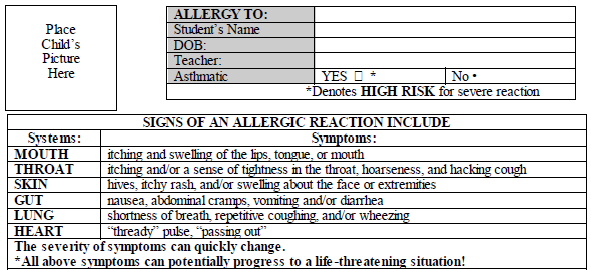
Action:
1. If ingestion is suspected, give (medication/dose/route) __________________________________ immediately!
2. CALL RESCUE SQUAD: _________________________________________________________________
3. CALL: Mother _____________________ Father _____________________
or emergency contacts.
4. CALL: Dr. _____________________ at _____________________
DO NOT HESITATE TO ADMINISTER MEDICATION OR CALL RESCUE SQUAD EVEN IF PARENTS OR DOCTOR CANNOT BE REACHED!
_________________________________________________________________________________________
Parent Signature Date Doctor's Signature Date
Emergency Contacts
Trained Staff Members
1.
1.
Name/Relation Phone
Name/Relation Phone
2.
2.
Name/Relation Phone
Name/Relation Phone
3.
3.
Name/Relation Phone
Name/Relation Phone
-
Students
Health Assessments and Immunizations
The Board of Education recognizes the importance of periodic health assessments according to state health regulations.
To determine health status of students, the Board of Education requires that students have health assessments.
The Board of Education adheres to those state laws and regulations that pertain to school immunizations and health assessments. It is the policy of the Board of Education to insure that all enrolled students are adequately immunized against communicable diseases. The Board may deny continued attendance in school to any student who fails to obtain the health assessments required under C.G.S. 10-206, as may be periodically amended.
The Board of Education shall annually designate a representative to receive reports of health assessments and immunizations from health care providers.
Parents wishing their children exempted or excused from health assessments, on religious grounds, must request such exemption to the Superintendent of Schools in writing. This request must be signed by the parent/guardian.
Parents/guardians wanting their children excused from immunizations on religious grounds (prior to kindergarten entry and grade 7 entry) must request such exemption in writing to the Superintendent of Schools if such immunization is contrary to the religious beliefs of the child or of the parent/guardian of the child. The request must be officially acknowledged by a notary public or a judge, a clerk or deputy clerk of a court having a seal, a town clerk, a justice of the peace, or a Connecticut-licensed attorney. It is the responsibility of the Principal to insure that each student enrolled has been adequately immunized and has fulfilled the required health assessments. The school nurse shall check and document immunizations and health assessments on all students enrolling in school and to report the status to the school principal. The school nurse shall also contact parents or guardians to make them aware if immunizations and/or health assessments are insufficient or not up-to-date. The school nurse will maintain in good order the immunization and health assessment records of each student enrolled.
Students born in high risk countries and entering school in Connecticut for the first time, should receive either TST (tuberculin skin test) or IGRA (interferon-gamma release assay). Any individual found to be positive shall have an appropriate medical management plan developed that includes a chest radiograph.
Students not already known to have a positive test for tuberculosis should be tested if they meet any of the risk factors for TB infection, as described in the administrative regulations accompanying this policy.
No record of any student's medical assessment may be open to the public.
As required, the District will annually report to the Department of Public Health and to the local Health Director the asthma data, pertaining to the total number of students per school and for the district, obtained through the required asthma assessments, including student demographics. Such required asthma diagnosis shall occur at the time of mandated health assessment at the time of enrollment, in either grade six or seven, and in either grade nine or ten. Such asthma diagnosis shall be reported whether or not it is recorded on the health assessment form, at the aforementioned intervals. The District, as required, will also participate in annual school surveys conducted by the Department of Public Health pertaining to asthma.
(cf. 5111 - Admission)
(cf. 5141.31 - Physical Examinations for School Programs)
(cf. 5125 - Student Records)
(cf. 5135.11 - Health/Medical Records - HIPAA)
(cf. 5141 - Student Health Services)
Legal Reference: Connecticut General Statutes
10 204a Required immunizations (as amended by P.A. 15-174 and P.A. 15-242)
10-204c Immunity from liability
10-205 Appointment of school medical adviser
10 206 Health assessments
10-207 Duties of medical advisors
10-206a Free health assessments
10-208 Exemption from examination or treatment
10-208a Physical activity of student restricted; board to honor notice
10-209 Records not to be public. Provision of reports to school.
10-212 School nurses
10-214 Vision, audiometric and postural screenings. When required. Notification of parents re defects; record of results
Department of Public Health, Public Health Code, 10-204a-2a, 10-204a-3a, 10-204a-4
Section 4 of PA 14-231
20 U.S.C. Section 1232h, No Child Left Behind Act
Federal Family Educational Rights and Privacy Act of 1974 (section 438 of the General Education Provisions Act, as amended, added by section 513 of P.L. 93-568, codified at 20 U.S.C. 1232g.
P.L. 93-568; codified as 20 U.S.C. 1232g
42 U.S.C. 1320d-1320d-8 P.L. 104-191, Health Insurance Portability and Accountability Act of 1996 (HIPAA)
Policy adopted: May 12, 2016
BOLTON PUBLIC SCHOOLS
Bolton, Connecticut
5141.3 R
Students
Immunizations
ADMINISTRATIVE REGULATIONS REGARDING IMMUNIZATIONS
I. Immunization Requirements
In accordance with state law and accompanying regulations, the Bolton Public Schools (the "District") requires each child to be protected by adequate immunization against diphtheria, pertussis, tetanus, poliomyelitis, measles, mumps, rubella, haemophilus influenzae type B, hepatitis A, hepatitis B, varicella, pneumococcal diseases, meningococcal disease and any other vaccine required by the schedule for active immunization as determined by the Commissioner of Public Health pursuant to Conn. Gen. Stat. § 19a-7f, before being permitted to enroll in any program or school under its jurisdiction.
Among other requirements, before being permitted to enter seventh grade, the District requires each child to be vaccinated against meningococcal disease. The District further requires each child to receive a second immunization against measles and tetanus, diphtheria and pertussis (Tdap) before being permitted to enter seventh grade.
Further, each child must have received two doses of immunization against varicella before being permitted to enter kindergarten and seventh grade, and each child must have received two doses of immunization against rubella and mumps before being permitted to enter grades kindergarten through twelve.
By January 1 of each year, children aged 24-59 months enrolled in the District's preschool program must show proof of receipt of at least one dose of influenza vaccine between August 1 and December 31 of the preceding year. All children aged 24-59 months who have not received vaccination against influenza previously must show proof of receipt of two doses of the vaccine the first influenza season that they are vaccinated. Children seeking to enroll in the District's preschool program between January 1 and March 31 are required to receive the influenza vaccine prior to being permitted to enter the program. Children who enroll in the preschool program after March 31 of any given year are not required to meet the influenza vaccine requirement until the following January.
Exemption from the applicable requirements of these administrative regulations shall be granted to any child who, before being permitted to enroll:
(1) presents a certificate from a physician, physician assistant, advanced practice registered nurse or local health agency stating that initial immunizations have been given to such child and additional immunizations are in process
(A) under guidelines and schedules specified by the Commissioner of Public Health; or
(B) in the case of a child enrolled in a preschool program or other prekindergarten program who, prior to April 28, 2021, was exempt from the applicable immunization requirements upon presentation of a statement that such immunizations would be contrary to the religious beliefs of such child or the parents or guardian of such child, as such additional immunizations are recommended, in a written declaration, in a form prescribed by the Commissioner of Public Health, for such child by a physician, a physician assistant or an advanced practice registered nurse. Such statement of religious beliefs shall be acknowledged by a judge of a court of record or a family support magistrate, a clerk or deputy clerk of a court having a seal, a town clerk, a notary public, a justice of the peace, an attorney admitted to the bar of this state, or a school nurse; or
(2) presents a certificate, in a form prescribed by the Commissioner of Public Health pursuant to Section 7 of Public Act No. 21-6, from a physician, physician assistant, or advanced practice registered nurse stating that in the opinion of a such physician, physician assistant, or advanced practice registered nurse such immunization is medically contraindicated because of the physical condition of such child; or
(3) in the case of measles, mumps or rubella, presents a certificate from a physician, physician assistant or advanced practice registered nurse or from the Director of Health in such child's present or previous town of residence, stating that the child has had a confirmed case of such disease; or
(4) in the case of haemophilus influenzae type B, has passed such child's fifth birthday; or
(5) in the case of pertussis, has passed such child's sixth birthday.
II. Exemptions Based on Religious Beliefs
A. Children Enrolled in Kindergarten through Twelfth Grade On or Before April 28, 2021
The immunization requirements set forth in Section I of these administrative regulations shall not apply to any child who is enrolled in kindergarten through twelfth grade on or before April 28, 2021 if:
1. such child presented a statement, prior to April 28, 2021, from the parents or guardians of such child that such immunization is contrary to the religious beliefs of such child or the parents or guardians of such child, and
2. such statement was acknowledged by a judge of a court of record or a family support magistrate, a clerk or deputy clerk of a court having a seal, a town clerk, a notary public, a justice of the peace, an attorney admitted to the bar of the State of Connecticut, or a school nurse.
B. Students Who Transfer from Another Public or Private School in Connecticut
The immunization requirements set forth in Section I of this policy shall not apply to any student who:
1. transfers to the District from another public or private school in Connecticut, and
2. was enrolled in kindergarten through twelfth grade in the other public or private school on or before April 28, 2021, and
3. presented a statement, prior to April 28, 2021, from the parents or guardians of such child that such immunization is contrary to the religious beliefs of such child or the parents or guardians of such child, and such statement was acknowledged by a judge of a court of record or a family support magistrate, a clerk or deputy clerk of a court having a seal, a town clerk, a notary public, a justice of the peace, an attorney admitted to the bar of the State of Connecticut, or a school nurse.
C. Children Enrolled in Preschool or Prekindergarten Prior to April 28, 2021
Any child who is enrolled in a preschool program or other prekindergarten program prior to April 28, 2021 who:
1. presented a statement, prior to April 28, 2021, from the parents or guardians of such child that such immunization is contrary to the religious beliefs of such child or the parents or guardians of such child, and
2. such statement was acknowledged by a judge of a court of record or a family support magistrate, a clerk or deputy clerk of a court having a seal, a town clerk, a notary public, a justice of the peace, an attorney admitted to the bar of the State of Connecticut, or a school nurse, but
3. did not present a written declaration from a physician, a physician assistant or an advanced practice registered nurse stating that additional immunizations are in process as recommended by such physician, physician assistant or advanced practice registered nurse, rather than as recommended under guidelines and schedules specified by the Commissioner of Public Health shall comply with the immunization requirements provided for in Section I of these administrative regulations on or before September 1, 2022, or not later than fourteen (14) days after transferring to a program operated by a school under the jurisdiction of the District, whichever is later.
In accordance with state law, the Bolton Board of Education ("Board") and the District shall not be liable for civil damages resulting from an adverse reaction to a non-defective vaccine required to be administered by state law.
If the parents or guardians of any child are unable to pay for any required immunization, the expense of such immunization shall, upon the recommendation of the Board, be paid by the town of the child's residence.
The District designates the school nurse(s) as the representative for receipt of reports from health care providers concerning student immunizations.
The current required immunizations for elementary (including preschool), middle and high school students can be found at: https://portal.ct.gov/-/media/SDE/School-Nursing/Forms/Immunization_Requirements.pdf.
In implementing these regulations, the District shall consider state guidance and supporting documents and comply with applicable law.
Legal Reference: Connecticut General Statutes
§ 10-204a Required immunizations
§ 10-204c Immunity from liability
Public Act No. 21-6, "An Act Concerning Immunizations"
Regulations of Connecticut State Agencies
§ 10-204a-2a Adequate Immunization
Letter to Superintendents of Schools et al. from Connecticut State Departments of Public Health and Education, Reinstatement of Prekindergarten and Kindergarten School Immunization Entry Requirement for Haemophilus Influenza Type B (Hib) Vaccine, June 25, 2010.
Letter to Superintendents of Schools et al. from Connecticut State Departments of Public Health and Education, Changes in the Immunization Requirements for School Entry, March 15, 2011.
State Department of Education, Guidance Regarding Public Act 21-6, "An Act Concerning Immunizations," May 25, 2021.
Regulation approved: May 12, 2016
Regulation revised: January 13, 2022BOLTON PUBLIC SCHOOLS
Bolton, Connecticut -
Students
SUICIDE PREVENTION AND INTERVENTION
The Bolton Board of Education (the “Board”) recognizes that suicide is a complex issue and that schools are not mental health treatment centers. The Bolton Public Schools (the “District”) cannot be expected to thoroughly evaluate and eliminate suicidal risk. Nevertheless, school personnel may become aware of specific factual circumstances in which a student has communicated a suicidal intent or other specific circumstances in which a student is at risk for suicide. In such cases, the Board is committed to respond in a supportive manner, both aggressively and immediately, to a student who has attempted, has threatened, or who communicates that they are considering attempting suicide.
Any Board employee who has knowledge that a student has made a suicidal threat or attempt or exhibited suicidal ideation must immediately report this information to the building principal or designee, who will, in turn, notify a member of the counseling staff and an administrator. A member of the Student Support Services Staff or administrator, with administrative assistance, if necessary, will contact the student's family and appropriate resources within and outside the school system, as permitted by law. The Board further directs the school staff to refer students who come to their attention as being at risk of attempting suicide for professional assessment and treatment services outside of the school. Information concerning a student's suicide attempt, threat or risk will be shared with others only as permitted by state and federal law.
In recognition of the need for youth suicide prevention procedures, the Board directs the Superintendent or designee to adopt and maintain administrative regulations addressing youth suicide prevention.
Training will be provided for teachers, other school staff, and students regarding the prevention of and response to youth suicide.
Legal Reference:
Connecticut General Statutes § 10-220a
Connecticut General Statutes § 10-221(f)
Public Act 23-167, “An Act Concerning Transparency in Education.”
Policy Adopted: April 11, 2004
Policy Revised: June 11, 2009
Policy Revised: January 11, 2024BOLTON PUBLIC SCHOOLS
Bolton, Connecticut -
Students
CHEMICAL HEALTH POLICY FOR STUDENT ATHLETES
The Bolton Board of Education (the "Board") participates in the Connecticut Interscholastic Athletic Conference ("CIAC"). In accordance with CIAC participation rules and the Board's obligation under state and federal law, the Board prohibits the unauthorized use, sale, distribution or possession of controlled drugs, controlled substances, drug paraphernalia, performance enhancing substances or alcohol during any school -sponsored athletic activity, whether occurring on or off school property. It shall be the policy of the Board to take positive action through education, counseling, discipline, parental involvement, medical referral, and law enforcement referral, as appropriate, in the handling of incidents by student athletes involving the possession, distribution, sale or use of substances that affect behavior, including performance-enhancing substances. This policy applies to all student athletes participating in school-sponsored athletics, whether or not such athletes are participating in CIAC controlled activities.
Definitions
(1) Controlled Drugs: means those drugs which contain any quantity of a substance which has been designated as subject to the federal Controlled Substances Act, 21 U.S.C. § 801 et seq., or which has been designated as a depressant or stimulant drug pursuant to federal food and drug laws, or which has been designated by the Commissioner of Consumer Protection pursuant to Connecticut General Statutes Section 21a-243, as having a stimulant, depressant or hallucinogenic effect upon the higher functions of the central nervous system and as having a tendency to promote abuse or psychological or physiological dependence, or both. Such controlled drugs are classifiable as amphetamine-type, barbiturate-type, cannabis-type, cocaine-type, hallucinogenic, morphine-type and other stimulant and depressant drugs. Connecticut General Statutes Section 21a-240(8).
(2) Controlled Substances: means a drug, substance or immediate precursor in schedules I to V, inclusive, of the Connecticut controlled substance scheduling regulations adopted pursuant to Connecticut General Statutes Sections 21a-243 and 21a-240(9).
(3) Drug Paraphernalia: means any equipment, products and materials of any kind which are used, intended for use or designed for use in planting, propagating, cultivating, growing, harvesting, manufacturing, compounding, converting, producing, processing, preparing, testing, analyzing, packaging, repackaging, storing, containing or concealing, or injecting, ingesting, inhaling or otherwise introducing any controlled substance into the human body, including but not limited to all items specified in Connecticut General Statutes Section 21a-240(20)(A), such as "bongs," pipes, "roach clips," miniature cocaine spoons, cocaine vials, and any object or container used, intended or designed for use in storing, concealing, possessing, distributing or selling controlled substances. Connecticut General Statutes Section 21a-240(20)(A).
(4) Performance Enhancing Substances: means any anabolic steroid, hormone or analogue, diuretic or other substance designed to enhance a student's performance in athletic competition, except when used under the care and direction of a licensed medical professional and only then in the manner prescribed by the medical professional and manufacturer's recommendations.
(5) Professional Communication: means any communication made privately and in confidence by a student to a professional employee of such student's school in the course of the professional employee's employment. Connecticut General Statutes Section 10-154a(a)(4).
(6) Professional Employee: means a person employed by a school who (A) holds a certificate from the State Board of Education, (B) is a member of a faculty where certification is not required, (C) is an administration officer of a school, or (D) is a registered nurse employed by or assigned to a school. Connecticut General Statutes Section 10-154a(a)(2).
(7) Student Athlete: means any student participating in an extracurricular school-sponsored athletic activity, whether interscholastic or intramural, including but not limited to student athletes who are participating in CIAC controlled activities.
Procedures
(1) Discretionary Nature of Student Athletics.
The Board sponsors athletic programs as part of its extracurricular program. The opportunity to participate in extracurricular activities such as student athletics is a privilege, not a right. The Board may remove students from participation in athletics activities in its discretion.
(2) Emergencies.
If an emergency situation results from the use of drugs, performance enhancing substances or alcohol, the student athlete shall be sent to the school nurse or medical advisor immediately, or emergency medical personnel will be notified. The parent or designated responsible person will also be notified as soon as possible.
(3) Prescribed Medications.
The parent or guardian of any student athlete who is required to take any prescribed medication during student athletic activities shall so inform the school nurse or the person designated to act in the absence of a nurse. Such prescribed medication will then be administered to the student athlete under the supervision of the school nurse or designee in accordance with Connecticut General Statutes Section 10-212a and the applicable regulations and in accordance with any Board policies and regulations concerning medication administration, except as provided below.
Student athletes taking improper amounts of a prescribed medication, or taking a prescribed medication without proper notification and supervision of the school nurse or designee, will be subject to the procedures for improper drug or alcohol use outlined in this policy.
Student athletes with a documented medical history demonstrating the need for regular use of performance enhancing substances for therapeutic purposes shall not be considered to be in violation of this policy when such substances are properly prescribed and taken by the student athlete in accordance with Connecticut General Statutes Section 10-212a and the applicable regulations and in accordance with any Board policies and regulations concerning medication administration.
Student athletes with a documented medical history demonstrating the need for regular, palliative use of marijuana shall not be considered to be in violation of this policy when such substance is properly prescribed and taken by the student athlete in accordance with Connecticut General Statutes §Sections 21a-408a through 408q. Under no circumstances shall the school nurse or designee administer to the student, or permit the palliative use of marijuana by the student, on a school bus, school grounds or property, in public places or in the presence of persons under the age of eighteen.
(4) Voluntary Disclosure of Drug/Alcohol Problem (Self-Referral).
The following procedures will be followed when a student athlete privately, and in confidence, discloses to a professional employee in a professional communication information concerning the student's use, possession, distribution or sale of a controlled drug, controlled substance or alcohol.
(a) Professional employees are permitted, in their professional judgment, to disclose any information acquired through a professional communication with a student, when such information concerns alcohol or drug abuse or any alcohol or drug problem of such student athlete. In no event, however, will they be required to do so. Connecticut General Statutes Section 10-154a(b).
(b) Any physical evidence obtained from such student athlete through a professional communication indicating that a crime has been or is being committed by the student athlete must be turned over to school administrators or law enforcement officials as soon as possible, but no later than two calendar days after receipt of such physical evidence, excluding Saturdays, Sundays and holidays. Employees are encouraged to contact the school administrator immediately upon obtaining physical evidence. In no case, however, will such employee be required to disclose the name of the student athlete from whom the evidence was obtained. Connecticut General Statutes Section 10-154a(b).
(c) Any professional employee who has received a professional communication from a student athlete may obtain advice and information concerning appropriate resources and refer the student athlete accordingly, subject to the rights of the professional employee as described in paragraph (a) above.
(d) If a student athlete consents to disclosure of a professional communication concerning the student athlete's alcohol or drug problem, or if the professional employee deems disclosure to be appropriate, the professional employee should report the student athlete's name and problem to the school's building administrator or designee who shall refer the student athlete to appropriate school staff members for intervention and counseling.
(5) Involuntary Disclosure or Discovery of Drug/Alcohol Problems.
When any school staff member, or a coach or volunteer responsible for or involved in student athletic programs, obtains information related to a student athlete from a source other than the student athlete's confidential disclosure, that the student athlete, on or off school grounds or at a school-sponsored activity, is unlawfully under the influence of, or unlawfully possesses, uses, dispenses, distributes, administers, sells or aids in the procurement of a controlled drug, controlled substance, drug paraphernalia, performance enhancing substances or alcohol, that information is considered to be involuntarily disclosed. In this event, the following procedures will apply.
(a) The staff member, coach or volunteer will immediately report the information to the building administrator or designee. The building administrator or designee will then refer the student athlete to appropriate school staff members for intervention and counseling.
(b) Any physical evidence (for example, alcohol, drugs, drug paraphernalia or performance enhancing substances) obtained from a student athlete indicating that a crime has been or is being committed by the student athlete must be turned over to the building administrator or designee or to law enforcement officials as soon as possible, but no later than within two calendar days after receipt of such physical evidence, excluding Saturdays, Sundays and holidays. Connecticut General Statutes Section 10-154a(b). The name of the student athlete must be disclosed to the building administrator or designee.
(c) Search and Seizure of Students and/or Possessions: A staff member, coach or volunteer who reasonably suspects that a student athlete is violating a state/federal law, school substance abuse policy or this chemical health policy must immediately report such suspicion to the building administrator or designee. The building administrator or designee may then search a student athlete's person or possessions connected to that person, in accordance with the Board's policies and regulations if such employee has reasonable suspicion from the inception of the search that the student athlete has violated or is violating either the law, a school substance abuse policy, or this chemical health policy.
Any physical evidence obtained in the search of a student athlete, or a student athlete's possessions, indicating that the student athlete is violating or has violated a state or federal law must be turned over to law enforcement officials as soon as possible, but not later than within three calendar days after receipt of such physical evidence, excluding Saturdays, Sundays and holidays. Connecticut General Statutes Section 10-154a(c). All school employees are encouraged to contact the school administration immediately upon obtaining physical evidence.
(6) Consequences for the Use, Sale, Distribution or Possession of Controlled Drugs, Controlled Substances, Drug Paraphernalia, Performance Enhancing Substances or Alcohol.
(a) Any student athlete in the Bolton Public Schools using, consuming, possessing, being under the influence of, manufacturing, distributing, selling or aiding in the procurement of controlled drugs, controlled substances, drug paraphernalia, performance enhancing substances or alcohol, either on or off school property, or at a school-sponsored activity, except as such use or possession is in accordance with Connecticut General Statutes §Sections 21a-408a through 408q, is subject to discipline up to and including expulsion pursuant to the Board's student discipline policy. On and after January 1, 2022, a student shall not face greater discipline, punishment or sanction for the use, sale, or possession of cannabis on school property than a student would face for the use, sale, or possession of alcohol on school property, except as otherwise required by applicable law.
(b) Student athletes found to be in violation this policy may be referred by the building administrator to an appropriate agency licensed to assess and treat drug and alcohol involved individuals. In such event, assessment and treatment costs will be the responsibility of the parent or guardian.
(c) A meeting may be scheduled with appropriate school staff members for the purpose of discussing the school's drug and alcohol policy and this chemical health policy with the student athlete and parent or guardian.
(d) Law enforcement officials may be contacted by the building administrator in the case of suspected involvement in the use, sale or distribution of controlled drugs, controlled substances, drug paraphernalia, performance-enhancing substances or alcohol.
(e) A student athlete found by the administration to have violated this policy may, in the discretion of school administrators, be suspended from play for short or long term periods, or may have student athletic participation privileges revoked.
(f) A student athlete found by the administration to have used performance enhancing substances shall receive a minimum penalty of revocation of athletic participation privileges for one hundred eighty (180) days. The Board shall report the violation to the CIAC.
(f) The Board recognizes that the CIAC may impose additional sanctions on student athletes participating in CIAC controlled activities who are found to have violated this policy.
(7) Prohibition on the Promotion or Dispensing of Performance Enhancing Substances by School Staff Members, Coaches or Volunteers.
(a) No school staff member, coach or volunteer responsible for or involved in student athletic programs shall dispense any drug, medication (prescription or non-prescription), or food supplement to any student athlete except under the supervision of the school nurse or designee in accordance with Connecticut General Statutes Section 10-212a and the applicable regulations, and in accordance with any Board policies and regulations concerning medication administration.
(b) No school staff member, coach or volunteer responsible for or involved in student athletic programs shall encourage the use of any drug, medication (prescription or non-prescription), or food supplement in a manner not described by the manufacturer.
(c) No school staff member, coach or volunteer responsible for or involved in student athletic programs shall supply, recommend, or knowingly permit student athletes to use any drug, medication (prescription or non-prescription), or food supplement for the specific purpose of enhancing their athletic performance.
(d) A school staff member, or coach responsible for or involved in student athletic programs, who violates the terms of this policy shall be subject to discipline, up to and including termination of employment. The Board may also report violations of this policy by employees to parents of student athletes and/or state and local authorities.
(e) The Board shall immediately terminate a volunteer responsible for or involved in student athletic programs who violates the terms of this policy. The Board may also report violations of this policy by volunteers to parents of student athletes and/or state and local authorities.
(8) Publication of Chemical Health Policy to School Staff Members, Coaches, Volunteers and Student Athletes.
(a) The Board shall publish this chemical health policy to all school staff members, coaches and volunteers responsible for or involved in student athletic programs.
(b) The Board shall publish this chemical health policy to all student athletes and their parents/guardians.
Legal References:
Connecticut General Statutes:
June Special Session, Public Act No. 21-1, An Act Concerning Responsible and Equitable Regulation of Adult-Use Cannabis
Section 10-154a
Section 10-212a
Section 10-221
Section 21a-240
Section 21a-243
Sections 21a-408a through 408q
2021-2022 CIAC Handbook, Section 4.12.E (Chemical Health Policy and Regulations), available at https://www.casciac.org/pdfs/ciachandbook_2122.pdf
Policy adopted: January 13, 2022
BOLTON PUBLIC SCHOOLS
Bolton, Connecticut -
HEADS UP: CONCUSSION IN YOUTH SPORTS
A Fact Sheet for COACHES
To download the coaches fact sheet in Spanish, please visit:
Centers for Disease Control and Prevention
THE FACTS
- A concussion is a brain injury.
- All concussions are serious.
- Concussions can occur without loss of consciousness.
- Concussions can occur in any sport.
- Recognition and proper management of concussions when they first occur can help prevent further injury or even death.
WHAT IS A CONCUSSION?
A concussion is an injury that changes how the cells in the brain normally work. A concussion is caused by a blow to the head or body that causes the brain to move rapidly inside the skull. Even a ding, getting your bell rung, or what seems to be a mild bump or blow to the head can be serious. Concussions can also result from a fall or from players colliding with each other or with obstacles, such as a goalpost.
The potential for concussions is greatest in athletic environments where collisions are common.1 Concussions can occur, however, in any organized or unorganized sport or recreational activity. As many as 3.8 million sports- and recreation-related concussions occur in the United States each year.2
RECOGNIZING A POSSIBLE CONCUSSION
To help recognize a concussion, you should watch for the following two things among your athletes:
1. A forceful blow to the head or body that results in rapid movement of the head.
-and-
2. Any change in the athlete's behavior, thinking, or physical functioning. (See the signs and symptoms of concussion.)
SIGNS AND SYMPTOMS
SIGNS OBSERVED BY COACHING STAFF
- Appears dazed or stunned
- Is confused about assignment or position
- Forgets sports plays
- Is unsure of game, score, or opponent
- Moves clumsily
- Answers questions slowly
- Loses consciousness (even briefly)
- Shows behavior or personality changes
- Can't recall events prior to hit or fall
- Can't recall events after hit or fall
SYMPTOMS REPORTED BY ATHLETE
- Headache or pressure in head
- Nausea or vomiting
- Balance problems or dizziness
- Double or blurry vision
- Sensitivity to light
- Sensitivity to noise
- Feeling sluggish, hazy, foggy, or groggy
- Concentration or memory problems
- Confusion
- Does not feel right
Adapted from Lovell et al. 2004
Athletes who experience any of these signs or symptoms after a bump or blow to the head should be kept from play until given permission to return to play by a health care professional with experience in evaluating for concussion. Signs and symptoms of concussion can last from several minutes to days, weeks, months, or even longer in some cases.
Remember, you can't see a concussion and some athletes may not experience and/or report symptoms until hours or days after the injury. If you have any suspicion that your athlete has a concussion, you should keep the athlete out of the game or practice.
PREVENTION AND PREPARATION
As a coach, you can play a key role in preventing concussions and responding to them properly when they occur. Here are some steps you can take to ensure the best outcome for your athletes and the team:
- Educate athletes and parents about concussion. Talk with athletes and their parents about the dangers and potential long-term consequences of concussion. For more information on long-term effects of concussion, view the following online video clip: Tramatic Brain Injury and Concussion . Explain your concerns about concussion and your expectations of safe play to athletes, parents, and assistant coaches. Pass out the concussion fact sheets for athletes and for parents at the beginning of the season and again if a concussion occurs.
- Insist that safety comes first.
- Teach athletes safe playing techniques and encourage them to follow the rules of play.
- Encourage athletes to practice good sportsmanship at all times.
- Make sure athletes wear the right protective equipment for their activity (such as helmets, padding, shin guards, and eye and mouth guards). Protective equipment should fit properly, be well maintained, and be worn consistently and correctly.
- Review the athlete fact sheet with your team to help them recognize the signs and symptoms of a concussion.
Check with your youth sports league or administrator about concussion policies. Concussion policy statements can be developed to include the leagues commitment to safety, a brief description of concussion, and information on when athletes can safely return to play following a concussion (i.e., an athlete with known or suspected concussion should be kept from play until evaluated and given permission to return by a health care professional). Parents and athletes should sign the concussion policy statement at the beginning of the sports season.
- Teach athletes and parents that it's not smart to play with a concussion. Sometimes players and parents wrongly believe that it shows strength and courage to play injured. Discourage others from pressuring injured athletes to play. Don't let athletes persuade you that they're just fine after they have sustained any bump or blow to the head. Ask if players have ever had a concussion.
- Prevent long-term problems. A repeat concussion that occurs before the brain recovers from the first usually within a short period of time (hours, days, or weeks) can slow recovery or increase the likelihood of having long-term problems. In rare cases, repeat concussions can result in brain swelling, permanent brain damage, and even death. This more serious condition is called second impact syndrome.4, 5 Keep athletes with known or suspected concussion from play until they have been evaluated and given permission to return to play by a health care professional with experience in evaluating for concussion. Remind your athletes: It's better to miss one game than the whole season.
ACTION PLAN
WHAT SHOULD A COACH DO WHEN A CONCUSSION IS SUSPECTED?
1. Remove the athlete from play. Look for the signs and symptoms of a concussion if your athlete has experienced a bump or blow to the head. Athletes who experience signs or symptoms of concussion should not be allowed to return to play. When in doubt, keep the athlete out of play.
2. Ensure that the athlete is evaluated right away by an appropriate health care professional. Do not try to judge the severity of the injury yourself. Health care professionals have a number of methods that they can use to assess the severity of concussions. As a coach, recording the following information can help health care professionals in assessing the athlete after the injury:
- Cause of the injury and force of the hit or blow to the head
- Any loss of consciousness (passed out/knocked out) and if so, for how long
- Any memory loss immediately following the injury
- Any seizures immediately following the injury
- Number of previous concussions (if any)
3. Inform the athlete's parents or guardians about the possible concussion and give them the fact sheet on concussion. Make sure they know that the athlete should be seen by a health care professional experienced in evaluating for concussion.
4. Allow the athlete to return to play only with permission from a health care professional with experience in evaluating for concussion. A repeat concussion that occurs before the brain recovers from the first can slow recovery or increase the likelihood of having long-term problems. Prevent common long-term problems and the rare second impact syndrome by delaying the athletes return to the activity until the player receives appropriate medical evaluation and approval for return to play.
If you think your athlete has sustained a concussion take him/her out of play, and seek the advice of a health care professional experienced in evaluating for concussion.
For more information and to order additional materials free-of-charge, visit: Centers for Disease Control and Prevention
For more detailed information on concussion and traumatic brain injury, visit: Traumatic Brain Injury and Concussion
REFERENCES
1. Powell JW. Cerebral concussion: causes, effects, and risks in sports. Journal of Athletic Training 2001; 36(3):307-311.
2. Langlois JA, Rutland-Brown W, Wald M. The epidemiology and impact of traumatic brain injury: a brief overview. Journal of Head Trauma Rehabilitation 2006; 21(5):375-378.
3. Lovell MR, Collins MW, Iverson GL, Johnston KM, Bradley JP. Grade 1 or ding concussions in high school athletes. The American Journal of Sports Medicine 2004; 32(1):47-54.
4. Institute of Medicine (US). Is soccer bad for children's heads? Summary of the IOM Workshop on Neuropsychological Consequences of Head Impact in Youth Soccer. Washington (DC): National Academy Press; 2002.
5. Centers for Disease Control and Prevention (CDC). Sports-related recurrent brain injuries-United States. Morbidity and Mortality Weekly Report 1997; 46(10):224-227. Available at: Sports Related Recurrent Brain Injury
U.S. DEPARTMENT OF HEALTH AND HUMAN SERVICES CENTERS FOR DISEASE CONTROL AND PREVENTION
Content Source: National Center for Injury Prevention and Control, Division of Injury Response
Page Located on the Web at Centers for Disease Control and Prevention
DEPARTMENT OF HEALTH AND HUMAN SERVICES
CENTERS FOR DISEASE CONTROL AND PREVENTION
SAFER - HEALTHIER - PEOPLE™
-
5141.7 Appendix B
Fact Sheet for Student Athletes
What is a concussion?
A concussion is a brain injury that:
- Is caused by a bump, blow, or jolt to the head.
- Can change the way your brain normally works.
- Can range from mild to severe.
- Can occur during practices or games in any sport.
- Can happen even if you haven't been knocked out.
- Can be serious even if you've just been "dinged" or had your "bell rung."
How can I prevent a concussion?
It's different for every sport. But there are steps you can take to protect yourself from concussion.
- Follow your coach's rules for safety and the rules of the sport.
- Practice good sportsmanship at all times.
- Use the proper sports equipment, including personal protective equipment (such as helmets)
- In order for equipment to protect you, it must be:
o Appropriate for the game, position, and activity
o Well maintained
o Properly fitted
o Used every time you play
How do I know if I've had a concussion?
You can't see a concussion, but you might notice some of the symptoms right away. Other symptoms can show up days or weeks after the injury. It's best to see a health care professional if you think you might have a concussion. An undiagnosed concussion can affect your ability to do schoolwork and other everyday activities. It also raises your risk for additional serious injury.
What are the symptoms of a concussion?
- Nausea (feeling that you might vomit)
- Balance problems or dizziness
- Double or fuzzy vision
- Sensitivity to light or noise
- Headache
- Feeling sluggish
- Feeling foggy or groggy
- Concentration or memory problems (forgetting game plays)
- Confusion
What should I do if I think I have a concussion?
- Tell your coaches and your parents. Never ignore a bump, blow, or jolt to the head. Also tell your coach if one of your teammates might have a concussion.
- Get a medical checkup. A health care professional can tell you if you have had a concussion and when you are OK to return to play.
- Give yourself time to recover. If you have had a concussion, your brain needs time to heal. While your brain is still healing, you are much more likely to suffer another concussion.
-
Bolton Public Schools
Student and Parent Concussion Informed Consent Form
2015-16
This consent form was developed to provide students and parents with current and relevant information regarding concussions and to comply with Connecticut General Statutes (C.G.S.) Chapter 163, Section 149b: Concussions: Training courses for coaches. Education plan. Informed consent form. Development or approval by the State Board of Education and Section 10-149c: Student athletes and concussions. Removal from athletic activities. Notification of parent or legal guardian. Revocation of coaching permit.
What is a Concussion?
National Athletic Trainers Association (NATA) - A concussion is a "trauma induced alteration in mental status that may or may not involve loss of consciousness."
Centers for Disease Control and Prevention (CDC) - "A concussion is a type of traumatic brain injury, or TBI, caused by a bump, blow, or jolt to the head that can change the way your brain normally works. Concussions can also occur from a blow to the body that causes the head to move rapidly back and forth." -CDC, Heads Up: Concussion Centers for Disease and Control
Even a "ding," "getting your bell rung," or what seems to be mild bump or blow to the head can be serious" -CDC, Heads Up: Concussion Fact Sheet for Coaches Centers for Disease and Control Prevention
Section 1. Concussion Education Plan Summary
The Concussion Education Plan and Guidelines for Connecticut Schools was approved by the Connecticut State Board of Education in January 2015. Below is an outline of the requirements of the Plan. The complete document is accessible on the CSDE Web site: Concussion Education Plan and Guidelines
State law requires that each local and regional board of education must approve and then implement a concussion education plan by using written materials, online training or videos, or in-person training that addresses, at a minimum the following:
1. The recognition of signs or symptoms of concussion.
2. The means of obtaining proper medical treatment for a person suspected of sustaining a concussion.
3. The nature and risks of concussions, including the danger of continuing to engage in athletic activity after sustaining a concussion.
4. The proper procedures for allowing a student athlete who has sustained a concussion to return to athletic activity.
5. Current best practices in the prevention and treatment of a concussion.
Section 2. Signs and Symptoms of a Concussion: Overview
A concussion should be suspected if any one or more of the following signs or symptoms are present, or if the coach/evaluator is unsure, following an impact or suspected impact as described in the CDC definition above.
Signs of a concussion may include (i.e. what the athlete displays/looks like to an observer):
- Confusion/disorientation/irritability
- Trouble resting/getting comfortable
- Lack of concentration
- Slow response/drowsiness
- Incoherent/ slurred speech
- Slow/clumsy movements
- Loses consciousness
- Amnesia/memory problems
- Acts silly/combative/aggressive
- Repeatedly ask same questions
- Dazed appearance
- Restless/irritable
- Constant attempts to return to play
- Constant motion
- Disproportionate/inappropriate reactions
- Balance problems
Symptoms of a concussion may include (i.e. what the athlete reports):
- Headache or dizziness
- Nausea or vomiting
- Blurred or double vision
- Oversensitivity to sound/light/touch
- Ringing in ears
- Feeling foggy or groggy
State law requires that a coach MUST immediately remove a student-athlete from participating in any intramural or interscholastic athletic activity who: a) is observed to exhibit signs, symptoms or behaviors consistent with a concussion following a suspected blow to the head or body, or b) is diagnosed with a concussion, regardless of when such concussion or head injury may have occurred. Upon removal of the athlete, a qualified school employee must notify the parent or legal guardian within 24 hours that the student athlete has exhibited signs and symptoms of a concussion.
Head Injuries - Injuries to the head includes:
- Concussions: (See above information). There are several head injuries associated with concussions which can be severe in nature including:
a) Second impact Syndrome - Athletes who sustain a concussion, and return to play prior to being recovered from the concussion, are also at risk for Second Impact Syndrome (SIS), a rare but life-altering condition that can result in rapid brain swelling, permanent brain damage or death; and
b) Post-Concussion Syndrome - A group of physical, cognitive, and emotional problems that can persist for weeks, months, or indefinitely after a concussion.
- Scalp Injury: Most head injuries only damage the scalp (a cut, scrape, bruise or swelling)⃛ Big lumps (bruises) can occur with minor injuries because there is a large blood supply to the scalp. For the same reason, small cuts on the head may bleed a lot. Bruises on the forehead sometimes cause black eyes 1 to 3 days later because the blood spreads downward by gravity;
- Skull Fracture: Only 1% to 2% of children with head injuries will get a skull fracture. Usually there are no other symptoms except for a headache at the site where the head was hit. Most skull fractures occur without any injury to the brain and they heal easily;
- Brain Injuries are rare but are recognized by the presence of the following symptoms:
(1) difficult to awaken, or keep awake or (2) confused thinking and talking, or (3) slurred speech, or (4) weakness of arms or legs or (5) unsteady walking (American Academy of Pediatrics - Healthy Children, 2010).
Section 3. Return to Play (RTP) Protocol Overview
Currently, it is impossible to accurately predict how long an individual's concussion will last. There must be full recovery before a student-athlete is allowed to resume participating in athletic activity. Connecticut law now requires that no athlete may resume participation until they have received written medical clearance from a licensed health care professional (physician, physician assistant, advanced practice registered nurse (APRN), athletic trainer) trained in the evaluation and management of concussions.
Concussion Management Requirements:
1. No athlete SHALL return to participation in the athletic activity on the same day of concussion.
2. If there is any loss of consciousness, vomiting or seizures, the athlete MUST be immediately transported to the hospital.
3. Close observation of an athlete MUST continue following a concussion. The athlete should be monitored for an appropriate amount of time following the injury to ensure that there is no worsening/escalation of symptoms.
4. Any athlete with signs or symptoms related to a concussion MUST be evaluated by a licensed health care professional (physician, physician assistant, advanced practice registered nurse (APRN), athletic trainer) trained in the evaluation and management of concussions.
5. The athlete MUST obtain an initial written clearance from one of the licensed health care professionals identified above directing her/him into a well-defined RTP stepped protocol similar to the one outlined below. If at any time signs or symptoms return during the RTP progression, the athlete should cease activity*.
6. After the RTP protocol has been successfully administered (no longer exhibits any signs or symptoms or behaviors consistent with concussions), final written medical clearance is required by one of the licensed health care professionals identified above for the athlete to fully return to unrestricted participation in practices and competitions.
Medical Clearance RTP protocol (Recommended one full day between steps)
Rehabilitation stage
Functional exercise at each stage of rehabilitation
Objective of each stage
1. No activity
Complete physical and cognitive rest until asymptomatic. School may need to be modified.
Recovery
2. Light aerobic exercise
Walking, swimming or stationary cycling maintaining intensity ,<70% of maximal exertion; no resistance training
Increase Heart Rate
3. Sport specific exercise
No contactSkating drills in ice hockey, running drills in soccer; no head impact activities
Add Movement
4. Non-contact sport drills
Progression to more complex training drills, ie. passing drills in football and ice hockey; may start progressive resistance training
Exercise, coordination and cognitive load
5. Full contact sport drills
Following final medical clearance, participate in normal training activities
Restore confidence and assess functional skills by coaching staff
6. Full activity
No restrictions
Return to full athletic participation
* If at any time signs or symptoms should worsen during the RTP progression the athlete should stop activity that day. If the athlete's symptoms are gone the next day, she/he may resume the RTP progression at the last step completed in which no symptoms were present. If symptoms return and don't resolve, the athlete should be referred back to her/his medical provider.
Section 4. Local/Regional Board of Education Policies Regarding Concussions
Starting with the 2015-2016 school year, and each school year thereafter, P.A. 14-66 prohibits a student athlete to participate in any intramural or interscholastic athletic activity unless the student and his/her parent/guardian (1) reads written materials, (2) views online training or videos, or (3) attends in-person training regarding the concussion education plan.
Please see Bolton Board of Education Concussion Policy 5141.7 - located at Bolton Public School Website LinkI have read and understand this document the "Student and Parent Concussion Informed Consent Form" and understand the severities associated with concussions and the need for immediate treatment of such injuries. I further understand my responsibilities to be informed and participate in the concussion education plan as described in Part IV above.
Student name: _______________________________ Date ______ Signature ____________________________
(Print Name)
I authorize my child to participate in ________________________for school year ________________________
(Sport/Activity)
Parent/Guardian name: ________________________Date _______ Signature__________________________
(Print Name)
References:
1. NFHS. Concussions. 2008 NFHS Sports Medicine Handbook (Third Edition). 2008: 77-82.
NFHS.
Clinical Journal of Sports Medicine.
2. Centers for Disease Control and Prevention. Heads Up: Concussion in High School Sports. Traumatic Brain Injury & Concussion.
3. CIAC Concussion Central - CIAC Handbook
Resources:
- Centers for Disease Control and Prevention. Injury Prevention & Control: Traumatic Brain Injury. Retrieved on June 16, 2010.
Traumatic Brain Injury & Concussion
- Centers for Disease Control and Prevention. Heads Up: Concussion in High School Sports Guide for Coaches. Retrieved on June 16, 2014.
-
Concussion Symptoms
Common symptoms in concussions are generally divided into physical/somatic, cognitive/thinking/remembering, sleep and emotional/mood disruption categories.
1. Physical
- Headache
- Nausea
- Vomiting
- Imbalance
- Slowed reaction time
- Dizziness
- Sensitivity to light
- Sensitivity to sound
- Fuzzy or blurred vision
2. Sleep
- Sleeping more or less than usual
- Drowsiness
- Trouble falling asleep
- Trouble maintaining sleep
3. Cognitive (Thinking/Remembering)
- Difficulty thinking or concentrating
- Difficulty remembering
- Confusion
- Feeling mentally foggy
- Feeling slowed down
- Decreased attention
- Decreased retention
- Distractibility
- Amnesia
4. Mood Disruption
- More emotional
- Irritable
- Sad
- Nervous
- Depressed
Source: Adapted from Pardini et al 2004.
Athletes who experience any of the signs and symptoms listed below after a bump, blow, or jolt to the head or body should be kept out of play the day of the injury and until a health care professional, experienced in evaluating concussions, provides written clearance that they are symptom-free and can to return to play. It is important to note that some athletes may not experience and/or report symptoms until hours or days after the injury. Most people with a concussion will recover quickly and fully. For some people, however, signs and symptoms of concussion can last for days, weeks, or longer.
Potential Signs Observed by Coaches, Athletic Trainers, Parents or Others:
- Appears dazed or stunned
- Is confused about assignment or position
- Forgets an instruction
- Is unsure of game, score, or opponent
- Moves clumsily
- Answers questions slowly
- Loses consciousness (even briefly)
- Shows mood, behavior, or personality changes
- Can't recall events prior to hit or fall
- Can't recall events after hit or fall
Potential Symptoms Reported by Athlete:
- Headache or "pressure" in head
- Nausea or vomiting
- Balance problems or dizziness
- Double or blurry vision
- Sensitivity to light
- Sensitivity to noise
- Feeling sluggish, hazy, foggy, or groggy
- Concentration or memory problems
- Confusion
- Does not "feel right" or is "feeling down"
Source: CDC, How Can I Recognize a Possible Concussion?
Athletes who experience any of the signs and symptoms listed above after a bump, blow, or jolt to the head or body should be kept out of play the day of the injury and until a health care professional, experienced in evaluating concussions, provides written clearance that they are symptom-free and can to return to play. It is important to note that some athletes may not experience and/or report symptoms until hours or days after the injury. Most people with a concussion will recover quickly and fully. For some people, however, signs and symptoms of concussion can last for days, weeks, or longer.
-
The Proper Procedures for Allowing a Student Athlete Who Has Sustained a Concussion to Return to Athletic Activity
When managing an athlete with a concussion, the management plan should cover both returning to school and to play, and should:
- include monitoring both physical and cognitive activities;
- consider concussion history; and
- be individualized to the athlete.
An athlete should be referred for follow-up care from a health care professional who can help him or her gradually return to school and to play when fully recovered. An athlete who has been diagnosed with a concussion should not return to practice or play the same day. In addition, Public Act No. 14-66, An Act Concerning Youth Athletics and Concussions requires that:
⃛coaches shall not permit such student athlete to participate in any supervised team activities involving physical exertion, including, but not limited to, practices, games or competitions, until such student athlete receives written clearance to participate in such supervised team activities involving physical exertion from a licensed health care professional trained in the evaluation and management of concussions. Following clearance, the coach shall not permit such student athlete to participate in any full, unrestricted supervised team activities without limitations on contact or physical exertion, including, but not limited to, practices, games or competitions, until such student athlete no longer exhibits signs, symptoms or behaviors consistent with a concussion at rest or with exertion, and receives written clearance to participate in such full, unrestricted supervised team activities from a licensed health care professional trained in the evaluation and management of concussions.
There are five gradual steps to help safely return an athlete to play, adapted from the International Concussion Consensus Guidelines located at:
Centers for Disease Control and Prevention
Suggested Return-to-Play Progression
Baseline (Step 0): As the baseline step of the Return-to-Play Progression, the athlete needs to have completed physical and cognitive rest and not be experiencing concussion symptoms for a minimum of 24 hours. Keep in mind, the younger the athlete, the more conservative the treatment. There should be a minimum of 24 hours before progressing to the next step.
Step 1: Light Aerobic Exercise
Goal: only to increase an athlete's heart rate
Time: 5 to 10 minutes
Activities: exercise bike, walking, or light jogging
No weight lifting or resistance training, jumping, or hard running
Step 2: Moderate Exercise
Goal: limited body and head movement
Time: reduced from typical routine
Activities: moderate jogging, brief running, moderate-intensity stationary biking, and moderate-intensity weightlifting and resistance training
No head impact activities
Step 3: Non-contact Exercise
Goal: more intense, but non-contact movement
Time: close to typical routine
Activities: running, high-intensity stationary biking, the player's regular weightlifting routine, and non-contact sport-specific drills
This stage may add some cognitive component to practice in addition to the aerobic and movement components introduced in Steps 1 and 2.
Step 4: Practice
Goal: reintegrate in full contact practice with vigilant observation by the coach and/or athletic trainer
Step 5: Return to Play
Goal: return to competition
It is important to monitor symptoms and cognitive function carefully during each increase of exertion. Athletes should only progress to the next level of exertion if they are not experiencing symptoms at the current level. If symptoms return at any step an athlete should stop these activities as this may be a sign that the athlete is pushing too hard. Only after additional rest, when the athlete is once again not experiencing symptoms for a minimum of 24 hours, should he or she start again at the step during which symptoms were experienced.
The Return-to-Play Progression process is best conducted through a team approach and by a health care professional who knows the athlete's physical abilities and endurance, such as the school's athletic trainer in collaboration with the school nurse. By gauging the athlete's performance on each individual step, a health care professional will be able to determine how far to progress the athlete on a given day. In some cases, the athlete may be able to work through one step in a single day, while in other cases it may take several days to work through an individual step. It may take several weeks to months to work through the entire 5-step progression. While most athletes will recover quickly and fully following a concussion, some will have symptoms for weeks or longer. Athletes should be referred to a concussion specialist if:
1. Symptoms worsen at any time.
2. Symptoms have not gone away after 10-14 days.
3. The athlete has a history of multiple concussions or risk factors for prolonged recovery. This may include a history of migraines, depression, mood disorders, or anxiety, as well as developmental disorders such as learning disabilities and Attention Deficit Hyperactivity Disorder (CDC, A "Heads Up" on Managing Return to Play).
Regulation approved: August 19, 2010
Regulation revised: November 12, 2015
BOLTON BOARD OF EDUCATION
Bolton, CT
-
Students
SUNSCREEN APPLICATION IN SCHOOL
The Bolton Board of Education (the “Board”) permits the application of sunscreen by students within the Bolton Public Schools (the “District”), in accordance with State law. Specifically, notwithstanding the provisions of Connecticut General Statutes § 10-212a and the Board’s policy and/or administrative regulations concerning the administration of medication in school, any student who is six (6) years of age or older may possess and self-apply an over-the-counter sunscreen product while in school prior to engaging in any outdoor activity.
For a student to apply sunscreen prior to engaging in any outdoor activity, the following elements must be met:
1. The student’s parent or guardian must sign the Board’s written authorization and submit the authorization to the school nurse; and
2. The student and the student’s parent or guardian, where applicable, must comply with any individual school procedures concerning the possession and self-application of sunscreen in school.
The Board authorizes the Superintendent or his/her designee to develop administrative regulations to implement this policy.
Legal References:
Conn. Gen. Stat. § 10-212a Administration of medications in schools, at athletic events and to children in school readiness programs
Public Act 19-60, “An Act Allowing Students to Apply Sunscreen Prior to Engaging in Outdoor Activities”
Policy adopted: December 12, 2029
BOLTON PUBLIC SCHOOLS
Bolton, CT
R5141.8
Students
ADMINISTRATIVE REGULATIONS CONCERNING SUNSCREEN APPLICATION IN SCHOOL
The Bolton Public Schools (the “District”) permits the application of sunscreen by students within the District, in accordance with State law and Board of Education policy and administrative regulations. Specifically, notwithstanding the provisions of Connecticut General Statutes § 10-212a and the Board’s policy and/or administrative regulations concerning the administration of medication in school, any student who is six (6) years of age or older may possess and self-apply an over-the-counter sunscreen product while in school prior to engaging in any outdoor activity.
A. For a student to apply sunscreen prior to engaging in any outdoor activity, the following elements must be met:
1. The student’s parent or guardian must sign the Board’s written authorization and submit the authorization to the school nurse; and
2. The student and the student’s parent or guardian, where applicable, must comply with individual school procedures concerning the possession and self-application of sunscreen in school.
B. Individual schools shall develop processes and procedures for the self-application of over-the-counter sunscreen in school by students age six (6) and older prior to engaging in an outdoor activity, which processes and procedures must include that (a) the student’s parent or guardian must sign the Board’s written authorization and submit the authorization to the school nurse and (b) a student may only apply sunscreen that belongs to and has been brought into school by the individual student; and may include the following:
1. The location for self-application of sunscreen.
2. The time or periods during the school day in which self-application may occur.
3. The labeling of the sunscreen with the student’s name.
Legal References:
Conn. Gen. Stat. § 10-212a Administration of medications in schools, at athletic events and to children in school readiness programs
Public Act 19-60, “An Act Allowing Students to Apply Sunscreen Prior to Engaging in Outdoor Activities”
Regulation adopted: December 12, 2019
BOLTON PUBLIC SCHOOLS WRITTEN AUTHORIZATION FOR THE POSSESSION AND APPLICATION OF SUNSCREEN IN SCHOOLName of Child:_______________________ Date of Birth:_________________________
Address of Child: _______________________________________________________________________
Name of Parent(s):_______________________________________________________________________
Address of Parent(s):______________________________________________________________________
(if different from child)Connecticut law permits students six (6) years of age or older to possess and self-apply an over-the-counter sunscreen product while in school prior to engaging in any outdoor activity, with signed parent/guardian consent.
I, ________________________________, the parent/guardian of ___________________________,
Print name of parent/guardian Print name of studentpermit my child to possess and self-apply an over-the-counter sunscreen product while in school prior to engaging in any outdoor activity. I understand and agree that the Bolton Board of Education assumes no responsibility or liability whatsoever with regard to the possession or application of the over-the-counter sunscreen, including but not limited to whether, or the manner in which, the sunscreen is applied; the expiration of the sunscreen; and/or any reaction the student may have to the application of the sunscreen.
_______________________________________________ __________________________
Signature of Parent/Guardian DatePlease return the completed original form to your child’s school nurse.
-
Students
IMPROVE COMPLETION RATES OF THE FREE APPLICATION FOR FEDERAL STUDENT AID (FAFSA)
The Bolton Board of Education (the "Board") understands that completion of the Free Application for Federal Student Aid ("FAFSA") is an important step in the path to postsecondary education and is associated with higher rates of college enrollment. The Board is committed to improving the completion rates of the FAFSA for students enrolled in the Bolton Public Schools (the "District").
In order to improve the completion rates of the FAFSA by students enrolled in grade twelve in the District, the District shall develop a systematic program through which such students are educated about the purpose and content of the FAFSA, encouraged to complete the FAFSA, and assisted in the completion of the FAFSA, as may be necessary and appropriate. The Board directs the Superintendent or designee to develop administrative regulations in furtherance of this policy. The Board further directs the Superintendent or designee to conduct periodic assessments of such regulations, at least annually, to determine effectiveness in improving completion rates of the FAFSA.
FAFSA Graduation Requirements
Students graduating in 2027 and beyond are required to have satisfied one of the following prior to graduation:
(1) completed a FAFSA;
(2) for students without legal immigration status, completed and submitted to a public institution of higher education an application for institutional financial aid; or
(3) completed a waiver of completion of the FAFSA and/or financial aid application, as applicable, on a form prescribed by the Commissioner of Education, signed by the student's parent or guardian or signed by the student if the student is eighteen or older.
On and after March 15 of each school year, a principal, school counselor, teacher, or other certified educator may complete the waiver on behalf of any student who has not satisfied the above requirements if such principal, school counselor, teacher, or other certified educator affirms that they have made a good faith effort to contact the parent/guardian or student about completion of such applications.
Confidentiality of FAFSA
Any information contained in a FAFSA held by the Board shall not be a public record for purposes of the Freedom of Information Act and thus shall not be subject to disclosure under the provisions of section 1-210 of the Connecticut General Statutes.
Reporting of FAFSA Completion Rates
Each year, the Superintendent or designee will report to the Board the FASFA completion rate for the high school in the District.
Gifts, Grants and Donations to Implement Policy
The Board may accept gifts, grants and donations, including in-kind donations, to implement the provisions of this policy.
Legal Reference:
Conn. Gen. Stat. § 10a-11i
Conn. Gen. Stat. § 10-223m
Conn. Gen. Stat. § 10-221a
Conn. Gen. Stat. § 10-221z
Public Act No. 24-45, "An Act Concerning Education Mandate Relief, School Discipline, and Disconnected Youth"
Policy adopted: August 25, 2022
Policy revised: December 12, 2024
BOLTON PUBLIC SCHOOLS
Bolton, CT
-
Students
RECESS AND PLAY-BASED LEARNING
It is the policy of the Bolton Board of Education (the “Board”) to promote the health and well-being of district students by encouraging healthy lifestyles and mental health wellness, including promoting physical exercise, activity and play as part of the school day within the Bolton Public Schools (“District”).
For purposes of this policy, a “school employee” is defined as (1) a teacher, substitute teacher, school administrator, school superintendent, guidance counselor, school counselor, psychologist, social worker, nurse, physician, school paraprofessional or coach employed by the Board or working in the district schools, or (2) any other individual who, in the performance of his or her duties, has regular contact with students and who provides services to or on behalf of students enrolled in the district schools pursuant to a contract with the Board.
For purposes of this policy, “recess” means the time during the regular school day for each student enrolled in elementary school that is devoted to physical exercise of not less than twenty minutes in total pursuant to Conn. Gen. Stat. § 10-221o.
I. Deprivation of Recess or Undirected Play Period as a Form of Discipline
For elementary school students, the Board includes a time of not less than twenty (20) minutes in total, during the regular school day, for recess, except that a planning and placement team (“PPT”) may develop a different schedule for students requiring special education and related services.
The administration may include additional time, beyond the twenty (20) minutes required for recess, devoted to undirected play during the regular school day for elementary school students.
In an effort to promote physical exercise and undirected play, the Board prohibits school employees from disciplining elementary school students by preventing them from participating in the full twenty (20) minutes of recess or additional time devoted to undirected play during the regular school day, except in accordance with this policy or as determined by a student’s Section 504 team or PPT.
A. Recess Period
School employees may prevent or otherwise restrict a student from participating in the entire time devoted to recess as a form of discipline only under the following circumstances:
1) When a student poses a danger to the health or safety of other students or school personnel; or
2) If there are two or more periods devoted to recess in a school day, then when the prevention or restriction of recess is limited to the period of recess that is the shortest in duration, provided that the student still participates in at least twenty minutes of recess in a school day.
School employees may prevent or restrict a student from participating in the entire time devoted to recess as a form of discipline, in accordance with this policy, only one time during a school week, unless the student is a danger to the health or safety of other students or school personnel.
School employees may not prevent or restrict a student from participating in the entire time devoted to recess if such prevention or restriction is related to the student’s failure to complete school work on time or to the student’s academic performance.
This policy distinguishes between a) discipline that is imposed before recess begins and b) discipline imposed during recess or methods used to redirect a student’s behavior during recess. School personnel may impose discipline during recess as a result of student’s behavior during recess, if such discipline is in accordance with Board policies and procedures. School personnel may also use methods to redirect a student’s behavior, in the event such behavior warrants redirection, during recess. For clarity, the prohibition against preventing or restricting a student’s participation in the time devoted to recess shall apply to student conduct that occurs prior to the recess time, rather than during the recess time.
B. Undirected Play Period
School employees may not discipline elementary school students by preventing them from participating in the full time devoted to undirected play, if any, during the regular school day, except when a student poses a danger to the health or safety of other students or school personnel, or as determined by a student’s Section 504 team or PPT.
II. Play-Based Learning Requirements for Pre-Kindergarten to Grade Five
Effective July 1, 2024, the Board directs the District administration to 1) provide for play-based learning during the instructional time of each regular school day for all students in kindergarten and any preschool program operated by the Board; and 2) permit a teacher to utilize play-based learning during the instructional time of the regular school day for all students in grades one to five, inclusive.
A. Definitions for Section II
1) “Free play” means unstructured, voluntary, child-initiated activities that are performed by a child for self-amusement and have behavioral, social and psychomotor rewards, except free play may be structured to promote activities that are child-directed, joyful and spontaneous.
2) “Guided play” means learning experiences that combine the child-directed nature of free play with a focus on learning outcomes and adult guidance.
3) “Play-based learning” means a pedagogical approach that emphasizes play in promoting learning and includes developmentally appropriate strategies that can be integrated with existing learning standards. Play-based learning does not mean time spent in recess or as part of a physical education course or instruction.
4) “Mobile electronic device” means any hand-held or other portable electronic equipment capable of providing data communication between two or more individuals, including, but not limited to, a text messaging device, a paging device, a personal digital assistant, a laptop computer, equipment that is capable of playing a video game or a digital video disk, or equipment on which digital images are taken or transmitted.
5) “Instructional time” means the time of actual school work during a regular school day.
B. Play-Based Learning Requirements for Pre-Kindergarten and Kindergarten
Play-based learning shall be provided during the instructional time of each regular school day for all students in kindergarten and any preschool program operated by the Board. Such play-based learning shall:
1) be incorporated and integrated into daily practice;
2) allow for the needs of such students to be met through free play, guided play and games; and
3) be predominantly free from the use of mobile electronic devices.
C. Play-Based Learning Requirements for Grades One to Five, Inclusive
The Board permits teachers to utilize play-based learning during the instructional time of a regular school day for all students in grades one to five, inclusive. Such play-based learning:
1) may be incorporated and integrated into daily practice;
2) shall allow for the needs of such students to be met through free play, guided play and games; and
3) shall be predominantly free from the use of mobile electronic devices.
D. Play-Based Learning for Students with IEPs or Section 504 Plans
Any play-based learning utilized shall comply with a student’s individualized education program (“IEP”) or Section 504 plan.
E. Deprivation of Play-Based Learning as a Form of Discipline
School employees may not discipline elementary school students by preventing them from participating in the full time devoted to play-based learning, if any, during the regular school day, except when a student poses a danger to the health or safety of other students or school personnel, or as determined by a student’s Section 504 team or PPT.
III. Prohibition on Compulsion of Physical Activity as a Form of Discipline
For all students, the Board prohibits school employees from disciplining students by requiring students to engage in physical activity as a form of discipline during the regular school day.
IV. Disciplinary Action for Failure to Follow Policy
Any employee who fails to comply with the requirements of this policy may be subject to discipline, up to and including termination of employment. Any contracted individual who provides services to or on behalf of students enrolled in the district and who fails to comply with the requirements of this policy may be subject to having the individual’s contract for services suspended by the district.
Legal References:
Connecticut General Statutes:
§ 10-221o Lunch periods. Recess. Boards to adopt policies addressing limitation of physical exercise
§ 10-221u Boards to adopt policies addressing the use of physical activity as discipline
Public Act No. 23-159, “An Act Concerning Teachers and Paraeducators”
Public Act No. 23-101, “An Act Concerning the Mental, Physical and Emotional Wellness of Children”
Policy adopted: November 9, 2016
Policy revised: January 12, 2023
Policy revised: January 11, 2024BOLTON PUBLIC SCHOOLS
Bolton, Connecticut -
Students
Safety: Student Dismissal Precautions
The school district is legally responsible for the safety of its students during the school day. Therefore, each building Principal will establish procedures to validate requests for early dismissal, to assure that students are released only for proper reasons, and only to authorized person(s).
Staff members shall not excuse any student from school prior to the end of the school day, or into any person's custody without the direct prior approval and knowledge of the building Principal, or his or her designee.
In keeping with these precautions, the following procedures will be adhered to:
· The building Principal or designee shall not excuse a student before the end of the school day without a request for early dismissal by the student's parent or guardian.
· Telephone requests for early dismissal of a student shall be honored only if the caller can be positively identified as the student's parent or guardian.
· Children of single-parent families will be released only upon the request to the custodial parent; i.e., the parent whom the court holds directly responsible for the child, and who is identified as such on the school record.
Additional precautions may be taken by the school administration, appropriate to the age of students, and as needs arise. Parents shall provide documentation concerning parental rights, including divorce decrees and restraining orders if any.
Policy adopted: March 11, 2004
BOLTON PUBLIC SCHOOLS
Bolton, Connecticut
5142.2
Students
Student Dismissal Precautions
The building principal of each school in the district shall maintain lists of individuals who are authorized to obtain the release of students in attendance at the school. No student may be released in the custody of any individual, not the parent or guardian of the student, unless the individual's name appears upon the list.
Parents or guardians may submit a list of individuals authorized to obtain the release of their children from school at the time of the child's enrollment.
A parent or guardian may amend a list submitted pursuant to this regulation at any time, in writing.
Certified copies of any court orders or divorce decrees provided by the custodial parent, which restrict a parent's ability to seek the release of their child, shall be maintained by the principal of each school.
If any individual seeks the release from school of a student he or she must report to the school office and present identification deemed satisfactory by the building principal. The principal must check the authorized list and relevant court orders or divorce decrees before a student may be released.
In the event of an emergency the principal may release a student to some individual not appearing on the approved list only if the parent of guardian has been contacted by the principal and has approved the release, and the principal determines that an emergency exists.
Regulation approved: March 11, 2004
BOLTON PUBLIC SCHOOLS
Bolton, Connecticut
-
Students
Cheating/Plagiarism
The Bolton Board of Education is opposed to all forms of cheating by students within the Bolton Public Schools. Cheating may be defined as any act engaged in by one or more students with the intention of deceiving through dishonest means such as copying, use of “cheat sheets,” or the deliberate use of ideas, writings, etc. of another person or from a source on the Internet.
The following procedure will be followed for cheating on tests and quizzes and for other incidents, including plagiarism, in which a student cheats on material required for the evaluation of his/her academic performance.
1. The student will receive no credit for the material. A “zero” will be recorded for the grade if the assignment is based on a numerical evaluation, otherwise a failing grade will be recorded for the evaluation.
2. The teacher will notify the Principal and the student’s guidance counselor. Referral to the counselor provides an opportunity to develop appropriate help for the student.
3. The teacher, after consulting the student’s counselor, will notify the student’s parent either by telephone.
4. A student involved in cheating will be subject to regular disciplinary action including probation and dismissal from academic honor societies.
(cf. 5121 - Examinations/Grading/Rating)
(cf. 5144 - Discipline/Punishment)
Policy adopted: March 11, 2004
BOLTON PUBLIC SCHOOLS
Bolton, Connecticut
-
Students
PHYSICAL RESTRAINT AND SECLUSION OF STUDENTS AND USE OF EXCLUSIONARY TIME OUT
The Board of Education seeks to foster a safe and positive learning environment for all students. Board of Education employees will restrict the use of physical restraint or seclusion of students to emergency situations, in accordance with this policy and accompanying administrative regulations and applicable law. Physical restraint or seclusion of a student may be necessary in an emergency situation to maintain the safety of the student or another individual. The Board also regulates the use of exclusionary time out in accordance with this Policy and accompanying regulations and applicable law.
The Board of Education authorizes the Superintendent or his/her designee to develop and implement Administrative Regulations in accordance with this Policy and applicable law. The Board of Education mandates compliance with this Policy and the associated Administrative Regulations at all times. Violations of this Policy and/or associated Administrative Regulations by a Board of Education staff member or other individual working at the direction of, or under the supervision of, the Board of Education, may result in disciplinary action, up to and including possible termination of employment status and/or termination of contract for services.
Nothing within these regulations shall be construed to interfere with the Board's responsibility to maintain a safe school setting, in accordance with Connecticut General Statutes § 10-220. Under no circumstances shall employees or individuals under the supervision of the Board use corporal punishment with students or physically manage students for purposes of discipline.
Legal References:
Public Act 18-51, An Act Implementing the Recommendations of the Department of Education
Conn. Gen. Stat. § 10-76b
Conn. Gen. Stat. § 10-76d
Conn. Gen. Stat. § 10-236b
Conn. Gen. Stat. § 53a-18 to 53a-22
Regs. Conn. State Agencies §§ 10-76b-5 through 10-76b-11
Other References:
Restraint and Seclusion: Resource Document, United States Department of Education, available at US Department of Education
Understanding the Laws and Regulations Governing the Use of Restraint and Seclusion, Connecticut State Department of Education (July 2018).
Guidance Related to Recent Legislation Restraint and Seclusion, Connecticut State Department of Education (Revised, July 2018).
Policy adopted: March 11, 2004
Policy revised: October 8, 2015
Policy revised: January 12, 2017
Policy revised: December 13, 2018
BOLTON PUBLIC SCHOOLS
Bolton, Connecticut
5144.1 R
ADMINISTRATIVE REGULATIONS CONCERNING PHYSICAL RESTRAINT AND SECLUSION OF STUDENTS AND USE OF EXCLUSIONARY TIME OUT
The Bolton Public Schools (the "District") seeks to foster a safe and positive learning environment for all students. District employees will restrict the use of physical restraint or seclusion of students to emergency situations, in accordance with these administrative regulations and the associated policy and applicable law. Physical restraint or seclusion of a student may be necessary in an emergency situation to maintain the safety of the student or another individual. District employees will restrict the use of exclusionary time out with students to those instances permitted by applicable law, as described in these administrative regulations and applicable law.
The following sets forth the procedures for compliance with the relevant state law and regulations concerning the physical restraint and seclusion of, and use of exclusionary time out with, students in the District. The Superintendent mandates compliance with these regulations at all times. Violations of these regulations by a Board of Education staff member or other individual working at the direction of, or under the supervision of, the Board of Education, may result in disciplinary action, up to and including possible termination of employment status and/or termination of contract for services.
Nothing within these regulations shall be construed to interfere with responsibility of the District to maintain a safe school setting, in accordance with Connecticut General Statutes § 10-220.
I. Definitions:
A. Exclusionary Time Out: A temporary, continuously monitored separation of a student from an ongoing activity in a non-locked setting, for the purpose of calming such student or deescalating such student's behavior.
B. Life Threatening Physical Restraint: Any physical restraint or hold of a person that (1) restricts the flow of air into a person's lungs, whether by chest compression or any other means, or (2) immobilizes or reduces the free movement of a person's arms, legs or head while the person is in the prone position.
C. Psychopharmacological Agent: Any medication that affects the central nervous system, influencing thinking, emotion or behavior;
D. Physical Restraint: Any mechanical or personal restriction that immobilizes or reduces the free movement of a person's arms, legs or head, including, but not limited to, carrying or forcibly moving a person from one location to another. The term does not include: (1) Briefly holding a person in order to calm or comfort the person; (2) restraint involving the minimum contact necessary to safely escort a person from one area to another; (3) medical devices, including, but not limited to, supports prescribed by a health care provider to achieve proper body position or balance; (4) helmets or other protective gear used to protect a person from injuries due to a fall; or (E5) helmets, mitts and similar devices used to prevent self-injury when the device is (i) part of a documented treatment plan or an Individualized Education Program ("IEP"); or (ii) prescribed or recommended by a medical professional, as defined in section 38a-976 of the Connecticut General Statutes, and is the least restrictive means available to prevent such injury; or (6) an exclusionary time out.
E. School Employee: (1) Any individual employed by the Bolton Public Schools who is a teacher, substitute teacher, administrator, superintendent, guidance counselor, psychologist, social worker, nurse, physician, paraprofessional, coach; and (2) any other individual who, in the performance of his or her duties, has regular contact with students and who provides services to or on behalf of students enrolled in the Bolton Public Schools pursuant to a contract with the Bolton Public Schools.
F. Seclusion: The confinement of a person in a room from which the student is physically prevented from leaving. Seclusion does not include the following: (i) an exclusionary time out; or (ii) any confinement of a student in which the person is physically able to leave the area of confinement including, but not limited to, in-school suspension.
G. Student: a child who is
1. Enrolled in grades kindergarten to twelve, inclusive, in a public school under the jurisdiction of a local or regional board of education;
2. Receiving special education and related services in an institution or facility operating under a contract with a local or regional board of education pursuant to subsection (d) of section 10-76d of the Connecticut General Statutes;
3. Enrolled in a program or school administered by a regional education service center established pursuant to section 10-66a of the Connecticut General Statutes; OR
4. Receiving special education and related services from an approved private special education program.
II. Life-Threatening Physical Restraint
A. No school employee shall under any circumstance use a life-threatening physical restraint on a student.
B. Nothing in this section shall be construed as limiting any defense to criminal prosecution for the use of deadly physical force that may be available under sections 53a-18 to 53a-22, inclusive, of the Connecticut General Statutes.
III. Procedures for Physical Restraint and Seclusion of Students
A. No school employee shall use physical restraint or seclusion on a student EXCEPT as an emergency intervention to prevent immediate or imminent injury to the student or to others.
B. Seclusion shall not be used as a planned intervention in a student's behavioral intervention plan, individualized education program or plan pursuant to Section 504 of the Rehabilitation Act.
C. No school employee shall use physical restraint or seclusion on a student unless the school employee has received training in accordance with state law and/or the District's trainings plans as described in Section X below, upon implementation thereof.
D. Physical restraint and seclusion of a student shall never be used as a disciplinary measure or as a convenience.
E. School employees must explore ALL less restrictive alternatives prior to using physical restraint or seclusion for a student.
F. School employees must comply with all regulations promulgated by the Connecticut State Department of Education in their use of physical restraint and seclusion with a student.
G. Monitoring
1. Physical restraint: A school employee must continually monitor any student who is physically restrained. The monitoring must be conducted by either:
a. direct observation of the student; or
b. observation by way of video monitoring within physical proximity sufficient to provide aid as may be needed.
2. Seclusion: A school employee must frequently monitor any student who is placed in seclusion. The monitoring must be conducted by either:
a. direct observation of the student; or
b. observation by way of video monitoring within physical proximity sufficient to provide aid as may be needed.
H. Length
1. Any period of physical restraint or seclusion:
a. shall be limited to that time necessary to allow the student to compose him or herself and return to the educational environment; and
b. shall not exceed fifteen (15) minutes, except as provided below.
2. If any instance of physical restraint or seclusion of a student used as an emergency intervention exceeds fifteen (15) minutes, one of the following individuals, who have received training in the use of physical restraint or seclusion, will determine whether continued physical restraint or seclusion is necessary to prevent immediate or imminent injury to the student or to others:
a. an administrator, or such administrator's designee;
b. a school health or mental health personnel; or
c. a board certified behavior analyst.
3. The individual identified under subsection 2 (a-c) shall make a new determination every thirty (30) minutes thereafter regarding whether such physical restraint or seclusion is necessary to prevent immediate or imminent injury to the student or to others.
I. A school employee must regularly evaluate the student being physically restrained or secluded for signs of physical distress. The school employee must record each evaluation in the educational record of the person being physically restrained or secluded.
IV. Seclusion Room Requirements
Seclusion can happen in any location, although a district may designate an area or room for this purpose. Regardless of location, any room used for seclusion must:
A. be of a size that is appropriate to the chronological and developmental age, size and behavior of the student;
B. have a ceiling height that is comparable to the ceiling height of the other rooms in the building in which the seclusion room is located;
C. be equipped with heating, cooling, ventilation and lighting systems that are comparable to the systems that are used in the other rooms of the building in which the seclusion room is located;
D. be free of any object that poses a danger to the student who is being placed in the seclusion room;
E. conform to applicable building code requirements.
If the door or doors to a room used for seclusion are to be locked, latched or otherwise secured, a modification from the State Fire Marshal's office shall be secured prior to the installation of a locking mechanism. If a door locking mechanism is used, the student shall be constantly monitored notwithstanding any other provisions of the Connecticut General Statutes or Regulations to the contrary. The locking mechanism to be used shall be a device that shall be readily released by staff as soon as possible but in no case longer than within two minutes of the onset of an emergency and is connected to the fire alarm system so that the locking mechanism is released automatically when a fire alarm is sounded. An "emergency," for purposes of this subsection, includes but is not limited to the following:
1. the need to provide direct and immediate medical attention to the student;
2. fire;
3. the need to remove the student to a safe location during a building lockdown; or
4. other critical situations that may require immediate removal of the student from seclusion to a safe location.
F. have an unbreakable observation window or fixture located in a wall or door, which allows the student a clear line of sight beyond the area of seclusion, to permit frequent visual monitoring of the student and any school employee in such room. The requirement for an unbreakable observation window does not apply if it is necessary to clear and use a classroom or other room in the school building as a seclusion room for a student.
V. Use of Psychopharmacologic Agent
A. No school employee may use a psychopharmacologic agent on a student without that student's consent and the consent of the student's parent/guardian, except:
1. as an emergency intervention to prevent immediate or imminent injury to the student or to others; or
2. as an integral part of the student's established medical or behavioral support or educational plan, or, if no such plan has been developed, as part of a licensed practitioner's initial orders.
B. The use of psychopharmacologic agents, alone or in combination, may be used only in doses that are therapeutically appropriate and not as a substitute for other appropriate treatment.
C. Any administration of a psychopharmacologic agent must ONLY be done in accordance with applicable federal and state law and the Board of Education's Administration of Medication Policy.
VI. Procedures for Exclusionary Time Out
A. No school employee may use exclusionary time out as a form of discipline for a student.
B. At least one school employee must remain with the student, or be immediately available to the student such that the student and the employee are able to communicate verbally, throughout the exclusionary time out.
C. The space used for an exclusionary time out must be clean, safe, sanitary and appropriate for the purpose of calming the student or deescalating the student's behavior.
D. The exclusionary time period must end as soon as possible.
E. Consistent with subsection D above, the exclusionary time out period may vary depending on the student's chronological and developmental age, individual needs and behavior.
VII. Required Meetings
A. Students not eligible for special education (and not being evaluated for eligibility for special education)
1. In the event that physical restraint or seclusion is used on a student four (4) or more times within twenty (20) school days, a team composed of an administrator, one or more of the student's teachers, a parent or guardian of the student, and, if any, a school mental health professional, shall convene to:
a. conduct or revise a behavioral assessment of the student;
b. create or revise any applicable behavior intervention plan; and
c. determine whether such student may require a referral for consideration for special education pursuant to federal and state law.
2. The requirement to convene this meeting shall not supersede the District's obligation to refer a student to a planning and placement team ("PPT") as may be required in accordance with federal and state law.
B. Students eligible for special education (and students being evaluated for eligibility for special education)
1. In the event that physical restraint or seclusion is used on a student four (4) or more times within twenty (20) school days, the student's PPT shall convene to:
a. conduct or revise a functional behavioral assessment ("FBA");
b. create or revise any applicable behavior intervention plan ("BIP"), including but not limited to, such student's individualized education program ("IEP"); and
c. review or revise the student's IEP, as appropriate.
2. In the event that the exclusionary time out process is unsuccessful in addressing a student's problematic behavior, the student's PPT shall convene as soon as practicable to determine alternative interventions or strategies to address the student's behavior.
C. A District and/or school administrator(s) shall determine the school employee(s) responsible for reviewing the number of occurrences of the use of physical restraint or seclusion on a monthly basis to ensure that the appropriate meeting(s) has been convened following the fourth occurrence of physical restraint or seclusion in a twenty (20) day period.
VIII. Crisis Intervention Team
A. Each school year, each school in the District must identify a crisis intervention team consisting of any teacher, administrator, school paraprofessional or other school employee designated by the school principal (in coordination with other appropriate administrators), and who has direct contact with students.
B. Members of crisis intervention teams shall respond to any incident in which the use of physical restraint or seclusion may be necessary as an emergency intervention to prevent immediate or imminent injury to a student or others.
C. The District shall maintain a list of the members of the crisis intervention team for each school.
IX. Documentation and Communication
A. After each incident of physical restraint or seclusion, and no later than the school day following the incident, a school employee must complete the form provided by the Bolton Public Schools for reporting incidents of physical restraint and seclusion. The incident form must be included in the educational file of the student who was physically restrained or secluded. The information documented on the form must include the following:
1. in the case of an emergency use, the nature of the emergency and what other steps, including attempts at verbal de-escalation, were taken to prevent the emergency from arising if there were indications that such an emergency was likely to arise;
2. a detailed description of the nature of the restraint or seclusion;
3. the duration of the restraint or seclusion;
4. the effect of the restraint or seclusion on the student's established behavioral support or educational plan; AND
5. whether the seclusion of a student was conducted pursuant to an IEP.
B. A school employee must notify the parent or guardian of a student of each incident that the student is physically restrained or secluded.
1. A school employee must make a reasonable attempt to immediately notify a parent or guardian after a student is initially placed in physical restraint or seclusion; in all circumstances, a school employee shall notify the parent or guardian within twenty-four (24) hours after a student is initially placed in physical restraint or seclusion.
2. Notification must be made by telephone, e-mail, or other method which may include, but is not limited to, sending a note home with the student.
3. The parent or guardian of a student who has been physically restrained or placed in seclusion shall be sent a copy of the completed incident report of such action no later than two (2) business days after the use of physical restraint or seclusion, regardless of whether the parent received the notification described in subsections 1 and 2 above.
4. The Director of Special Education [or other responsible administrator] shall determine what school employees shall be permitted to ensure that required parent/guardian notifications are made.
C. The Director of Special Education [or other responsible administrator], or his or her designee, must, at each initial PPT meeting for a student, inform the child's parent, guardian, or surrogate parent, or the student if such student is an emancipated minor or eighteen years of age or older, of the laws relating to physical restraint and seclusion as expressed through this regulation, and of the laws and regulations adopted by the Connecticut State Department of Education relating to physical restraint and seclusion.
1. The Director of Special Education [or other responsible administrator], or his or her designee, shall provide to the child's parent, guardian, or surrogate parent, or the student if such student is an emancipated minor or eighteen years of age or older, at the first PPT meeting following the student's referral to special education the plain language notice of rights regarding physical restraint and seclusion developed by the Connecticut State Department of Education.
2. The plain language notice developed by the Connecticut State Department of Education shall also be provided to the student's parent, guardian, or surrogate parent, or the student if such student is an emancipated minor or eighteen years of age or older at the first PPT meeting at which the use of seclusion as a behavior intervention is included in the student's IEP.
D. The Director of Special Education [or other responsible administrator], or his or her designee, must be notified of the following:
1. each use of physical restraint or seclusion on a student;
2. the nature of the emergency that necessitated its use;
3. whether the seclusion of a student was conducted pursuant to an IEP; AND
4. if the physical restraint or seclusion resulted in physical injury to the student.
X. Responsibilities of the Director of Special Education [or other responsible administrator]
A. The Director of Special Education [or other responsible administrator], or his or her designee, must compile annually the instances of physical restraint and seclusion within the District, the nature of each instance of physical restraint and seclusion, and whether instances of seclusion were conduct pursuant to IEPs.
B. The Director of Special Education [or other responsible administrator], or his or her designee, must report to the Connecticut State Department of Education within two (2) business days any instance of physical restraint or seclusion that resulted in physical injury (serious and non-serious) to the student.
XI. Professional Development Plan and Training
A. The District shall provide training regarding the physical restraint and seclusion of students to the members of the crisis intervention team for each school in the District identified in Section VIII, above. The District may provide such training to any teacher, administrator, school paraprofessional or other school employee, designated by the school principal and who has direct contact with students. The District shall provide such training annually and the training shall include, but not be limited to:
1. Beginning with the school year commencing July 1, 2017, an annual overview of the relevant laws and regulations regarding the use of physical restraint and seclusion on students and the proper uses of physical restraint and seclusion. Such overview shall be provided by the Department of Education in a manner and form as prescribed by the Commissioner of Education.
2. the creation of a plan to provide training regarding the prevention of incidents requiring physical restraint or seclusion of students. This plan shall be implemented not later than July 1, 2018.
3. the creation of a plan to provide training regarding the proper means of physical restraint or seclusion of a student, including, but not limited to:
a. verbal defusing or de-escalation;
b. prevention strategies;
c. various types of physical restraint;
d. the differences between life-threatening physical restraint and other varying levels of physical restraint;
e. the differences between permissible physical restraint and pain compliance techniques;
f. onitoring methods to prevent harm to a student who is physically restrained or in seclusion; and
g. recording and reporting procedures on the use of physical restraint and seclusion.
This plan shall be implemented no later than July 1, 2018.
B. Each member of a crisis intervention team must be recertified in the use of physical restraint and seclusion pursuant to Section XI.A.3, above, on an annual basis.
XII. Review and Revision of Policies, Regulations and Procedures
A. The District shall make available policies and procedures regarding the physical restraint and seclusion of students and the use of exclusionary time out on the District's Internet web site and procedures manual.
B. The District shall update any policies, regulations and/or procedures regarding the physical restraint and seclusion of students and the use of exclusionary time out within sixty (60) days after the State Department of Education's adoption or revision of regulations regarding the same. Any and all such updates shall be made available in accordance with subsection A of this section.
Legal References:
Public Act 18-51, An Act Implementing the Recommendations of the Department of Education
Conn. Gen. Stat. § 10-76b
Conn. Gen. Stat. § 10-76d
Conn. Gen. Stat. § 10-236b
Conn. Gen. Stat. § 53a-18 to 53a-22
Regs. Conn. State Agencies §§ 10-76b-5 through 10-76b-11
Other References:
Restraint and Seclusion: Resource Document, United States Department of Education, available at http://www2.ed.gov/policy/seclusion/restraints-and-seclusion-resources.pdf.
Understanding the Laws and Regulations Governing the Use of Restraint and Seclusion, Connecticut State Department of Education (July 2018).
Guidance Related to Recent Legislation Restraint and Seclusion, Connecticut State Department of Education (Revised, July 2018).
Regulation adopted: January 12, 2017
Regulation revised: December 13, 2018
BOLTON PUBLIC SCHOOLS
Bolton, Connecticut
-
Bolton Public Schools
Physical Restraint Report Form
Note: This report is required to be submitted to the Director of Special Education as soon as practicable after an incident involving physical restraint, but in no event later than 24 hours after the incident.
Physical Restraint: Any mechanical or personal restriction that immobilizes or reduces the free movement of a person's arms, legs or head. The term DOES NOT INCLUDE: (A) Briefly holding a person in order to calm or comfort the person; (B) restraint involving the minimum contact necessary to safely escort a person from one area to another; (C) medical devices, including, but not limited to, supports prescribed by a health care provider to achieve proper body position or balance; (D) helmets or other protective gear used to protect a person from injuries due to a fall; or (E) helmets, mitts and similar devices used to prevent self-injury when the device is part of an Individualized Education Program ("IEP").
STUDENT INFORMATION:
Name of Student: ___________________________________ Date of Restraint: _____________
Date of Birth: ___________ Age: _________ Gender: M/F _______ Grade Level: ___________
Does student currently receive special education services or is the student being evaluated for eligibility for special education services? Yes:___ No: ___ School: _______________________
Date of this report: ___________________ Site of physical restraint: ______________________
This report prepared by: __________________________________ Position: ________________
Staff administering restraint:
Name: ___________________________________ Title: _______________________________
Name: ___________________________________ Title: _______________________________
Name: ___________________________________ Title: _______________________________
Staff monitoring restraint:
Name: ___________________________________ Title: _______________________________
Name: ___________________________________ Title: _______________________________
Administrator who was verbally informed following the restraint:
Name: ___________________________________ Title: _______________________________
Reported by: ______________________________ Title: _______________________________
PRECIPITATING ACTIVITY:
Description of activity in which the restrained or other students were engaged immediately preceding emergency use of physical restraint:
Description of the risk of immediate or imminent injury to the student restrained or others that required use of physical restraint:
Description of other steps, including attempts at verbal de-escalation, to prevent the emergency necessitating use of restraint:
DESCRIPTION OF PHYSICAL RESTRAINT:
Justification for initiating physical restraint (check all that apply):
[ ] Non-Physical interventions were not effective
[ ] To protect student from immediate or imminent injury
[ ] To protect other student/staff from immediate or imminent injury
Type of Protective Hold Used:
[ ] Side by side parallel hold
[ ] Lifted and carried (full security hold)
[ ] Held in chair (reverse cradle transport)
[ ] Floor control
[ ] Other (describe)
Regular evaluation of the student being restrained for signs of physical distress:
Time: _______ Evaluation:____________________________________________
Time: _______ Evaluation:____________________________________________
Time: _______ Evaluation:____________________________________________
Time: _______ Evaluation:____________________________________________
Time: _______ Evaluation:____________________________________________
Time restraint began:_______________________ Time restraint ended:____________________
Total time (in minutes): ____________________
CESSATION OF RESTRAINT:
How restraint ended (check all that apply):
[ ] Determination by staff member that student was no longer a risk to himself/herself or others
[ ] Intervention by administrator(s) to facilitate de-escalation
[ ] Law enforcement personnel arrived
[ ] Staff sought in-house assistance
[ ] Community emergency personnel arrived
[ ] Other (describe):
Description of any injury to student and/or staff and any medical or first aid care provided:
Time medical staff checked injured person:___________________________________________
Medical staff actions:____________________________________________________________
Medical staff name: _____________________________________________________________
Incident report was filed with the following school district official:
______________________________________________________________________________
Date:______________
FURTHER ACTION TO BE TAKEN: (Attach separate page if necessary)
The school will take the following actions (check all that apply)
[ ] Review incident with student to address behavior that precipitated the restraint
[ ] Debrief staff regarding incident
[ ] Consider whether follow-up is necessary for students who witnessed the incident
[ ] Further contact with parents (describe):
[ ] Convene Crisis Team Meeting
[ ] Convene PPT to review/revise behavior intervention plan and/or IEP
[ ] Convene PPT to discuss functional behavior assessment
PARENT/GUARDIAN NOTIFICATION (required for all restraints):
Parent who was verbally informed of this restraint:
Name: __________________________ Telephone Number: _____________________
Date: _____________________________________ Time: ______________________
Called by: __________________________________ Title: ______________________
Notice mailed to Parent: Yes_____ No_____
Mailed by: __________________________________ Title: ______________________
Reviewed by:_____________________________________________ Date:
(Program Administrator/ Team Leader)
Reviewed by:_____________________________________________ Date:
(Director of Special Education)
FOR DIRECTOR OR DESIGNEE USE ONLY
[ ] Reviewed physical restraint report
[ ] Reviewed behavior plan, if applicable
[ ] In considering the effect of the restraint on the student's established behavioral support of educational plan, I find the following:
___________________________________________________________________________________________________
___________________________________________________________________________________________________
___________________________________________________________________________________________________
___________________________________________________________________________________________________
___________________________________________________________________________________________________
-
Bolton Public Schools
Seclusion Report Form
Note: This report is required to be submitted to the Director of Special Education as soon as practicable after an incident involving the seclusion of a student, but in no event later than 24 hours after the incident.
Seclusion: The confinement of a person in a room, whether alone or with supervision by a Board of Education employee, in a manner that prevents the person from leaving the room.
STUDENT INFORMATION:
Name of Student: ___________________________________ Date of seclusion:
Date of Birth: ___________ Age: _________ Gender: M/F _______ Grade Level:
Does student currently receive special education services or is the student being evaluated for eligibility for special education services? Yes: ___ No: ___ School:
Date of this report: ___________________ Site of seclusion: __________________
This report prepared by: _____________________ Position: __________________
Staff placing student in seclusion:
Name: ___________________________________ Title: ____________________
Name: ___________________________________ Title: ____________________
Name: ___________________________________ Title: ____________________
Staff monitoring seclusion:
Name: ___________________________________ Title: ____________________
Name: ___________________________________ Title: ____________________
Administrator who was verbally informed following the seclusion:
Name: ___________________________________ Title: ____________________
Reported by: ______________________________ Title: ____________________
PRECIPITATING ACTIVITY/DESCRIPTION OF SECLUSION:
Does the student's IEP include the use of seclusion? Yes ____ No ____
If No: Description of the risk of immediate or imminent injury to the student secluded or others that required use of seclusion.
If Yes or No: Description of other steps, including attempts at verbal de-escalation, to prevent the use of seclusion:
MONITORING OF SECLUSION
Regular evaluation of the student being secluded for signs of physical distress:
Time: _______ Evaluation:____________________________________________
Time: _______ Evaluation:____________________________________________
Time: _______ Evaluation:____________________________________________
Time: _______ Evaluation:____________________________________________
Time: _______ Evaluation:____________________________________________
Time: _______ Evaluation:____________________________________________
Time: _______ Evaluation:____________________________________________
Time: _______ Evaluation:____________________________________________
Time: _______ Evaluation:____________________________________________
Time seclusion began:_____________________ Time seclusion ended:____________________
Total time (in minutes): ____________________
CESSATION OF SECLUSION:
How seclusion ended (check all that apply):
[ ] Determination by staff member that student was no longer a risk to himself/herself or others
[ ] Intervention by administrator(s) to facilitate de-escalation
[ ] Law enforcement personnel arrived
[ ] Staff sought in-house assistance
[ ] Community emergency personnel arrived
[ ] Termination per instruction in IEP/behavior plan
[ ] Other (describe):
Description of any injury to student and/or staff and any medical or first aid care provided:
Time medical staff checked injured person: ___________________________________
Medical staff actions: ____________________________________________________
Medical staff name: _____________________________________________________
Incident report was filed with the following school district official:
Date:______________
FURTHER ACTION TO BE TAKEN: (Attach separate page if necessary)
The school will take the following actions (check all that apply)
[ ] Review incident with student to address behavior that precipitated the seclusion
[ ] Debrief staff regarding incident
[ ] Consider whether follow-up is necessary for students who witnessed the incident
[ ] Further contact with parents (describe):
[ ] Convene Crisis Team Meeting
[ ] Convene PPT to review/revise behavior intervention plan and/or IEP
[ ] Convene PPT to discuss functional behavior assessment
PARENT/GUARDIAN NOTIFICATION (required for all seclusions):
Parent who was verbally informed of this seclusion:
Name: __________________________ Telephone Number: ____________________
Date: ______________________________________ Time: ____________________
Called by: ___________________________________ Title: ____________________
Notice mailed to Parent: Yes_____ No_____
Mailed by: ___________________________________Title: ____________________
Reviewed by:_____________________________________________ Date: ____________________
(Program Administrator/ Team Leader)
Reviewed by:_____________________________________________ Date: ____________________
(Director of Special Education)
FOR DIRECTOR OR DESIGNEE USE ONLY
[ ] Reviewed seclusion report
[ ] Reviewed behavior plan, if applicable
[ ] In considering the effect of the seclusion on the student's established behavioral support of educational plan, I find the following:
___________________________________________________________________________________________________
___________________________________________________________________________________________________
___________________________________________________________________________________________________
___________________________________________________________________________________________________
___________________________________________________________________________________________________
-
(STATE INCIDENT REPORTING FORM)
Report of Seclusion or Restraint
Incident Report
School District: _____________________________ School: _______________________________
Address: __________________________________ Address: ______________________________
Phone: ____________________________________ Phone: _______________________________
Name and Title of Person Preparing the report: ___________________________________________
Incident: Seclusion ___________________________ Restraint ______________________________
Name of Student: ____________________________ Student Disability: _______________________
Birth Date of Student: _________________________ Male/Female Race: ______________________
Describe the nature and use of seclusion: (Identify the emergency that necessitated the use of seclusion and how long the student was in seclusion. Was the use of seclusion included in the student's IEP?)
___________________________________________________________________________________________________
___________________________________________________________________________________________________
___________________________________________________________________________________________________
___________________________________________________________________________________________________
Describe the nature and use of restraint: (Identify the emergency that necessitated the use of restraint, time in restraint and type of restraint used.)
___________________________________________________________________________________________________
___________________________________________________________________________________________________
___________________________________________________________________________________________________
___________________________________________________________________________________________________
Was the parent contacted within twenty-four hours of the use seclusion or restraint as an emergency intervention to prevent immediate or imminent injury to the person or others?
Yes ______ No ______ If "No", did the parent receive a copy of the incident report no later than five days from the date of the incident? Yes _____ No______
Was the student injured during the emergency use of restraint or seclusion? Yes___ No ____ If "Yes", complete and attach a Report of Injury.
ED 636: Seclusion/Restraint Report
-
5144.1 Appendix A
RESTRAINT AND SECLUSION LAWS IN CONNECTICUT
The following sets forth Connecticut law related to the physical restraint and seclusion of persons at risk, which can be found in Public Act 07-157, amending Connecticut General Statutes Sections 46a-150 through 46a-153, 10-76b, and 10-76d. The [_______] Board of Education mandates compliance with these laws at all times.
I. The following definitions apply to these procedures:
- Life-threatening physical restraint means any physical restraint or hold of a person that (restricts the flow of air into a person's lungs, whether by chest compression or any other means, or immobilizes or reduces the free movement of a person's arms, legs or head while the person is in the prone position.
- Psychopharmacologic agent means any medication that affects the central nervous system, influencing thinking, emotion or behavior.
- School employee means a teacher, substitute teacher, school administrator, superintendent, guidance counselor, psychologist, social worker, nurse, physician, school paraprofessional, or coach employed by the board of education or working in a public elementary, middle of high school; or any other individual who, in the performance of his/her duties has regular contact with students and who provides services to or on behalf of students enrolled in the district's schools, pursuant to a contract with the board of education.
- Student means a child (A) enrolled in grades kindergarten to twelve, inclusive, in a public school under the jurisdiction of a local or regional board of education, (B) receiving special education and related services in an institution or facility operating under contract with a local or regional board of education, (C) enrolled in a program or school administered by a regional education service center, or (D) receiving special education and related services from an approved private special education program, but shall not include any child receiving educational services from Unified School District #2 or the Department of Mental Health and Addiction Services.
- Provider: A person who provides direct care, or supervision of a person at risk.
- Assistant Provider or Assistant: A person assigned to provide, or who may be called upon in an emergency to provide, assistance or security to a provider or supervision of a person at risk.
- Person at Risk: A person receiving care or supervision in an institution or facility operated by, licensed or authorized to operate by or operating pursuant to a contract with the Department of Public Health, Developmental Services, Children and Families or Mental Health Addiction Services.
- Life Threatening Physical Restraint: Any physical restraint or hold of a person that restricts the flow of air into a person's lungs, whether by chest compression or any other means.
- Physical Restraint: Any mechanical or personal restriction that immobilizes or reduces the free movement of a person's arms, legs or head. The term does not include: (A) Briefly holding a person in order to calm or comfort the person; (B) restraint involving the minimum contact necessary to safely escort a person from one area to another; (C) medical devices, including, but not limited to, supports prescribed by a health care provider to achieve proper body position or balance; (D) helmets or other protective gear used to protect a person from injuries due to a fall; or (E) helmets, mitts and similar devices used to prevent self-injury when the device is part of a documented treatment plan and is the least restrictive means available to prevent such self-injury.
- Seclusion: The confinement of a person in a room, whether alone or with supervision by a provider or assistant, in a manner that prevents the person from leaving that room.
II. Procedures for Physical Restraint of Persons at Risk
No school employee, provider or assistant shall under any circumstance use a life-threatening physical restraint on a person at risk.
No school employee, provider or assistant shall use involuntary physical restraint on a person at risk EXCEPT as an emergency intervention to prevent immediate or imminent injury to the person at risk or to others.
Physical restraint of a student or person at risk shall never be used as a disciplinary measure or as a convenience.
School employees, providers and assistants must explore all less restrictive alternatives prior to using physical restraint for a person at risk.
School employees, providers and assistants must comply with all regulations promulgated by the Connecticut State Board of Education in their use of physical restraint with a person at risk.
Monitoring
A school employee, provider or an assistant must continually monitor any student or person at risk who is physically restrained. The monitoring must be conducted by direct observation of the person at risk.
A school employee, provider or an assistant must regularly evaluate the person being restrained for signs of physical distress. The school employee, provider or assistant must record each evaluation in the educational record of the person being restrained.
Documentation and Communication
A school employee or provider must notify the parent or guardian of a person at risk of each incident that the person at risk is physically restrained.
The School/Administrator/Director of Special Education must be notified of the following:
a. each use of physical restraint;
b. the nature of the emergency that necessitated its use; AND
c. if the physical restraint resulted in physical injury.
After a physical restraint occurs, the following information must be documented in the educational file of the student who was physically restrained:
a. in the case of an emergency use, the nature of the emergency and what other steps, including attempts at verbal de-escalation, were taken to prevent the emergency from arising if there were indications that such an emergency was likely to arise;
b. a detailed description of the nature of the restraint;
c. the duration of the restraint; AND
d. the effect of the restraint on the person's established behavioral support or educational plan.
III. Procedures for Seclusion of a Student
No school employee shall use involuntary seclusion on a student except as an emergency intervention to prevent immediate or imminent injury to the student or to others.
Seclusion of a student shall never be used as a disciplinary measure or as a convenience.
School employees, providers and assistants must explore all less restrictive alternatives prior to using seclusion. An Individualized Education Program Team ("IEP Team") may not incorporate the use of seclusion into a child's IEP.
School employees, Providers and assistants must comply with all regulations promulgated by the Connecticut State Board of Education in their use of seclusion.
Monitoring
A school employee, provider or an assistant must frequently monitor any person at risk who is placed in seclusion. The monitoring must be conducted by direct observation of the person at risk.
A school employee, provider or an assistant must regularly evaluate the person in seclusion for signs of physical distress. The school employee, provider or assistant must record each evaluation in the educational record of the person who is in seclusion.
Documentation and Communication
A school employee, provider must notify the parent or guardian of a student of each incident that the student is placed in seclusion.
The Director of Special Education must be notified of the following:
a. each use of seclusion on a student;
b. the nature of the emergency that necessitated its use;
c. if the seclusion resulted in physical injury to the student.
After seclusion occurs, the following information must be documented in the educational file of the student who was placed in seclusion:
a. in the case of an emergency use, the nature of the emergency and what other steps, including attempts at verbal de-escalation, were taken to prevent the emergency from arising if there were indications that such an emergency was likely to arise;
b. a detailed description of the nature of the seclusion;
c. the duration of the seclusion; AND
d. the effect of the seclusion on the person's established behavioral support or educational plan.
IV. Responsibilities of the Superintendent/Director of Special Education
The Superintendent/Director of Special Education, or his or her designee, must compile annually the instances of physical restraint and seclusion within the District and the nature of each instance of physical restraint and seclusion.
The Superintendent/Director of Special Education, or his or her designee, shall report to the Connecticut State Department of Education any instance of physical restraint or seclusion that resulted in physical injury to the person at risk.
The Director of Special Education, or his or her designee, must, at each initial IEP Team meeting for a child, inform the child's parent, guardian, or surrogate parent, or the student if such Student is an emancipated minor or eighteen years of age or older, of the laws relating to physical restraint and seclusion as expressed through this regulation, and of the laws and regulations adopted by the Connecticut State Board of Education relating to physical restraint and seclusion.
V. Responsibilities of the Connecticut State Board of Education
The State Board of Education shall review the annual compilation of each local and regional board of education and shall produce an annual summary report identifying the frequency of use of physical restraint or seclusion on students and specifying whether the use of such seclusion was in accordance with an individualized education program (IEP) or whether the use of such physical restraint or such seclusion was an emergency. Such report shall be submitted on an annual basis as specified by the Department of Education.
The State Board of Education and the Commissioner receiving a report of serious injury or death resulting from a physical restraint or seclusion shall report the incident to the Director of the Office of Protection and Advocacy for Persons with Disabilities and, if appropriate, the Child Advocate of the Office of the Child Advocate.
The State Board of Education may regulate the use of physical restraint and seclusion of special education students in the public schools.
The State Board of Education shall adopt regulations concerning the use of physical restraint and seclusion in public schools.
-
Students
SECTION 504
SECTION 504 OF THE REHABILITATION ACT OF 1973 AND TITLE II OF THE AMERICANS WITH DISABILITIES ACT OF 1990
Section 504 of the Rehabilitation Act of 1973 ("Section 504") prohibits discrimination against individuals with a disability in any program receiving Federal financial assistance. Similarly, Title II of the Americans with Disabilities Act of 1990 ("Title II" or "ADA") prohibits discrimination against individuals with a disability by state and local governments. To be protected under Section 504 and the ADA ("collectively, "Section 504/ADA"), an individual must (1) have a physical or mental impairment that substantially limits one or more major life activities; (2) have a record of such an impairment; or (3) be regarded as having such an impairment.
In order to fulfill its obligation under Section 504/ADA, the Bolton Public Schools (the "District") recognize a responsibility to avoid discrimination in policies and practices regarding its personnel, students, parents/guardians and members of the public who participate in school sponsored programs, which may require reasonable modifications to such policies and practices. In this regard, the District prohibits discrimination against any person with a disability in any of the services, programs or activities of the school system.
The District has specific responsibilities under Section 504 to identify, evaluate and provide an educational placement for students who have a physical or mental impairment that substantially limits a major life activity. The District's obligation includes providing access to a free appropriate public education ("FAPE") for students determined to be eligible under Section 504/ADA. Under Section 504, FAPE is defined as the provision of regular or special education and related services that are designed to meet the individual educational needs of a student with a disability as adequately as the needs of students without disabilities are met, and that are provided without cost (except for fees similarly imposed on nondisabled students/parents).
If a student's parents/guardians disagree with the decisions made by the professional staff of the District with respect to the identification, evaluation or educational placement of their child, such parents/guardians have a right to request an impartial due process hearing.
In addition, a student or parent/guardian of a student may also file an internal grievance/complaint on these issues or any other type of discrimination on the basis of disability by or within the district by utilizing the grievance/complaint procedures outlined in the Board's Administrative Regulations Regarding Students and Section 504 of Rehabilitation Act of 1973 and Title II of Americans with Disabilities Act, and/or may file a complaint with the Office for Civil Rights, U.S. Department of Education ("OCR"):
Office for Civil Rights, Boston Office
U.S. Department of Education
8th Floor
5 Post Office Square
Boston, MA 02109- 3921
(617) 289-0111
Anyone who wishes to file a grievance/complaint with the District, or who has questions or concerns about this policy, should contact the Director of HR and Student Support Services, the Section 504/ADA Coordinator for the District, at phone number 860-643-1569.
Legal References:
29 U.S.C. §§ 705, 794
34 C.F.R. Part 104
42 U.S.C. § 12101 et seq.
28 C.F.R. Part 35
Protecting Students with Disabilities, Frequently Asked Questions About Section 504 and the Education of Children with Disabilities, Office for Civil Rights (March 17, 2011), available at - http://www.ed.gov/about/offices/list/ocr/504faq.html
Dear Colleague Letter, United States Department of Education, Office for Civil Rights (January 19, 2012)
Supporting Students with Disabilities and Avoiding the Discriminatory Use of Student Discipline Under Section 504 of the Rehabilitation Act of 1973, Office for Civil Rights (July 2022), available at - Supporting Students With Disabilities
Policy adopted: May 14, 2009
Policy revised: May 9, 2013
Policy revised: January 12, 2017
Policy revised: December 12, 2019
Policy revised: January 12, 2023
Policy revised: April 9, 2025
BOLTON PUBLIC SCHOOLS
Bolton, Connecticut
R5145
ADMINISTRATIVE REGULATION REGARDING SECTION 504 OF THE REHABILITATION ACT OF 1973 AND TITLE II OF THE AMERICANS WITH DISABILITIES ACT OF 1990
Bolton Board of Education Section 504/ADA Grievance/Complaint Procedures Regarding Discrimination Against Students on the Basis of Disability
Section 504 of the Rehabilitation Act of 1973 ("Section 504") and Title II of the Americans with Disabilities Act of 1990 ("Title II" or "ADA") (collectively, "Section 504/ADA") prohibit discrimination on the basis of disability. For the purposes of Section 504/ADA, the term "disability" with respect to an individual means: (a) a physical or mental impairment that substantially limits one or more major life activities of such individual; (b) a record of such an impairment; or (c) being regarded as having such an impairment.
I. Definitions
Free appropriate public education (FAPE): for purposes of Section 504, refers to the provision of regular or special education and related aids and services that are designed to meet individual educational needs of students with disabilities as adequately as the needs of students without disabilities are met, that are provided without cost (except for fees similarly imposed on nondisabled students/parents), and is based upon adherence to procedures that satisfy the Section 504 requirements pertaining to educational setting, evaluation and placement, and procedural safeguards.
Major life activities: include, but are not limited to, caring for oneself, performing manual tasks, seeing, hearing, eating, sleeping, walking, standing, sitting, reaching, lifting, bending, speaking, breathing, learning, reading, concentrating, thinking, communicating, interacting with others, and working. A major life activity also includes the operation of a major bodily function, such as the functions of the immune system, special sense organs and skin, normal cell growth, and digestive, genitourinary, bowel, bladder, neurological, brain, respiratory, circulatory, cardiovascular, endocrine, hemic, lymphatic, musculoskeletal, and reproductive systems. The operation of a major bodily function includes the operation of an individual organ within a body system.
Mitigating measures: include, but are not limited to, (a) medication, medical supplies, equipment, appliances, low-vision devices (defined as devices that magnify, enhance, or otherwise augment a visual image, but not including ordinary eyeglasses or contact lenses), prosthetics including limbs and devices, hearing aid(s) and cochlear implant(s) or other implantable hearing devices, mobility devices, oxygen therapy equipment and supplies; (b) use of assistive technology; (c) reasonable modifications or auxiliary aids or services; (d) learned behavioral or adaptive neurological modifications; or (e) psychotherapy, behavioral therapy, or physical therapy.
Physical or mental impairment: (a) any physiological disorder or condition, cosmetic disfigurement, or anatomical loss affecting one or more of the following body systems, such as: neurological, musculoskeletal, special sense organs, respiratory (including speech organs), cardiovascular, reproductive, digestive, genitourinary, immune, circulatory, hemic, lymphatic, skin, and endocrine ; (b) any mental or psychological disorder, such as intellectual disability, organic brain syndrome, emotional or mental illness, and specific learning disability; or (c) an impairment that is episodic or in remission if it would substantially limit a major life activity when active. Physical or mental impairment includes, but is not limited to, contagious and noncontagious diseases and conditions such as the following: orthopedic, visual, speech, and hearing impairments, and cerebral palsy, epilepsy, muscular dystrophy, multiple sclerosis, cancer, heart disease, diabetes, intellectual disability, emotional illness, dyslexia and other specific learning disabilities, Attention Deficit Hyperactivity Disorder, Human Immunodeficiency Virus infection (whether symptomatic or asymptomatic), tuberculosis, drug addiction, and alcoholism.
II. Procedures for Grievances/Complaints Alleging Discrimination on the Basis of Disability
A. Any eligible person, including any student, parent/guardian, staff member or other employee who feels that the individual has been discriminated against on the basis of disability (including differential treatment, harassment and retaliation) may submit a written complaint to the designated Section 504/ADA Coordinator (see contact information below) for the Bolton Public Schools (the "District") within thirty (30) school days of the alleged occurrence. Complaints by students and/or parents/guardians alleging discrimination involving students will be investigated under these procedures; complaints by employees or other non-students will be investigated under the appropriate administrative regulations.
B. Timely reporting of complaints facilitates the prompt investigation and resolution of such complaints. If a complaint is filed relating to alleged discrimination occurring more than thirty (30) school days after the alleged occurrence, the Board's ability to investigate the allegations may be limited by the passage of time. Therefore, complaints received after thirty (30) school days of the alleged occurrence shall be investigated to the extent possible, given the passage of time and the impact on available information, witnesses and memory. If a complaint is made verbally, the individual taking the complaint will reduce the complaint to writing.
C. At any time, when a complaint involves discrimination that is directly related to a claim regarding the identification, evaluation or educational placement of a student under Section 504, the complainant may request that the Section 504/ADA Coordinator submit the complaint directly to an impartial hearing officer and request a due process hearing in accordance with Section III.D. Complaints regarding a student's rights with respect to the student's identification, evaluation or educational placement shall be addressed in accordance with the procedures set forth below in Section III.
D. Retaliation against any individual who complains pursuant to the Board's policy and regulations listed herein is strictly prohibited. The District will not tolerate any retaliation that occurs as a result of the good faith reporting or complaint of disability-based discrimination or as a result of an individual's participation or cooperation in the investigation of a complaint. The District will take necessary actions to prevent retaliation as a result of filing a complaint or the participation in an investigation of a complaint.
E. If the Section 504/ADA Coordinator is the subject of the complaint, the complaint should be submitted directly to the Superintendent who may conduct the investigation or appoint a designee to conduct the investigation in accordance with these procedures. If the Superintendent is the subject of the complaint, the Section 504/ADA Coordinator will forward the complaint to the Board, and the Board shall designate an appropriate party to conduct the investigation in accordance with these procedures.
F. Complaints will be investigated promptly. Timeframes may be extended as needed given the complexity of the investigation, availability of individuals with relevant information and other extenuating circumstances. Confidentiality will be maintained by all persons involved in the investigation to the extent possible.
G. If a disability discrimination complaint raises a concern about bullying behavior, the Section 504 Coordinator shall notify the Safe School Climate Specialist or designee who shall coordinate any bullying investigation with the Section 504 Coordinator, so as to ensure that any such bullying investigation complies with the requirements of applicable Board policies.
H. The complaint should contain the following information:
1. The name of the complainant;
2. The date of the complaint;
3. The date(s) of the alleged discrimination;
4. The names of any witnesses or individuals relevant the complaint;
5. A detailed statement describing the circumstances in which the alleged discrimination occurred; and
6. The remedy requested.
However, all complaints will be investigated to the extent possible, even if such information is not included in the complaint. In such circumstances, additional information may be requested by the investigator as part of the investigation process.
I. Upon receipt of the complaint, the individual investigating the complaint shall:
1. Provide a copy of the written complaint to the Superintendent of Schools;
2. Meet separately with the complainant and the respondent within ten (10) school days to discuss the nature of the complaint, identify individuals the complainant and respondent believe have relevant information, and obtain any relevant documents the complainant and respondent may have;
3. Provide the complainant and the respondent with a copy of the applicable Board Section 504/ADA Policy and these administrative regulations;
4. Consider whether and which interim measures might be appropriate for an alleged victim and the respondent pending the outcome of the District's investigation;
5. Conduct an investigation of the factual basis of the complaint that is adequate, reliable, and impartial, including conducting interviews with individuals with information and review of documents relevant to the complaint;
6. Maintain confidentiality to the extent practicable throughout the investigative process in accordance with state and federal law;
7. Communicate the outcome of the investigation in writing to the complainant, and to the respondent (to the extent permitted by state and federal confidentiality requirements), within fifteen (15) school days from the date the complaint was received by the Section 504/ADA Coordinator or Superintendent. The written notice shall include a finding whether the complaint was substantiated and if so, shall identify how the District will remedy any identified violations of Section 504/ADA. The investigator may extend this deadline for no more than fifteen (15) additional school days if needed to complete the investigation. The complainant and the respondent shall be notified of any such extension;
8. If a complaint is made during summer recess, the complaint will be reviewed and addressed as quickly as possible given the availability of staff and/or other individuals who may have information relevant to the complaint, and no later than fifteen (15) school days after the start of the following school year. The complainant and the respondent will receive notice if the investigation has been impeded by the summer recess, and interim measures may be implemented as necessary (see sub-paragraph 4);
9. Ensure that appropriate corrective action is taken whenever allegations are verified. When allegations are verified, ensure that measures to remedy the effects of the discrimination and prevent its recurrence are appropriately considered, and offered, when appropriate. Corrective action should include steps to avoid continuing discrimination.
10. In the event the investigator concludes that there is no violation of Section 504/ADA, the District may attempt to resolve the complainant's ongoing concerns, if possible.
J. After receiving the written notice of the outcome, parties shall have ten (10) school days to submit a formal written statement of appeal, if they so choose, to the Superintendent of Schools challenging the outcome of the investigation and explaining the basis for appeal.
Upon receipt of an appeal, the Superintendent shall appoint a decisionmaker(s) for the appeal, who may be the Superintendent or designee. The decisionmaker(s) for the appeal will provide the appealing party's written statement to the non-appealing party. The non-appealing party will then have ten (10) school days to submit to the decision-maker(s) for the appeal a written statement in support of, or challenging, the outcome of the investigation.
The decisionmaker(s) for the appeal shall review the evidence and the information presented by the parties and determine if further action and/or investigation is warranted. Such action may include consultation with the investigator(s) and the parties, a meeting with appropriate individuals to attempt to resolve the complaint, or a decision affirming or overruling the written outcome. Generally, a party's disagreement with the outcome of the investigation, alone, will not be basis for further action. The decisionmaker(s) for the appeal will attempt to issue written notice of the outcome of the appeal to the parties within thirty (30) school days of receipt of all written statements from the parties.
III. Grievance/Complaint Resolution Procedures for Complaints Involving a Student's Identification, Evaluation or Educational Placement
Complaints regarding a student's identification, evaluation or educational placement shall generally be handled using the procedures described below. However, at any time, the complainant may request that the Section 504/ADA Coordinator submit the complaint directly to an impartial hearing officer, and request a hearing in accordance with the provisions of subsection D (below).
A. Submission of Complaint to Section 504/ADA Coordinator
1. In order to facilitate the prompt investigation of complaints, any complaint regarding a student's identification, evaluation or educational placement under Section 504 should be forwarded to the District's Section 504/ADA Coordinator (see contact information below) within thirty (30) school days of the alleged date that the dispute regarding the student's identification, evaluation and/or education placement arose. Timely reporting of complaints facilitates the resolution of potential educational disputes.
2. The complaint concerning a student's identification, evaluation or educational placement should contain the following information:
a. Full name of the student, age, and grade level;
b. Name of parent(s);
c. Address and relevant contact information for parent/complainant;
d. Date of complaint;
e. Specific areas of disagreement relating to the student's identification, evaluation and/or placement; and
f. Remedy requested.
However, all complaints will be investigated to the extent possible even if such information is not included in the written complaint. In such circumstances, additional information may be requested by the investigator as part of the investigation process.
3. Complaints will be investigated promptly within timeframes identified below. Timeframes may be extended as needed given the complexity of the investigation, availability of individuals with relevant information and other extenuating circumstances.
4. Upon receipt of the complaint, the Section 504/ADA Coordinator or the Coordinator's designee shall:
a. Forward a copy of the complaint to the Superintendent of Schools;
b. Meet with the complainant within ten (10) school days to discuss the nature of the complainant's concerns and determine if an appropriate resolution can be reached, or whether interim measures may be appropriate. If a complaint is made during summer recess, the complaint will be reviewed and addressed as quickly as possible given the availability of staff and other individuals who may have information relevant to the complaint, and no later than ten (10) school days after the start of the following school year;
c. If, following such a meeting, further investigation is deemed necessary, the Section 504/ADA Coordinator or designee shall promptly investigate the factual basis for the complaint, consulting with any individuals reasonably believed to have relevant information, including the student and/or complainant; and
d. Communicate the results of the investigation in writing to the complainant and any persons named as parties to the complaint (to the extent permitted by state and federal confidentiality requirements) within fifteen (15) school days from the date the complaint was received by the Section 504/ADA Coordinator or designee.
e. In the event that the Section 504/ADA Coordinator or designee has a conflict of interest that prevents such individual from serving in this role, the complaint shall be forwarded to the Superintendent who shall appoint an investigator who does not have a conflict of interest.
B. Review by Superintendent of Schools
1. After receiving the written notice of the outcome, the Complainant shall have ten (10) school days to submit a formal written statement of appeal, if they so choose, to the Superintendent of Schools challenging the outcome of the investigation and explaining the basis for appeal. Upon receipt of an appeal, the Superintendent shall appoint a decisionmaker(s) for the appeal, who may be the Superintendent or designee.
2. The decisionmaker(s) for the appeal shall review the evidence and the information presented by the parties and determine if further action and/or investigation is warranted. Such action may include consultation with the investigator(s) and the parties, a meeting with appropriate individuals to attempt to resolve the complaint, or a decision affirming or overruling the written outcome. Generally, a party's disagreement with the outcome of the investigation, alone, will not be basis for further action. The decisionmaker(s) for the appeal will attempt to issue written notice of the outcome of the appeal to the parties within thirty (30) school days of receipt of all written statements from the parties.
3. If the complainant is not satisfied with the decisionmaker for the appeal's decision or proposed resolution, such individual may request that the Superintendent submit the matter to a neutral mediator or to an impartial hearing officer. This request for mediation or a hearing should be made within fifteen (15) school days of the Superintendent or designee's decision.
C. Mediation Procedures
1. A parent/guardian or student 18 years of age or older may request mediation with a neutral mediator to attempt to resolve a disagreement with the decisions made by the professional staff of the District with respect to the identification, evaluation or educational placement of the student.
2. A request for mediation regarding a student's identification, evaluation or educational placement under Section 504 should be forwarded to the District's Section 504/ADA Coordinator within thirty (30) school days of the alleged date that the dispute regarding the student's identification, evaluation, and/or education placement arose or within fifteen (15) school days of the Superintendent's decision in reviewing a complaint handled through the grievance/complaint procedure described in Section III.B, above. Mediation shall only occur by mutual agreement of the parties.
3. The request for mediation concerning a disagreement relating to a student's identification, evaluation or educational placement should contain the following information:
a. Full name of the student, age, and grade level;
b. Name of parent(s);
c. Address and relevant contact information for parent/complainant;
d. Date of complaint;
e. Specific areas of disagreement relating to the student's identification, evaluation and/or placement; and
f. Remedy requested.
4. Upon receipt of a request for mediation,
a. The Section 504/ADA Coordinator shall:
i. Forward a copy of the request for mediation to the Superintendent of Schools; and
ii. Inform the parent/guardian or student 18 years old or older as to whether the District agrees to mediation in writing.
b. If the District agrees to mediation, the Board shall retain a neutral mediator who is knowledgeable about the requirements of Section 504/ADA and has an understanding of a free appropriate public education ("FAPE") under Section 504 and the distinctions between and among Section 504, the ADA and the Individuals with Disabilities Education Act ("IDEA").
c. If the District does not agree to mediation, the Section 504/ADA Coordinator shall inform the parent/guardian or student aged 18 or older of their right to request an impartial hearing.
5. The mediator shall inform all parties involved of the date, time and place of the mediation and of the right to have legal counsel or other representation at the complainant's own expense, if desired.
6. The mediator shall meet with the parties jointly, or separately, as determined by the mediator, and shall facilitate a voluntary settlement of the dispute between the parties, if possible.
7. All statements, offers, or discussions and/or information shared during the mediation process, but not available from other means, shall be confidential, and may not be used in a subsequent hearing or other administrative or judicial proceeding related to the disagreement that is the subject of the mediation.
8. If the parties are not able to reach a voluntary settlement of the dispute, the complainant may request an impartial hearing, as described below.
D. Impartial Hearing Procedures
An impartial due process hearing is available to a parent/guardian of a student, or a student aged 18 years of age or older who disagrees with the decisions made by the professional staff of the District with respect to the identification, evaluation or educational placement of the student, or otherwise makes a claim of discrimination relating to the identification, evaluation or educational placement of the student.
1. The request for a due process hearing concerning a disagreement relating to a student's identification, evaluation or educational placement should contain the following information:
a. Full name of the student, age, and grade level;
b. Name of parent(s);
c. Address and relevant contact information for parent/complainant;
d. Date of complaint;
e. Specific areas of disagreement relating to the student's identification, evaluation and/or placement; and
f. Remedy requested.
2. Upon receipt of a request for an impartial due process hearing, the district shall retain an impartial hearing officer. The impartial hearing officer must be someone who is knowledgeable about the requirements of Section 504/ADA and has an understanding of a free appropriate public education ("FAPE") under Section 504 and the distinctions between and among Section 504, the ADA and the IDEA.
3. The impartial hearing office shall schedule a pre-hearing conference with the District and the parent(s) or student aged 18 years of age or older (and/or legal counsel for the student) to identify the issue(s) for hearing, set the hearing schedule and address other administrative matters related to the hearing, including the option for mediation.
4. The impartial hearing officer shall inform all parties involved of the date, time and place of the hearing and of the right to present witnesses, other evidence and to be represented by legal counsel at each party's own expense, if desired.
5. The impartial hearing officer shall hear all aspects of the complainant's complaint concerning the identification, evaluation or educational placement of the student and shall reach a decision within forty-five (45) school days of receipt of the request for hearing. The decision shall be presented in writing to the complainant and to the Section 504/ADA Coordinator. The impartial hearing officer's decision shall be final.
6. An impartial hearing officer under Section 504 does not have jurisdiction to hear claims alleging discrimination, harassment or retaliation based on an individual's disability unless such a claim is directly related to a claim regarding the identification, evaluation, or educational placement of a student under Section 504.
7. The time limits noted herein may be extended for good cause shown for reasons including, but not limited to, permitting more time for thorough review of the record, presentation of evidence or opportunity for resolution.
E. Drug/Alcohol Violations
If a student with a disability violates the Board's policies relative to the use or possession of illegal drugs or alcohol, the Board may take disciplinary action against such student for the student's illegal use or possession of drugs or alcohol to the same extent that the Board would take disciplinary action against nondisabled students. Such disciplinary action is not subject to the complaint or due process procedures outlined above.
IV. The Section 504/ADA Coordinator for the District is:
Director of HR and Student Support Services
72 Brandy Street
Bolton, CT 06043
860-643-1569
V. Complaints to Federal Agencies
At any time, the complainant has the right to file a formal complaint with the U.S. Department of Education, Office for Civil Rights, 8th Floor, 5 Post Office Square, Suite 900, Boston, MA 02109-0111 (telephone number (617) 289-0111; US Department of Education
Regulation adopted: January 12, 2017
Regulation revised: December 12, 2019
Regulation revised: January 12, 2023
Regulation revised: April 9, 2025
BOLTON PUBLIC SCHOOLS
Bolton, Connecticut
-
Students
Search and Seizure
1. Search of a Student and the Student's Effects
A. Fourth Amendment rights to be free from unreasonable searches and seizures apply to searches conducted by public school officials. A student and his/her effects may be searched if there are "reasonable grounds for suspecting that the search will turn up evidence that the student has violated or is violating either the law or the rules of the school." The way the search is conducted should be "reasonably related to the objectives of the search and not excessively intrusive in light of the age and sex of the student and the nature of the infraction."
2. Search of a Locker, Desk and Other Storage Area
A. Lockers, desks and other storage areas provided by the school system for use by students are the property of the school system. Such storage areas are provided for the temporary convenience of students only. The Board of Education authorizes the administration and/or law enforcement officials to search lockers and other school property available for use by students for the presence of weapons, contraband or the fruits of a crime if there are reasonable grounds at the inception of the search for suspecting that the search will reveal evidence that the student has violated or is violating either the law or the rules of the school. Moreover, the scope of the search shall be reasonably related to the objectives of the search and shall not be excessively intrusive in light of the age and sex of the student and the nature of the infraction.
B. If the school administration reasonably suspects that a student is not maintaining a locker or other storage area assigned to him/her in a sanitary condition, or that the storage area contains items the possession of which is illegal or in violation of school regulations or that endangers the health, safety or welfare of the student or others, administration has the right to open and examine the storage area and to seize any such items that are found.
C. When required by law and otherwise at the option of the building principal, items that have been seized shall be submitted to the Resident State Trooper for proper disposition. Items not submitted to the police shall be disposed of as directed by the building principal.
3. The decision to search shall be made by the principal or the principal's designee. The search shall be made in the presence of at least one witness. Should a student refuse to cooperate, the administration may contact the police to assist with the search. Discovery of illegal or dangerous materials shall be reported to the Office of the Superintendent.
Use of drug-detection dogs and metal detectors, similar detective devices; and/or breathalyzers and other passive alcohol screening devices may be used only on the express authorization of the Superintendent, in accordance with such procedures as the Superintendent may devise.
Legal References: Connecticut General Statutes:
Section 10-221, Boards of Education to prescribe rules
Section 54-33n, Searches
New Jersey v. T.L.O.; 469 U.S. 325 (1985)
Policy adopted: March 11, 2004
Revised: November 9, 2016
BOLTON PUBLIC SCHOOLS
Bolton, Connecticut
5145.12 R
Students
Search and Seizure
1. Search of a Student and the Student's Effects
A. All searches of students shall be conducted or directed by an authorized school administrator, i.e., the Principal or Vice Principal, in the presence of a witness.
B. A search of a student's handbag, gym bag, cellular telephone, personal electronic device or similar personal property carried by a student may be conducted if there are reasonable grounds for suspecting that the search will produce evidence that the student has violated or is violating either the law or the rules of the school. A student's other effects are also subject to the same rule. Effects may include motor vehicles located on school property.
C. A search of a student's person may be conducted only if there are reasonable grounds at the inception of the search for suspecting that the search will reveal evidence that the student has violated or is violating either the law or the rules of the school. Moreover, the scope of the search shall be reasonably related to the objectives of the search and shall not be excessively intrusive in light of the age and sex of the student and the nature of the infraction. Metal detectors, breathalyzers and/or drug-detection dogs may be used to detect the presence of contraband, including weapons, drugs or alcohol, in furtherance of this policy and to the extent authorized by law.
D. Strip searches are prohibited except when there are reasonable grounds for suspecting that such a search will produce evidence of conduct which places students, staff or school property in immediate danger. Such searches may be conducted at the request of the school Principal, or by a member of the Police Department. During such searches, a member of the school staff shall be present at all times as a witness, and both the police officer conducting the search and the witness shall be of the same sex as the student searched.
E. Any evidence of illegal conduct or conduct violative of the rules of the school produced as a result of searches according to these regulations shall be subject to seizure. Where required by law and otherwise at the option of the building Principal, such evidence shall be submitted to the Police Department for proper disposition. Evidence not submitted to the Police Department shall be disposed of as directed by the building Principal.
2. Search of a Locker, Desk and Other Storage Area
A. The Board of Education provides lockers, desks, gym baskets and other storage areas in which students may keep and store personal belongings and materials provided by the Board of Education. Such storage areas are the property of the Board of Education.
B. No student shall keep or store personal belongings or materials provided by the Board of Education in any storage area other than one provided by the Board of Education and designated for his/her use by the school administration.
C. Each student shall be responsible for maintaining any storage area assigned to him/her for his/her use in an orderly and sanitary condition.
D. No student shall keep or store in a storage area assigned to him/her for his/her use any item the possession of which is illegal or in violation of school regulations or that endangers the health, safety or welfare of self or others (such as matches, chemicals, ammunition, weapons, drugs, tobacco, alcoholic beverages, etc.).
E. The use of lockers and other storage areas by students is a privilege. At all times such storage areas remain the property of the Board of Education. If the school administration reasonably suspects that a student is not maintaining a storage area assigned to him/her in a sanitary condition, or that the locker contains items the possession of which is illegal or in violation of school regulations or that endangers the health, safety or welfare of the student or others, it has the right to open and examine the storage area and to seize any such items that are found. The school administration may authorize law enforcement officials to search lockers/storage areas in accordance with Board Policy 5145, Section 2(A).
F. When required by law and otherwise at the option of the building principal, items that have been seized shall be submitted to the Police Department for proper disposition. Items not submitted to the police department shall be disposed of as directed by the building Principal.
Legal References: Connecticut General Statutes
Section 10-221 Boards of education to prescribe rules
Section 54-33n Searches
New Jersey v. T.L.O., 469 U.S. 325 (1985)
Regulation approved: March 11, 2004
Revised: November 9, 2016
-
Search and Seizure
Student Interrogations, Searches and Arrests
1. What factors cause you to have a reasonable suspicion that the search of this student or his or her effects, locker or automobile will turn up evidence that the student has violated or is violating the law or the rules of the school?
A. Eyewitness account:
1. By whom: _______________________________________________________
2. Date/time: _______________________________________________________
3. Place: __________________________________________________________
4. What was seen: ___________________________________________________
__________________________________________________________________
__________________________________________________________________
B. Information from a reliable source.
1. From whom: ______________________________________________________
2. Time received: ____________________________________________________
3. How information was received: ________________________________________
4. Who received the information: _________________________________________
5. Describe information: ________________________________________________
___________________________________________________________________
___________________________________________________________________
C. Suspicious behavior. Explain: _______________________________________
___________________________________________________________________
___________________________________________________________________
D. Time of search: ___________________________________________________
E. Location of search: ________________________________________________
F. Student told purpose of search: _______________________________________
G. Consent requested: ________________________________________________
2. Was the search you conducted reasonable in terms of scope and intrusiveness? ______
A. What are you searching for: ____________________________________________
B. Sex of the student: ___________________________________________________
C. Age of the student: ___________________________________________________
D. Exigency of the situation: _______________________________________________
E. What type of search is being conducted: ___________________________________
F. Who is conducting the search: ___________________________________________
Position: ______________________________________________________________
Sex: _________________________________________________________________
G. Witness(es): ________________________________________________________
3. Explanation of Search.
A. Describe the time and location of the search: ________________________________
B. Describe exactly what was searched: ______________________________________
C. What did the search yield: ______________________________________________
D. What was seized: _____________________________________________________
E. Were any materials turned over to the police: ________________________________
F. Were parents notified of the search, including the reason for it and the scope:
_____________________________________________________________________
-
Students
Search and Seizure
Vehicle Searches on School Grounds
The privilege of bringing a student-operated motor vehicle onto school premises is hereby conditioned on consent by the student driver to allow the search of that motor vehicle when there is reasonable cause for a search of that motor vehicle. The act of bringing a motor vehicle upon school premises will allow school officials to presume consent by the student, parent or guardian, or owner of the vehicle for a search of that motor vehicle. Refusal by a student, parent or guardian, or owner of the vehicle to allow access to a motor vehicle on school premises at the time of a request to search the motor vehicle will be cause for termination, without further hearing, of the privilege of bringing a motor vehicle onto school premises. The Principal, or a building administrator, may request a law enforcement officer to search a motor vehicle on school premises, subject to provisions of this policy.
(cf. 5145.12 - Search and Seizure)
Legal Reference: Connecticut General Statutes
10-221 Boards of education to prescribe rules.
New Jersey v T.L.O., 53 U.S.L.W. 4083 (1985)
Policy adopted: March 11, 2004
BOLTON PUBLIC SCHOOLS
Bolton, Connecticut
-
Students
On-Campus Recruitment
Subject to the provisions of Subdivision (11) of Subsection (b) of Section 1-210 of the Connecticut General Statutes, the high schools of the school district shall provide the same directory information and on-campus recruiting opportunities to representatives of the armed forces of the United States of America and State Armed Services as are offered to nonmilitary recruiters, recruiters for commercial concerns and recruiters representing institutions of higher education.
The Board of Education (Board) will inform, at the middle and high school level, students and parents/guardians of the availability of (1) vocational, technical and technological education and training at technical high schools and (2) agricultural sciences and technology education at regional agricultural science and technology education centers.
The board shall also provide full access for the recruitment of students by technical high schools, regional agricultural science and technology education centers, inter-district magnet schools, charter schools and inter-district student attendance programs, provided such recruitment is not for the purpose of interscholastic athletic competition. The Board shall also post information about these school options on its website.
Directory information or class lists of student names and/or addresses shall not be distributed without the consent of the parent or legal guardian of the student or by the student who has attained majority status.
Military recruiters or institutions of higher learning shall have access to secondary school students’ names, addresses, and telephone listings unless a secondary student or the parent of the student requests that such information not be released without prior written parental consent. The Board of Education shall notify parents of the option to make such request and shall comply with any request received.
The school administrator may make the determination of when the recruitment meetings are to take place and reserves the right to deny such meeting where the holding of such meeting will materially and substantially interfere with the proper and orderly operation of the school.
Any person or organization denied the rights accorded under this policy shall have the right to request a review of the decision by the Board of Education by filing a written request with the Superintendent of Schools.
(cf. 5125 – Student Records; Confidentiality)
Legal Reference: Connecticut General Statutes
1-210 (11) Access to public records. Exempt records.
10-220d Student recruitment by a regional and interdistrict specialized schools and programs. Recruitment of athletes prohibited (as amended by P.A. 12-116, An Act Concerning Educational Reform)
10-221b Boards of Education to establish written uniform policy re treatment of recruiters as amended by P.A. 09-252)
P.L. 106-398, 2000 H.R. 4205: The National Defense Authorization Act for Fiscal Year 2001
P.L. 107-110 “No Child Left Behind Act” Title IX, Sec. 9528
Policy Adopted: March 11, 2004
Policy Revised: December 14, 2012
BOLTON PUBLIC SCHOOLS
Bolton, Connecticut
5145.14
Students
On-Campus Recruitment
Subject to the provisions of Subdivision (11) of Subsection (b) of Section 1-210 of the Connecticut General Statutes, the high schools of the school district shall provide the same directory information and on-campus recruiting opportunities to representatives of the armed forces of the United States of America and State Armed Services as are offered to nonmilitary recruiters, recruiters for commercial concerns and recruiters representing institutions of higher education.
The Board of Education (Board) will inform, at the middle and high school level, students and parents/guardians of the availability of (1) vocational, technical and technological education and training at technical high schools and (2) agricultural sciences and technology education at regional agricultural science and technology education centers.
The board shall also provide full access for the recruitment of students by technical high schools, regional agricultural science and technology education centers, inter-district magnet schools, charter schools and inter-district student attendance programs, provided such recruitment is not for the purpose of interscholastic athletic competition. The Board shall also post information about these school options on its website.
Directory information or class lists of student names and/or addresses shall not be distributed without the consent of the parent or legal guardian of the student or by the student who has attained majority status.
Military recruiters or institutions of higher learning shall have access to secondary school students’ names, addresses, and telephone listings unless a secondary student or the parent of the student requests that such information not be released without prior written parental consent. The Board of Education shall notify parents of the option to make such request and shall comply with any request received.
The school administrator may make the determination of when the recruitment meetings are to take place and reserves the right to deny such meeting where the holding of such meeting will materially and substantially interfere with the proper and orderly operation of the school.
Any person or organization denied the rights accorded under this policy shall have the right to request a review of the decision by the Board of Education by filing a written request with the Superintendent of Schools.
(cf. 5125 – Student Records; Confidentiality)
Legal Reference: Connecticut General Statutes
1-210 (11) Access to public records. Exempt records.
10-220d Student recruitment by a regional and interdistrict specialized schools and programs. Recruitment of athletes prohibited (as amended by P.A. 12-116, An Act Concerning Educational Reform)
10-221b Boards of Education to establish written uniform policy re treatment of recruiters as amended by P.A. 09-252)
P.L. 106-398, 2000 H.R. 4205: The National Defense Authorization Act for Fiscal Year 2001
P.L. 107-110 “No Child Left Behind Act” Title IX, Sec. 9528
Policy Adopted: March 11, 2004
Policy Revised: December 14, 2012
BOLTON PUBLIC SCHOOLS
Bolton, Connecticut
-
Students
Freedom of Speech/Expression
It shall be the policy of the school district to recognize and protect the rights of student expression. It will maintain a balance of these rights with the interests of an orderly and efficient educational process and of a school environment suitable for the healthy growth and development of all students. This policy will not be implemented on behalf of any other interests.
The school district shall assume no responsibility for the contents of any written material produced, posted, circulated or otherwise distributed, or of student conduct, taken in accordance with this policy, insofar as such matter or conduct may relate to any interests other than those of an orderly and efficient educational process and proper school environments.
(cf. 1220 -Citizens' Advisory Committees)
(cf. 1312 -Public Complaints)
(cf. 6144 -Controversial Issues)
(cf. 6161 Equipment, Books, Materials: Provision/Selection)
Legal Reference: Tinker v. Des Moines Independent Community School District, 393 U.S. 503 (1969).
Grayned v. City of Rockford, 408 U.S. 104 (1972).
Amendment of U.S. Constitution-Article I.
Connecticut Constitution, Article First, Declaration of Rights, Sections 4, 5.
Academic Freedom Policy (adopted by Connecticut State Board of Education, 9/9/81).
Policy adopted: March 11, 2004
BOLTON PUBLIC SCHOOLS
Bolton, Connecticut
-
Students
Nondiscrimination
The Bolton Board of Education (the "Board") complies with all laws prohibiting the exclusion of any person from any of its educational programs or activities, or the denial to any person of the benefits of any of its educational programs or activities, including all academic, extra-curricular, and school-sponsored activities, on the basis of any protected characteristic (or protected class) including race, color, religion, age, sex, sexual orientation, marital status, national origin, alienage, ancestry, disability, pregnancy, gender identity or expression, veteran status, status as a victim of domestic violence or any other basis prohibited by state or federal law ("Protected Class"), subject to the conditions and limitations established by law. When the Board has created a limited public forum, the Board shall provide equal access to the Boy Scouts and other groups as required by law.
It is the policy of the Board that any form of discrimination or harassment on the basis of an individual's actual or perceived membership in a Protected Class, whether by students, Board employees, Board members or third parties subject to the control of the Board, is prohibited in the Bolton Public Schools (the "District"). The Board's prohibition of discrimination or harassment in its educational programs or activities expressly extends to academic, nonacademic and extracurricular activities, including athletics.
Retaliation Prohibited:
The Board prohibits reprisal or retaliation against any individual who reports incidents in good faith that may be a violation of this policy, or who participates in the investigation of such reports.
Discrimination on the Basis of Protected Class Association Prohibited:
Discrimination and/or harassment against any individual on the basis of that individual's association with someone in a Protected Class may also be considered a form of Protected Class discrimination and/or harassment, and is therefore prohibited by this policy.
Scope and Applicability:
Students, Board employees, Board members and community members (e.g., other individuals affiliated with the District, accessing or seeking access to District facilities) are expected to adhere to a standard of conduct that is respectful of the rights of all members of the school community.
Definitions:
The following definitions apply for purposes of this policy:
A. Discrimination:
With respect to students, unlawful discrimination occurs when a student is denied participation in, or the benefits of, a program or activity of the Board because of such student's actual or perceived membership in a Protected Class.
B. Harassment:
Harassment is a form of Protected Class discrimination that is prohibited by law and by this policy. Harassment constitutes unlawful discrimination when it creates a hostile environment, which occurs when the harassment is sufficiently severe, pervasive, or persistent so as to interfere with or limit a student's ability to participate in or benefit from the services, activities, or opportunities offered by the District.
Although not an exhaustive list, the following are examples of the types of conduct that may be considered Protected Class harassment and can lead to a hostile environment, and are therefore prohibited by this policy:
• objectively offensive racial, ethnic, or religious epithets (or epithets commonly associated with any Protected Class membership, including but not limited to epithets relating to sex, sexual orientation, and/or gender identity or expression);
• other words or phrases commonly considered demeaning or degrading on the basis of Protected Class membership;
• display of images or symbols commonly associated with discrimination against individuals on the basis of their membership in a Protected Class;
• graphic, written or electronic communications that are harmful, or humiliating based on Protected Class membership;
• bigoted conduct or communications; or
• physical, written, electronic or verbal threats based on Protected Class membership.
Harassment does not have to involve intent to harm, be directed toward a specific person, or involve repeated incidents.
Sexual harassment is a form of harassment that is prohibited by law and Board Policy #5145.5, Policy Regarding Prohibition of Sex Discrimination, Including Sex-Based Harassment. For more information regarding harassment based on sex, sexual orientation, pregnancy, or gender identity or expression, contact the District's Title IX Coordinator at:
Director of HR and Student Support Services
72 Brandy Street
Bolton, CT 06043
(860)643-1569
C. Veteran:
A veteran is any person honorably discharged from, released under honorable conditions from or released with an other than honorable discharge based on a qualifying condition from active service in the United States Army, Navy, Marine Corps, Coast Guard, Air Force and Space Force and any reserve component thereof, including the Connecticut National Guard. "Qualifying condition" means (A) a diagnosis of post-traumatic stress disorder or traumatic brain injury made by an individual licensed to provide health care services at a United States Department of Veterans Affairs facility, (B) an experience of military sexual trauma disclosed to an individual licensed to provide health care services at a United States Department of Veterans Affairs facility, or (C) a determination that sexual orientation, gender identity or gender expression was more likely than not the primary reason for an other than honorable discharge, as determined in accordance with Conn. Gen. Stat. §§ 27-103(c), (d).
D. Gender identify or expression:
Gender identity or expression refers to a person's gender-related identity, appearance or behavior, whether or not that gender-related identity, appearance or behavior is different from that traditionally associated with the person's physiology or assigned sex at birth, which gender-related identity can be shown by providing evidence including, but not limited to, medical history, care or treatment of the gender-related identity, consistent and uniform assertion of the gender-related identity or any other evidence that the gender-related identity is sincerely held, part of a person's core identity or not being asserted for an improper purpose.
E. Sexual orientation:
Sexual orientation refers to a person's identity in relation to the gender or genders to which they are romantically, emotionally or sexually attracted, inclusive of any identity that a person (i) may have previously expressed, or (ii) is perceived by another person to hold.
F. Race:
The term race is inclusive of ethnic traits historically associated with race, including but not limited to, hair texture and protective hairstyles. "Protective hairstyles" includes, but is not limited to, wigs, headwraps and hairstyles such as individual braids, cornrows, locs, twists, Bantu knots, afros and afro puffs.
G. Domestic violence:
The term domestic violence means (1) a continuous threat of present physical pain or physical injury against a family or household member, as defined in Conn. Gen. Stat. § 46b-38a; (2) stalking, including but not limited to, stalking as described in Conn. Gen. Stat. § 53a-181d, of such family or household member; (3) a pattern of threatening, including but not limited to, a pattern of threatening as described in Conn. Gen. Stat. § 53a-62, of such family or household member or a third party that intimidates such family or household member; or (4) coercive control of such family or household member, which is a pattern of behavior that in purpose or effect unreasonably interferes with a person's free will and personal liberty. "Coercive control" includes, but is not limited to, unreasonably engaging in any of the following: (a) isolating the family or household member from friends, relatives or other sources of support; (b) depriving the family or household member of basic necessities; (c) controlling, regulating or monitoring the family or household member's movements, communications, daily behavior, finances, economic resources or access to services; (d) compelling the family or household member by force, threat or intimidation, including, but not limited to, threats based on actual or suspected immigration status, to (i) engage in conduct from which such family or household member has a right to abstain, or (ii) abstain from conduct that such family or household member has a right to pursue; (e) committing or threatening to commit cruelty to animals that intimidates the family or household member; or (f) forced sex acts, or threats of a sexual nature, including, but not limited to, threatened acts of sexual conduct, threats based on a person's sexuality or threats to release sexual images.
Reporting to District Officials:
It is the policy of the Board to provide for the prompt and equitable resolution of complaints alleging Protected Class discrimination or harassment. The District will investigate both formal and informal complaints of discrimination, harassment, or retaliation.
Any student, staff member and/or parent/guardian who believes a student has experienced Protected Class discrimination or harassment or an act of retaliation or reprisal in violation of this policy should report such concern in writing to the Director of HR and Student Support Services in accordance with the Board's complaint procedures included in the Board's Administrative Regulations Regarding Non-Discrimination/Students, which accompany this policy and are available online at https://www.boltonpublicschools.com/board_of_education/policies or upon request from the main office of any District school. Students are encouraged to immediately report concerns about Protected Class discrimination, harassment, or retaliation.
Students may make verbal or written reports about Protected Class discrimination, harassment, or retaliation to any Board employee.
If a complaint involves allegations of discrimination or harassment based on sex, sexual orientation, pregnancy, or gender identity or expression, such complaints will be handled in accordance with the procedures set forth in Board Policy #5145.4, Policy Regarding Prohibition of Sex Discrimination, Including Sex-Based Harassment. Complaints involving allegations of discrimination or harassment based on disability will be addressed in accordance with the procedures set forth in Board Policy #5145, Section 504/ADA (Students). In the event reported conducted allegedly violates more than one policy, the Board will coordinate any investigation in compliance with the applicable policies.
Mandatory Staff Reporting for Student Incidents:
Board employees are required to report incidents of alleged student-to-student and employee-to-student discrimination, harassment or retaliation that may be based on a Protected Class when Board employees witness such incidents or when Board employees receive reports or information about such incidents, whether such incidents are verbal or physical or amount to discrimination, harassment or retaliation in other forms. Reports should be made to any District administrator or to the Director of HR and Student Support Services:
Remedial Action:
If the District makes a finding of discrimination, harassment or retaliation of a student, the District will take remedial action designed to:
A. eliminate the discriminatory/harassing/retaliatory conduct,
B. prevent its recurrence, and
C. address its effects on the complainant and any other affected individuals.
Examples of appropriate action may include, but are not limited to:
A. In the case of a student respondent, interventions for the individual who engaged in the discrimination/harassment may include, but are not limited to, discipline (including but not limited to suspension and/or expulsion), educational interventions, exclusion from extra-curricular activities and/or sports programs, and/or referral to appropriate state or local agencies;
B. In the case of an employee respondent, interventions for the individual who engaged in the discrimination/harassment may include, but are not limited to, supervisor notification, discipline (including possible termination of employment), training, and/or referral to appropriate state or local agencies;
C. In the case of respondent who is otherwise associated with the school community, interventions for the individual who engaged in the discrimination/harassment may include, but are not limited to, exclusion from school property and/or activities and/or referral to appropriate state or local agencies;
D. Follow-up inquiries with the complainant and witnesses to ensure that the discriminatory/harassing conduct has stopped and that they have not experienced any retaliation;
E. Supports for the complainant; and
F. Training or other interventions for the larger school community designed to ensure that students, staff, parents, Board members and other individuals within the school community understand the types of behavior that constitute discrimination/harassment, that the District does not tolerate it, and how to report it.
District staff members and administrators will work with students and parents/guardians to take steps designed to prevent acts of discrimination, harassment and retaliation.
Reporting to State and Federal Agencies:
In addition to reporting to the Board, any student and/or parent/guardian also may file a complaint with the following agencies:
Office for Civil Rights, U.S. Department of Education ("OCR"):
Office for Civil Rights, Boston Office
U.S. Department of Education
8th Floor
5 Post Office Square
Boston, MA 02109- 3921
(617)-289-0111
Connecticut Commission on Human Rights and Opportunities:
Connecticut Commission on Human Rights and Opportunities
450 Columbus Blvd.
Hartford, CT 06103-1835
(860-541-3400 or Connecticut Toll Free Number 1-800-477-5737)
Questions/Requests for Accommodation:
Any parent, student, staff member, Board member or community member who:
1. has questions or concerns about this policy or its accompanying regulations;
2. wishes to request or discuss accommodations for a student based on religion; may contact:
Director of HR and Student Support Services
72 Brandy Street
Bolton, CT 06043
(860)-643-1569
Any parent, student, staff member, Board member or community member who has questions or concerns about the Board's policies regarding discrimination or harassment on the basis of gender/sex, gender identity, or sexual orientation may contact the Board's Title IX Coordinator:
Director of HR and Student Support Services
72 Brandy Street
Bolton, CT 06043
(860)-643-1569
Any parent, student, staff member, Board member or community member who:
1. has specific questions or concerns about the Board's policies regarding discrimination on the basis of disability applicable to students; OR
2. wishes to request an accommodation for a student on the basis of disability may contact the District's Section 504/ADA Coordinator:
Director of HR and Student Support Services
72 Brandy Street
Bolton, CT 06043
(860)-643-1569
Legal References:
Title IX of the Education Amendments of 1972, 20 U.S.C. § 1681, et seq.
Title VI of the Civil Rights Act of 1964, 42 U.S.C. § 2000d, et seq.
Boy Scouts of America Equal Access Act, 20 U.S.C. § 7905
Americans with Disabilities Act, 42 U.S.C. § 12101, et seq.
Section 504 of the Rehabilitation Act of 1973, 29 U.S.C. § 794, et seq.
Connecticut General Statutes § 1-1n, "Gender Identity or Expression" defined
Connecticut General Statutes § 10-15c
Connecticut General Statutes § 27-103
Connecticut General Statutes § 46a-51, Definitions
Connecticut General Statutes § 46a-58, Deprivation of rights
Connecticut General Statutes § 46b-1, Family relations matters and domestic violence defined
Public Act No. 23-145, "An Act Revising the State's Antidiscrimination Statutes"
Policy adopted: March 11, 2004
Policy revised: December 12, 2019
Policy revised: November 11, 2021
Policy revised: August 24, 2023
Policy revised: April 9, 2025
BOLTON PUBLIC SCHOOLS
Bolton, Connecticut
R5145.4
Students
Nondiscrimination
ADMINISTRATIVE REGULATIONS REGARDING DISCRIMINATION COMPLAINTS (STUDENTS)
The Bolton Board of Education (the "Board") complies with all laws prohibiting the exclusion of any person from any of its educational programs or activities, or the denial to any person of the benefits of any of its educational programs or activities, on the basis of any protected characteristic (or protected class) including race, color, religion, age, sex, sexual orientation, marital status, national origin, alienage, ancestry, disability, pregnancy, gender identity or expression, veteran status, status as a victim of domestic violence or any other basis prohibited by state or federal law ("Protected Class"), subject to the conditions and limitations established by law. When the Board has created a limited public forum, the Board shall provide equal access to the Boy Scouts and other groups as required by law.
It is the policy of the Board that any form of discrimination or harassment on the basis of an individual's actual or perceived membership in a Protected Class, whether by students, Board employees, Board members or third parties subject to the control of the Board., is prohibited in the Bolton Public Schools (the "District"). The Board's prohibition of discrimination or harassment in its educational programs or activities expressly extends to academic, nonacademic and extracurricular activities, including athletics.
Retaliation Prohibited:
The Board prohibits reprisal or retaliation against any individual who reports incidents in good faith that may be a violation of this policy, or who participates in the investigation of such reports.
The District will not tolerate any reprisals or retaliation that occur as a result of the good faith reporting of charges of Protected Class discrimination or harassment. Any such reprisals or retaliation may result in disciplinary action against the retaliator, and other corrective actions as appropriate.
Discrimination on the Basis of Protected Class Association Prohibited:
Discrimination and/or harassment against any individual on the basis of that individual's association with someone in a Protected Class may also be considered a form of Protected Class discrimination and/or harassment.
Scope and Applicability:
Students, Board employees, Board members and community members (e.g., other individuals affiliated with the District, accessing or seeking access to District facilities) are expected to adhere to a standard of conduct that is respectful of the rights of all members of the school community.
The following non-exhaustive list provides examples of the type of prohibited conduct that may be considered Protected Class harassment that can lead to a hostile environment, and are therefore prohibited:
• objectively offensive racial, ethnic, or religious epithets (or epithets commonly associated with any Protected Class membership, including but not limited to epithets relating to sex, sexual orientation, and/or gender identity or expression);
• other words or phrases commonly considered demeaning or degrading on the basis of Protected Class membership;
• display of images or symbols commonly associated with discrimination against individuals on the basis of their membership in a Protected Class;
• graphic, written or electronic communications that are harmful, or humiliating based on Protected Class membership;
• bigoted conduct or communications; or
• physical, written, electronic or verbal threats based on Protected Class membership.
Harassment does not have to involve intent to harm, be directed toward a specific person, or involve repeated incidents.
Reporting to District Officials:
It is the policy of the Board to provide for the prompt and equitable resolution of complaints alleging Protected Class discrimination or harassment. The District will investigate both formal and informal complaints of discrimination, harassment, or retaliation.
Any student, staff member and/or parent/guardian who believes a student has experienced Protected Class discrimination or harassment or an act of retaliation or reprisal in violation of Board policy should report such concern in writing to the Director of HR and Student Support Services or to the building principal, or designee in accordance with the Board's complaint procedures included in these Administrative Regulations Regarding Non-Discrimination/Students.
If a complaint involves allegations of discrimination or harassment based on sex, sexual orientation, pregnancy, or gender identity or expression, such complaints will be handled in accordance with the procedures set forth in Board Policy #5145.5, Policy Regarding Prohibition of Sex Discrimination, Including Sex-Based Harassment. Complaints involving allegations of discrimination or harassment based on disability will be addressed in accordance with the procedures set forth in Board Policy #5145, Section 504/ADA (Students). In the event reported conducted allegedly violates more than one policy, the Board will coordinate any investigation in compliance with the applicable policies.
Mandatory Staff Reporting for Student Incidents:
Board employees are required to report incidents of alleged student-to-student and employee-to-student discrimination, harassment or retaliation that may be based on a Protected Class when Board employees witness such incidents or when Board employees receive reports or information about such incidents, whether such incidents are verbal or physical or amount to discrimination, harassment or retaliation in other forms. Reports should be made to any District administrator or to the Director of HR and Student Support Services:
Complaint Procedure:
Preferably, complaints should be filed within thirty (30) days of the alleged occurrence. Timely reporting of complaints facilitates the investigation and resolution of such complaints. The District will investigate such complaints promptly and equitably, and will take corrective action when allegations are verified.
Students may make verbal or written reports about Protected Class discrimination, harassment, or retaliation to any Board employee. Board employees receiving such reports shall promptly forward them to any District administrator or to the Director of HR and Student Support Services.
The student and/or parent/guardian or other individual will be provided a copy of the Board's policy and regulation and made aware of the student's rights under this policy and regulation. In the event the any District administrator or the Director of HR and Student Support Services receives a complaint alleging discrimination or harassment of a student based on sex, sexual orientation, pregnancy, or gender identity or expression, the administrator or designee and the Director of HR and Student Support Services shall follow the procedures identified in Board Policy #5145.5, Policy Regarding Prohibition of Sex Discrimination, Including Sex-Based Harassment. In the event the Director of HR and Student Support Services or administrator or designee receives a complaint alleging discrimination or harassment based on disability, the Director of HR and Student Support Services shall follow the procedures identified in Board Policy #5145, Section 504/ADA (Students).
Complaint Procedure:
Preferably, complaints should be filed within thirty (30) days of the alleged occurrence. Timely reporting of complaints facilitates the investigation and resolution of such complaints. The District will investigate such complaints promptly and equitably, and will take corrective action when allegations are verified.
Students may make verbal or written reports about Protected Class discrimination, harassment, or retaliation to any Board employee. Board employees receiving such reports shall promptly forward them to any District administrator or to the Director of HR and Student Support Services.
The student and/or parent/guardian or other individual will be provided a copy of the Board's policy and regulation and made aware of the student's rights under this policy and regulation. In the event the any District administrator or the Director of HR and Student Support Services receives a complaint alleging discrimination or harassment of a student based on sex, sexual orientation, pregnancy, or gender identity or expression, the administrator or designee and the Director of HR and Student Support Services shall follow the procedures identified in Board Policy #5145.5, Policy Regarding Prohibition of Sex Discrimination, Including Sex-Based Harassment. In the event the Director of HR and Student Support Services or administrator or designee receives a complaint alleging discrimination or harassment based on disability, the Director of HR and Student Support Services shall follow the procedures identified in Board Policy #5145, Section 504/ADA (Students).
The complaint should state the:
A. Name of the complainant/victim,
B. Date of the complaint,
C. Date(s) of the alleged harassment/discrimination,
D. Name(s) of the harasser(s) or discriminator(s),
E. Location where such harassment/discrimination occurred,
F. Names of any witness(es) to the harassment/discrimination,
G. Detailed statement of the circumstances constituting the alleged harassment/discrimination; and
H. Proposed remedy.
Any student and/or parent/guardian or other individual who makes an oral complaint of discrimination or harassment of a student to any of the above-mentioned personnel will be provided a copy of this regulation and will be requested to make a written complaint pursuant to the above procedure. If a student (or individual acting on behalf of the student) is unable to make a written complaint, the Board employee receiving the oral complaint will either reduce the complaint to writing or assist the student (individual acting on behalf of the student) in completing the written complaint form or ask a District administrator for assistance in doing so.
All complaints are to be forwarded immediately to the Superintendent or designee. Upon receipt of a complaint alleging discrimination or harassment of a student under this complaint procedure, the Superintendent shall designate a District administrator (or other trained individual) to promptly investigate the complaint. During the course of the investigation, the investigator shall interview or consult with all individuals reasonably believed to have relevant information, including the individual alleged to have experienced Protected Class discrimination and/or harassment (the "complainant"), the reporter (if different from the complainant) the alleged discriminator/harasser ("respondent") and any witnesses to the conduct. Complaints will be investigated promptly within the timeframes identified below. Timeframes may be extended as needed given the complexity of the investigation, availability of individuals with relevant information and/or other extenuating circumstances. Confidentiality will be maintained by all persons involved in the investigation to the extent possible to the extent consistent with principles of due process, as determined by the investigator.
Upon receipt of a written complaint of discrimination or harassment, the investigator should:
1. Offer to meet with the complainant (and respondent, if applicable) within ten (10) business days (provided that such timeframe may be reasonably extended based on the availability of necessary witnesses and/or participants, the complexity of the investigation, and/or other extenuating circumstances) to discuss the nature of the complaint, discuss the availability of interim measures, identify individuals the complainant or respondent believes has relevant information, and obtain any relevant documents the complainant or respondent may have;
2. Provide the complainant (and respondent, if applicable) with a copy of the Board's non-discrimination policy and accompanying regulations;
3. Conduct an investigation that is adequate, reliable, and impartial. Investigate the factual basis of the complaint, including, as applicable, conducting interviews with the parties to the complaint and any relevant witnesses or other individuals deemed relevant to the complaint;
4. Review any records, notes, statements, or other documents relevant to the complaint;
5. Maintain confidentiality to the extent practicable throughout the investigative process, in accordance with state and federal law;
6. Complete a final investigation report that includes: (i) a findings of fact based on the evidence gathered; (ii) for each allegation, the conclusion(s) and reasoning(s) as to whether the discrimination or harassment occurred; and (iii) for any individual(s) found to have engaged in discrimination or harassment, a broad statement of consequences imposed (to the extent permitted by state and federal confidentiality requirements) (e.g., "Consequences were imposed.").
7. Communicate the outcome of the investigation in writing to the complainant (and respondent, if applicable) (to the extent permitted by state and federal confidentiality requirements), within thirty (30) business days (provided that such timeframe may be reasonably extended based on the availability of necessary witnesses and/or participants, the complexity of the investigation, and/or other extenuating circumstances) from the date the complaint was received by the Superintendent's office. The complainant (and respondent, if applicable) shall be notified of any extension of the investigation timeline. The written notice shall include a finding whether the complaint was substantiated and if so, shall identify, to the extent possible, how the District will remedy the discrimination or harassment, adhering to the requirements of state and federal law;
8. If a complaint is made during summer recess, the complaint will be reviewed and addressed as quickly as possible given the availability of employees and/or other individuals who may have information relevant to the complaint. If fixed timeframes cannot be met, the complainant (and respondent, if applicable) will receive notice and interim measures may be implemented as necessary;
9. Whenever allegations are verified, ensure that appropriate corrective action is taken (including, but not limited to, disciplinary action) aimed at preventing the recurrence of the discrimination or harassment. Corrective action should include steps designed to avoid continuing discrimination or harassment;
10. After receiving the written notice of the outcome, parties shall have ten (10) school days to submit a formal written statement of appeal, if they so choose, to the Superintendent challenging the outcome of the investigation and explaining the basis for appeal. Upon receipt of an appeal, the Superintendent shall appoint a decisionmaker(s) for the appeal, who may be the Superintendent or designee. The decisionmaker(s) for the appeal will provide the appealing party's written statement to the non-appealing party. The non-appealing party will then have ten (10) school days to submit to the decision-maker(s) for the appeal a written statement in support of, or challenging, the outcome of the investigation. The decisionmaker(s) for the appeal shall review the evidence and the information presented by the parties and determine if further action and/or investigation is warranted. Such action may include consultation with the investigator(s) and the parties, a meeting with appropriate individuals to attempt to resolve the complaint, or a decision affirming or overruling the written outcome. Generally, a party's disagreement with the outcome of the investigation, alone, will not be basis for further action. The decisionmaker(s) for the appeal will attempt to issue written notice of the outcome of the appeal to the parties within thirty (30) school days of receipt of all written statements from the parties.
Remedial Action:
If the District makes a finding of discrimination, harassment or retaliation of a student, the District will take remedial action designed to:
A. eliminate the discriminatory/harassing/retaliatory conduct,
B. prevent its recurrence, and
C. address its effects on the complainant and any other affected individuals.
Examples of appropriate action may include, but are not limited to:
A. In the case of a student respondent, interventions for the individual who engaged in the discrimination/harassment may include, but are not limited to, discipline (including but not limited to suspension and/or expulsion), educational interventions, exclusion from extra-curricular activities and/or sports programs, and/or referral to appropriate state or local agencies;
B. In the case of an employee respondent, interventions for the individual who engaged in the discrimination/harassment may include, but are not limited to, supervisor notification, discipline (including possible termination of employment), training, and/or referral to appropriate state or local agencies;
C. In the case of respondent who is otherwise associated with the school community, interventions for the individual who engaged in the discrimination/harassment may include, but are not limited to, exclusion from school property and/or activities and/or referral to appropriate state or local agencies;
D. Follow-up inquiries with the complainant and witnesses to ensure that the discriminatory/harassing conduct has stopped and that they have not experienced any retaliation;
E. Supports for the complainant; and
F. Training or other interventions for the larger school community designed to ensure that students, staff, parents, Board members and other individuals within the school community understand the types of behavior that constitute discrimination/harassment, that the District does not tolerate it, and how to report it.
District staff members and administrators will work with students and parents/guardians to take steps designed to prevent acts of discrimination, harassment and retaliation.
Staff Development:
The District will periodically provide staff development for District administrators and periodically distribute the Board's Non-Discrimination policies and the implementing administrative regulations to staff, students and parents in an effort to maintain an environment free of discrimination, harassment and retaliation.
Reporting to State and Federal Agencies:
Any student and/or parent/guardian also may file a complaint with the Office for Civil Rights, U.S. Department of Education ("OCR"):
Office for Civil Rights, Boston Office
U.S. Department of Education
8th Floor
5 Post Office Square
Boston, MA 02109- 3921
(617-289-0111)
http://www2.ed.gov/about/offices/list/ocr/docs/howto.html
Any student and/or parent/guardian may also file a complaint with the Connecticut Commission on Human Rights and Opportunities:
Connecticut Commission on Human Rights and Opportunities
450 Columbus Blvd.
Hartford, CT 06103-1835
(860-541-3400 or Connecticut Toll Free Number 1-800-477-5737)
Questions/Requests for Accommodation:
Any parent, student, staff member, Board member or community member who:
1. has questions or concerns about this policy or its accompanying regulations;
2. wishes to request or discuss accommodations for a student based on religion; may contact:
Director of HR and Student Support Services
72 Brandy Street
Bolton, CT 06043
(860)-643-1569
Any parent, student, staff member, Board member or community member who has questions or concerns about the Board's policies regarding discrimination or harassment of students on the basis of gender/sex, gender identity, or sexual orientation may contact the District's Title IX Coordinator:
Director of HR and Student Support Services
72 Brandy Street
Bolton, CT 06043
(860)-643-1569
Any parent, student, staff member, Board member or community member who:
1. has specific questions or concerns about the Board's policies regarding discrimination on the basis of disability applicable to students; OR
2. wishes to request an accommodation for a student on the basis of disability may contact the District's Section 504/ADA Coordinator:
Director of HR and Student Support Services
72 Brandy Street
Bolton, CT 06043
(860)-643-1569
Regulation approved: March 11, 2004
Regulation revised: December 12, 2019
Regulation revised: November 11, 2021
Regulation revised: August 24, 2023
Regulation revised: April 9, 2025
BOLTON PUBLIC SCHOOLS
Bolton, Connecticut
DISCRIMINATION/HARASSMENT COMPLAINT FORM
(For complaints based on race, color, religion, age, marital status, national origin, alienage, ancestry, veteran status, or status as a victim of domestic violence)
Name of the reporter ______________________________________________________
Name of the complainant/victim _____________________________________________
School/program and grade of the complainant/victim _____________________________
Reporter's relationship to complainant/victim ___________________________________
Date of the complaint ______________________________________________________
Date of the alleged discrimination/harassment ___________________________________
Name or names of the discriminator(s) or harasser(s) _____________________________
________________________________________________________________________
Location where such discrimination/harassment occurred __________________________
________________________________________________________________________
Name(s) of any witness(es) to the discrimination/harassment ______________________
________________________________________________________________________
Detailed statement of the circumstances constituting the alleged discrimination or harassment
________________________________________________________________________
________________________________________________________________________
________________________________________________________________________
________________________________________________________________________
Proposed remedy:
________________________________________________________________________
________________________________________________________________________
________________________________________________________________________
________________________________________________________________________
-
Students
Prohibition of Sex Discrimination Including Sex-Based Harassment
The Bolton Board of Education (the "Board") and the Bolton Public Schools (the "District") do not discriminate on the basis of sex and prohibit sex discrimination in any education program or activity that the Board and/or District operate, as required by Title IX of the Education Amendments of 1972, 20 U.S.C. § 1681, et seq. and its implementing regulations ("Title IX"), as it may be amended from time to time, Title VII of the Civil Rights Act of 1964 ("Title VII"), and Connecticut law.
Inquiries about Title IX may be referred to the District's Title IX Coordinator, the U.S. Department of Education's Office for Civil Rights, or both. The District's Title IX Coordinator is:
Director of HR and Student Support Services
72 Brandy Street
Bolton, CT 06043
bgoldsnider@boltonct.org
860-643-1569 x3405
The Superintendent of Schools shall develop and adopt grievance procedures that provide for the prompt and equitable resolution of complaints made (1) by students, employees, or other individuals who are participating or attempting to participate in the District's education program or activity, or (2) by the Title IX Coordinator, alleging any action that would be prohibited by Title IX, Title VII, or Connecticut law (the "Administrative Regulations"). The Administrative Regulations are located hereafter.
Sex discrimination occurs when a person, because of the person's sex, is denied participation in or the benefits of any education program or activity receiving federal financial assistance. This includes discrimination on the basis of sex stereotypes, sex characteristics, pregnancy or related conditions, sexual orientation, and gender identity. Sex discrimination includes sex-based harassment, as defined below.
Sex-based harassment is a form of sex discrimination and means sexual harassment and other harassment on the basis of sex, including on the basis of sex stereotypes, sex characteristics, pregnancy or related conditions, sexual orientation, and gender identity, that is:
1. Quid pro quo harassment, or where an employee, agent or other person authorized by the Board to provide an aid, benefit or services under its education program or activity explicitly or impliedly conditions the provision of an aid, benefit, or service of the Board on an individual's participation in unwelcome sexual conduct;
2. Hostile environment harassment, or unwelcome sex-based conduct that based on the totality of the circumstances, is (1) subjectively and objectively offensive and (2) so severe or pervasive that it limits or denies a person's ability to participate in or benefit from the District's education program or activity. Whether a hostile environment has been created is a fact-specific inquiry that includes consideration of the following:
a. the degree to which the conduct affected the complainant's ability to access the District's education program or activity;
b. the type, frequency, and duration of the conduct;
c. the parties' ages, roles within the District's education program or activity, previous interactions, and other factors about each party that may be relevant to evaluating the effects of the conduct;
d. the location of the conduct and the context in which the conduct occurred; and
e. other sex-based harassment in the District's education program or activity; or
3. A specific offense, as follows:
a. Sexual assault, meaning an offense classified as a forcible or nonforcible sex offense under the uniform crime reporting system of the Federal Bureau of Investigation;
b. Dating violence, meaning violence committed by a person: (i) who is or has been in a social relationship of a romantic or intimate nature with the victim; and (ii) where the existence of such a relationship shall be determined based on a consideration of the following factors: the length of the relationship, the type of relationship, and the frequency of interaction between the persons involved in the relationship;
c. Domestic violence, meaning felony or misdemeanor crimes committed by a person who: (i) is a current or former spouse or intimate partner of the victim under the family or domestic violence laws of Connecticut, or a person similarly situated to a spouse of the victim; (ii) is cohabitating, or has cohabitated, with the victim as a spouse or intimate partner; (iii) shares a child in common with the victim; or (iv) commits acts against a youth or adult victim who is protected from those acts under the family or domestic violence laws of Connecticut; or
d. Stalking, meaning engaging in a course of conduct directed at a specific person that would cause a reasonable person to: (i) fear for the person's safety or the safety of others; or (ii) suffer substantial emotional distress.
Reporting Sex Discrimination:
The following people have a right to make a complaint of sex discrimination, including a complaint of sex-based harassment, requesting that the District investigate and make a determination about alleged discrimination under Title IX:
1. A "complainant," which includes:
a. a student of the District or employee of the Board who is alleged to have been subjected to conduct that could constitute sex discrimination under Title IX; or
b. a person other than a student of the District or employee of the Board who is alleged to have been subjected to conduct that could constitute sex discrimination under Title IX at a time when that individual was participating or attempting to participate in the Board's education program or activity;
2. A parent, guardian, or other authorized legal representative with the legal right to act on behalf of a complainant; and
3. The District's Title IX Coordinator.
For clarity, a person is entitled to make a complaint of sex-based harassment only if they themselves are alleged to have been subjected to the sex-based harassment, if they have a legal right to act on behalf of such person, or if the Title IX Coordinator initiates a complaint consistent with the requirements of Title IX.
With respect to complaints of sex discrimination other than sex-based harassment, in addition to the people listed above, the following persons have a right to make a complaint:
• Any student of the District or employee of the Board; or
• Any person other than a student of the District or employee of the Board who was participating or attempting to participate in the Board's education program or activity at the time of the alleged sex discrimination.
To report information about conduct that may constitute sex discrimination or make a complaint of sex discrimination under Title IX, please contact the District's Title IX Coordinator or an administrator.
Any Board employee who has information about conduct that reasonably may constitute sex discrimination must as immediately as practicable notify the Title IX Coordinator. If the Title IX Coordinator is alleged to have engaged in sex discrimination, Board employees shall instead notify their building principal or the Superintendent of Schools, if the employee is not assigned to a school building.
Individuals may also make a report of sex discrimination to the U.S. Department of Education: Office for Civil Rights, Boston Office, U.S. Department of Education, 9th Floor, 5 Post Office Square, Boston, MA 02109-3921 (Telephone (617) 289-0111) and/or to the Connecticut Commission on Human Rights and Opportunities, 450 Columbus Boulevard, Hartford, CT 06103-1835 (Telephone: 860-541-3400 or Connecticut Toll Free Number: 1-800-477-5737).
Legal References: Title IX of the Education Amendments of 1972, 20 U.S.C. § 1681, et seq.
Title IX of the Education Amendments of 1972, 34 C.F.R § 106.1, et seq.
Civil Rights Act of 1964, Title VII, 42 U.S.C. § 2000e-2(a)
Meritor Savings Bank, FSB v. Vinson, 477 U.S. 57 (1986)
Gebser v. Lago Vista Independent School District, 524 U.S. 274 (1998)
Davis v. Monroe County Board of Education, 526 U.S. 629 (1999)
Equal Employment Opportunity Commission Policy Guidance on Current Issues of Sexual Harassment (N-915.050), March 19, 1990
Conn. Gen. Stat. § 10-15c - Discrimination in public schools prohibited.
Conn. Gen. Stat. § 46a-54 - Commission powers Connecticut
Conn. Gen. Stat. § 46a-60 - Discriminatory employment practices prohibited
Conn. Gen. Stat. § 46a-81c - Sexual orientation discrimination: Employment
Conn. Gen. Stat. § 10-153 - Discrimination on the basis of sex, gender identity or expression or marital status prohibited
Conn. Agencies Regs. §§ 46a-54-200 through § 46a-54-207
Brittell v. Department of Correction, 247 Conn. 148 (1998)
Fernandez v. Mac Motors, Inc., 205 Conn. App. 669 (2021)
Policy adopted: March 11, 2004
Policy revised: November 9, 2016
Policy revised: September 10. 2020
Policy revised: November 11, 2021
Policy revised: April 9, 2025
BOLTON PUBLIC SCHOOLS
Bolton, Connecticut
R5145.5
Students
ADMINISTRATIVE REGULATIONS
PROHIBITION OF SEX DISCRIMINATION, INCLUDING SEX-BASED HARASSMENT
The Bolton Board of Education (the "Board") and the Bolton Public Schools (the "District") do not discriminate on the basis of sex and prohibit sex discrimination in any education program or activity that the Board and/or District operate, as required by Title IX of the Education Amendments of 1972, 20 U.S.C. § 1681, et seq. and its implementing regulations ("Title IX"), as it may be amended from time to time, Title VII of the Civil Rights Act of 1964 ("Title VII"), and Connecticut law.
The District has adopted grievance procedures that provide for the prompt and equitable resolution of complaints made by students, employees, or other individuals who are participating or attempting to participate in the District's education program or activity, or by the Title IX Coordinator, alleging any action that would be prohibited by Title IX, Title VII, or Connecticut law. Any reference in these Administrative Regulations to the Title IX coordinator or to an administrator includes such person's designee.
Sex discrimination occurs when a person, because of the person's sex, is denied participation in or the benefits of any education program or activity receiving federal financial assistance. This includes discrimination on the basis of sex stereotypes, sex characteristics, pregnancy or related conditions, sexual orientation, and gender identity. Sex discrimination includes sex-based harassment, as defined below.
Sex-based harassment under Title IX is a form of sex discrimination and means sexual harassment and other harassment on the basis of sex, including on the basis of sex stereotypes, sex characteristics, pregnancy or related conditions, sexual orientation, and gender identity, that is:
1. Quid pro quo harassment, or where an employee, agent or other person authorized by the Board to provide an aid, benefit or services under its education program or activity explicitly or impliedly conditions the provision of an aid, benefit, or service of the Board on an individual's participation in unwelcome sexual conduct;
2. Hostile environment harassment, or unwelcome sex-based conduct that based on the totality of the circumstances, is (1) subjectively and objectively offensive and (2) so severe or pervasive that it limits or denies a person's ability to participate in or benefit from the District's education program or activity. Whether a hostile environment has been created is a fact-specific inquiry that includes consideration of the following:
a. the degree to which the conduct affected the complainant's ability to access the District's education program or activity;
b. the type, frequency, and duration of the conduct;
c. the parties' ages, roles within the District's education program or activity, previous interactions, and other factors about each party that may be relevant to evaluating the effects of the conduct;
d. the location of the conduct and the context in which the conduct occurred; and
e. other sex-based harassment in the District's education program or activity; or
3. A specific offense, as follows:
a. Sexual assault, meaning an offense classified as a forcible or nonforcible sex offense under the uniform crime reporting system of the Federal Bureau of Investigation;
b. Dating violence, meaning violence committed by a person: (i) who is or has been in a social relationship of a romantic or intimate nature with the victim; and (ii) where the existence of such a relationship shall be determined based on a consideration of the following factors: the length of the relationship, the type of relationship, and the frequency of interaction between the persons involved in the relationship;
c. Domestic violence, meaning felony or misdemeanor crimes committed by a person who: (i) is a current or former spouse or intimate partner of the victim under the family or domestic violence laws of Connecticut, or a person similarly situated to a spouse of the victim; (ii) is cohabitating, or has cohabitated, with the victim as a spouse or intimate partner; (iii) shares a child in common with the victim; or (iv) commits acts against a youth or adult victim who is protected from those acts under the family or domestic violence laws of Connecticut; or
d. Stalking, meaning engaging in a course of conduct directed at a specific person that would cause a reasonable person to: (i) fear for the person's safety or the safety of others; or (ii) suffer substantial emotional distress.
SECTION I: REPORTING SEX DISCRIMINATION
To report information about conduct that may constitute sex discrimination or make a complaint of sex discrimination, please contact the District's Title IX Coordinator or an administrator. The District's Title IX Coordinator is:
Director of HR and Student Support Services
72 Brandy Street
Bolton, CT 06043
bgoldsnider@boltonct.org
860-643-1569 x3405
The following people have a right to make a complaint of sex discrimination, including a complaint of sex-based harassment, requesting that the District investigate and make a determination about alleged discrimination under Title IX and under the Board's policy and these Administrative Regulations:
1. A "complainant," which includes:
a. a student of the District or employee of the Board who is alleged to have been subjected to conduct that could constitute sex discrimination under Title IX; or
b. a person other than a student of the District or employee of the Board who is alleged to have been subjected to conduct that could constitute sex discrimination under Title IX at a time when that individual was participating or attempting to participate in the District's education program or activity;
2. A parent, guardian, or other authorized legal representative with the legal right to act on behalf of a complainant (collectively, "parent or guardian"); and
3. The District's Title IX Coordinator.
For clarity, a person is entitled to make a complaint of sex-based harassment only if they themselves are alleged to have been subjected to the sex-based harassment, if they have a legal right to act on behalf of such person, or if the Title IX Coordinator initiates a complaint consistent with the requirements of Title IX.
With respect to complaints of sex discrimination other than sex-based harassment, in addition to the people listed above, the following people have a right to make a complaint:
• Any student of the District or employee of the Board; or
• Any person other than a student of the District or employee of the Board who was participating or attempting to participate in the District's education program or activity at the time of the alleged sex discrimination.
The District may consolidate complaints of sex discrimination against more than one respondent, or by more than one complainant against one or more respondents, or by one party against another party, when the allegations of sex discrimination arise out of the same facts or circumstances. Consolidation shall not violate the Family Educational Rights and Privacy Act ("FERPA"), and thus requires that prior written consent is obtained from the parents or eligible students to the disclosure of their education records. Where the District is unable to obtain prior written consent, complaints cannot be consolidated. When more than one complainant or more than one respondent is involved, references in these Administrative Regulations to a party, complainant, or respondent include the plural, as applicable.
SECTION II: DEFINITIONS
1. Bias occurs when it is proven that the Title IX Coordinator, investigator(s), and/or decisionmaker(s) demonstrate actual bias, rather than the appearance of bias. Actual bias includes, but is not limited to, demonstrated personal animus against the respondent or the complainant and/or prejudgment of the facts at issue in the investigation.
2. Complainant means (1) a student of the District or employee of the Board who is alleged to have been subjected to conduct that could constitute sex discrimination under Title IX or its regulations; or (2) a person other than a student of the District or employee of the Board who is alleged to have been subjected to conduct that could constitute sex discrimination under Title IX or its regulations and who was participating or attempting to participate in the District's education program or activity at the time of the alleged sex discrimination. When a complainant is a student of the District, reference in these Administrative Regulations to complainant includes the student's parent or guardian.
3. Complaint means oral or written requests to the District that objectively can be understood as a request for the District to investigate and make a determination about alleged discrimination under Title IX or its regulations and under the Board's policy and these Administrative Regulations.
4. A conflict of interest occurs when it is proven that the Title IX Coordinator, investigator(s), and/or decisionmaker(s) have personal, financial and/or familial interests that affected the outcome of the investigation.
5. Consent means an active, clear and voluntary agreement by a person to engage in sexual activity with another person (also referred to hereafter as "affirmative consent").
For the purposes of an investigation conducted pursuant to these Administrative Regulations, the following principles shall be applied in determining whether consent for sexual activity was given and/or sustained:
o Affirmative consent is the standard used in determining whether consent to engage in sexual activity was given by all persons who engaged in the sexual activity.
o Affirmative consent may be revoked at any time during the sexual activity by any person engaged in the sexual activity.
o It is the responsibility of each person engaging in a sexual activity to ensure that the person has the affirmative consent of all persons engaged in the sexual activity to engage in the sexual activity and that the affirmative consent is sustained throughout the sexual activity.
o It shall not be a valid excuse to an alleged lack of affirmative consent that a respondent to the alleged violation believed that a complainant consented to the sexual activity:
• because the respondent was intoxicated or reckless or failed to take reasonable steps to ascertain whether the complainant consented, or
• if the respondent knew or should have known that the complainant was unable to consent because such individual was unconscious, asleep, unable to communicate due to a mental or physical condition, unable to consent due to the age of the individual or the age difference between the individual and the respondent, or incapacitated due to the influence of drugs, alcohol or medication.
o The existence of a past or current dating or sexual relationship between a complainant and a respondent, in and of itself, shall not be determinative of a finding of consent.
6. Disciplinary sanctions means consequences imposed on a respondent following a determination under Title IX or under the Board's policy and these Administrative Regulations that the respondent violated the District's prohibition on sex discrimination.
7. For purposes of investigations and complaints of sex discrimination, education program or activity includes buildings owned or controlled by the Board and conduct that is subject to the District's disciplinary authority. The District has an obligation to address a sex-based hostile environment under its education program or activity, even when some conduct alleged to be contributing to the hostile environment occurred outside the District's education program or activity or outside the United States.
8. Employee means (A) a teacher, substitute teacher, school administrator, school superintendent, guidance counselor, school counselor, psychologist, social worker, nurse, physician, school paraprofessional or coach employed by the Board or working in a public elementary, middle or high school; or (B) any other individual who, in the performance of the individual's duties, has regular contact with students and who provides services to or on behalf of students enrolled in a public elementary, middle or high school, pursuant to a contract with the Board.
9. Party means a complainant or respondent.
10. Pregnancy or related conditions mean (A) pregnancy, childbirth, termination of pregnancy, or lactation; (B) medical conditions related to pregnancy, childbirth, termination of pregnancy, or lactation; or (C) recovery from pregnancy, childbirth, termination of pregnancy, lactation, or related medical conditions.
11. Relevant means related to the allegations of sex discrimination under investigation as a part of the District's Title IX grievance procedures. Questions are relevant when they seek evidence that may aid in showing whether the alleged sex discrimination occurred, and evidence is relevant when it may aid a decisionmaker in determining whether the alleged sex discrimination occurred.
12. Remedies means measures provided, as appropriate, to a complainant or any other person the District identifies as having had their equal access to the District's education program or activity limited or denied by sex discrimination. These measures are provided to restore or preserve that person's access to the District's education program or activity after the District determines that sex discrimination occurred.
13. Respondent means an individual who is alleged to have violated the District's prohibition on sex discrimination. When a respondent is a student of the District, reference in these Administrative Regulations to respondent includes the student's parent or guardian.
14. Retaliation means intimidation, threats, coercion, or discrimination against any person by a student or an employee or other person authorized by the District to provide aid, benefit, or service under the District's education program or activity, for the purpose of interfering with any right or privilege secured by Title IX or Title VII or their regulations or Connecticut law, or because the person has reported information, made a complaint, testified, assisted, or participated or refused to participate in any manner in an investigation, proceeding, hearing or informal resolution process conducted pursuant to federal Title IX regulations or under the Board's policy and these Administrative Regulations. This also includes peer retaliation, which means retaliation by a student against another student.
15. School days means the days that school is in session as designated on the calendar posted on the District's website. In its discretion, and when equitably applied and with proper notice to the parties, the District may consider business days during the summer recess as "school days" if such designation facilitates the prompt resolution of the grievance procedures.
16. Supportive measures means individualized measures offered as appropriate, as reasonably available, without unreasonably burdening a complainant or respondent, not for punitive or disciplinary reasons, and without fee or charge to the complainant or respondent to: (1) restore or preserve that party's access to the District's education program or activity, including measures that are designed to protect the safety of the parties or the District's educational environment; or (2) provide support during the District's grievance procedures or during the informal resolution process. Supportive measures may include counseling,; extensions of deadlines or other course-related adjustments; increased security and monitoring; restrictions on contact; changes to class schedules or extracurriculars; training and education programs related to sex-based harassment, and other similar measures as determined appropriate by the Title IX Coordinator.
SECTION III: RESPONSE TO SEX DISCRIMINATION
1. Notification of Procedures. When notified of conduct that reasonably may constitute sex discrimination, including sex-based harassment, the Title IX Coordinator shall notify the complainant or, if the complainant is unknown, the individual who reported the conduct, of the grievance procedures, and the informal resolution process, if available and appropriate. If a complaint is made, the Title IX Coordinator shall also notify the respondent of the grievance procedures and the informal resolution process, if available and appropriate.
2. Supportive Measures. When notified of conduct that reasonably may constitute sex discrimination, including sex-based harassment, an administrator will offer and coordinate supportive measures as appropriate for the complainant and/or respondent to restore or preserve that person's access to the District's education program or activity or provide support during the District's Title IX grievance procedures or during the informal resolution process. The District will not disclose information about any supportive measures to persons other than the person to whom they apply and their parent or guardian unless necessary to provide the supportive measure or restore or preserve a party's access to the educational program or activity.
a. Where a supportive measure has been implemented, a party may seek the modification or termination of the supportive measure, if the supportive measure is applicable to them and if the party's circumstances have materially changed. The District may, as appropriate, modify or terminate supportive measures at the conclusion of the grievance procedures or at the conclusion of the informal resolution process.
b. Challenge to Supportive Measures. Upon an administrator's decision to provide, deny, modify or terminate a supportive measure, either a respondent or a complainant may challenge that decision. The challenged supportive measure must be applicable to the challenging party. A party's challenge may be based on, but is not limited to, concerns regarding whether the supportive measure is reasonably burdensome; reasonably available; being imposed for punitive or disciplinary reasons; imposed without fee or charge; or otherwise effective in meeting the purposes for which it is intended, including to restore or preserve access to the education program or activity, provide safety, or provide support during the grievance procedures. Such challenge shall be made in writing to the Title IX Coordinator.
Promptly and without undue delay after receiving a party's challenge, the Title IX Coordinator shall determine if the decision to provide, deny, modify, or terminate the supportive measure was inconsistent with the definition of supportive measures in this Administrative Regulation. When there is a change to a supportive measure currently in place, including the termination of the supportive measure, or where a new supportive measure is implemented or a requested supportive measure has been denied, the Title IX Coordinator shall notify the affected party of the determination.
In the event that the Title IX Coordinator made the decision to provide, deny, modify or terminate a supportive measure, the challenge will be assigned to a disinterested administrator.
3. Informal Resolution Process. In lieu of resolving a complaint of sex discrimination through the District's formal grievance procedures (outlined below), the parties may instead elect to participate in an informal resolution process. The District has discretion to determine whether it is appropriate to offer an informal resolution process and may decline to offer informal resolution despite one or more of the parties' wishes. The District does not offer informal resolution to resolve a complaint that includes allegations that an employee engaged in sex-based harassment of a student, or when such a process would conflict with the law. Upon the District offering the informal resolution process to both parties, that parties shall have seven (7) school days to decide if they would like to participate in the process. The District shall obtain the parties' voluntary consent to proceed with the informal resolution process. If the informal resolution process proceeds, the Title IX Coordinator shall appoint an informal resolution facilitator, who will not be the same person as the investigator or the decisionmaker.
a. Notice of Informal Resolution Process. Promptly upon obtaining the parties' voluntary consent to process with the informal resolution process and before initiation of the informal resolution process, the District must provide to the parties written notice that explains:
1) the allegations;
2) the requirements of the informal resolution process;
3) that, prior to agreeing to a resolution, any party has the right to withdraw from the informal resolution process and to initiate or resume the formal grievance procedures;
4) that the parties' agreement to a resolution at the conclusion of the informal resolution process would preclude the parties from initiating or resuming the formal grievance procedures arising from the same allegations;
5) the potential terms that may be requested or offered in an informal resolution agreement (which may include, but are not limited to, restrictions on contact, restrictions on the respondent's participation in the District's programs or activities, other disciplinary sanctions, and/or sensitivity training), including notice that an informal resolution agreement is binding only on the parties; and
6) what information the District will maintain and whether and how the District could disclose such information for use in formal grievances procedures.
b. Intake Meeting(s). From the date of the written notice provided in subsection III.3.a, above, the parties will have thirty (30) school days to reach a resolution. The Title IX Coordinator may extend this timeframe for the same reasons identified in subsection IV.1.d, below. If a resolution is not reached, the District will continue resolving the complaint through the grievance procedures as outlined below. The informal resolution process will be designed to be collaborative, focusing on the needs of both parties. When the parties have agreed to pursue the informal resolution process, the informal resolution facilitator shall have a separate intake meeting with each party to determine the appropriate path for resolution. During the intake meeting(s), each party will have the opportunity to share their perspective on the allegations, and the informal resolution facilitator will ascertain the party's goals and motivation in pursuing an informal resolution process.
c. Informal Resolution Process. Depending on the allegations of sex discrimination, the District may offer, or the parties may request (subject to the District's approval), one or more of the following types of informal resolution processes:
1) Facilitated Dialogue: After the intake meeting(s), the parties engage in a direct conversation about the alleged sex discrimination with the assistance of the informal resolution facilitator. In a facilitated dialogue, the parties are communicating directly and sharing the same space (virtually or in-person). During a facilitated dialogue, the parties will have the opportunity to discuss their individual experiences and listen to the experiences of others with the intention of reaching a mutually agreeable resolution.
2) Mediation: After the intake meeting, the parties will engage in back-and-forth communication to reach an agreed-upon resolution. Mediation may take place electronically or in-person or virtually, with the parties in different locations (e.g. not face-to-face). The parties will have the opportunity to speak with the informal resolution facilitator, and the informal resolution facilitator will communicate each party's perspective to the opposing party. Mediation may be completed in one session or may require multiple sessions.
d. Informal Resolution Agreement. After the parties have reached an agreed-upon resolution, the informal resolution facilitator shall memorialize such agreement in writing. Such resolutions may include, but are not limited to, mutual no-contact orders; agreed upon sensitivity training; restrictions on the respondent's participation in the District's programs or activities or other disciplinary sanctions; or other mutually agreed upon resolutions. Both parties shall sign the informal resolution agreement, at which point the matter will be considered resolved.
e. Retaliation and Subsequent Conduct. Nothing in this section precludes an individual from filing a complaint of retaliation for matters related to an informal resolution, nor does it preclude either party from filing complaints based on conduct that is alleged to occur following the District's facilitation of the informal resolution.
4. Emergency Removal. The District will not impose discipline on a respondent for sex discrimination prohibited by Title IX unless there is a determination at the conclusion of the grievance procedures that the respondent engaged in prohibited sex discrimination. However, the District may remove a respondent from the District's program or activity on an emergency basis, provided that the District undertakes an individualized safety and risk analysis, determines than an imminent and serious threat to the health or safety of the complainant or any students, employees, or other persons arising from the allegations of sex discrimination justifies removal, and provides the respondent with notice and an opportunity to challenge the decision immediately following the removal.
5. Students with Disabilities. If a complainant or respondent is a student with a disability, the Title IX Coordinator shall consult with one or more members of the student's Planning and Placement Team or Section 504 Team to determine how to comply with the requirements of the Individuals with Disabilities Education Act ("IDEA") and Section 504 of the Rehabilitation Act throughout the implementation of the grievance procedures, including in the implementation of supportive measures.
6. Absence of a Complaint. In the absence of a complaint, or the withdrawal of any or all allegations in the complaint, and in the absence or termination of the informal resolution process, the Title IX Coordinator shall make a fact-specific determination regarding whether the Title IX Coordinator should initiate a complaint of sex discrimination. In making this determination, the Title IX Coordinator shall consider, at a minimum, the following factors:
a. The complainant's request not to proceed with initiation of a complaint;
b. The complainant's reasonable safety concerns regarding initiation of a complaint;
c. The risk that additional acts of sex discrimination would occur if a complaint is not initiated;
d. The severity of the alleged sex discrimination, including whether the discrimination, if established, would require the removal of a respondent from the District's program or activity or imposition of another disciplinary sanction to end the discrimination and prevent its recurrence;
e. The age and relationship of the parties, including whether the respondent is a Board employee;
f. The scope of the alleged sex discrimination, including information suggesting a pattern, ongoing sex discrimination, or sex discrimination alleged to have impacted multiple individuals;
g. The availability of evidence to assist a decisionmaker in determining whether sex discrimination occurred; and
h. Whether the District could end the alleged sex discrimination and prevent its recurrence without initiating its grievance procedures.
If, after considering these and other relevant factors, the Title IX Coordinator determines that the alleged conduct presents an imminent and serious threat to the health or safety of the complainant or other person, or that the alleged conduct prevents the District from ensuring equal access on the basis of sex to its education program or activity, the Title IX Coordinator may initiate a complaint.
SECTION IV: GRIEVANCE PROCEDURES FOR COMPLAINTS OF SEX DISCRIMINATION
1. Basic Requirements for the Grievance Procedures.
a. The District will treat complainants and respondents equitably.
b. The District prohibits any Title IX Coordinator, investigator, or decisionmaker from having a conflict of interest or bias for or against complainants or respondents generally or an individual complainant or respondent.
c. The District presumes that the respondent is not responsible for the alleged sex discrimination until a determination is made at the conclusion of the grievance procedures.
d. The District has established timeframes for the major stages of the grievance procedures. The District has also established the following process that allows for the reasonable extension of timeframes on a case-by-case basis for good cause with notice to the parties that includes the reason for the delay:
1) When determining whether a reasonable extension of timeframes is appropriate, the Title IX Coordinator shall pursue a two-step inquiry. When appropriate, the Title IX Coordinator shall make this determination in consultation with the investigator, decisionmaker, appeal decisionmaker and/or the informal resolution facilitator.
2) First, the Title IX Coordinator shall determine whether good cause exists. Good cause shall include, but is not limited to, the absence or illness of a party or a witness; concurrent law enforcement activity and/or activity by the Department of Children and Families; school being out of session; or particular circumstances based on the Title IX Coordinator's experience and familiarity with the complaint that constitute good cause. Reasonable modifications for those with disabilities and language assistance for those with limited proficiency in English should be provided within the established timeframes without need for a reasonable extension.
3) The existence of good cause will not always require a reasonable extension. When evaluating whether such good cause warrants a reasonable extension of time, the Title IX Coordinator shall, in part, determine whether there is a reasonable alternative that may be pursued in lieu of an extension. Where no such alternative exists and where a reasonable extension is necessary to properly effectuate the District's grievance procedures, the Title IX Coordinator shall determine an appropriate extension of time and provide notice of the period of extension to the parties in writing.
e. The District will take reasonable steps to protect the privacy of the parties and witnesses during its grievance procedures. These steps will be designed to not restrict the ability of the parties to obtain and present evidence, including by speaking to witnesses; consulting with their family members or confidential resources; or otherwise preparing for or participating in the grievance procedures. The District prohibits retaliation by or against any parties, including against witnesses.
f. The District will objectively evaluate all evidence that is relevant and not otherwise impermissible-including both inculpatory (tending to prove sex discrimination) and exculpatory evidence (tending to disprove sex discrimination). Credibility determinations will not be based on a person's status as a complainant, respondent, or witness.
g. The following types of evidence, and questions seeking that evidence, are impermissible (i.e., will not be accessed or considered, except by the District to determine whether one of the exceptions listed below applies; will not be disclosed; and will not otherwise be used), regardless of whether they are relevant:
1) Evidence that is protected under a privilege recognized by Federal or Connecticut law, unless the person to whom the privilege is owed has voluntarily waived the privilege;
2) A party's or witness's records that are made or maintained by a physician, psychologist, or other recognized professional or paraprofessional in connection with the provision of treatment to the party or witness, unless the District obtains that party's or witness's voluntary, written consent for use in its grievance procedures; and
3) Evidence that relates to the complainant's sexual interests or prior sexual conduct, unless evidence about the complainant's prior sexual conduct is offered to prove that someone other than the respondent committed the alleged conduct or is evidence about specific incidents of the complainant's prior sexual conduct with the respondent that is offered to prove consent to the alleged sex-based harassment. The fact of prior consensual sexual conduct between the complainant and respondent does not by itself demonstrate or imply the complainant's consent to the alleged sex-based harassment or preclude determination that sex-based harassment occurred.
h. The District will not impose discipline on a respondent for sex discrimination prohibited by Title IX unless there is a determination at the conclusion of the grievance procedures that the respondent engaged in prohibited sex discrimination. However, the District may remove a respondent from the District's program or activity on an emergency basis, as discussed above.
2. Filing a Complaint. A complainant (as defined above) and/or their parent or guardian may file a written or oral complaint with the Title IX Coordinator or an administrator to initiate the District's grievance procedures. Complaints should be filed within thirty (30) school days of the alleged occurrence. If a complaint is filed after thirty (30) school days of the alleged occurrence, the District may be limited in its ability to investigate the complaint.
3. Notice of District Grievance Procedures. If not already done, within five (5) school days of receiving a complaint, the Title IX Coordinator shall inform the complainant and their parent or guardian about the District's Title IX grievance procedures, offer the complainant supportive measures, and, where appropriate, inform the complainant and their parent or guardian about the District's informal resolution process. Through this notification, the Title IX Coordinator shall confirm that the complainant is requesting the District to conduct an investigation and make a determination regarding their allegations of sex discrimination. When the Title IX Coordinator is named as the respondent, the building principal or administrator responsible for the program shall notify the complainant and their parent or guardian.
4. Jurisdiction and Dismissal. Prior to initiating an investigation into the alleged sex discrimination and prior to issuing the notice of allegations, the Title IX Coordinator shall review the complaint and determine jurisdiction. If the alleged conduct occurred in the District's program or activity or the conduct is otherwise subject to the District's disciplinary authority, then the District has jurisdiction. If there is no jurisdiction, the Title IX Coordinator must dismiss the complaint. The Title IX Coordinator shall make a determination regarding jurisdiction within five (5) school days of receiving the complaint.
a. The Title IX Coordinator or the investigator may dismiss a complaint of sex discrimination prior to issuing the notice of allegations and prior to reaching a determination regarding responsibility where:
1) The District is unable to identify the respondent after taking reasonable steps to do so;
2) The respondent is not participating in the District's education program or activity and/or is not employed by the Board;
3) The complainant voluntarily withdraws any or all of the allegations in the complaint, the Title IX Coordinator declines to initiate a complaint, and the Title IX Coordinator determines that, without the complainant's withdrawn allegations, the conduct that remains alleged in the complaint, if any, would not constitute sex discrimination under Title IX even if proven; or
4) The Title IX Coordinator determines the conduct alleged in the complaint, even if proven, would not constitute sex discrimination under Title IX. Before dismissing the complaint, the District will make reasonable efforts to clarify the allegations by communicating with the complainant to discuss the allegations in the complaint.
b. Upon dismissal of the complaint, the Title IX Coordinator will promptly notify the complainant of the basis for the dismissal. If the dismissal occurs after the respondent has been notified of the allegations, then the Title IX Coordinator will also notify the respondent of the dismissal and the basis for the dismissal promptly following notification to the complainant, or simultaneously if notification is in writing. When a complaint is dismissed, the District will, at a minimum:
1) Offer supportive measures to the complainant as appropriate;
2) If the respondent has been notified of the allegations, offer supportive measures to the respondent as appropriate; and
3) Take other prompt and effective steps, as appropriate, through the Title IX Coordinator to ensure that sex discrimination does not continue or recur within the District's education program or activity.
c. Appeal of Dismissal. The Title IX Coordinator will notify the complainant that a dismissal may be appealed and will provide the complainant with an opportunity to appeal the dismissal of a complaint. If the dismissal occurs after the respondent has been notified of the allegations, then the Title IX Coordinator will also notify the respondent that the dismissal may be appealed. The District's appeal procedures will be implemented equally for all parties.
1) Dismissals may be appealed on the following bases:
a) Procedural irregularity that would change the outcome;
b) New evidence that would change the outcome and that was not reasonably available when the dismissal was issued; and
c) The Title IX Coordinator, investigator or decisionmaker had a conflict of interest or bias for or against complainants or respondents generally or the individual complainant or respondent that would change the outcome.
2) If the dismissal is appealed, an administrator who did not take part in the investigation of the allegations or the dismissal of the complaint will be the appeal decisionmaker for the dismissal. The District's appeal process for the dismissal of a complaint provides the following:
a) The appealing party shall have five (5) school days, from the receipt of the dismissal, to submit a written statement in support of, or challenging the outcome of the dismissal;
b) The appeal decisionmaker must promptly notify the other party of the appeal;
c) The other party shall have five (5) school days, from receiving notice from the appeal decisionmaker to submit a written a statement in support of, or challenging, the outcome; and
d) Within ten (10) school days following the other party's opportunity to provide a statement, the appeals decisionmaker shall provide the parties the result of the appeal and the rationale for the result.
5. Notice of Allegations. Upon receipt or filing by the Title IX Coordinator of a complaint, and after determining that the District retains jurisdiction over the complaint, the Title IX Coordinator must provide a notice of allegations to the parties that includes the following:
a. The District's Title IX grievance procedures and availability of the informal resolution process;
b. Sufficient information available at the time to allow the parties to respond to the allegations, including the identities of the parties involved in the incident(s), the conduct alleged to constitute sex discrimination, and the date(s) and location(s) of the alleged incident(s);
c. A statement that retaliation is prohibited; and
d. A statement that the parties are entitled to an equal opportunity to access the relevant and not otherwise impermissible evidence or an accurate description of this evidence; and if the District provides a description of the evidence, the parties are entitled to an equal opportunity to access the relevant and not otherwise impermissible evidence upon the request of any party.
If, in the course of an investigation, the investigator decides to investigate additional allegations of sex discrimination by the respondent toward the complainant that are not included in the initial notice of allegations or that are included in a complaint that is consolidated, the District will notify the parties of the additional allegations by issuing an additional notice of allegations.
6. Investigation. The District will provide for the adequate, reliable, and impartial investigation of complaints. In most circumstances, the District will institute a unified investigative model in which an administrator, or a team of administrators, will serve as both the investigator and the decisionmaker. In rare circumstances, the Title IX Coordinator may implement a bifurcated investigative model in which the investigator and the decisionmaker are separate administrators, or separate teams of administrators. The implementation of a bifurcated investigative model shall be in the sole discretion of the District, based on a review by the Title IX Coordinator of the complexity of the investigation and the resources needed. The following applies to all investigations, except as otherwise provided herein:
a. The burden is on the District-not on the parties-to conduct an investigation that gathers sufficient evidence to determine whether sex discrimination occurred.
b. The investigator(s) will provide an equal opportunity for the parties to present fact witnesses and other inculpatory and exculpatory evidence that is relevant and not otherwise impermissible.
c. The investigator(s) will review all evidence gathered through the investigation and determine what evidence is relevant and what evidence is impermissible regardless of relevance.
d. Disclosure of Evidence: Prior to making a determination, the investigator(s) will provide each party with an equal opportunity to access the evidence that is relevant to the allegations of sex discrimination and not otherwise impermissible.
1) Access to such evidence shall be accomplished by the investigator(s) providing the parties with a description of such evidence or the actual relevant and not otherwise impermissible evidence.
2) The parties shall have five (5) school days to review a description of the evidence or the actual evidence.
3) If not already provided, the parties may request to review the relevant and not otherwise impermissible evidence, rather than a description of the evidence. Parties requesting a review of the evidence must do so within the five (5) school day review period identified above.
4) The parties may submit a written response to the evidence, which must be received by the investigator(s) no later than the end of the five (5) school day review period identified above.
5) Based on the complexity and amount of the evidence, the investigator(s) may provide the parties with additional time to review and respond to the evidence.
6) The District strictly prohibits the unauthorized disclosure of information and evidence obtained solely through the grievance procedures by parties or any other individuals involved in the Title IX grievance procedures. Disclosures of such information and evidence for purposes of administrative proceedings or litigation related to the complaint of sex discrimination are authorized.
e. Only when using a bifurcated investigative model, the investigator(s) will draft an investigative report that summarizes the relevant and not otherwise impermissible evidence. The investigator(s) will provide this report to the parties and to the decisionmaker(s).
7. Questioning the Parties and Witnesses. The decisionmaker(s) shall question parties and witnesses to adequately assess the credibility of a party or witness, to the extent credibility is both in dispute and relevant to evaluating one or more allegations of sex discrimination. Credibility may be considered to be in dispute where the decisionmaker(s) must choose between competing narratives to resolve the complaint. The decisionmaker(s), at their discretion, may conduct individual meetings with the parties or witnesses to evaluate credibility. The decisionmaker(s) may consider the following factors in making this evaluation:
a. Plausibility - Whether the testimony is believable on its face; whether the party or witness experienced or perceived the conduct firsthand; and/or whether there are any inconsistencies in any part of the party's or witness's testimony;
b. Corroboration - Whether there is other testimony or physical evidence that tends to prove or disprove the party's or witness's testimony;
c. Motive to Falsify - Whether the party or the witness had a motive to lie; whether a bias, interest or other motive exists; and/or whether there is a fear of retaliation;
d. Demeanor - Evaluating the party's or witness's body language, including whether there is a perceived nervousness and/or they make tense body movements.
The decisionmaker(s) shall consider the credibility of any party and witness based on the factors above, as well as the evidence and information gathered during the investigation.
8. Determination of Whether Sex Discrimination Occurred. Following an investigation and evaluation of all relevant and not otherwise impermissible evidence and within sixty (60) school days of issuing the initial notice of allegations, the decisionmaker(s) will:
a. Use the preponderance of the evidence standard to determine whether sex discrimination occurred. The standard requires the decisionmaker(s) to evaluate relevant and not otherwise impermissible evidence and determine if it is more likely than not that the conduct occurred. If the decisionmaker(s) is not persuaded by a preponderance of the evidence that sex discrimination occurred, the decisionmaker(s) shall not determine that sex discrimination occurred;
b. Notify the parties in writing of the determination whether sex discrimination occurred under Title IX and/or the Board's policy and these Administrative Regulations, including the rationale for such determination, and the procedures and permissible bases for the complainant and respondent to appeal;
c. Not impose discipline on a respondent for sex discrimination prohibited by Title IX unless there is a determination at the conclusion of the grievance procedures that the respondent engaged in prohibited sex discrimination;
d. Comply with the grievance procedures before the imposition of any disciplinary sanctions against a respondent; and
e. Not discipline a party, witness, or others participating in the grievance procedures for making a false statement or for engaging in consensual sexual conduct based solely on the determination whether sex discrimination occurred.
9. Remedies and Disciplinary Sanctions. If there is a determination that sex discrimination occurred, the Title IX Coordinator will, as appropriate:
a. Coordinate the provision and implementation of remedies to a complainant and other people the District identified as having had equal access to the District's education program or activity limited or denied by sex discrimination. These remedies may include, but are not limited to: continued supports for the complainant and other people the District identifies; follow-up inquiries with the complainant and witnesses to ensure that the discriminatory/harassing conduct has stopped and that they have not experienced any retaliation; training or other interventions for the larger school community designed to ensure that students, staff, parents, Board members and other individuals within the school community understand the types of behavior that constitute discrimination/harassment, that the District does not tolerate it, and how to report it; counseling supports; other remedies as may be appropriate for a particular circumstance as determined by the Title IX Coordinator.
b. Coordinate the imposition of disciplinary sanctions, as appropriate, for a respondent, including notification to the complainant of any such disciplinary sanctions. The possible sanctions may include, but are not limited to, discipline up to and including expulsion for students and termination of employment for employees; resolution through restorative practices; and/or restrictions from athletics and other extracurricular activities.
c. Take other appropriate prompt and effective steps to ensure that sex discrimination does not continue or recur within the District's education program or activity.
d. Communicate with a student's PPT or Section 504 team prior to disciplining a respondent to ensure compliance with the requirements of the IDEA and Section 504 with respect to discipline of students.
e. If expulsion is recommended, refer a student respondent to the Board for expulsion proceedings pursuant to Connecticut law.
10. Appeal of Determination. After receiving the written determination of the outcome, parties shall have ten (10) school days to submit a formal written statement of appeal, if they so choose, to the Title IX Coordinator challenging the outcome of the grievance procedures and explaining the basis for appeal.
Upon receipt of an appeal, the Superintendent shall appoint a decisionmaker(s) for the appeal, who shall be someone other than the Title IX Coordinator, investigator(s), or initial decisionmaker(s). The decisionmaker(s) for the appeal will provide the appealing party's written statement to the non-appealing party. The non-appealing party will then have ten (10) school days to submit to the decision-maker(s) for the appeal a written statement in support of, or challenging, the outcome of the grievance procedures.
The decisionmaker(s) for the appeal shall review the evidence and the information presented by the parties and determine if further action and/or investigation is warranted. Such action may include consultation with the investigator(s) and the parties, a meeting with appropriate individuals to attempt to resolve the complaint, or a decision affirming or overruling the written outcome. Generally, a party's disagreement with the outcome of the investigation, alone, will not be basis for further action. The decisionmaker(s) for the appeal will attempt to issue written notice of the outcome of the appeal to the parties within thirty (30) school days of receipt of all written statements from the parties.
SECTION V: PREGNANCY OR RELATED CONDITIONS
When any District employee is notified by a student or a student's parent or guardian that the student is pregnant or has a related condition, the District employee must promptly provide the student or parent or guardian with the Title IX Coordinator's contact information and inform the person that the Title IX Coordinator can coordinate specific actions to prevent sex discrimination and ensure the student's equal access to the District's education program or activity. Once a student or a student's parent or guardian notifies the Title IX Coordinator of the student's pregnancy or related condition, the Title IX Coordinator must take specific actions to prevent discrimination and ensure equal access, as outlined in 34 C.F.R. § 106.40(b)(3) of the Title IX federal regulations.
For Board employees, the District will treat pregnancy or related conditions as any other temporary medical conditions for all job-related purposes and follow the provisions outlined in 34 C.F.R. § 106.57 of the Title IX federal regulations. The District will provide reasonable break time for an employee to express break milk or breastfeed as needed. The District will also ensure that an employee can access a lactation space, which must be a space other than a bathroom that is clean, shielded from view, free from intrusion from others, and may be used by an employee for expressing breast milk or breastfeeding as needed.
SECTION VI: RETALIATION
The District prohibits retaliation, including peer retaliation, in its education program or activity. When the District has information about conduct that reasonably may constitute retaliation under Title IX and/or the Board's policy and these Administrative Regulations, the District must initiate its grievance procedures or, as appropriate, an informal resolution process.
SECTION VII: RECORDKEEPING
The District will maintain for a period of seven (7) years:
1. For each complaint of sex discrimination, records documenting the informal resolution process or the grievance procedures and the resulting outcome;
2. For each notification the Title IX Coordinator received of information about conduct that reasonably may constitute sex discrimination under Title IX, records documenting the actions the District took in response; and
3. All materials used to provide training to employees pursuant to this Administrative Regulation. The District will make these training materials available upon request for inspection by members of the public.
SECTION VIII: TRAINING
The District shall provide the individuals designated below with the following training promptly upon hiring or change of position that alters their duties, and annually thereafter.
1. All employees. All employees shall be annually trained on the District's obligation to address sex discrimination in its education program or activity; the scope of conduct that constitutes sex discrimination under Title IX, including the definition of sex-based harassment; and all applicable notification and information requirements related to pregnancy and related conditions and the District's response to sex discrimination.
2. Investigators, decisionmakers, and other persons who are responsible for implementing the District's grievance procedures or have the authority to modify or terminate supportive measures. Any employee who will act as an investigator, decisionmaker, or is responsible for supportive measures shall be annually trained on the District's response to sex discrimination; the District's grievance procedures; how to serve impartially, including by avoiding prejudgment of the facts at issue, conflicts of interest, and bias; and the meaning and application of the term "relevant" in relation to questions and evidence, and the types of evidence that are impermissible regardless of relevance under the grievance procedures.
3. Informal Resolution Facilitator. Any employee who will act as an informal resolution facilitator shall be annually trained on the topics in subsection (1) and the rules and practices associated with the District's informal resolution process and on how to serve impartially, including by avoiding conflicts of interest and bias.
4. Title IX Coordinator. Any employee who will serve as the Title IX coordinator must be trained on above subsections (1)-(3) and must be trained on their specific responsibilities under Title IX, the District's recordkeeping system and the requirements recordkeeping under Title IX.
SECTION IX: FURTHER REPORTING
At any time, a complainant alleging sex discrimination may also file a complaint with the Office for Civil Rights, Boston Office, U.S. Department of Education, 9th Floor, 5 Post Office Square, Boston, MA 02109-3921 (Telephone (617) 289-0111).
Individuals may also make a report of sex discrimination to the Connecticut Commission on Human Rights and Opportunities, 450 Columbus Boulevard, Hartford, CT 06103-1835 (Telephone: 860-541-3400 or Connecticut Toll Free Number: 1-800-477-5737).
Regulation approved: March 11, 2004
Regulation revised: November 9, 2016
Regulation revised: September 10, 2020
Regulation revised: November 11, 2021
Regulation revised: January 12, 2023
Regulation revised: April 9, 2025
BOLTON PUBLIC SCHOOLS
Bolton, Connecticut
COMPLAINT FORM REGARDING SEX DISCRIMINATION, INCLUDING SEX-BASED HARASSMENT
Name of the complainant: ________________________________________________________
Date of the alleged conduct: ______________________________________________________
Date of the alleged discrimination/harassment: ________________________________________
Name(s) of the alleged perpetrator(s): ______________________________________________
______________________________________________________________________________
Location where such conduct occurred:______________________________________________
______________________________________________________________________________
Name(s) of any witness(es) to the conduct: ___________________________________________
______________________________________________________________________________
Detailed statement of the circumstances:
______________________________________________________________________________
______________________________________________________________________________
______________________________________________________________________________
______________________________________________________________________________
______________________________________________________________________________
Remedy requested
______________________________________________________________________________
______________________________________________________________________________
______________________________________________________________________________
______________________________________________________________________________
Signature: _____________________________________________________________________
Date: _________________________________________________________________________
-
Students
Police in Schools
Schools are responsible for students during school hours which includes protecting each student's constitutional rights, assuring due process in questioning and arrest, and protecting students from any form of illegal coercion.
When police are investigating possible criminal acts which occurred, or may have occurred, on school property, or while under the jurisdiction of the school district, they may question students at school when the following procedures are observed:
1. Students will be questioned as confidentially and inconspicuously as possible.
2. An attempt will be made to notify the student's parents so that they may be present during the questioning. The school principal, or his/her designee, will be present.
3. Preferably, the officer doing the questioning will wear civilian clothes.
When investigating a possible criminal violation occurring off school grounds or not part of a school program, Police will be encouraged to question students in their homes; however, they may be permitted to question students in the schools when the procedures outlined in 1-3 above are observed.
(cf. 1411 - Law Enforcement Agencies)
Policy adopted: March 11, 2004
BOLTON PUBLIC SCHOOLS
Bolton, Connecticut
-
Students
Child Sexual Abuse and Assault Policy and Reporting Procedure
The Bolton Board of Education has adopted a uniform child sexual abuse and/or sexual assault response policy and reporting procedure in connection with the implementation of its sexual assault and abuse prevention and awareness program.
I. Procedures for Reporting of Child Sexual Abuse and Sexual Assault
A. Parents/guardians of students may file a written report of suspected child sexual abuse and/or sexual assault pertaining to any student enrolled in the Bolton Public Schools. The written report of suspected child sexual abuse and/or sexual assault shall be reasonably specific as to the basis for the report, including the time and place of the suspected abuse and/or sexual assault, the number of incidents, the victim of the child sexual abuse and/or sexual assault, and the names of potential witnesses or others with pertinent information. Such written reports may be filed with any building or central office administrator. All reports shall be forwarded to the Safe School Climate Specialist for the school in which the student is enrolled. The Safe School Climate Specialist or designee shall cause such reports to be reviewed and actions taken consistent with this policy.
B. Any adult affiliated with the school community may file a written report of suspected child sexual abuse and/or sexual assault pertaining to any student enrolled in the Bolton Public Schools. The written report of suspected child sexual abuse and/or sexual assault shall be reasonably specific as to the basis for the report, including the time and place of the suspected abuse and/or sexual assault, the number of incidents, the victim of the child sexual abuse and/or sexual assault, and the names of potential witnesses or others with pertinent information. Such written reports may be filed with any building or central office administrator. All reports shall be forwarded to the Safe School Climate Specialist for the school in which the student is enrolled. The Safe School Climate Specialist or designee shall cause such reports to be reviewed and actions taken consistent with this policy.
C. Students may make written or verbal reports of child sexual abuse and/or sexual assault to any school employee. All reports shall be forwarded to the Safe School Climate Specialist for the school in which the student is enrolled. The Safe School Climate Specialist or designee shall cause such reports to be reviewed and actions taken consistent with this policy.
D. Upon receipt of any report of child sexual abuse and/or sexual assault from any source, a school employee shall report such suspicion to the appropriate authority in accordance with Board Policy 4120, pertaining to Reports of Suspected Abuse or Neglect of Children or Sexual Assault of Students by School Employees.
II. Procedures for Review of Reports of Child Sexual Abuse and/or Assault
A. The Safe School Climate Specialist or designee for the school in which the student is enrolled shall be responsible for reviewing any reports of suspected child sexual abuse and/or sexual assault. In the event that the suspected child sexual abuse and/or sexual assault has not yet been reported to the appropriate authority in accordance with Board Policy 4120, pertaining to Reports of Suspected Abuse or Neglect of Children or Sexual Assault of Students by School Employees, the Safe School Climate Specialist or designee shall promptly cause such a report to be made.
B. If/when such report alleges that an employee of the Board of Education or other individual under the control of the Board is the perpetrator of child sexual abuse and/or sexual assault, the Safe School Climate Specialist or designee shall immediately notify the Superintendent of Schools, who shall cause such report to be investigated in accordance with Board Policy 4120, pertaining to Reports of Suspected Abuse or Neglect of Children or Sexual Assault of Students by School Employees.
C. The Safe School Climate Specialist or designee shall also promptly notify the parents or guardians of the student about whom a report of suspected child sexual abuse and/or sexual assault has been made. The notification requirement shall not apply if a parent or guardian is the individual suspected of perpetrating the child sexual abuse and/or sexual assault. The Safe School Climate Specialist or designee shall offer to meet with the parents or guardians of the student about whom a report of suspected child sexual abuse and/or sexual assault has been made, in order to discuss the district's review and support procedures, including but not limited to: 1) actions that child victims of sexual abuse and/or sexual assault and their families may take to obtain assistance, 2) intervention and counseling options for child victims of sexual abuse and/or assault, and 3) access to educational resources to enable child victims of sexual abuse and/or sexual assault to succeed in school. If either a Department of Children and Families ("DCF") investigation or a police investigation is pending pertaining to the report of suspected child sexual abuse and/or sexual assault, the Safe School Climate Specialist or designee shall obtain the permission of DCF and/or the police department conducting the investigation prior to informing the parents/guardians of the report.
D. In the event that the report of suspected child sexual abuse and/or sexual assault alleges that another student enrolled in the Bolton Public Schools is the perpetrator of the sexual abuse and/or sexual assault, the Safe School Climate Specialist or designee shall take appropriate action to investigate or cause such a report to be investigated, and appropriate remedial actions taken, in accordance with Board Policy 4120, pertaining to Reports of Suspected Abuse or Neglect of Children or Sexual Assault of Students by School Employees; Board Policy 5131.911, pertaining to Bullying Prevention and Intervention; and Board Policy 5141.5, Sex Discrimination and Sexual Harassment.
E. The Safe School Climate Specialist or designee shall develop a student support plan for any student who has been a victim of child sexual abuse and/or sexual assault. The report of suspected sexual abuse and/or assault need not be verified prior to the implementation of a support plan. The elements of the support plan shall be determined at the discretion of the Safe School Climate Specialist or designee, and shall be designed to support the student victim's ability to access the school environment.
III. Support Strategies
A. Child sexual abuse and/or sexual assault can take many forms and can vary dramatically in the nature of the offense and the impact the behavior may have on the victim and other students. Accordingly, there is no one prescribed response to child sexual abuse and/or sexual assault.
B. The following sets forth possible interventions and supports which may be utilized to support individual student victims of child sexual abuse and/or sexual assault:
1. Referral to a school counselor, psychologist or other appropriate social or mental health service.
2. Encouragement of the student victim to seek help when feeling overwhelmed or anxious in the school environment.
3. Facilitated peer support groups.
4. Designation of a specific adult in the school setting for whom the student victim may seek out for assistance.
5. Periodic follow-up by the Safe School Climate Specialist and/or Title IX Coordinator with the victim of sexual abuse and assault.
C. The following sets forth possible interventions and supports which may be utilized systemically as prevention and intervention strategies pertaining to child sexual abuse and/or sexual assault:
1. School rules prohibiting sexual assault and establishing appropriate consequences for those who engage in such acts.
2. School-wide training related to prevention and identification of, and response to, child sexual abuse and/or sexual assault.
3. Age-appropriate educational materials designed for children in grades kindergarten to twelve, inclusive, regarding child sexual abuse and sexual assault awareness and prevention that will include information pertaining to, and support for, disclosures of sexual abuse and sexual assault, including but not limited to:
(a) the skills to recognize child sexual abuse and sexual assault, boundary violations and unwanted forms of touching and contact, and the ways offenders groom or desensitize victims; and
(b) strategies to promote disclosure, reduce self-blame, and mobilize bystanders.
4. Promotion of parent involvement in child sexual abuse and sexual assault prevention and awareness through individual or team participation in meetings, trainings, and individual interventions.
5. Respectful and supportive responses to disclosures of child sexual abuse and/or sexual assault by students.
6. Use of peers to help ameliorate the plight of victims and include them in group activities.
7. Continuing awareness and involvement on the part of students, school employees and parents with regards to prevention and intervention strategies.
IV. Safe School Climate Specialists
The Safe School Climate Specialists for the Bolton Public Schools are:
Assistant Principal, Bolton Center School, 860-643-2411, x4115
Dean of Students, Bolton High School, 860-643-2768, x1103
V. Community Resources
The Board of Education recognizes that prevention of child sexual abuse and sexual assault requires a community approach. Supports for victims and families will include both school and community resources. The national, state, and local resources below may be accessed by families at any time, without the need to involve school personnel.
A. National Resources:
National Center for Missing & Exploited Children Resource Center
http://www.missingkids.com/Publications
699 Prince Street, Alexandria, Virginia 22314-3175
24-hour call center: 1-800-843-5678
- Online resource center contains publications on child safety and abuse prevention, child sexual exploitation, and missing children.
National Children's Advocacy Center
www.nationalcac.org
210 Pratt Ave., Huntsville, Alabama 35801
Telephone: (256) 533-5437
National Child Traumatic Stress Network
www.nctsn.org
General information on childhood trauma, including information on child sexual abuse.
- NCCTS - Duke University
1121 West Chapel Hill Street Suite 201
Durham, NC 27701
Telephone: (919) 682-1552
National Sexual Violence Resource Center (Includes Multilingual Access)
http://www.nsvrc.org/projects/multilingual-access/multilingual-access
123 North Enola Drive
Enola, PA 17025
Toll Free Telephone: 877-739-3895
Darkness to Light
http://www.d2l.org
Grassroots national non-profit organization to educate adults to prevent, recognize and react responsibly to child sexual abuse.
1064 Gardner Road, Suite 210
Charleston, SC 29407
National Helpline: (866) FOR-LIGHT
Administrative Office: (843) 965-5444
B. Statewide Resources:
Department of Children and Families
http://www.ct.gov/dcf/site/default.asp
Connecticut agency responsible for protecting children who are abused or neglected
505 Hudson Street
Hartford, Connecticut 06106
Child Abuse and Neglect Careline: 1-800-842-2288
Telephone, Central Office: (860) 550-6300
- FAQs About Reporting Suspected Abuse and Neglect:
The Connecticut Alliance to End Sexual Violence
http://EndSexualViolenceCT.org/
Telephone: (860) 282-9881
Statewide coalition of community-based sexual assault crisis service programs working to end sexual violence through victim assistance, public policy advocacy, and prevention education training. Each member center provides free and confidential 24/7 hotline services in English and Spanish, individual crisis counseling, support groups, accompaniment and support in hospitals, police stations, and courts, referral information, and other services to anyone in need.
- To find a Connecticut Alliance to End Sexual Violence member program please visit: CT End CT Sexual Violence
Connecticut Children's Alliance
www.ctchildrensalliance.org
75 Charter Oak Ave Suite 1-309
Hartford, Connecticut 06106
Phone: (860) 610-6041
CCA is a statewide coalition of Child Advocacy Centers and Multidisciplinary Teams.
Connecticut Network of Care
http://connecticut.networkofcare.org
Connecticut Network of Care is an online information portal listing programs and support groups for sexual assault and abuse in Connecticut.
Legal References:
Conn. Gen. Stat s. 17a-101q, Statewide Sexual Abuse and Assault Awareness and Prevention Program
Policy adopted: November 9, 2016
Revised:
BOLTON PUBLIC SCHOOLS
Bolton, Connecticut
6000 - Instruction Series
-
1. Elementary and Secondary
6111 – School Calendar
6144.1 – Curricular Exemptions
6145.6 – Travel and Exchange Programs
6146 – High School Graduation Requirements
Grading/Assessment System
6146.1 – Weighted Grading and Calculation of Grade Point Averages
Instructional Arrangements
6154 – Homework/Make-Up Work
6155 – Enrollment In An Advanced Course Or Program And Challenging Curriculum
Instructional Resources
6161 – Equipment, Books and Materials: Provision/Selection
6161.2 – Care of Instructional Materials
6161.21 – Damage of Instructional Materials: Fees/Fines/Charges
6162 – Instructional Resources for Teachers
Instructional Resources for Students
Individual Services & Diagnostic Counseling
Health Services
Curriculum Extensions
6171 – Special Education
(a) The Equitable Identification of Gifted and Talented Students 6171.3 P
(2) Program Adaptations/Alternative Programs
(c) Title I Parent Involvement 6172.4 P
(d) Credit For Online Courses 6172.6 P
G. Promotion and Retention 6205 P
H. Parental Access to Instructional Materials 6210 P
I. Parent-teacher Communication 6212 P
-
Instruction
School Calendar
The Board shall determine annually the dates on which the schools shall be open, in accordance with applicable law. The school year shall consist of not less than 180 days and shall end no later than June 30th. Provisions shall be made on the school calendar for holidays and other non-session days.
The calendars recommended to the Board may include the operation of schools on state holidays providing a suitable nonsectarian educational program is held to observe the holiday, except for those holidays that occur in December and January.
The Board shall establish a Bolton High School graduation date which, at the time of such establishment, provides for at least 180 days of school. Such graduation date may be modified, in the Board's discretion, in accordance with applicable law.
Legal Reference: Connecticut General Statutes:
1-4 Days designated as legal holidays
10-15 Towns to maintain schools
10-16 Length of school year
10-16l Establishment of graduation date
10-66q Unifrom regional school calendar
Policy adopted: July 15, 2004
Policy revised: December 14, 2023BOLTON PUBLIC SCHOOLS
Bolton, Connecticut -
Instruction
CURRICULAR EXEMPTIONS
Mandatory Curricular Exemptions:
Upon the written request of a parent or guardian received by the school district prior to planned instruction in the areas set forth below, the Bolton Board of Education (the “Board”) shall permit curricular exemptions for instruction in the following areas:
1. Dissection;
2. Family life education;
3. HIV/AIDS;
4. Sexual abuse and assault awareness and prevention program; or
5. Firearms safety programs.
Definitions:
“Dissection Instruction” is defined as instruction in which a student must participate in, or observe, the dissection of any animal.
“Family Life Education Instruction” is defined as instruction pertaining to family planning, human sexuality, parenting, nutrition and the emotional, physical, psychological, hygienic, economic and social aspects of family life.
“HIV/AIDS Instruction” is defined as ongoing and systematic instruction on Acquired Immune Deficiency Syndrome (AIDS) offered by the district pursuant to state law.
“Sexual abuse and assault awareness and prevention program” is defined as the state-wide program identified or developed by the Department of Children and Families, in collaboration with the Department of Education and Connecticut Sexual Assault Crisis Services, Inc. (or a similar entity) that includes age-appropriate educational materials designed for children in grades kindergarten to twelve, inclusive, regarding child sexual abuse and assault awareness and prevention that may include, but not be limited to, (A) the skills to recognize (i) child sexual abuse and assault, (ii) boundary violations and unwanted forms of touching and contact, and (iii) ways offenders groom or desensitize victims, and (B) strategies to (i) promote disclosure, (ii) reduce self-blame, and (iii) mobilize bystanders.
Written Request for Mandatory Exemption:
Parents who wish to exercise such exemptions must notify the school district in writing in advance of the instruction to be provided.
Permissive Curricular Exemptions:
Except for the mandatory curricular exemptions noted above, or otherwise required by law, the Board does not require teachers to exempt students from any other aspect of the curriculum.
Alternative Assignments:
1. Any student excused from participating in, or observing, the dissection of any animal as part of classroom instruction shall be required to complete an alternate assignment to be determined by the teacher.
2. Any student excused from participating in the sexual abuse and assault awareness and prevention program or a firearm safety program shall be provided, during the period of time in which the student would otherwise be participating in such program, an opportunity for other study or academic work as determined by the teacher.
3. Any student excused from any other aspect of the curriculum may be required by the teacher to complete an alternative assignment as determined by the teacher.
Legal References:
Conn. Gen. Stat. § 10-16c.
Conn. Gen. Stat. § 10-16e.
Conn. Gen. Stat. § 10-18c.
Conn. Gen. Stat. § 10-18d.
Conn. Gen. Stat. § 10-19(b).
Conn. Gen. Stat. § 17a-101q.
Policy adopted: July 15, 2004
Policy revised: January 12, 2023BOLTON PUBLIC SCHOOLS
Bolton, Connecticut -
Instruction
Travel and Exchange Programs/Foreign Exchange Students Attending Bolton Schools
The Bolton Board of Education recognizes the value of a foreign exchange for students. This unique opportunity to experience the culture of another country can be an effective and memorable learning experience for a student.
In order to insure that students coming into the local school system from another country have a positive experience, the following guidelines will be distributed to all concerned sponsoring agencies and families.
1. The Board of Education, or its designee, reserves the right to determine, on an individual basis, if a foreign exchange student may or may not attend public school.
2. Advance notice, and all pertinent documents, including health records and transcripts must be provided to the school prior to July 1, in order to be considered for final acceptance as an exchange student.
3. Whether or not a foreign exchange student receives a diploma shall be at the discretion of the principal.
4. All living arrangements for foreign exchange students are the responsibility of the sponsoring agency and families. This includes changes in living arrangements after the student has arrived and throughout the stay. Neither the Board of Education nor any of its employees will assume responsibility in this area.
5. Foreign exchange students are subject to the same academic and behavioral standards as all other students while enrolled in district schools.
6. No foreign exchange student who has already completed secondary education will be allowed to compete in CIAC sports.
District Students Participating in Foreign Exchange Programs
Any district student, planning on going to a foreign country as an exchange student, shall, prior to leaving, request permission from the school Principal to have course work completed in the foreign country applied to his/her high school educational record. The Principal shall notify the Board of Education of the decision.
If permission is granted, the following guidelines shall apply:
1. Students must provide to the principal a transcript of courses taken while on exchange, including a brief description of each course.
2. The Principal or designee will determine which credits are transferable. The decision of the Principal will be final!
Policy adopted: July 15, 2004
Policy revised: December 14, 2023BOLTON PUBLIC SCHOOLS
Bolton, Connecticut -
Instruction
Graduation Requirements
In order to satisfy the high school graduation requirements within Bolton Public Schools, a student must have satisfactorily completed the prescribed courses of study; demonstrated proficiency in basic skills identified by the Bolton Board of Education (the "Board"); satisfied the legally mandated number and distribution of credits required to graduate from high school and if graduating in 2027 and thereafter, satisfied the Free Application for Federal Student Aid ("FAFSA") requirements detailed below.
Required Coursework and Credits for Graduation
The Bolton Board of Education conforms with state law regarding credits for graduation from high school.
Classes Graduating in 2023 and Thereafter
For classes graduating in 2023 and thereafter, the following 25 credits are required:
Humanities - 9 credits including Civics and the arts
• 1 credit in U.S. History
• 0.5 credit in Civics
• 2 additional credits in Social Studies
• 4 credits in English
• 1 credit in Fine Arts
• 0.5 elective in Humanities
Science, Technology, Engineering, and Math (STEM) - 9 credits
• 1 credit in a Physical Science course
• 1 credit in a Life Science course
• 1 credit in Science
• 3 credits in Math
• 0.5 credits in Personal Finance
• 2 credits in Career Technical Education
• 0.5 elective in STEM
Physical Education and Wellness - 1 credit
Health and Safety Education - 1 credit
World Languages - 1 credit
Senior Capstone/Mastery-Based Diploma Assessment - 1 credit
Electives - 3 credits
A student who presents written documentation from a physician, advanced practice registered nurse, or physician assistant stating that participation in physical education is not advisable because of the physical condition of the student, shall be excused from the physical education requirement. In such a case, another course must be substituted.
Any student who is deaf or hearing impaired may be exempted from any world language graduation requirement if the student's parent or guardian requests such exemption in writing.
A credit is defined as not less than the equivalent of a forty (40) minute class period for each school day of a school year except for a credit or part of a credit toward high school graduation earned (1) at an institution accredited by the Board of Regents for Higher Education or Office of Higher Education or regionally accredited, (2) through on-line coursework that is completed satisfactorily in accordance with Board policy, or (3) through a demonstration of mastery based on competency and performance standards, in accordance with guidelines adopted by the State Board of Education.
Only courses taken in grades nine to twelve inclusive, and that are in accordance with the state-wide subject matter content standards, adopted by the State Board of Education, shall satisfy the above graduation requirements.
High school graduation credit will be granted to students upon the successful demonstration of mastery of subject matter achieved through educational experiences and opportunities that provide flexible and multiple pathways to learning, including:
• Cross-curricular graduation requirements,
• Career and technical education,
• Virtual learning,
• Work-based learning,
• Service learning,
• Dual enrollment and early college,
• Internships and student-designed independent studies;
Provided that such demonstration of mastery is in accordance with such state-wide subject matter content standards.
High school graduation credit will be granted to students who pass a subject area proficiency examination identified and approved by the Commissioner of the Department of Education, regardless of the number of hours a student spent in an instructional setting authorized by the Board learning the subject matter.
High school graduation credit will be granted to students for coursework completed during the school year or summer months at an institution accredited by the Board of Regents for Higher Education or Office of Higher Education or regionally accredited. One three-credit semester course, or its equivalent, at such an institution shall equal one-half credit for purposes of this policy.
High school graduation credit will be granted to students upon the successful completion of on-line coursework in accordance with the Board's on-line coursework policy.
High school graduation credit will be granted to students upon the successful completion of a credit recovery program approved by the Commissioner of Education.
Demonstration of Proficiency in Basic Skills
In addition to meeting the coursework and credit graduation requirements listed above, to graduate high school, each student must demonstrate proficiency in the basic skills as described below.
1. Literacy Basic Skills Standard
a. Achieve a grade of C- or better in two (1.0) full credit BHS English courses; OR
b. Achieve the College and Career Readiness Benchmark for the PSAT/NMSQT taken in the junior year; OR
c. Achieve the College and Career Readiness Benchmark for the SAT; OR
d. Portfolio review and assessment of student work
2. Mathematics Basic Skills Standard
a. Achieve a grade of C- or better in courses totaling two credits of BHS Math courses; OR
b. Achieve the College and Career Readiness Benchmark for the PSAT/NMSQT taken in the junior year; OR
c. Achieve the College and Career Readiness Benchmark for the SAT; OR
d. Portfolio review and assessment of student work
3. Science Basic Skills Standard
a. Achieve a grade of C- or better in two (1.0) full credit BHS Science courses; OR
b. Meet standard on the NGSS (Next Generation Science Standards) exam taken in the junior year; OR
c. Portfolio review and assessment of student work
4. Other Bolton High School Requirements
a. Bolton Public Schools Transferable Skills for graduation; AND
b. Community Service (50 hours); AND
c. Career/College Portfolio including Job Shadowing (1 day); AND
d. Bolton High School Health Portfolio
Students may demonstrate proficiency in the basic skills described above by achieving satisfactory results on the following:
• Standardized testing such as AP tests;
• Portfolio review;
• Teacher review committee of student's body of work; or
• Any other assessment method determined by the Board or Administration
FAFSA Requirement for Classes Graduating in 2027 and Thereafter
Students graduating in 2027 and beyond are required to have satisfied one of the following prior to graduation:
(1) completed a FAFSA;
(2) for students without legal immigration status, completed and submitted to a public institution of higher education an application for institutional financial aid; or
(3) completed a waiver of completion of the FAFSA and/or financial aid application, as applicable, on a form prescribed by the Commissioner of Education, signed by the student's parent or guardian or signed by the student if the student is eighteen or older.
On and after March 15 of each school year, a principal, school counselor, teacher, or other certified educator may complete the waiver on behalf of any student who has not satisfied the above requirements if such principal, school counselor, teacher, or other certified educator affirms that they have made a good faith effort to contact the parent/guardian or student about completion of such applications.
Students Receiving Special-Education Services
Students who successfully meet Bolton High School's content area graduation standards and demonstrate mastery of the Portrait of the Graduate transferable skills as specified in the goals and objectives of their Individualized Education Plans (IEP), will be awarded diplomas.
Certificates and Diplomas
Certification of promotion shall be awarded to students who successfully complete middle school. Diplomas shall be awarded to seniors who successfully complete high school.
Withdrawn Credits Due to Poor Attendance
Regular attendance at high school classes is critical to the learning process and essential to the self-development of students. The high school principal shall establish a fair system of withholding graduation credits for excessive absences from courses. This system will be articulated in the student handbook.
Graduation During Period of Expulsion
A student may graduate during an expulsion period if the Board determines that the student has completed the necessary credits required for graduation.
Legal References:
Conn. Gen. Stat. § 10-14n
Conn. Gen. Stat. § 10-16b
Conn. Gen. Stat. § 10-221a
Conn. Gen. Stat. § 10-221z
Conn. Gen. Stat. § 10-223a
Public Act No. 24-45, "An Act Concerning Education Mandate Relief, School Discipline, and Disconnected Youth"
Policy revised: January 20, 2005
Policy revised: January 10, 2008
Policy revised: November 12, 2015
Policy revised: October 14, 2021
Policy revised: December 12, 2024
BOLTON PUBLIC SCHOOLS
Bolton, Connecticut
-
Instruction
Weighted Grading and Calculation of Grade Point Averages
The Bolton Board of Education (the “Board”) recognizes the importance of parents and students understanding the manner in which grade point averages are calculated within the Bolton Public Schools (the “District”). In accordance with Connecticut law, this policy shall explain the manner in which grade point averages are calculated within the district.
I. Calculation of Grade Point Average and Class Rank Percentile for Purposes of the Connecticut Automatic Admissions Program
The Board understands its obligation under state law to identify students in the District who are eligible for the Connecticut Automatic Admissions Program (“CAAP”).
In accordance with state law, for each student who completes eleventh grade, the District will: (1) calculate a grade point average using the standardized method established by the Board of Regents for Higher Education (“BOR”) for purposes of the CAAP (“CAAP GPA”), and (2) determine whether such student’s class rank percentile is above or below the minimum established by the BOR. The District shall share a student’s CAAP GPA and whether the student is above or below the minimum class rank percentile for the CAAP with the student, the student’s parent or guardian, the Connecticut State Department of Education (“CSDE”), and, upon request, a participating institution for purposes of applying to such institution under the CAAP.
The District shall notify each student enrolled in the student’s final year of high school, and the parent or guardian of such student, whether the student may be admitted to at least one participating institution under the CAAP based on the academic threshold established by such institution.
The District shall calculate each student’s CAAP GPA, identify institutions to which students are eligible for automatic admission under the CAAP, and generate student letters in accordance with guidance issued by the CSDE, as such guidance may be amended from time to time.
II. Calculation of Grade Point Averages for All Other Purposes
The Board believes that, due to the rigorous nature of certain classes the grades earned in such classes deserve additional weight for purposes of calculating grade point average and determining class rank. These rigorous classes and programs include the following: honors classes, advanced placement classes, International Baccalaureate program, Cambridge International program, dual enrollment, dual credit, or early college. Therefore, it is the policy of the Board to grant grades earned in such courses additional weight for the aforementioned purposes.
Calculating Grade Point Average
A student’s grade point average shall be calculated in the following manner:
Grade point average, based upon the 4+ point scale below, is determined by averaging the weighted grades for a student’s cumulative semesters of high school.
Regular
Honors
AP
A/A+
4.00
4.33
4.67
A-
3.67
4.00
4.33
B+
3.33
3.67
4.00
B
3.00
3.33
3.67
B-
2.67
3.00
3.33
C+
2.33
2.67
3.00
C
2.00
2.33
2.67
C-
1.67
2.00
2.33
D+
1.33
1.67
2.00
D
1.00
1.33
1.67
D-
0.67
1.00
1.33
F
0.00
0.00
0.00
The Superintendent or designee shall be responsible for implementing this policy and developing procedures in furtherance of this policy, if necessary.
Legal Reference:
Connecticut General Statutes § 10-220g
Connecticut General Statutes § 10-220q
Connecticut General Statutes § 10a-11h
Connecticut State Department of Education, Information and Resources to Support Connecticut School for the Connecticut Automatic Admissions Program (CAAP), available at https://portal.ct.gov/SDE/Performance/Information-and-Resources-to-Support-Connecticut-Schools-for-CT-Automatic-Admissions-Program
Policy adopted: July 15, 2004
Policy revised: January 13, 2022
Policy revised: August 24, 2023BOLTON PUBLIC SCHOOLS
Bolton, Connecticut -
Instruction
Class Size
Philosophy
The Board of Education believes class size is an important factor in the teaching/learning situation. In order to maximize student learning, the Board of Education will monitor class size. The following guidelines are established:
Grades K-8
When a class size approaches or exceeds twenty-five (25) students, consideration will be given to alleviate oversized classes. Special consideration will be given to maintaining lower class sizes at the K-3 level. Alternatives to alleviate large classes will include:
a. Instructional assistants;
b. Additional classes;
c. Any other educationally acceptable methods in the best interests of students.
Grades 9-12
When a class/section size exceeds twenty-five (25) students, consideration will be given to alleviate oversized classes by measures including:
a. Additional class sections;
b. Any other educationally acceptable methods in the best interests of students.
Further, it shall be the policy of the Board of Education to consider in general ten (10) students as a minimum class size and administration shall make all reasonable efforts to abide by that number. However, in cases where administration can support the need for a class with fewer than ten (10) students, the Board will consider such requests on an individual basis.
Policy adopted: July 15, 2004
BOLTON PUBLIC SCHOOLS
Bolton, Connecticut
-
Instruction
Field Trips
The Board of Education (the "Board") encourages and sanctions student field trips that are of value in helping achieve the educational vision and goals of the school system.
The Board of Education recognizes that the trip to and from the destination can be an important part of the school trip experience. Under special circumstances, however, parents may transport students to and from an event, with the permission of the Principal or designee. Each school will identify procedures for obtaining such permission, including signed requests in advance from each student's parent.
All student field trips shall require prior written approval of the building principal. In addition, all student field trips that are scheduled to last more than one day shall require the prior written approval of the Superintendent or designee, and the Board of Education.
All field experiences within the continental United States required at least one (1) chaperone for every eight (8) students. Outside of the United States, the ratio will be at least one (1) chaperone for every six (6) students. "Chaperone" is defined as an adult who will have supervisory duties during the course of the trip. Adults who are accompanying the group, but who are not directly responsible for students do not meet the definition of "chaperone".
All overnight school trips shall be considered for approval with the following caveats:
• The Board reserves the right to reconsider the approval of this trip at any time between now and the time of departure of the trip;
• In the event that the Board decides at any point to rescind its approval of this trip, thereby canceling the trip, the Board will not be responsible for any financial losses or penalties incurred by the affected students or their parents or guardians;
• In the event that the Board decides at any point to rescind it approval of this trip, thereby canceling the trip, any leave time granted to any board employees for the purpose of making the trip will be canceled, and those employees will be expected to report to work.
All student field trips that require public solicitation of funds shall require Board approval prior to any solicitation by involved students or others on their behalf. In addition, any such fundraising activities must comply with the provisions of the Board Policy concerning fundraising activities (Policy 1324) and any administrative regulations implementing such Board Policy. The Board of Education encourages principals to make reasonable efforts to secure funds to help subsidize school trips for students who need financial help or to coordinate ways for such students to earn funding for school trips.
The Superintendent or designee is authorized to develop administrative regulations to implement this policy. The Board of Education will not be responsible for any student field trip that is not approved in accordance with the procedures set forth in this policy and any accompanying administrative regulations.
Policy adopted: July 15, 2004
Policy revised: November 3, 2005
Policy revised: December 14, 2023BOLTON PUBLIC SCHOOLS
Bolton, Connecticut -
Instruction
Homework
It is the policy of the Bolton Board of Education (the "Board") to ensure that all students comply with the homework requirements imposed by the school in which the child is enrolled. It is also the policy of the Board that any imposition of homework should be related to the curriculum goals and standards recognized as appropriate for the student's grade.
The Superintendent or his/her designee shall be responsible for developing procedures in furtherance of this policy.
Legal Reference:
Connecticut General Statutes §10-221(b)
Policy adopted: July 15, 2004
Policy revised: December 14, 2023BOLTON PUBLIC SCHOOLS
Bolton, Connecticut -
Instruction
K-12 Guidelines for Homework
A. Guidelines for teachers:
1. Explain the purpose of any given assignment
2. Give clear directions on the method and means of accomplishing the assignment.
3. Explain the method of evaluation and provide consistent and timely feedback to students on the homework assigned.
4. Suggest a reasonable time allotment for daily assignments.
5. Give long-term assignments as far in advance as practical, including a written explanation so that requirements, expectations, deadlines, and grading policy are clear.
6. Ensure that deadlines and penalties are understood and consistent.
7. Encourage integrity and honesty in all homework assignments.
8. Coordinate major assignments with other teachers when possible.
9. Communicate with parents of students who consistently fail to complete homework assignments.
B. Guidelines for students:
l. Consult with the teacher about work to be completed after an absence.
2. Understand the purpose and requirements, including content, structure, and appearance, of the assignment and the means of evaluation.
3. Follow the directions and complete each assignment to the best of his/her ability.
4. Budget time realistically.
5. Demonstrate integrity by completing homework independently and with a minimum of help.
6. Meet the deadlines and understand the penalties.
C. Guidelines for parents:
1. Understand the philosophy and guidelines concerning homework.
2. Provide the student with a time and place to accomplish his/her assignments.
3. Contact the teacher for classroom concerns or questions and if there are remaining issues contact should be made with the school’s guidance department or administration.
4. Be supportive of the homework policy, as it is an integral part of the student's learning process.
5. Realize that in the absence of a specific assignment, long-term projects, reading for enrichment, practicing skills, reviewing materials covered, etc., are all part of the homework process.
6. Encourage integrity and honesty.
7. Recognize that content and appearance of all written homework assignments are important elements.
8. Never give so much help that the value of homework is lost.
K - 8 Recommended Study Time*
Kindergarten Practice assignments given when necessary
Grade 1 Average 10 minutes
Grade 2 Average 15 minutes
Grade 3 Average 25minutes
Grade 4 Average 40 minutes
Grade 5 Average 60 minutes
Grade 6 Average 75 minutes
Grade 7 Average 90 minutes
Grade 8 Average 100 minutes
*The preceding recommended average homework times do not reflect the required independent reading time of 20 minutes per night for students in grades 1 - 8.
High School Recommended Study Time
Daily homework assignments may average two hours. This time estimate does not imply that assignments are or should be the same for all students.
Make Up Work Grades 6 -12
When students have been absent from school for any reason, they are expected to complete all work assigned during their absence. Students are responsible for getting their own homework if they are absent one or two days. Requests for make up work during prolonged absences should be directed to the school's main office.
Students with excused absences from school, on school sponsored field trips, or school related activities are entitled to make up the missed work and assignments. It is the student's responsibility to find out what was missed and to make arrangements with the teacher to complete the work missed. One day of make up time will be allowed for each day of excused out-of-school time. (For example, a student who is absent from school for three days will have three school days to complete make up work.) In the case of a prolonged absence, special arrangements may be made with the teacher.
Homebound Tutoring Guidelines and Responsibilities
The tutor will:
1. Provide a designated number of homebound hours of instruction.
2. Receive student course work generated through the guidance school office and left in the school main office. The completed work is to be returned to the classroom teacher(s) for correcting and grading.
3. Receive written feedback from the classroom teacher(s) regarding grades earned.
4. Notify the student or parent if they cannot meet and reschedule the session.
5. Schedule tutoring sessions Monday through Friday, following the school calendar. No sessions will be scheduled during school vacations.
6. Receive compensation of one hour, at tutor rate, if the student is absent without prior notification. The tutor will be required to wait twenty minutes for the student to arrive.
The parent will:
1. Transport the student to and from the tutoring site.
2. Notify the tutor, in advance, if the student will be absent. The student's attendance policy mirrors their school building's attendance policy.
The student will:
1. Arrive at the tutoring site promptly. The student’s attendance policy mirrors their school building’s attendance policy.
2. Complete all assignments, including taking the midyear and final exams, if applicable.
3. Return completed assignments to the tutor within a given timeline.
The classroom teacher(s) will:
1. Provide books and instructional materials to the tutor.
2. Meet with the tutor and explain the assignments and the expectations of the student.
3. Prepare a timeline for completion of the assignments.
4. Correct the student's work and give written feedback on the assignments and the student's progress.
The Director of Pupil Services will:
1. Schedule an organizational meeting with the parents, the tutor, and the building administration to review the course requirements or modifications of the course requirements.
2. Develop the criteria and timeline to review the progress of students receiving tutoring due to expulsion.
3. Oversee and monitor and adjust the guidelines, as necessary, per student.
Regulation approved: July 15, 2004
Regulation Revised and Approved: July 11, 2011
BOLTON PUBLIC SCHOOLS
Bolton, Connecticut
-
Instruction
ENROLLMENT IN AN ADVANCED COURSE OR PROGRAM AND CHALLENGING CURRICULUM
The Bolton Board of Education (the “Board”) understands the importance of providing opportunities for students to enroll in an advanced course or program and offering students challenging curriculum in the Bolton Public Schools (the “District”). In accordance with Connecticut law, this policy shall explain the manner in which the District determines eligibility for enrollment in advanced courses or programs and creates academic plans for students in the District.
I. Definitions
For purposes of this policy:
"Advanced course or program" means an honors class, advanced placement class, International Baccalaureate program, Cambridge International program, dual enrollment, dual credit, early college or any other advanced or accelerated course or program offered by the Board in grades nine to twelve, inclusive.
“Advanced placement” program is a program authorized by the College Board that offers college-level courses and exams that students take in high school.
“Cambridge International program” is an internationally recognized academic program for students aged five (5) to nineteen (19). High school level courses, available only through approved Cambridge International Schools, provide students the opportunity to earn postsecondary credit that is accepted by colleges in the United States and abroad.
“Dual credit/Dual enrollment” courses are college courses offered by high schools in partnership with a college or university. Students taking these courses in high school are simultaneously enrolled with the partner higher education institution. Students who successfully complete a dual credit/dual enrollment course earn credit toward high school graduation as well as college course credit that appears on a student transcript issued by a college or university.
“International Baccalaureate (“IB”) program” is a program that offers international education through four programs for students aged three (3) to nineteen (19). The four programs are: Primary Years, Middle Years, Diploma Program, and Career-related Program. Schools must be authorized to teach IB programs. Every authorized school is known as an IB World School.
"Prior academic performance" means the course or courses that a student has taken, the grades received for such course or courses and a student's grade point average.
II. Eligibility Criteria
Consistent with state law, the District will identify students in grades eight and nine who may be eligible to take or enroll in an advanced course or program. Students will be eligible to enroll in advanced courses or programs throughout their high school career, even if they are not identified as eligible in grades eight or nine.
Eligibility for enrollment in an advanced course or program shall not be based exclusively on a
student’s prior academic performance. There are multiple methods by which a student may satisfy the eligibility criteria for enrollment in an advanced course or program, including:
• Recommendations from teachers, administrators, school counselors or other school personnel.
• A student’s prior academic performance, as determined by evidence-based indicators of how a student will perform in an advanced course or program.
• The District administration may, in its discretion, identify and publicize additional criteria, including but not limited to student or parent request. Any such criteria shall be established prior to the commencement of an academic term.
III. Creation of an Academic Plan/Challenging Curriculum
The District will create an academic plan for each student who is identified in grade eight or nine as eligible for enrollment in an advanced course or program. Such plan will be designed to enroll the student in one or more advanced courses or programs and allow the student to earn college credit or result in career readiness. Such academic plan will also be aligned with:
• The courses or programs offered by the Board,
• The student’s student success plan, created pursuant to Conn. Gen. Stat. § 10-221a(j),
• High school graduation requirements, and
• Any other policies or standards adopted by the Board relating to the eligibility for student enrollment in advanced courses or programs.
The academic plan may be part of the student’s success plan, which is required for
each student by Conn. Gen. Stat. §10-221a.
A student, or the student’s parent or guardian, may decline to implement the provisions of
an academic plan created for such student.
IV. Guiding Principles and Implementation
The Board recognizes that course access and academic planning should be guided by considerations beyond traditional course eligibility criteria.
The Superintendent or designee shall be responsible for implementing this policy and developing procedures in furtherance of this policy and in accordance with guidance provided by the Connecticut Department of Education.
Legal Reference:
Connecticut General Statutes § 10-221a
Connecticut General Statutes § 10-221w
Connecticut General Statutes § 10-221x
Connecticut State Department of Education, District Guidance for Developing an Advanced Course Participation Policy (April 2022)
Policy adopted: June 9, 2022
Policy revised: January 12, 2023BOLTON PUBLIC SCHOOLS
Bolton, Connecticut -
Instruction
Equipment, Books, and Materials
The Board of Education shall provide each school with the equipment, textbooks, and other learning materials necessary to meet the needs of instruction. Equipment, books, and materials for a learning area shall be selected by certified staff in that area.
Most school and art supplies are furnished to students. In the case of crafts and industrial art classes where projects are made, students may be required to pay the costs of materials.
Adoption of Primary Learning Materials
The review and selection of primary learning materials will be carried on continuously in order to remain current.
Where applicable all materials should present balanced views concerning the international, national and local issues and problems of the past, present, and future, and should:
1. Stimulate growth in factual knowledge, literary appreciation and aesthetic and ethical values.
2. Help students develop abilities in critical reading and thinking.
3. Develop and foster an appreciation of cultural diversity and development in the United States and throughout the world.
4. Provide for all students an effective basic education that does not discriminate on the basis of race, age, color, religion, national origin, gender, or physical abilities.
5. Allow sufficient flexibility for meeting the special needs of individual students and groups of students.
Any textbook or learning material that will serve the function of a textbook must be processed through the district primary learning material adoption procedure and formally adopted by the Board of Education. This applies to a textbook or material that will be used as a primary learning tool on an ongoing basis with the majority of students in a class, course, or learning group within a class.
Primary learning materials are textbooks, paperback books, audiovisual kits, or other instructional materials which are:
· used for the duration of a course or school year; the majority of assignments are derived from such material.
· used by all students in a class, course, or learning group within a class.
The administration will develop and maintain a procedure for selecting materials which meets the aforementioned criteria. Such procedure shall include the opportunity for professional staff to analyze, evaluate, and recommend primary learning materials for adoption.
The Board of Education shall adopt primary learning materials. Notice of such intended adoption shall be given at a meeting of the Board held at least one week prior to the adoption vote.
The Superintendent shall be empowered to approve the trial use of a primary learning material for a period of up to one school year. Written notification of such trial use shall be provided to the Board of Education and the Curriculum Council for informational purposes.
Supplemental Materials
Supplemental learning materials are those books, audiovisual kits, and other instructional materials that instructional staff use to complement primary learning materials. The Superintendent shall ensure that each school has in place a plan for the professional review of all learning materials.
Legal Reference Connecticut General Statutes
10-221 Boards of Education to prescribe rules.
10-222a Boards to have use of funds derived from repayment for school materials.
10-228 Free textbooks, supplies, materials and equipment.
10-229 Change of textbooks.
President's Council, District 25 v. Community School Board no. 25, 457 F.2d 289 (1972), cert. denied 409 U.S.C. 998 (Nov. 1972)
Minarcini v. Strongsville City School District, 541 F.2d 577 (6th Cir. 1976).
Island Trees Union Free School District Board of Education v. Pico, 457 US 853 (1982).
Academic Freedom Policy (adopted by Connecticut State Board of Education, 9/9/81)
Policy adopted: July 15, 2004
BOLTON PUBLIC SCHOOLS
Bolton, Connecticut
-
BOLTON PUBLIC SCHOOLS
Bolton, Connecticut
Adoption of New Learning Materials
Request and Recommendation Form
1. SUBJECT ___________________________ DEPARTMENT _____________________
2. Title _________________________________
Author _______________________________
Publisher _____________________________
Copyright Date ________________________ Edition ___________________________
3. Reasons for requesting material:
________________________________________________________________________
________________________________________________________________________
________________________________________________________________________
4. Cost of the new material:
per volume ____________________________
total cost ______________________________
5. Estimate of how long material will serve the needs of the program:
________________________________________________________________________
________________________________________________________________________
________________________________________________________________________
6. Report on any “piloting,” trial use, or other evaluation that led to recommendation:
________________________________________________________________________
________________________________________________________________________
________________________________________________________________________
7. Description of steps taken to ensure new materials are integrated appropriately within or among schools:
________________________________________________________________________
________________________________________________________________________
________________________________________________________________________
8. Reading level of new materials (if applicable): (circle one) FRYE/CHALL ___________
**SMOG _______________
Reading consultant should analyze readability level whenever possible.
Reviewed and recommended by: __________________________________________
Ad-Hoc Committee Chair
__________________________________________
Principal
__________________________________________
Director of Curriculum and Instruction
**Recommended at the secondary level
-
Instruction
Care of Instructional Materials
Damaged of Lost Instructional Materials
The Board of Education may impose sanctions against students who lose or damage textbooks and other educational materials. The Superintendent is authorized by the Board to set regulations and adopt any guidelines necessary to carry out the wishes of the Board.
Legal References: Connecticut General Statutes
10-221(c) Boards of education to prescribe rules.
Policy adopted: July 15, 2004
BOLTON PUBLIC SCHOOLS
Bolton, Connecticut
6161.2
Instruction
Care of Instructional Materials
Library books, textbooks, and other educational materials are loaned to the students for their use, and shall be returned when requested by school authorities. Teachers shall emphasize to students that texts and materials are the public's property, and should be appropriately cared for. Students must pay the full replacement cost of any book or educational material lost or damaged beyond ordinary wear.
Students who fail promptly to return or pay for texts and materials may have grades, transcripts or report cards withheld until restitution is made.
(cf. 5131.5 - Student Vandalism)
Legal Reference: Connecticut General Statutes
10-221(c) Boards of education to prescribe rules, policies and procedures.
10-222a Boards to have use of funds derived from repayment for school materials.
Regulation approved: July 15, 2004
BOLTON PUBLIC SCHOOLS
Bolton, Connecticut
-
Instruction
Fees, Fines and Charges
The Board of Education recognizes its responsibility to purchase books and supplies to meet the needs of instruction in the schools of the District. The Board of Education also recognizes that it is the responsibility of each student to exercise care in the use of instructional materials. A student may be assessed costs of replacing any materials or property which are lost or damaged through his or her negligence.
Textbooks
1. The Board of Education feels it is the responsibility of the student, who has the loan of textbooks, workbooks, etc., to maintain and care for each textbook or workbook until it is returned to the proper authority at the end of the school year or upon the completion of its use.
2. If proper use or normal care is not practiced by the student, the student will be expected to pay a fee to cover the cost of replacement or repair.
A. Damaged books
The charges for damaged books will be determined by administration.
B. Lost books
The student will reimburse the school system for the replacement cost of the book.
Fees for Materials of Non-Required Projects
Students involved in special interest work over and above the basic instructional program may be charged for materials necessary in their chosen project.
Athletic Uniforms and Equipment
Students will be responsible for the care and safe return of athletic uniforms and equipment loaned to them. Students will be required to pay the full costs of repairs for uniform or equipment damage due to misuse or negligence. Students will be responsible for full replacement cost for lost uniforms or equipment.
The Athletic Director shall develop and implement appropriate uniform control procedures which shall be subject to the approval of the Superintendent of Schools.
Uniforms
Students will be responsible for care and safe return of uniforms loaned to them. Students will be required to pay the full costs of repairs for uniform damage due to misuse or negligence. Students will be responsible for full replacement cost for lost uniforms.
The supervisor of the activity shall develop and implement appropriate uniform control procedures which shall be subject to the approval of the Superintendent of Schools.
Musical Instruments
Students will be responsible for the care and return of all Board of Education owned instruments. In the case of damaged or lost equipment, actual repair costs or replacement costs may be imposed.
Field Trips
In general, transportation costs for field trips must be borne by the student. In view of this fact, discretion should be used in planning field trips to avoid unreasonable costs.
Lab Fees
Students may be charged for loss or breakage of equipment due to misuse or negligence.
Other Fees
In accordance with Board policy, the cost of the following items are to be borne by the student:
• Cap and gown for graduation;
• Class ring;
• Yearbook;
• Class dues;
• Materials used in club activities;
• Musical instruments for participating in a school band or orchestra except those provided by the school;
• Club dues;
• Athletic fees;
• Dances.
Legal Reference: Connecticut General Statutes
10-221(c) Boards of education to prescribe rules.
Policy adopted: July 15, 2004
Policy revised: January 14, 2021
BOLTON PUBLIC SCHOOLS
Bolton, Connecticut -
Instruction
Instructional Resources for Teachers
All District classrooms and media centers should be equipped with an evenly-proportioned, wide assortment of teaching tools, textbooks, workbooks, audio-visual materials, and equipment selected to meet the students' needs. Textbooks and instructional materials should provide quality learning experiences for students and:
1. Enrich and support the curriculum;
2. Stimulate growth in knowledge, literary appreciation, aesthetic values, and ethical standards;
3. Provide background information to enable students to make intelligent judgments;
4. Present opposing sides of controversial issues;
5. Be representative of the many religious, ethnic, and cultural groups and their contributions to our American heritage;
6. Depict in an accurate and unbiased way the cultural diversity and pluralistic nature of American society.
Teachers are encouraged to limit the use of supplemental media material to only that which will enhance, or otherwise illustrate, the subjects being taught. All supplemental media material must be age-appropriate. Additionally, no R-rated movie shall be shown to students unless prior approval is received from the Building Principal and Superintendent and parents are notified of its nature and possible offensive content and give permission for their child, if under age 18, to view it. No NC-17 movies shall be shown under any circumstances.
(cf. 6177 - Use of Commercially Produced Video Recordings)
Legal Reference: General Education Provisions Act, 20 U.S.C. § 1232g.
Policy adopted: July 15, 2004
Policy revised: December 14, 2023BOLTON PUBLIC SCHOOLS
Bolton, Connecticut -
6162 Form
BOLTON PUBLIC SCHOOLS
Bolton, Connecticut
Bolton High School Film Request
Teacher: ________________________________________
Class: __________________________________________
Film and rating: ___________________________________
Date(s) to be shown: _______________________________
1. Describe how the film enhances, supports, or furthers the particular unit of study.
_________________________________________________________________
_________________________________________________________________
_________________________________________________________________
_________________________________________________________________
2. Attach student guide to be used by students for the film.
3. Attach or describe assessment to be used for the film.
_________________________________________________________________
_________________________________________________________________
_________________________________________________________________
_________________________________________________________________
Coordinator Signature: _____________________________ Date: ___________________
Principal Signature: ________________________________ Date: ___________________
This form is required for the showing of full-length films or portions thereof.
Forms must be submitted to the office ten school days prior to the anticipated viewing.
-
The Commissioner of Education requires school districts to include this Circular Letter in their policies and procedural manual. District staff must be made sufficiently familiar with these requirements so as to advise parents appropriately.
CONNECTICUT STATE DEPARTMENT OF EDUCATION
HARTFORD
Series 2003-2004
Circular Letter C-1
TO: Superintendents of Schools
Directors of Special Education
Special Education Impartial Hearing Officers
Special Education Attorneys
Connecticut Parent Advocacy Center (PTI)
Special Education Resource Center
FROM: Theodore S. Sergi, Commissioner of Education
DATE: July 3, 2003
SUBJECT: State Eligibility for the IDEA Part B grant for federal fiscal year 2003
The Office of Special Education Programs (OSEP) of the Federal Department of Education has been engaged in an ongoing review of Connecticut's statutes and regulations relating to the provision of special education services to eligible students. OSEP has identified what they regard as state statutory "inconsistencies" with the IDEA requirements. To remain eligible for federal financial assistance for the upcoming fiscal year, the State has been directed by OSEP to issue this memo advising all interested parties to abide by the requirements as set forth by OSEP in various memos to the State Department of Education (SDE). Accordingly, effective immediately, the following requirements shall be followed by all interested parties:
1. Section 10-76h(a)(1) of the Connecticut general statutes requires that neither party to an impartial due process hearing may proceed to such hearing without first raising their issues at a planning and placement team meeting. Neither party to a due process hearing may use this requirement to bar the other party from exercising their right to a due process hearing on any matter related to the identification, evaluation, or educational placement of a child with a disability or the provision of a free appropriate public education to that child pursuant to 20 USC Sec. 1415(b)(6) and 34 CFR Sec. 300.507.
2. Special education hearing officers are hereby instructed that they shall not use the PPT requirement to prohibit parties from raising, in a due process hearing, an issue that was not raised in a PPT meeting. This does not prevent a hearing officer from ordering the parties to reconvene a PPT if deemed appropriate.
3. Section 10-76h(a) requires that school districts initiate due process proceedings against parents in the event the parent revokes or refuses consent for their child to be placed in a private school as recommended by the PPT. School districts shall not use the due process procedures to override parental refusal to consent to the initial provision of special education and related services in a private facility. The override provision is available only in the event that the parent has already consented to the receipt of special education and related services and subsequent to initial placement of the child, the district seeks a private school placement.
4. Section 10-76h(d)(4) sets criteria for the submission of evidence upon appealing a special education due process hearing decision to Superior Court pursuant to the provisions of Section 4-183. The court shall hear additional evidence at the request of a party notwithstanding the criteria set forth in Section 10-76h(d)(4).
The State has provided a written assurance to OSEP that these interim requirements shall be enforced by the SDE pending the adoption of legislation by the Connecticut General Assembly. Each school district shall include this Circular Letter as an addendum to the procedural safeguards document currently provided to parents. Also, school districts shall include this Circular Letter in their policies and procedures manual and ensure that all district staff are sufficiently familiar with these requirements so as to advise parents appropriately.
We will continue to explore ways to make special education due process less litigious and more helpful for all parties. We are hopeful that our discussions with OSEP have broadened their perspective on these issues and changes will be considered in the context of the pending IDEA reauthorization legislation. In the meantime, we welcome your ideas on improving special education due process proceedings.
If you have any questions regarding this information, please contact Theresa C. DeFrancis at (860) 807-2018.
TSS: tcd
cc: George Coleman, Associate Commissioner
George Dowaliby, Bureau Chief
-
Instruction
THE EQUITABLE IDENTIFICATION OF GIFTED AND TALENTED STUDENTS
The Bolton Board of Education (the "Board") will use equitable methods to identify students enrolled in the Bolton Public Schools (the "District") that have an extraordinary learning ability and/or outstanding talent in the creative arts, the development of which requires programs or services beyond the level of those ordinarily provided in regular school programs. Such students will be identified as gifted and/or talented.
I. Definitions
For purposes of this policy:
"Extraordinary learning ability" means a child identified by the planning and placement team as gifted and talented on the basis of either performance on relevant standardized measuring instruments, or demonstrated or potential achievement or intellectual creativity, or both.
"Gifted and talented" means a child identified by the planning and placement team as (A) possessing demonstrated or potential abilities that give evidence of very superior intellectual, creative or specific academic capability and (B) needing differentiated instruction or services beyond those being provided in the general education program in order to realize the child's intellectual, creative or specific academic potential. The term includes children with extraordinary learning ability ("gifted") and children with outstanding talent in the creative arts ("talented").
"Outstanding talent in the creative arts" means a child identified by the planning and placement team as gifted and talented on the basis of demonstrated or potential achievement in music, the visual arts or the performing arts.
"Planning and placement team ("PPT")," for purposes of the evaluation, identification or determination of the specific educational needs of a child who may be gifted or talented, means a group of certified or licensed professionals who represent each of the teaching, administrative, and pupil personnel staffs, and who participate equally in the decision making process.
II. Referral
Any student enrolled in grades kindergarten through twelve, inclusive, in a District school may be referred to the PPT to determine eligibility as gifted and talented. A referral may come from any source, including the student's teacher, an administrator, the student's parent/guardian, or the student.
III. Evaluation and Identification
The PPT shall be responsible for conducting evaluations and identifying whether students are eligible as gifted and talented, and shall meet, as needed during the school year to determine the eligibility of groups of children for whom evaluation and identification as gifted and talented are planned. When a child has been individually referred to the PPT for consideration as a gifted and talented child, the PPT shall provide the student's parent(s)/guardian(s) with written notice of the referral.
The Board requires the use of multiple methods of identification of gifted and talented students. The PPT will use the following methods of evaluation in determining whether a student is eligible as gifted and talented:
Group Assessment. The PPT may use an appropriate standardized test administered to all students in a particular grade. In administering standardized tests, the PPT will use a locally normed cut score to identify students for consideration for gifted and talented classification. Parent/guardian consent is not required prior to the administration of a group assessment.
Individual Evaluation. Individual evaluations may be recommended by the PPT in appropriate circumstances, such as when there is a possibility of identifying the student as gifted and talented in areas that are not typically addressed by large-scale standardized tests, such as social studies, a technical discipline, music, creative arts, or performing arts. The PPT may also recommend an individual assessment for a student referred to the PPT for an evaluation when the student is in a grade level in which group assessments are not administered. Before a student is individually evaluated for identification as gifted or talented, the PPT must secure the written consent from a parent/guardian.
After the PPT has determined from an individual or group assessment that a student has potential for or has demonstrated extraordinary learning ability or outstanding talent in the creative arts, the student will be identified as gifted and talented only if the PPT determines that the child requires differentiated instruction or services beyond those provided in the general education program in order to realize the child's intellectual, creative or specific academic potential.
The results of the PPT meeting concerning a determination of the child's identification as gifted or talented shall be provided to the parent or guardian electronically or, if the District does not have the parent or guardian's e-mail address on file, in writing. Such notice shall include, but is not limited to, (1) an explanation of how such student was identified as gifted and talented; and (2) the contact information for (A) the District employee in charge of the provision of services to gifted and talented students, or, if there is no such employee, the District employee in charge of the provision of special education and related services, (B) the employee at the Connecticut State Department of Education who has been designated as responsible for providing information and assistance to boards of education and parents or guardians of students related to gifted and talented students and, (C) any associations in the state that provide support to gifted and talented students.
If a parent/guardian disagrees with the results of the evaluation conducted by the PPT, the parent/guardian has a right to a hearing.
The District may identify up to ten (10) percent of the total student population for the District as gifted and talented.
IV. Provision of Services
The provision of services for gifted and talented students by the Board is discretionary.
In evaluating and identifying students as gifted or talented, the District shall ensure that such methods do not screen out students who are English learners because of their limited English proficiency unless demonstrated proficiency in English is required for meaningful participation. In providing services, if any, for gifted and talented students, the District shall ensure that students who are English learners/multilingual learners receive appropriate language assistance services while participating in gifted and talented services.
Legal Reference:
Conn. Gen. Stat. § 10-76a
Conn. Gen. Stat. § 10-76xx
Conn. Agencies Regs. § 10-76a-1
Conn. Agencies Regs. § 10-76a-2
Conn. Agencies Regs. § 10-76d-1
Conn. Agencies Regs. § 10-76d-9(c)
Connecticut State Department of Education, Gifted and Talented Education: Guidance Regarding Identification and Service (March 2019), available at Gifted and Talented Education Guidance
United States Department of Education, Office for Civil Rights, Ensuring Meaningful Participation in Advanced Coursework and Specialized Programs for Students Who Are English Learners (June 2023), available at Ensuring Meaning Participation in Advanced Coursework and Special Programs
Policy adopted: August 25, 2022
Policy revised: April 9, 2025
BOLTON PUBLIC SCHOOLS
-
Instruction
Parent and Family Engagement Policy for Title I Students
In accordance with Section 1010 of the Every Student Succeeds Act ("ESSA"), Public Law 1114-95, it is the policy of the Bolton Board of Education (the "Board") to provide parents and family members of students participating in the district's Title I programs meaningful opportunities to participate in the education of their children within these programs. To facilitate parental and family participation, the Board encourages parents and family members of Title I eligible students to be involved in regular meetings, communications, and activities that will inform them about the district's Title I programs, to participate in the improvement of such programs and to help improve their child's progress within these programs.
This policy has been developed jointly with, and agreed upon by, parents and family members of children participating in Title I programs. The district shall distribute this written Parent and Family Engagement Policy to parents and family members of participating students in an understandable and uniform format and, to the extent practicable, in a language the parents can understand. The policy shall be made available to the public and updated periodically, as necessary to carry out the requirements of the parent and family engagement portion of Section 1010 of ESSA.
The Board shall conduct, with the meaningful involvement of Title I parents and family members, an annual evaluation of the content and effectiveness of this policy in improving the academic quality of the schools receiving Title I funds. The Board shall use the findings of such evaluation to design evidence-based strategies for more effective parental involvement, and to revise, if necessary, the policy. Such annual evaluation shall include identifying:
1. barriers to greater participation by parents in activities authorized by 20 U.S.C. § 6318 (with particular attention to parents who are economically disadvantaged, are disabled, have limited English proficiency, have limited literacy, or are of any racial or ethnic minority background);
2. the needs of parent and family members to assist with the learning of their children, including engaging with school personnel and teachers; and
3. strategies to support successful school and family interactions.
Each year, each school within the district that is involved in Title I programs shall conduct a meeting, at a convenient time, to involve parents in the planning, review and improvement of programs funded by Title I. All parents of participating children must be invited and encouraged to attend. At this meeting, parents shall be given a description and explanation of the Title I programs, the curriculum in use at the school, the forms of academic assessment used to measure student progress, the achievement levels of the challenging State academic standards, and information regarding the importance of parental involvement and their right to be involved.
In addition to the required annual meeting, and if requested by parents, schools within the district that are involved in Title I programs shall offer opportunities for regular meetings at flexible times of the day in order to allow parents to formulate suggestions for the Board's Title I programs and their application to their child(ren)'s programs; and to participate, as appropriate, in decisions related to the education of their children. Parents will be given opportunities to participate in the joint development of the district's Title I plan, as required by Section 1006 of ESSA, and in the process of any school review and improvement in accordance with the State's plan, as required by Section 1111 of ESSA. At any time, if a parent is dissatisfied with a school's Title I program, he/she shall have the opportunity to submit comments for review at the district level.
The Board will provide the coordination, technical assistance and other support necessary to assist and build capacity of Title I schools in planning and implementing effective parent and family involvement activities to improve student academic achievement and school performance. Parental and family engagement in Title I programs shall be coordinated and integrated with parental and family engagement strategies, to the extent feasible, under other federal, state, local and district programs.
In order to build the schools' and parents' capacity for strong parental involvement, the Board shall:
1. provide assistance to parents of students participating in Title I programs in understanding topics such as the challenging state academic standards, state and local academic assessments, the requirements under Title I, and how to monitor their child's progress and work with educators to improve the achievement of their children;
2. provide materials and training to help parents to work with their children, such as literacy training and using technology (including education about the harms of copyright piracy);
3. educate teachers, specialized instructional support personnel, staff and administrators, with the assistance of parents, about how to better communicate and work with parents;
4. to the extent feasible and appropriate, coordinate and integrate parent involvement programs and activities with other federal, state and local programs, including public preschool programs, conduct other activities that encourage and support parent participation;
5. ensure that information related to school and parent programs, meetings and other activities is sent to participating parents in a format and, to the extent practicable, in a language the parents can understand;
6. provide such other reasonable support for parental involvement activities as parents may request; and
7. inform parents and parental organizations of the existence and purpose of parent resource centers within the State.
School-Parent Compact
This policy further requires that each school involved in Title I programs shall jointly develop with parents of participating children a school-parent compact that outlines how parents, staff, and students will share the responsibility for improved student academic achievement and the means by which the school and parents will build and develop a partnership to help children achieve the State's high standards. The school-parent compact shall:
1. describe the school's responsibility to provide high-quality curriculum and instruction in a supportive and effective learning environment that enables Title I students to meet the challenging State academic standards;
2. indicate the ways in which each parent will be responsible for supporting their child's learning, volunteering in their child's classroom, and participating, as appropriate, in decisions related their child's education and positive use of extracurricular time;
3. address the importance of ongoing teacher-parent communication through parent-teacher conferences, frequent reports to parents, reasonable access to school staff, and opportunities to volunteer, participate in, and observe their child's classroom activities; and
4. ensure regular, two-way, meaningful communication between family members and school staff, and, to the extent practicable, in a language that family members can understand.
The Board authorizes the Superintendent, or his/her designee, to develop a school-parent compact and other procedures such as those relating to meetings, parent communication and parental involvement activities, as he/she deems necessary in order to ensure compliance with this policy.
The Superintendent is required to include information about parental involvement and actions taken to improve parental involvement in the strategic school profile he or she submits annually to the Board and Commissioner of Education. Such actions to improve parental involvement may include methods to engage parents in the planning and improvement of school programs and to increase support to parents working at home with their children on learning activities.
Legal References:
Connecticut General Statutes:
§ 10-220(c). Duties of Boards of Education
Federal Law:
20 U.S.C. § 6318. Parent and family engagement
20 U.S.C. § 7801. Definitions
Policy adopted: July 15, 2004
Policy revised: December 14, 2023BOLTON PUBLIC SCHOOLS
Bolton, Connecticut -
Instruction
Title I Parent Involvement
In order to achieve the desired level of Title I parent involvement desired by Board of Education policy on this topic, these regulations guide the development of each school’s annual plan designed to foster a cooperative effort among the parents, school and community.
A. Guidelines
Parent involvement activities developed at each school will include opportunities for:
· volunteering;
· parent education;
· home support for child’s education;
· parent participation in school decision-making.
The school system will provide opportunities for professional development and resources for staff and parents/community regarding effective parent involvement practices.
B. Roles and Responsibilities
1. Parents
It is the responsibility of the parent to:
· actively communicate with school staff;
· be aware of rules and regulations of school;
· take an active role in the child’s education by reinforcing, at home, the skills and knowledge the student has learned in school;
· utilize opportunities for participation in school activities.
2. Staff
It is the responsibility of the staff to:
* develop and implement a school plan for parent involvement;
* promote and encourage parent involvement activities;
* effectively and actively communicate with all parents about skills, knowledge and attributes student is learning in school and suggestions for reinforcement;
* send information to parents of Title I children in a format and, to the extent practicable, in a language the parents can understand.
3. Community
Community members who volunteer in the schools have the responsibility to:
· be aware of rules and regulations of the school;
· utilize opportunities for participation in school activities.
4. Administration
It is the responsibility of the administration to:
* facilitate and implement the Title I Parent Involvement Policy and Plan;
* provide training and space for parent involvement activities;
* provide resources to support successful parent involvement practices;
* provide in-service education to staff regarding the value and use of contributions of parents and how to communicate with and work with parents as equal partners;
* send information to parents of Title I children in a format and, to the extent practicable, in a language the parents can understand.
Regulation approved: July 15, 2004
BOLTON PUBLIC SCHOOLS
Bolton, Connecticut
-
6172.4 Appendix
Parent Involvement Policy/School-Parent Compact
(“No Child Left Behind” Sec. 1118)
This portion of HR-1 requires schools, receiving federal ESEA funds, to have a written parent involvement policy pertaining to Title I programs. The policy shall establish the school’s expectations for parent involvement and describe how the school will address the following issues:
1. The involvement of parents in the joint development of its Title I plan as required by Sec. 1112;
2. The manner in which the school will provide the coordination, technical assistance and other support necessary to implement parental involvement and improve student achievement and school performance;
3. The coordination of parent involvement with other parental involvement strategies under other programs;
4. The manner of conducting an annual evaluation of the parental involvement policy; and
5. The manner in which the school will involve parents in the school’s activities.
The policy is to be jointly developed with parents and it must be distributed, to the extent possible, in a language and format understandable to the parents. The policy must also be made available to the public and updated, as necessary, to meet the changing needs of the school and parents.
This section of the legislation requires schools to convene an annual meeting. The meeting is to be held at a convenient time, for parents of participating children. The meeting is to be used to inform parents of their school’s participation in the Title I program and to provide an explanation of the requirements of parental involvement.
In addition, parental involvement requires the offering of a flexible number of meetings, at various times of the day and/or evening. Title I funds can be used for transportation, childcare, or home visits as such services relate to parental involvement.
Parents must be involved in an organized, ongoing, and timely way in the planning, review, and improvement of Title I programs including the parental involvement policy and the required school-parent compact.
Parents of children in the Title I program must be provided with:
1. Timely information about programs provided under Title I;
2. A description and explanation of the curriculum in use at the school, the forms of academic assessment used to measure student progress, and the proficiency levels students are expected to meet;
3. Opportunities, if requested by parents, for regular meetings to formulate suggestions and to participate, as appropriate, in decisions relating to the education of their children, and respond to any such suggestions as soon as practicably possible, and
4. The opportunity to bring parent comments, if they are dissatisfied with the school’s Title I program, to the district level.
In addition, as a required component to the school-level parental involvement policy, each school served under this section of the legislation must jointly develop with parents of children served in the program a school-parent compact that outlines how parents, the entire school staff, and students will share the responsibility for improved student academic achievement and the means by which the school and parents will build and develop a partnership to help children achieve the State’s high standards.
The school-parent compact shall:
1. Describe the school’s responsibility to provide high-quality curriculum and instruction in a supportive and effective learning environment that enables children in the Title I program to meet the State’s academic achievement standards;
2. The ways in which each parent will be responsible for supporting their children’s learning, such as monitoring attendance, homework completion and television watching; volunteering in the classroom; and participating, as appropriate, in decisions related to their child’s education and positive use of extra-curricular time; and
3. Address the importance of parent-teacher communication on an on-going basis, with, at a minimum, parent-teacher conferences, frequent reports to parents, and reasonable access to staff.
To ensure effective involvement of the parents of children served in Title I programs, schools and districts are required to:
1. Provide assistance to the Title I parents in understanding the State’s academic content and achievement standards and assessments; monitoring progress; and how to work with educators to improve the achievement of their children;
2. Provide materials and training to help parents work with their children to improve their children’s achievement, such as literacy training and use of technology;
3. Provide in-service education to staff regarding the value and use of contributions of parents and how to communicate with and work with parents as equal partners;
4. Coordinate and integrate, as feasible and appropriate, parent involvement programs and activities with other federally assisted programs, such as Head Start and Reading First; and
5. Send information to parents of Title I children in a format and, to the extent practicable, in a language the parents can understand.
Schools and districts may also consider other approaches, in addition to those mandated above, to foster parental involvement. Such approaches could include the establishment of a district wide parent advisory council, involvement of other community based organizations, and payment for transportation and/or child care expenses from Title I funds to help parents attend training and meetings.
The legislation indicates that if a school or district has a parent involvement policy that applies to all parents, that policy may be amended to meet the requirements of this subsection of the ESEA reauthorization. As you are aware, Connecticut law mandates a parental involvement policy for all districts.
Due to the specific requirements of the Title I parental involvement policy, it is recommended that a separate policy be developed, as required with parental input, including at least one annual meeting.
-
Instruction
Credit for Online Courses
The Bolton Board of Education ("Board") in accordance with Connecticut General Statutes § 10-221a, sanctions the receipt of online course credit to be used toward high school graduation requirements, in accordance with this policy.
I. CREDIT FOR ONLINE COURSES
A. Pre-approval of Courses Identified by Students and Parents
To receive credit for online courses to be used toward high school graduation requirements, students must, prior to registering for the course, receive approval from the high school principal or designee. The decision of the principal or designee with regard to online course credit approval is final. Pre-approval for online course credit may be granted if the requirements set forth below are met.
B. Requirements for Online Coursework
1. The workload required by the online course is equivalent to that of a similar course taught in a traditional classroom setting;
2. The content of the online course is rigorous and aligned with curriculum guidelines approved by the State Board of Education, where appropriate;
3. The course engages students and has interactive components, which may include, but are not limited to, required interactions between students and their teachers, participation in online demonstrations, discussion boards or virtual labs;
4. The program of instruction for such online coursework is planned, ongoing and systematic;
5. The courses are:
a. taught by teachers who are certified in Connecticut or another state and have received training on teaching in an online environment, or
b. offered by institutions of higher education that are accredited by the Board of Regents for Higher Education or regionally accredited; and
6. The principal has determined, in the principal's professional judgment, that, given the student's academic and disciplinary history, the student is appropriately suited to engage in online coursework.
C. Additional Requirements
Only students in grades 9-12 are eligible to receive credit toward high school graduation by taking online courses. Students who have been pre-approved shall receive such credit upon completing the online course and obtaining a passing grade.
Any expense incurred for taking an online course identified by the student and/or parent to supplement the District's curricular offerings shall be the responsibility of the student/parent and shall not be the responsibility of the Board.
Legal References
Public Act No. 22-80 "An Act Concerning Childhood Mental and Physical Health Services in Schools"
Public Act No. 21-46, "An Act Concerning Social Equity and the Health, Safety, and Education of Children"
June Special Session, Public Act No. 21-2, Sections 391-393.
Connecticut General Statutes § 10-220
Connecticut General Statutes § 10-221a
Connecticut State Department of Education, CSDE Guidance Regarding the Future of Remote Learning in Connecticut Schools (July 15, 2021), available at CT Gov.
Connecticut State Department of Education, Superintendents' Meeting, Back to School Updates (August 9, 2021).
Policy adopted: December 9, 2010
Policy revised: October 8, 2020
Policy revised: December 14, 2023BOLTON PUBLIC SCHOOLS
Bolton, Connecticut -
Instruction
Promotion and Retention
It is the policy of the Bolton Board of Education that student promotion shall be determined by academic performance and social and emotional maturity. The Administration and faculty shall apply these criteria when determining whether to promote or retain a student. Retention is an extraordinary measure that should be the result of the combined professional judgment of the school principal, teachers, guidance counselor and/or other support personnel.
The Superintendent or his/her designee shall be responsible for developing procedures, in furtherance of this policy, that are designed to foster student achievement and reduce the incidence of social promotion. Such procedures shall:
1) include objective criteria for the promotion and graduation of students,
2) provide for the measuring of the progress of students against such criteria and the reporting of such information to parents and students,
3) include alternatives to promotion such as transition programs, and
4) provide for supplemental services.
Such procedures may require students who have substantial academic deficiencies that jeopardize their eligibility for promotion or graduation to attend after school programs, summer school or other programs that are designed to assist students in remedying such deficiencies.
Legal Reference:
Connecticut General Statutes § 10-221(b)
Connecticut General Statutes § 10-223a
Policy adopted: March 11, 2004
Policy revised: June 12, 2014
Policy revised: November 12, 2020
Policy revised: April 9, 2025
BOLTON PUBLIC SCHOOLS
Bolton, Connecticut
-
Instruction
Parental Access to Instructional Material
In accordance with federal law and Board policy, parents or guardians shall be permitted access to instructional material used as part of the educational curriculum for any student.
"Instructional material" means any instructional content that is provided to a student, regardless of its format, including printed or representational materials, audio-visual materials, and materials in electronic or digital formats (such as materials accessible through the Internet). The term does not include academic tests or academic assessments.
Upon request, the district shall permit parents or guardians to inspect any instructional material. The district shall grant reasonable access to instructional material within a reasonable period of time after a request is received from a parent or guardian.
Legal Reference:
Federal Law:
Elementary and Secondary Education Act of 1965, 20 U.S.C. § 1232h, as amended by the Every Student Succeeds Act, Pub. L. 114-95
Policy adopted: December 14, 2023
BOLTON PUBLIC SCHOOLS
Bolton, Connecticut -
Instruction
PARENT-TEACHER COMMUNICATION
The Bolton Board of Education (the “Board”) believes that parents should be knowledgeable about the education that the Bolton Public Schools (the “District”) provides to enrolled students. The Board believes that parents are most knowledgeable when they have regular communication with teachers. Therefore, it is the policy of the Board to encourage parent-teacher communication. The Superintendent or designee shall be responsible for developing procedures in furtherance of this policy.
The Superintendent is further required to include information about parental involvement and actions taken to improve parental involvement in the strategic school profile that is submitted annually to the Board and Commissioner of Education. Such actions to improve parental involvement may include methods to engage parents in the planning and improvement of school programs and to increase support to parents working at home with their children on learning activities.
The procedures developed in furtherance of this policy may include monthly newsletters, required regular contact with all parents, drop-in hours for parents, home visits, and the use of technology such as homework hot lines to allow parents to check on their children’s assignments and students to receive assistance if needed.
Such procedures shall require the District to conduct two flexible parent-teacher conferences for each school year. In addition, the procedures shall require the District to:
A. offer parents the option of attending parent-teacher conferences by telephonic, video, or other conferencing platform;
B. conduct one parent-teacher conference, in addition to the two flexible parent-teacher conferences described above, during periods when the District provides remote learning for more than three consecutive weeks, and one additional parent-teacher conference every six months thereafter for the duration of such period of remote learning (for purposes of this policy, and in accordance with applicable law, “remote learning” means instruction by means of one or more Internet-based software platforms as part of a remote learning model); and
C. request from each student’s parent the name and contact information of an emergency contact person who may be contacted if the student’s parent cannot be reached to schedule a parent-teacher conference required during periods of District-provided remote learning.
The procedures must also require a teacher conducting a parent-teacher conference that is required in section (B) above to provide a copy of the document, to be developed by the Department of Education, to provide information concerning educational, safety, mental health, and food insecurity resources and programs available for students and their families, to the parent prior to the parent-teacher conference. If, after making three attempts, a teacher is unable to make contact with a student’s parent in order to schedule a parent-teacher conference required in section (B) above, the teacher shall report such inability to the school principal or designee. Such principal or designee shall contact any emergency contact person designated by the student’s parent to ascertain such student’s and family’s health and safety.
Legal reference:
Connecticut General Statutes:
§ 10-220(c) Duties of Boards of Education
§ 10-221(g) Boards of Education to prescribe rules, policies and procedures
Policy adopted: January 12, 2023
BOLTON PUBLIC SCHOOLS
Bolton, Connecticut -
Instruction
Individuals with Disabilities Education Act - Alternative Assessments for Students with Disabilities for Statewide and Districtwide Assessments
The Bolton Board of Education will, in all respects, comply with the requirements of state and federal law with regard to the special education of students with disabilities. Decisions about whether a student with a disability eligible for special education and related services under the Individuals with Disabilities Education Act shall participate in alternative assessment(s) to particular statewide or district-wide assessments shall be made by each student's planning and placement team in accordance with applicable state and federal law.
Legal References:
Conn. Gen. Stat. § 10-14q
Individuals with Disabilities Education Act (IDEA), 20 U.S.C. § 1400 et seq.
34 C.F.R. § 300.320 et seq.
Connecticut Alternate Assessment (CTAA) Test Administration Manual, English Language Arts and Mathematics (Dec. 9, 2019), available at CT Education.
CTAA and Alternate Science Learner Characteristics Inventory (LCI), available at CT Department of Education.
Policy adopted: July 15, 2004
Policy revised: December 14, 2023BOLTON PUBLIC SCHOOLS
Bolton, Connecticut
9000 - Bylaws of the Board Series
-
0. Role of Board and Members 9000 B
A. Limits of Authority 9010 B
1. Organization
A. Officsers and Auxiliary Personnel
(1) Board of Education Officers 9120 B
(2) Official Duties of Chairperson 9121 B
(3) Official Duties of Vice Chairperson 9122 B
(4) Official Duties of Secretary 9123 B
B. Committees 9130 B
C. Student Representatives on the Board of Education 9160 B
2. Members
A. Filling Vacancies 9221 B
B. Resignation/Removal from Office 9222 B
C. Orientation of Board Members 9230
(1) Board Member Development 9240 B
(2) Remuneration and Reimbursement 9250 B
D. Conflict of Interest 9270 B
(1) Code of Ethics 9271 B
3. Methods of Operation
A. Development, Distribution and Maintenance of Manual of Policies, Regulations, Bylaws
(1) Formulation, Adoption, Amendment of Policies 9311 B
(2) Suspension of Policies, Bylaws and Regulations 9314 B
B. Meetings
(1) Time, Place And Notice Of Meetings 9321 B
(2) Public and Executive Sessions 9322 B
(3) Construction And Posting Of Agenda 9323 B
(4) Meeting Conduct 9325 B
(a) Quorum 9325.1 B
(b) Minutes 9325.4 B
(c) Attendance at Meetings via Electronic Communications 9325.43 B
C. Board Self Evaluation 9400 B
-
Bylaws
Role of Board and Members
1. General Duties
A. The Board of Education represents the residents of the Town in carrying out the mandates of the General Statutes pertaining to education.
B. The Board of Education shall determine all questions of general policy to be employed in the conduct of the schools.
C. In determining school policy it shall:
(1) hear and consider facts and recommendations,
(2) adopt a plan, policy or course of action, and
(3) authorize the Superintendent of Schools, its chief executive officer, to carry out its policy.
2. Specific Powers and Duties
The Board of Education shall have authority to take all action necessary or advisable to meet its responsibilities under state statute [and Town Charter] including but not limited to the following:
A. Create, abolish, modify and maintain such positions, schools, divisions and classifications as may be necessary for the efficient administration of the educational enterprise.
B. To elect a Superintendent of Schools in accordance with state statutes.
C. To consider and adopt an annual budget, prepared by the Superintendent of Schools.
D. To determine the number, classification, duties and remuneration of employees.
E. To establish policies for employment, promotion and dismissal of personnel in accordance with the state statutes.
F. To provide for the appraisal of the efficiency of personnel.
G. To initiate and approve the acquisition and disposition of school sites, to initiate and approve plans for school buildings.
H. To consider any specific recommendations made by the Superintendent of Schools.
I. To keep the citizenry informed of purposes, values, conditions and needs of public education in the Town.
J. To consider, revise and adopt any changes in the curriculum.
K. To take any other actions required or permitted by law.
L. To make reasonable provision to implement the educational interests of the State, as defined by law, so that
(1) each child shall have for the period prescribed in the General Statutes equal opportunity to receive a suitable program of educational experiences;
(2) the school district shall finance at a reasonable level an educational program designed to achieve this end;
(3) the school district shall provide educational opportunities for its students to interact with students and teachers from other racial, ethnic and economic backgrounds;
(4) the mandates in the General Statutes pertaining to education within the jurisdiction of the State Board of Education shall be implemented.
Legal References:
Connecticut General Statutes
1-200 Definitions (public agency)
10-4a Educational interest of the State identified
10-4b Failure of local or regional board to implement educational interests
10-220 Duties of Boards of Education
10-221 Board of education to prescribe rules
10-241 Powers of school district
Bylaw adopted: November 14, 2002
Bylaw revised: January 12, 2012
Bylaw revised: November 9, 2017
BOLTON PUBLIC SCHOOLS
Bolton, Connecticut
1/28/05
-
Bylaws of the Board
Board Self Evaluation
Annually the full Board will conduct a self -evaluation of its performance. The evaluation may include the following areas: communicating with the stakeholders, Board governance, planning and goal setting, Board-Superintendent relations, Board member conduct, Board member development, and improving student achievement.
Legal Reference: Connecticut General Statutes
10-220 Duties of boards of education.
Bylaw adopted by the Board: May 14, 2015
Bylaw revised: November 9, 2017
BOLTON PUBLIC SCHOOLS
Bolton, Connecticut
-
Bylaws of the Board
Limits of Authority
General
The Board of Education's statutory authority as spelled out in Board policy 9000 is to be exercised collectively by Board of Education members in public meetings of the Board and in committee meetings. Except for specific responsibilities of the Board officers set forth in Board policy 9121, individual members of the Board have no individual authority in district schools, unless carrying out an assignment specifically authorized at a meeting of the Board, but exercise governance as part of the entire Board of Education or of a specifically authorized committee working under specific committee charges from the Board.
(cf. 9000 Role of Board Members)
(cf. 9121 Official Duties of Chairperson)
Bylaw Adopted: April 20, 2014
Bylaw Revised: November 9, 2017
BOLTON PUBLIC SCHOOLS
Bolton, Connecticut
-
Bylaws of the Board
Board of Education Officers
Election of Officers
The Board of Education shall elect from its members a Chairperson, Vice-Chairperson, and a Secretary, but no later than one month after the date on which newly elected members take office. The organizational meeting shall be called to order by the current Board Chairperson who will preside until his/her successor is chosen. In the absence of the Chairperson, the Vice-Chairperson, or Secretary in that order, shall preside until a new Chairperson is elected.
If such officers are not chosen within one month from the date on which newly elected members take office, the Board of Selectmen shall choose such officers from the Board membership.
Officers shall hold their respective offices for two years, and until their successors are duly elected.
Should a vacancy arise in an office of the Board during the term of a Board officer's service, the members of the Board shall elect a successor to fill the office until the next regular election for Board officers.
Election of officers shall be in writing and the vote of each member shall be made available for public inspection within forty-eight hours, excluding Saturday, Sunday or legal holidays, and recorded in the minutes of the meeting.
Legal Reference: Connecticut General Statutes
10-218 Officers. Meetings.
Bylaw Adopted: November 14, 2002
Bylaw Revised: April 10, 2014
Bylaw Revised: November 9, 2017
-
Bylaws of the Board
Official Duties of Chairperson
The Chairperson shall preside at all meetings of the Board of Education, and shall perform other duties as directed by law and Board bylaws. The Chairperson shall:
1. Consult with the Superintendent in the construction of Board agendas.
2. Serve as the Board's spokesperson.
3. Appoint Board committees, subject to Board approval.
4. Serve as an ex-officio member on all Board committees.
5. Call special meetings of the Board.
6. Act as the Board's representative for the purpose of consultation with the Board's legal counsel when appropriate, and may authorize other Board members to consult with Board counsel when appropriate.
7. Perform other duties as may be delegated to him/her by the Board.
Bylaw adopted: November 9, 2017
BOLTON PUBLIC SCHOOLS
Bolton, Connecticut
-
Bylaws of the Board
Official Duties of Vice Chairperson
In the absence of the Chairperson, the Vice Chairperson shall assume and carry out the duties and responsibilities of the Chairperson.
Bylaw adopted by the Board: November 9, 2017
BOLTON PUBLIC SCHOOLS
Bolton, Connecticut
-
Bylaws of the Board
Official Duties of Secretary
The Secretary of the Board of Education shall:
1. Keep minutes or cause minutes to be kept of all meetings of the Board, and shall cause copies of such minutes to be forwarded to each member of the Board.
2. In accordance with the General Statutes, the Board Secretary shall cause a copy of the minutes of all Board meetings to be placed on file in the Board Office and posted on the Board's website, if available, no later than seven (7) days after the date on which the Board shall have met. Such minutes will be available for public inspection, except that such minutes will not be termed "official minutes" until approved by the Board of Education at a duly convened meeting of the Board.
3. Make provision that members of the Board are notified of all regular and special meetings.
4. Attend to the official correspondence of the Board.
5. Preside at Board of Education meetings in the absence of the Chairperson and Vice Chairperson.
Legal Reference: Connecticut General Statutes
1-225 Meetings of government agencies to be public. Recording of votes. Schedule and agenda of meetings to be filed. Notice of special meetings. Executive sessions.
7-3 Warning of Town and other meetings
7-4 Record of warning
10-224 Duties of the Secretary
10-225 Salaries of Secretary and attendance officers
Bylaw adopted by the Board: November 9, 2017
-
Bylaws of the Board
Committees
The Board shall act as a committee of the whole on all matters coming before it except that for the performance of certain Board functions or for the consideration of specific issues, committees may be created by vote of the Board.
Duties of each committee shall be determined as a committee is formed.
No committee shall have power other than to recommend to the Board of Education unless specially authorized. No committee, or member of a committee, is authorized to make any contract or enter into any agreement.
The Superintendent of Schools shall be an ex officio member of each committee, except any which deals with his/her personal status.
The Chairperson of the Board of Education is an ex officio member of all committees.
All committees of the Board of Education shall follow the provisions of the Freedom Of Information Act as required by statute. A record shall be maintained of each meeting by the chairperson of each committee, which shall include the names of committee members in attendance, a listing of topics discussed and committee recommendations.
Legal Reference: Connecticut General Statutes
(cf. 9132/9133 - Committees and Advisory Committees)
Legal Reference: Connecticut General Statutes
Bylaw adopted: November 14, 2002
Bylaw revised: November 3, 2005
Bylaw revised: April 9, 2015
Bylaw revised: November 9, 2017
BOLTON PUBLIC SCHOOLS
Bolton, Connecticut
-
BOLTON PUBLIC SCHOOLS
Bylaws of the Board
Student Representatives on the Board of Education
The Bolton Board of Education has established two non-voting student representative positions to the Board of Education. The purpose of these positions is to establish and maintain an open line of communication between students and the Board of Education. It allows for a student's perspective on school system issues for the Board of Education and gives the participating student an educational experience on how local government functions. The student liaisons will be limited to high school juniors or seniors.
The student liaisons are nominated by the Bolton High School Student Council according to the Student Council bylaws and approved by the high school principal. Student liaisons may serve up to a two year term.
Following their selection, student representatives shall attend an orientation session with the Superintendent and at least one Board of Education member. Standards for student representation/participation to the Board of Education will be addressed at the orientation session. This session will be held prior to the student representatives' first Board of Education meeting.
The student liaisons are expected to attend Board of Education meetings and can be appointed to committees of the Board of Education at the discretion of the chairperson. Student representatives will receive all meeting agendas, minutes, and other appropriate information. Student representatives will not participate in executive sessions or other confidential sessions.
Bylaw adopted by the Board: November 14, 2002
Bylaw Revised: December 14, 2017
BOLTON PUBLIC SCHOOLS
Bolton, Connecticut
-
Bylaws of the Board
Filling Vacancies
Board Member Vacancies
Any vacancy occurring on the Bolton Board of Education, unless otherwise provided by charter or special act, shall be filled by a vote of the remaining members of the Board. The appointee shall serve until either a special election or until the next regular Town election.
By formal action of the Board, the Chairperson of the Town Committee of the political party that the vacating Board member represents will be notified of the vacancy. The Town Committee will be asked to nominate a replacement to fill the vacancy within thirty (30) days. As a courtesy, the Chairperson of the Town committee of the other political party will also be notified. Upon receipt of the name or names of the individuals being recommended to fill the vacancy, the nomination(s) will be considered by the Board of Education at the next regular meeting. The vacancy shall be filled by an individual with the same political affiliation as the member who is being replaced, taking into account the laws concerning minority representation.
If the vacancy is not filled by the remaining members of the Board of Education within sixty (60) days from the time such position becomes vacant, the Board of Selectmen shall, within thirty (30) days thereafter, fill the vacancy by appointment.
(cf. 9120 Officers)
Legal Reference: Connecticut General Statutes
9 204 Minority representation on boards of education.
10 219 Procedure for filling vacancy on board of education.
10 232 Restriction on employment of members of the board of education.
Bolton Charter Section 2.5 Vacancies in Elected Offices
Bylaw adopted: April 9, 2015
Bylaw revised: November 9, 2017
BOLTON PUBLIC SCHOOLS
Bolton, Connecticut
-
Bylaws of the Board
Resignation/Removal from Office
Resignation
If for reasons of health, change in domicile, or any other compelling reason a member does decide to resign from the Board of Education, the member should provide notification of his/her intent to resign as far in advance as possible so that the Board may plan appropriately. Resignations of Board members must be submitted in writing to the Town Clerk, with a copy to the Board Chairperson.
Should a member of a Board of Education become employed by the Bolton Board of Education his or her position on the Board shall immediately become vacant and his/her membership on the Board immediately cease.
Removal from Office
Should the Board seek to remove a Board officer from his/her position as a Board officer, any vote concerning his/her removal will be proceeded by reasonable notice to the officer and an opportunity for the officer to be heard by the Board on the issue. At the request of the Board officer who is the subject of removal, the Board shall in a timely manner provide a statement of the reasons for his/her removal. A Board officer may be removed from a position of a Board officer by two-thirds vote of the membership of the whole Board.
(cf. 9221 - Filling Vacancies)
(cf. 9121 - Officers)
Legal Reference: Connecticut General Statutes
7-103 Resignation of municipal officers.
10-232 Restrictions on employment of members of the board of education
LaPointe v. Board of Education of Town of Winchester, 274 Conn. 806 (2005)
Bylaw adopted by the Board: December 11, 2014
Bylaw revised: November 9, 2017
BOLTON PUBLIC SCHOOLS
Bolton, Connecticut
-
Bylaws of the Board
Orientation of Board Members
The Board of Education and the administrative staff shall assist each new Board member elect to become familiar with and to understand the Board of Education's functions, policies and procedures and operation of the school district before the member takes office. The following methods shall be employed:
1. The incoming member shall be given selected materials on the function of the Board of Education and the school district.
2. The incoming member shall be invited to attend Board meetings and functions and to participate in its discussions.
3. The incoming member shall be invited to meet with the Superintendent and other administrative personnel to discuss services they perform for the Board and the school district.
4. The incoming member shall be provided with the link to the district website of the Board 's policies and bylaws, administrative regulations and copies of pertinent materials developed by the State School Board Association, Board minutes for the past year and other helpful information explaining the Board's roles and responsibilities.
5. The incoming member may attend, at district expense, workshops for newly elected members as approved by the Board of Education.
6. The Board Chairperson or designee shall arrange a meeting with new Board member(s) for the purpose of explaining and answering questions about Board processes and procedures.
7. The Board Chairperson may request a veteran Board member to mentor a new member.
Bylaw adopted by the Board: November 14, 2002
Bylaw revised by the Board: June 11, 2015
BOLTON PUBLIC SCHOOLS
Bolton, Connecticut
-
Bylaws of the Board
Board Member Development
The Board of Education believes that it is essential that its individual members learn, understand and practice effective governance principles. The Board is responsible for member orientation and development. Board members will be provided with opportunities to attend state and national meetings designed to educate members about public school issues, board governance and legislation.
Board members may participate in opportunities for development that include, but are not limited to, the following:
- In-service activities planned by the Board and/or administration, as appropriate
- Participation in conferences, workshops and conventions held by state and national school boards associations and other educational organizations.
- Subscriptions to publications addressing Board member concerns.
Recognizing the need for continuing training and development of its members, the Board of Education encourages the participation of all members in appropriate conferences, conventions and workshops. To account for the investment of time and funds necessary to implement this policy, the Board establishes these procedures for its guidance:
- The Superintendent of Schools will inform the Board, in a timely manner, of upcoming conferences, conventions and workshops. The Board will determine which events appear to be most likely to produce the greatest benefit to the Board and the district. Individual Board members may also bring events to the attention of the Board.
- Funds for participation at such meetings may be budgeted. When funds are limited, the Board will designate which members will attend a given meeting.
- If a Board member is authorized to attend a conference, convention or workshop, and reimbursement is pre-approved by the Board, Board members will be reimbursed, upon request, for reasonable and necessary expenses actually incurred.
- In the event a conference, convention or workshop is not attended by the all members of the Board, those who do attend will be requested to share, by means of a written report, information, recommendations and materials acquired at the meeting.
Professional journals and books in relevant topics shall be brought to the attention of Board members and/or made available to Board members.
(cf. 4133 - Travel Reimbursement)
Bylaw adopted by the Board: November 3, 2005
Bylaw revised: November 9, 2017
-
Bylaws of the Board
Remuneration and Reimbursement
Board members shall receive no compensation for their service on the Board of Education.
Board members authorized to attend educational conferences, meetings or travel on Board business shall be reimbursed, upon submitting vouchers and supporting documentation for reasonable expenditures, transportation costs, and registration fees. Board members must have approval in advance from the Board to be eligible for a reimbursement.
Each Board member that receives prior authorization for reimbursement of a Board of Education expense is expected to account for all expenditures incurred in connection with the performance of his/her Board duties.
Receipts in general are required for:
a. Lodging -- Lodging accommodations should provide normal comforts and services well located in relation to the area in which Board business will be conducted.
b. Meals --Reasonable expenditures are allowed for meals. Board members may submit appropriate explanatory information as needed, on a separate sheet of paper attached to the receipt. The Board will not reimburse Board members for the purchase of alcohol.
c. Taxi or Bus Fare.
d. Parking Fees or Toll Charges (when applicable).
e. Registration Fees -- The Board will not pay any late registration fees without an explicit prior authorization.
Legal Reference: Connecticut General Statutes
10 232 Restrictions on employment of members of board of education.
Bylaw adopted by the Board: May 14, 2015
Bylaw revised: November 9, 2017
-
Bylaws of the Board
Conflict of Interest
No member of the Board of Education, officer, or employee shall have a financial interest in any contract purchase order for any supplies, materials, equipment or contractual services furnished to the school district. Board members shall not accept or receive, directly or indirectly, from any person, firm or corporation to which any contract or purchase order may be awarded by the school district, any money or gift of value, or any promise or contract for future reward or compensation.
No member of the Board of Education may be employed for compensation by the school district. If a Board member is employed by the school district the office to which he or she was elected or appointed shall become vacant.
Legal Reference: Connecticut General Statutes
7-479 Conflict of interest (municipal employees).
10-232 Restrictions on employment of members of the board of education.
Bylaw adopted by the Board: November 14, 2002
Bylaw revised: November 9, 2017
BOLTON PUBLIC SCHOOLS
Bolton, Connecticut
-
Bylaws of the Board
Code of Ethics
Bolton Board of Education Members will:
1. Advocate for high quality free public education for all Connecticut children. In fulfilling my responsibilities, I will think of "children first.
2. Uphold and enforce all laws, rules, and regulations pertaining to public schools and strive to bring about any needed change only through legal and ethical means.
3. Work to create public schools which meet the individual educational needs of all children regardless of their ability, race, creed, gender, sexual orientation and identity, physical condition or social standing.
4. Be fully informed about the nature, value and direction of contemporary education in our society.
5. Ensure that the community is fully and accurately informed about our schools and the importance of supporting them.
6. Understand that the responsibility and role of Board members is not to "run the schools" through administration, but as a Board ensure that they are well-run through effective policies.
7. Seek to confine Board action to policy-making, strategic planning and appraisal, and frame policies and actions only after the Board has thoroughly considered the potential impact of its action.
8. Reach conclusions only after reviewing and considering all aspects of an issue with fellow Board members at a Board meeting, respect the opinions of others, and support the final decision of the Board.
9. Recognize that authority rests only with the whole Board assembled in a meeting, and make no personal promises nor take any private action which may compromise the Board.
10. Understand that the Board represents the entire school community and resist surrendering their independent judgment to special interests or partisan political groups, and never use their position on the Board for the gain of self, family or friends.
11. Refer all complaints through the proper "chain of command" within the system.
Adopted from: CABE Code of Ethics for Boards of Education
Legal Reference: Town of Bolton Ethics Ordinance
Bylaw adopted: November 14, 2002
Bylaw revised: November 9, 2017
BOLTON PUBLIC SCHOOLS
Bolton, Connecticut
-
BOLTON PUBLIC SCHOOLS
Bylaws of the Board
Formulation, Adoption, Amendment of Policies
The Bolton Board of Education considers policy development its chief function, along with appraisal of the results achieved as a result of its policies. The Board exercises its leadership of the school district through the development and adoption of written policies and the study and evaluation of the results of the execution of its written policies
As the needs, conditions and objectives of the school district are continuously subject to change, policy review and development is an ongoing process.
Policy Development
Suggestions for new policies or policy changes can come to the Board of Education from Board members, the Superintendent, by statute, as a matter of law, or by others interested in the success of the school district such as staff, students or citizens.
The Superintendent or a Board member will prepare a draft policy statement for consideration and development by the Board. The Superintendent and/or the Board may seek the advice of counsel assistance in the drafting, development or review of proposed policies.
Policy Adoption
Policy proposals and suggested amendments to, revisions of, or deletions of existing policies shall normally be submitted to all members of the Board of Education by the Superintendent in writing prior to a regular Board of Education meeting in which such proposed policies, amendments, revisions or deletions thereof shall be read and discussed.
Policies will, barring emergencies, be adopted or amended after consideration at two meetings of the Board of Education approval of a proposed policy may be granted by the Board in lieu of formal policy to meet emergency conditions or special events which will take place before formal action can be taken.
The agenda and minutes shall be marked to indicate policy matters. When a policy is placed on the agenda for the second consecutive meeting, a motion either to adopt or not to adopt the policy or the proposed policy changes is necessary for discussion. If the discussion results in a suggestion for change, the policy with the suggested change(s) may be adopted at the second reading.
The formal adoption of policies shall be by majority vote of present members of the Board of Education and the action shall be recorded in the minutes of the Board of Education. Only those written statements so adopted and so recorded shall be regarded as official policy.
Policy Dissemination
The Superintendent is directed to establish and maintain an orderly process for making pertinent policies of the Board known to staff members, students, and others affected by them and provide easy accessibility to an up-to-date policy collection for all employees of the school system and members of the Board.
The Board's policy manual shall be considered a public record and shall be open for inspection at the Board offices.
Reference: Robert's Rules of Order, Revised
Bylaw adopted by the Board: November 14, 2002
Bylaw revised: December 14, 2017
BOLTON PUBLIC SCHOOLS
Bolton, Connecticut
-
Bylaws of the Board
Suspension of Policies, Bylaws and Regulations
Policies, bylaws and Board of Education adopted regulations shall be subject to suspension for a specified purpose and limited time by
A. A majority vote of all members of the Board in attendance at a meeting, provided that prior notification of the proposed suspension has been described in writing in the call of the meeting.
B. A majority vote of all the members of the Board when no such prior written notice has been given.
C. A two-thirds vote of all members of the Board in attendance at a meeting when no such prior written notice has been given.
Administrative regulations of the Board may be suspended for a specified purpose and limited time:
A. By the Superintendent, who shall give notice to the Board of the reason and time period for the suspension of the administrative regulation.
B. The Board may direct the Superintendent to suspend administrative regulations for a specified purpose and limited time upon majority vote of all members in attendance at a meeting provided that prior notification of such proposed suspension has been described in writing in the call of the meeting, or upon majority vote of all members of the Board when no such written notice has been given.
Reference: Robert's Rules of Order, Newly Revised
Bylaw adopted by the Board: November 14, 2002
Bylaw revised: December 14, 2017
BOLTON PUBLIC SCHOOLS
Bolton, Connecticut
-
Bylaws
TIME, PLACE AND NOTICE OF MEETINGS
1. Regular Meetings
A. The Board of Education shall set a calendar of regular meetings for the ensuing year at the first regular meeting in November.
B. In compliance with the General Statutes of the State of Connecticut, the Chairperson shall file this calendar with the Town Clerk, and post this calendar on the Board’s website on or before December 31.
C. Normally the Board shall schedule regular meetings on the second Thursday of each month of the year except July, when the Board shall schedule no regular meetings. The August meeting shall be scheduled on the third Thursday of the month.
D. If at any point in the meeting the Board of Education should not maintain a quorum, then the Chairperson of the Board will adjourn the meeting and declare the time and place of the resumption of the meeting, which shall be reflected in a written order of adjournment. A copy of the written order of adjournment will be posted on or near the door of the place where the meeting was held within twenty-four hours after the time of adjournment.
E. If, in accordance with applicable law, the Board conducts a regular meeting by means of electronic equipment, the Board shall provide, at least forty-eight (48) hours before the meeting, direct notification in writing or by electronic transmission to each member of the Board and post a notice that the Board intends to conduct the meeting solely or in part by means of electronic equipment in the Administrative Offices of the Board, in the office of the Town Clerk and on the Board’s Internet web site. Such notice shall include instructions for the public to attend and provide comment or otherwise participate in the meeting, by means of electronic equipment or in person, as applicable and permitted by law.
2. Special Meetings
A. Special meetings may be held when determined by the Board, when so called by the Chairperson, or within fourteen (14) days upon written request of three members of the Board.
B. No special meeting shall be held unless a notice stating the time, place and purpose of the meeting has been given to each member and to the Town Clerk, and has been posted on the Board’s website, if available, twenty-four (24) hours before the time stated for the meeting to convene.
1. If, in accordance with applicable law, the Board holds a special meeting conducted solely or in part by means of electronic equipment, notice of such meeting shall include whether the meeting will be conducted solely or in part by means of electronic equipment. If such meeting is to be conducted by means of electronic equipment, such notice shall include instructions for the public, by means of electronic equipment or in person, to attend and provide comment or otherwise participate in the meeting, as applicable and permitted by law.
C. When a majority of the members agree that an emergency exists which has made a regular notice impossible, such a meeting may be called at a time or place which may be most convenient. In case of such emergency meeting, a copy of the minutes setting forth the nature of the emergency and the proceedings occurring at such meeting shall be filed with the Town Clerk no later than seventy-two (72) hours following the holding of such a meeting.
3. Meeting Time and Place
A. All regular meetings of the Board shall begin at 6:30 PM or as soon thereafter as a quorum is present. All regular meetings of the Board shall be held in the BHS Library Media Center, unless otherwise noted by the Board.
B. Special Meetings (non-emergency) of the Board shall be held at a time and place to be determined and announced in advance of meeting.
Legal References:
Connecticut General Statutes
Public Act 22-3, “An Act Concerning Remote Meetings Under the Freedom of Information Act.”
1-225 Meetings of government agencies to be public. Recording of votes. Schedule
of agenda of meetings to be filed. Notice of special meetings. Executive
sessions
1-228 Adjournment of meetings. Notice
1-229 Continued hearings. Notice
1-230 Regular meetings to be held pursuant to regulation, ordinance or resolution
7-3 Warning of Town and other meetings
7-4 Record of warning
10-218 Officers. Meetings
Bylaw adopted: November 14, 2002
Bylaw revised: November 9, 2017
Bylaw revised: October 8, 2020
Bylaw revised: January 12, 2023BOLTON PUBLIC SCHOOLS
Bolton, Connecticut -
Bylaws of the Board
Public and Executive Sessions
1. Public Meetings
A. All meetings of the Board of Education for the discussion and transaction of official business shall be open to the public, except that the Board may, by the affirmation vote of two-thirds of the members present and voting, meet in executive session for one or more of the purposes specified in Conn. Gen. Stat. §1-225.
B. As defined by statute, the term "meeting" shall not include: any meeting of a personnel search committee for executive level employment candidates; any chance meeting, or a social meeting neither planned nor intended for the purpose of discussing matters relating to official business; strategy or negotiations with respect to collective bargaining; a caucus of members of a single political party notwithstanding that such members also constitute a quorum of a public agency; an administrative or staff meeting of a single-member public agency; and communications limited to notice of meetings of the board of education or the agendas thereof. The term "caucus" means a convening or assembly of the enrolled members of a single political party who are members of a public agency within the state or political subdivision.
2. Executive Sessions
A. The public may be excluded from meetings of the Board of Education which are declared to be executive sessions.
B. Executive sessions may be held upon a two -thirds vote of the members present and voting taken at a public meeting stating the reason for such executive session. Executive sessions may be held for any reasons permissible under the Freedom of Information Act, including one or more of the following reasons:
1. Discussion concerning the appointment, employment, performance, evaluation, health or dismissal of a public officer or employee, provided that such individual may require that discussion be held at an open (public) meeting.
2. Strategy and negotiations with respect to pending claims and litigation to which the Board or a member of the Board, because of his or her conduct as a member of the Board, is a party until such claims or litigation have been finally adjudicated or otherwise settled.
3. Matters concerning security strategy or the deployment of security personnel, or devices affecting public security.
4. Discussion of the selection of a site or the lease, sale or purchase of real estate when publicity regarding such site, lease, sale, purchase or construction would cause a likelihood of increased price until such time as all of the property has been acquired or all proceedings or transactions concerning same have been terminated or abandoned.
5. Discussion of any matter which would result in the disclosure of public records or the information contained therein described in Conn. Gen. Stat. §1-210(b).
Legal Reference:
Connecticut General Statutes
1-200 Definitions (Public Agency; Meetings; Person; Public Record; Executive Session)
1-210 Access to public records. Exempt records.
1-225 Meetings of government agencies to be public. Recording of votes. Schedule and agenda of meetings to be filed. Notice of special meetings. Executive sessions.
1-231 Executive sessions.
Bylaw adopted: November 14, 2002
Bylaw revised: June 11, 2015
Bylaw revised: November 9, 2017
Bylaw revised: October 8, 2020BOLTON PUBLIC SCHOOLS
Bolton, Connecticut -
Bylaws of the Board
CONSTRUCTION AND POSTING OF AGENDA
I. Construction of Agenda
A. The Superintendent in cooperation with the Chairperson of the Board of Education (the “Board”) shall prepare an agenda for each meeting of the Bolton Board.
B. In addition to those items listed by the Chairperson of the Board, any member of the Board may contact the Chairperson or the Superintendent and request that an item be placed on the agenda. This request must be made no later than seventy-two (72) hours prior to the legally required public posting of the agenda.
C. If at least three Board members request in writing that an additional agenda item be placed on the Board’s agenda, it will either be placed on the agenda or a special meeting of the Board will be scheduled within fourteen (14) days of the written request.
II. Posting of Agenda
A. At least twenty-four (24) hours prior to the time of the regular [or special] meeting, an agenda will be constructed and posted by the Superintendent of Schools for the Board.
B. An agenda will be posted at Town Hall, the Board’s Administrative Offices, and on the Board’s Internet website.
C. The Board may add items to the agenda of any regular meeting by a two-thirds vote of those Board Members present and voting.
D. If, in accordance with applicable law, the Board holds a public meeting that is accessible to the public by means of electronic equipment or by means of electronic equipment in conjunction with an in-person meeting, the agenda shall include instructions for the public to attend and provide comment or otherwise participate in the meeting by means of electronic equipment or in person, as applicable and permitted by law. Any such agenda shall be posted in accordance with the provisions of Connecticut General Statutes Section 1-225.
Legal Reference:
Connecticut General Statutes
Public Act 22-3, “An Act Concerning Meetings Under the Freedom of Information Act.”
1-225 Meetings of government agencies to be public. Recording of votes. Schedule and agenda of certain meetings to be filed and posted on web sites. Notice of special meetings. Executive sessions
10-218 Officers. Meetings
Bylaw adopted: November 14, 2002
Bylaw revised: January 12, 2023BOLTON PUBLIC SCHOOLS
Bolton, Connecticut -
Bylaws of the Board
Meeting Conduct
1. Definitions
For purposes of this policy:
A. “Electronic equipment” means any technology that facilitates real-time public access to meetings, including, but not limited to, telephonic, video, or other conferencing platforms.
B. “Electronic transmission” means any form or process of communication not directly involving the physical transfer of paper or another tangible medium, which (A) is capable of being retained, retrieved and reproduced by the recipient, and (B) is retrievable in paper form by the recipient.
2. Meeting Conduct
A. Meetings of the Bolton Board of Education (the “Board”) shall be conducted by the Chairperson in a manner consistent with the adopted bylaws of the Board and the provisions of law, including the Freedom of Information Act.
B. All Board meetings shall commence at, or as close as practicable to, the stated time, provided there is a quorum.
C. All regular and special Board meetings shall be guided by an agenda that will have been prepared and delivered in advance to all Board members and other designated persons and made available to the public in accordance with the Freedom of Information Act.
D. Robert's Rules of Order shall govern the proceedings of the Board except as otherwise provided by these bylaws.
E. In the event that a Board meeting is interrupted by any person or group of persons so as to render the orderly conduct of such meeting unfeasible and order cannot be restored by the removal of individuals who are willfully interrupting the meetings, the Chairperson may order the room cleared and continue in session.
1. Only matters appearing on the agenda may be considered in such a session.
2. Duly accredited representatives of the press or other news media, except those participating in the disturbance, shall be allowed to attend any such session.
3. Nothing in these bylaws shall prohibit the Board from establishing a procedure for readmitting an individual or individuals not responsible for willfully disturbing the meeting.
3. Smoking
A. Smoking of any kind, including using an electronic nicotine or cannabis delivery system or vapor product, will not be permitted in any room in which a meeting of the Board is being conducted, nor during the time immediately prior to the meeting.
B. When applicable, a sign notifying the public that no smoking is allowed in the room designated for the meeting will be prominently posted.
4. Procedures for Participation By Means of Electronic Equipment
A. The Board shall provide Board members the opportunity to participate in meetings by means of electronic equipment, except that the Board is not required to adjourn or postpone a meeting if a Board member loses the ability to participate because of an interruption, failure, or degradation of that member’s connection by electronic equipment, unless the member’s participation is necessary to form a quorum. Conditions for participation are as follows:
1. If a quorum of the Board members attend a meeting, other than an executive session, by means of electronic equipment from the same physical location, members of the public must be permitted to attend such meeting in such physical location.
2. Any physical or demonstrable material that is used in the course of the proceedings must be present in the physical location, if any, where the public is located;
3. All those in attendance at the meeting, at whatever location, must be able to hear and identify all participants in the proceeding, including their individual remarks and votes.
4. Any vote taken at a meeting during which a Board member participates by means of electronic equipment shall be taken by roll call, unless the vote is unanimous.
5. The minutes of the meeting shall record a list of Board members who attended the meeting in person and a list of Board members who attended the meeting by means of electronic equipment.
Any Board member who participates orally in a meeting conducted by means of electronic equipment shall make a good faith effort to state such member’s name and title, if applicable, at the outset of each occasion that such member participates orally during an uninterrupted dialogue or series of questions and answers.
B. When a Board member is participating in a meeting by means of electronic equipment, the Chairperson shall take the necessary steps to ensure that the conditions enumerated above are met. In addition, the Chairperson shall take the necessary steps to ensure that a Board member participating by means of electronic equipment has adequate opportunity to express himself/herself in Board discussion, including the opportunity to take the floor and make motions.
5. Procedures for Public Participation By Means of Electronic Equipment
The Board may hold a public meeting that is accessible to the public by means of electronic equipment or by means of electronic equipment in conjunction with an in-person meeting. If the Board allows for the public to participate by means of electronic equipment, it shall do so in accordance with the following procedures:
A. Not less than forty-eight (48) hours before the Board conducts a regular meeting by means of electronic equipment, the Board shall provide direct notification in writing or by electronic transmission to each member of the Board, and post a notice that the Board intends to conduct the meeting solely or in part by means of electronic equipment, (a) in the Board’s Administrative Offices; (b) in the office of the Town Clerk and (c) on the Board’s Internet web site, if any.
B. Not less than twenty-four (24) hours prior to any such meeting, the Board shall post the agenda for any such meeting in the same manner as the notice of the meeting as set forth in Section 5.A.
C. Such notice and agenda shall include instructions for the public to attend and provide comment or otherwise participate in the meeting, by means of electronic equipment or in person, as applicable and permitted by law. Any such notice and agenda shall be posted in accordance with the provisions of Connecticut General Statutes § 1-225.
D. If the Board holds a meeting, other than an executive session or special meeting, solely by means of electronic equipment:
1. The Board shall provide any member of the public
a. upon a written request submitted not less than twenty-four (24) hours prior to such meeting, with a physical location and any electronic equipment necessary to attend such meeting in real-time, and
b. the same opportunities to provide comment or testimony and otherwise participate in such meeting that such member of the public would be accorded if such meeting were held in person, except that the Board is not required (i) to adjourn or postpone a meeting if a member of the public loses the ability to participate because of an interruption, failure or degradation of such person’s connection to the meeting by electronic equipment, or (ii) to offer members of the public who attend a meeting by means of electronic equipment the opportunity for public comment, testimony, or other participation if the provision of such opportunity is not required by law for members of the public who attend such meeting in person.
2. The Board shall not be required to adjourn or postpone the meeting if a member of the public loses the ability to participate because of an interruption, failure, or degradation of such person’s connection to the meeting by means of electronic equipment.
3. The Board shall ensure that such meeting is recorded or transcribed, excluding any portion of the meeting that is conducted in executive session. Such transcription or recording shall be posted on the Board’s Internet web site and made available to the public to view, listen to, and copy in the Board’s Administrative Offices not later than seven (7) days after the meeting and for not less than forty-five (45) days thereafter.
4. If a quorum of Board members attend a meeting by means of electronic equipment from the same physical location, the Board shall permit members of the public to attend such meeting in such physical location.
E. If the Board holds a special meeting and any portion of such meeting is to be conducted by means of electronic equipment, it must include in the notice of such meeting if the meeting will be conducted solely or in part by means of electronic equipment.
1. Not less than twenty-four (24) hours prior to such meeting, the Board shall post such notice and an agenda of the meeting in accordance with applicable law.
2. If such meeting is to be conducted by means of electronic equipment, such notice and agenda shall include instructions for the public, by means of electronic equipment or in person, to attend and provide comment or otherwise participate in the meeting, as applicable and permitted by law.
F. Any member of the public who participates orally in a meeting conducted by means of electronic equipment shall make a good faith effort to state such member’s name and title, if applicable, at the outset of each occasion that such member participates orally during an uninterrupted dialogue or series of questions and answers.
G. Whenever a meeting being conducted by means of electronic equipment is interrupted by the failure, disconnection or, in the Chairperson's determination, unacceptable degradation of the electronic means of conducting a meeting, or if a Board member necessary to form a quorum loses the ability to participate because of the interruption, failure or degradation of such member’s connection by electronic equipment, the Board may, not less than thirty (30) minutes and not more than two (2) hours from the time of the interruption or the Chairperson’s determination, resume the meeting (1) in person, if a quorum is present in person, or (2) if a quorum is restored by means of electronic equipment, solely or in part by such electronic equipment.
1. In each case of resumption of such meeting, electronic access shall be restored to the public if such capability has been restored.
2. The Board shall, if practicable, post a notification on its Internet web site and inform attendees by electronic transmission of the expected time of resumption or of the adjournment or postponement of the meeting, as applicable, and may announce at the beginning of any meeting what preplanned procedures are in place for resumption of a meeting in the event of an interruption.
H. In the event that a Board meeting is interrupted by any person or group of persons so as to render the orderly conduct of such meeting unfeasible, and if such person or group of persons is attending such meeting by means of electronic equipment, the Chairperson may terminate such person’s or group of persons’ attendance by electronic equipment until such time as such person or group of persons conforms to order or, if need be, until such meeting is closed.
6. Public Address
A. The Board may permit any individual or group to address the Board concerning any subject that lies within its jurisdiction during a portion of the Board's regular meetings so designated for such purpose.
(1) Three minutes may be allotted to each speaker and a maximum of ten minutes to each subject matter. The Board may modify these limitations at the beginning of a meeting if the number of persons wishing to speak makes it advisable to do so.
(2) A Board of Education member shall be appointed by the Chairperson prior to the meeting to act as timekeeper for the meeting, if deemed necessary by the Chairperson.
(3) No boisterous conduct shall be permitted at any Board of Education meeting. Persistence in boisterous conduct shall be grounds for summary termination, by the Chairperson, of that person's privilege of address.
(4) All speakers must identify themselves by name and address.
Legal References:
Connecticut General Statutes
1-200 Definitions
1-206 Denial of access of public records or meeting. Appeals. Notice. Orders. Civil penalty. Petition for relief from vexatious requester. Service of process upon commission. Frivolous appeals. Appeal re state hazardous waste program records
1-225 Meetings of government agencies to be public. Recording of votes. Schedule and agenda of certain meetings to be filed and posted on web sites. Notice of special meetings. Executive sessions
1-232 Conduct of meetings
19a-342 Smoking prohibited. Exceptions. Signs required. Penalties
Freedom of Information Commission Advisory Opinion #41 (April 9, 1980)
Bylaw adopted: November 14, 2002
Bylaw revised: November 9, 2017
Bylaw revised: October 8, 2020
Bylaw revised: August 20, 2021
Bylaw revised: January 12, 2023BOLTON PUBLIC SCHOOLS
Bolton, Connecticut -
Bylaws of the Board
QUORUM AND VOTING PROCEDURES
1. Quorum:
A. The majority of all members of the Bolton Board (the “Board”) shall be necessary to constitute a quorum for the transaction of business.
B. If, in accordance with applicable law, the Board provides Board members the opportunity to participate in meetings by means of electronic equipment, the Board is not required to adjourn or postpone a meeting if a Board member loses the ability to participate because of an interruption, failure, or degradation of that member’s connection by electronic equipment, unless the member’s participation is necessary to form a quorum. If a quorum of the Board members attend a meeting, other than an executive session, by means of electronic equipment from the same physical location, members of the public must be permitted to attend such meeting in such physical location.
C. If, in accordance with applicable law, the Board holds a meeting solely by means of electronic equipment, and if a quorum of Board members attend a meeting by means of electronic equipment from the same physical location, the Board shall permit members of the public to attend such meeting in such physical location.
2. Voting Procedures:
A. No member can vote on a question in which the Board member has a direct personal or pecuniary interest.
B. Members may vote for themselves for any office or other position.
C. While it is the duty of every member who has an opinion on a question to express it by vote, a Board member cannot be compelled to do so.
D. A member may abstain from voting (with the knowledge that the effect is the same as if the Board member had voted on the prevailing side).
E. The votes of each member of the Board upon any issue before the Board shall be recorded in the minutes of the session at which taken.
F. Board members shall have the opportunity to explain their votes, with the explanation to be recorded in the minutes.
G. Any vote taken at a meeting during which a Board member participates by means of electronic equipment shall be taken by roll call, unless the vote is unanimous.
Legal References:
Public Act 22-3, “An Act Concerning Remote Meetings Under the Freedom of Information Act.”
Bylaw adopted: November 14, 2002
Bylaw revised: November 9, 2017
Bylaw revised: January 12, 2023BOLTON PUBLIC SCHOOLS
Bolton, Connecticut -
Bylaws of the Board
MINUTES
1. In compliance with legal requirements, a complete and accurate set of minutes of each meeting shall be kept.
2. Minutes shall be maintained at the Administrative Offices of the school district in an official record book designated for said purpose.
3. The minutes shall constitute the official records of proceedings of the Bolton Board of Education (the “Board”) and shall be open to public inspection at all reasonable times.
4. The minutes shall include the following:
A. The time, place and date of each meeting.
B. The names of those members in attendance.
C. The disposition of all matters on which action was recommended.
D. All motions and resolutions and their disposition, listing all votes, abstentions and absentees.
E. All decisions concerning future meetings and agendas.
F. By request, a brief statement of a Board member may be included.
5. A record of votes taken at each meeting shall be reduced to writing and made available for public inspection within forty-eight hours of the conclusion of the meeting at which the votes were taken. Votes taken shall also be reflected in the minutes of each meeting, and the minutes shall be made available for public inspection and posted on the Board’s Internet web site, if available, not later than seven days of the date of the meeting to which they refer, however, the Board shall not be required by law to post such minutes on an Internet website. Should the Board decide to make minutes available on the Board’s Internet website, it shall do so at the sole discretion of the Board.
6. If, in accordance with applicable law, the Board conducts a meeting in which one or more Board members attend by means of electronic equipment, the minutes of the meeting shall record a list of Board members that attended the meeting in person and a list of members that attended the meeting by means of electronic equipment.
Legal Reference:
Connecticut General Statutes
Public Act 22-3, “An Act Concerning Meetings Under the Freedom of Information Act.”
1-225 Meetings of government agencies to be public. Recording of votes. Schedule and agenda of certain meetings to be filed and posted on web sites. Notice of special meetings. Executive sessions
Bylaw adopted: November 14, 2002
Bylaw revised: December 14, 2017
Bylaw revised: January 12, 2023BOLTON PUBLIC SCHOOLS
Bolton, Connecticut -
Bylaws of the Board
Attendance at Meetings via Electronic Communications
Recognizing the inherent responsibility and statutory duties of Board members, the Board strongly encourages members to attend and participate at all meetings of the Board. Although great importance is given to the physical presence of Board members at meetings, the attendance and participation of members electronically is authorized under limited conditions.
The Board recognizes that factors such as illness, travel, and schedule conflicts can make it impossible for a Board member to be physically present at a Board meeting, and that electronic communications can enable a Board member to participate in a meeting from a remote location.
Procedures for Electronic Participation
Board members may participate in meetings telephonically under the conditions set forth herein. When such conditions are met, any Board member participating telephonically shall be counted for the purpose of constituting a quorum. Conditions for participation are as follows:
1. The facility made available for the public to attend the meeting must be located where the greatest number of Board members are assembled.
2. Any physical or demonstrable material that is used in the course of the proceedings must be present in the place where the public is located.
3. All those in attendance at the meeting, including the public, at all locations must be able to hear and identify all participants in the proceeding, including individual remarks and votes.
Should a Board member a Board member wish to participate in a meeting electronically, the Board member shall comply with the following conditions:
1. Submit such request to the Board Chairperson prior to the meeting.
2. Ensure that the remote location is quiet and free from background noise and interruptions.
When a Board member is participating in a meeting telephonically, the Chairperson shall take the necessary steps to ensure that the three conditions enumerated above are met. In addition, the Chairperson shall take the necessary steps to ensure that a Board member participating telephonically has adequate opportunity to express himself/herself in Board discussion, including the opportunity to take the floor and make motions. When a member is participating in a meeting electronically, all votes shall be by roll call vote.
Bylaw adopted: November 12, 2015
Bylaw revised: November 9, 2017
BOLTON PUBLIC SCHOOLS
Bolton, Connecticut